

Brown and black spiders are frequently seen in homes, gardens, and quiet outdoor spaces. Their muted colors help them blend into natural and man-made environments, making them easy to miss. While some look intimidating, most are harmless and even helpful in controlling pests. In this guide, we explore seven small to medium-sized brown and black spiders you might encounter, each with its own unique behavior and appearance.
1. False Black Widow (Steatoda grossa)
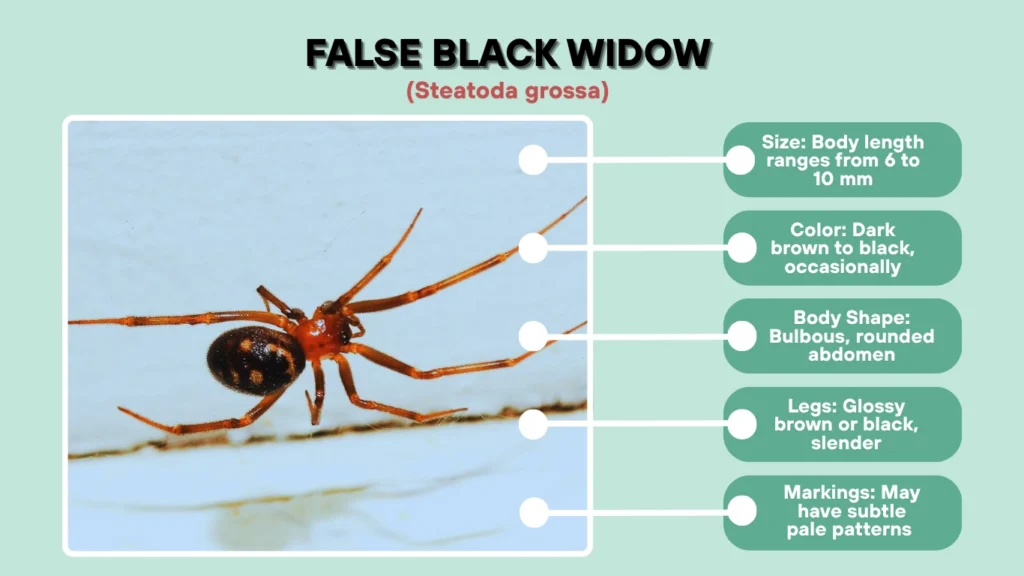
The False Black Widow is a small to medium-sized spider often mistaken for the true black widow due to its rounded body and dark appearance. Found frequently inside homes, it’s generally harmless and tends to avoid human interaction. Its mix of brown and black coloring makes it easy to overlook in shaded areas like basements, closets, or garages.
Identification
- Size: Body length ranges from 6 to 10 mm
- Color: Dark brown to black, occasionally with a purplish hue
- Body Shape: Bulbous, rounded abdomen with a smaller cephalothorax
- Legs: Glossy brown or black, slender, and sometimes faintly banded
- Markings: May have subtle pale patterns or blotches on the upper abdomen
Habitat and Behavior
False Black Widows build irregular cobwebs in secluded, low-traffic areas—such as behind furniture, under stairs, or in garages. They tend to remain stationary in their webs and come out mainly at night to feed on trapped insects. These spiders are slow-moving and non-aggressive unless provoked.
Bite and Human Interaction
While their bite can cause mild discomfort, such as localized pain or redness, it’s not medically dangerous. Symptoms generally subside within a day or two. Bites occur only when the spider is unintentionally pressed or disturbed.
Color Pattern
The False Black Widow typically features a dark brown to nearly black abdomen with a smooth, glossy surface. Some individuals may show pale cream or gray markings in the form of irregular blotches or faint bands. These patterns are more visible in younger spiders and may fade with age. Unlike true black widows, they lack the distinct red hourglass on the underside.
2. Bold Jumping Spider (Phidippus audax)
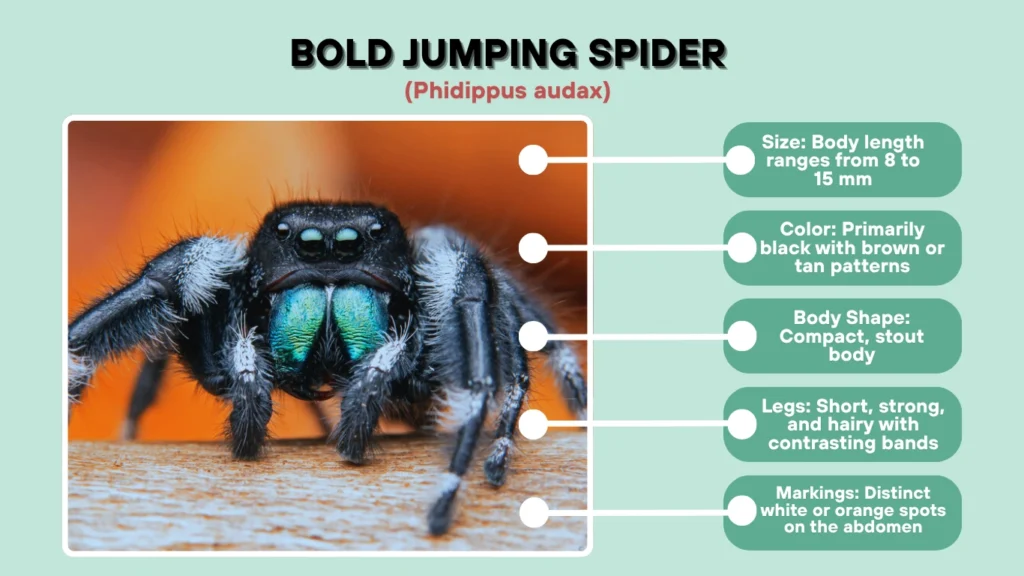
The Bold Jumping Spider is a small, active spider known for its compact body, powerful legs, and bold behavior. Often seen hopping across walls, windowsills, or garden furniture, it has a striking appearance with a mix of black and brown hues. This spider is harmless to humans and curious rather than shy, often turning to look directly at people who notice it.
Identification
- Size: Body length ranges from 8 to 15 mm
- Color: Primarily black with brown or tan patterns
- Body Shape: Compact, stout body with a large cephalothorax
- Legs: Short, strong, and hairy with contrasting bands
- Markings: Distinct white or orange spots on the abdomen, especially three on the back
Habitat and Behavior
Bold Jumping Spiders are active hunters rather than web-builders. They roam during the day, using their excellent vision to stalk and pounce on prey. Commonly found near windows, doors, gardens, and fences, they may wander indoors, especially in warmer months. They use a silk thread for safety while jumping.
Bite and Human Interaction
Though they might appear intimidating due to their size and speed, they are non-aggressive. Bites are very rare and only occur if handled roughly. If bitten, symptoms are usually mild and short-lived, such as slight redness or swelling.
Color Pattern
This spider displays a bold black base color with brown or rust-toned patches and white or orange markings. Young spiders tend to have orange spots, which often turn white in adults. Their iridescent green or blue chelicerae (fangs) add a distinctive touch to their dramatic appearance.
3. Funnel-Web Grass Spider (Agelenopsis spp.)

The Funnel-Web Grass Spider is known for the sheet-like webs it spins in grassy areas or garden beds. It’s a quick-moving, shy spider with a body colored in blends of brown and black. Sometimes found indoors near windows or doorways, especially in late summer, this spider is easily recognized by the funnel-shaped retreat at one edge of its web.
Identification
- Size: Body length ranges from 7 to 11 mm
- Color: A mix of light brown, dark brown, and black
- Body Shape: Long, narrow body with a flattened abdomen
- Legs: Long legs with faint banding and light hair coverage
- Markings: Two dark longitudinal stripes on the cephalothorax and varying patterns on the abdomen
Habitat and Behavior
Funnel-Web Grass Spiders prefer outdoor environments—lawns, bushes, flower beds, and the base of trees. When they venture indoors, they seek shelter near entry points or under furniture. They spin dense, non-sticky webs with a signature funnel hideout where they wait to ambush prey. They are fast and skittish, retreating when disturbed.
Bite and Human Interaction
These spiders rarely bite and are not considered a threat to humans. If bitten, the reaction is mild and resolves quickly. They are more beneficial than harmful, as they help control insect populations around homes.
Color Pattern
Their bodies often feature a combination of black, brown, and tan with characteristic parallel dark stripes on the head. The abdomen may have mottled or chevron patterns in muted shades, blending well with natural surfaces like grass and bark. This camouflaged pattern helps them remain hidden from predators and prey alike.
4. Trapdoor Spider (Bothriocyrtum californicum)
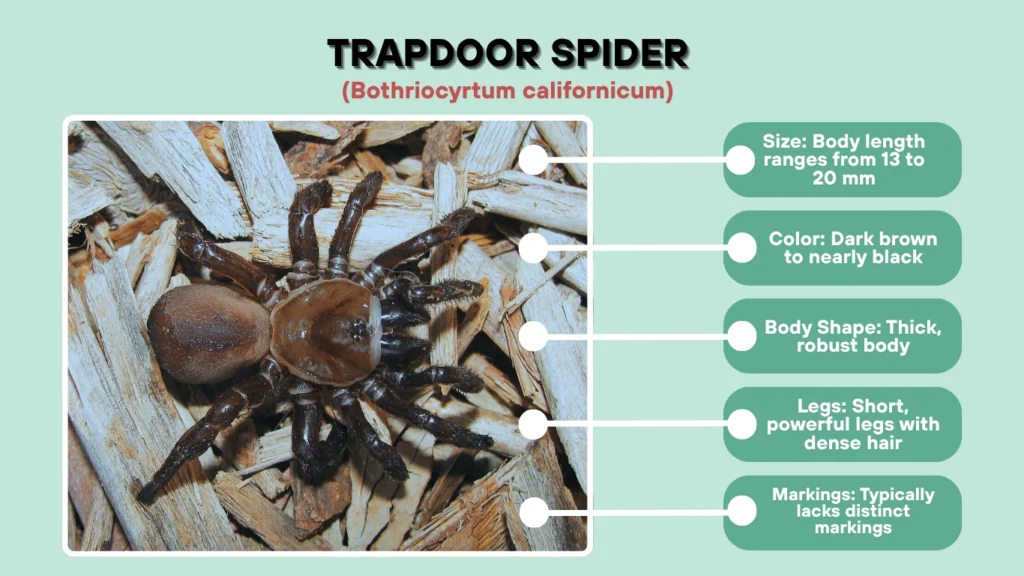
The Trapdoor Spider is a secretive, burrowing spider with a bulky appearance and a dark brown to black body. It spends most of its life underground, emerging only briefly to hunt. Though rarely seen indoors, it can be encountered near homes in warm regions, especially during rainy seasons. Its heavy build and earthy tones make it resemble a clump of soil when still.
Identification
- Size: Body length ranges from 13 to 20 mm
- Color: Dark brown to nearly black
- Body Shape: Thick, robust body with a hardened cephalothorax
- Legs: Short, powerful legs with dense hair
- Markings: Typically lacks distinct markings; body appears uniformly dark
Habitat and Behavior
This spider is a solitary ground dweller. It builds a silk-lined burrow with a camouflaged trapdoor, usually in soil or under natural debris. It remains hidden most of the time, lunging out only when prey approaches the entrance. It does not spin webs for trapping but is an ambush predator.
Bite and Human Interaction
Trapdoor Spiders are shy and rarely bite unless handled directly. Their bite may feel like a bee sting but is not considered dangerous. They are more likely to flee than fight when disturbed.
Color Pattern
The Trapdoor Spider has a matte dark brown or black color with a hardened look. Its coloration helps it blend into soil and leaf litter. There are usually no visible patterns or stripes, making it appear uniform in tone across the body and legs.
5. Southern House Spider (Kukulcania hibernalis)
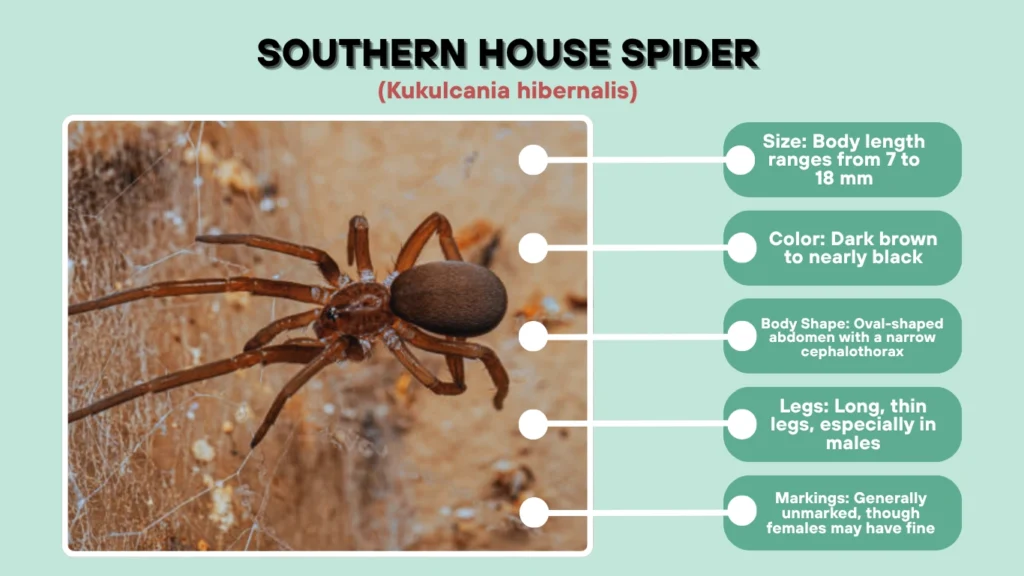
The Southern House Spider is often mistaken for a brown recluse due to its similar shape and brownish-black coloring, but it is harmless. Males are more commonly seen wandering indoors, while females stay hidden in webs. These spiders are commonly found in homes across the southern U.S., especially in basements, garages, and attics.
Identification
- Size: Body length ranges from 7 to 18 mm (males appear more slender)
- Color: Dark brown to nearly black
- Body Shape: Oval-shaped abdomen with a narrow cephalothorax
- Legs: Long, thin legs, especially in males
- Markings: Generally unmarked, though females may have fine patterns on the abdomen
Habitat and Behavior
They build irregular webs in dark, undisturbed areas such as ceiling corners, wall cracks, or window frames. Males are often seen roaming at night in search of mates. Despite their spooky appearance, they are passive and rarely bite.
Bite and Human Interaction
Southern House Spiders are not dangerous. Bites are extremely rare and not medically significant. Their intimidating look is misleading, as they tend to avoid contact with humans altogether.
Color Pattern
These spiders range in color from medium brown to dark chocolate or black. Males may appear darker and shinier, while females are often more uniformly brown with a slight sheen. Their legs and body typically lack distinct banding or spotting.
6. Spinybacked Orb Weaver (Gasteracantha cancriformis)

The Spinybacked Orb Weaver is a unique and colorful spider, but some individuals—especially darker morphs—feature a combination of black and brown markings. Despite their intimidating spines and appearance, they are small, harmless, and frequently seen in gardens or near outdoor lights. Their body shape and colors make them stand out among orb weavers.
Identification
- Size: Body length ranges from 5 to 9 mm
- Color: Varies; some are brown or black with white, red, or yellow patterns
- Body Shape: Broad, crab-like body with six distinct spines on the abdomen
- Legs: Short, dark brown to black legs
- Markings: Patterned abdomen may include dots or bands in black, brown, or white
Habitat and Behavior
These spiders spin circular orb webs in gardens, shrubs, and sometimes near buildings or windows. They are active during the day and stay near the center of their webs. Their spiny appearance is a defense mechanism against predators, but they pose no danger to humans.
Bite and Human Interaction
Spinybacked Orb Weavers are completely harmless to humans. They do not bite unless provoked, and even then, the bite is insignificant. Most people recognize them more for their odd looks than any interaction.
Color Pattern
Though many are brightly colored, some morphs of this species are predominantly dark brown or black with faint white or pale yellow dots. These muted versions often appear more in shaded areas or regions with heavy foliage. The spines are usually dark, adding to their bold silhouette.
7. Orb-Weaving Spider (Araneus spp.)
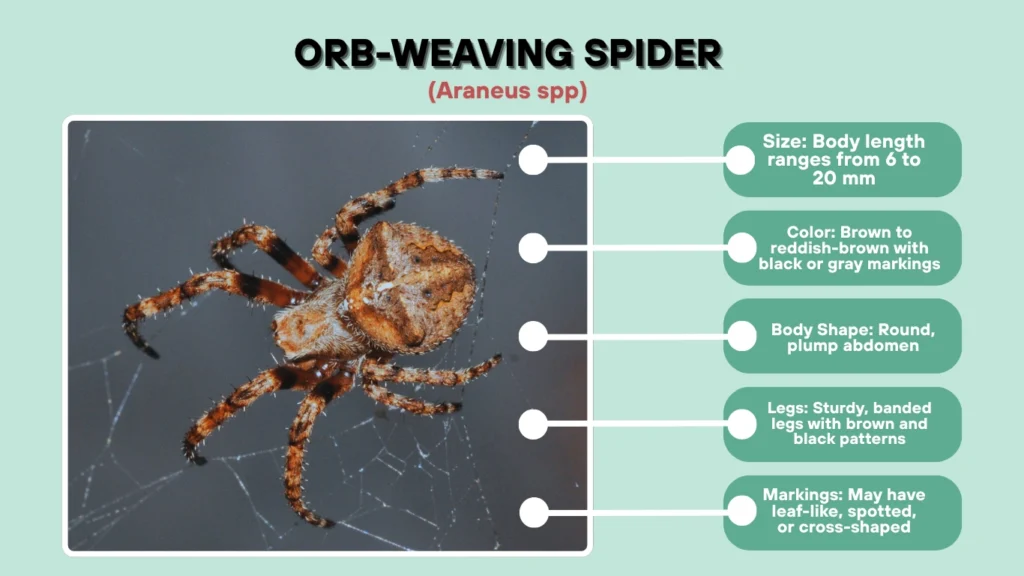
Orb-weaving spiders come in many forms, but several species, like Araneus diadematus, can be brown with black accents. Known for their large, symmetrical webs, they are most active in late summer and fall. Though their coloring and size can make them look intimidating, they are shy and gentle by nature.
Identification
- Size: Body length ranges from 6 to 20 mm depending on species
- Color: Brown to reddish-brown with black or gray markings
- Body Shape: Round, plump abdomen with a slightly smaller cephalothorax
- Legs: Sturdy, banded legs with brown and black patterns
- Markings: May have leaf-like, spotted, or cross-shaped markings on the abdomen
Habitat and Behavior
These spiders build intricate orb webs between trees, fences, or around lights. They typically rebuild their webs each evening and hide nearby during the day. In residential areas, they may appear on porches, garden walls, or between outdoor furniture.
Bite and Human Interaction
Orb-weavers are very reluctant to bite and are not dangerous. Their bites, if they occur, cause only minor symptoms. People often observe them more than interact with them, especially when their large webs appear overnight.
Color Pattern
Most species have a brown base color with darker markings or black outlines on the abdomen and legs. Some may also show faint white or tan designs, which help them blend into bark or foliage. Their banded legs and patterned bodies make them one of the more visually striking spiders seen outdoors.
Summary:
From bold jumpers to secretive trapdoor spiders, brown and black spiders vary widely in size, markings, and habits. Most are not dangerous to humans and prefer to avoid contact, instead playing a helpful role by feeding on insects. Whether hiding in corners, building webs in gardens, or roaming around windowsills, these spiders are part of everyday ecosystems. Learning to recognize them can ease fear and help maintain a balanced home environment.