

Spider mites are among the most destructive pests for both indoor and outdoor plants. These microscopic creatures feed on plant cells by piercing the surface of leaves and sucking out the nutrients, leading to visible signs of stress, decay, and even plant death. The worst part? They’re so tiny that by the time you see them, the damage is already underway.
Catching spider mites early can make all the difference between a healthy recovery and a full infestation. Below, I’ve shared the 7 most common early warning signs you should watch for—plus an explanation of how these pests spread so quickly between plants.
1. Pale or Yellowing Leaves

One of the earliest symptoms of spider mite damage is the fading of leaf color. Healthy leaves typically have a strong green hue, but as spider mites feed, the chlorophyll (green pigment) is destroyed.
You may notice:
- Light yellow or cream-colored patches
- Gradual fading, starting from the underside
- Leaves that look “dusty” or dull in color
This yellowing often begins in isolated spots before spreading across the leaf. In many cases, gardeners mistake it for nutrient deficiency or sunburn, but if you notice it along with any other signs below, spider mites are likely the culprit.
2. Stippling on Leaf Surfaces
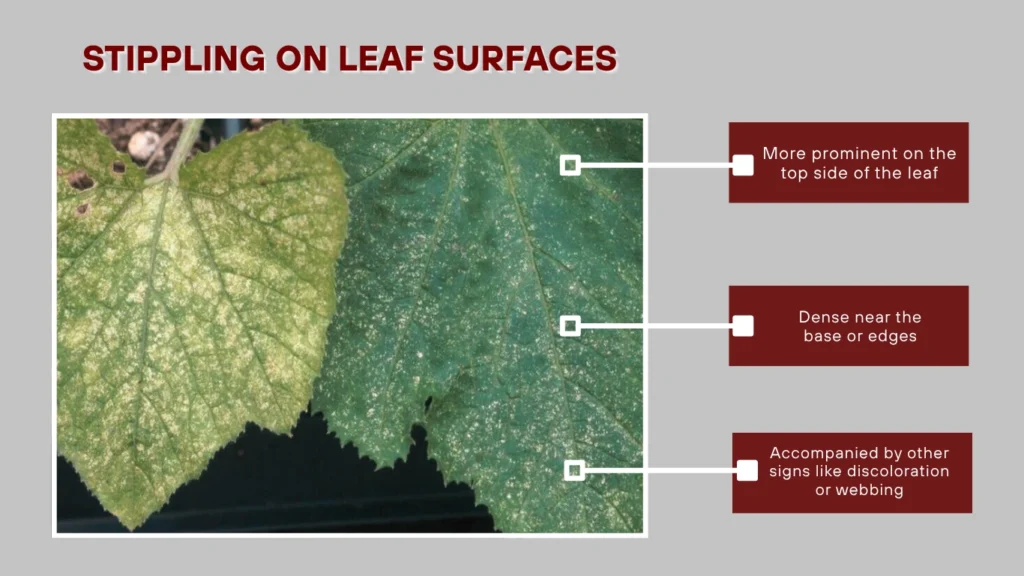
Stippling refers to the tiny, dot-like marks on the surface of leaves that almost resemble salt and pepper flecks. These dots are caused by the mites puncturing individual plant cells to feed.
Stippling is usually:
- More prominent on the top side of the leaf
- Dense near the base or edges
- Accompanied by other signs like discoloration or webbing
You’ll often notice this speckling before seeing the mites themselves. If you look closely or use a magnifying glass, you may catch small red or white mites moving around.
3. Fine Webbing on Leaves or Buds

This is the classic sign of a spider mite infestation. Unlike spiders that spin neat webs, spider mite silk is thin, loose, and usually spread across the plant surface. Early infestations may have only a few threads, but these increase rapidly.
Webbing can be seen:
- On the underside of leaves
- Between stems and petioles
- Draped over flower buds or leaf joints
This webbing serves as protection for the mites and can trap dust, making the plant look dirty. If you see webbing, it’s a strong indicator that the infestation is growing.
4. Bronzed or Bleached Leaf Color

As spider mite feeding continues, the damage becomes more severe. Affected leaves can begin to take on a bronzed, rusted, or bleached look. This change results from widespread cell damage that interferes with the plant’s ability to photosynthesize.
Bronzing usually follows these patterns:
- Starts at the edges and moves inward
- Leaf surfaces may feel dry or brittle
- May affect multiple leaves on a single branch
In ornamentals like roses or citrus trees, bronzing can cause flowers to drop early and new buds to fail to open.
5. Dusty or Dirty-Looking Leaves
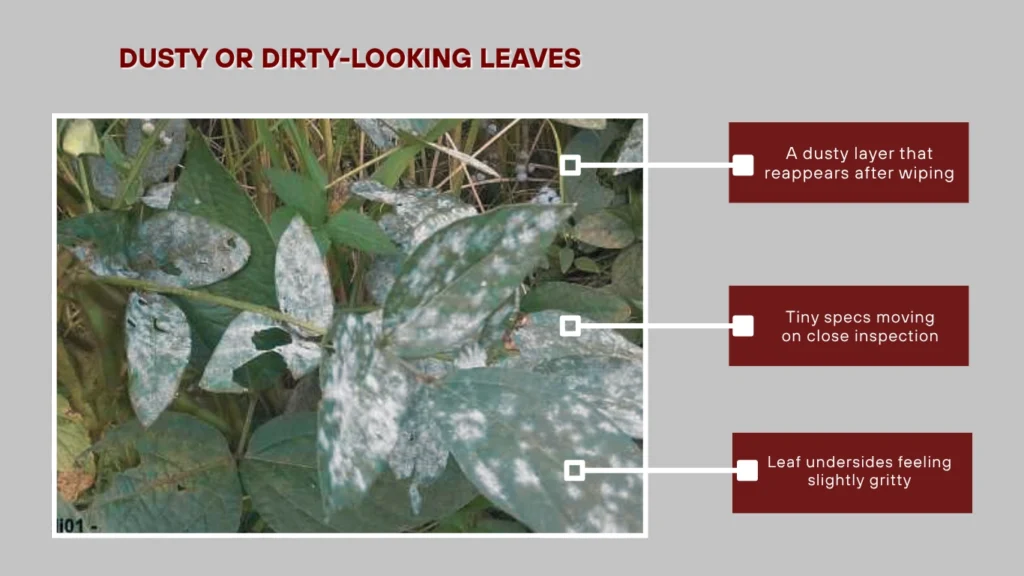
If you suddenly notice that your plant looks dusty even after cleaning, it may not be dirt—it could be mites. Spider mites are so small (typically less than 1mm) that they resemble moving dust particles. Along with their eggs and cast skins, they often make the plant look grimy or unclean.
You may notice:
- A dusty layer that reappears after wiping
- Tiny specs moving on close inspection
- Leaf undersides feeling slightly gritty
This is often one of the most overlooked signs, especially on large plants or shrubs where routine leaf cleaning is difficult.
6. Dropping or Dying Leaves
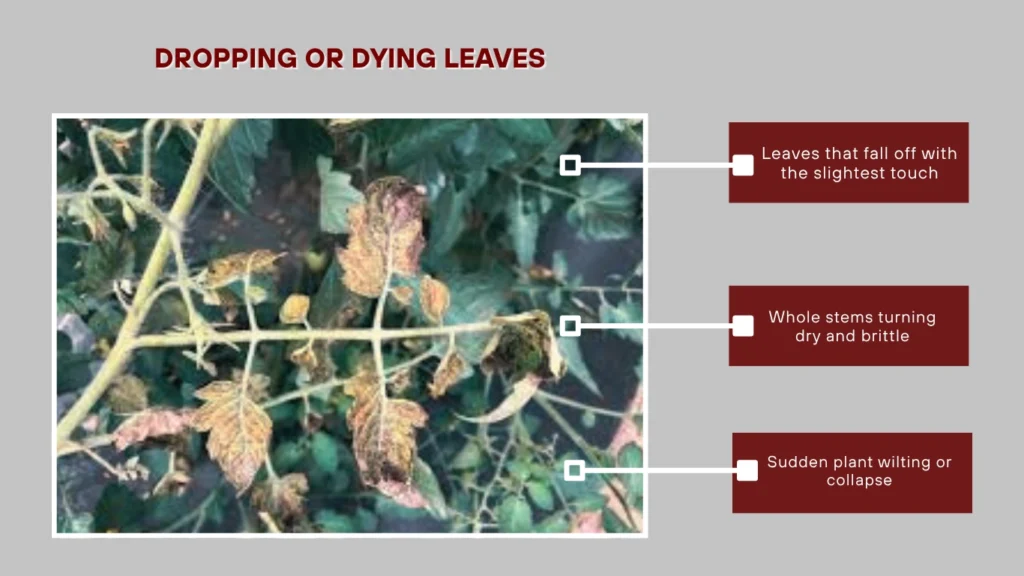
As the infestation progresses, plants begin to lose their leaves prematurely. Since the mites compromise the leaf’s ability to perform photosynthesis, the plant will naturally shed damaged leaves to conserve energy.
Symptoms of this stage include:
- Leaves that fall off with the slightest touch
- Whole stems turning dry and brittle
- Sudden plant wilting or collapse
Indoor plants like Calathea, Fiddle Leaf Fig, or Ivy are particularly sensitive to spider mite damage and may deteriorate quickly without treatment.
7. Holes or Deformed Growth

While spider mites do not chew holes like caterpillars, heavy feeding can cause tissue death, which may lead to holes or torn areas. Additionally, new growth may appear twisted, crumpled, or stunted due to the damage done to the plant’s nutrient flow.
Look for:
- Small holes or tears in older leaves
- New leaves that look smaller or curled
- Buds that fail to bloom or open unevenly
This stage typically indicates that the infestation has been going on for a while, and the plant is now struggling to produce healthy foliage.
How Spider Mites Spread
Spider mites are stealthy and fast when it comes to spreading between plants. Here’s how they travel and multiply:
1. Wind and Airflow
Outdoors, spider mites can be carried by the wind from one plant to another. Indoors, they can travel through ventilation systems or be blown between plants by fans.
2. Human Contact
Spider mites often hitch a ride on clothing, hands, or gardening tools. If you touch an infested plant and then handle a healthy one, you may unknowingly transfer mites.
3. Infected New Plants
Introducing new plants without quarantine is a common way to bring mites into your collection. Even healthy-looking plants can carry eggs or juvenile mites hiding under leaves.
4. Pets and Other Pests
Spider mites can also be transported by pets brushing up against foliage or other insects moving between plants.
5. Favorable Conditions
Mites reproduce rapidly in hot, dry environments. In such conditions, a single female can lay hundreds of eggs, which hatch in days and mature within a week.
What to Do If You Spot Early Signs
If you detect any of the above signs, act quickly:
- Isolate the affected plant to prevent spreading
- Use a magnifying glass to confirm mite presence
- Rinse the plant thoroughly with water
- Apply a natural treatment like neem oil or insecticidal soap
- Increase humidity around the plant (mites hate moisture)
- Clean nearby pots, shelves, and surfaces
Final Thoughts
Spider mites might be tiny, but their impact is massive. The earlier you catch them, the easier they are to manage. Look closely at your plants—especially under the leaves—and trust your instincts if something feels off. Whether you’re growing herbs in your kitchen, houseplants by the window, or a full garden outside, staying alert to these 7 early signs can save you time, energy, and your precious greenery.