

When people hear the name “brown recluse spider,” fear often follows. With its notorious reputation and eerie nickname, this spider has become one of the most feared household pests in the United States. But how dangerous is the brown recluse really? In this article, I’ll break down what makes this spider unique, what happens if it bites you, and how you can protect yourself and your home.
What Is a Brown Recluse Spider?

The brown recluse spider (Loxosceles reclusa) is a venomous spider native to the central and southern United States. Its name “recluse” comes from its shy behavior. It prefers to hide in dark, undisturbed spaces and rarely interacts with humans unless provoked or accidentally disturbed.
Identifying a Brown Recluse Spider
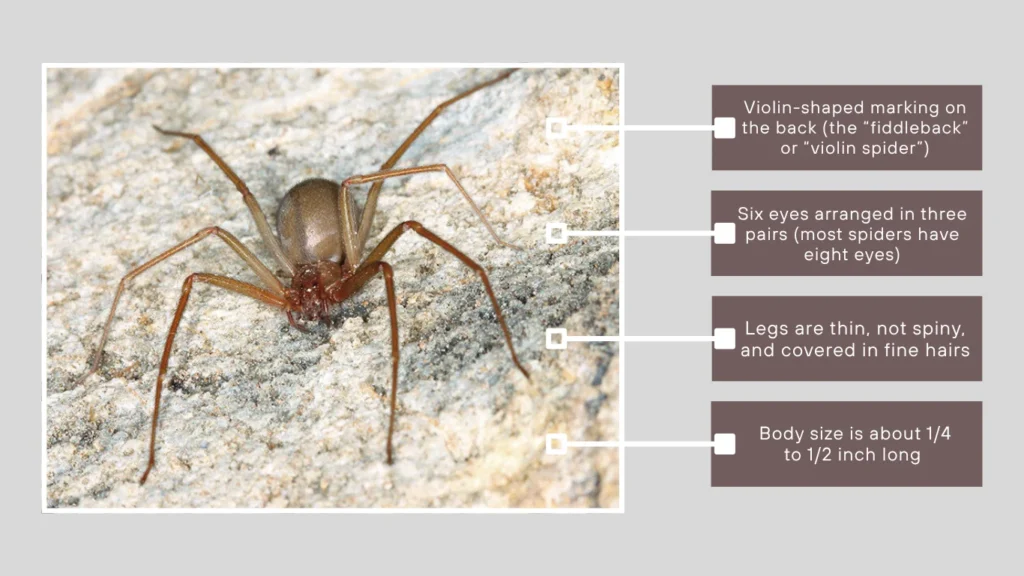
Brown recluse spiders are often misidentified, which contributes to the myths and confusion around them. Knowing how to correctly identify one can help you stay calm and take the right steps if needed.
Identification Features
- Violin-shaped marking on the back (the “fiddleback” or “violin spider”)
- Six eyes arranged in three pairs (most spiders have eight eyes)
- Light to medium brown body color (not shiny or dark like other common spiders)
- Legs are thin, not spiny, and covered in fine hairs
- Body size is about 1/4 to 1/2 inch long (roughly the size of a quarter including legs)
Keep in mind: other spiders may look similar, especially wolf spiders or house spiders, but lack the violin mark and unique eye pattern.
Is the Brown Recluse Spider Dangerous?
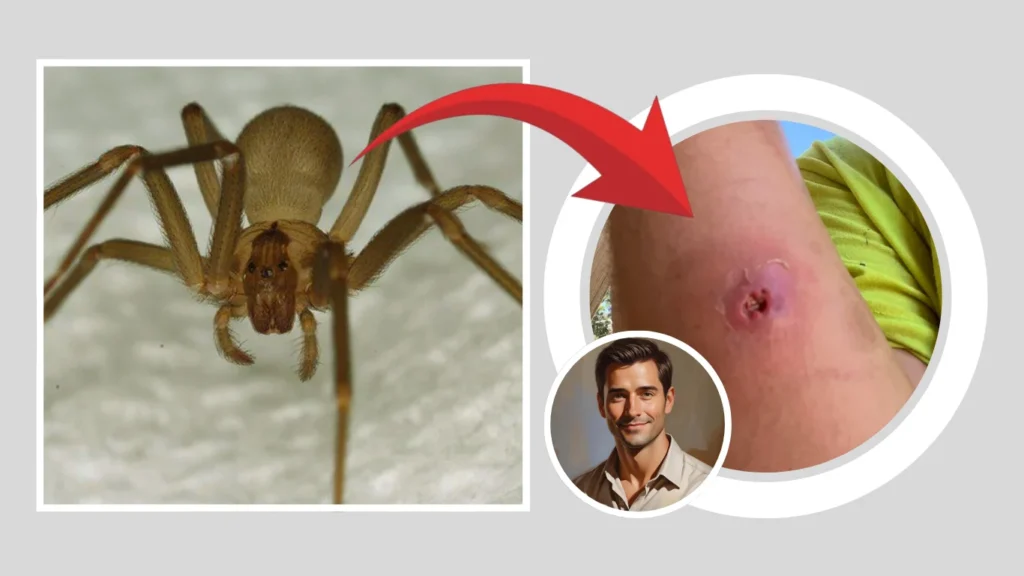
The answer is yes—but with context.
The brown recluse does have venom that can be harmful to humans. However, serious cases are rare. Most bites result in mild symptoms or go unnoticed. In fact, many supposed “brown recluse bites” turn out to be infections or other insect bites.
How Dangerous Is the Venom?
Brown recluse venom is cytotoxic, meaning it destroys cells and tissues at the bite site. This is why some bites result in ulceration or necrosis (dead tissue). The severity of the bite depends on several factors:
- The amount of venom injected
- The location of the bite
- The individual’s immune response
- Whether the wound becomes infected
Only a small percentage of bites develop into serious wounds, and deaths are extremely rare.
Brown Recluse Spider Bite Symptoms
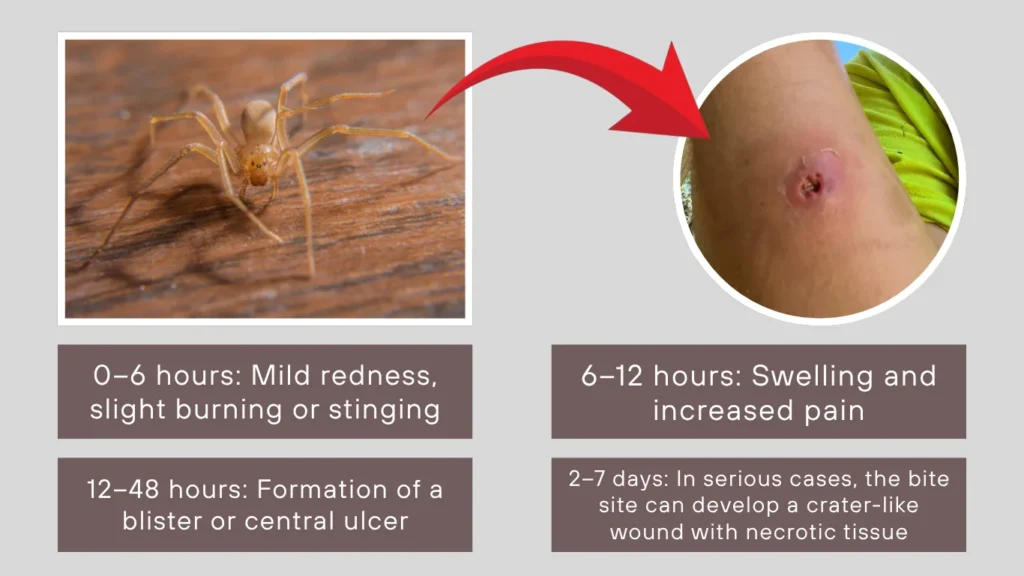
Most brown recluse bites are not initially painful. This leads many people to ignore the bite until symptoms appear hours later.
Bite Symptoms Over Time
- 0–6 hours: Mild redness, slight burning or stinging
- 6–12 hours: Swelling and increased pain
- 12–48 hours: Formation of a blister or central ulcer, sometimes with a blue or purple center and red outer ring
- 2–7 days: In serious cases, the bite site can develop a crater-like wound with necrotic tissue
- Additional symptoms (rare): Fever, chills, fatigue, body aches, nausea
Healing time varies. Mild bites heal within a week, while more serious wounds can take weeks or even months.
When to Seek Medical Help
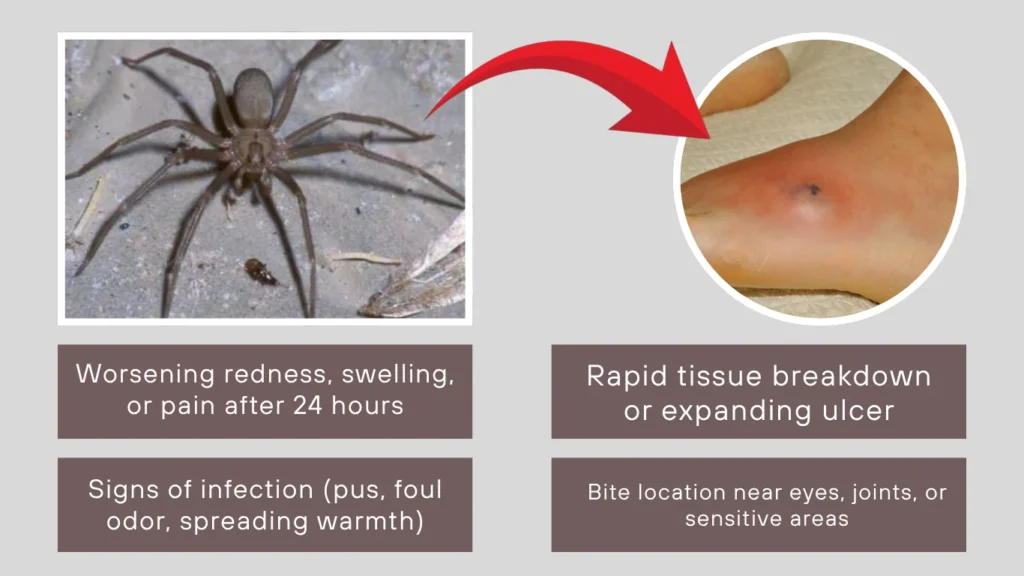
It’s important not to panic. Many brown recluse bites heal without professional treatment. But some signs indicate you need medical attention:
Go to the Doctor If You Notice:
- Worsening redness, swelling, or pain after 24 hours
- Rapid tissue breakdown or expanding ulcer
- Signs of infection (pus, foul odor, spreading warmth)
- Fever, chills, or nausea
- Bite location near eyes, joints, or sensitive areas
Doctors may prescribe antibiotics, wound care, or in rare cases, surgical cleaning for necrotic tissue.
Treatment and Recovery
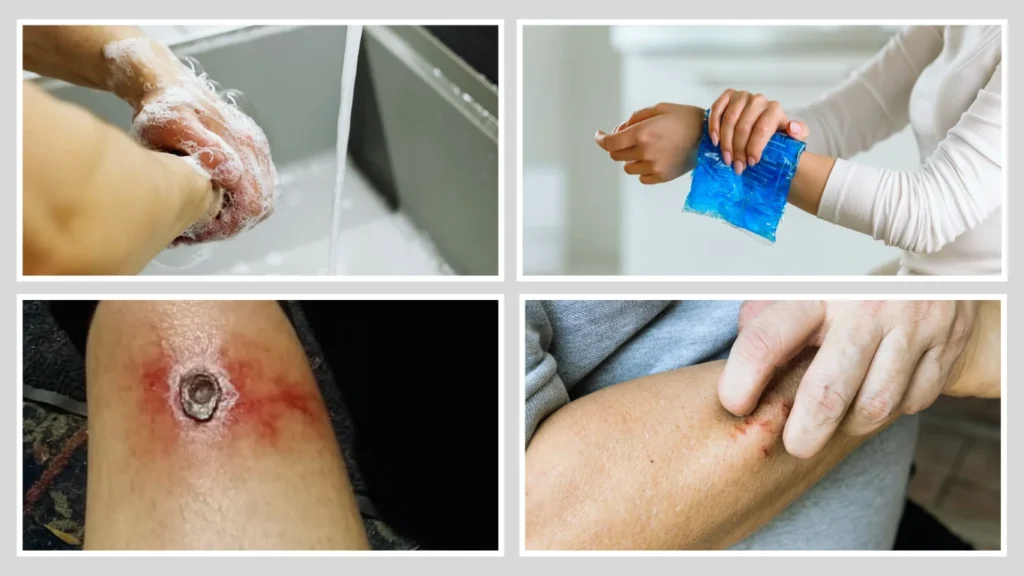
There is no specific antivenom for brown recluse bites. Treatment focuses on symptom management and preventing infection.
What to Do If Bitten
- Clean the area: Wash gently with soap and water to reduce the chance of infection.
- Apply a cold pack: Helps reduce swelling and pain.
- Elevate the bite area: Especially for bites on arms or legs.
- Avoid scratching or pressing on the wound.
- Monitor the bite over the next 48 hours.
Over-the-counter pain relievers (like ibuprofen or acetaminophen) can help manage pain. If the bite shows signs of worsening, consult a doctor quickly.
Preventing Brown Recluse Encounters
The best defense is avoiding contact altogether. While brown recluses don’t go out of their way to bite, they will defend themselves if trapped against your skin (for example, inside a shoe or tucked-away clothing).
Prevention Tips
- Shake out shoes, clothes, and towels before use, especially if stored in closets or on the floor
- Store rarely used items in sealed plastic containers
- Use gloves when moving storage boxes, cleaning basements, or handling firewood
- Seal cracks and crevices in walls and baseboards
- Install door sweeps and weather stripping
- Keep bedrooms, attics, and basements free of clutter
Sticky traps can also help detect and reduce spider activity.
Myths vs. Facts About Brown Recluses
Because of social media and urban legends, brown recluse spiders have become infamous. But not all the stories are true.
Debunked Myths
- Myth: “Brown recluse bites always cause severe necrosis.”
Fact: Most bites are mild and heal without issues. - Myth: “Brown recluses are found all over the U.S.”
Fact: They are mainly found in the Midwest and South Central U.S. Reports from other states are rare and often unverified. - Myth: “All brown spiders are brown recluses.”
Fact: Many harmless brown spiders are mistaken for recluses. - Myth: “They actively seek out humans.”
Fact: Brown recluses avoid people and only bite when threatened.
Understanding the truth helps reduce unnecessary panic and promotes smart prevention.
Final Thoughts
Yes, brown recluse spiders are venomous—and their bite can cause serious harm in some cases. But they are not the monsters they’re made out to be. Most people will never be bitten, and even those who are typically recover with simple first aid or medical attention.