
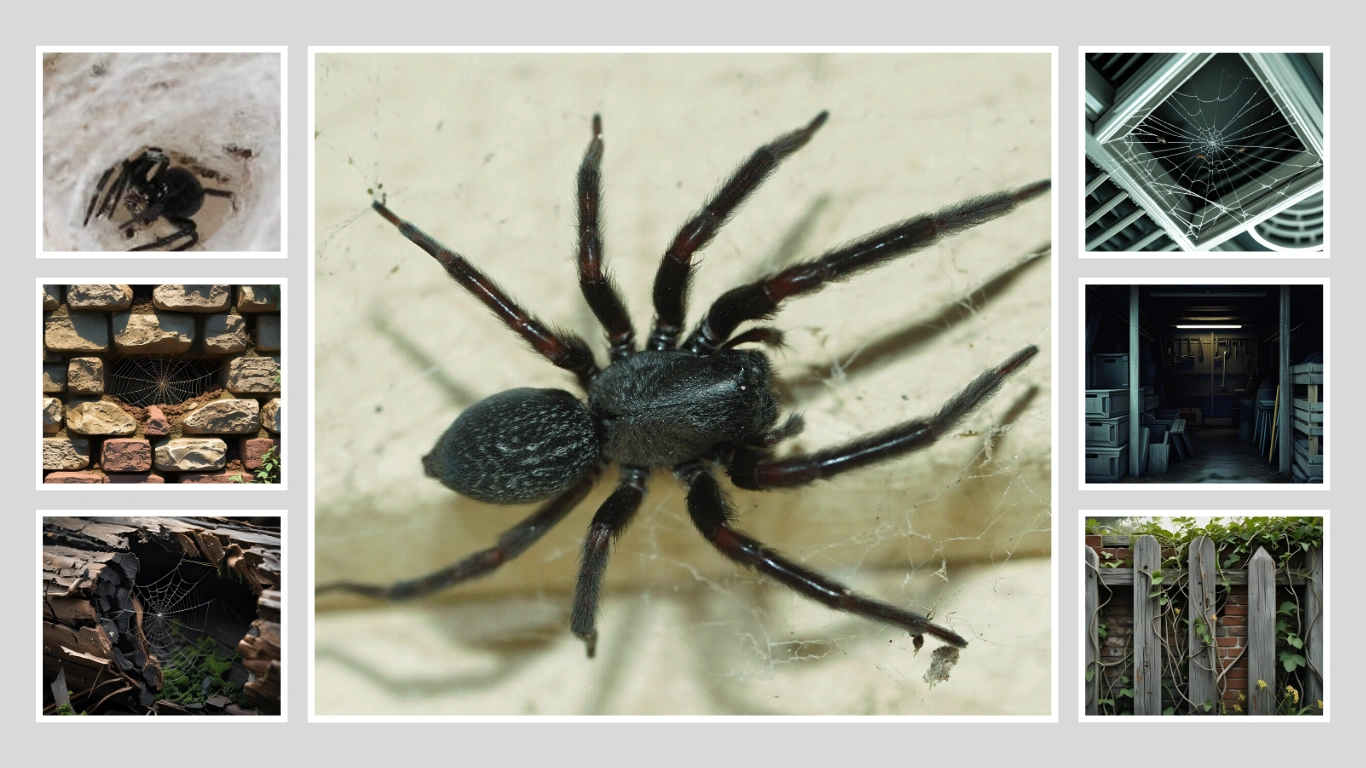
The black house spider (Badumna insignis) is a familiar sight to many homeowners in Australia and parts of New Zealand. With its dark, velvety body and messy funnel-shaped web, this spider may look intimidating, but it plays a beneficial role by preying on insects around the home. One of the most frequently asked questions is: Where exactly do black house spiders live?
From tucked-away corners indoors to sheltered crevices outdoors, black house spiders have adapted well to human environments. This article explores their geographic range, indoor and outdoor habitat preferences, web locations, and more.
Geographic Range of Black House Spiders
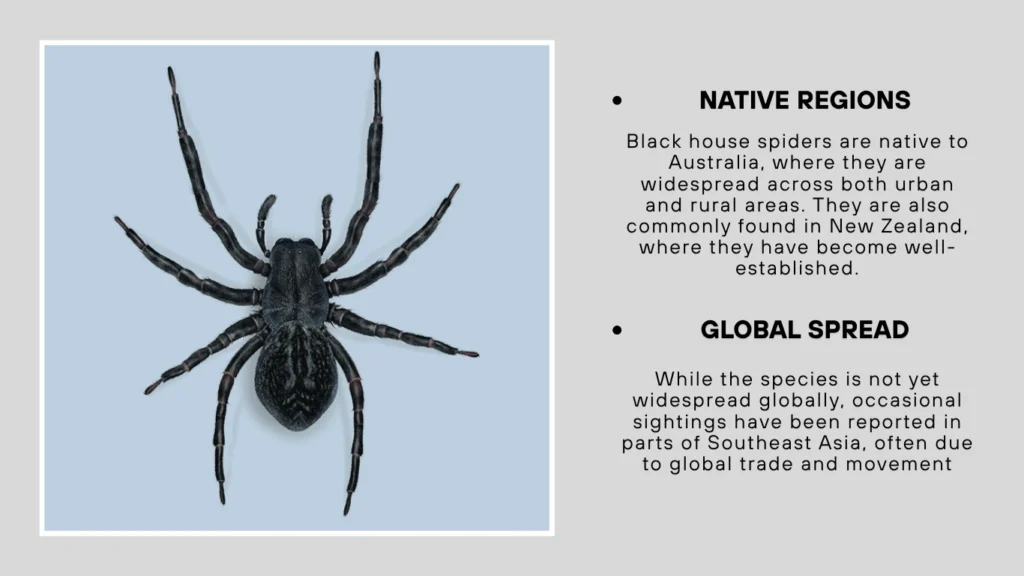
Native Regions
Black house spiders are native to Australia, where they are widespread across both urban and rural areas. They are also commonly found in New Zealand, where they have become well-established.
Global Spread
While the species is not yet widespread globally, occasional sightings have been reported in parts of Southeast Asia, often due to global trade and movement. However, they remain most abundant in Australia, particularly along the east and south coasts.
These spiders thrive in temperate and coastal regions, where the climate supports their year-round activity and web-building behavior.
Preferred Indoor Habitats
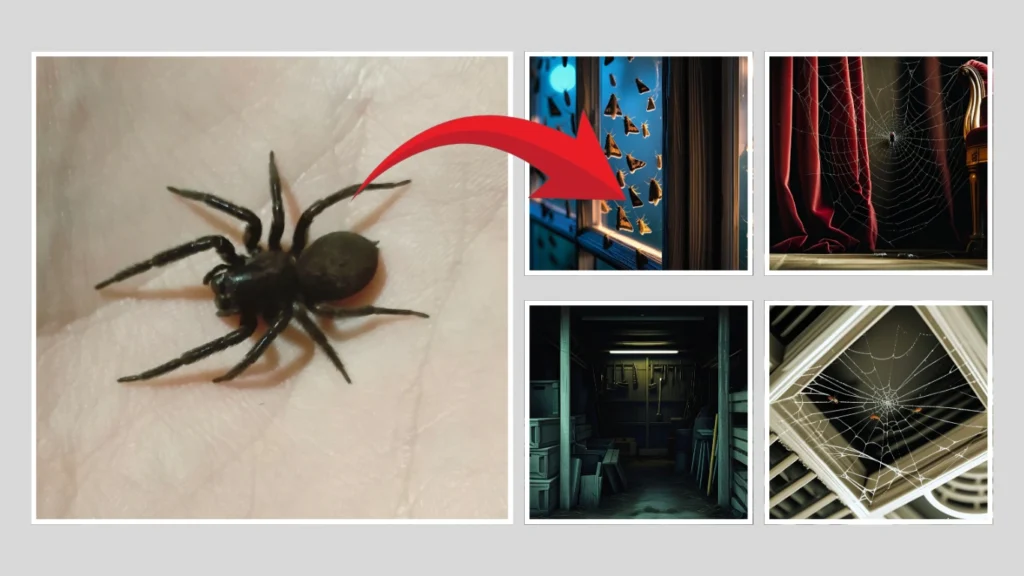
Black house spiders are often encountered inside homes, especially in areas that are quiet, dry, and undisturbed.
Common Indoor Locations
- Window frames – One of the most typical spots; the window attracts flying insects at night, making it an ideal feeding ground.
- Behind curtains and furniture – These low-traffic zones are perfect for undisturbed web-building.
- Inside sheds and garages – Cool, dark, and quiet, these places are excellent for long-term habitation.
- Ceiling corners and air vents – Ideal for anchoring webs and catching small insects entering through ventilation.
Why They Choose These Spots
Black house spiders look for:
- Shelter from wind, rain, and predators
- Easy access to prey, such as mosquitoes, flies, and moths
- Stable surfaces to anchor their web securely
- Low human activity, where they’re unlikely to be disturbed
Unlike wandering spiders, black house spiders stay stationary, often residing in one spot for long periods.
Preferred Outdoor Habitats
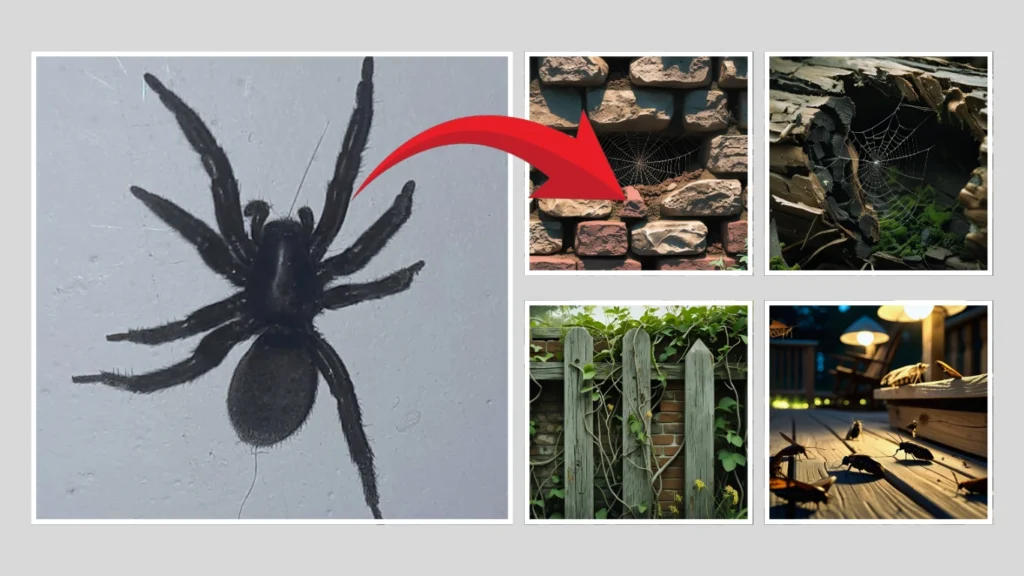
Black house spiders are not limited to indoor areas. They are equally—if not more—common outdoors, especially around homes, gardens, and natural rocky structures.
Where They Build Webs Outside
- Rock walls and garden retaining walls – Small gaps and crevices are perfect for building their funnel webs.
- Under loose bark or in hollow logs – These provide darkness and moisture, ideal for web maintenance.
- Between fence posts and brickwork – Urban structures mimic their natural hiding spots and offer similar stability.
- On porches, decks, and outdoor furniture – Especially near light sources where insects gather at night.
Environmental Conditions They Prefer
- Dry and compact areas – Avoiding spots with excess moisture or heavy rain.
- Partial shade – They don’t like direct sunlight hitting their webs for long periods.
- Low traffic – Webs are vulnerable to disruption, so areas without frequent human or animal activity are favored.
Their outdoor presence often goes unnoticed until their webs accumulate dust or debris, revealing their locations.
Web-Building and Long-Term Residency
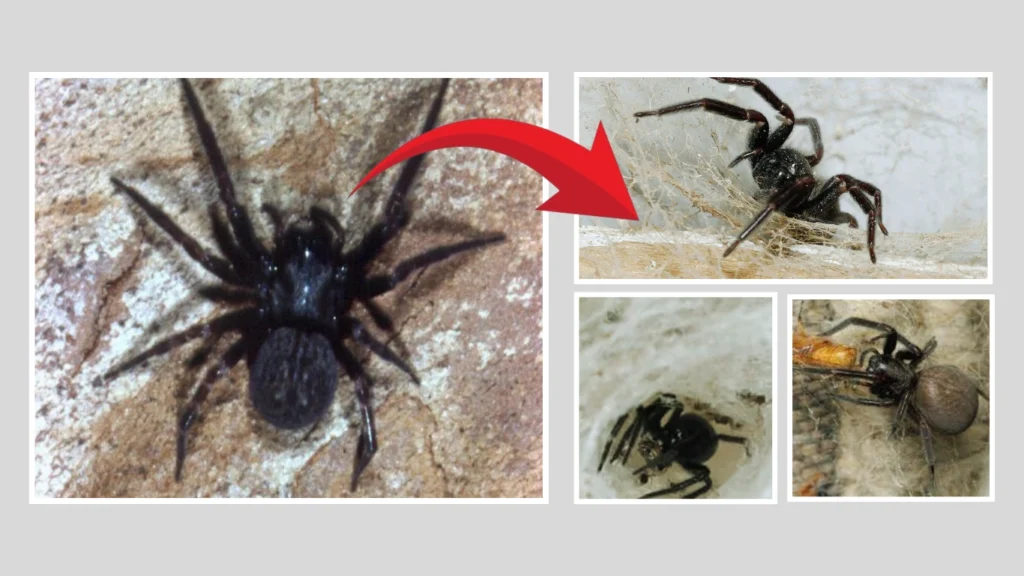
Structure of the Web
Black house spiders are known for their distinctive funnel-shaped webs, which are:
- Thick and messy in appearance
- Built with a retreat tunnel where the spider hides
- Designed with sticky outer threads to catch prey
The web is not rebuilt daily like orb-weaver spiders do. Instead, it is reinforced regularly, sometimes lasting for months or years in the same place.
How Long They Stay in One Place
Female black house spiders can remain in a single web for several years if the environment stays favorable. The web is extended and rebuilt as needed, often growing in size with the spider.
Males don’t stay in one location. Once mature, they leave their own burrows and go on the move in search of mates, making them more likely to be seen roaming indoors or outdoors.
Do Black House Spiders Live Near Humans?
Yes—black house spiders are highly adapted to urban environments and are often found in close proximity to human structures.
Why They Thrive Near People
- Artificial lights attract insects, which in turn attract spiders
- Buildings offer shelter that mimics rock crevices or tree bark
- Many people don’t notice them, allowing webs to go undisturbed
Although they live near people, they are not aggressive and prefer to hide rather than confront.
Human Structures as Habitat
- Houses, schools, office buildings
- Outdoor toilets and pump stations
- Utility boxes and mailboxes
- Wooden fences and storage sheds
These spiders don’t invade homes in the traditional sense but take advantage of available space around the structure.
Where You’re Unlikely to Find Them
Not all environments suit black house spiders. There are certain conditions they tend to avoid.
Unsuitable Habitats
- Wet, swampy, or muddy areas – Excess moisture weakens their webs and can flood their retreats
- Very clean, high-traffic indoor spaces – Regular cleaning removes webs before they can be established
- Smooth, glassy surfaces – They need textured surfaces to anchor their silk
- Highly exposed outdoor areas – Strong wind, direct rain, or full sun can damage their webs
They also avoid competition and will not build webs near larger, dominant spider species.
Final Thoughts
Black house spiders are quiet, long-term residents of many Australian homes—both inside and out. They prefer dark, dry, and stable environments, especially corners and crevices that go undisturbed. Indoors, you’ll find them near windows and ceilings; outdoors, they build webs under rocks, fences, and bark.
FAQs
1. Do black house spiders live in bedrooms?
Yes, they can—especially in corners near windows or behind furniture where they’re unlikely to be disturbed. However, they tend to favor less active rooms like storage areas, basements, or attics.
2. Are they more common indoors or outdoors?
Black house spiders are actually more common outdoors, but they often move indoors when outdoor temperatures drop or insect prey becomes scarce.
3. Can black house spiders live in apartments?
Yes, they can. Apartments with balconies, window frames, or small utility spaces provide plenty of opportunities for them to build webs, especially near light sources.
4. Do they prefer light or dark areas?
They prefer dark, sheltered areas for web building but often position their webs near light sources where insects gather—like porch lights or window corners.
5. How can I safely remove them from my home?
Use the cup-and-paper method to gently trap and relocate the spider outside. Avoid using harsh chemicals—they’re not dangerous and are helpful in controlling pests.