
Tarantulas are some of the most misunderstood creatures on the planet. Known for their large size, hairy legs, and intimidating appearance, these spiders often evoke fear. Yet, among pet lovers and arachnid enthusiasts, they’re admired for their calm demeanor and fascinating behaviors.
As interest in tarantulas grows—especially in the exotic pet trade—so do concerns about their survival. Are tarantulas endangered? Are we at risk of losing these unique spiders due to habitat loss and overcollection?
Let’s explore their current conservation status, threats they face, and what can be done to protect them.
Overview of Tarantula Species
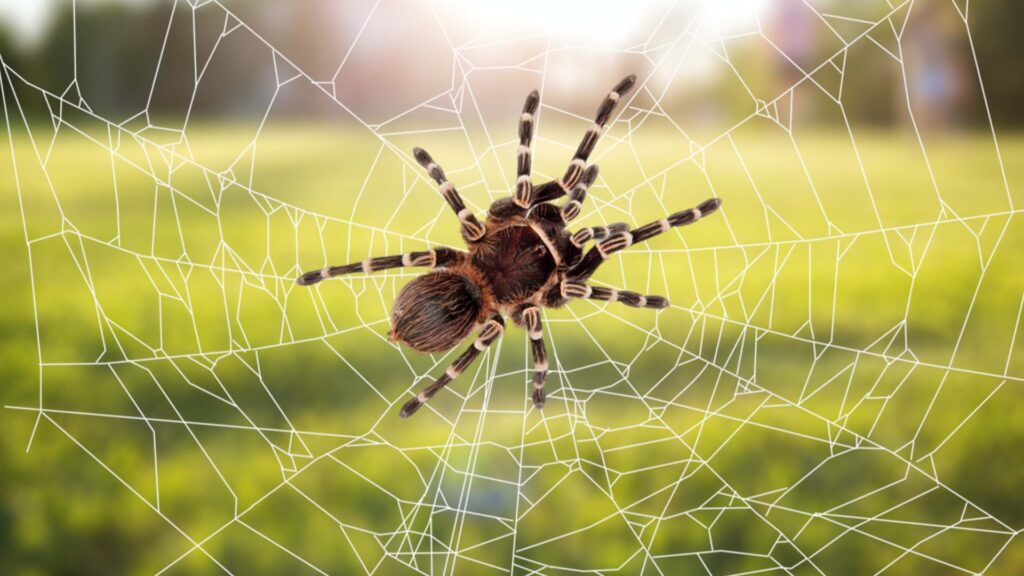
Tarantulas belong to the family Theraphosidae, which includes over 1,000 known species worldwide. They are found across:
- North and South America
- Africa
- Asia
- Parts of Australia
Most tarantulas are terrestrial (ground-dwelling), while some are arboreal (tree-dwelling), especially in rainforest regions.
Popular vs. Rare Species
Not all tarantulas are equal in numbers. Some species, like:
- Chilean rose tarantula (Grammostola rosea)
- Mexican red-knee tarantula (Brachypelma hamorii)
- Pinktoe tarantula (Avicularia avicularia)
…are common in the pet trade and are widely bred in captivity.
On the other hand, some tarantulas have a limited range, exist in only one region, and are therefore more vulnerable to environmental changes and human impact.
Conservation Status of Tarantulas

Are All Tarantulas Endangered?
No, most tarantula species are not officially classified as endangered. However, the issue is complex. Many tarantulas have never been formally assessed by conservation organizations like the IUCN (International Union for Conservation of Nature), so their true population status remains unknown.
That said, several species are facing pressures and have been recognized as needing protection.
IUCN Red List & CITES Status
- The IUCN Red List currently lists very few tarantula species, mainly due to a lack of data.
- However, CITES (the Convention on International Trade in Endangered Species) has taken action. Many species, particularly from the genus Brachypelma (like the Mexican red-knee), are listed under Appendix II. This means:
- Trade is regulated
- Export and import require permits
- Wild collection is discouraged or restricted
- Trade is regulated
This listing is an effort to reduce overharvesting from the wild and encourage captive breeding.
Major Threats to Tarantula Populations
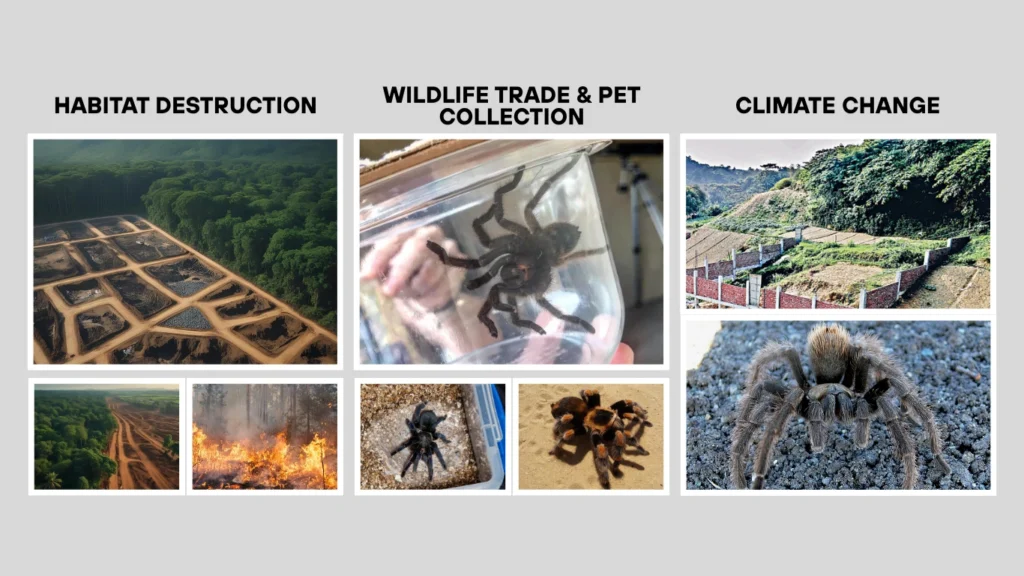
While tarantulas are not all endangered, some species are at significant risk due to a range of human-driven threats.
1. Habitat Destruction
- Deforestation for agriculture, housing, and infrastructure wipes out entire ecosystems.
- In places like Mexico, Brazil, and Southeast Asia, logging and land clearing destroy the forest floors and burrows tarantulas rely on.
- Mining and wildfires also contribute to the loss of habitat, especially for species with limited ranges.
Some tarantulas that were once common are now hard to find in the wild due to shrinking habitats.
2. Wildlife Trade & Pet Collection
Tarantulas are heavily collected for the pet industry, particularly the more colorful or docile species.
- Demand for exotic pets leads to illegal and unsustainable harvesting of wild tarantulas.
- In some countries, local communities collect tarantulas and sell them to dealers, often without knowledge of their ecological impact.
- This has caused major population declines in species like the Mexican red-knee and Brachypelma smithi.
While captive breeding helps reduce pressure, illegal trade remains a major issue in regions with poor enforcement.
3. Climate Change
- Rising temperatures and unpredictable weather patterns can impact spider behavior, prey availability, and reproduction.
- Some tarantulas may struggle to adapt to changing rainfall, leading to burrow collapse or seasonal disruptions in breeding.
This especially affects species with narrow habitat requirements, such as rainforest dwellers.
Conservation Efforts and Legal Protections
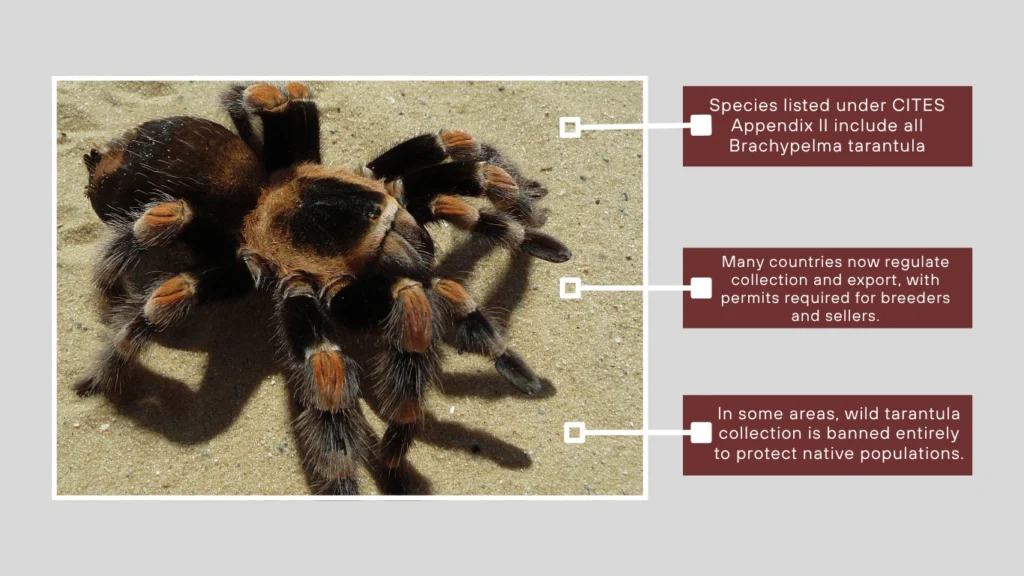
Efforts are underway globally and locally to protect tarantulas, especially those at risk due to habitat loss and trade.
Legal Protections
- Species listed under CITES Appendix II include all Brachypelma tarantulas, which are native to Mexico and Central America.
- Many countries now regulate collection and export, with permits required for breeders and sellers.
- In some areas, wild tarantula collection is banned entirely to protect native populations.
Captive Breeding Programs
- Captive-bred tarantulas have become more common, especially for species popular in the pet trade.
- These programs help:
- Reduce the need for wild collection
- Preserve genetics of rare species
- Provide ethical options for pet owners
- Reduce the need for wild collection
Some hobbyists also engage in responsible breeding and trade under legal guidelines, helping support species without harming wild populations.
Why Tarantulas Matter
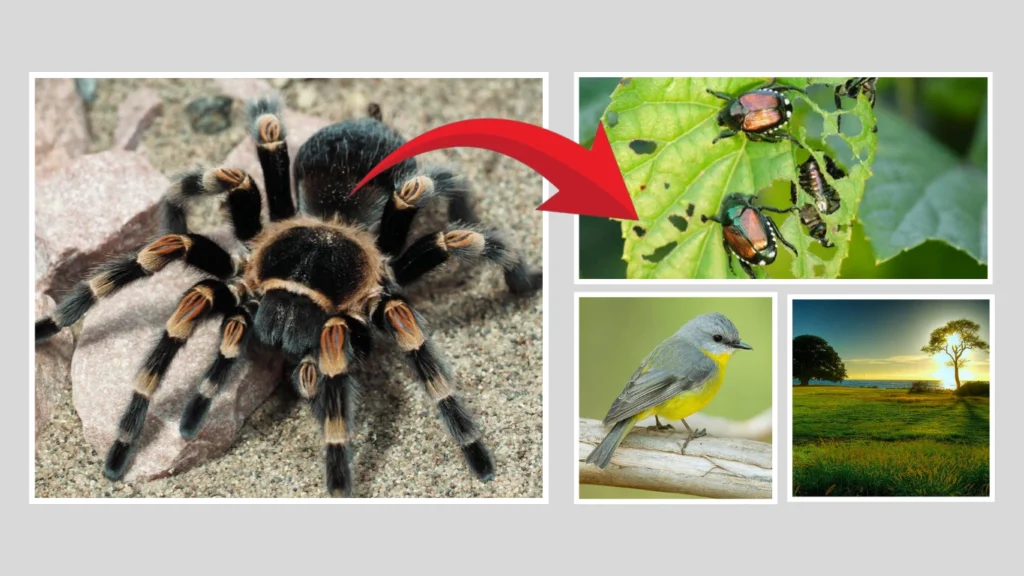
Tarantulas aren’t just exotic pets or creepy crawlies—they’re an important part of ecosystems.
- They are natural pest controllers, feeding on insects, small reptiles, and other invertebrates.
- As prey, they provide food for birds, mammals, and even other spiders.
- Their presence in an ecosystem often signals environmental health.
Losing tarantula species would not only impact biodiversity but also disrupt food chains in their native habitats.
What Can You Do to Help?
1. Practice Ethical Pet Ownership
- Only buy captive-bred tarantulas from reputable breeders.
- Avoid purchasing wild-caught tarantulas, even if they seem rare or beautiful.
- Know the laws in your region regarding exotic spider ownership and trade.
2. Support Conservation Initiatives
- Donate to or promote organizations working in invertebrate conservation.
- Help raise awareness about the importance of tarantulas and dispel myths that they’re dangerous or useless.
3. Respect Their Habitats
If you live in a region with native tarantulas, avoid destroying their habitats when gardening, building, or hiking. Educate others about their ecological role.
Final Thoughts
While most tarantulas are not currently classified as endangered, several species are at risk due to habitat destruction, over-collection, and climate change. Their slow reproductive rate and isolated populations make recovery difficult once damage is done.
FAQs
1. Are pet tarantulas endangered?
Most pet tarantulas are not endangered because they’re bred in captivity by responsible breeders. However, some species collected from the wild—especially those with limited habitats—face population decline. Overcollection for the exotic pet trade has contributed to threats for certain species, particularly in regions like Mexico and Southeast Asia.
2. Which tarantula species are protected?
Several tarantulas in the Brachypelma genus (such as the Mexican red-knee) are protected under CITES Appendix II, which controls international trade. This listing aims to prevent overharvesting. Additionally, some countries have national laws banning or limiting wild collection of native tarantula species to preserve their natural populations.
3. Is it legal to own a tarantula?
Yes, owning a tarantula is legal in many countries, but laws differ depending on species and region. You may need a license or permit to own, breed, or import certain protected species. It’s essential to check with your local wildlife or environmental authority before buying a tarantula.
4. How many tarantula species are at risk?
Only a small number of tarantula species have been officially assessed for extinction risk. However, scientists suspect many rare or range-restricted species may be vulnerable due to habitat loss, climate change, and unregulated trade. Lack of research means some declining populations may go unnoticed and unprotected.
5. Why are tarantulas important to the ecosystem?
Tarantulas play a vital ecological role as predators of insects, helping to control pest populations. They also serve as prey for birds, reptiles, and mammals, contributing to food chains. Their burrows improve soil structure, and their presence can indicate a healthy, balanced environment.