

The Arizona Blonde Tarantula (Aphonopelma chalcodes), also known as the Arizona Desert Blonde Tarantula, is one of the most iconic tarantulas of the southwestern United States. Recognized for its golden-blonde carapace and calm nature, this species has become a popular choice among beginners in the tarantula-keeping hobby. Native to Arizona and surrounding desert regions, it thrives in dry environments where it lives in burrows and hunts at night.
This guide provides a complete look at the Arizona Blonde Tarantula, including identification, scientific facts, size, lifespan, gender differences, care needs, and natural behavior.
General Identification & Names
The Arizona Blonde Tarantula goes by several common names, including:
- Arizona Blonde Tarantula
- Arizona Blond Tarantula
- Arizona Desert Blonde Tarantula
- Blonde Arizona Tarantula
Its scientific name is Aphonopelma chalcodes, and it is part of the family Theraphosidae, which includes hundreds of tarantula species worldwide.
Adult females are characterized by a light, golden-colored carapace and tan to brown legs, while males often appear darker with more slender bodies. This distinct coloration makes them stand out among North American tarantulas.
Scientific Classification & Facts

- Scientific name: Aphonopelma chalcodes
- Family: Theraphosidae
- Distribution: Southwestern United States, mainly Arizona, New Mexico, and northern Mexico
Interesting facts:
- Their fangs are powerful enough to pierce insect exoskeletons easily.
- Despite their intimidating look, they are generally docile and rarely bite.
- They are terrestrial burrowers, spending most of their lives underground.
- Arizona Blondes are sometimes mistaken for similar species such as the Palomino Tarantula, though they are not the same.
Their venom is mild and not considered medically significant. Defensive displays may include raising their front legs or flicking urticating hairs, but actual attacks are very rare.
Size, Lifespan & Growth

Arizona Blonde Tarantulas are medium to large spiders compared to other North American tarantulas.
- Size: Adults typically measure 4–6 inches in leg span, with females usually larger than males.
- Weight: They are relatively lightweight but sturdy, with females having bulkier abdomens.
- Growth rate: Slow-growing, requiring several years to reach maturity.
Lifespan:
- Females: 20–30 years, making them exceptionally long-lived tarantulas.
- Males: 5–10 years, usually dying soon after reaching maturity and mating.
Because of this vast difference, females are highly prized in the pet trade, while males are often kept for shorter-term observation.
Male vs Female Differences
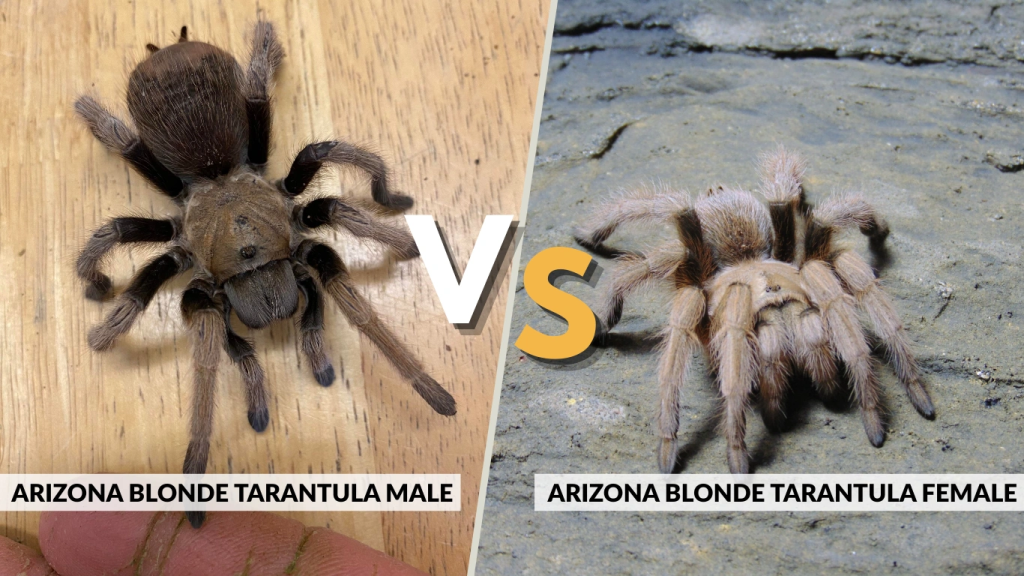
Sexual dimorphism is noticeable in this species.
Males:
- More slender and darker overall.
- Long, thin legs adapted for roaming during mating season.
- Possess tibial hooks and enlarged pedipalps used during reproduction.
- Much shorter lifespan, often perishing within a year or two after maturity.
Females:
- Stockier with a golden-blonde carapace and lighter coloration.
- Spend most of their lives in or near burrows.
- Can live for multiple decades, producing egg sacs with hundreds of spiderlings.
The most reliable way to sex them is by examining their molts. Females develop spermatheca structures used for storing sperm, while males do not.
Habitat & Range

Arizona Blonde Tarantulas are native to the deserts and scrublands of Arizona, though they are also found in New Mexico, parts of California, and northern Mexico.
- Habitat: Arid desert regions with sandy or rocky soil.
- Burrowing: They dig burrows up to a foot deep, often lined with silk to detect vibrations from prey.
- Range: Concentrated in Arizona but also present across desert areas of the American Southwest.
- Occasional records: Individuals have been observed in nearby states, including parts of Florida through relocation, though this is outside their natural distribution.
These burrows provide protection from predators and extreme desert temperatures.
Care, Enclosure & Environment
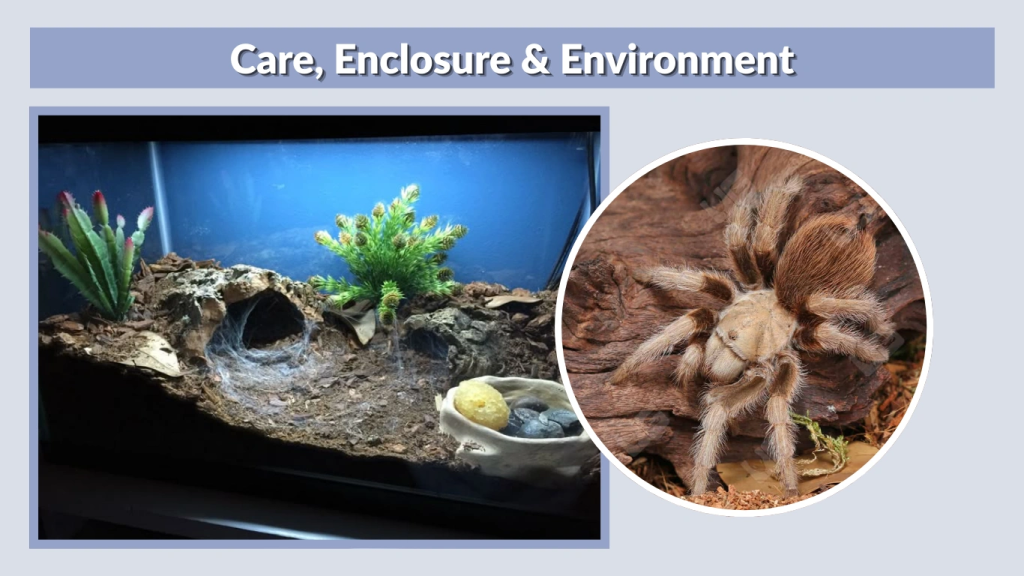
Arizona Blonde Tarantulas are hardy and low-maintenance, which is why they are considered excellent beginner tarantulas.
Enclosure size:
- Adults do well in a 5–10 gallon terrarium.
- Width is more important than height, since they are terrestrial.
Substrate & burrowing:
- Use 3–5 inches of dry substrate such as coco fiber, organic soil, or peat moss.
- They are natural burrowers, so provide enough depth for digging.
Temperature & humidity:
- Keep between 70–80°F (21–27°C).
- Humidity should remain around 55–65%. Overly damp conditions stress them, so keep substrate mostly dry.
Decor & hiding:
- Provide a hide (cork bark, clay pot, or artificial cave).
- A shallow water dish should always be present.
This species thrives in simple setups and does not need elaborate decorations or lighting.
Diet & Feeding

Arizona Blonde Tarantulas are carnivorous hunters that feed primarily on insects.
Common foods in captivity:
- Crickets
- Dubia roaches
- Mealworms or superworms (as occasional treats)
Feeding frequency:
- Spiderlings and juveniles: 2–3 times per week
- Adults: Once every 7–10 days
Important notes:
- Do not feed prey larger than the tarantula’s abdomen.
- Remove uneaten insects to prevent stress or injury.
- They may fast before molting or during seasonal changes, which is normal.
Temperament & Behavior

Arizona Blonde Tarantulas are often described as calm and tolerant, though individuals vary.
Temperament traits:
- Usually docile, making them suitable for beginner keepers.
- Can show defensive stances (raising legs) if threatened.
- May flick urticating hairs when stressed, which can irritate skin and eyes.
Handling:
Although they are considered one of the more handleable species, frequent handling is not recommended. A fall from even a small height can cause serious injury. Observation inside the enclosure is the safest way to enjoy them.
Biting, Venom & Safety
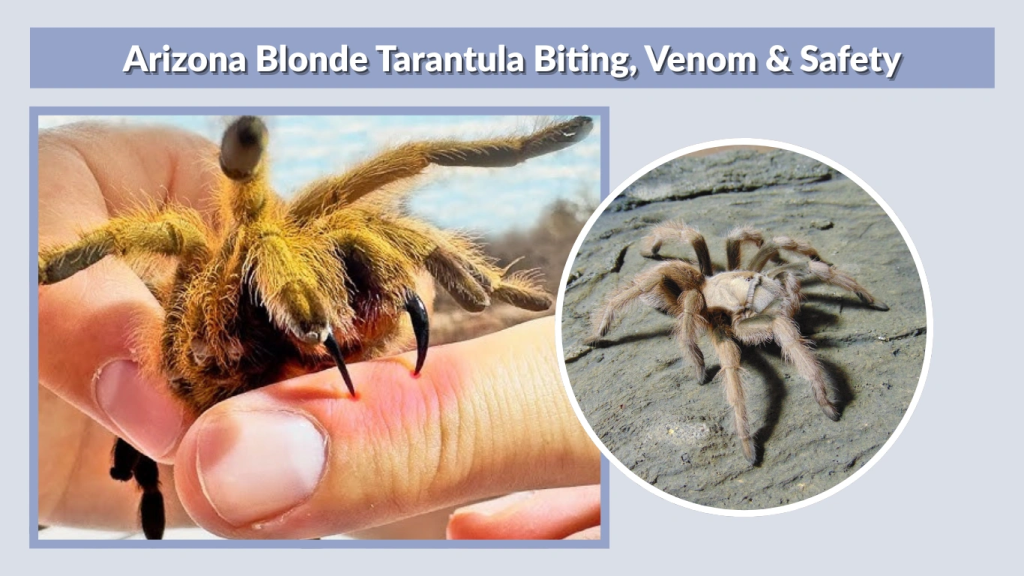
Like all tarantulas, the Arizona Blonde Tarantula has venom, but it is mild to humans.
Bites:
- Rare, as they prefer to retreat or flick hairs.
- Symptoms include pain, redness, and mild swelling, comparable to a bee sting.
Venom:
- Not medically significant unless someone has an allergy.
- More discomfort comes from urticating hairs than from venom.
Are they dangerous?
No, Arizona Blonde Tarantulas are not considered dangerous. They are often kept in classrooms and educational programs to teach about arachnids.
Reproduction & Life Cycle
Mating season:
- Males wander during late summer and fall to find females.
- Courtship involves tapping behaviors with the pedipalps.
Egg sacs:
- Females can produce an egg sac containing several hundred eggs.
- Spiderlings hatch after 6–8 weeks and molt before dispersing.
Lifespan differences:
- Males usually die within months of mating.
- Females continue reproducing for decades.
FAQs
1. How big do Arizona Blonde Tarantulas get?
They typically reach 4–6 inches in leg span, with females often larger than males. This size makes them one of the bigger tarantulas found in North America, though not as massive as South American species.
2. How long do Arizona Blonde Tarantulas live?
Females can live 20–30 years in captivity, while males usually survive 5–10 years. This makes sexing important for keepers who want a long-term pet.
3. Are Arizona Blonde Tarantulas venomous?
Yes, but their venom is mild and not considered dangerous to humans. Bites are rare and usually no more severe than a bee sting, though allergic reactions are possible.
4. Do Arizona Blonde Tarantulas burrow?
Yes, they are natural burrowers. In the wild, they dig burrows up to a foot deep to escape predators and desert heat. In captivity, they should be given deep substrate for digging.
5. Are Arizona Blonde Tarantulas good pets?
Yes. They are hardy, docile, and require minimal care, making them popular among beginners. However, like all tarantulas, they should not be handled frequently due to the risk of injury from falls.
Conclusion
The Arizona Blonde Tarantula is one of the most beginner-friendly species in the tarantula hobby. With its striking golden coloration, long lifespan, and calm nature, it is admired both as a pet and as a fascinating desert-dwelling species. Providing a simple enclosure, proper diet, and minimal disturbance ensures these spiders live healthy, stress-free lives for many years.