
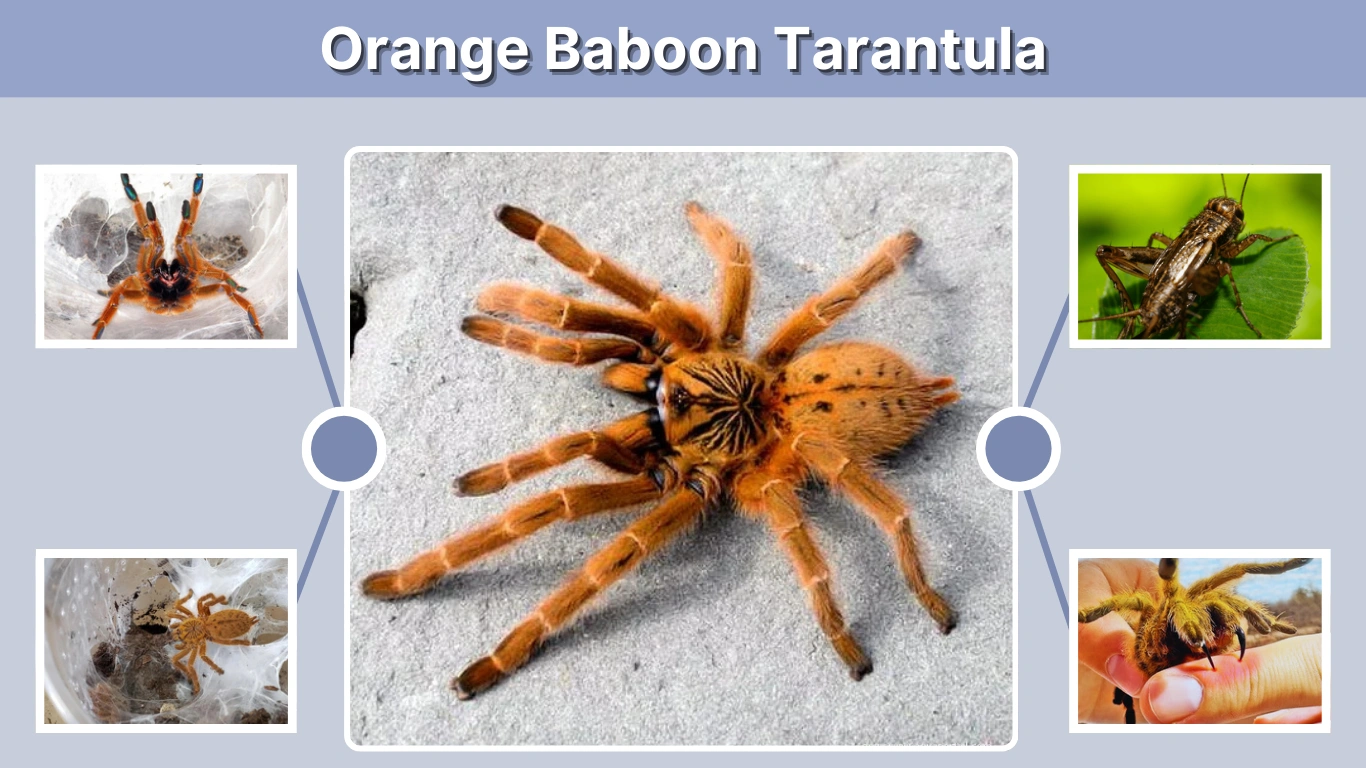
The Orange Baboon Tarantula (OBT), widely nicknamed the “Orange Bitey Thing,” is one of the most captivating yet infamous species in the tarantula world. Native to Africa, it is admired for its fiery orange coloration and intricate webbing abilities. However, it has also earned a reputation for being highly defensive and quick to bite, making it a poor choice for beginners. Enthusiasts often keep it for display rather than interaction, valuing its bold personality and striking appearance.
General Identification & Names

The Orange Baboon Tarantula belongs to the species Pterinochilus murinus. It is native to regions of East Africa, particularly Tanzania and surrounding countries. Hobbyists refer to it with several nicknames:
- OBT (Orange Bitey Thing) – a common term in the tarantula-keeping community.
- Usambara Orange Baboon Tarantula – named after the Usambara Mountains in Tanzania.
- Orange Starburst Baboon Tarantula – referencing its bright color and starburst pattern.
These variations highlight regional populations and subtle differences in appearance, but all share the same aggressive reputation.
Traits & Characteristics
OBTs are instantly recognizable due to their vibrant orange or rusty coloration, which sets them apart from many other tarantulas. Their carapace often features a starburst pattern, giving them an exotic and eye-catching look.
Behaviorally, they are fast, defensive, and heavily reliant on webbing. Unlike many tarantulas that prefer minimal webbing, OBTs cover their enclosures with thick silk, creating tunnels and retreats. This makes them fascinating to observe but challenging to maintain safely.
Unique features include:
- Distinct starburst marking on the carapace.
- Stridulation (producing a hissing-like sound when threatened).
- Strong web-building behavior uncommon among terrestrial tarantulas.
Size, Growth & Lifespan

The Orange Baboon Tarantula is a medium-sized species compared to some giant tarantulas. Adults typically reach 4 to 6 inches in leg span. Females are larger and stockier than males, with a broader abdomen.
- Growth Rate: OBTs grow at a moderate to fast pace. Slings (spiderlings) can reach juvenile size relatively quickly under proper feeding conditions.
- Lifespan: Females often live 12 to 15 years, while males usually survive 3 to 4 years after reaching maturity. This significant difference is common among tarantula species.
Their growth and long lifespan for females make them appealing to serious hobbyists seeking a long-term exotic pet.
Habitat & Behavior

In the wild, Orange Baboon Tarantulas inhabit savannas, scrublands, and dry forests of East Africa. They are primarily terrestrial but show strong burrowing and webbing instincts. Unlike arboreal tarantulas, they rarely climb, instead preferring to establish silk-lined burrows or retreats under rocks and vegetation.
OBTs are known for their bold and defensive behavior. They rely on speed and intimidation rather than retreating. When threatened, they raise their front legs in a threat display, sometimes accompanied by hissing. Their survival strategy revolves around quick attacks and elaborate web structures to trap prey.
Key behavioral traits include:
- Heavy webbing throughout their territory.
- Defensive postures when disturbed.
- Reluctance to tolerate communal living, though rare experiments have been attempted.
Aggression & Temperament

The Orange Baboon Tarantula has earned its “bitey” nickname for good reason. It is one of the most defensive tarantulas in captivity. Unlike more docile species, OBTs are prone to biting if provoked and show little tolerance for handling.
Signs of aggression include:
- Threat Posture: Raising front legs and baring fangs.
- Stridulation: Producing a warning sound.
- Fast Movement: Capable of darting across enclosures quickly, making escapes possible if not handled carefully.
Due to these traits, keepers are strongly advised never to handle OBTs. Instead, they should be admired as display pets. Communal setups are also highly risky, as aggression often leads to cannibalism.
Venom & Bites

The venom of the Orange Baboon Tarantula is considered medically significant compared to many other tarantulas. While not lethal to humans, its bite delivers intense pain, muscle cramping, and swelling that can last for days.
- Are They Poisonous? Technically, they are venomous, not poisonous. Venom is injected through bites, while poison must be ingested.
- Bite Symptoms: Intense burning pain, localized swelling, muscle spasms, and headaches are common. Some cases report nausea and extended recovery time.
- Bite Reports: Enthusiasts describe the pain as comparable to wasp stings multiplied several times. The TV series Kings of Pain showcased an OBT bite, rating it as extremely painful but not fatal.
Because of these risks, OBTs are never recommended for handling and should only be kept by experienced tarantula hobbyists who understand proper precautions.
Care & Enclosure

Providing the right environment is essential for keeping an Orange Baboon Tarantula healthy and secure. Since they are burrowing and web-spinning spiders, their enclosure should reflect their natural habitat.
- Enclosure Size: A medium enclosure (around 5–10 gallons for an adult) is sufficient, as they are not highly active wanderers. The enclosure should be escape-proof, with secure lids, since OBTs are quick and defensive.
- Substrate: Use at least 4–6 inches of substrate such as coconut fiber or topsoil to allow burrowing. Adding cork bark hides and rocks encourages natural retreat-building.
- Humidity & Temperature: Maintain humidity around 60–70% with occasional misting, but ensure good ventilation. Ideal temperature ranges between 75–85°F.
- Webbing Space: They will coat the enclosure with silk, so avoid unnecessary decorations that may restrict their webbing behavior.
Because of their aggression, OBTs are not beginner tarantulas. They are better suited for experienced keepers who prioritize safety and proper care.
Feeding & Diet
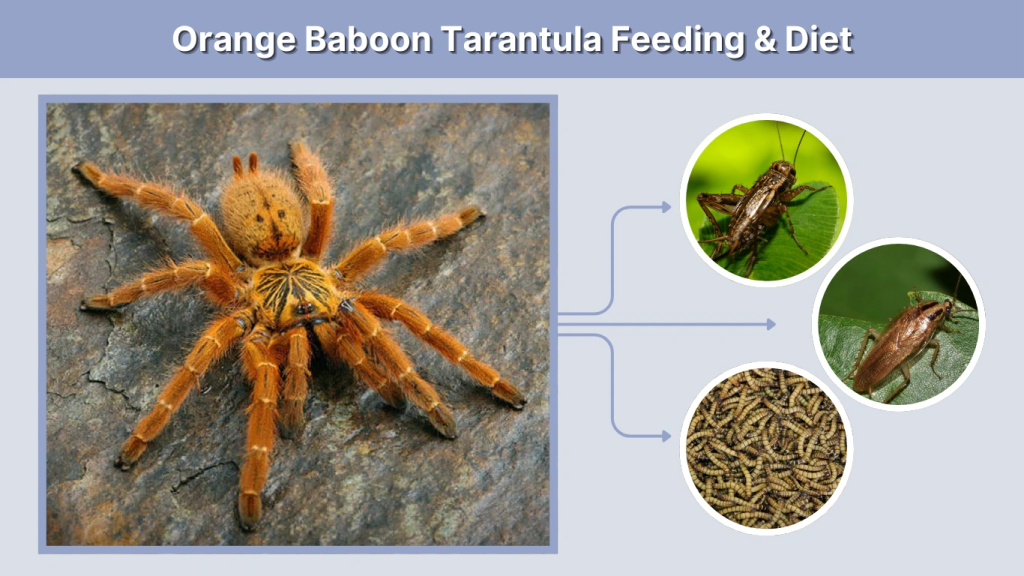
Orange Baboon Tarantulas are carnivorous hunters with a strong feeding response. In captivity, they thrive on a diet of live feeder insects such as crickets, roaches, and mealworms.
- Slings (Spiderlings): Should be fed pinhead crickets or small roaches every 2–3 days.
- Juveniles: Can eat larger crickets or small mealworms 2–3 times per week.
- Adults: Require feeding once or twice weekly, depending on their size.
OBTs often display dramatic hunting behavior, aggressively pouncing on prey. This makes feeding time an exciting aspect of ownership, though caution is needed when opening the enclosure. Overfeeding should be avoided to prevent obesity and health issues.
Reproduction & Gender
Sexual dimorphism is evident in OBTs, with females being larger, bulkier, and longer-lived than males. Males usually have longer legs and smaller abdomens once mature.
- Mating Behavior: Breeding can be risky, as females may attack or consume males. Males must approach cautiously, and even then, survival after mating is not guaranteed.
- Breeding in Captivity: Successful breeding requires careful monitoring. Females create egg sacs with dozens to hundreds of spiderlings, which demand attentive care to ensure survival.
- Maturity: Females reach maturity in about 2–3 years, while males mature faster but live shorter lives after reaching adulthood.
Breeding OBTs is a challenge best left to advanced hobbyists due to the aggressive tendencies and potential danger to the male.
Buying & Selling
The Orange Baboon Tarantula is widely available in the exotic pet trade, but it requires careful consideration before purchase.
- Price Range: Slings often cost $20–$40, while juveniles and adults may range from $60–$100 depending on size, sex, and rarity of locality variations.
- Slings vs. Adults: Many enthusiasts prefer buying slings, as they are cheaper and adapt easily to new enclosures. However, adults provide immediate display value.
- Availability: They are commonly sold online and in reptile expos. In regions such as the Philippines and the U.S., they are a popular choice among collectors.
- Legal Considerations: Ownership legality varies. For example, they are not legal to own in California due to strict exotic animal regulations. Always verify local laws before purchase.
For beginners, the OBT is generally not recommended. Its defensive behavior, venom potency, and fast movements pose challenges that require prior tarantula-keeping experience.
FAQs
What is the lifespan of an Orange Baboon Tarantula?
Females can live 12–15 years, making them a long-term commitment. Males, however, usually live only 3–4 years after maturity.
How venomous is the Orange Baboon Tarantula?
Their venom is medically significant and causes extreme pain, swelling, and muscle cramps. While rarely life-threatening, a bite can lead to days of discomfort.
Can beginners keep Orange Baboon Tarantulas?
No. OBTs are aggressive and defensive, making them unsuitable for beginners. They are best kept by experienced hobbyists who understand handling risks.
What do Orange Baboon Tarantulas eat?
They feed on insects such as crickets, roaches, and mealworms in captivity. In the wild, they hunt small invertebrates and occasionally small vertebrates.
Are Orange Baboon Tarantulas legal to own everywhere?
No. Some regions, such as California, restrict ownership of exotic or venomous arachnids. Always research local laws before purchasing.