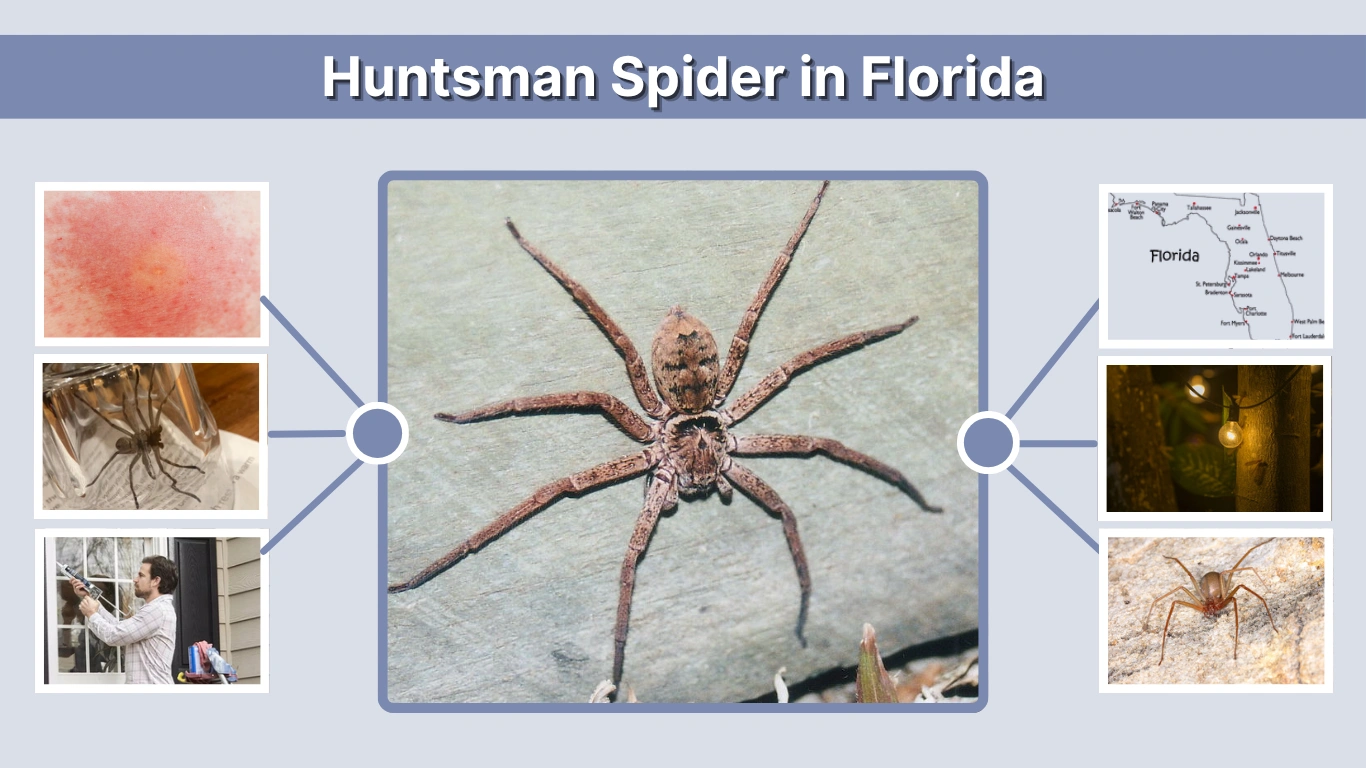
The huntsman spider is one of Florida’s most remarkable arachnids, often startling people with its large size and crab-like stance. Despite their intimidating appearance, these spiders are not dangerous to humans. In fact, they play a useful role in controlling pests. To better understand them, let’s explore their identification, habitat, size, and behavior in Florida.
Identification: Key Features of the Huntsman Spider
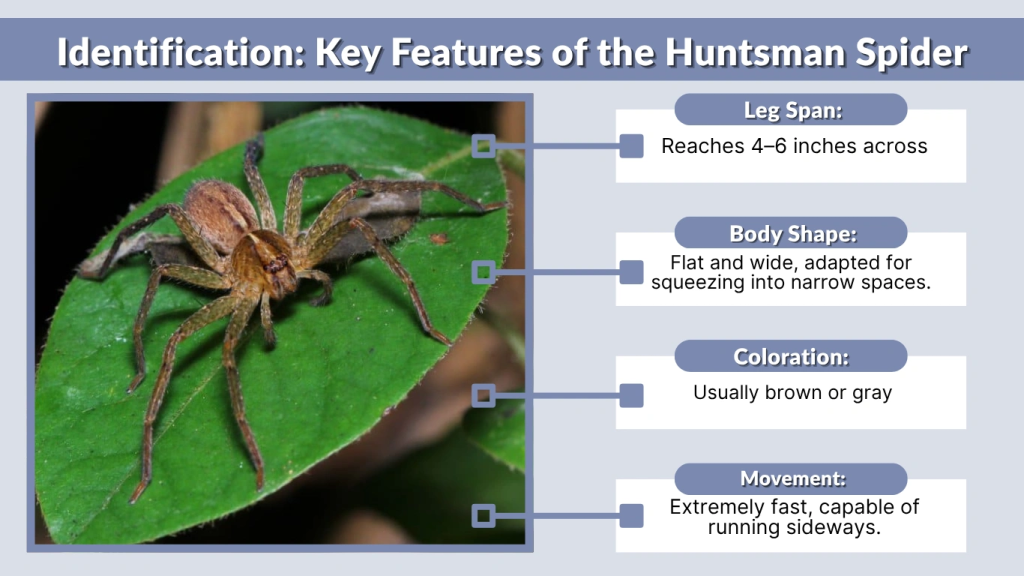
Huntsman spiders are often confused with wolf spiders or banana spiders, but they can be identified by specific traits:
- Leg Span: Reaches 4–6 inches across, with legs extending outward like a crab.
- Body Shape: Flat and wide, adapted for squeezing into narrow spaces.
- Coloration: Usually brown or gray, often with mottled markings for camouflage.
- Movement: Extremely fast, capable of running sideways.
- Hunting Style: Active hunters that do not spin webs to catch prey.
These details make them one of the easiest large spiders to recognize in Florida.
Huntsman Spiders in Florida
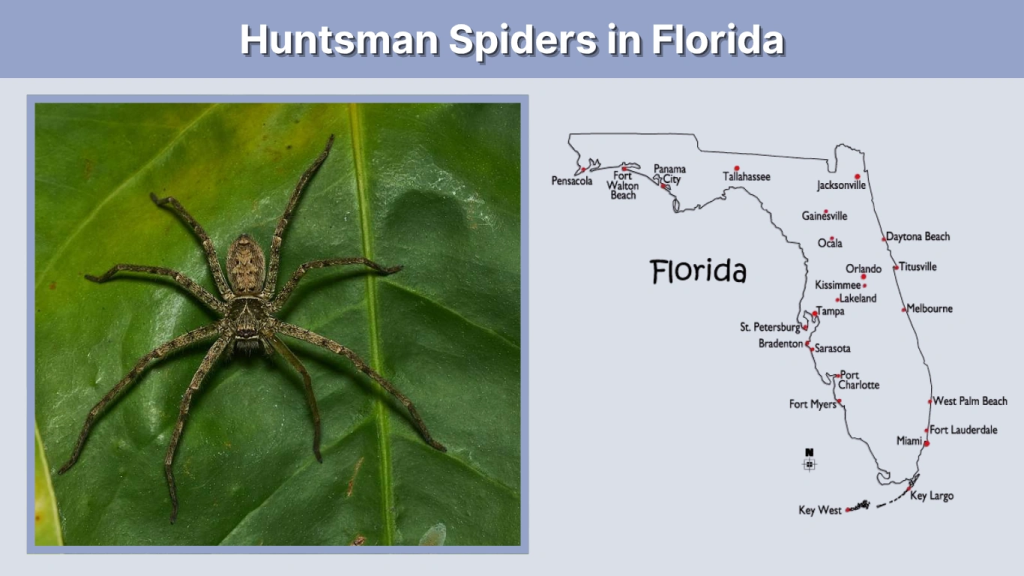
Florida’s subtropical climate provides the ideal environment for huntsman spiders to thrive. Though not originally native, they were likely introduced through cargo shipments and have established themselves in several regions.
They are especially common in Central and South Florida, including Orlando, Tampa, Miami, and Naples. Huntsman spiders adapt to both natural and urban environments, which explains why they are frequently seen in gardens, garages, and sometimes even inside cars. Their ability to blend into human spaces contributes to their frequent encounters with residents.
Florida Huntsman Spider Size
One of the main reasons huntsman spiders grab attention is their size.
- Average Leg Span: Between 4 and 6 inches, making them one of the largest spiders in Florida.
- Female vs. Male: Females tend to be heavier-bodied, while males are leaner and faster.
- Comparison to Australia: Florida’s huntsman spiders are large, but smaller than Australia’s giant huntsman, which can span up to 12 inches.
Although their wide leg span looks intimidating, their bodies are proportionally small, which makes them less bulky than wolf spiders.
Appearance and Color Variations
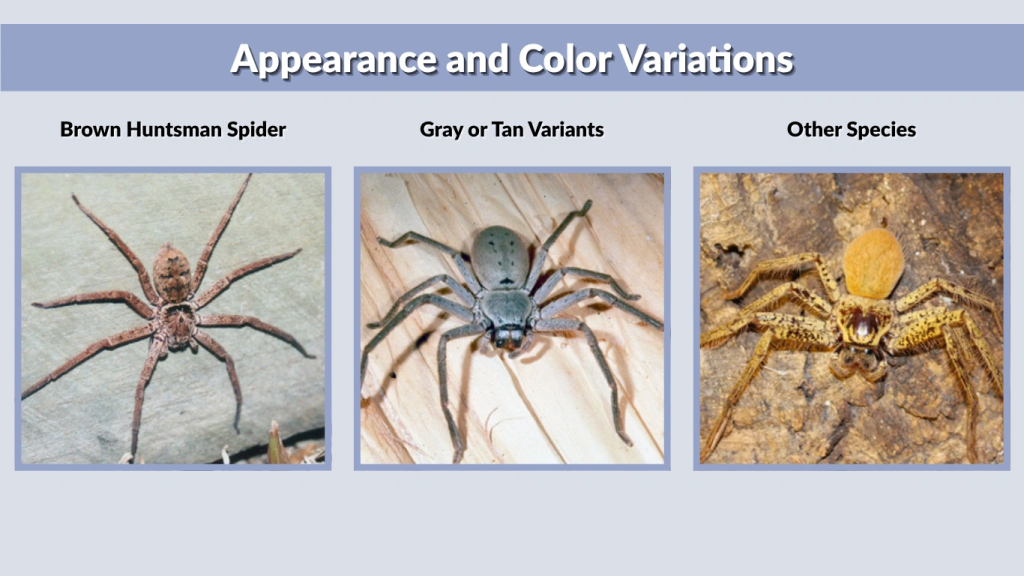
Huntsman spiders in Florida display natural camouflage that helps them remain unnoticed. Most are brown or gray, with subtle mottled patterns that blend into tree bark and wooden structures.
Common Variations
- Brown Huntsman Spider: Frequently found indoors, especially in garages and sheds.
- Gray or Tan Variants: More common outdoors, often hiding under bark or leaves.
- Confusion with Other Species: Many people mistake them for wolf spiders or banana spiders, but the sideways stance and long, crab-like legs reveal their true identity.
This diversity in coloration often leads to misidentification, but the overall shape makes huntsman spiders easy to distinguish once observed closely.
Huntsman Spider Bite in Florida
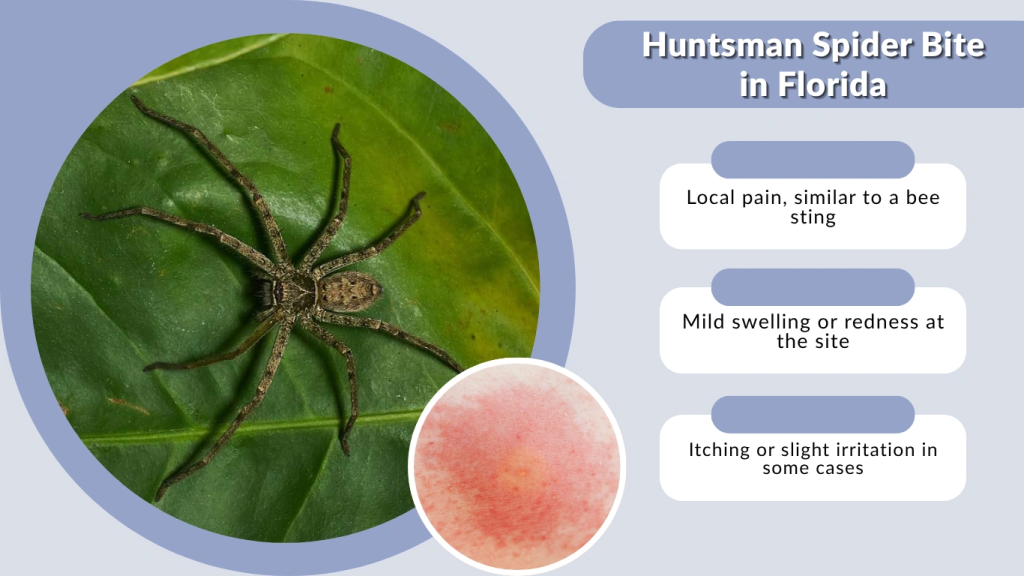
The size of the huntsman spider often raises fears about venom and bites. Like most spiders, they do have venom, but it is designed to immobilize insects, not harm people.
Bite Symptoms
- Local pain, similar to a bee sting
- Mild swelling or redness at the site
- Itching or slight irritation in some cases
Huntsman spider bites are extremely rare and usually occur only when the spider feels trapped. Unlike the brown recluse or black widow, huntsman spiders in Florida are not medically significant, and their bites do not pose serious health risks.
Huntsman Spider Behavior
Huntsman spiders are known for their speed and hunting abilities. Unlike web-building spiders, they chase down prey at night, relying on their agility to capture insects. Their diet includes cockroaches, moths, crickets, and grasshoppers, making them natural pest controllers.
They are shy around humans and will typically flee when disturbed. In Florida, they are often found in garages, gardens, and even inside vehicles, where they seek shelter. With an average lifespan of 2–3 years, females protect their egg sacs until hatching, which sometimes increases sightings during breeding seasons.
Florida Huntsman Spider vs. Other Spiders

Florida has many large spiders, and the huntsman is often mistaken for others. Comparing them side by side helps clarify differences.
- Huntsman vs. Wolf Spider: Huntsman spiders are flatter with long, sideways legs, while wolf spiders are stockier and remain close to the ground. Huntsman spiders climb walls and ceilings; wolf spiders do not.
- Huntsman vs. Banana Spider: Banana spiders (golden orb-weavers) spin large webs and have bright yellow markings. Huntsman spiders do not build webs and are brown or gray.
- Huntsman vs. Recluse Spider: Brown recluse spiders are dangerous due to necrotic venom. Huntsman spiders are harmless, and their bites cause only mild discomfort.
- Huntsman vs. Australian Huntsman: Florida huntsman spiders are large, but Australia’s giant huntsman holds the record with a 12-inch leg span.
Impact on Florida’s Ecosystem
Huntsman spiders play an important ecological role, despite their fearsome appearance. They are natural predators that help keep insect populations balanced.
They feed on cockroaches, moths, crickets, and grasshoppers, reducing pests in homes and gardens. This not only benefits people but also contributes to the health of Florida’s subtropical environment. Birds, reptiles, and small mammals also feed on huntsman spiders, making them part of the food web. While not native, they are not considered harmful to the ecosystem and instead provide pest control benefits.
Common Myths and Misconceptions
Because of their size and speed, huntsman spiders in Florida are surrounded by myths:
- They are deadly to humans: False. Their venom is harmless to people.
- They attack humans or pets: False. They are shy and avoid confrontation.
- They purposely invade cars: False. They enter vehicles by accident while seeking shelter.
- They are invasive threats: False. They help control pests and have blended into Florida’s environment without major disruption.
Clearing up these misconceptions helps reduce fear and allows Floridians to appreciate their ecological role.
Living With Huntsman Spiders in Florida
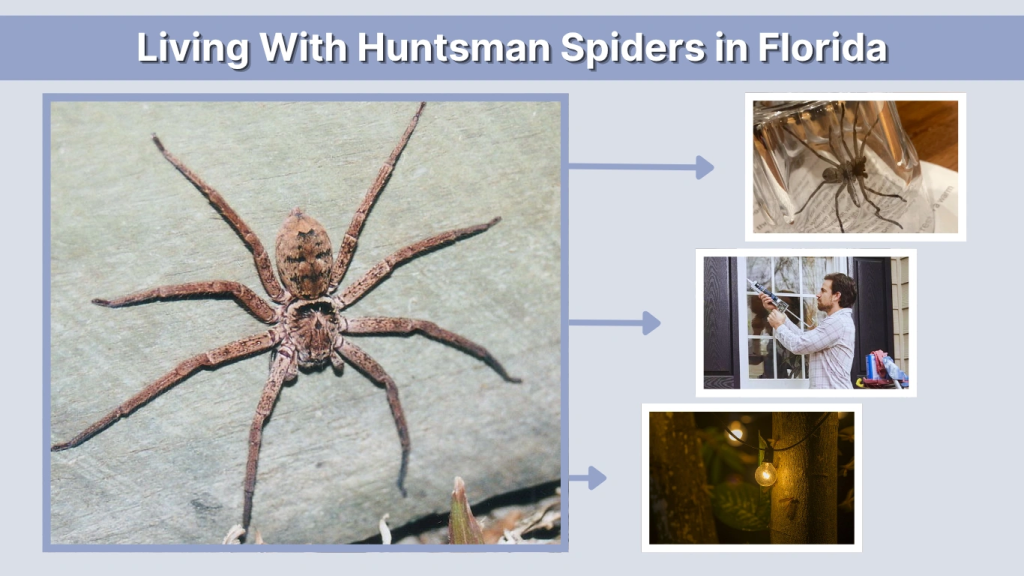
Huntsman spiders may look intimidating, but they are generally harmless roommates. Many homeowners allow them to stay indoors because of their ability to control pests. Still, if removal is necessary, there are safe ways to handle encounters.
- Relocate them using a jar and cardboard, then release outside.
- Seal windows, doors, and gaps to reduce indoor entry.
- Limit outdoor lighting, which attracts insects (and in turn, spiders).
- Keep garages and sheds clutter-free to minimize hiding spots.
Professional pest control is rarely required unless there is a recurring issue indoors. Most of the time, huntsman spiders act as natural pest managers.
FAQs
What is the average size of a huntsman spider in Florida?
Florida huntsman spiders usually span 4–6 inches across, making them one of the largest spiders in the state. Their wide legs give them a crab-like appearance. Females are larger and more robust, while males are leaner but quicker.
Are huntsman spiders in Florida venomous or dangerous?
Yes, huntsman spiders are venomous, but not dangerous to humans. Their venom works on insects, not people. Bites may cause mild pain, swelling, or redness, but they are not medically serious. They should not be confused with recluse or widow spiders.
Where are huntsman spiders found in Florida?
They are common in Central and South Florida, especially in warm, humid areas. Huntsman spiders live in gardens, under bark, inside garages, and sometimes in cars. They thrive in environments where insects are plentiful.
How do huntsman spiders compare to wolf spiders in Florida?
Wolf spiders are shorter, bulkier, and live on the ground, while huntsman spiders are flatter, with longer legs, and climb walls or ceilings. Both are harmless to humans and help reduce pest numbers in Florida.
What role do huntsman spiders play in Florida’s ecosystem?
Huntsman spiders act as natural pest controllers by hunting roaches, crickets, and moths. Their presence reduces pest populations in homes and gardens. They are also prey for birds and reptiles, making them an important link in Florida’s ecological chain.