

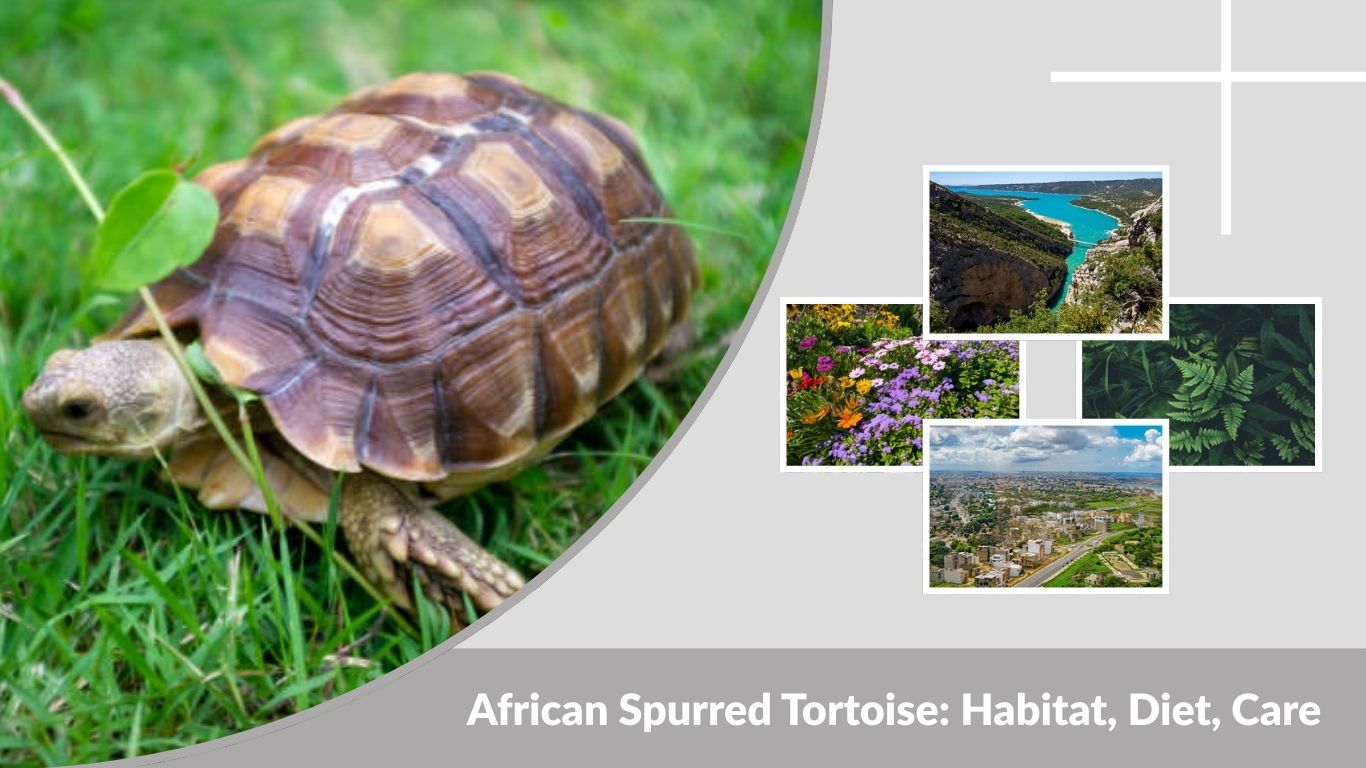
The African spurred tortoise, also known as the Sulcata tortoise, is one of the largest tortoise species in the world. Native to the dry regions of North Africa, this tortoise is well known for its impressive size, strong legs, and long lifespan. Because of its hardy nature and unique appearance, the African spurred tortoise has become a popular reptile among pet enthusiasts. However, caring for this species requires proper knowledge about its habitat, diet, and environmental needs. Understanding these factors helps ensure that these remarkable reptiles can live healthy and long lives.
What Is an African Spurred Tortoise?
The African spurred tortoise (Centrochelys sulcata) is a large land tortoise that originates from the southern edge of the Sahara Desert. It is commonly referred to as the Sulcata tortoise, and it is the third-largest tortoise species in the world. This species is well adapted to hot and dry climates, where it survives by digging burrows and feeding on tough desert vegetation.
Unlike many other tortoise species, the African spurred tortoise grows very quickly and can reach a significant size as an adult. Because of this rapid growth and large body size, potential owners must be prepared to provide plenty of space and long-term care.
Scientific Classification
The African spurred tortoise belongs to the reptile group known as Testudines, which includes turtles and tortoises. Scientists classify it within the tortoise family because it lives entirely on land and has strong, elephant-like legs designed for walking rather than swimming.
Its scientific classification includes:
- Kingdom: Animalia
- Phylum: Chordata
- Class: Reptilia
- Order: Testudines
- Family: Testudinidae
- Genus: Centrochelys
- Species: Centrochelys sulcata
This classification helps researchers understand the evolutionary relationships between different tortoise species.
Overview of the Species
The African spurred tortoise is known for its strength, size, and ability to survive in harsh desert environments. In the wild, these tortoises inhabit regions where temperatures can become extremely hot during the day.
One of their most impressive abilities is their skill at digging deep burrows. These burrows help them escape extreme heat and protect them from predators. Because of this burrowing behavior, African spurred tortoises can survive in areas where other animals might struggle to live.
African Spurred Tortoise Physical Characteristics
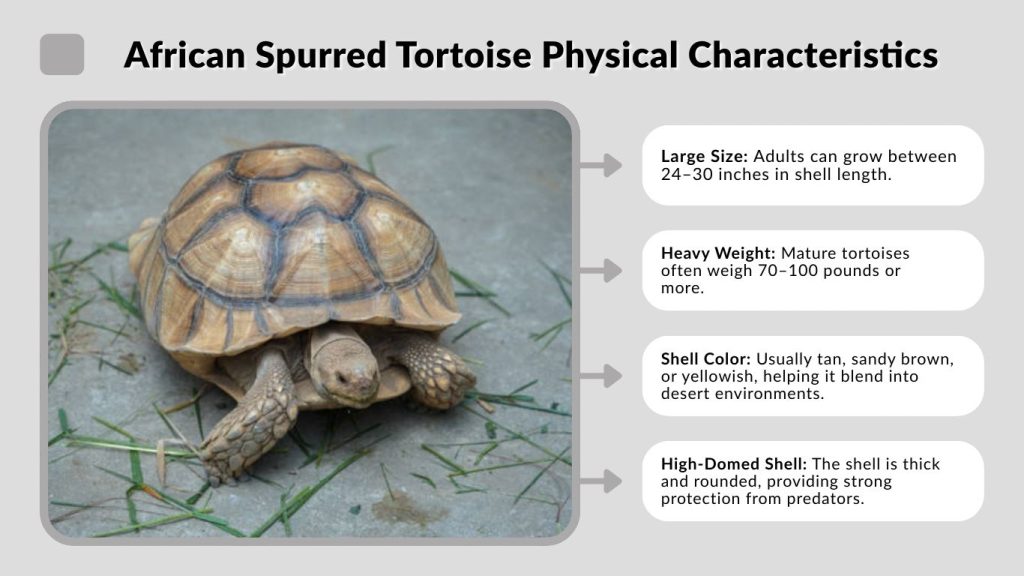
The African spurred tortoise, also known as the Sulcata tortoise, has several distinctive physical features that help it survive in hot and dry environments. It is a large, powerful tortoise with a strong shell and thick, scaly skin designed to protect it from harsh desert conditions. Its sturdy body structure and digging ability allow it to live comfortably in dry grasslands and semi-desert habitats. Below are some of the key physical characteristics that make this tortoise unique.
- Large Size: Adults can grow between 24–30 inches in shell length.
- Heavy Weight: Mature tortoises often weigh 70–100 pounds or more.
- Shell Color: Usually tan, sandy brown, or yellowish, helping it blend into desert environments.
- High-Domed Shell: The shell is thick and rounded, providing strong protection from predators.
- Leg Spurs: Cone-shaped spurs on the hind legs give the tortoise its name.
- Strong Legs: Thick, elephant-like legs designed for digging and walking on rough terrain.
- Rough, Scaly Skin: Helps protect the body and reduce moisture loss in hot climates.
- Large Head and Beak: Strong beak used for biting and chewing tough plant material.
These physical adaptations allow the African spurred tortoise to survive in challenging environments while supporting its large body and long lifespan.
African Spurred Tortoise Habitat
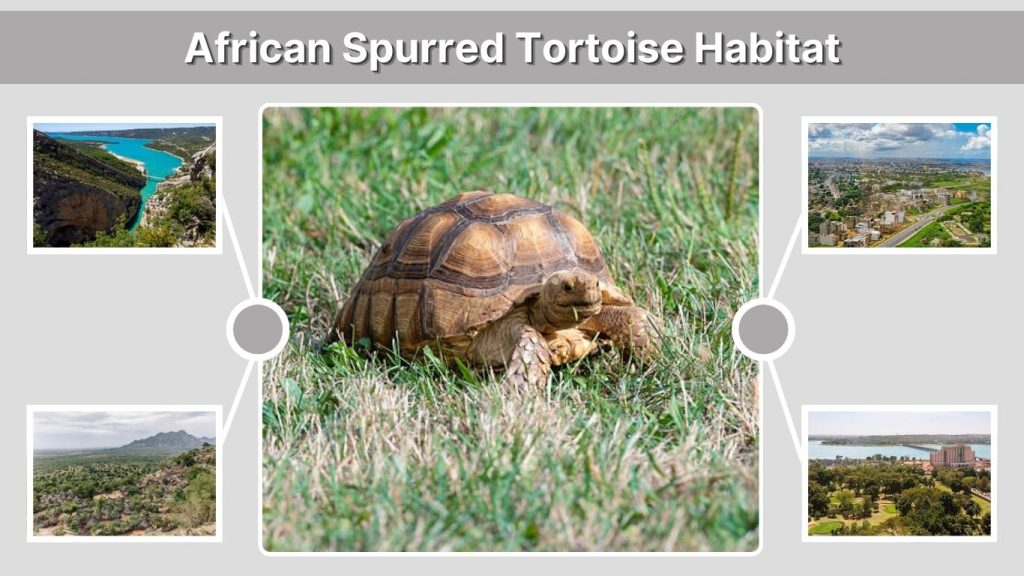
The African spurred tortoise naturally lives in dry and arid regions of Africa, particularly near the southern edge of the Sahara Desert. These tortoises have evolved to survive in areas where rainfall is limited and temperatures can become extremely hot.
Their environment usually consists of open landscapes with scattered vegetation. These areas provide enough plant life for food while also offering loose soil where the tortoises can dig burrows.
Natural Habitat in the Wild
In the wild, African spurred tortoises are commonly found in semi-arid grasslands and desert edges. These regions are known for their warm climates and dry conditions.
Countries where they are often found include:
- Senegal
- Mali
- Chad
- Sudan
- Ethiopia
These locations form part of the Sahel region, a large belt of land that lies between the Sahara Desert and the savanna grasslands further south.
Environment They Prefer
African spurred tortoises thrive in environments that provide warm temperatures and dry soil. Their preferred habitats typically include:
- Dry grasslands
- Semi-desert landscapes
- Areas with sandy or loose soil
Loose soil is especially important because these tortoises rely on digging burrows to regulate their body temperature. By staying underground during the hottest part of the day, they can avoid overheating.
These habitats allow them to find food while also providing protection from extreme weather conditions.
African Spurred Tortoise Diet
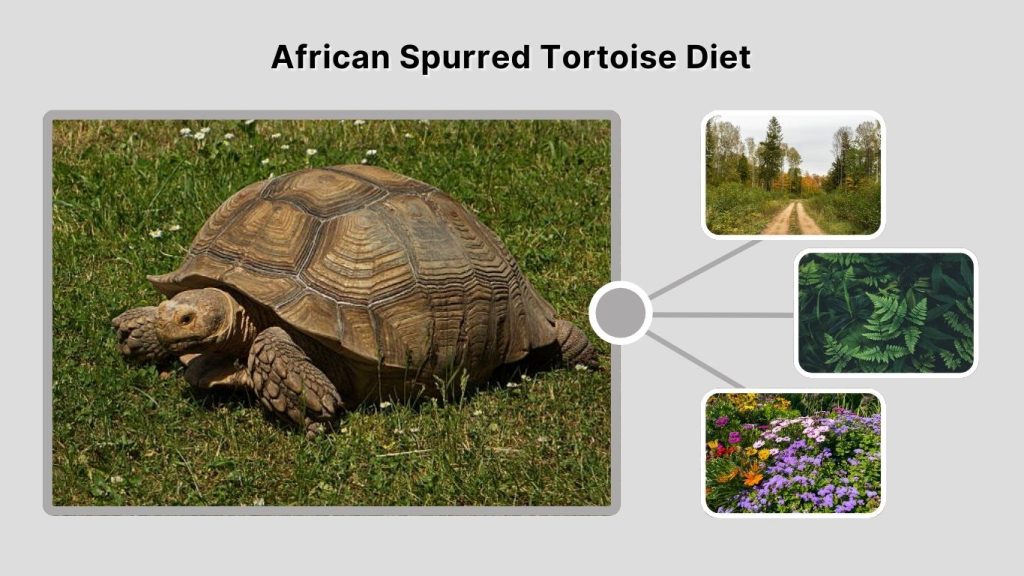
The African spurred tortoise is a herbivorous reptile, meaning it feeds almost entirely on plant material. In the wild, these tortoises consume a wide variety of grasses, leaves, and other vegetation that grow in their natural habitat. Their digestive system is specially adapted to process high-fiber plant foods, which provide the nutrients they need to survive in dry environments.
Because food can be scarce in desert regions, African spurred tortoises have developed the ability to eat tough plants that many other animals avoid. Their strong jaws allow them to chew fibrous vegetation, while their slow metabolism helps them conserve energy.
Natural Diet in the Wild
In their natural habitat, African spurred tortoises mainly feed on grasses and low-growing plants. These foods contain the fiber and nutrients needed for healthy shell growth and digestion.
Common foods they eat in the wild include:
- Various desert grasses
- Leaves from shrubs and weeds
- Flowering plants
- Succulents and cactus pads
These plants also provide a small amount of moisture, which is important because water sources can be limited in their natural environment.
Common Foods in Captivity
When kept as pets, African spurred tortoises should be fed a diet that closely resembles what they would eat in the wild. A proper diet helps maintain healthy growth and prevents shell problems.
Recommended foods include:
- Grass and hay (such as timothy or orchard grass)
- Leafy greens like collard greens and mustard greens
- Weeds such as dandelion leaves
- Edible flowers like hibiscus
Providing a high-fiber diet is essential for maintaining good digestive health.
Foods to Avoid
Some foods can harm African spurred tortoises and should not be given regularly. These foods can lead to health problems or improper shell growth.
Foods to avoid include:
- High-protein foods
- Animal products
- Excess sugary fruits
- Processed human foods
A balanced, plant-based diet is the best way to keep these tortoises healthy.
African Spurred Tortoise Care
Although African spurred tortoises are hardy animals, they require proper care and a suitable environment to remain healthy. Because they grow very large and live for many decades, owners must be prepared for a long-term commitment.
Providing the right housing, temperature, and nutrition is essential for the well-being of this species.
Housing Requirements
African spurred tortoises need a large space to move around and explore. Small enclosures are not suitable for adult tortoises because of their size.
Proper housing should include:
- A spacious outdoor enclosure when possible
- Strong fencing to prevent escape
- Areas of shade for protection from heat
- Dry soil for digging and burrowing
These tortoises are powerful diggers, so enclosures must be designed carefully to prevent them from digging under fences.
Temperature and Lighting
Because this species originates from hot regions, maintaining proper temperature is extremely important.
Ideal conditions include:
- Daytime temperatures between 80°F and 100°F
- Access to a warm basking area
- UVB lighting for indoor enclosures
UVB light helps tortoises produce vitamin D3, which allows them to absorb calcium and maintain strong shells.
Diet and Feeding in Captivity
Feeding a balanced diet is one of the most important aspects of caring for an African spurred tortoise.
Basic care guidelines include:
- Provide high-fiber plant foods daily
- Offer fresh water at all times
- Add calcium supplements when needed
- Avoid overfeeding sugary fruits
Proper nutrition supports healthy shell development and long-term health.
African Spurred Tortoise Lifespan
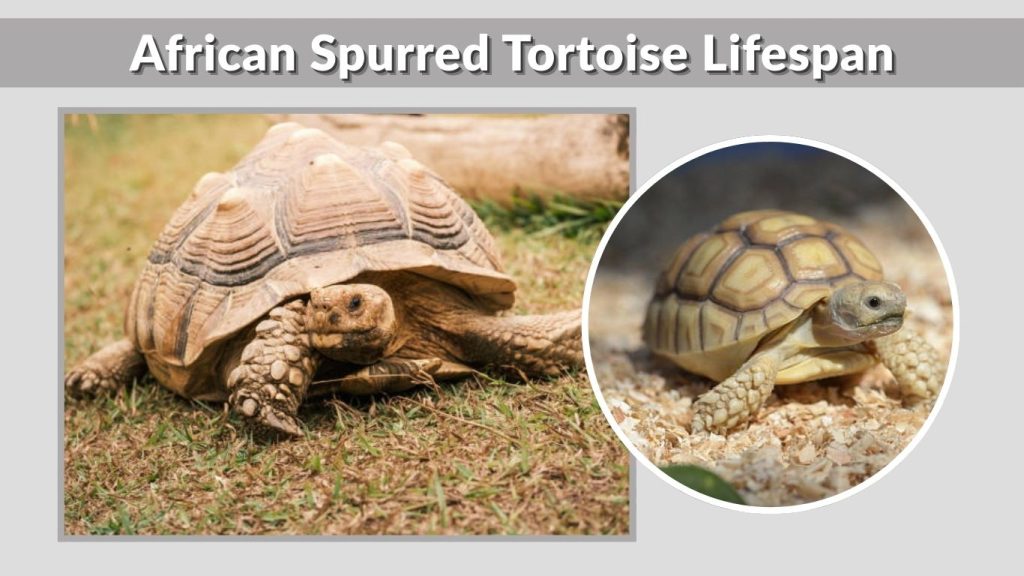
One of the most remarkable characteristics of the African spurred tortoise is its long lifespan. These tortoises can live for many decades, making them a lifelong commitment for anyone who chooses to keep one as a pet.
How Long Do African Spurred Tortoises Live?
On average, African spurred tortoises can live 50 to 70 years. In some cases, individuals have been known to live 80 years or even longer when provided with excellent care.
Their long lifespan is one reason why potential owners should carefully consider the responsibilities involved in keeping such a long-lived animal.
Factors That Affect Lifespan
Several factors can influence how long an African spurred tortoise lives.
Important factors include:
- Proper nutrition and diet
- A suitable living environment
- Access to sunlight or UVB lighting
- Regular health care and monitoring
Tortoises that receive proper care and a balanced diet are much more likely to live long, healthy lives.
African Spurred Tortoise Facts
The African spurred tortoise is a fascinating reptile with many unique traits. Here are some interesting facts about this species:
- It is the third-largest tortoise species in the world.
- These tortoises can dig burrows that are several feet deep.
- They can survive in extremely hot and dry climates.
- African spurred tortoises can grow very large compared to most pet tortoises.
- Their strong shells provide excellent protection from predators.
These remarkable characteristics make the African spurred tortoise one of the most interesting reptiles found in Africa.
Conservation Status
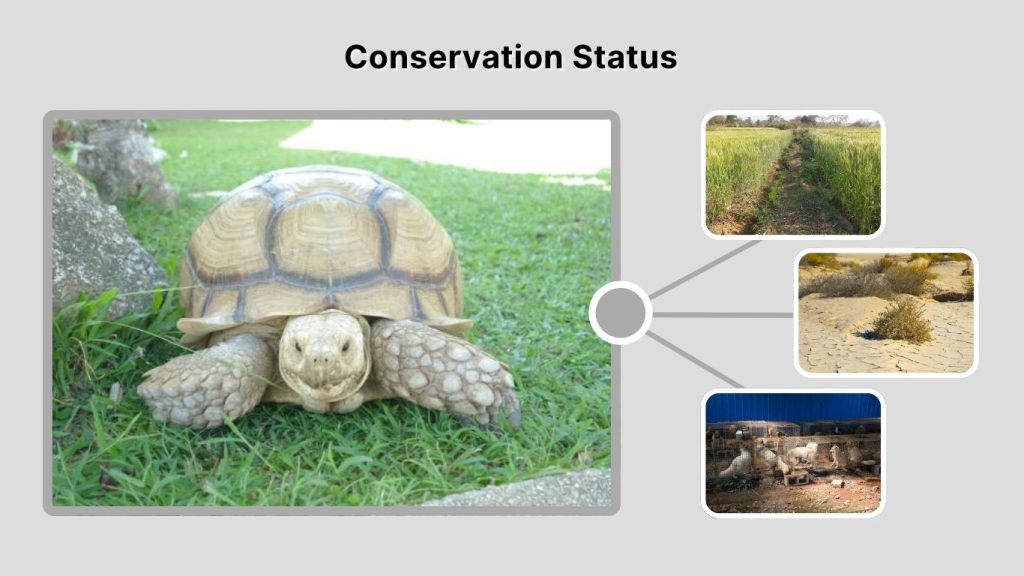
Although African spurred tortoises are still found in the wild, their populations are facing several challenges. Environmental changes and human activities are affecting their natural habitats.
Threats in the Wild
Some of the main threats to this species include:
- Habitat loss due to agriculture
- Climate change affecting desert ecosystems
- Capture for the illegal pet trade
These factors can reduce wild populations if not properly managed.
Conservation Efforts
Conservation organizations and wildlife experts are working to protect African spurred tortoises through habitat protection and education.
Important conservation efforts include:
- Protecting natural habitats
- Promoting responsible pet ownership
- Supporting wildlife conservation programs
Conclusion
The African spurred tortoise is a remarkable reptile known for its large size, long lifespan, and ability to survive in harsh desert environments. Native to the dry regions of Africa, this species has adapted to life in hot climates through its strong shell, powerful legs, and burrowing behavior. Its herbivorous diet and unique lifestyle make it an important part of its natural ecosystem. However, keeping this tortoise as a pet requires proper knowledge, space, and long-term commitment. By understanding its habitat, diet, and care requirements, people can help ensure that the African spurred tortoise continues to thrive both in the wild and in captivity.