



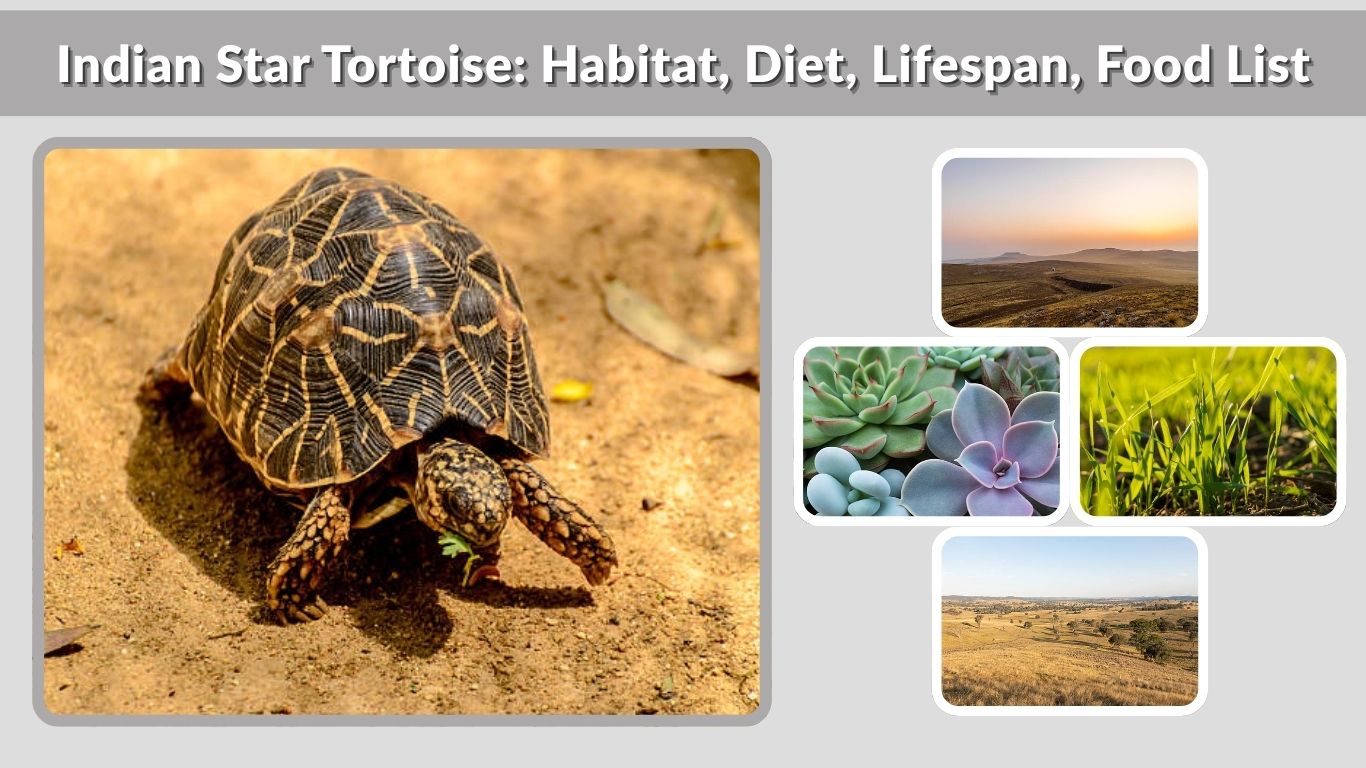
The Indian star tortoise (Geochelone elegans) is one of the most beautiful tortoise species in the world. It is famous for the striking star-shaped patterns on its shell, which give the tortoise its name. Native to India, Sri Lanka, and parts of Pakistan, this tortoise lives in dry grasslands and scrub forests where it feeds mainly on plants. Because of its unique appearance and calm nature, the Indian star tortoise is popular among reptile enthusiasts. However, understanding its habitat, diet, and behavior is important for protecting this fascinating species in the wild.
What Is an Indian Star Tortoise?
The Indian star tortoise is a small to medium-sized land tortoise belonging to the Testudinidae family, which includes all true tortoises. This species is well known for its decorative shell pattern that features yellow star-like lines radiating from the center of each scute.
These tortoises are adapted to warm climates and are commonly found in areas with dry vegetation. They are generally slow-moving animals that spend much of their time grazing on plants and resting under vegetation to avoid excessive heat.
Scientific Classification
Like all tortoises, the Indian star tortoise belongs to the reptile order Testudines, a group that includes turtles and tortoises with protective shells.
The scientific classification of the Indian star tortoise is as follows:
- Kingdom: Animalia
- Phylum: Chordata
- Class: Reptilia
- Order: Testudines
- Family: Testudinidae
- Genus: Geochelone
- Species: Geochelone elegans
This classification helps scientists understand how the Indian star tortoise is related to other tortoise species around the world.
Overview of the Species
Indian star tortoises are admired for their distinctive shell design and gentle behavior. Their unique star pattern helps camouflage them among dry grasses and vegetation.
These tortoises are most active during cooler parts of the day, such as early morning or late afternoon. During very hot conditions, they often seek shelter under bushes, rocks, or shaded areas.
Their ability to survive in dry environments makes them well adapted to the climates of South Asia.
Indian Star Tortoise Physical Characteristics
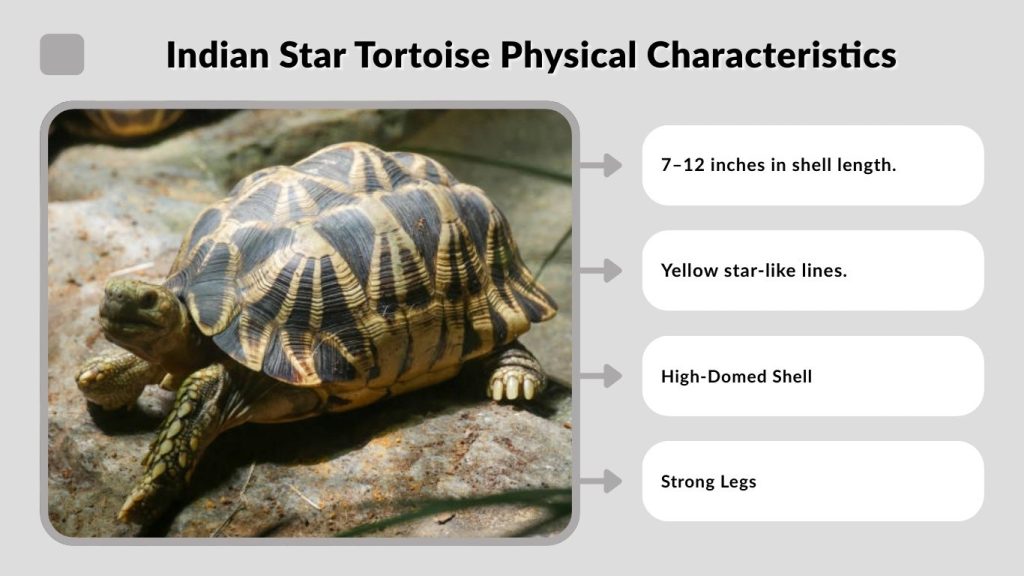
The Indian star tortoise is famous for its striking shell pattern and compact body structure. Its physical features help it survive in warm, dry environments where protection and mobility are important. The tortoise’s high-domed shell, sturdy legs, and unique star-like markings make it one of the most recognizable tortoise species in the world. Below are some key physical characteristics of the Indian star tortoise.
- Medium Size: Adults typically grow between 7–12 inches in shell length.
- Star-Shaped Shell Pattern: Bright yellow star-like lines radiate across a dark brown or black shell.
- High-Domed Shell: The shell is tall and rounded, providing strong protection from predators.
- Strong Legs: Thick legs adapted for walking on dry and rough terrain.
- Scaly Skin: Tough skin that protects the body and reduces moisture loss.
- Compact Body: A sturdy body structure suited for slow movement and grazing.
- Hard Protective Shell: The shell acts as natural armor against environmental hazards.
- Small Head with Strong Beak: Used for biting and chewing plants and grasses.
These physical traits allow the Indian star tortoise to thrive in dry grasslands and scrub forests while maintaining its distinctive and beautiful appearance.
Indian Star Tortoise Habitat
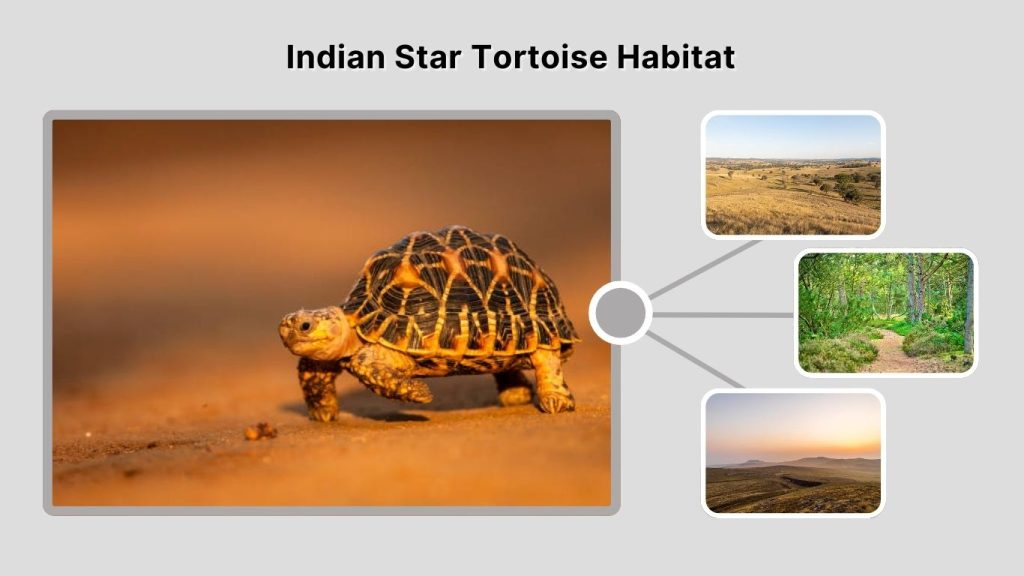
The Indian star tortoise naturally lives in warm and dry regions of South Asia. Its habitat includes areas with sparse vegetation where it can easily find food and shelter.
These tortoises are well adapted to environments that experience seasonal rainfall and long dry periods.
Natural Habitat in the Wild
In the wild, Indian star tortoises are mainly found in India, Sri Lanka, and parts of Pakistan. These regions offer the warm climate and vegetation that the tortoise needs to survive.
They are commonly found in:
- Dry grasslands
- Scrub forests
- Semi-arid environments
These landscapes provide a variety of plants that serve as food sources for the tortoise.
Preferred Environment
Indian star tortoises prefer environments where they can find both food and shelter. Their ideal habitats often include areas with:
- Low grasses and shrubs
- Loose soil for movement
- Vegetation that provides shade
During extremely hot weather, these tortoises often hide under plants or in shaded areas to regulate their body temperature.
Climate Adaptations
Indian star tortoises are well adapted to the warm climates of South Asia. Their bodies are designed to handle hot temperatures and dry conditions.
They usually remain active during the cooler parts of the day and rest during the hottest hours. This behavior helps them conserve energy and avoid overheating.
Indian Star Tortoise Diet
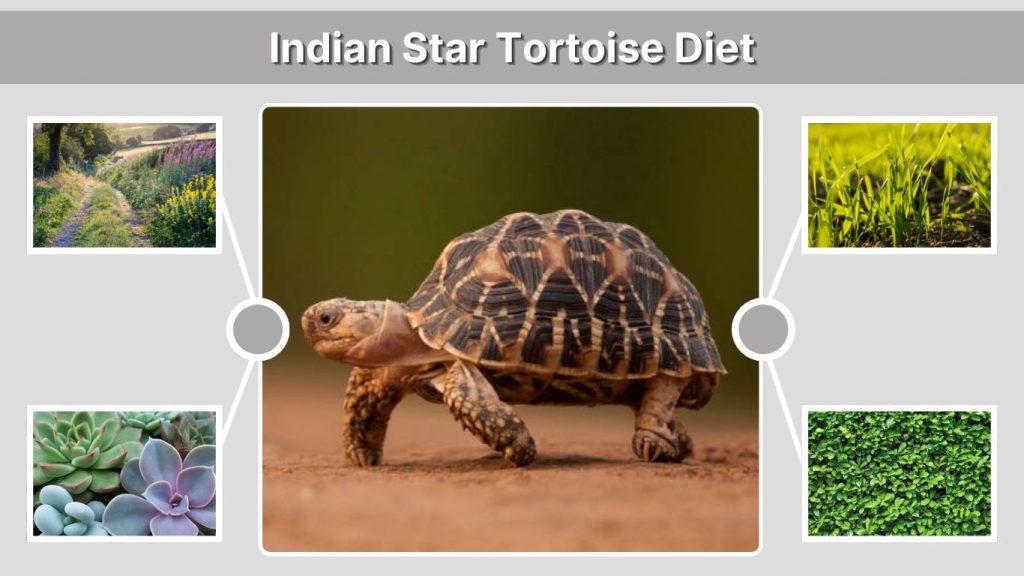
The Indian star tortoise is a herbivorous reptile, meaning it eats only plant-based foods. In the wild, these tortoises graze on a variety of grasses, leaves, flowers, and other vegetation. Their digestive system is designed to process high-fiber plant material, which supports healthy shell growth and overall health.
Because they live in dry regions, Indian star tortoises often feed on plants that grow in grasslands and scrub forests. Their strong beaks allow them to bite and chew tough vegetation.
What Do Indian Star Tortoises Eat in the Wild?
In their natural environment, Indian star tortoises feed on a wide variety of plants that grow in dry landscapes. Their diet mainly includes low-growing vegetation that is rich in fiber and nutrients.
Common foods eaten in the wild include:
- Natural grasses
- Leaves from shrubs and plants
- Wild flowers
- Succulent plants
- Small weeds
These foods provide the nutrients necessary for energy, growth, and shell development.
Indian Star Tortoise Food List
When kept in captivity, the diet of an Indian star tortoise should closely resemble the foods it eats in the wild. A healthy diet should focus on leafy greens and fibrous plants.
A typical Indian star tortoise food list may include:
- Dandelion greens
- Collard greens
- Mustard greens
- Hibiscus leaves and flowers
- Clover
- Grass and hay
Providing a variety of foods ensures the tortoise receives balanced nutrition.
Foods to Avoid
Some foods can be harmful to Indian star tortoises and should not be fed regularly.
These include:
- High-protein foods
- Animal products
- Excess sugary fruits
- Processed human foods
Maintaining a high-fiber, plant-based diet is the best way to keep an Indian star tortoise healthy.
Indian Star Tortoise Lifespan
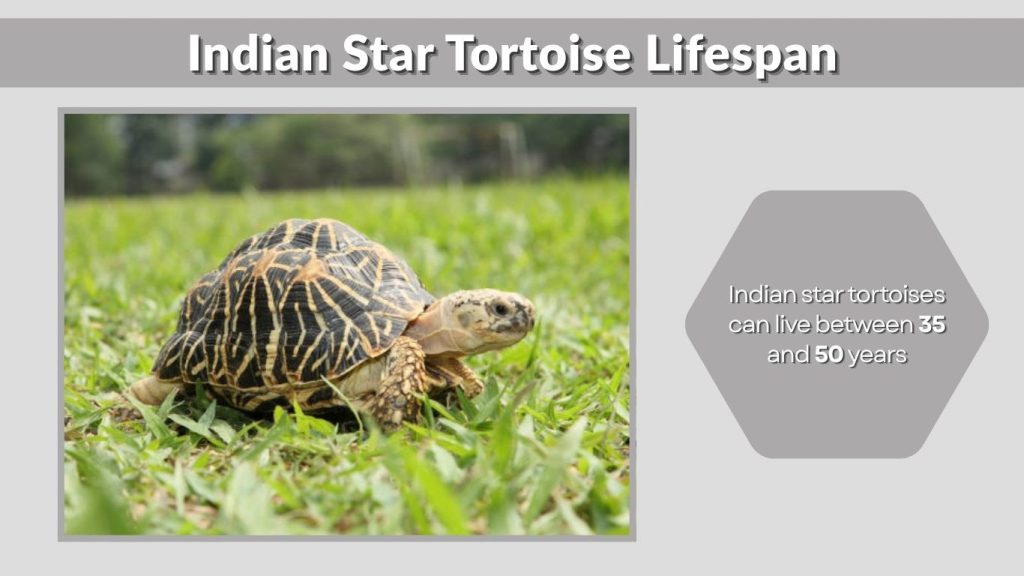
Indian star tortoises are known for their long lifespan, especially when they are kept in suitable conditions and provided with proper care.
How Long Do Indian Star Tortoises Live?
On average, Indian star tortoises can live between 35 and 50 years. In some cases, individuals may live even longer when provided with a healthy diet and proper environment.
Their slow metabolism and protective shells contribute to their long lifespan.
Factors That Affect Lifespan
Several factors influence how long an Indian star tortoise will live.
Important factors include:
- A balanced diet rich in fiber
- A suitable habitat with proper temperature
- Access to sunlight or UVB lighting
- Protection from disease and predators
Proper care greatly increases the chances that a tortoise will live a long and healthy life.
Indian Star Tortoise Behavior
Indian star tortoises display several behaviors that help them survive in their natural habitat. They are generally calm reptiles and spend much of their time grazing or resting.
Daily Activity
These tortoises are most active during the morning and late afternoon when temperatures are cooler. During these periods, they move around in search of food and bask in sunlight.
When temperatures become too high, they usually rest in shaded areas or under vegetation.
Temperament
Indian star tortoises are generally shy and peaceful animals. They rarely show aggressive behavior and prefer to avoid danger by hiding.
Because of their calm temperament, they are often admired by reptile enthusiasts.
Indian Star Tortoise Facts
The Indian star tortoise is one of the most fascinating tortoise species in the world. Here are some interesting facts about this reptile:
- It is famous for its star-shaped shell pattern.
- Indian star tortoises are native to South Asia, especially India and Sri Lanka.
- They are primarily herbivores that feed on grasses and plants.
- These tortoises can live for several decades with proper care.
- They are often threatened by illegal wildlife trade.
Conservation Status
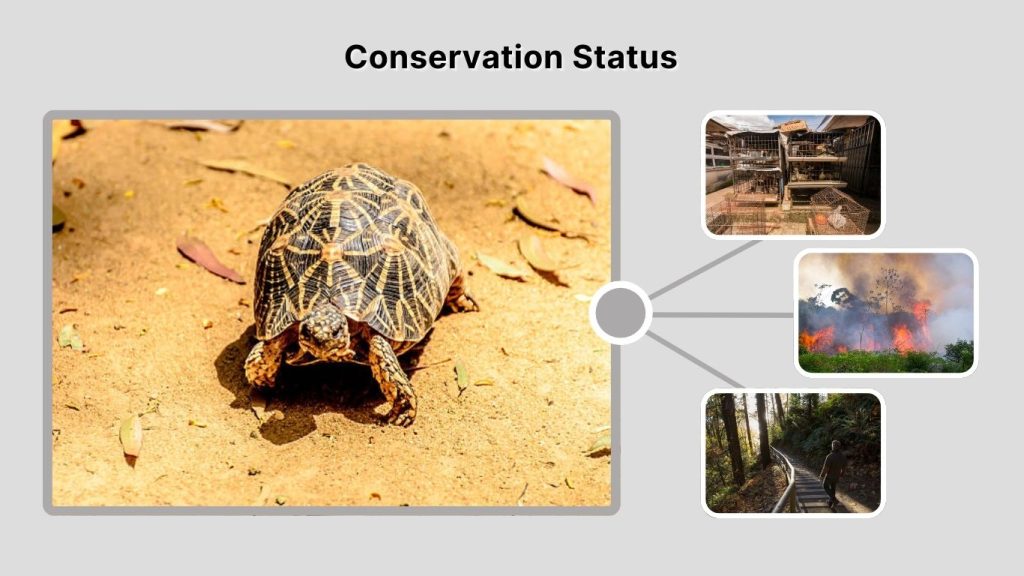
Although the Indian star tortoise is widely known, its wild populations face several challenges due to human activities.
Threats in the Wild
Some of the main threats include:
- Illegal pet trade
- Habitat destruction
- Environmental changes
These factors can reduce the number of tortoises in the wild if proper protection measures are not taken.
Conservation Efforts
Various conservation programs aim to protect Indian star tortoises by promoting wildlife protection laws and raising awareness about the importance of preserving natural habitats.
Protecting these tortoises ensures that future generations can continue to admire this beautiful species.
Conclusion
The Indian star tortoise is a remarkable reptile known for its stunning shell patterns and calm behavior. Native to the dry regions of South Asia, it has adapted well to warm climates and plant-based diets. Its relatively small size and unique appearance make it one of the most admired tortoise species in the world. However, protecting its natural habitat and preventing illegal trade are important for its survival. By understanding the habitat, diet, lifespan, and behavior of the Indian star tortoise, people can better appreciate and protect this fascinating animal.