




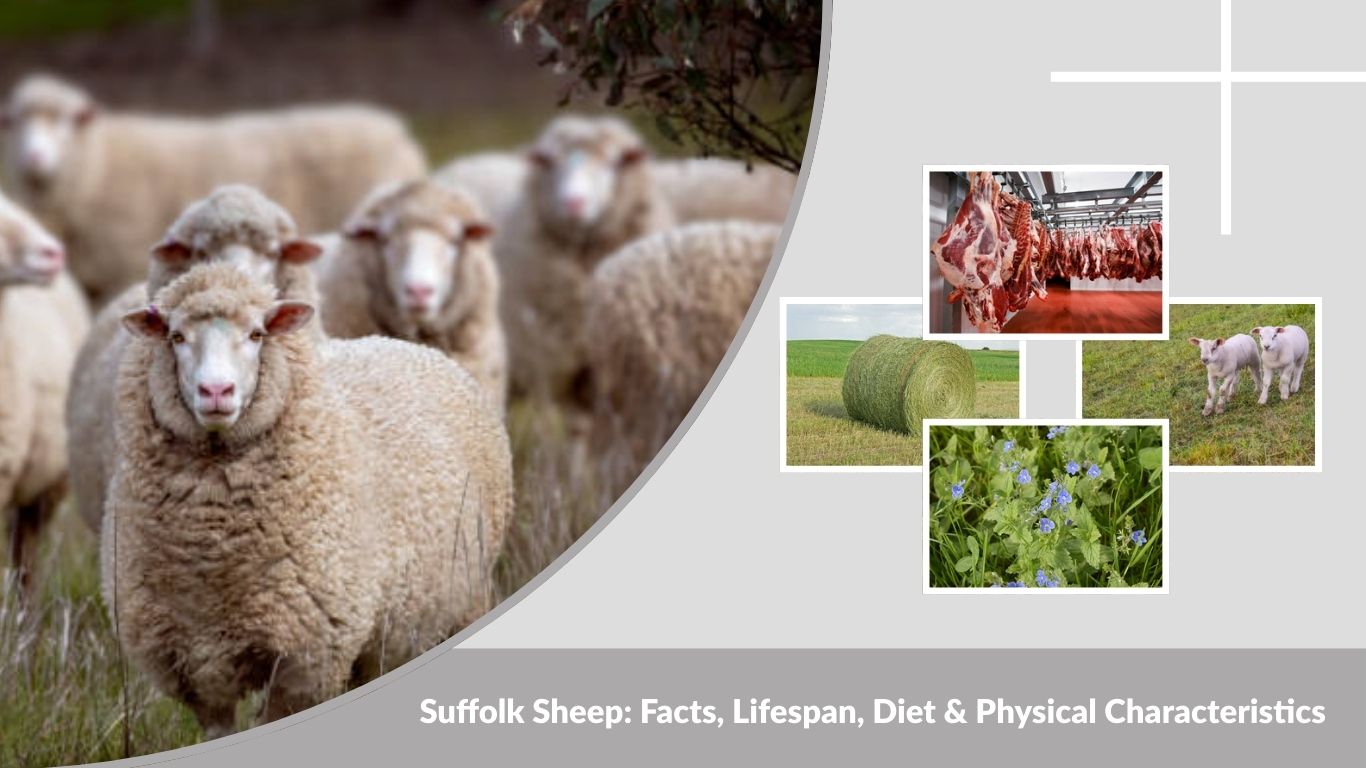
The Suffolk sheep is one of the most well-known and widely raised sheep breeds in the world. Recognized for its black face, black legs, and white wool body, this breed is especially valued for meat production. Suffolk sheep originated in England and have become popular in many countries due to their fast growth, strong build, and high-quality lamb meat. Farmers often choose Suffolk sheep for commercial farming because they are hardy animals that grow quickly and adapt well to different environments.
What Are Suffolk Sheep?
The Suffolk sheep is a domesticated sheep breed belonging to the species Ovis aries. It is part of the Bovidae family, which includes other livestock animals such as goats, cattle, and antelope.
Suffolk sheep are known for their excellent meat production and strong body structure. They are considered a terminal sire breed, meaning they are often used in breeding programs to produce lambs with superior meat quality and rapid growth.
Because of their productive qualities, Suffolk sheep are widely used in commercial sheep farming systems around the world.
These sheep are also known for their calm temperament and ability to thrive in pasture-based farming environments.
History and Origin of Suffolk Sheep
The Suffolk sheep breed has a long history that began in England and later spread around the world.
Development in England
Suffolk sheep were originally developed in Suffolk county in eastern England during the late 18th century.
The breed was created by crossing Southdown rams with Norfolk Horn ewes. This combination produced sheep that had both strong meat production and hardy grazing ability.
Over time, farmers continued selective breeding to improve the sheep’s growth rate, muscle development, and overall productivity.
Spread Around the World
During the 19th century, Suffolk sheep began to spread beyond England. They were introduced to countries such as the United States, Australia, and New Zealand.
Because of their ability to produce high-quality lamb meat and grow quickly, the breed became very popular among sheep farmers.
Today, Suffolk sheep are raised in many parts of the world and are considered one of the most important meat-producing sheep breeds.
Modern Breeding
Modern Suffolk sheep breeding programs focus on improving traits such as:
- Growth rate
- Muscle development
- Feed efficiency
- Lamb production
These improvements help farmers produce lambs that reach market weight quickly while maintaining high meat quality.
Suffolk Sheep Physical Characteristics
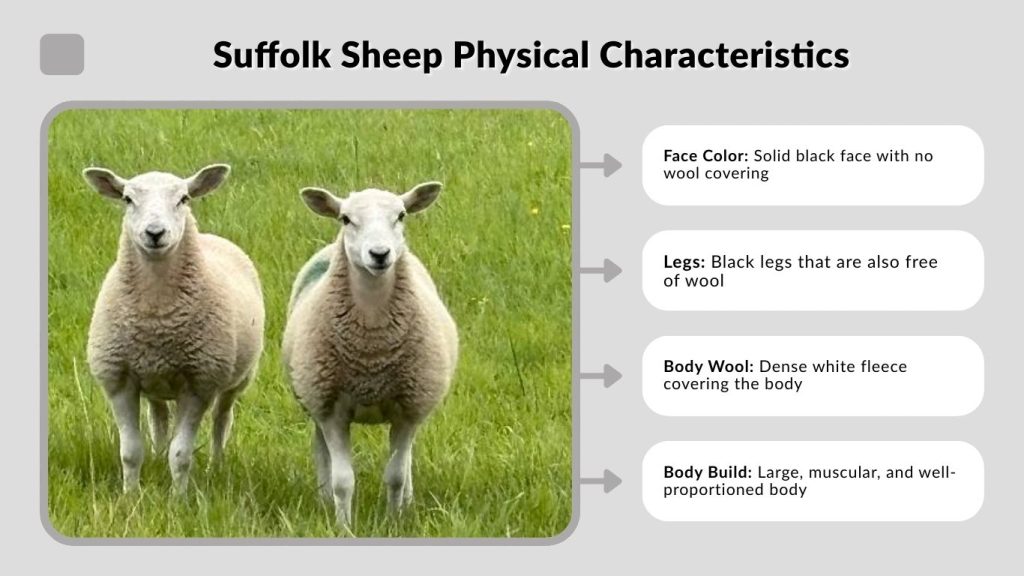
Suffolk sheep are easily recognized by their distinct black face, black legs, and white wool-covered body. This breed is known for its large, muscular build, which makes it one of the most popular sheep breeds for meat production. Suffolk sheep have strong frames and broad bodies that support rapid growth and efficient weight gain. Their physical traits are specifically valued in livestock farming because they contribute to high-quality lamb production and overall productivity.
Key Physical Characteristics
- Face Color: Solid black face with no wool covering
- Legs: Black legs that are also free of wool
- Body Wool: Dense white fleece covering the body
- Body Build: Large, muscular, and well-proportioned body
- Head Shape: Long head with a straight profile
- Horns: Naturally polled (hornless)
- Chest: Broad chest and deep body structure
- Back: Strong and wide back supporting muscle development
- Size: Medium to large sheep breed
- Growth Rate: Fast-growing lambs with strong muscle formation
These physical characteristics make Suffolk sheep one of the most recognizable and productive meat sheep breeds in the livestock industry.
Suffolk Sheep Habitat and Farming

Suffolk sheep are highly adaptable animals that can live in many different environments. They are most commonly raised in grassland and pasture-based farming systems where they can graze on natural vegetation.
Where Are Suffolk Sheep Raised?
Today, Suffolk sheep are raised in many countries around the world, including:
- United Kingdom
- United States
- Australia
- New Zealand
- Canada
Because of their adaptability and productive qualities, the breed has become very popular in commercial sheep farming.
Preferred Environment
Suffolk sheep thrive in environments with open grazing areas and abundant pasture grass. These conditions allow them to grow quickly while maintaining good health.
They perform well in temperate climates, but they can also adapt to a variety of farming conditions.
Adaptability
One of the reasons Suffolk sheep are widely used in farming is their ability to adapt to different environments. They are strong grazers and can efficiently convert pasture into body weight and muscle.
Their hardy nature allows them to remain productive even in changing farming conditions.
Suffolk Sheep Diet
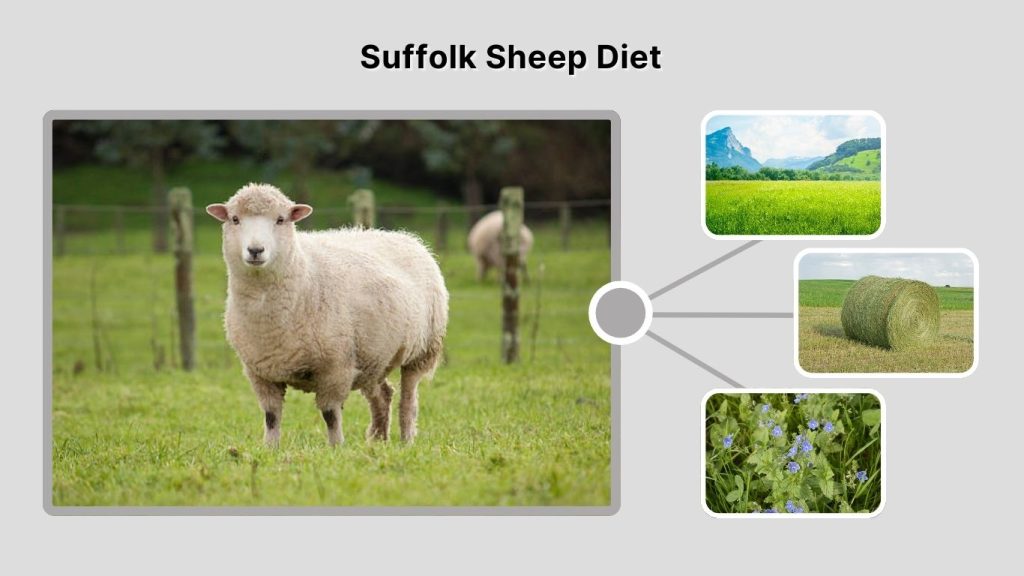
The Suffolk sheep diet mainly consists of plant-based foods because they are herbivores. Proper nutrition is important to support their growth, health, and meat production.
What Do Suffolk Sheep Eat?
Suffolk sheep commonly feed on:
- Fresh pasture grass
- Hay and forage
- Clover and other pasture plants
- Grain supplements when necessary
These foods provide the nutrients needed for growth and energy.
Nutritional Needs
Suffolk sheep require a balanced diet that includes:
- Protein for muscle development
- Fiber for proper digestion
- Minerals and vitamins for overall health
- Fresh water for hydration
Farmers often monitor feed quality carefully to ensure that the sheep remain healthy and productive.
Suffolk Sheep Lifespan
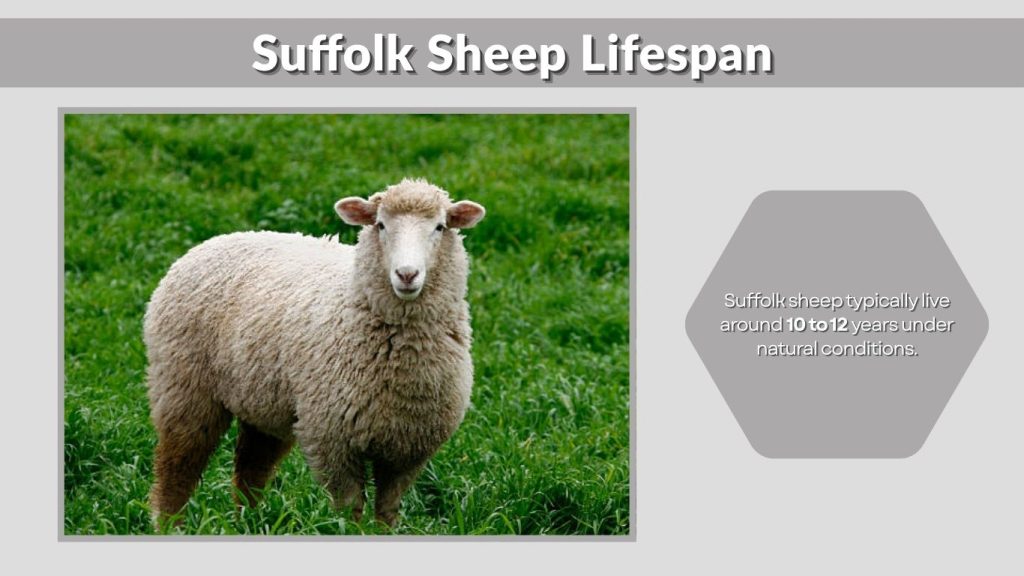
The Suffolk sheep lifespan can vary depending on factors such as nutrition, farming practices, and health care. In general, Suffolk sheep can live for several years when properly cared for, although many sheep raised for meat production may not live their full natural lifespan.
Average Lifespan
Suffolk sheep typically live around 10 to 12 years under natural conditions. However, in commercial farming systems, sheep are often raised mainly for meat production, so they may be kept for a shorter period.
Breeding ewes may remain productive for several years, producing lambs annually before being retired from breeding programs.
Factors Affecting Lifespan
Several factors influence how long Suffolk sheep live, including:
- Quality of diet and nutrition
- Veterinary care and disease prevention
- Housing and environmental conditions
- Parasite control and management practices
Proper farm management and regular health monitoring can significantly improve the longevity and well-being of Suffolk sheep.
Lifespan in Farming Systems
In farming systems, Suffolk sheep are often managed based on their productivity. Rams and ewes used for breeding may live longer, while lambs raised for meat production are usually sold earlier.
Even though their production lifespan may be shorter, healthy management ensures that sheep remain strong and productive during their active years.
Suffolk Sheep Farming and Uses
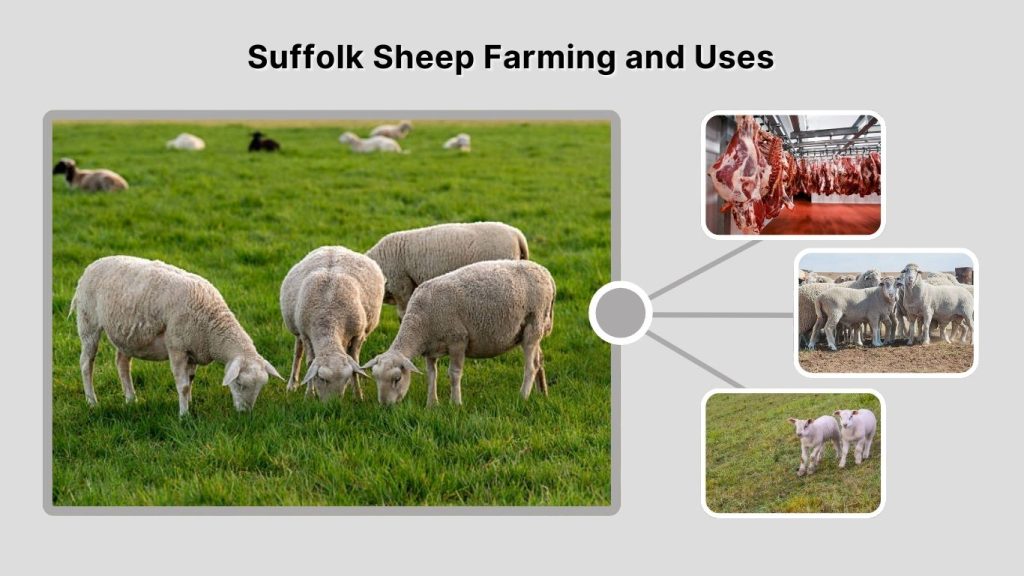
Suffolk sheep are primarily raised for meat production, but they also play an important role in breeding programs used to improve other sheep breeds.
Meat Production
One of the main reasons farmers raise Suffolk sheep is their ability to produce high-quality lamb meat. Suffolk lambs grow quickly and develop strong muscle structure, making them ideal for commercial meat production.
Their meat is known for being lean, tender, and flavorful, which makes it popular in many markets.
Breeding Programs
Suffolk sheep are commonly used as terminal sires in breeding programs. This means they are bred with other sheep breeds to produce lambs that grow quickly and have excellent meat quality.
Crossbreeding with Suffolk rams can improve:
- Growth rate
- Carcass quality
- Meat production efficiency
Because of these advantages, Suffolk sheep are widely used in modern livestock breeding systems.
Farming Benefits
Raising Suffolk sheep offers several advantages to farmers:
- Fast growth rate of lambs
- Strong and muscular body structure
- Good adaptation to grazing systems
- High demand for Suffolk lamb meat
These benefits make Suffolk sheep one of the most valuable sheep breeds used in meat production.
Interesting Suffolk Sheep Facts
Suffolk sheep have several interesting characteristics that make them unique among sheep breeds:
- Suffolk sheep are easily recognized by their black face and black legs.
- They are one of the most widely used terminal sire breeds in sheep farming.
- Suffolk lambs grow quickly and can reach market weight faster than many other breeds.
- The breed is known for producing high-quality lamb meat with strong muscle development.
These traits have helped Suffolk sheep become one of the most popular sheep breeds used in modern agriculture.
FAQs
What are Suffolk sheep used for?
Suffolk sheep are mainly raised for meat production, but they are also used in breeding programs to improve other sheep breeds.
How long do Suffolk sheep live?
Suffolk sheep can live about 10–12 years, although those raised for meat production are usually kept for a shorter time.
What do Suffolk sheep eat?
Suffolk sheep eat grass, hay, forage plants, and sometimes grain supplements.
What are the physical characteristics of Suffolk sheep?
Suffolk sheep are known for their black face, black legs, white wool body, muscular build, and hornless heads.