




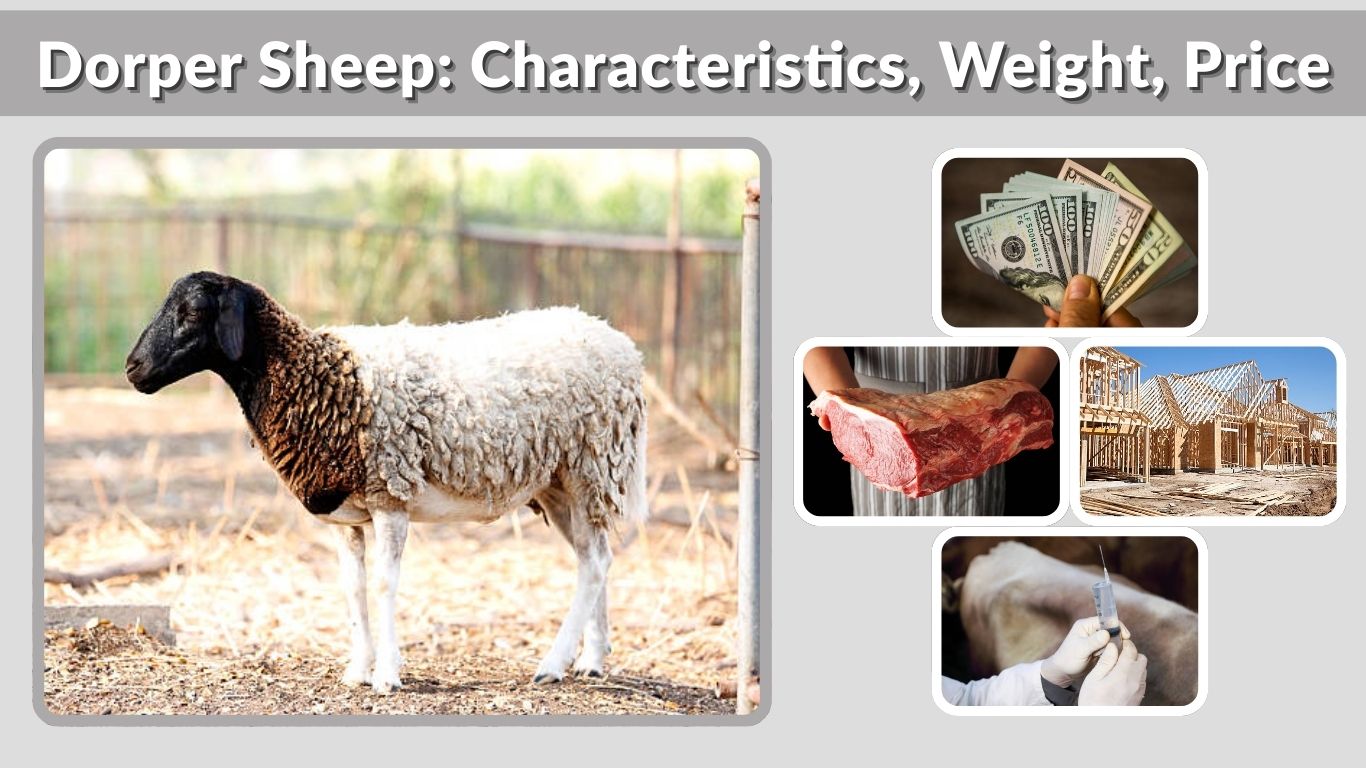
Dorper sheep is one of the most popular meat sheep breeds in the world, known for its fast growth, excellent meat quality, and strong adaptability. Originally developed in South Africa, this breed has gained global recognition among farmers because it thrives in harsh climates and requires minimal management. Dorper sheep are highly productive, making them an ideal choice for commercial meat production. In this guide, we will explore Dorper sheep characteristics, advantages, farming methods, and other essential information for beginners and experienced farmers.
What is Dorper Sheep?
Dorper sheep is a well-known meat-producing sheep breed developed specifically to survive in arid and semi-arid regions. Due to its ability to grow quickly and produce high-quality meat, the breed has become extremely popular in sheep farming industries across many countries.
Origin and History
Dorper sheep originated in South Africa during the 1930s. Farmers wanted a breed that could survive in harsh environments while producing excellent meat. To achieve this, breeders crossed two different sheep breeds:
- Dorset Horn sheep
- Blackhead Persian sheep
The result was a hardy sheep breed that combines the fast growth of Dorset Horn with the heat tolerance and resilience of Blackhead Persian. The name Dorper itself comes from the combination of these two breeds (Dor-set and Per-sian).
Why Dorper Sheep is Popular Worldwide
Dorper sheep quickly became popular beyond South Africa because of several unique advantages. Farmers in many countries prefer this breed due to its efficiency and productivity.
Some reasons for its global popularity include:
- Rapid growth and early maturity
- High-quality meat production
- Ability to adapt to different climates
- Strong disease resistance
- Low maintenance requirements
Because of these benefits, Dorper sheep are now raised in countries such as the United States, Australia, India, and many parts of Africa and Asia.
Dorper Sheep Characteristics
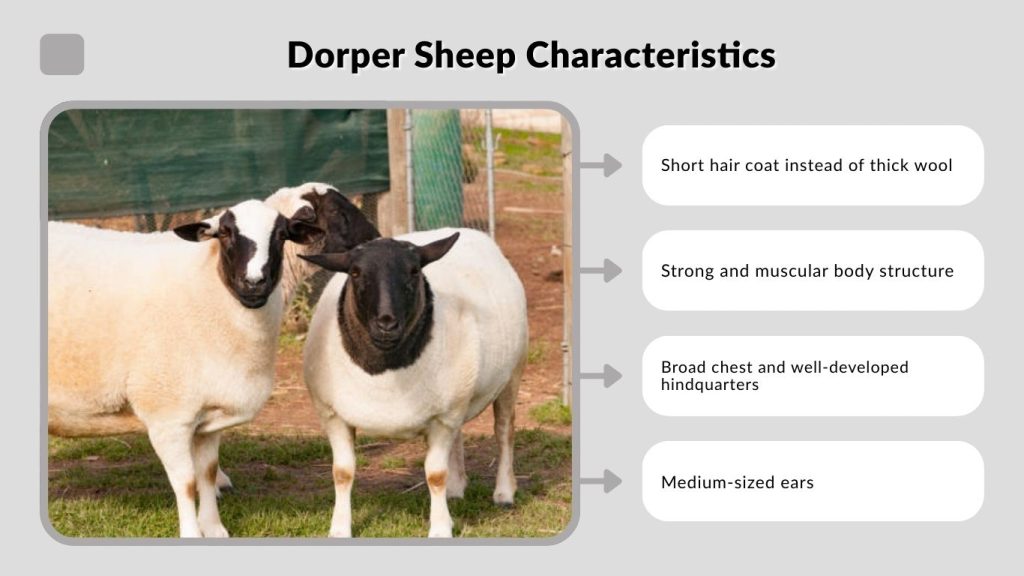
Dorper sheep have several unique characteristics that make them easy to recognize and ideal for meat production.
Physical Appearance
Dorper sheep have a distinctive and attractive appearance. Most Dorper sheep have a black head with a white body, although there is also a white Dorper variety that is completely white.
Key physical features include:
- Short hair coat instead of thick wool
- Strong and muscular body structure
- Broad chest and well-developed hindquarters
- Medium-sized ears
- Smooth coat that sheds naturally
Because they are considered hair sheep, Dorper sheep usually do not require regular shearing like wool breeds. Their coat naturally sheds during warmer seasons, reducing maintenance costs for farmers.
Body Weight
Dorper sheep are known for their impressive body weight and fast growth rate. They gain weight quickly compared to many other sheep breeds, making them highly profitable for meat production.
Typical body weights include:
- Adult ram weight: 90–120 kg
- Adult ewe weight: 60–80 kg
- Lamb growth rate: very rapid during the first few months
Under proper feeding and management conditions, Dorper lambs can reach market weight much faster than traditional sheep breeds.
Lifespan
Dorper sheep generally live for 10 to 12 years under good farming conditions. However, their most productive years are usually within the first 6 to 8 years of life.
During these productive years, ewes can produce multiple lambs, contributing significantly to farm profitability.
Dorper Sheep Advantages
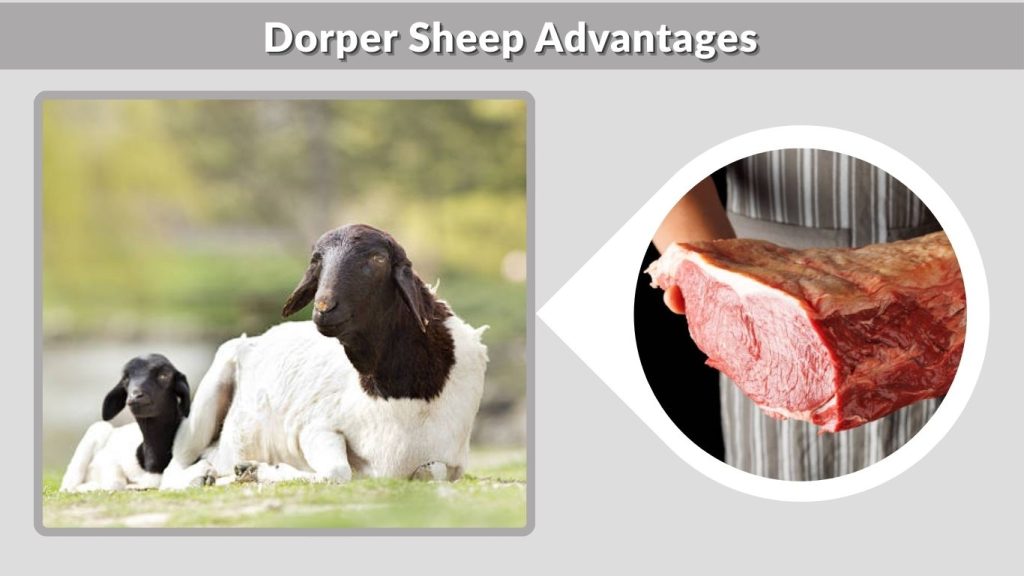
Dorper sheep offer many benefits that make them an excellent choice for both small-scale and commercial farmers.
Fast Growth Rate
One of the biggest advantages of Dorper sheep is their rapid growth. Lambs grow quickly and reach market weight faster than many other breeds.
Benefits of their fast growth include:
- Earlier market readiness
- Lower feeding costs per kilogram of meat
- Higher annual production
This growth efficiency is one of the main reasons why Dorper sheep are widely used for meat production.
Excellent Meat Quality
Dorper sheep produce high-quality, tender meat that is widely preferred in many markets. The meat has a good balance of lean muscle and fat, giving it a rich flavor.
Important qualities of Dorper meat include:
- Tender texture
- Mild flavor
- High dressing percentage
- Good carcass yield
Because of these qualities, Dorper lamb meat often sells at a premium price in many regions.
High Fertility Rate
Another advantage of Dorper sheep is their strong reproductive performance. Ewes are capable of producing lambs regularly and often give birth to twins.
Key reproductive benefits include:
- High lambing percentage
- Twinning ability
- Short lambing intervals
- Strong maternal instincts
These characteristics help farmers increase flock size quickly and improve overall productivity.
Low Maintenance
Dorper sheep are known for being easy to manage compared to many traditional sheep breeds.
Their low maintenance requirements include:
- Minimal shearing due to hair coat
- Strong resistance to harsh climates
- Ability to survive on natural pasture
These qualities make Dorper sheep ideal for farmers who want a hardy breed that requires less labor and management.
Dorper Sheep Farming Guide

Dorper sheep farming can be highly profitable when proper management practices are followed. This breed is well known for its ability to adapt to different environments, making it suitable for both small-scale and commercial farming. However, farmers must ensure proper housing, feeding, and healthcare to maintain healthy animals and achieve maximum production.
Housing Requirements
Although Dorper sheep are hardy animals, providing proper shelter is still important for their health and productivity. A well-designed sheep house protects the animals from extreme weather conditions such as heavy rain, strong winds, and excessive heat.
Important housing considerations include:
- Dry and clean shelter: The floor should remain dry to prevent disease and parasite problems.
- Good ventilation: Proper airflow reduces humidity and keeps sheep comfortable.
- Adequate space: Overcrowding should be avoided to reduce stress and disease transmission.
- Protection from predators: Strong fencing and secure housing help keep sheep safe.
In general, each adult sheep requires approximately 1.2 to 1.5 square meters of space inside the shelter.
Feeding Management
Proper nutrition plays a major role in the growth and productivity of Dorper sheep. Fortunately, Dorper sheep are excellent grazers and can survive well on natural pasture.
Common feed sources include:
- Natural grass and pasture
- Legume plants
- Hay and silage
- Grain supplements
- Mineral and vitamin mixtures
While grazing provides most of the nutrients, farmers often provide additional feed to improve growth rates, especially for lambs and pregnant ewes.
Fresh, clean water should always be available. An adult Dorper sheep may drink 3–5 liters of water per day, depending on the weather and feeding conditions.
Health Management
Maintaining good health is essential for successful sheep farming. Regular health checks and preventive care help reduce disease risks.
Important health management practices include:
- Routine vaccination programs
- Regular deworming to control parasites
- Maintaining clean housing conditions
- Monitoring sheep for signs of illness
Some common diseases that may affect sheep include foot rot, internal parasites, and respiratory infections. Early detection and veterinary treatment are important to prevent major losses.
Dorper Sheep Breeding
Dorper sheep are well known for their excellent reproductive performance. Their strong fertility and good mothering ability make them a valuable breed for flock expansion.
Breeding Age
Dorper sheep reach sexual maturity relatively early.
Typical breeding ages include:
- Rams: Around 5–6 months of age
- Ewes: Around 7–8 months of age
However, many farmers prefer to breed ewes when they reach adequate body weight to ensure healthy lambs.
Gestation Period
The gestation period of Dorper sheep is approximately 150 days, which is similar to most sheep breeds. After this period, the ewe gives birth to one or more lambs.
Many Dorper ewes give birth to twins, which increases flock productivity and profitability.
Lambing Management
Proper care during lambing is very important for the survival and health of newborn lambs.
Key lambing management practices include:
- Providing a clean and quiet lambing area
- Monitoring pregnant ewes closely
- Ensuring lambs receive colostrum (first milk) immediately after birth
- Keeping newborn lambs warm and dry
Good lamb management significantly improves survival rates and growth performance.
Dorper Sheep Price
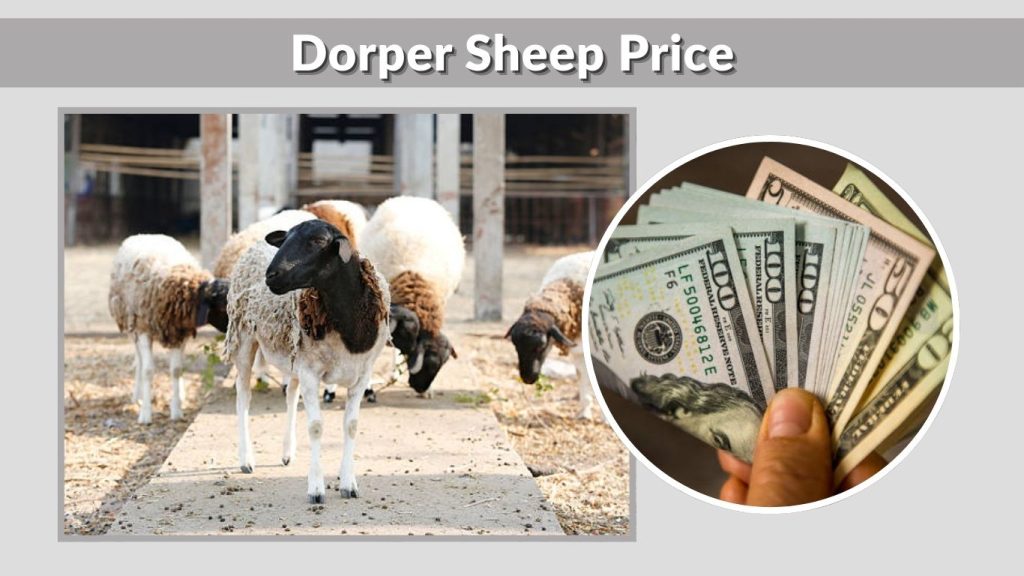
The price of Dorper sheep varies depending on factors such as age, weight, breed quality, and location. Purebred Dorper sheep generally cost more than crossbred sheep because of their superior genetic traits.
Dorper Sheep Price by Country
Prices may vary widely across different countries. Approximate prices include:
- United States: $300 – $800 per sheep
- South Africa: $200 – $600 per sheep
- India: ₹20,000 – ₹60,000 depending on quality
- Bangladesh: ৳30,000 – ৳80,000 depending on size and purity
These prices may change depending on market demand and breeding quality.
Factors Affecting Price
Several factors influence the price of Dorper sheep:
- Age of the sheep
- Body weight and health condition
- Genetic purity and pedigree
- Farm reputation and breeding quality
Farmers looking to start a Dorper sheep farm should always purchase healthy animals from reliable breeders.
Dorper Sheep Farming Profitability

Dorper sheep farming can be very profitable due to the breed’s fast growth, strong reproduction, and high meat demand.
Cost of Farming
The main costs involved in Dorper sheep farming include:
- Housing construction
- Feed and pasture management
- Veterinary care and vaccinations
- Labor and farm management
Proper planning helps farmers reduce costs and improve efficiency.
Profit Potential
Dorper sheep farming offers several profit advantages:
- Fast growth allows earlier sale of lambs
- High-quality meat has strong market demand
- High fertility increases flock size quickly
- Lower maintenance reduces operating costs
Many farmers choose Dorper sheep because they can produce multiple lambs each year while maintaining strong growth performance.
Conclusion
Dorper sheep are widely considered one of the best breeds for meat production. Their fast growth, excellent meat quality, strong adaptability, and high fertility make them a valuable option for farmers around the world. With proper housing, nutrition, healthcare, and breeding management, Dorper sheep farming can become a highly profitable agricultural business. Whether you are a beginner or an experienced livestock farmer, investing in Dorper sheep can provide long-term benefits and sustainable income.