



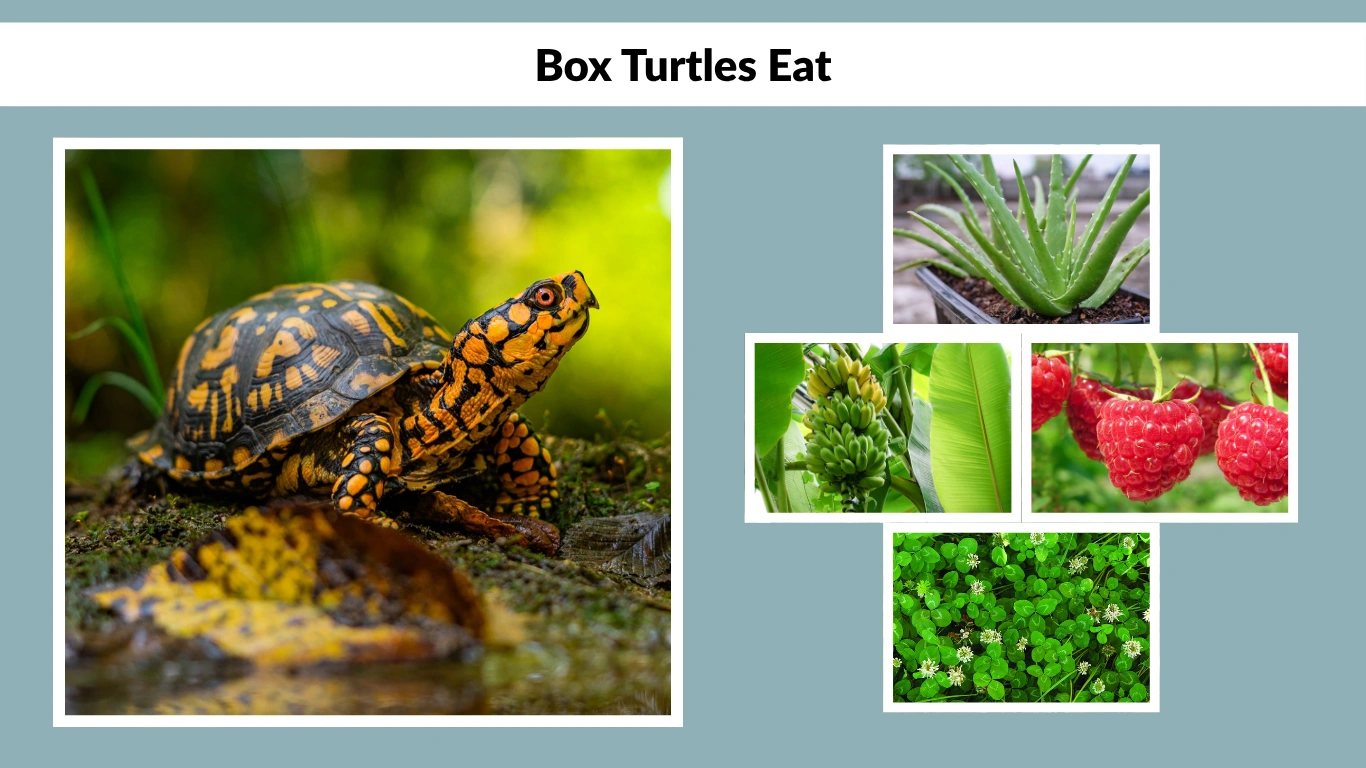
Box turtles are omnivorous reptiles with a surprisingly diverse palate. Whether you own a pet box turtle or you’ve spotted one in the wild, understanding what box turtles can eat is essential to their health. This guide answers every question about their diet, from what fruits and vegetables they can eat to what human foods are safe—and what to avoid.
We’ll also explore what different types of box turtles (like Eastern, Three-Toed, and Russian) eat, along with safe flowers, herbs, mushrooms, and even succulents. Whether you’re feeding a baby turtle or looking for kitchen-friendly options for your pet, this guide has you covered.
What Can Box Turtles Eat?
Box turtles are opportunistic omnivores. In the wild, they eat a mix of plants, insects, fruits, fungi, and small animals. Captive turtles require a similarly balanced diet, typically made up of 60% vegetables and greens, 30% protein, and 10% fruit.
Different species—like Eastern box turtles and Three-Toed box turtles—may have slightly different preferences, but their core dietary needs remain the same.
What Vegetables Can Box Turtles Eat?
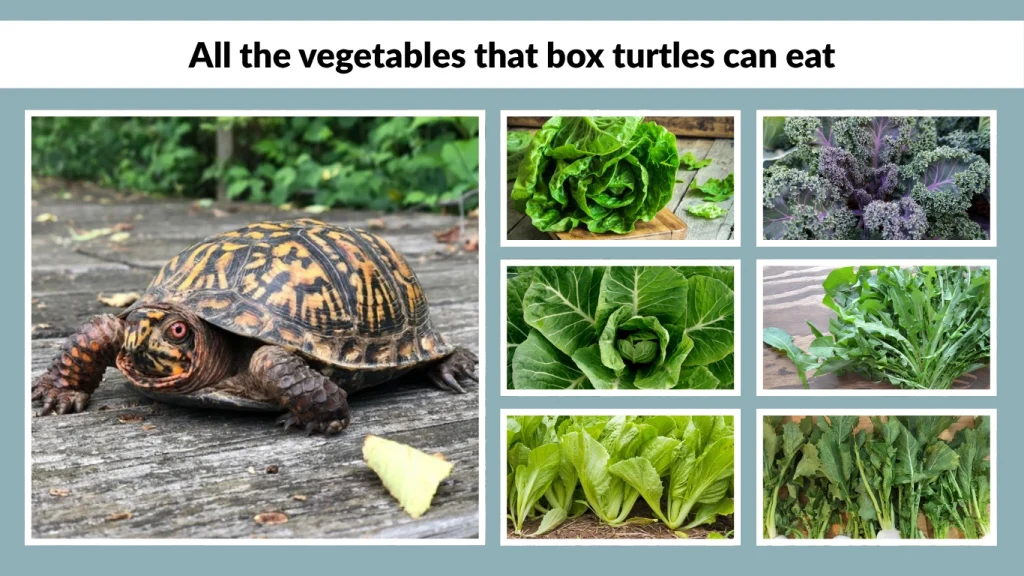
Vegetables should make up the largest portion of a box turtle’s diet. Leafy greens are the best option, but many other veggies are also safe and healthy. You can offer:
- Romaine lettuce (not iceberg)
- Kale
- Collard greens
- Dandelion greens
- Mustard greens
- Turnip greens
- Carrots (shredded)
- Squash
- Zucchini
- Bell peppers
- Green beans
Avoid starchy vegetables like potatoes or corn, and always serve vegetables raw, chopped, and pesticide-free.
What Fruits Can Box Turtles Eat?

Fruits are a treat for box turtles and should be given in moderation. They enjoy sweet, juicy fruits, which help hydrate them and offer vitamins. Safe fruits include:
- Strawberries
- Blueberries
- Raspberries
- Apples (seedless)
- Bananas
- Mango
- Watermelon
- Grapes (cut in half)
- Melon
- Papaya
Acidic fruits like oranges or pineapples should be avoided or fed rarely due to their effect on digestion.
What Fruits and Vegetables Can Box Turtles Eat Together?
A good feeding routine includes a mix of chopped fruits and vegetables, especially when introducing new foods. A sample meal might include shredded carrots, kale, and chopped strawberries. This variety helps encourage natural foraging behavior and ensures balanced nutrition.
What Flowers Can Box Turtles Eat?
Box turtles naturally consume flowers in the wild. Many blooms are not only safe but also rich in antioxidants. Some safe options include:
- Hibiscus
- Dandelions
- Rose petals (untreated)
- Pansies
- Nasturtiums
- Marigolds
Always ensure the flowers haven’t been sprayed with chemicals or pesticides, especially if picked from a garden or florist.
What Herbs Can Box Turtles Eat?
Some herbs are not just safe—they’re also beneficial for digestion. You can feed box turtles small amounts of:
- Parsley
- Cilantro
- Basil
- Dill
- Mint
Offer herbs as occasional treats or mixed into their regular greens to enhance flavor and scent.
What Mushrooms Can Box Turtles Eat?
In the wild, box turtles eat many types of mushrooms—some of which are even toxic to humans. While their digestive systems are more tolerant, you should still be cautious. In captivity, feed only store-bought mushrooms such as:
- White button mushrooms
- Portobello
- Cremini
Avoid feeding wild mushrooms unless you are absolutely certain they are non-toxic.
What Plants Can Box Turtles Eat?

Aside from vegetables, many non-toxic garden plants can be safely consumed by box turtles. These include:
- Plantain weeds
- Clover
- Chickweed
- Purslane
- Aloe vera (small amounts)
- Lamb’s ear
Avoid any plant known to be toxic to pets, such as nightshades, ivy, or foxglove.
What Kind of Succulents Can Box Turtles Eat?
Some succulents are safe for box turtles, but many are toxic. If you want to include succulents in their enclosure, choose turtle-safe varieties like:
- Prickly pear cactus pads (spines removed)
- Sedum species (some, not all)
Avoid jade plant, kalanchoe, and aloe vera in large quantities.
What Can Baby Box Turtles Eat?
Baby box turtles need more protein than adults to support healthy growth. While they can eat fruits and vegetables, a larger portion of their diet should include:
- Earthworms
- Mealworms
- Crickets
- Small snails
- Chopped boiled egg (occasionally)
Mix these proteins with finely chopped vegetables like carrots, dandelion greens, and squash to create a balanced feeding plan.
What Can Eastern Box Turtles Eat?
Eastern box turtles are common in the U.S. and have a very diverse diet. In the wild, they eat slugs, insects, mushrooms, fruits, and greens. In captivity, their diet should reflect this diversity. You can offer:
- Earthworms, snails, and bugs
- Mixed leafy greens
- Edible flowers
- Seasonal berries and fruits
They also benefit from calcium supplements, especially if they don’t have regular access to natural sunlight.
What Can Three-Toed Box Turtles Eat?
Three-toed box turtles enjoy more fruit than other species and are often found feeding on fallen berries in the wild. In addition to standard vegetables and protein, you can safely offer them more:
- Papaya
- Watermelon
- Blackberries
However, moderation is still key to avoid obesity and digestive issues.
What Can Russian Box Turtles Eat?
Russian box turtles (often confused with Russian tortoises) require a high-fiber, low-protein diet. Their focus should be on dark leafy greens, weeds, and herbs rather than insects or fruit. Avoid high-sugar or soft fruits for this species.
What Can Wild Box Turtles Eat?
In nature, wild box turtles are expert foragers. They eat:
- Insects, slugs, worms
- Mushrooms
- Fallen fruits
- Wildflowers
- Grass and weeds
Their diet changes with the season and location. If you find a wild turtle, it’s best to leave it in its natural environment with access to natural food sources.
What Can Pet Box Turtles Eat?
Pet box turtles should be fed a rotating mix of fresh produce, protein, and supplements. Most pet owners use a 60/30/10 ratio: 60% veggies, 30% protein, and 10% fruit. Add a calcium supplement to meals a few times a week to support shell health.
What Human Food Can Box Turtles Eat?
Box turtles can eat some human foods, especially from your kitchen’s produce drawer. Safe options include:
- Bananas
- Berries
- Cooked sweet potato (cooled and mashed)
- Hard-boiled eggs (chopped)
- Raw leafy greens
- Apples (seedless)
Avoid processed food, dairy, bread, salt, and anything spicy or fried.
What Can Box Turtles Not Eat?
Not all foods are safe. Box turtles should never eat:
- Avocado
- Onions
- Garlic
- Rhubarb
- Chocolate
- Dairy
- Processed or salted foods
- Citrus fruits (can cause digestive issues)
Feeding any of these can cause serious health problems or even be fatal over time.
What Can Eat a Box Turtle? (Predators)
While box turtles are not part of a human diet, they do have predators in the wild. Raccoons, birds, snakes, coyotes, and even domestic dogs may try to eat box turtles—especially young ones whose shells haven’t hardened.
Final Thoughts
Understanding what box turtles can eat is key to keeping them healthy and active. Whether you’re caring for a baby, feeding a pet, or observing one in the wild, their diet should be varied, natural, and free of toxic or processed food. Offer a mix of vegetables, fruits, flowers, herbs, and safe proteins, and always research new items before feeding.