





Sea turtles are among the oldest living creatures on Earth, having roamed the oceans for more than 100 million years. Their resilience, grace, and long life have fascinated scientists and ocean lovers alike. But exactly how long do sea turtles live? While their lifespan can vary depending on the species and environment, many sea turtles are known to live for several decades, with some reaching a century or more under the right conditions.
In this article, we’ll dive into the average lifespan of sea turtles, look at how long each species lives, explore the factors that affect their longevity, and understand the role of conservation in helping them thrive.
Average Lifespan of Sea Turtles
Most sea turtles live between 50 and 100 years, with some species reaching even greater ages in the wild. Unlike many land animals, sea turtles do not show many outward signs of aging, making it difficult for scientists to determine their exact age. Their long lifespan, however, is consistent with other long-lived reptiles, such as tortoises and crocodiles.
One key thing to note: while adult sea turtles may live for decades, few survive to adulthood. It’s estimated that only 1 in 1,000 to 1 in 10,000 hatchlings make it to maturity due to natural predation and human threats.
Lifespan by Species
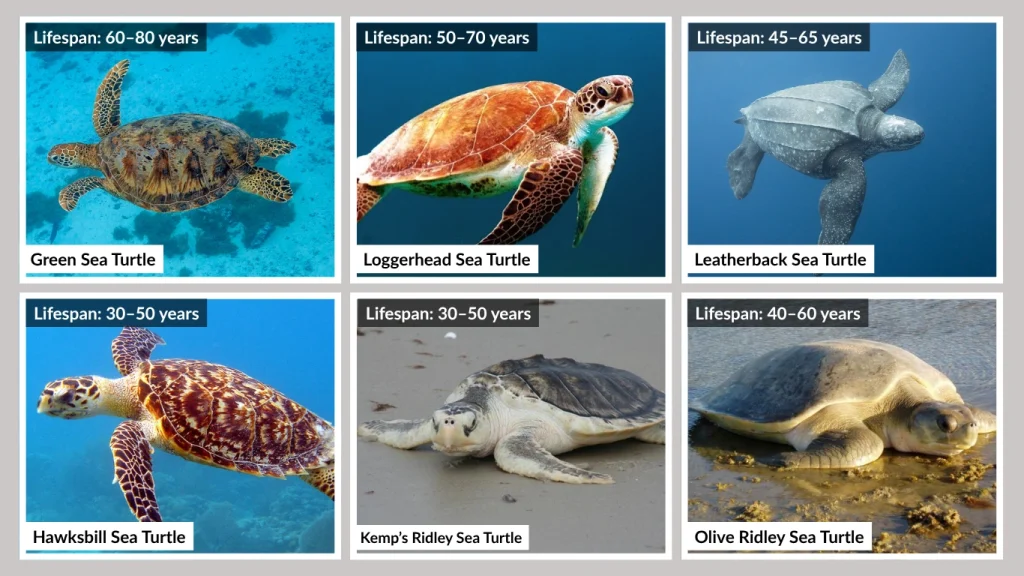
Green Sea Turtle (Chelonia mydas)
Lifespan: 60–80 years
Green sea turtles are mostly herbivorous as adults and are known for their long migrations between feeding and nesting sites. With fewer natural predators as adults, they can live several decades in the wild, especially if protected from human interference.
Loggerhead Sea Turtle (Caretta caretta)
Lifespan: 50–70 years
Loggerheads are powerful swimmers with strong jaws, known for eating hard-shelled prey like crabs and mollusks. They reach maturity around 25–30 years and can live well beyond that, particularly in undisturbed environments.
Leatherback Sea Turtle (Dermochelys coriacea)
Lifespan: 45–65 years (possibly longer)
Leatherbacks are the largest and most migratory of all sea turtles. They feed primarily on jellyfish and travel across entire oceans. Although data is limited, some researchers believe they may live longer than 65 years under ideal conditions.
Hawksbill Sea Turtle (Eretmochelys imbricata)
Lifespan: 30–50 years
Hawksbills are reef dwellers that feed mainly on sea sponges. They are critically endangered due to illegal shell trade. In the wild, they can live up to 50 years, although habitat destruction has lowered survival rates.
Kemp’s Ridley Sea Turtle (Lepidochelys kempii)
Lifespan: 30–50 years
The smallest and most endangered sea turtle, Kemp’s ridley turtles nest almost exclusively in the Gulf of Mexico. Their lifespan is shorter compared to other species, but with effective conservation, some reach the 50-year mark.
Olive Ridley Sea Turtle (Lepidochelys olivacea)
Lifespan: 40–60 years
These turtles are known for their mass nesting events called “arribadas.” While their population is more stable, threats from fishing and pollution still impact their average lifespan.
Flatback Sea Turtle (Natator depressus)
Lifespan: Estimated 50+ years
Native to northern Australia, flatbacks are less studied than other species. They don’t migrate as far and are rarely seen outside Australian waters. Their lifespan is believed to be similar to other medium-sized sea turtles.
Factors That Influence Lifespan
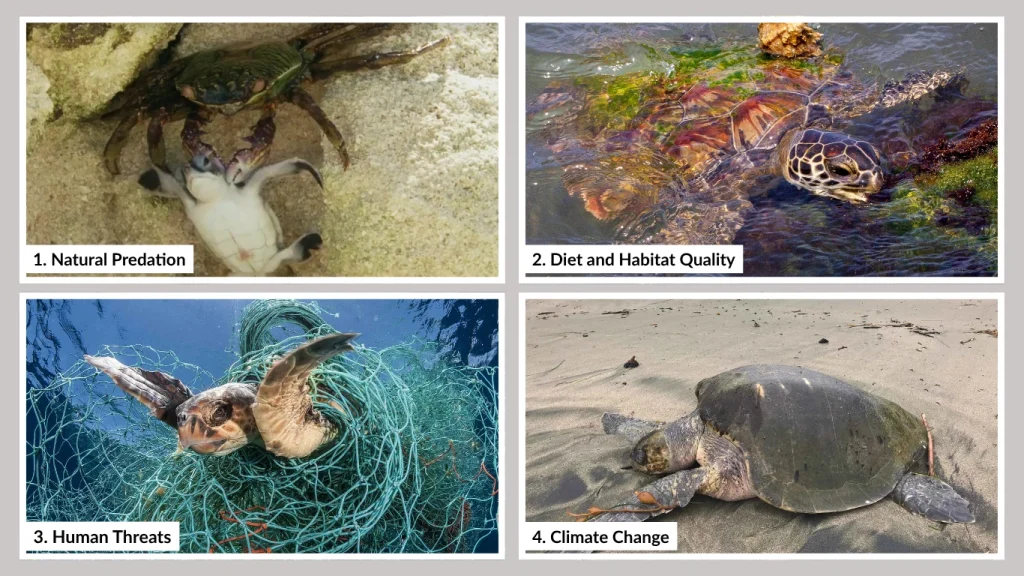
1. Natural Predation
Sea turtles are most vulnerable in their early life stages. Hatchlings face numerous predators, including birds, crabs, and fish. Juveniles can be eaten by sharks and other large predators. Once mature, turtles have fewer threats but are not immune to danger.
2. Diet and Habitat Quality
A turtle’s diet and environment significantly influence its health and lifespan. Turtles that live in clean, nutrient-rich areas and have access to a steady food supply tend to live longer. Pollution, poor water quality, and limited food reduce life expectancy.
3. Human Threats
Human activity remains the biggest threat to sea turtles. These include:
- Bycatch in fishing nets
- Plastic ingestion, often mistaken for jellyfish
- Habitat destruction, including nesting beaches
- Boat collisions in coastal waters
These dangers greatly reduce the number of turtles that make it to adulthood and survive into older age.
4. Climate Change
Rising temperatures impact sea turtles in multiple ways. For example, the sex of hatchlings is temperature-dependent—higher temperatures produce more females, which can affect population stability. Warmer seas can also disrupt feeding and migration patterns.
5. Disease and Injury
Turtles can suffer from diseases like fibropapillomatosis, a virus that causes debilitating tumors. Injuries from boats, entanglement, or sharp objects in the ocean can lead to infections or death if not treated, particularly in areas without conservation support.
Why It’s Hard to Know Their Exact Lifespan
Unlike trees or mammals, turtles don’t have growth rings or other reliable external age markers. Scientists often estimate age based on shell size, tag-and-recapture studies, and nesting records. However, long migrations and deep-sea behavior make it difficult to track individuals throughout their lives.
Sea Turtle Lifespan vs. Other Marine Creatures
Compared to other marine animals:
- Whales (like blue whales) can live over 80–100 years
- Sharks (e.g., Greenland shark) may exceed 250 years
- Dolphins often live 40–60 years
- Octopuses, in contrast, live only 1–2 years
Sea turtles rank high among long-lived marine reptiles, rivaling many mammals in lifespan.
Conservation and Its Impact on Lifespan
Thanks to global conservation efforts, many sea turtle populations are slowly recovering. Measures that help turtles live longer include:
- Tagging programs to track and protect migratory routes
- Protected nesting beaches with hatchling release programs
- Turtle-friendly fishing gear to prevent bycatch
- Rescue and rehabilitation centers for injured turtles
When turtles are protected from poaching, pollution, and habitat loss, they have a much better chance of living a full, natural lifespan.
FAQs
1. Do sea turtles live longer in the wild or in captivity?
Sea turtles generally live longer in the wild if protected, as captivity can cause stress, limited movement, and dietary issues. However, well-maintained rescue centers can support injured turtles long-term.
2. Can sea turtles die of old age?
Yes, but it’s rare. Most turtles die from external threats before reaching their natural lifespan. When undisturbed, they can die of organ failure or reduced mobility in old age.
3. How do scientists estimate a sea turtle’s age?
Age is estimated based on shell size, sexual maturity, and nesting history. Some methods also include tagging juveniles and tracking them over decades.
4. What is the oldest recorded sea turtle?
There is no official verified record, but anecdotal evidence and studies suggest some individuals may live over 100 years, especially in protected environments.
5. Why do so few hatchlings reach adulthood?
Hatchlings face intense predation, pollution, and habitat challenges immediately after birth. Their small size and lack of defense make them vulnerable until they grow larger and stronger.
Final Thoughts
Sea turtles are long-lived, resilient creatures that play vital roles in marine ecosystems. While they can live for 50 to 100 years or more, many factors—especially human-caused ones—can cut their lives short. Understanding their lifespan helps raise awareness of how our actions impact their survival.
With continued conservation efforts and public education, we can help more sea turtles reach their full life potential—and keep these ancient mariners thriving for generations to come.