


Sea turtles are remarkable ocean dwellers with diets that vary widely based on their species, habitat, and stage of life. Some are herbivores that graze on seagrass beds, while others are skilled hunters that seek out jellyfish, crabs, and other sea life. Their feeding behavior plays a crucial role in maintaining the health of marine ecosystems—such as coral reefs and seagrass meadows.
In this article, we’ll explore 8 common foods that sea turtles eat, breaking down why they choose each food and the nutritional benefits these meals provide. Whether you’re a nature enthusiast, marine biologist, or simply curious, this guide will help you better understand how sea turtles survive and thrive in the wild.
1. Seagrass
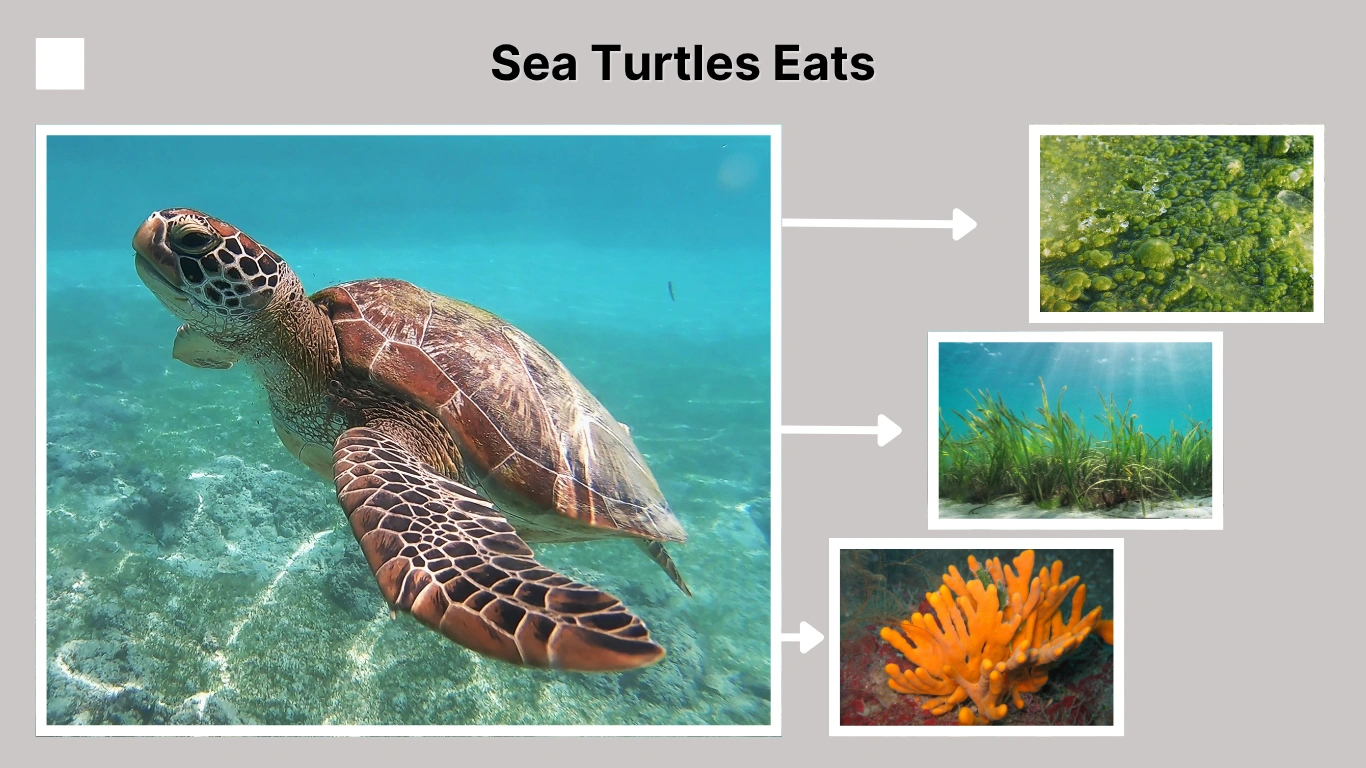
Seagrass is one of the primary foods consumed by adult green sea turtles. These underwater plants grow in shallow coastal waters and provide a reliable, abundant food source.
Why They Eat It
Green sea turtles have serrated jaws that allow them to easily tear and chew seagrass. As they age, they shift toward a mostly herbivorous diet, grazing in seagrass meadows throughout the day.
Health Benefits
Seagrass is rich in fiber, which supports healthy digestion. It also provides essential vitamins and minerals that help maintain a strong shell, good vision, and overall immune function. Regular grazing on seagrass helps keep seagrass beds trimmed, promoting ocean ecosystem health.
2. Algae

Algae are another plant-based staple for sea turtles, especially green and hawksbill turtles. These organisms grow on rocks, coral, and underwater structures in both shallow and deep marine environments.
Why They Eat It
Algae are widely available and easy to access, making them a convenient food source. Sea turtles often scrape algae off hard surfaces using their sharp beaks, especially when seagrass is limited.
Health Benefits
Algae provide essential nutrients like calcium, magnesium, and antioxidants. They also contain chlorophyll, which supports detoxification and immune health, and their fibrous texture aids in digestion.
3. Jellyfish
Jellyfish are a favorite food of leatherback sea turtles, which are uniquely adapted to feed on these soft, gelatinous creatures in open ocean waters.
Why They Eat It
Leatherbacks have delicate, scissor-like jaws and backward-facing spines in their throat (esophageal papillae) that help them catch and swallow slippery jellyfish without injury from stings.
Health Benefits
Although low in calories, jellyfish are rich in water and help keep turtles hydrated. They also provide small amounts of protein and collagen, supporting tissue repair and energy in these deep-diving turtles.
4. Sponges
Sponges are a primary food source for hawksbill sea turtles, especially in coral reef habitats. These turtles are among the few animals capable of eating certain types of sponges that are toxic to most marine life.
Why They Eat It
Hawksbills have narrow, pointed beaks that allow them to reach deep into crevices in coral reefs to extract sponges. Their unique digestive system is adapted to handle the toxins found in many sponge species.
Health Benefits
Sponges are rich in calcium, silica, and other trace minerals. Eating sponges supports strong shell development and overall nutrition. This specialized diet also reduces competition for food among other reef-dwelling species.
5. Crabs and Crustaceans
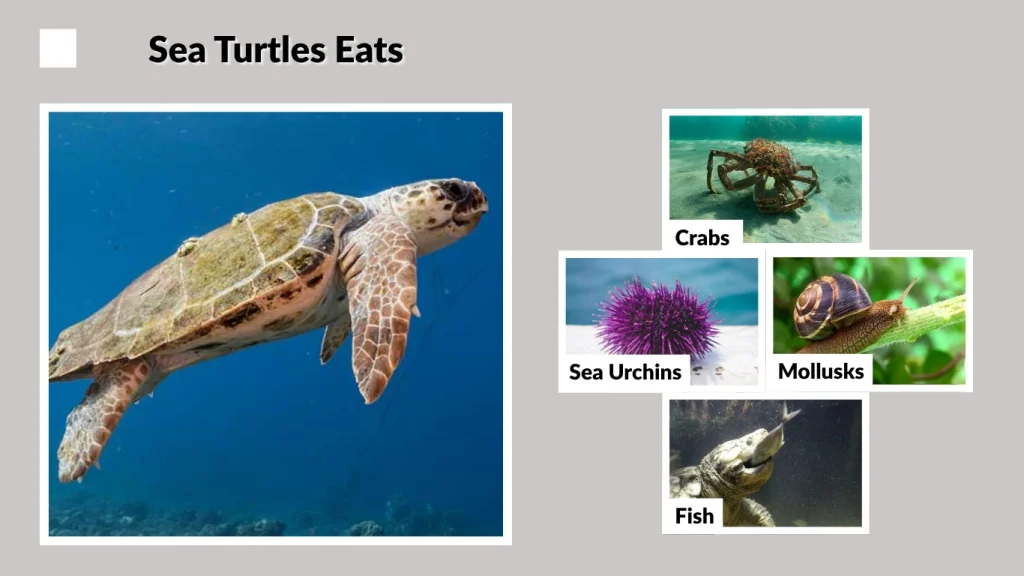
Crabs, lobsters, and other crustaceans are a favorite among carnivorous and omnivorous sea turtles like loggerheads, who are equipped with strong, crushing jaws.
Why They Eat It
These prey are commonly found on the ocean floor and in rocky crevices. Loggerheads use their powerful jaws to crush the hard shells and access the soft meat inside.
Health Benefits
Crustaceans provide high-quality protein, healthy fats, and minerals like zinc and calcium. These nutrients support energy levels, shell strength, and immune health, especially in growing or active turtles.
6. Mollusks (Clams, Snails, Mussels)
Many sea turtles, especially loggerheads and ridleys, feed on mollusks found buried in sandy bottoms or attached to rocks. These shelled creatures are a nutritious and satisfying food source.
Why They Eat It
Turtles use their strong jaws to crack open the hard shells of mollusks and extract the soft, nutrient-rich meat. These animals are often abundant in coastal and reef environments.
Health Benefits
Mollusks are high in protein, calcium, and iron. They support muscle development, shell strength, and oxygen transport in the blood—crucial for turtles that dive for long periods.
7. Fish
While not a primary food for most adult turtles, smaller fish can be part of the diet, especially for young or opportunistic carnivorous turtles.
Why They Eat It
Turtles may catch small, slow-moving, or injured fish in their natural environment. This usually happens in shallow reef areas or near the ocean floor.
Health Benefits
Fish are a great source of lean protein, omega-3 fatty acids, and B vitamins. They contribute to healthy brain function, energy production, and immune defense.
8. Sea Urchins
Sea urchins, with their spiny exteriors, are a surprising but frequent food for sea turtles like loggerheads that have powerful jaws capable of cracking through the tough outer shell.
Why They Eat It
Sea turtles forage along the ocean floor and consume urchins when other prey is scarce. Their beaks and jaws are well-adapted to remove the spines and access the soft insides.
Health Benefits
Sea urchins provide protein, iodine, and other minerals. They also help control urchin populations on reefs, preventing overgrazing of algae and maintaining reef health.
Sea Turtles Hunting Style
Sea turtles have evolved unique hunting and foraging techniques based on their species, jaw shape, diet, and habitat. Unlike predators that chase their prey, sea turtles are slow and strategic feeders, relying on adaptability, jaw strength, and environmental awareness rather than speed.
Here’s how different sea turtles hunt and find food in the wild:
1. Passive Grazing (Herbivorous Turtles like Green Sea Turtles)
Green sea turtles are primarily herbivores as adults.
- Technique: They slowly graze on seagrass beds or algae-covered rocks.
- Behavior: They swim close to the seafloor, using their beak-like jaws to tear and munch soft vegetation.
- Adaptation: Serrated jaws help cut through tough plant fibers.
2. Crevice Picking (Hawksbill Turtles)
Hawksbills specialize in coral reef feeding.
- Technique: They use their narrow, pointed beaks to reach deep into crevices.
- Behavior: They search for sponges and soft invertebrates hiding in reef cracks.
- Adaptation: Sharp, curved beaks allow precise, surgical removal of prey like sponges.
3. Crushing and Cracking (Loggerhead Turtles)
Loggerheads are omnivores known for their strong jaws.
- Technique: They crush hard-shelled prey like crabs, mollusks, and sea urchins.
- Behavior: Forage along the seafloor, using powerful jaw muscles to break shells.
- Adaptation: Massive head and muscular jaw structure optimized for shell-crushing.
4. Open Water Drift Feeding (Leatherback Turtles)
Leatherbacks are carnivores that mainly eat jellyfish.
- Technique: They drift through open ocean waters, snatching jellyfish as they swim.
- Behavior: They use sensitive facial structures to detect soft-bodied prey in low light.
- Adaptation: Papillae (backward-facing spines) in their throat prevent slippery prey from escaping.
5. Opportunistic Scavenging (Multiple Species)
Some turtles will scavenge if live prey is unavailable.
- Technique: They feed on dead fish, floating jellyfish, or leftover scraps.
- Behavior: Often seen feeding near the ocean surface or on the seafloor.
- Adaptation: Strong immune systems allow them to handle decaying matter safely.
FAQs
1. Do all sea turtles eat the same type of food?
No, sea turtle diets vary greatly by species. For example, green sea turtles are primarily herbivores as adults, eating seagrass and algae. Leatherbacks specialize in jellyfish, while hawksbills eat sponges, and loggerheads consume hard-shelled prey like crabs and mollusks. Their jaw shape and habitat influence what they can eat.
2. Can sea turtles eat plastic by mistake?
Yes, unfortunately. Sea turtles often mistake floating plastic—especially plastic bags—for jellyfish. Ingesting plastic can lead to intestinal blockages, malnutrition, and even death. This is one of the leading threats to sea turtle populations worldwide.
3. How do baby sea turtles find food after hatching?
After hatching, baby sea turtles (hatchlings) instinctively swim out to the open ocean, where they enter a “floating life” phase. They feed on small plankton, jellyfish, floating algae, and tiny crustaceans. Their sharp instincts and natural cues help them locate food without guidance.
4. Do sea turtles have teeth?
No, sea turtles do not have teeth. Instead, they have strong, beak-like jaws adapted to their specific diet. Some have serrated edges for slicing plants, while others have crushing plates for breaking shells or backward-facing spines to grip slippery prey like jellyfish.
5. How often do sea turtles eat?
In the wild, sea turtles forage throughout the day, especially during daylight hours. Their feeding frequency depends on food availability, species, and age. Hatchlings and juveniles tend to eat more often due to their rapid growth, while adults may eat less frequently but consume larger meals.