




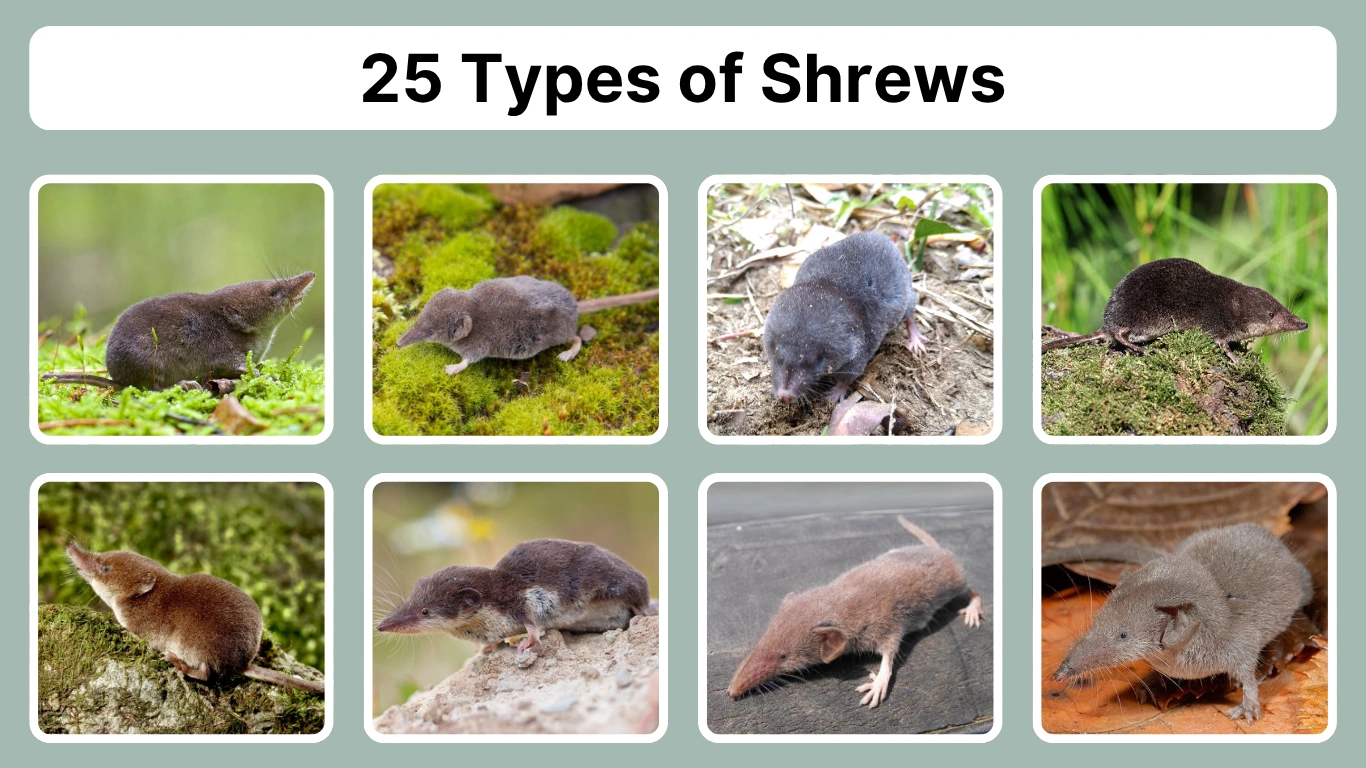
Shrews are tiny, insect-eating mammals often mistaken for rodents, but they belong to their own unique group within the mammal kingdom. Despite their size, shrews are some of the most active and aggressive hunters in nature. Found on nearly every continent, they thrive in a wide range of habitats—from tropical rainforests and alpine tundra to urban gardens and mountain caves. Some are aquatic, others live underground, and a few even possess venomous saliva.
This guide explores 25 fascinating types of shrews from around the world, including both true shrews and extinct or shrew-like relatives. Each entry highlights its identification, natural habitat, feeding habits, and unique behaviors. Whether it’s the world’s smallest mammal—the Etruscan Shrew—or the venomous Cuban Solenodon, these tiny creatures reveal the incredible diversity and adaptability of one of Earth’s most overlooked mammals.
1. Eurasian Common Shrew

The Eurasian Common Shrew (Sorex araneus) is one of the most widespread and studied shrew species in Europe and parts of northern Asia. Small, energetic, and insectivorous, it plays a vital role in controlling insect populations in forests and grasslands.
Identification
- Size: 2.2–3 inches in body length
- Tail: About half the body length
- Color: Tricolored fur—dark brown back, grayish flanks, and lighter underside
- Snout: Long and pointed with tiny whiskers
- Ears: Small and partially hidden by fur
- Weight: 5–14 grams
Natural Habitat and Range
The Eurasian Common Shrew inhabits a wide range of environments across Europe and into parts of Russia and Central Asia. It prefers damp, dense ground cover in woodlands, grasslands, hedgerows, and gardens. It often shelters under logs, leaf litter, or burrows.
Diet and Feeding Habits
This shrew has a voracious appetite and must eat frequently to survive. Its diet consists mostly of insects, spiders, worms, and larvae. Occasionally, it consumes seeds or carrion. It uses its highly developed sense of smell and touch to locate prey, often hunting both day and night.
Behavior and Activity
Eurasian Common Shrews are solitary and highly territorial. They are active throughout the year, including winter, and can be aggressive toward intruders. They emit high-pitched squeaks and scent-mark their territory. Due to their fast metabolism, they are constantly foraging and rarely rest for long. Their average lifespan is short, usually 1 to 2 years.
2. American Pygmy Shrew
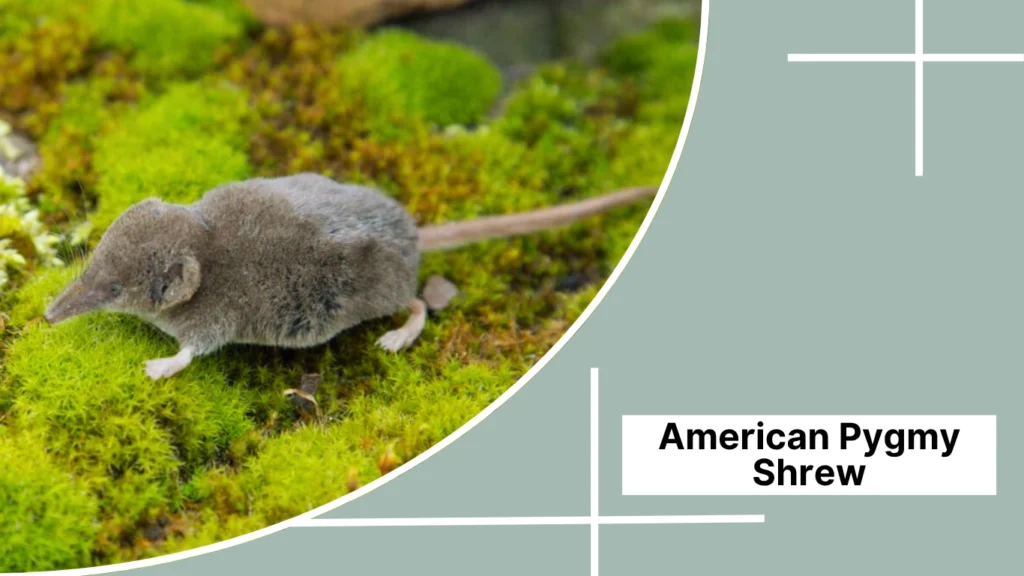
The American Pygmy Shrew (Sorex hoyi) is one of the smallest mammals in North America and among the smallest in the world by body mass. Despite its tiny size, it is a relentless predator with a rapid metabolism that requires near-constant feeding.
Identification
- Size: 1.5–2 inches in body length
- Tail: Long and slender, nearly the length of the body
- Color: Reddish-brown to grayish back with lighter underparts
- Snout: Long and pointed
- Ears: Tiny and almost hidden in fur
- Weight: 2–4 grams
Natural Habitat and Range
This species is found across much of Canada and the northern United States, particularly in moist coniferous and mixed forests. It prefers habitats with thick leaf litter, moss, or ground cover that provides protection and supports insect life.
Diet and Feeding Habits
The American Pygmy Shrew feeds on small insects, larvae, spiders, and other invertebrates. Due to its high metabolism, it must eat every couple of hours—consuming more than its body weight daily. It forages both above and below the forest floor.
Behavior and Activity
This shrew is solitary and active year-round, including in winter under snow cover. It moves rapidly and is rarely seen due to its size and secretive nature. It builds nests in decaying logs, root systems, or dense moss, and uses scent trails for navigation and territory marking.
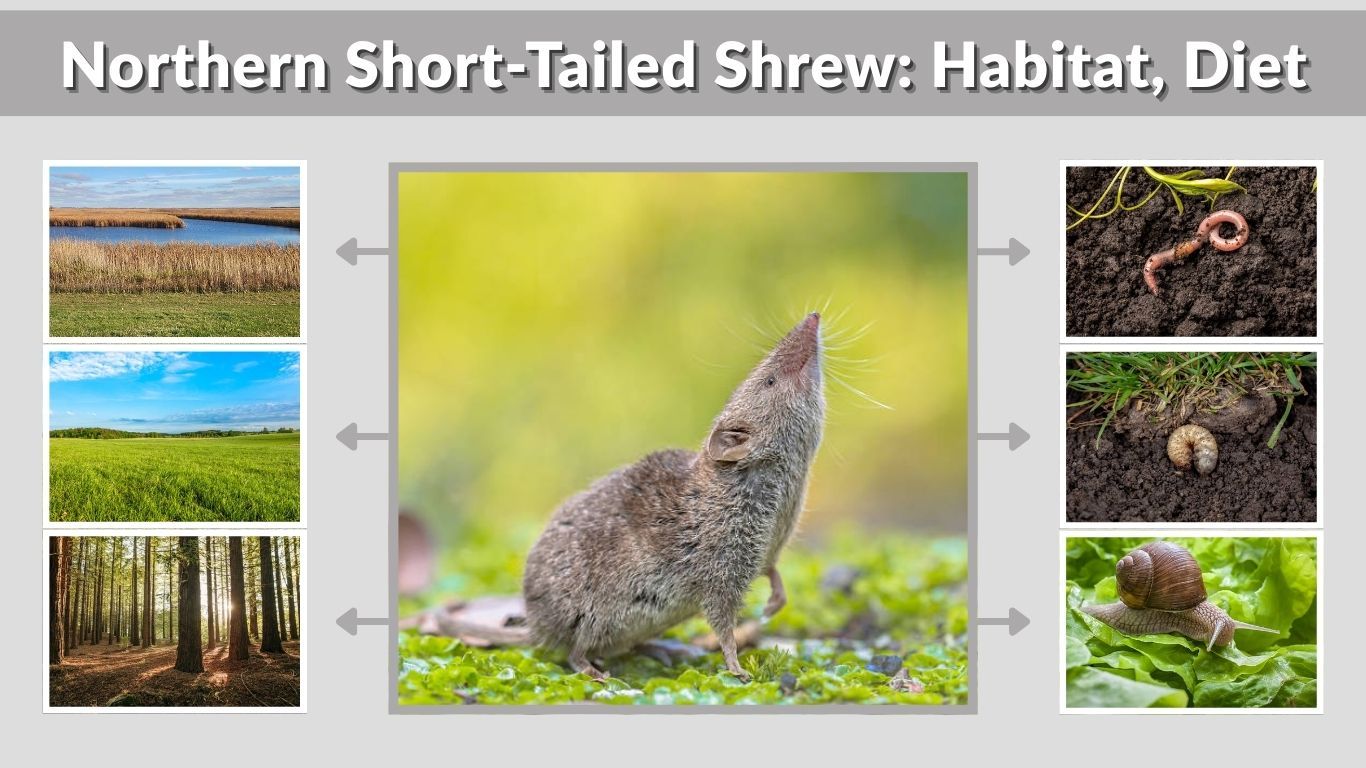
3. Northern Short-tailed Shrew

The Northern Short-tailed Shrew (Blarina brevicauda) is a robust, gray-furred species native to eastern and central North America. It is one of the few venomous mammals, using toxic saliva to immobilize its prey.
Identification
- Size: 3–4 inches in body length
- Tail: Very short, about one-quarter of body length
- Color: Slate-gray to dark brown fur
- Snout: Thick and blunt compared to other shrews
- Ears: Small and barely visible
- Weight: 15–30 grams
Natural Habitat and Range
Found in forests, fields, wetlands, and suburban areas from southeastern Canada to the central United States, this shrew prefers moist, well-covered environments. It frequently nests under logs, rocks, or thick vegetation.
Diet and Feeding Habits
The diet includes insects, worms, snails, and small vertebrates like frogs or mice. Its venomous saliva helps subdue larger prey. It also eats seeds and fungi. Like other shrews, it eats frequently and stores food in underground caches.
Behavior and Activity
Northern Short-tailed Shrews are active both day and night, year-round. They tunnel through leaf litter or soil and may use existing burrows. They are territorial and vocal, producing high-pitched squeaks and ultrasonic clicks. Their metabolic rate is extremely high, requiring constant feeding to survive.
4. Southern Short-tailed Shrew

The Southern Short-tailed Shrew (Blarina carolinensis) is a small, stocky shrew native to the southeastern United States. Similar in appearance to its northern cousin, it is also venomous and highly active, making it an efficient insect predator in warm, humid regions.
Identification
- Size: 2.5–3.5 inches in body length
- Tail: Very short, about one-fifth of the body length
- Color: Slate gray or dark brown fur, soft and velvety
- Snout: Short and broad
- Ears: Tiny and nearly hidden under fur
- Weight: 10–18 grams
Natural Habitat and Range
This species is found throughout the southeastern U.S., from Texas to Florida and north into parts of the Carolinas. It inhabits moist woodlands, pine forests, grasslands, and swamps, usually where leaf litter and ground cover are abundant.
Diet and Feeding Habits
Southern Short-tailed Shrews feed on insects, earthworms, centipedes, snails, spiders, and occasionally small vertebrates. Their venom allows them to immobilize and cache live prey. They also consume seeds, fungi, and carrion when available.
Behavior and Activity
These shrews are aggressive, solitary, and active year-round. They use a network of surface runways and shallow burrows to forage and nest. Vocalizations include squeaks, chirps, and clicks. Despite their small size, they are dominant predators within the soil ecosystem.
5. Eurasian Water Shrew
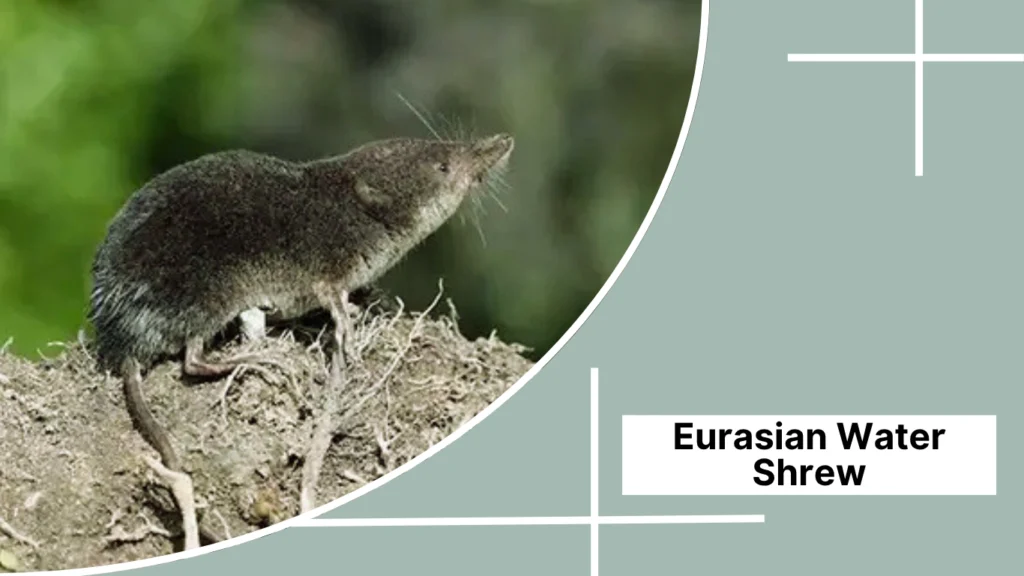
The Eurasian Water Shrew (Neomys fodiens) is a semi-aquatic species found across Europe and parts of Asia. Known for its swimming ability and unique venomous bite, it is one of the few shrews adapted to life in and around freshwater environments.
Identification
- Size: 3.5–4.5 inches in body length
- Tail: Long and thick, often fringed with stiff hairs for swimming
- Color: Dark gray to black back with a silver or white underside
- Snout: Long, with whiskers that help detect prey underwater
- Ears: Small and partially hidden in fur
- Weight: 12–18 grams
Natural Habitat and Range
This shrew inhabits the banks of streams, rivers, ponds, marshes, and other freshwater habitats across much of Europe and into western Russia. It prefers clean, flowing water and abundant ground vegetation for cover.
Diet and Feeding Habits
Eurasian Water Shrews feed on aquatic insects, larvae, small fish, tadpoles, snails, and earthworms. They dive and swim skillfully using their hind feet and tail for propulsion. Their venom helps subdue prey, and they store food in hidden caches.
Behavior and Activity
They are solitary and territorial, often aggressive toward other shrews. Most active at night and twilight, they use underwater hunting techniques guided by touch and smell. Their fur is water-repellent, and they often groom to maintain insulation. Their presence is an indicator of healthy freshwater ecosystems.
6. Mediterranean Water Shrew
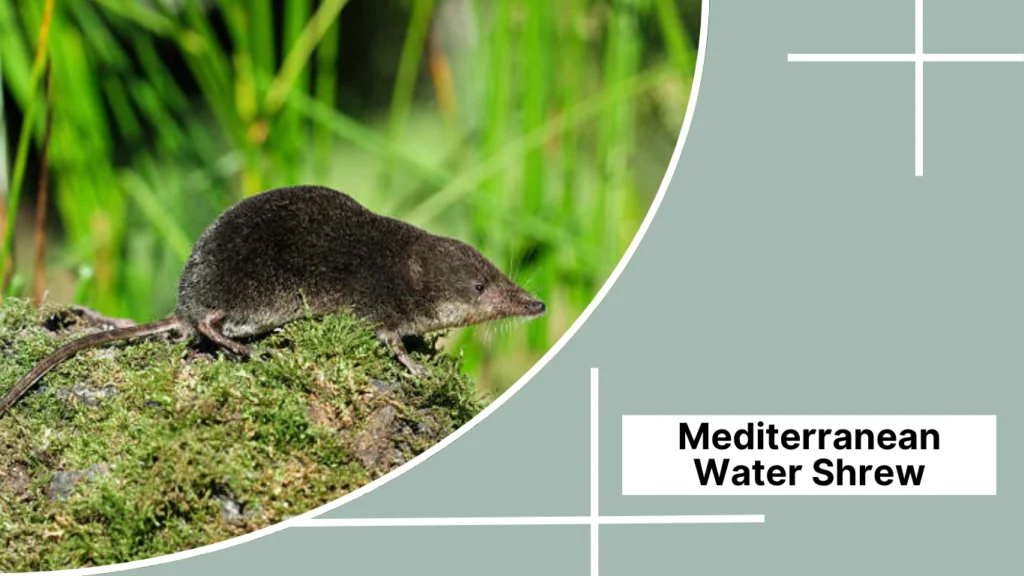
The Mediterranean Water Shrew (Neomys anomalus) is a semi-aquatic insectivore closely related to the Eurasian Water Shrew. Though smaller and less aggressive, it shares many of the same aquatic adaptations and behaviors.
Identification
- Size: 3–4 inches in body length
- Tail: Long, thin, and partially fringed for swimming
- Color: Dark brown to grayish-brown back with a pale underside
- Snout: Long and flexible with whiskers for sensing prey
- Ears: Small and rounded, covered by fur
- Weight: 9–15 grams
Natural Habitat and Range
This species is found in southern and central Europe, especially around the Iberian Peninsula, Italy, and the Balkans. It prefers slow-moving or stagnant freshwater habitats like streams, springs, ponds, and wet meadows with dense vegetation.
Diet and Feeding Habits
Its diet includes aquatic insects, crustaceans, worms, snails, and amphibian larvae. It may also catch small terrestrial insects along the shore. It dives skillfully and uses its whiskers and keen sense of smell to locate prey underwater.
Behavior and Activity
Mediterranean Water Shrews are shy, solitary, and mostly nocturnal or crepuscular. They create burrows near water and maintain complex scent-marked territories. They groom regularly to maintain the waterproof quality of their fur, which is crucial for insulation while swimming.
7. Masked Shrew

The Masked Shrew (Sorex cinereus) is one of the most widespread shrew species in North America. Small, slender, and fast-moving, it thrives in a variety of moist habitats and is known for its adaptability and energetic behavior.
Identification
- Size: 2.5–3.5 inches in body length
- Tail: Long and narrow, about half the body length
- Color: Brownish-gray back with lighter gray or white underparts
- Snout: Long and thin
- Ears: Small but visible
- Weight: 3–6 grams
Natural Habitat and Range
Masked Shrews are found across Alaska, Canada, and most of the northern United States. They inhabit moist woodlands, wetlands, meadows, and forest edges, particularly where ground cover and insect life are abundant.
Diet and Feeding Habits
Their diet includes insects, larvae, spiders, worms, and other small invertebrates. They also eat seeds, fungi, and carrion when needed. Because of their rapid metabolism, they feed constantly and may consume up to 100% of their body weight each day.
Behavior and Activity
Masked Shrews are active both day and night throughout the year. They build shallow tunnels or use natural crevices for nesting. Territorial and solitary, they use scent glands to mark their paths and burrows. They are agile climbers and swimmers, often venturing into water to hunt.
8. Dusky Shrew

The Dusky Shrew (Sorex monticolus), also known as the Montane Shrew, is a high-elevation species found in the mountainous regions of western North America. It is a fast and adaptable insectivore that thrives in cool, moist environments.
Identification
- Size: 2.5–4 inches in body length
- Tail: Moderately long, slightly over one-third the body length
- Color: Dark brown to grayish-brown back with a lighter underside
- Snout: Pointed and narrow
- Ears: Small and rounded, partly hidden by fur
- Weight: 4–9 grams
Natural Habitat and Range
The Dusky Shrew is found from Alaska to northern Mexico, especially in forested slopes, meadows, and alpine habitats. It prefers moist areas near streams, logs, and mossy ground, particularly at higher elevations.
Diet and Feeding Habits
Its diet includes insects, spiders, centipedes, earthworms, and other small invertebrates. It occasionally consumes plant matter such as seeds or fungi. This shrew hunts both on the ground surface and under leaf litter or snow.
Behavior and Activity
Dusky Shrews are solitary and highly active year-round. They are crepuscular or nocturnal and nest in burrows, under rocks, or in dense vegetation. They mark their territory with scent glands and produce faint squeaks and clicks to communicate or navigate.
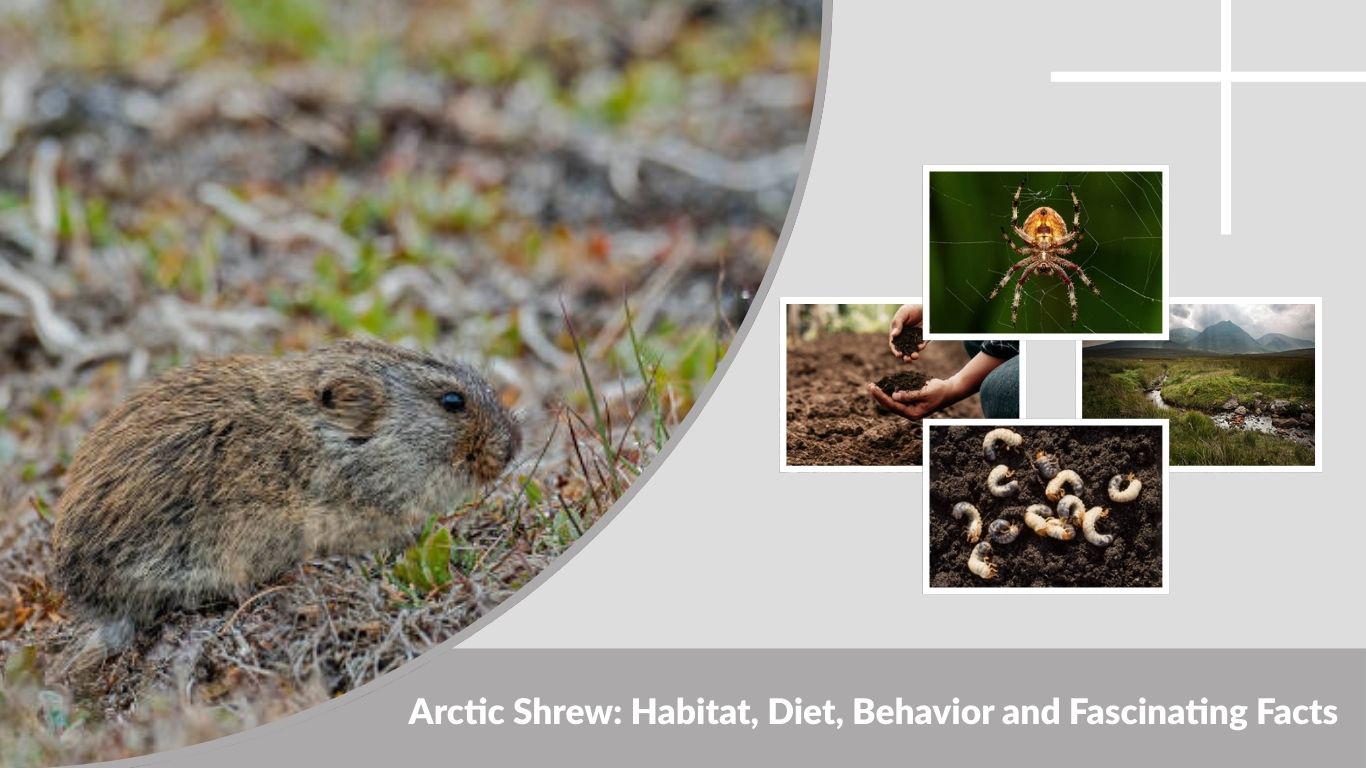
9. Arctic Shrew
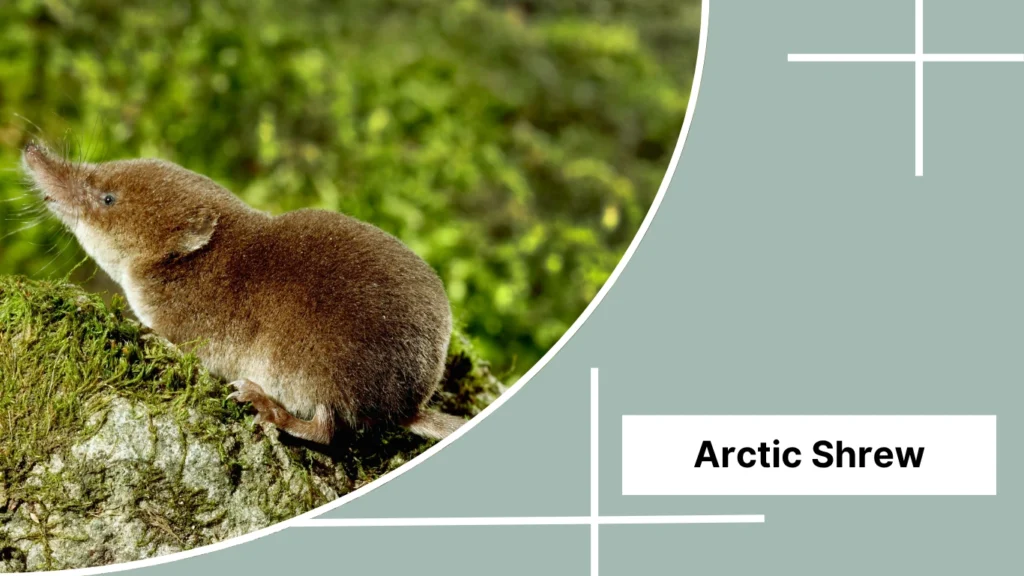
The Arctic Shrew (Sorex arcticus) is a hardy, northern species adapted to cold climates. Its striking tricolored fur and preference for wet habitats distinguish it from other North American shrews.
Identification
- Size: 3–4.2 inches in body length
- Tail: Long, thin, and often bicolored
- Color: Distinct tricolor pattern—dark back, lighter flanks, and pale belly
- Snout: Pointed and flexible
- Ears: Small and fur-covered
- Weight: 7–14 grams
Natural Habitat and Range
The Arctic Shrew inhabits boreal forests, bogs, tundra edges, and wet meadows across Canada and parts of the northern United States. It favors areas with thick ground cover and constant moisture, often near water bodies.
Diet and Feeding Habits
This shrew feeds on insects, spiders, worms, larvae, and other small invertebrates. It also consumes snails and slugs. It forages actively along the ground, under snow, or in dense vegetation.
Behavior and Activity
Arctic Shrews are solitary and highly territorial. They are active during both day and night, even in winter, when they tunnel under snow. Their nests are hidden in dense grass or moss, and they frequently groom to maintain fur insulation. Their tricolored coat provides camouflage in northern habitats.
10. Smoky Shrew
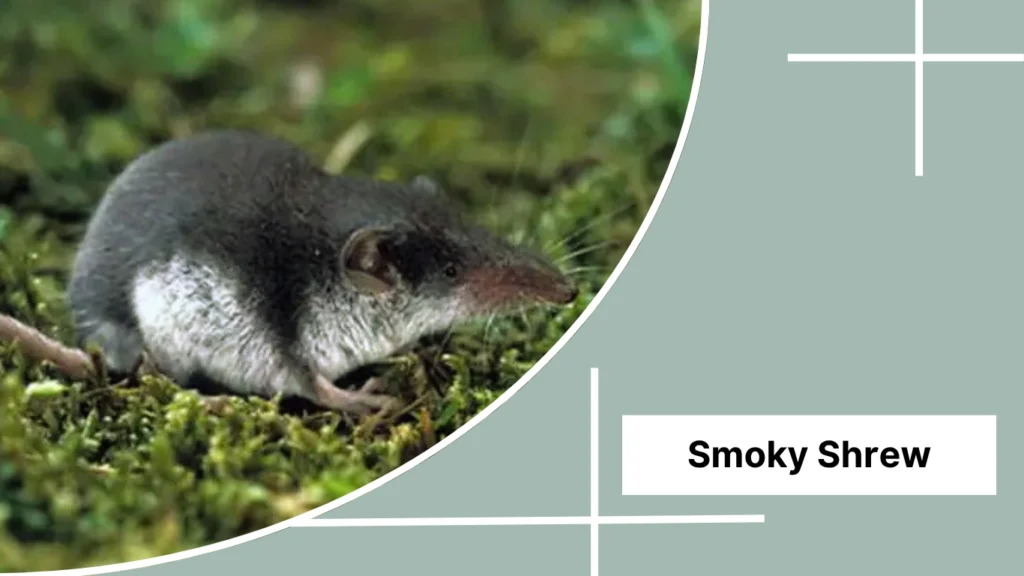
The Smoky Shrew (Sorex fumeus) is a forest-dwelling species native to eastern North America. Known for its dark, smoky-gray coat and secretive habits, it is commonly found in cool, moist woodland environments.
Identification
- Size: 3–4.2 inches in body length
- Tail: Long and hairy, about one-third to half the body length
- Color: Dark brown to grayish-slate, sometimes with a silvery tint on the underside
- Snout: Narrow and elongated
- Ears: Small and nearly hidden by fur
- Weight: 4–8 grams
Natural Habitat and Range
Smoky Shrews are distributed across the northeastern and Appalachian regions of the United States and into southeastern Canada. They prefer moist hardwood and mixed forests with heavy ground cover, rotting logs, and leaf litter.
Diet and Feeding Habits
They feed on small insects, spiders, beetles, snails, earthworms, and millipedes. They may occasionally consume seeds and fungi. Their foraging often occurs under logs, moss, and thick leaf layers where prey is abundant.
Behavior and Activity
Smoky Shrews are solitary, territorial, and active year-round. They construct runways beneath the forest floor and often build nests in soft soil or under rotting wood. They are quiet, using faint vocalizations and scent trails to navigate and communicate.
11. Long-tailed Shrew
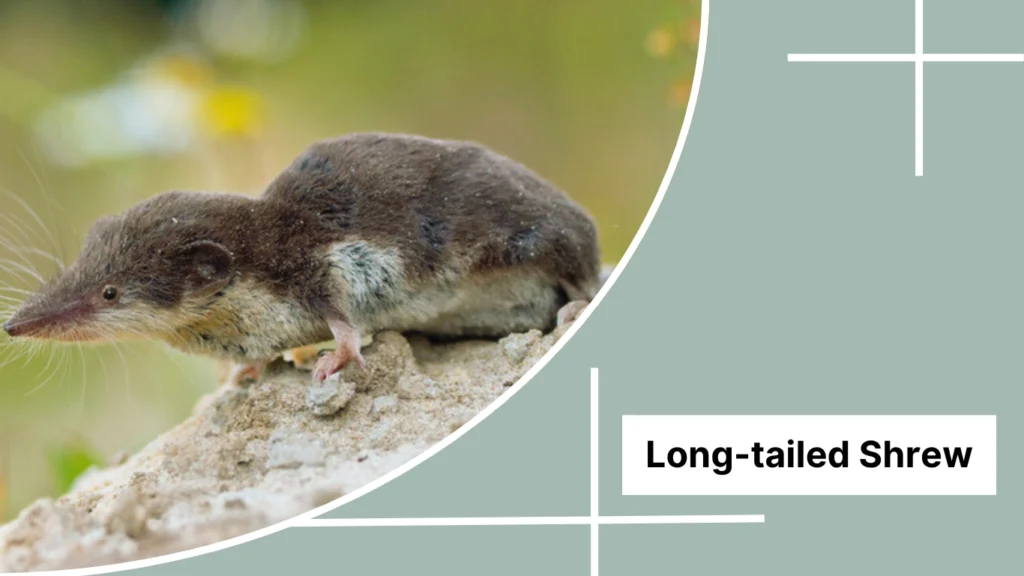
The Long-tailed Shrew (Sorex dispar), also known as the Rock Shrew, is an agile and elusive species adapted to steep, rocky environments. It is found primarily in the Appalachian Mountains and northeastern North America.
Identification
- Size: 3–4.5 inches in body length
- Tail: Very long and whip-like, nearly equal to or longer than the body
- Color: Dark slate-gray coat with lighter gray underside
- Snout: Long and slender
- Ears: Small, rounded, and fur-covered
- Weight: 4–7 grams
Natural Habitat and Range
This shrew inhabits cool, rocky outcrops, talus slopes, and mossy cliffs in high-elevation forests and mountain valleys. It prefers rugged, moist microhabitats with abundant crevices and cover.
Diet and Feeding Habits
It feeds primarily on insects, spiders, worms, and other invertebrates. The Long-tailed Shrew uses its agility and long tail for balance as it navigates rocks and narrow spaces in search of food.
Behavior and Activity
It is secretive, solitary, and most active at dusk and night. Unlike many other shrews, it rarely ventures far from its rocky habitat. Its long tail helps maintain balance on uneven surfaces, making it one of the most agile shrews in North America.
12. Merriam’s Shrew
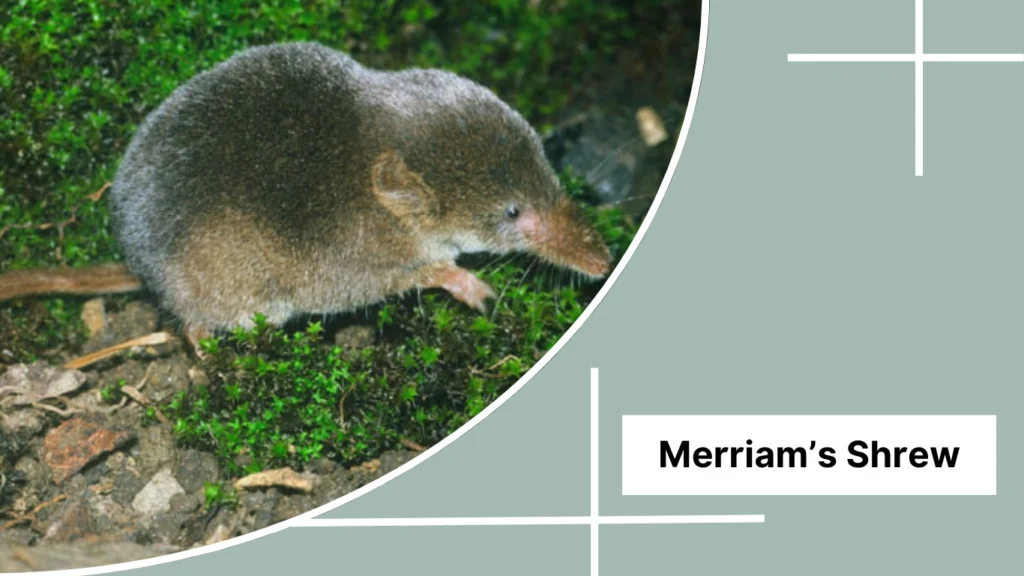
Merriam’s Shrew (Sorex merriami) is a small and inconspicuous species native to the western United States. It is often overlooked due to its secretive nature and resemblance to other small shrews in its range.
Identification
- Size: 2.5–3.5 inches in body length
- Tail: Short to moderately long, sparsely furred
- Color: Grayish-brown back with lighter gray underparts
- Snout: Narrow and pointed
- Ears: Small and hidden in dense fur
- Weight: 3–6 grams
Natural Habitat and Range
Merriam’s Shrew is found in grasslands, sagebrush steppe, and dry open woodlands throughout parts of the western U.S., including states like Idaho, Montana, and Utah. It favors areas with loose soil, low vegetation, and scattered cover.
Diet and Feeding Habits
This shrew feeds on insects, spiders, worms, and other small invertebrates. It forages actively along the surface and just below the soil, often in the early morning and evening.
Behavior and Activity
Merriam’s Shrew is solitary and terrestrial, creating shallow burrows or using rodent runways for shelter. It is rarely seen but may be caught in pitfall traps during ecological studies. Like many shrews, it has a high metabolism and must eat frequently.
13. Tundra Shrew
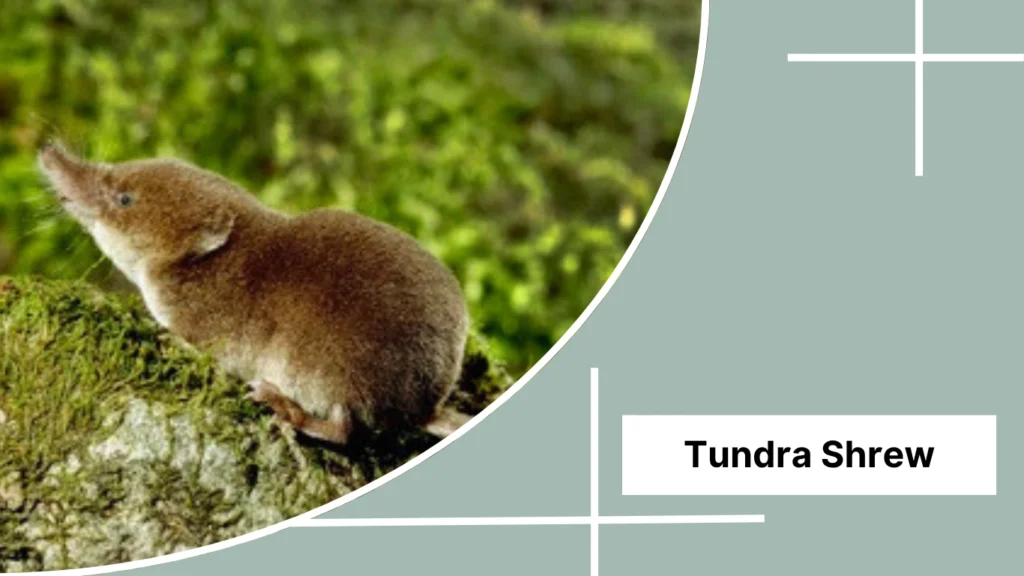
The Tundra Shrew (Sorex tundrensis) is a cold-adapted species found in the far northern regions of North America. It thrives in Arctic and sub-Arctic ecosystems and is well-suited for life in harsh, treeless environments.
Identification
- Size: 3.5–4.5 inches in body length
- Tail: Long and bicolored, about half the body length
- Color: Dark brownish-gray back with paler underparts
- Snout: Long and slightly arched
- Ears: Small and rounded, barely visible
- Weight: 7–11 grams
Natural Habitat and Range
Tundra Shrews are found in Alaska, parts of Canada, and along the edges of the Arctic tundra. They live in wet meadows, sedge marshes, streambanks, and shrub-covered slopes near permafrost zones.
Diet and Feeding Habits
They eat insects, spiders, mollusks, worms, and occasionally small vertebrates or plant matter. Their hunting activity increases during the short Arctic summer when food is most abundant.
Behavior and Activity
Tundra Shrews are active year-round, even beneath snow during winter. They are solitary and mostly nocturnal or crepuscular. Nests are built in grassy hummocks or beneath rocks, often near water. Despite the harsh environment, they maintain high energy through frequent foraging.
14. Southeastern Shrew
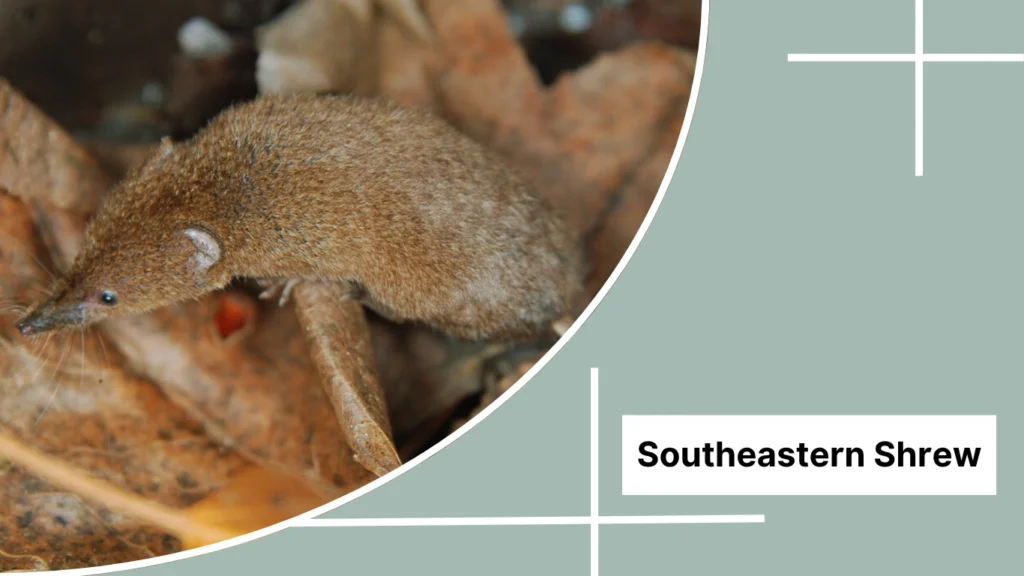
The Southeastern Shrew (Sorex longirostris) is a small, slender species found throughout the southeastern United States. It is one of the smallest shrews in its range and is known for its pointed snout and fast, erratic movements.
Identification
- Size: 2.5–3 inches in body length
- Tail: Thin and about one-third of body length
- Color: Reddish-brown back with paler gray or buff-colored underparts
- Snout: Long and narrow
- Ears: Tiny and hidden beneath soft fur
- Weight: 2–5 grams
Natural Habitat and Range
This shrew inhabits pine forests, hardwood woodlands, wetlands, and grassy fields from Texas to the Carolinas and north to parts of the Midwest. It prefers moist environments with ample leaf litter or debris for cover.
Diet and Feeding Habits
It feeds on ants, beetles, spiders, worms, and other invertebrates. Due to its small size and high metabolism, it must eat frequently and constantly searches for prey among the forest floor debris.
Behavior and Activity
The Southeastern Shrew is elusive, fast-moving, and most active at night. It builds nests in logs, roots, or leaf piles and marks trails with scent glands. It is solitary and territorial, using squeaks and scent cues to communicate.
15. Large-headed Shrew
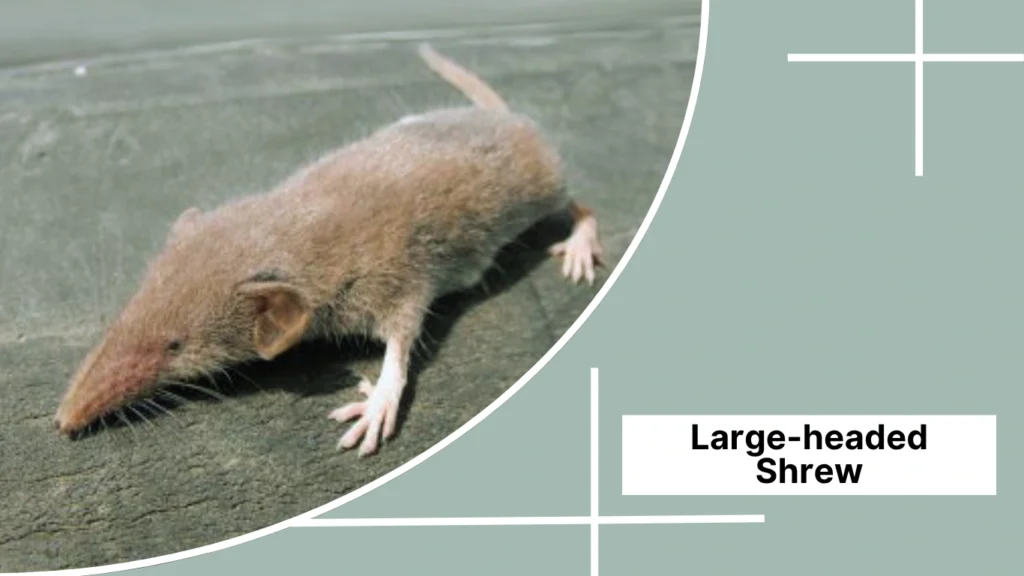
The Large-headed Shrew (Crocidura grandiceps) is a tropical species native to West Africa. As its name suggests, it has a proportionally large head and snout, adapted for rooting through dense vegetation and soil for prey.
Identification
- Size: 4–5 inches in body length
- Tail: Thick and moderately long
- Color: Dark gray or brownish coat with lighter underside
- Head: Broad and muscular with a long snout
- Ears: Rounded and slightly protruding
- Weight: 8–15 grams
Natural Habitat and Range
This shrew is found in humid lowland forests and moist savannas in countries like Ghana, Côte d’Ivoire, and Nigeria. It favors dense undergrowth and moist leaf litter, where insects and worms are plentiful.
Diet and Feeding Habits
Its diet consists of insects, larvae, earthworms, and small arthropods. It forages by digging and pushing through soil and fallen leaves using its strong snout and forelimbs.
Behavior and Activity
The Large-headed Shrew is terrestrial, solitary, and primarily nocturnal. It nests under logs or dense ground cover and is sensitive to habitat disturbance. Though poorly studied, it’s thought to play an important role in controlling insect populations in forest ecosystems.
16. Greater White-toothed Shrew
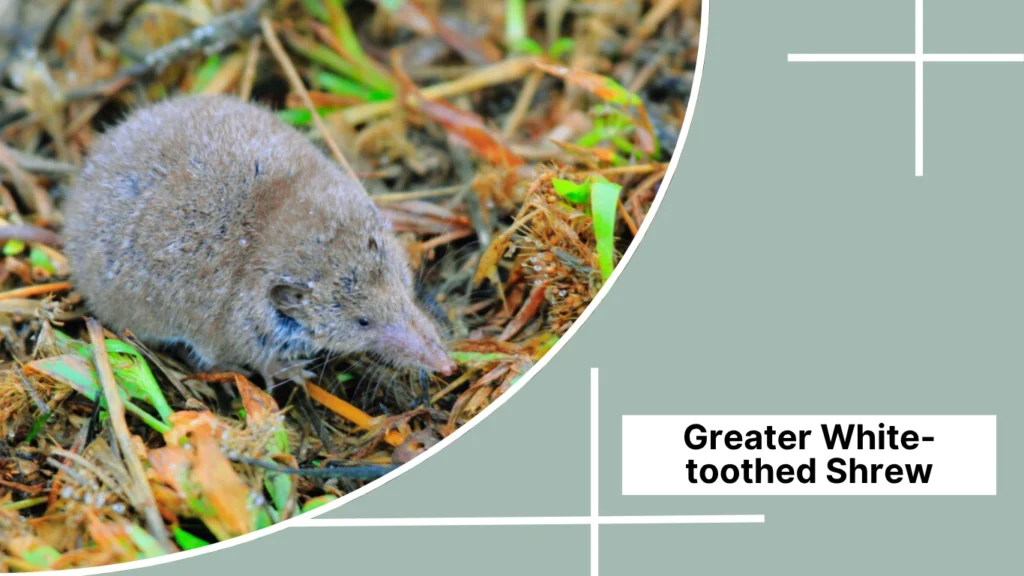
The Greater White-toothed Shrew (Crocidura russula) is a common and adaptable species found across much of Europe and North Africa. It is named for its pale, non-pigmented teeth—a feature that sets it apart from many other shrew species.
Identification
- Size: 2.5–4 inches in body length
- Tail: Thick, moderately long, and slightly hairy
- Color: Grayish-brown back with a paler belly
- Snout: Long and narrow
- Teeth: White, lacking the reddish enamel found in many shrews
- Weight: 6–14 grams
Natural Habitat and Range
This species inhabits forests, grasslands, hedgerows, gardens, and even urban areas. It is native to Western Europe and North Africa and has been introduced to Ireland and parts of the U.K., where it is expanding its range.
Diet and Feeding Habits
Greater White-toothed Shrews eat insects, spiders, earthworms, and other invertebrates. They are also known to scavenge small vertebrates and even consume fruit or plant material on occasion.
Behavior and Activity
They are active both day and night and live solitary lives, defending territories with scent marking. They emit high-pitched calls and ultrasonic clicks for navigation and communication. This species adapts well to human-modified landscapes and can become locally abundant.
17. Lesser White-toothed Shrew
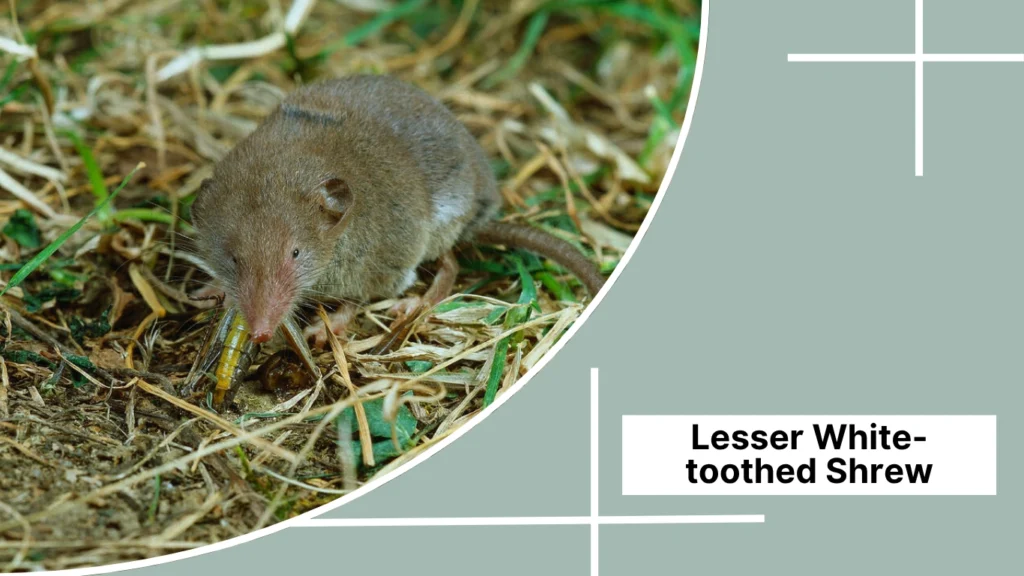
The Lesser White-toothed Shrew (Crocidura suaveolens) is a tiny and agile shrew species found across parts of Europe, Asia, and North Africa. Despite its small size, it is a skilled predator and well adapted to dry habitats.
Identification
- Size: 2–2.8 inches in body length
- Tail: Very long, slender, and often longer than the body
- Color: Pale grayish-brown back with whitish underparts
- Snout: Thin and sharply pointed
- Teeth: White without pigmented enamel
- Weight: 3–7 grams
Natural Habitat and Range
This shrew prefers dry grasslands, scrublands, sand dunes, and open woodland edges. It is widely distributed from southern Europe and North Africa to Central Asia and parts of the Middle East.
Diet and Feeding Habits
It feeds mainly on insects, spiders, small arthropods, and larvae. Its long tail and nimble body help it navigate through thick grass and ground litter while searching for prey.
Behavior and Activity
The Lesser White-toothed Shrew is mostly nocturnal and highly active. It nests in crevices, burrows, or dense vegetation. Though solitary, it may share overlapping ranges with others of its kind. It uses scent and high-frequency calls to communicate and find its way in low-visibility environments.
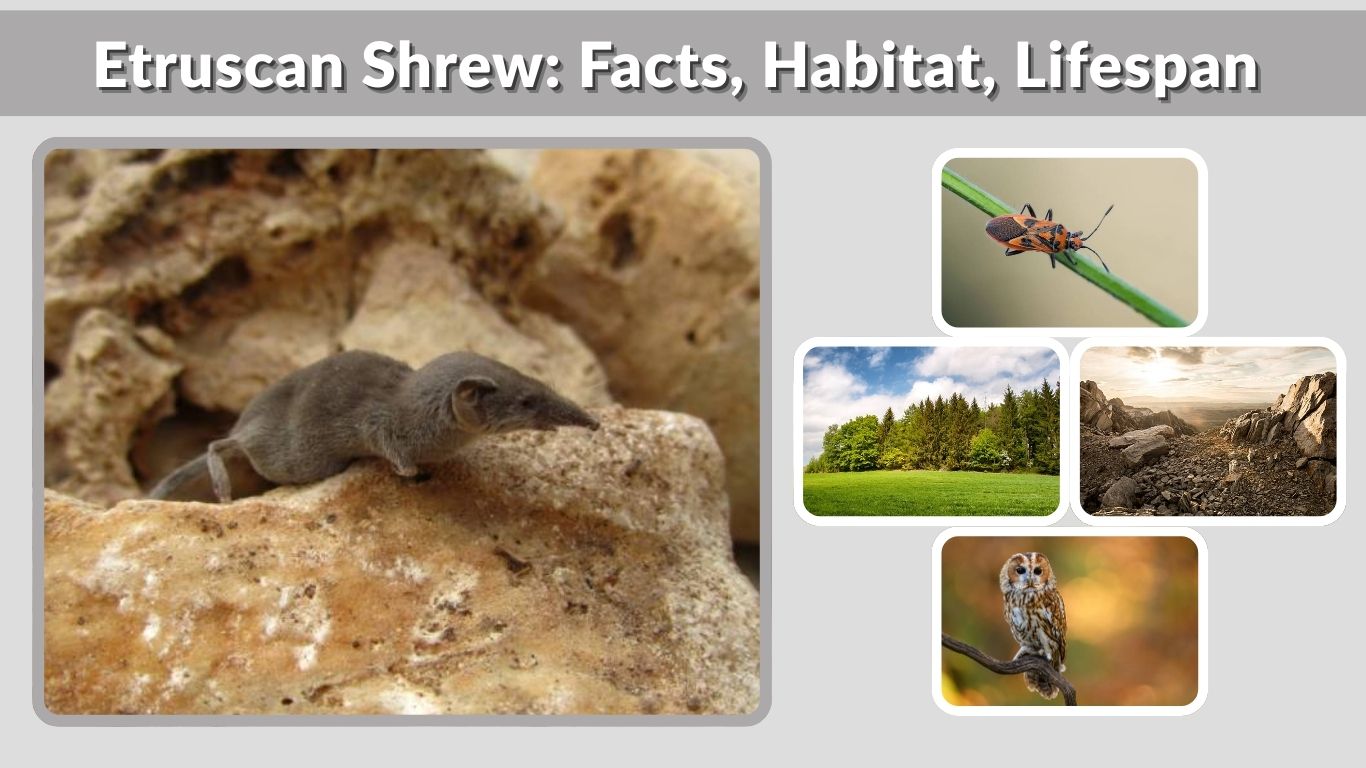
18. Etruscan Shrew

The Etruscan Shrew (Suncus etruscus), also known as the Etruscan Pygmy Shrew, holds the title of the smallest known mammal by mass. Despite its minuscule size, it is an incredibly active and efficient predator.
Identification
- Size: 1.3–2 inches in body length
- Tail: Long and thin, about the same length as the body
- Color: Grayish or light brown with a paler underside
- Snout: Very long and pointed
- Ears: Small and rounded
- Weight: 1.5–2 grams
Natural Habitat and Range
This shrew is native to southern Europe, North Africa, and parts of the Middle East and South Asia. It prefers warm environments such as dry grasslands, Mediterranean scrub, and cultivated fields with ground cover.
Diet and Feeding Habits
It consumes tiny insects, larvae, and spiders—eating several times its body weight daily. It hunts almost continuously, using rapid movements and a keen sense of smell and touch to locate prey.
Behavior and Activity
Etruscan Shrews are solitary and extremely active, often displaying quick, darting movements. They are primarily nocturnal and rely on dense vegetation or crevices for shelter. Due to their fast metabolism, they must eat frequently and can survive only brief periods without food.
19. Asian House Shrew

The Asian House Shrew (Suncus murinus), also called the Gray Musk Shrew, is one of the largest and most widespread shrews in Asia. It is often found near human settlements and is both admired and disliked for its role in pest control.
Identification
- Size: 4–6 inches in body length
- Tail: Thick and scaly, nearly as long as the body
- Color: Gray to dark brown coat with a lighter underside
- Snout: Broad and slightly curved
- Ears: Large and visible
- Weight: 25–100 grams
Natural Habitat and Range
Native to South and Southeast Asia, this shrew is found in forests, farmlands, and urban areas. It has been introduced to many islands and regions, including East Africa and the Middle East, where it thrives in homes and warehouses.
Diet and Feeding Habits
It feeds on insects, cockroaches, termites, spiders, small vertebrates, and household scraps. Its aggressive feeding behavior makes it a useful insect controller, but it may also damage stored food and materials.
Behavior and Activity
Asian House Shrews are bold, mostly nocturnal, and vocal, emitting squeaks and high-pitched cries. They are solitary and territorial. Their musky odor helps them communicate and mark territory. Though beneficial in pest control, they are sometimes considered household pests themselves.
20. Forest Shrew
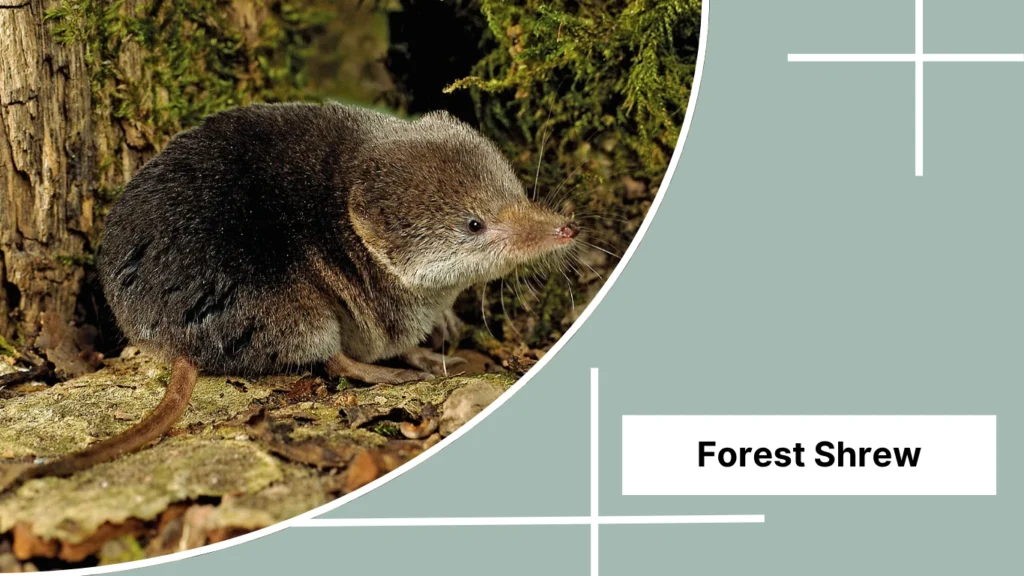
The Forest Shrew (Myosorex varius) is a small, adaptable shrew species endemic to southern Africa. It is one of the most common and widely distributed shrews in the region and is known for thriving in a variety of habitats, including forests and farmlands.
Identification
- Size: 3–4.5 inches in body length
- Tail: Short and furry, less than half the body length
- Color: Dark gray to blackish-brown fur with a lighter underside
- Snout: Short and blunt
- Ears: Small and rounded
- Weight: 8–16 grams
Natural Habitat and Range
Found in South Africa, Lesotho, and Eswatini, the Forest Shrew inhabits a wide range of environments—from moist montane forests to grasslands, farmlands, and gardens. It prefers areas with dense ground cover and moist soils.
Diet and Feeding Habits
It feeds on insects, spiders, worms, and other small invertebrates. It uses its sensitive nose to locate prey under leaf litter and stones, often foraging both during the day and at night.
Behavior and Activity
Forest Shrews are territorial, solitary, and active year-round. They use scent glands for communication and navigation. Though small, they are bold and curious, often seen darting between rocks or through thick vegetation.
21. African Giant Shrew
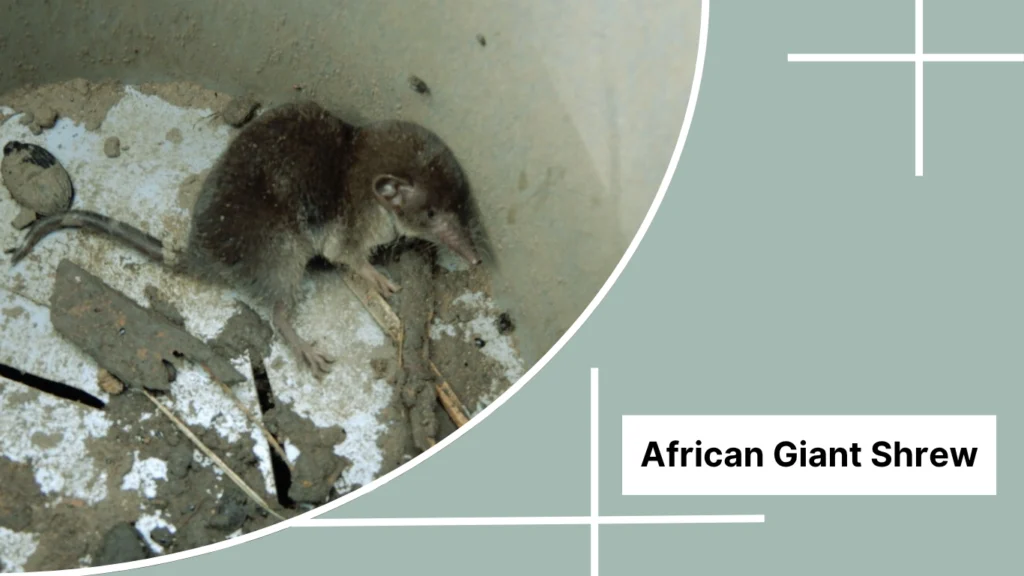
The African Giant Shrew (Crocidura olivieri) is one of the largest shrew species in the world. Native to sub-Saharan Africa, it is robust, wide-ranging, and often found near human settlements.
Identification
- Size: 5–6.5 inches in body length
- Tail: Long, thick, and sparsely haired
- Color: Dark gray to brownish fur with a paler underside
- Snout: Broad and powerful
- Ears: Small and rounded
- Weight: 40–100 grams
Natural Habitat and Range
This species inhabits forests, woodlands, agricultural fields, and urban areas across central, eastern, and western Africa. It is highly adaptable and often found near food sources or water.
Diet and Feeding Habits
It is omnivorous, feeding on insects, earthworms, fruit, seeds, and occasionally small vertebrates. Its powerful jaw allows it to handle larger and tougher prey than most shrews.
Behavior and Activity
The African Giant Shrew is solitary and mostly nocturnal. It uses scent trails for territory marking and navigation. It builds nests in burrows or natural cavities and may become aggressive if threatened. Its size and boldness make it more visible than smaller shrew species.
22. Bicolored Shrew
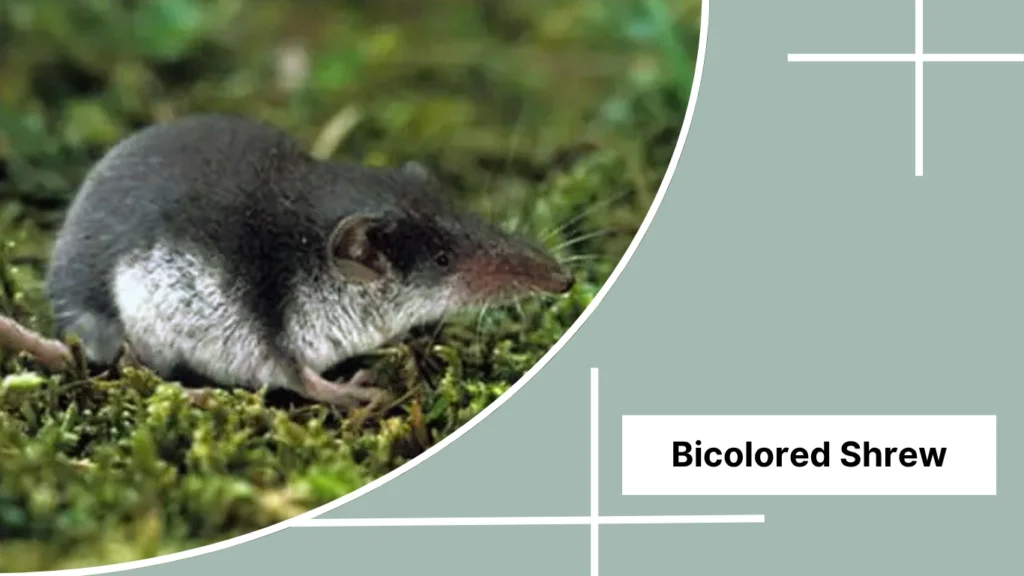
The Bicolored Shrew (Crocidura leucodon) is a medium-sized shrew native to Europe and parts of western Asia. It is named for its distinct two-tone fur coloration, which helps distinguish it from other closely related species.
Identification
- Size: 2.8–4 inches in body length
- Tail: Medium-length, often bicolored and slightly furry
- Color: Dark brown or gray back with a sharply contrasting white belly
- Snout: Narrow and pointed
- Ears: Small but visible
- Weight: 7–14 grams
Natural Habitat and Range
This shrew is found across central and eastern Europe, extending into parts of the Middle East. It inhabits farmland, grasslands, woodland edges, gardens, and human settlements—often near buildings or stone walls.
Diet and Feeding Habits
It primarily feeds on insects, worms, spiders, and small invertebrates. It occasionally scavenges dead animals or eats plant material like seeds and berries when prey is scarce.
Behavior and Activity
The Bicolored Shrew is nocturnal and solitary, often making shallow burrows or using crevices for shelter. It is highly vocal and uses a combination of sound and scent for communication and territory marking. It remains active year-round and adapts well to altered landscapes.
23. Andean Shrew
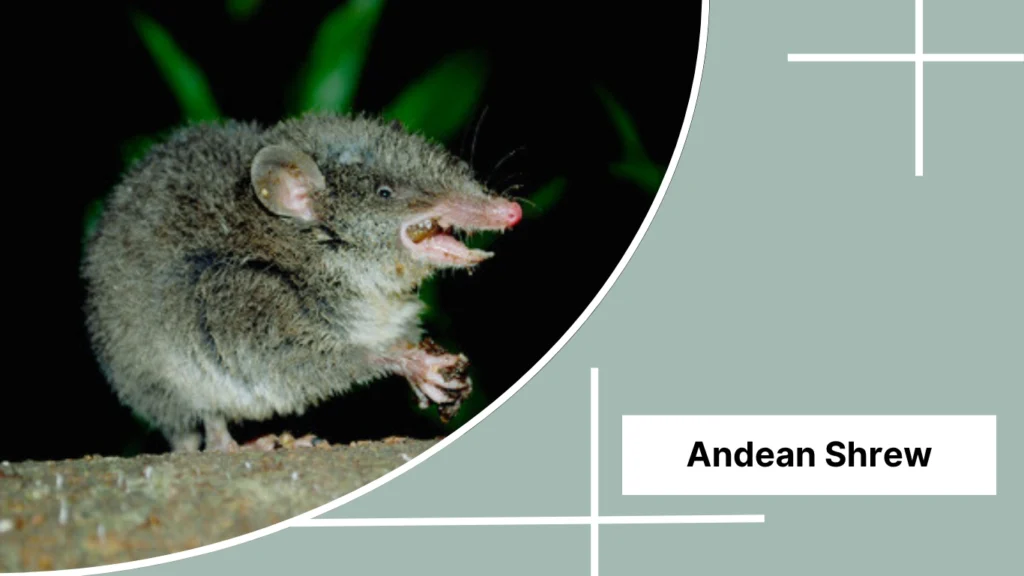
The Andean Shrew (Cryptotis equatoris) is a small, rare species found in the high-altitude cloud forests of the northern Andes. It belongs to the genus Cryptotis, known for their short tails and preference for mountainous habitats.
Identification
- Size: 2.5–3.5 inches in body length
- Tail: Very short and stubby, often less than one-third of body length
- Color: Dark gray to brownish coat with a lighter underside
- Snout: Short and stout compared to other shrews
- Ears: Tiny and nearly hidden by fur
- Weight: 4–8 grams
Natural Habitat and Range
The Andean Shrew inhabits cloud forests and montane woodlands in Ecuador and possibly nearby regions in Colombia and Peru. It lives at elevations between 2,000 and 3,500 meters, often in damp soil and mossy areas.
Diet and Feeding Habits
It feeds on insects, larvae, and other small soil invertebrates. It forages in leaf litter, under logs, and within soft forest soils. Its strong limbs and short tail are ideal for digging and navigating narrow ground tunnels.
Behavior and Activity
This shrew is elusive and understudied due to its limited range and difficult-to-access habitat. It is believed to be solitary and terrestrial, active mostly at night or during cool, moist conditions. It likely nests in underground chambers or within thick moss beds.
24. Haitian Shrew (Nesophontes paramicrus) – Extinct
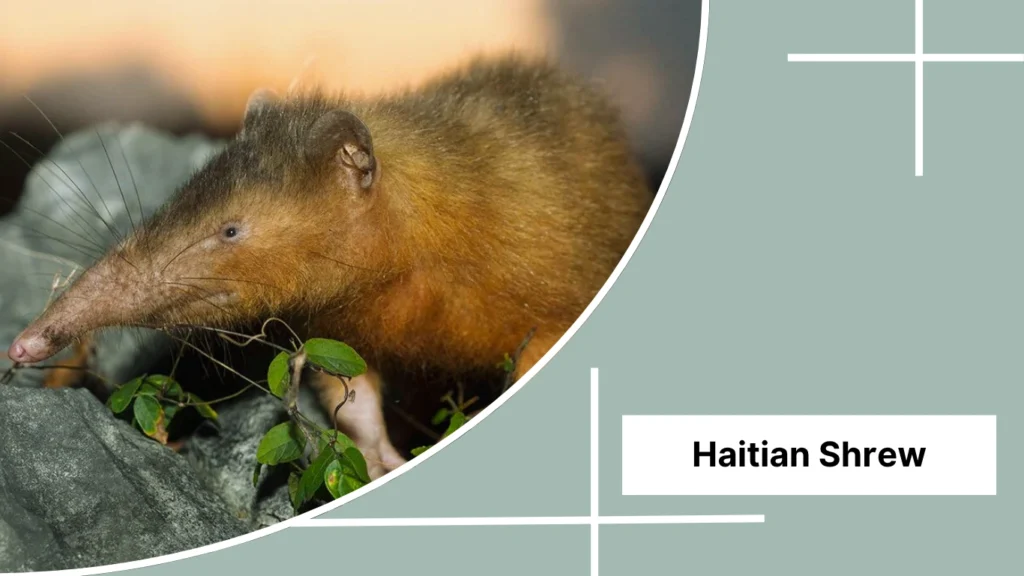
The Haitian Shrew, or Nesophontes paramicrus, was a small, shrew-like mammal native to the island of Hispaniola (present-day Haiti and the Dominican Republic). Though called a “shrew,” it belonged to the now-extinct family Nesophontidae and resembled modern shrews in size and habits.
Identification
- Size: Estimated 3–4 inches in body length
- Tail: Presumed short and sparsely haired
- Color: Unknown (no preserved skin or fur)
- Snout: Likely long and narrow, shrew-like
- Ears: Small and rounded (based on skeletal remains)
- Weight: Estimated 5–10 grams
Natural Habitat and Range
It inhabited moist tropical forests and scrublands in lowland and mountainous regions of Hispaniola. Fossil and subfossil evidence suggests it lived in leaf litter, root systems, and crevices near forest floors.
Diet and Feeding Habits
Like modern shrews, it likely fed on insects, worms, and other small invertebrates. Its sharp teeth and pointed snout suggest a diet of soft-bodied prey found in soil and debris.
Behavior and Activity
The Haitian Shrew is believed to have been nocturnal and ground-dwelling. It probably nested in hidden cavities and foraged at night. It went extinct sometime after European colonization—likely due to habitat loss and the introduction of invasive predators like rats and mongooses.
25. Cuban Solenodon (Solenodon cubanus) – Shrew-like Insectivore

The Cuban Solenodon (Solenodon cubanus) is not a true shrew but shares many shrew-like characteristics. This rare, primitive mammal is endemic to Cuba and is one of only two surviving solenodon species in the world.
Identification
- Size: 6–9 inches in body length
- Tail: Long, naked, and scaly
- Color: Dark brown to black fur with a pale underside
- Snout: Extremely long and flexible
- Ears: Large and rounded
- Weight: 600–1,000 grams
Natural Habitat and Range
It inhabits dense forests, mountain slopes, and moist lowlands in eastern Cuba. It prefers undisturbed areas with ample leaf litter, logs, and ground cover.
Diet and Feeding Habits
The Cuban Solenodon is insectivorous, feeding on insects, worms, and small vertebrates. It uses echolocation-like clicking sounds and a venomous groove in its lower incisors to subdue prey—one of the few venomous mammals on Earth.
Behavior and Activity
It is nocturnal, slow-moving, and secretive. It builds burrows or nests in hollow logs or rocky crevices. Despite its appearance, it is more closely related to early mammalian ancestors than to true shrews. The species is considered endangered due to habitat destruction and predation by introduced species.