





Foxes are among the most adaptable and diverse members of the canine family, found in environments ranging from Arctic tundras and scorching deserts to tropical forests and suburban neighborhoods. Known for their sharp senses, intelligence, and bushy tails, foxes vary greatly in appearance and behavior across different species.
This guide introduces 15 distinct types of foxes from around the world, each with its own unique adaptations, habitats, and survival strategies. From the well-known Red Fox to the elusive Blanford’s Fox and the tiny, heat-resistant Fennec Fox, you’ll explore how these fascinating creatures thrive in a wide variety of ecosystems. Whether you’re curious about tree-climbing foxes, desert dwellers, or endangered island species, this list offers a deeper look into the lives of some of the world’s most captivating wild canids.
1. Red Fox

The Red Fox (Vulpes vulpes) is the most widespread and well-known fox species in the world. Its adaptability to diverse environments—from rural woodlands to bustling cities—has made it an iconic and highly successful member of the canid family.
Identification
- Size: 18–35 inches in body length (excluding tail)
- Tail: 12–21 inches long, bushy with a white tip
- Color: Typically reddish-orange with a white chest and underbelly, black legs and ear tips
- Ears: Upright and pointed
- Weight: 6–15 pounds
Natural Habitat and Range
Red Foxes are found across the Northern Hemisphere, including North America, Europe, Asia, and parts of North Africa. They thrive in forests, grasslands, mountains, deserts, agricultural lands, and urban areas—adapting well to both wild and human-modified environments.
Diet and Feeding Habits
They are omnivores and opportunistic feeders. Their diet includes rodents, rabbits, birds, insects, fruits, berries, and even human food waste. Red Foxes cache surplus food to eat later, burying it in shallow holes.
Behavior and Activity
Red Foxes are mostly nocturnal or crepuscular, though they can be active during the day. They are solitary hunters and highly territorial. Known for their cunning behavior, they use a combination of stealth and speed to catch prey. Mating season occurs in winter, and vixens (females) raise litters of 4–6 kits in dens dug into the ground.
2. Arctic Fox
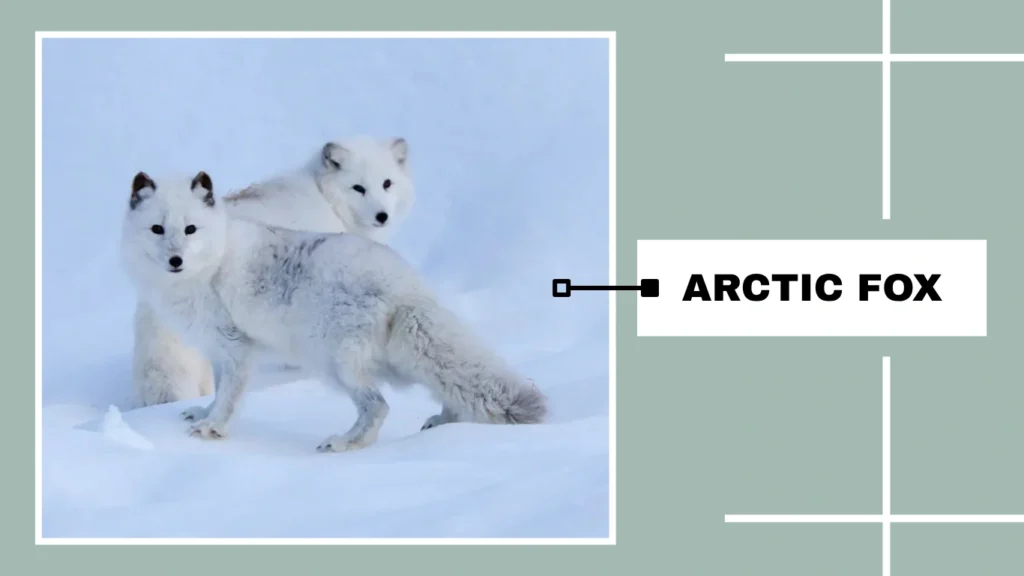
The Arctic Fox (Vulpes lagopus) is a small, hardy fox species adapted to survive the harsh, frozen conditions of the Arctic tundra. Its thick fur and seasonal camouflage make it one of the best-adapted animals to extreme cold.
Identification
- Size: 18–27 inches in body length
- Tail: 10–15 inches, thick and fluffy
- Color: White in winter; brown or gray in summer
- Ears: Short and rounded to minimize heat loss
- Weight: 6–10 pounds
Natural Habitat and Range
Arctic Foxes inhabit the treeless tundra and coastal regions of the Arctic, including parts of Alaska, Canada, Greenland, Russia, and Scandinavia. They live in burrows and may dig dens into hillsides or snowbanks for insulation.
Diet and Feeding Habits
They are omnivores and scavengers, feeding on lemmings, voles, birds, eggs, carrion, fish, and berries. In winter, they often follow polar bears to scavenge leftover seals or hunt under the snow using keen hearing to locate prey.
Behavior and Activity
Arctic Foxes are nomadic and constantly roam in search of food, often covering great distances. They are well-insulated for freezing temperatures and use their bushy tails as a blanket while sleeping. During breeding season, they form monogamous pairs and raise pups in communal dens.
3. Fennec Fox
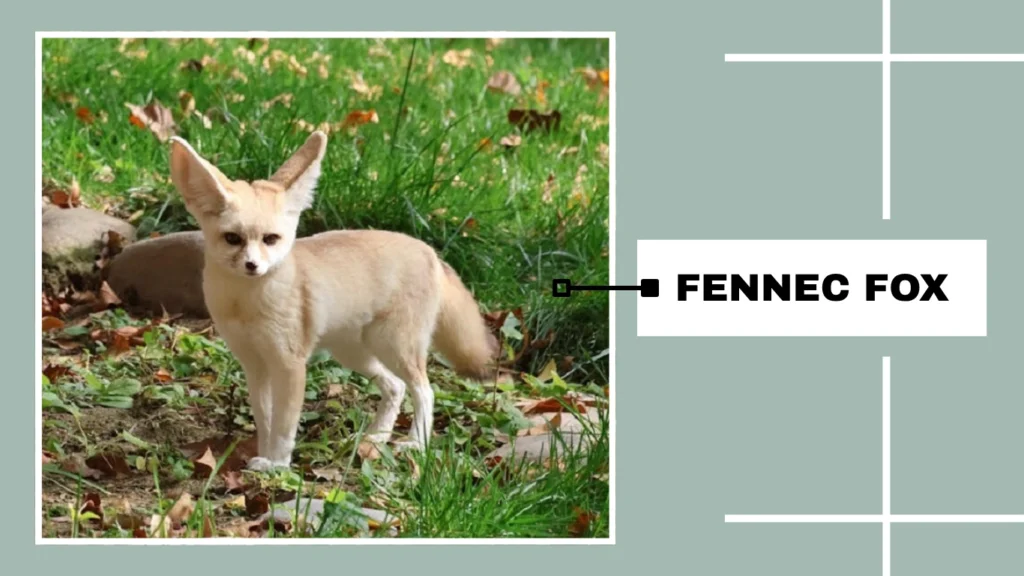
The Fennec Fox (Vulpes zerda) is the smallest of all fox species, famous for its oversized ears and ability to thrive in desert environments. Native to the Sahara, this nocturnal fox is adapted to extreme heat and dryness.
Identification
- Size: 9–16 inches in body length
- Tail: 7–12 inches, bushy with a black tip
- Color: Creamy beige with a white underside
- Ears: Extremely large (up to 6 inches), used for heat dissipation
- Weight: 2–3.5 pounds
Natural Habitat and Range
Fennec Foxes inhabit sandy deserts and arid regions of North Africa and the Arabian Peninsula. They create elaborate burrow systems in dunes to stay cool and avoid predators.
Diet and Feeding Habits
They are omnivores, feeding on insects, small rodents, lizards, birds, eggs, fruits, and roots. Fennec Foxes can survive without free-standing water, obtaining moisture from their food.
Behavior and Activity
Fennec Foxes are highly nocturnal, becoming active at night when desert temperatures drop. They live in small family groups and communicate through barks, whines, and scent marking. Their agility, digging ability, and exceptional hearing help them locate prey beneath the sand.
4. Gray Fox
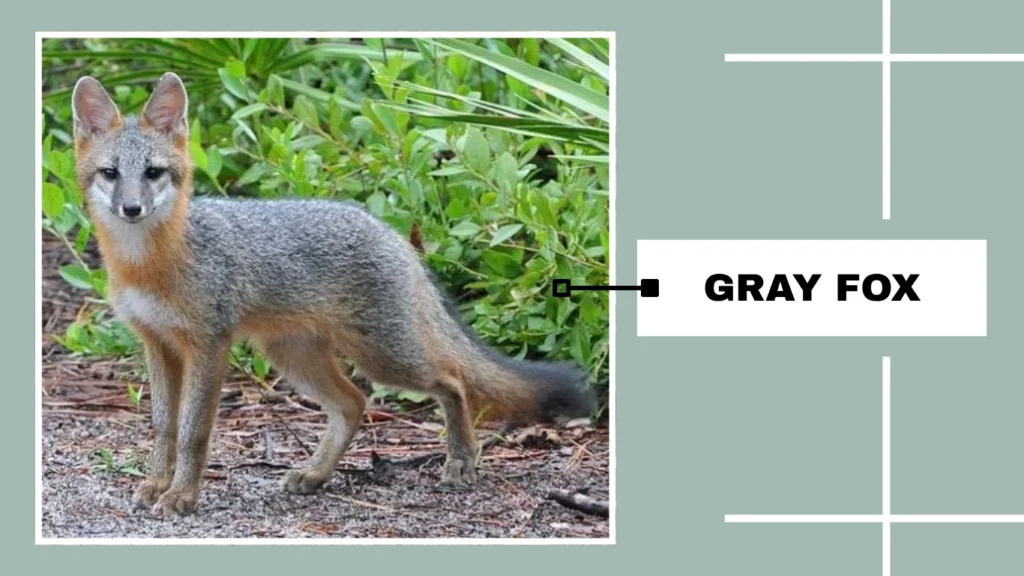
The Gray Fox (Urocyon cinereoargenteus) is a medium-sized, tree-climbing fox native to North and Central America. Unlike most foxes, it has strong claws and agility that allow it to climb trees with ease, making it one of the only canids with this behavior.
Identification
- Size: 20–27 inches in body length
- Tail: 11–17 inches, bushy with a black stripe and tip
- Color: Grizzled gray back, reddish sides, and white underparts
- Ears: Pointed with reddish edges
- Weight: 7–15 pounds
Natural Habitat and Range
Gray Foxes inhabit deciduous forests, rocky hillsides, deserts, and brushy areas throughout southern Canada, the United States, Mexico, and Central America. They prefer dense vegetation and are more reclusive than the Red Fox.
Diet and Feeding Habits
They are omnivorous, feeding on small mammals, birds, insects, fruits, and nuts. Their diet shifts seasonally and may include acorns, berries, and corn. They also cache food for later consumption.
Behavior and Activity
Gray Foxes are crepuscular and nocturnal, often avoiding human activity. They are solitary except during mating and rearing of young. Their ability to climb trees sets them apart from other foxes, both for hunting and escaping predators.
5. Kit Fox

The Kit Fox (Vulpes macrotis) is a small, desert-dwelling fox found in the southwestern United States and northern Mexico. It is known for its large ears, which help regulate body temperature in hot environments.
Identification
- Size: 18–21 inches in body length
- Tail: 10–14 inches, long and bushy with a black tip
- Color: Pale gray to buff coat with whitish underparts
- Ears: Very large and pointed
- Weight: 3.5–6 pounds
Natural Habitat and Range
Kit Foxes live in arid deserts, grasslands, and scrublands, especially in California, Nevada, Arizona, New Mexico, and northern Mexico. They prefer sandy or loose soils where they can dig burrows.
Diet and Feeding Habits
Their diet includes kangaroo rats, mice, rabbits, lizards, birds, insects, and fruit. They hunt at night and rely heavily on hearing and scent to locate prey.
Behavior and Activity
Kit Foxes are primarily nocturnal and highly secretive. They use complex underground burrows for shelter and protection from the heat. They are monogamous and raise litters of 4–5 pups. Populations have declined in parts of their range due to habitat fragmentation and disease.
6. Swift Fox
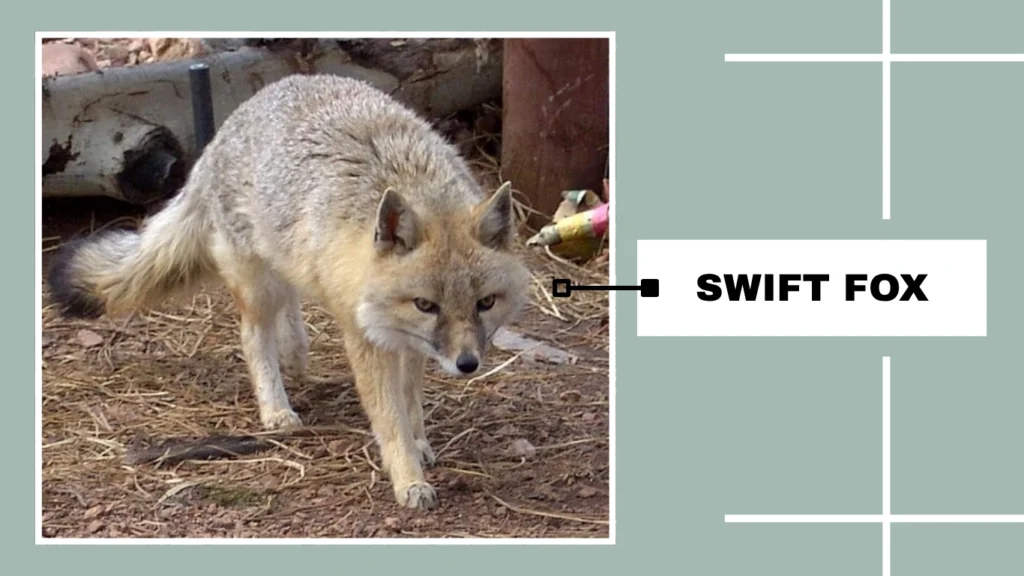
The Swift Fox (Vulpes velox) is a small, quick-footed fox species native to the Great Plains of North America. It’s known for its speed and agility, making it one of the fastest foxes in open grassland habitats.
Identification
- Size: 12–15 inches in body length
- Tail: 10–14 inches, thick and bushy with a black tip
- Color: Light tan to yellowish-gray with orange tones on the neck and flanks
- Ears: Short and rounded
- Weight: 4–7 pounds
Natural Habitat and Range
Swift Foxes live in shortgrass and mixed-grass prairies of the United States and southern Canada. They prefer open, flat terrain with sparse vegetation and use underground dens for shelter and raising pups.
Diet and Feeding Habits
They are omnivorous and opportunistic, feeding on rabbits, rodents, birds, insects, and fruits. Insects like grasshoppers and beetles are common in summer, while small mammals dominate their winter diet.
Behavior and Activity
Swift Foxes are mainly nocturnal and spend much of the day resting in their dens. They are shy and elusive, often forming monogamous pairs during the breeding season. Thanks to conservation programs, their populations have been rebounding after near extinction in parts of their historical range.
7. Bengal Fox

The Bengal Fox (Vulpes bengalensis), also known as the Indian Fox, is a slender, medium-sized fox native to the Indian subcontinent. It is well adapted to dry habitats and is known for its bushy, black-tipped tail and agile movement.
Identification
- Size: 18–24 inches in body length
- Tail: 10–14 inches, thick and distinctly black-tipped
- Color: Grayish-brown to sandy with paler underparts
- Ears: Long, narrow, and pointed
- Weight: 5–9 pounds
Natural Habitat and Range
Bengal Foxes are found across India, Nepal, and parts of Bangladesh and Pakistan. They prefer dry grasslands, scrublands, semi-arid plains, and open forests—avoiding dense forests and high elevations.
Diet and Feeding Habits
They are omnivores, feeding on rodents, insects, birds, reptiles, fruits, and carrion. Their diet varies seasonally and is shaped by local food availability.
Behavior and Activity
Bengal Foxes are primarily nocturnal and crepuscular, becoming active at dusk and returning to their dens at dawn. They are territorial and live in pairs or small family groups. Unlike some other foxes, they are rarely seen climbing or scavenging near human settlements.
8. Tibetan Fox

The Tibetan Fox (Vulpes ferrilata) is a unique, square-faced fox species found in the high-altitude regions of the Tibetan Plateau. Known for its thick fur and oddly stern expression, it’s specially adapted to cold, open environments.
Identification
- Size: 23–28 inches in body length
- Tail: 12–16 inches, long and bushy with a pale tip
- Color: Sandy gray to tan with a whitish underside and darker back
- Ears: Short and rounded
- Weight: 8–12 pounds
Natural Habitat and Range
Tibetan Foxes inhabit alpine steppes, semi-arid plains, and high-altitude grasslands across Tibet, Nepal, Bhutan, and western China. They live at elevations above 3,000 meters, often in remote, windswept terrain.
Diet and Feeding Habits
They primarily hunt pikas, a small rabbit-like mammal, but also feed on rodents, hares, birds, and carrion. Tibetan Foxes often follow brown bears to scavenge remains from excavated pika burrows.
Behavior and Activity
They are diurnal and solitary, usually seen in pairs only during breeding season. Tibetan Foxes are not fast runners but rely on patience, ambush tactics, and stealth to catch prey in open landscapes. Their shy nature and remote habitat make them difficult to study in the wild.
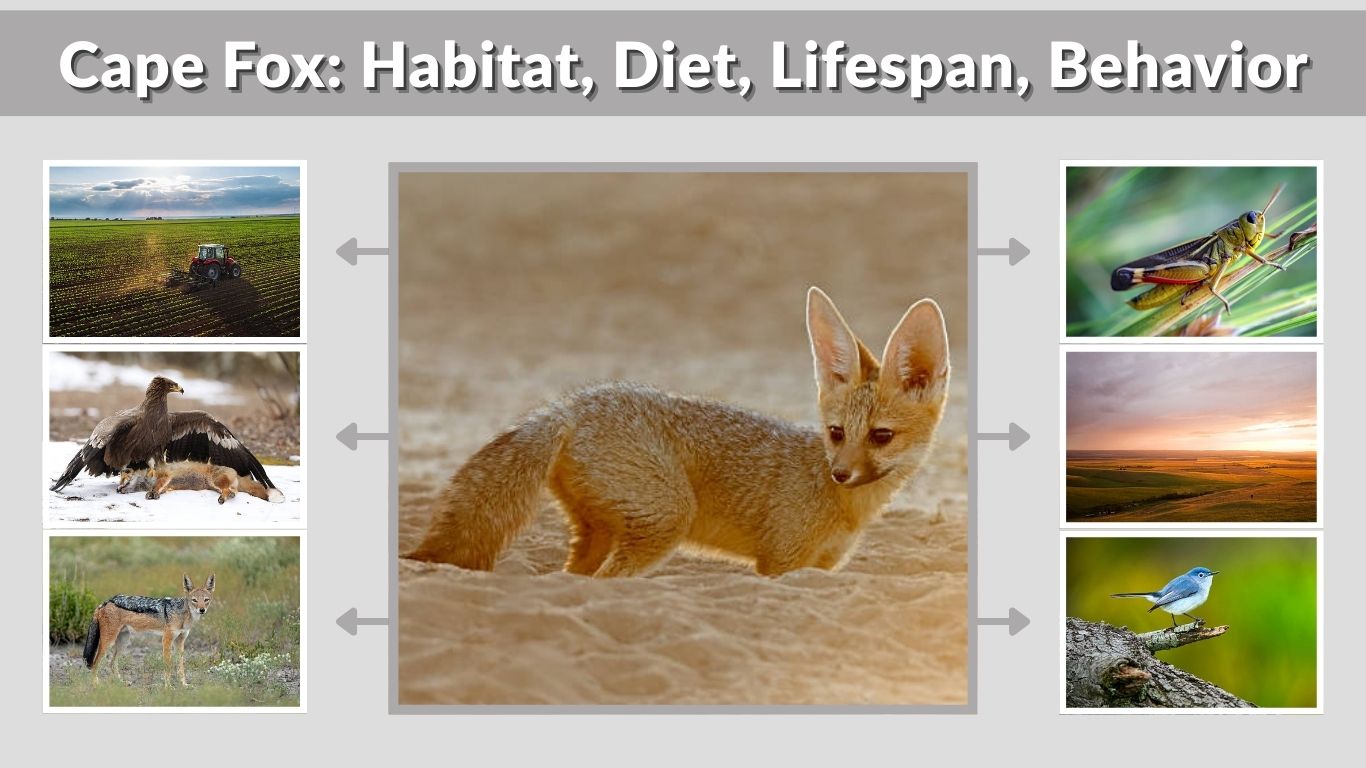
9. Cape Fox

The Cape Fox (Vulpes chama), also called the silver-backed fox, is a small, nocturnal fox native to southern Africa. It is the only true fox species native to sub-Saharan Africa and is known for its sleek appearance and secretive behavior.
Identification
- Size: 18–24 inches in body length
- Tail: 10–14 inches, bushy with a dark or black tip
- Color: Silvery-gray back with reddish-brown flanks and limbs
- Ears: Large, pointed, and reddish on the inside
- Weight: 6–10 pounds
Natural Habitat and Range
Cape Foxes are found in open country, semi-deserts, savannas, scrublands, and arid grasslands across South Africa, Namibia, Botswana, and Zimbabwe. They prefer flat or gently rolling terrain with sparse vegetation.
Diet and Feeding Habits
They are omnivores, feeding on rodents, birds, insects, reptiles, fruit, and carrion. They often forage alone at night and may bury excess food to consume later.
Behavior and Activity
Cape Foxes are strictly nocturnal and secretive. They are usually solitary but may be seen in mating pairs or with offspring. They dig their own dens or use abandoned ones, emerging only at night to hunt. When threatened, they use speed and agility to escape, and they are rarely vocal.
10. Blanford’s Fox
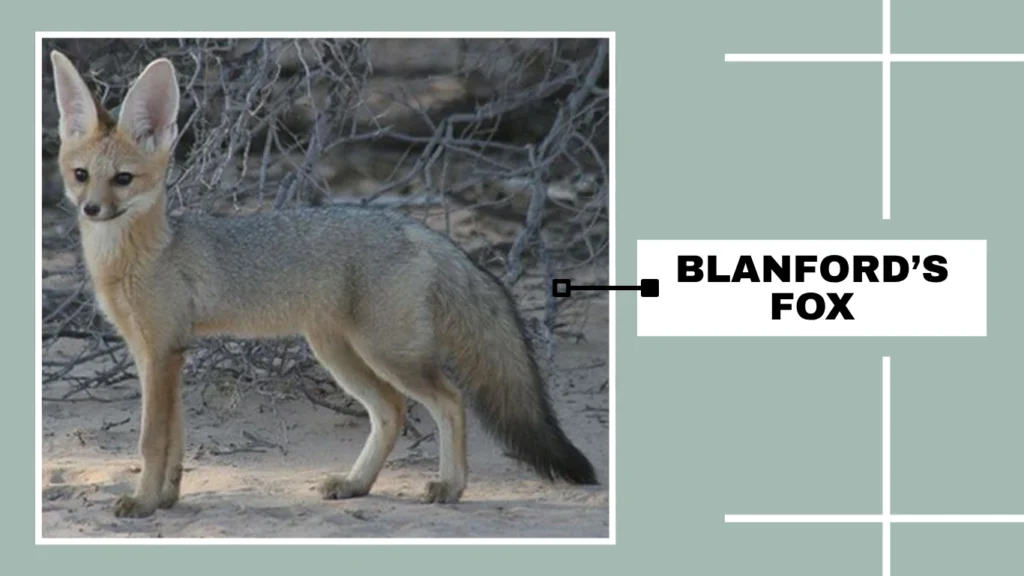
Blanford’s Fox (Vulpes cana) is a small, desert-adapted fox found in arid and mountainous regions of the Middle East and Central Asia. It is elusive and agile, often found in rocky environments where it climbs with ease.
Identification
- Size: 15–18 inches in body length
- Tail: 12–14 inches, long and bushy with a black tip
- Color: Pale gray or sandy with lighter underparts and dark markings on the face
- Ears: Large and wide, aiding in heat dissipation
- Weight: 2–4 pounds
Natural Habitat and Range
Blanford’s Fox inhabits rocky deserts, cliffs, and arid mountain slopes in countries such as Iran, Pakistan, Afghanistan, Israel, Oman, and Saudi Arabia. It prefers steep terrain where it can find crevices for shelter.
Diet and Feeding Habits
This fox is omnivorous, feeding primarily on insects, fruits, small mammals, and birds. It is especially fond of dates and other desert fruits. It drinks little water, obtaining most of its moisture from food.
Behavior and Activity
Blanford’s Fox is strictly nocturnal and solitary. It is a skilled climber, often found in rocky crevices or steep slopes. Shy and rarely seen, it avoids open areas during daylight. It uses its bushy tail for balance while climbing.
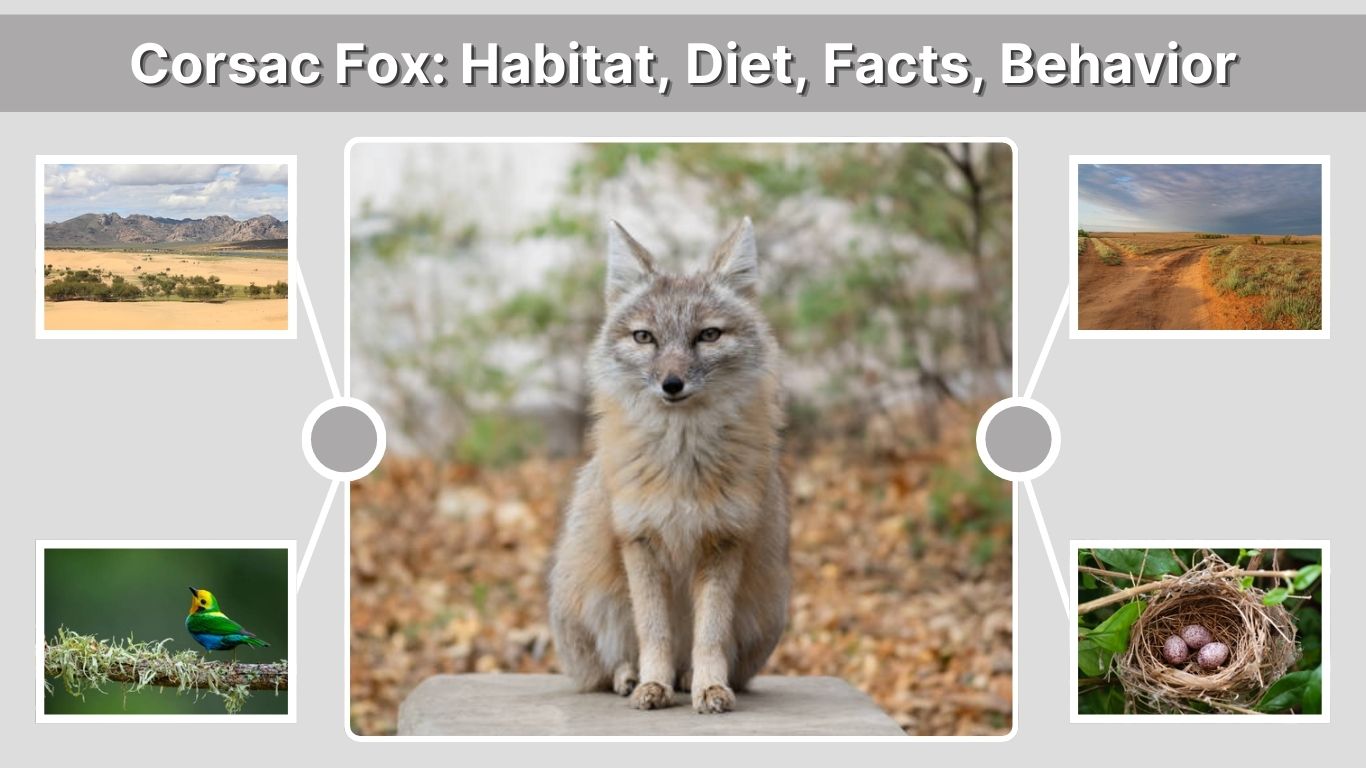
11. Corsac Fox

The Corsac Fox (Vulpes corsac) is a medium-sized fox species native to the open steppes and semi-deserts of Central Asia. Adapted to harsh climates, it is known for its dense coat and nomadic behavior.
Identification
- Size: 18–26 inches in body length
- Tail: 10–14 inches, bushy and pale-tipped
- Color: Pale gray-yellow to sandy with a whitish underside
- Ears: Medium-sized and rounded
- Weight: 3.5–7 pounds
Natural Habitat and Range
Corsac Foxes are found in Mongolia, Kazakhstan, Russia, northern China, and surrounding regions. They prefer dry, treeless plains, deserts, and grasslands with sparse vegetation.
Diet and Feeding Habits
They feed on small mammals like voles and gerbils, as well as insects, birds, and carrion. Their diet varies seasonally, and they can survive without drinking water for long periods, relying on food for moisture.
Behavior and Activity
Corsac Foxes are nocturnal and highly nomadic, traveling long distances in search of food. They do not dig their own burrows but occupy abandoned ones. In winter, they may form small packs. They are silent, cautious, and well-camouflaged in the open steppe.
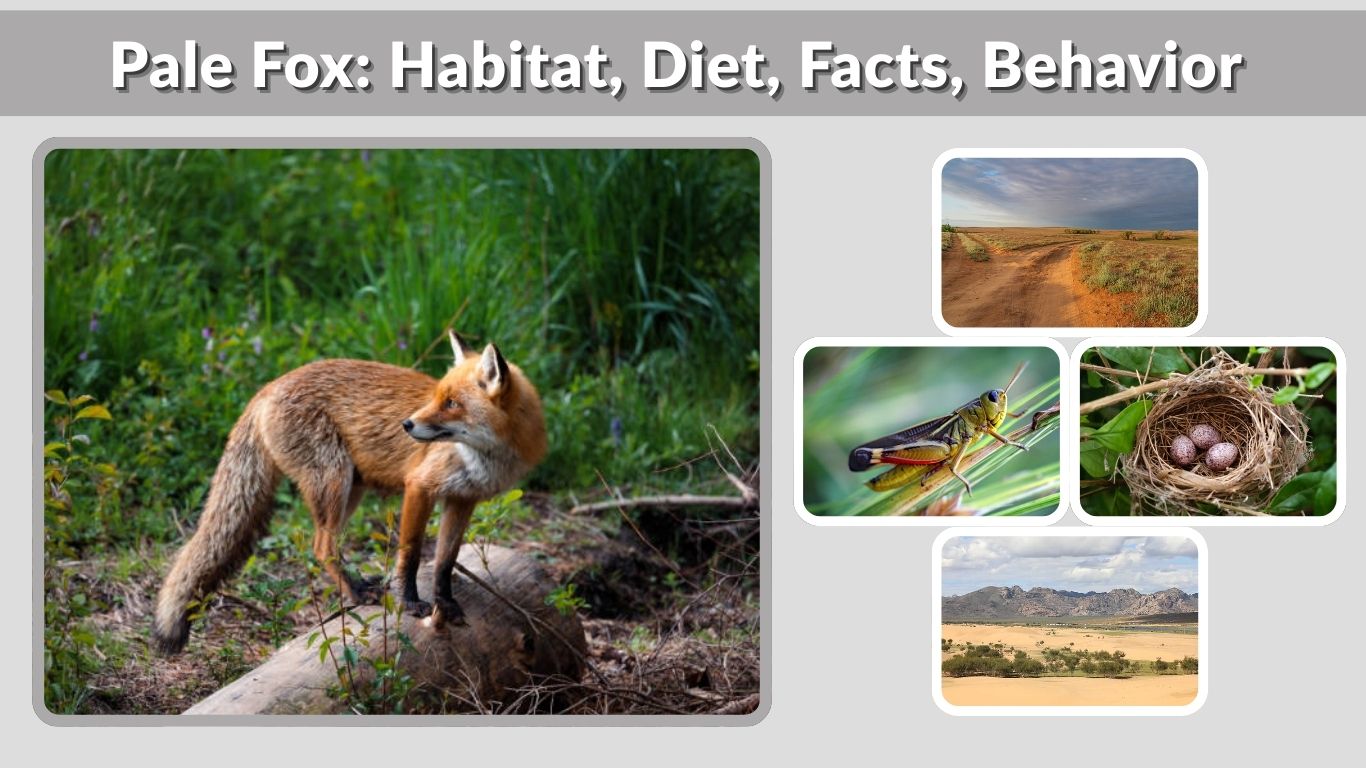
12. Pale Fox

The Pale Fox (Vulpes pallida) is a slender, desert-dwelling fox found across the Sahel region of Africa. It is one of the least-studied fox species and is perfectly adapted to hot, arid environments.
Identification
- Size: 16–18 inches in body length
- Tail: 10–12 inches, bushy with a dark tip
- Color: Pale sandy or buff-colored coat with grayish back and white underparts
- Ears: Large, wide, and pointed
- Weight: 4–6 pounds
Natural Habitat and Range
Pale Foxes are found in the dry savannas and semi-deserts of the Sahel belt, from Senegal and Mauritania to Ethiopia and Sudan. They prefer sandy areas with sparse vegetation and dig extensive burrow systems.
Diet and Feeding Habits
They are omnivorous, feeding on insects, small rodents, reptiles, fruits, berries, and occasionally human scraps. Their diet is water-efficient, allowing them to survive in areas with little to no free-standing water.
Behavior and Activity
Pale Foxes are nocturnal and highly secretive. They spend the day underground in burrows to escape the desert heat. They are rarely seen, often traveling alone or in pairs at night. Their burrows can be over 15 feet long with multiple entrances.
13. Rüppell’s Fox
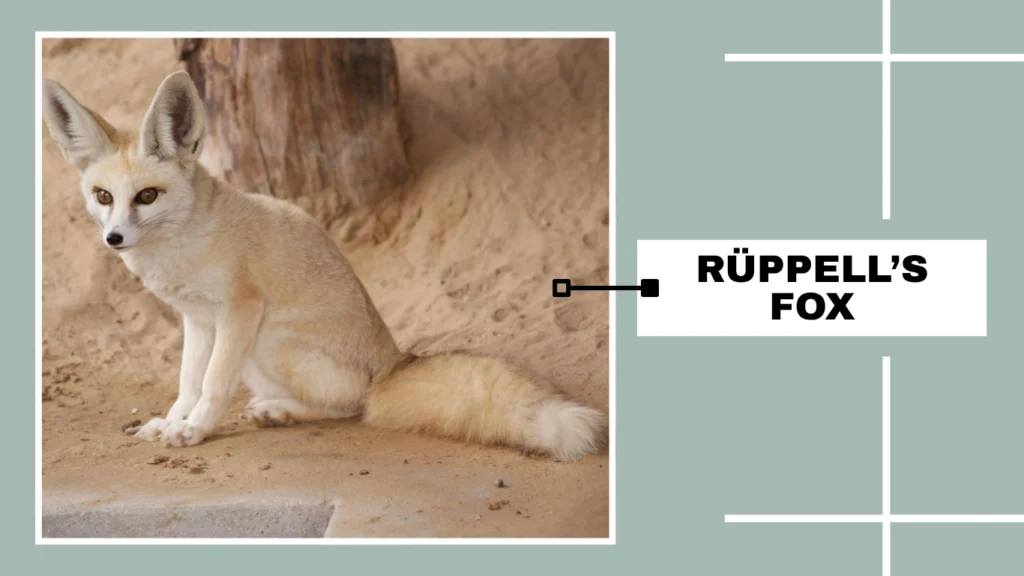
Rüppell’s Fox (Vulpes rueppellii), also called the Sand Fox, is a small fox adapted to desert life. It is named after the German naturalist Eduard Rüppell and is native to the deserts and semi-arid regions of North Africa and the Middle East.
Identification
- Size: 16–20 inches in body length
- Tail: 10–12 inches, fluffy with a dark or black tip
- Color: Pale grayish-tan coat with white underparts and a dark spot above each eye
- Ears: Very large and thin, helping to release heat
- Weight: 3–6 pounds
Natural Habitat and Range
Rüppell’s Foxes inhabit rocky deserts, dry plains, and sandy dunes in countries such as Morocco, Egypt, Libya, Saudi Arabia, and Iran. They seek areas with loose soil for digging burrows.
Diet and Feeding Habits
They are omnivores, feeding on insects, lizards, rodents, birds, fruits, and seeds. They also scavenge food remains and are able to go long periods without drinking water, relying on food moisture.
Behavior and Activity
These foxes are nocturnal and solitary. During the day, they shelter in burrows to avoid the desert heat. They are swift, silent, and rarely vocal. Rüppell’s Foxes are elusive in the wild but are well adapted to desert survival with minimal water.
14. Hoary Fox

The Hoary Fox (Lycalopex vetulus) is a small, South American fox species endemic to Brazil. Despite its name, it is not a true fox of the Vulpes genus, but it shares many similarities in appearance and behavior.
Identification
- Size: 20–24 inches in body length
- Tail: 10–12 inches, bushy with a black tip
- Color: Grayish coat with a hoary (frosted) appearance and reddish legs
- Ears: Medium-sized and pointed
- Weight: 5–8 pounds
Natural Habitat and Range
Hoary Foxes are found mainly in the Brazilian Cerrado—tropical savanna and dry grassland regions. They prefer open landscapes with scattered trees and avoid dense forests and wetlands.
Diet and Feeding Habits
Their diet is mainly insectivorous, focusing on termites and beetles, though they also eat fruits, small rodents, and birds. They play an important role in seed dispersal due to their fruit consumption.
Behavior and Activity
Hoary Foxes are nocturnal and elusive. They are solitary or live in mated pairs with pups during the breeding season. Unlike most foxes, they rarely scavenge and are not aggressive hunters, relying mostly on slow-moving or abundant insect prey.
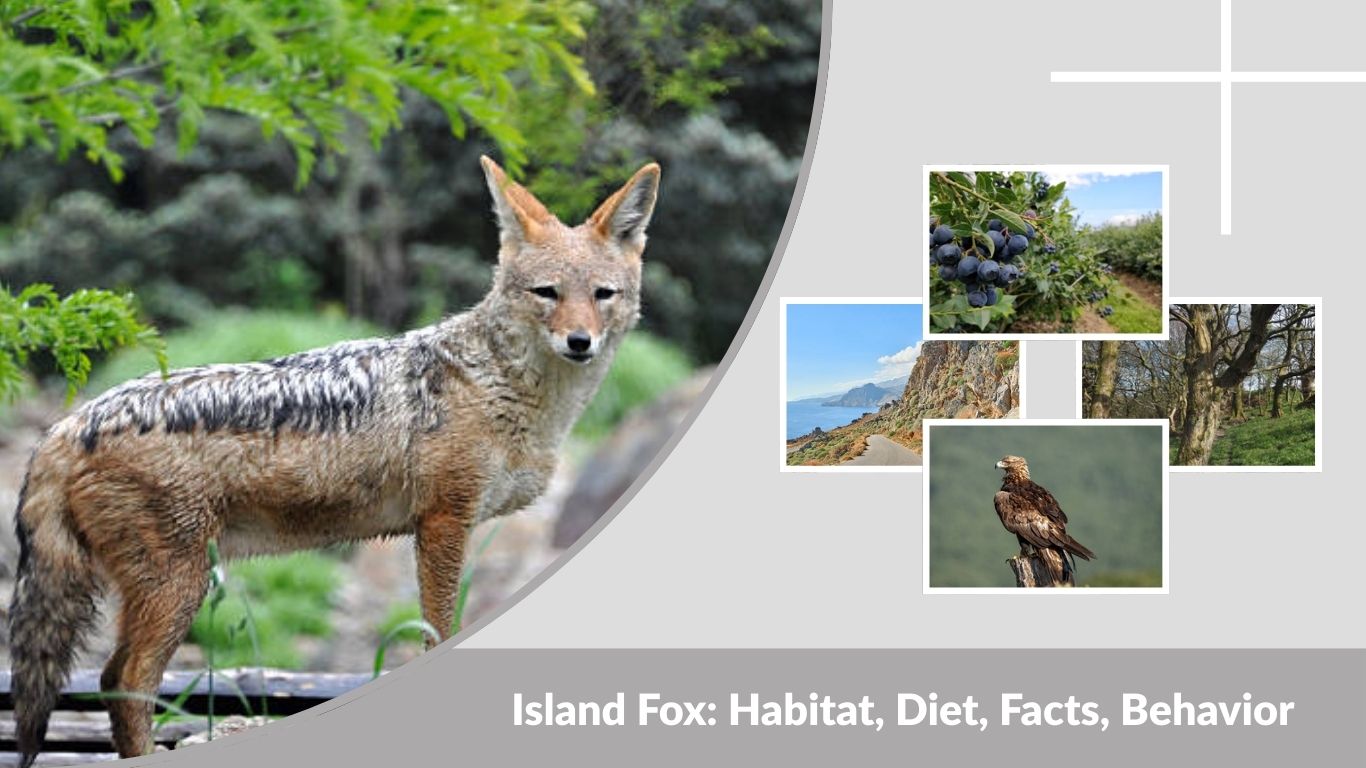
15. Island Fox
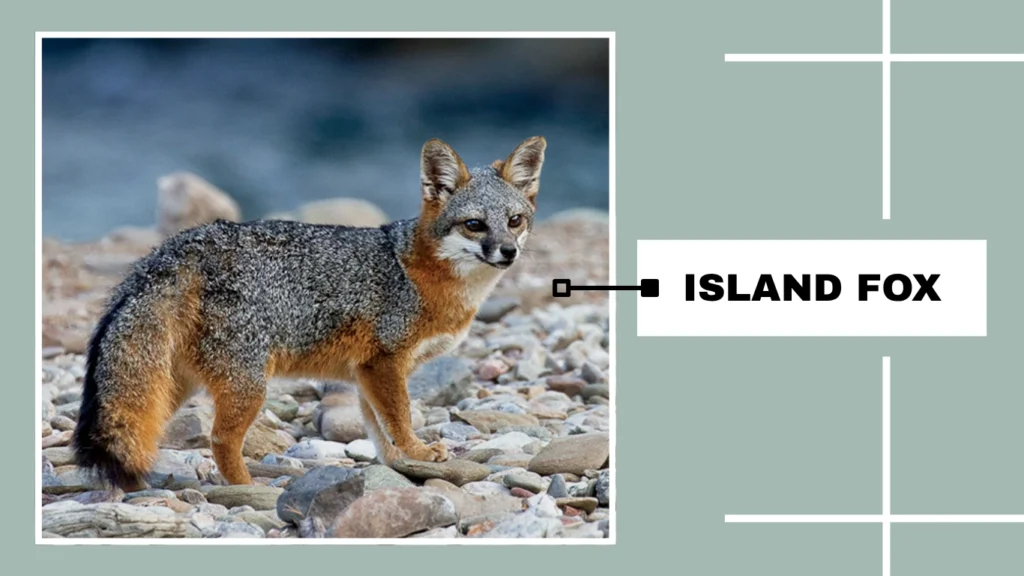
The Island Fox (Urocyon littoralis) is a small, dwarf fox species native to six of the eight Channel Islands off the coast of southern California. It evolved from the Gray Fox and adapted to island life with smaller size and reduced predators.
Identification
- Size: 18–20 inches in body length
- Tail: 4–6 inches, bushy and black-tipped
- Color: Grizzled gray on the back with reddish-brown legs and white underparts
- Ears: Short and rounded
- Weight: 2.5–5 pounds
Natural Habitat and Range
The Island Fox inhabits scrublands, coastal sage, grasslands, and forests on islands such as Santa Cruz, Santa Rosa, and San Miguel. Each island hosts its own subspecies, adapted to the specific conditions of that island.
Diet and Feeding Habits
They are omnivorous, feeding on insects, small mammals, birds, fruits, and cactus pads. Their diet varies by season and island habitat. They forage primarily on the ground and are opportunistic feeders.
Behavior and Activity
Island Foxes are diurnal and highly territorial. They are monogamous and form lifelong pair bonds. Their populations once neared extinction due to disease and invasive predators, but conservation efforts have successfully restored numbers in recent decades.