

If you’re drawn to tarantulas with vibrant colors and striking personalities, the Antilles Pinktoe Tarantula (Caribena versicolor) is one you need to know. Famous for its iridescent blue, green, and purple hues—and bright pink toes—this arboreal species has become a favorite in the exotic pet world. But it’s not alone. From purple pink-toe tarantulas to Brazilian pink blooms, there’s a whole spectrum of colorful species to explore.
In this guide, we’ll cover the Antilles Pinktoe in depth and introduce other beautiful tarantulas, including how to care for them, what to expect in size and behavior, and where to find them for sale.
Antilles Pinktoe Tarantula Overview

The Antilles Pinktoe Tarantula, also known as Caribena versicolor, is one of the most stunning arboreal tarantulas in the hobby. Native to Martinique in the Caribbean, this species is prized for its bright, metallic colors and relatively calm temperament. It starts life as a vibrant blue spiderling, then transitions into a mix of emerald green, purple, and pink as it matures.
Quick Facts:
- Scientific Name: Caribena versicolor
- Common Names: Antilles Pinktoe, Martinique Pinktoe
- Leg Span: 4.5–6 inches
- Lifespan: Up to 12 years (females), 2–3 years (males)
- Native Region: Caribbean island of Martinique
- Coloration: Blue (juveniles), green/pink/purple (adults)
- Type: Arboreal (tree-dwelling)
This species is not only beautiful but also well-suited for display, making it a favorite among both beginners (with research) and experienced tarantula keepers.
Temperament and Behavior

The Antilles Pinktoe is generally known for its docile nature, but it’s also fast and skittish, which means handling should be limited—especially for beginners. Unlike some more defensive tarantulas, it will usually flee before biting if disturbed.
Key Behavioral Traits:
- Very active climbers
- Known for creating thick web tunnels in high corners of the enclosure
- Rarely shows threat posture
- May flick urticating hairs if stressed, but this is uncommon
- Better observed than handled, due to their speed and fragile bodies
They are more curious than aggressive, often seen exploring their enclosures or rebuilding their web structures. With a calm environment and proper setup, these tarantulas thrive and display a wide range of natural behaviors.
Antilles Pinktoe Tarantula Care Guide
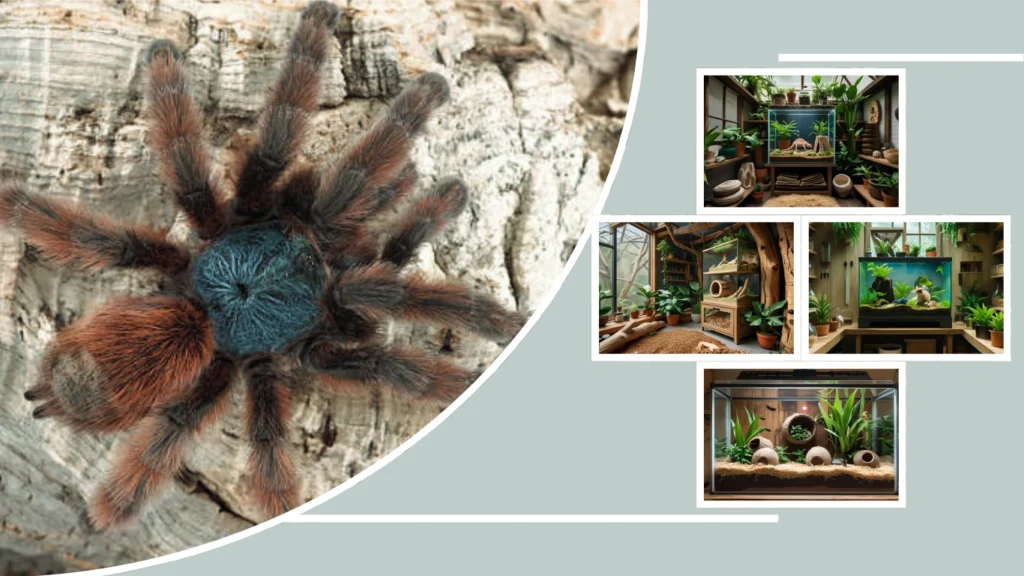
Proper care is key to keeping your Antilles Pinktoe healthy and stress-free. As an arboreal tarantula, it needs a vertical setup that mimics its natural habitat in the trees.
Enclosure Setup
- Height over floor space: Use a tall terrarium (12”–18” high for adults)
- Ventilation: Crucial to prevent mold; cross-ventilation is ideal
- Substrate: 2–3 inches of coconut fiber or topsoil to retain humidity
- Decor: Add cork bark, branches, and foliage for climbing and web-building
Temperature & Humidity
- Temperature: 75–85°F (24–29°C)
- Humidity: 70–80%
- Light misting every few days is usually enough. Ensure water doesn’t pool in the substrate.
Feeding
- Feed 1–2 appropriately sized insects (crickets, dubia roaches) every 5–7 days
- Remove uneaten prey after 24 hours
- Juveniles may need smaller, more frequent meals
This species doesn’t require complex care, but attention to humidity and airflow is essential to avoid health issues like mold or dehydration.
Popular Related Species (Colorful Tarantulas)

If you love the Antilles Pinktoe’s vivid coloration, you’ll be glad to know there are several other beautiful and colorful tarantulas worth exploring:
Purple Pinktoe Tarantula (Avicularia purpurea)
- Sleek, velvet-like deep purple body
- Calm temperament
- Slightly less vibrant as spiderlings, but stunning adults
Brazilian Pink Bloom Tarantula
- Known for pink-tipped legs and a soft, peachy carapace
- Rare in the pet trade
- Arboreal with similar care needs to the Antilles Pinktoe
Blue Pinktoe Tarantula
- A color morph or juvenile phase of Caribena versicolor
- Bright blue metallic sheen
- Often confused with the Trinidad Pinktoe
Green Bottle Blue Tarantula (Chromatopelma cyaneopubescens)
- Not a pinktoe but extremely colorful
- Metallic blue legs, orange abdomen, and green carapace
- Terrestrial and heavy webbers
Mexican Pink Beauty / Pink Zebra Beauty
- Terrestrial, docile tarantulas with subtle pink or peach hues
- Ideal for beginners due to calm temperament
These species vary in size, behavior, and housing needs, but all are known for their eye-catching appearance and are popular among tarantula enthusiasts.
Buying Guide: Price, Availability, and Where to Find Pinktoe Tarantulas
If you’re interested in owning an Antilles Pinktoe or one of its colorful relatives, the good news is that they’re widely available through reputable breeders and online exotic pet stores. Prices can vary depending on age, size, and rarity. Spiderlings are usually more affordable and range from $40 to $70, while larger juveniles or adult females may cost $100 or more. Rarer species like the Brazilian Pink Bloom or Purple Pinktoe may command higher prices due to limited availability.
It’s important to purchase from breeders who offer captive-bred specimens, as wild-caught tarantulas often carry health issues and contribute to habitat depletion. Many breeders also offer shipping within the U.S. or internationally with live arrival guarantees. Before purchasing, always check local regulations, as tarantula ownership is restricted or requires permits in some regions.
Pinktoe Tarantulas in the Wild
In their natural habitats, Antilles Pinktoe tarantulas live high in the trees of humid Caribbean forests. Their arboreal nature means they’re seldom seen on the ground, instead preferring to build dense web nests among leaves and branches. These webs serve both as a hiding place and a platform for hunting small insects.
The wild environment is consistently warm and moist, and the spider’s vibrant coloration may help it blend into the shifting light and shadows of its forest home. Despite their bright appearance, they are not aggressive and will often flee into their webs at the first sign of disturbance. Observing them in the wild is rare and usually only possible in regions like Martinique, where they are native and protected.
Pinktoe Tarantula Identification and Pictures

One of the most distinguishing features of the Antilles Pinktoe is its remarkable color change from juvenile to adult. Spiderlings are a metallic, electric blue that turns into a mix of green, purple, and pink as they mature. This transformation is not only stunning but also helps distinguish them from other pinktoe species. Adults have a velvety greenish-blue carapace, fuzzy pink-tipped legs, and an iridescent abdomen that can shift in hue depending on lighting.
High-quality images often highlight their arboreal stance, where they cling to vertical surfaces with agility. Compared to ground-dwelling tarantulas, their legs are more slender and adapted for climbing. Pictures taken just after molting usually show their colors at their most vibrant, which is why many enthusiasts share photos of their tarantulas soon after a fresh molt.
Are Pinktoe Tarantulas Poisonous or Dangerous?
Pinktoe tarantulas, including the Antilles Pinktoe, are not considered dangerous to humans. They do possess venom, like all tarantulas, but it’s mild and used primarily to subdue insect prey. A bite is rare and usually only occurs if the spider feels trapped or is mishandled. Even then, the effects are minor—typically no more severe than a bee sting, and in many cases, far less irritating.
What makes pinktoe tarantulas different from some terrestrial species is their tendency to flee rather than defend. Their arboreal nature means they are more likely to jump away from a threat than confront it. Though they may bite if pressed, they do not have strong venom or aggressive tendencies. For people with sensitivities or allergies, any bite should still be monitored, but for most, there is no real danger. They are safe to keep as pets with a basic understanding of their handling needs and respect for their space.
Are They Good for Beginners?
While pinktoe tarantulas are often recommended for intermediate keepers, they can be suitable for beginners who are ready to do their research. They are more delicate than terrestrial tarantulas, especially during molting periods or when humidity levels are off. Their speed can be surprising to those used to slower species, and new keepers should be cautious when opening enclosures or attempting to interact.
That said, their docile nature and beautiful colors make them a rewarding choice. They are not prone to threat displays, flicking hairs, or defensive behavior. As long as their care requirements—particularly humidity, ventilation, and vertical space—are met consistently, they can thrive in captivity. Observing their webbing, feeding, and climbing behavior is fascinating, making them ideal for those looking for a display species rather than a handleable pet.