
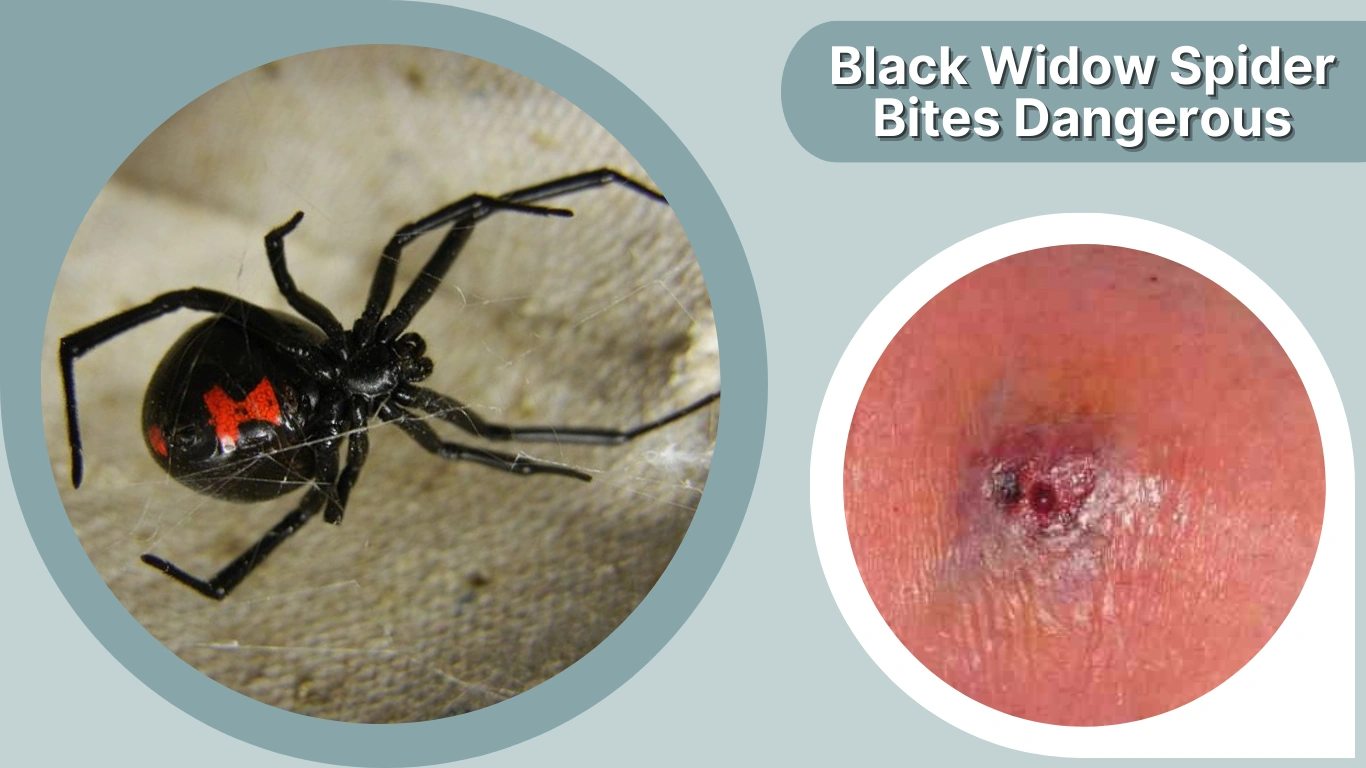
Black widow spiders are one of the most recognized and feared spiders in the world. Known for their shiny black bodies and distinctive red hourglass marking, they carry a reputation for being deadly. While it is true that their venom is potent, the real danger lies in how the bite affects humans and how it is treated. Fatalities are extremely rare today thanks to modern medicine, but black widow bites can still cause intense pain and serious health complications. Let’s explore how dangerous black widow spiders really are and whether male spiders pose the same risk.
Understanding Black Widow Spiders
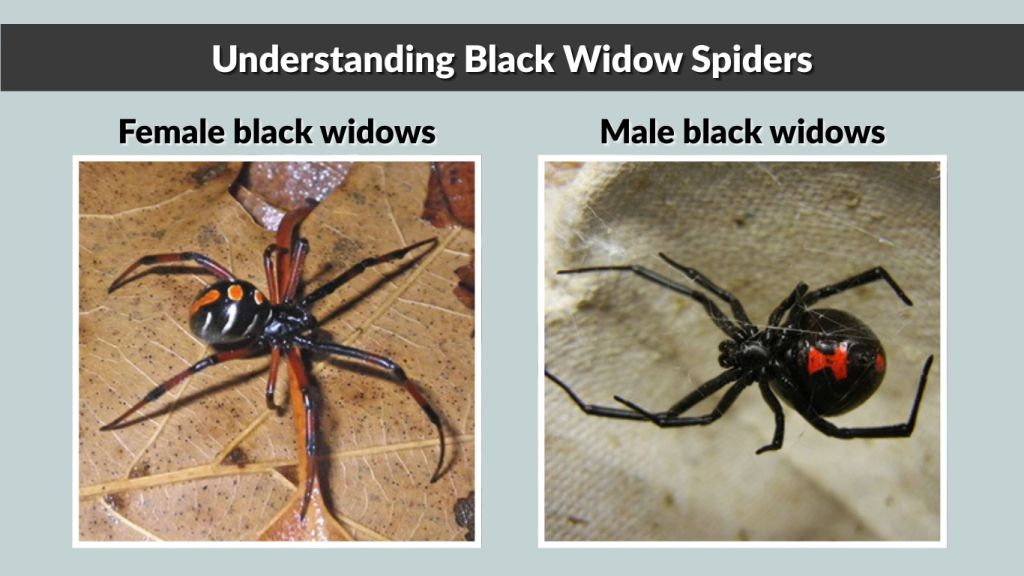
Black widow spiders belong to the genus Latrodectus and are found in many regions, including North America, southern Europe, Asia, Africa, and Australia.
- Female black widows are larger, shiny black, and easily recognized by the red hourglass mark on the underside of their abdomen.
- Male black widows are smaller, lighter in color, and much less dangerous.
They typically live in dark, quiet areas such as garages, sheds, basements, woodpiles, and gardens. They prefer undisturbed spaces where they can build their irregular webs to trap insects and other prey.
Are Black Widow Spiders Dangerous?
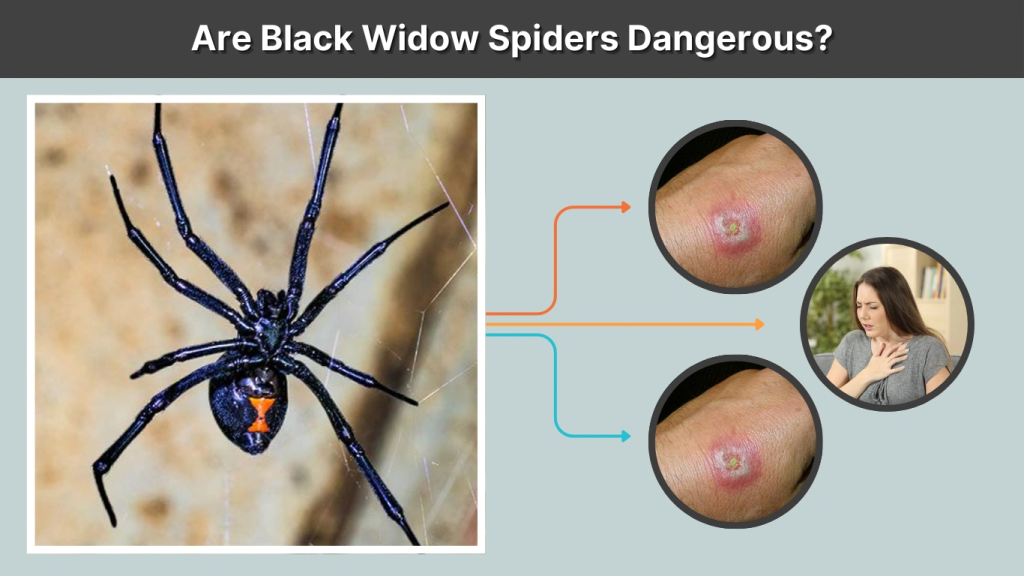
Yes, black widow spiders are dangerous, but the level of danger is often misunderstood.
- Potent venom: The venom of a female black widow contains a neurotoxin called latrotoxin. It affects the nervous system, causing pain, muscle cramps, and other symptoms.
- Risk of death: While the venom is medically significant, deaths are extremely rare. The last confirmed fatality in the United States occurred decades ago.
- Myths vs reality: Many people assume every bite is lethal, but in reality, most cases are painful yet treatable with proper care.
The main danger lies in untreated bites or cases involving vulnerable individuals such as children, elderly people, or those with weak immune systems.
Are Black Widow Spider Bites Dangerous?
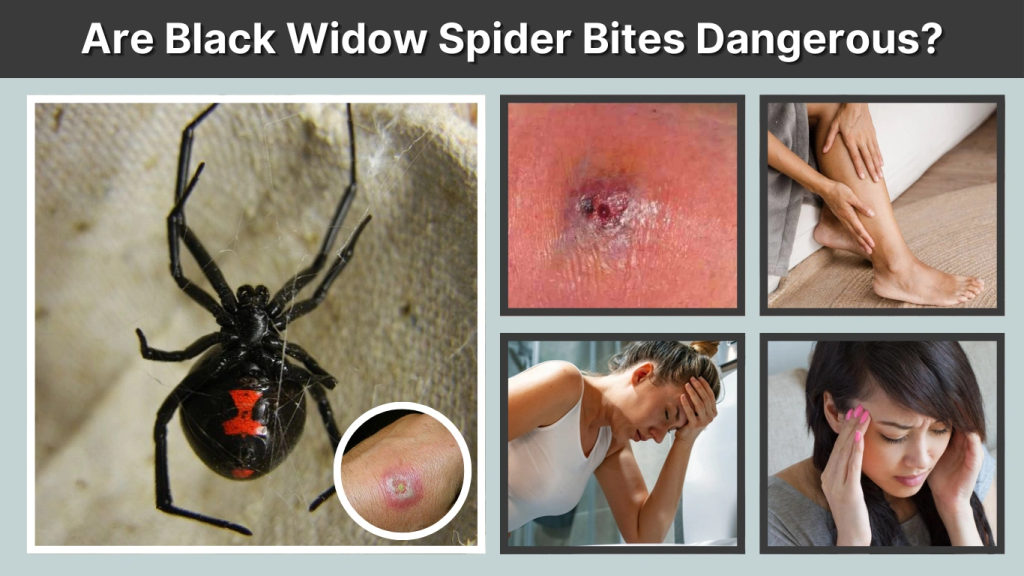
When a female black widow bites, the venom is injected into the victim’s body. Not every bite results in envenomation—sometimes they deliver a “dry bite.” But when venom enters the body, it can trigger a range of symptoms.
Common bite symptoms include:
- Sharp pain at the bite site
- Muscle cramps or spasms spreading through the body
- Sweating and nausea
- Headache and dizziness
These symptoms usually appear within 1–2 hours after the bite. Although painful, most people recover with supportive treatment and, in severe cases, antivenom.
How Dangerous Are Black Widow Spider Bites to Humans?
For healthy adults, black widow bites are rarely life-threatening, but they can be extremely uncomfortable and require medical attention.
- Adults: Most healthy adults experience localized pain and muscle cramping, but recover fully with treatment.
- Children and elderly: They are at higher risk of complications, such as severe muscle rigidity, hypertension, and shock.
- Immunocompromised individuals: People with weakened immune systems or underlying health conditions may have stronger reactions.
In the United States, thousands of black widow bites are reported annually, but fatalities are nearly nonexistent thanks to available medical care. Compared to more dangerous spiders such as the Sydney funnel-web, black widow spiders are considered less deadly but still medically important.
Are Male Black Widow Spiders Dangerous?
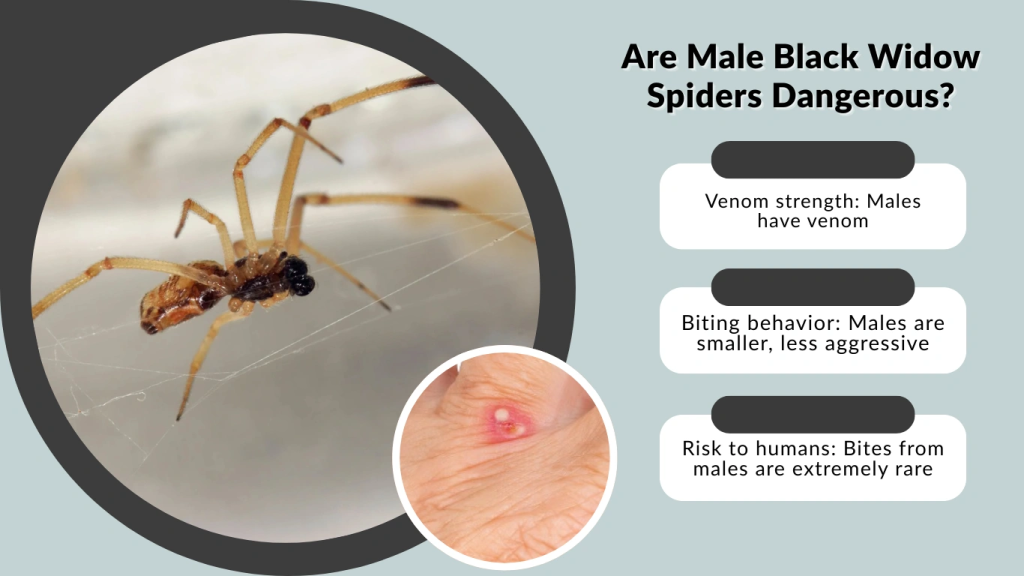
Unlike females, male black widows pose little to no danger to humans.
- Venom strength: Males have venom, but it is far weaker and less toxic than that of females.
- Biting behavior: Males are smaller, less aggressive, and rarely bite humans.
- Risk to humans: Bites from males are extremely rare and usually result in mild, localized irritation rather than serious systemic symptoms.
In short, when people talk about “dangerous black widow bites,” they are almost always referring to the bite of the female black widow.
Symptoms of Black Widow Spider Bites

While every bite experience is different, most envenomated bites share a predictable pattern of symptoms.
- Localized pain: The bite area often becomes red, swollen, and intensely painful within 30 minutes to 2 hours.
- Muscle cramps: One of the most common symptoms. The cramps may spread from the bite site to the abdomen, chest, or back.
- Systemic symptoms: Sweating, nausea, headache, dizziness, and increased blood pressure may occur.
The severity of symptoms depends on the amount of venom injected, the victim’s health condition, and how quickly treatment is received.
Complications of Black Widow Spider Bites
Although deaths are rare, complications can occur in vulnerable individuals or in cases of delayed treatment.
- Severe allergic reactions: Some victims may experience difficulty breathing or anaphylaxis.
- Infections: Scratching the bite site can lead to bacterial infection, pus formation, and scarring.
- Prolonged pain: In rare cases, muscle pain and cramps may last for days or even weeks.
Children and elderly individuals are most at risk of developing serious complications.
First Aid and Treatment for Black Widow Spider Bites

Knowing how to respond quickly can make a big difference.
Immediate first aid steps:
- Wash the bite area with soap and water.
- Apply a cold pack to reduce swelling and numb pain.
- Keep the affected limb elevated and minimize movement.
- Stay calm, as increased heart rate can spread venom faster.
Medical treatment:
- Pain relief: Over-the-counter painkillers or stronger medications prescribed by a doctor.
- Muscle relaxants: To reduce painful cramping.
- Antivenom: Available for severe cases, especially in children, elderly patients, or those with systemic symptoms.
- Hospital observation: In moderate to severe cases, victims may need intravenous fluids and monitoring.
Preventing Black Widow Spider Bites
Since black widows often live near homes, prevention is key.
- Maintain outdoor areas: Clear away woodpiles, rocks, and clutter where spiders hide.
- Seal entry points: Close cracks, gaps, and holes around doors, windows, and basements.
- Use protective gear: Wear gloves, long sleeves, and boots when working outdoors or in storage spaces.
- Check before use: Shake out shoes, gloves, or clothing left outdoors.
By reducing hiding spots and being cautious, you can minimize encounters with black widows.
Myths and Misconceptions
Many misconceptions about black widow spiders make them seem deadlier than they are.
- “All black widow bites are fatal.” False—most cases are painful but not life-threatening.
- “Male black widows are equally dangerous.” False—males are far less venomous and rarely bite.
- “Black widows actively attack humans.” False—they are shy and usually bite only when provoked or accidentally pressed against the skin.
Understanding the truth helps people avoid unnecessary panic while still respecting the risks.
Final Thoughts
Black widow spiders are indeed dangerous due to their powerful venom, but modern treatment makes fatalities very rare. The real risk lies in the severe pain and possible complications they cause. Female black widows are the ones to watch out for, while males pose almost no threat. With awareness, prevention, and quick response, encounters with black widow spiders can be managed safely.
FAQs
Are black widow spiders aggressive?
No, they are generally shy and only bite in self-defense when threatened or disturbed.
How can I tell if I was bitten by a black widow?
A sharp, burning pain at the site followed by muscle cramps and sweating within a few hours are typical signs of a black widow bite.
How long does it take to recover from a bite?
Most people recover within 1–3 days with treatment, though muscle pain and fatigue may linger for up to a week.
Can pets die from a black widow bite?
Yes, small pets like cats and dogs are more vulnerable to venom and may need immediate veterinary care if bitten.
Do black widow spiders bite unprovoked?
No, they usually bite only when accidentally pressed against skin or disturbed in their hiding places.