

Spider crabs are some of the most extraordinary creatures in the ocean, known for their spindly legs, slow movement, and unusual appearance. Their enormous size—especially the Japanese spider crab—can make them seem intimidating, leading many to wonder if they are dangerous. Despite their eerie look, spider crabs are gentle, slow-moving scavengers that pose virtually no threat to humans. Let’s explore their behavior, habitat, and why their fearsome reputation is undeserved.
What Is a Spider Crab?
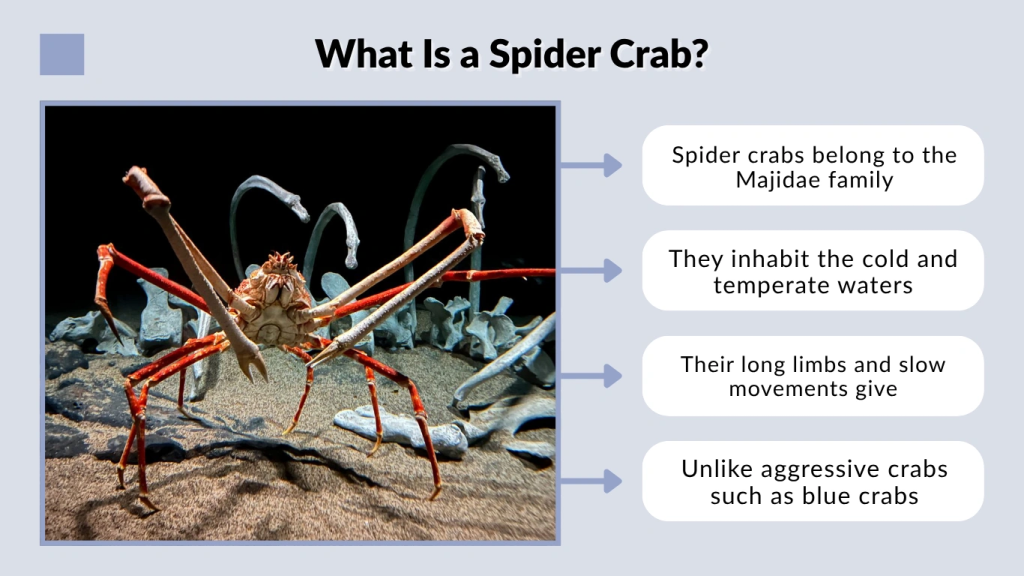
Overview and Characteristics
Spider crabs belong to the Majidae family, a group of marine crabs recognized for their long legs and rounded, armored shells. They inhabit the cold and temperate waters of the Atlantic and Pacific Oceans, often dwelling along the seafloor at depths of several hundred meters. Their long limbs and slow movements give them an almost alien appearance, but their role in the ecosystem is vital—they help keep the ocean clean by feeding on decaying plants and animals.
Unlike aggressive crabs such as blue crabs or coconut crabs, spider crabs are gentle scavengers. They are opportunistic feeders that prefer picking up dead material rather than hunting live prey. Their clawed appendages are used primarily for feeding, not for defense or attack.
Species Spotlight
Several species of spider crabs exist across the world, but a few stand out for their size and uniqueness:
- Japanese Spider Crab (Macrocheira kaempferi) – The largest arthropod on Earth, found off Japan’s Pacific coast, with legs spanning up to 12 feet.
- Giant Spider Crab – A general term for large species within the spider crab family.
- European Spider Crab (Maja brachydactyla) – Smaller in size but abundant in the northeast Atlantic and often used in seafood cuisine.
Each species shares the same docile temperament, making them fascinating but harmless ocean dwellers.
Are Spider Crabs Dangerous?
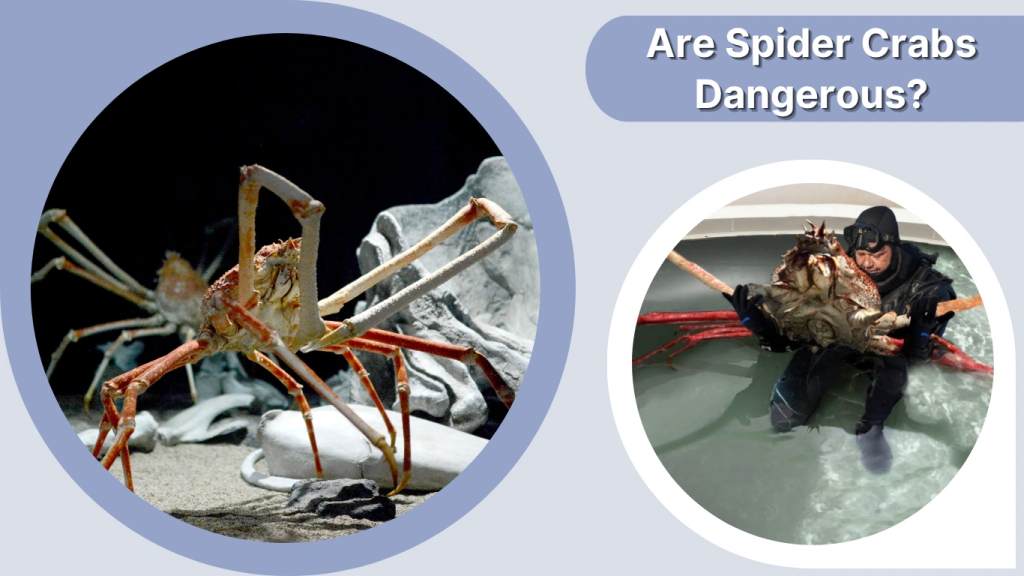
Temperament and Behavior
Spider crabs are docile and slow-moving, spending most of their time scavenging along the ocean floor. They are not hunters or predators and have no interest in humans or larger animals. Their claws are designed for grasping food, not fighting. When confronted by divers or other sea creatures, spider crabs typically freeze, hide, or slowly retreat instead of attacking.
In aquariums, they are considered peaceful and even shy. Their main defense mechanism is camouflage—they decorate their shells with pieces of algae, shells, and sponges to blend into their surroundings. This behavior emphasizes how non-aggressive they are by nature.
Interaction with Humans
Encounters between spider crabs and humans are rare since these animals live in deep waters. However, divers and fishermen who interact with them describe spider crabs as calm and harmless. They do not bite or chase humans. The only minor risk comes from their claws, which can deliver a light pinch if the crab feels threatened or mishandled. Even then, their grip is far less dangerous than that of other crabs.
| Behavior | Description |
| Aggression | None; timid and slow-moving |
| Defense | Camouflage and retreat |
| Reaction to humans | Avoids confrontation |
| Risk factor | Minimal – possible pinch if provoked |
Most reports of “dangerous spider crabs” stem from misunderstandings or online exaggerations. Their strange appearance, particularly in the case of the giant Japanese spider crab, often sparks fear, but these creatures are anything but hostile.
Are Japanese Spider Crabs Dangerous?
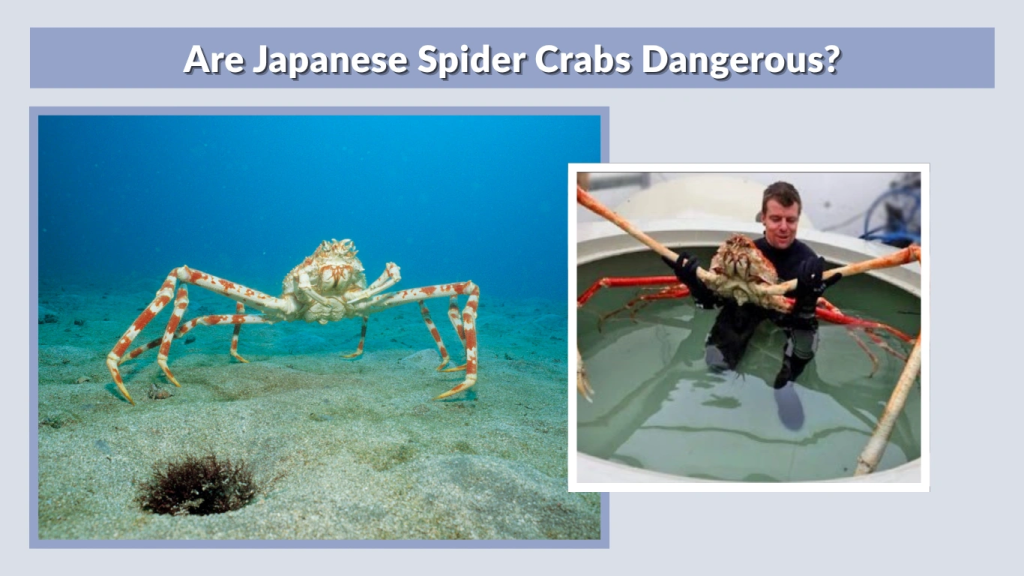
The Japanese spider crab is often featured in viral images due to its enormous size and alien-like look. With legs that can stretch up to 12 feet and weigh up to 40 pounds, it’s understandable why people find them intimidating. However, they are known to be gentle and passive, feeding mainly on dead fish and plant material found on the seabed.
Divers who have encountered them describe the species as calm and surprisingly delicate. Their long, thin legs make them appear fearsome, but they are fragile and easily damaged. Japanese spider crabs lack venom, aggression, and speed, which means they pose no danger to humans. In fact, their claws are used only to scavenge food, not to attack.
How Do Spider Crabs Defend Themselves?
Spider crabs rely on stealth and natural armor rather than aggression. Their camouflage is one of the best in the marine world — they cover their shells with bits of algae, seaweed, and debris to blend perfectly into the ocean floor. This clever disguise helps them avoid predators such as octopuses and larger fish.
Their hard exoskeleton acts as a strong defense barrier. It protects their bodies from bites and stings, while their long claws are used primarily to pick up food or ward off small threats. However, even when defending themselves, spider crabs are slow and non-aggressive. They retreat rather than attack, making them one of the ocean’s gentlest giants.
Unlike some marine animals, spider crabs have no venom glands and cannot sting or poison predators. Their main strategy for survival is patience, camouflage, and a slow, cautious lifestyle on the seabed.
Are Spider Crabs Dangerous to Eat?
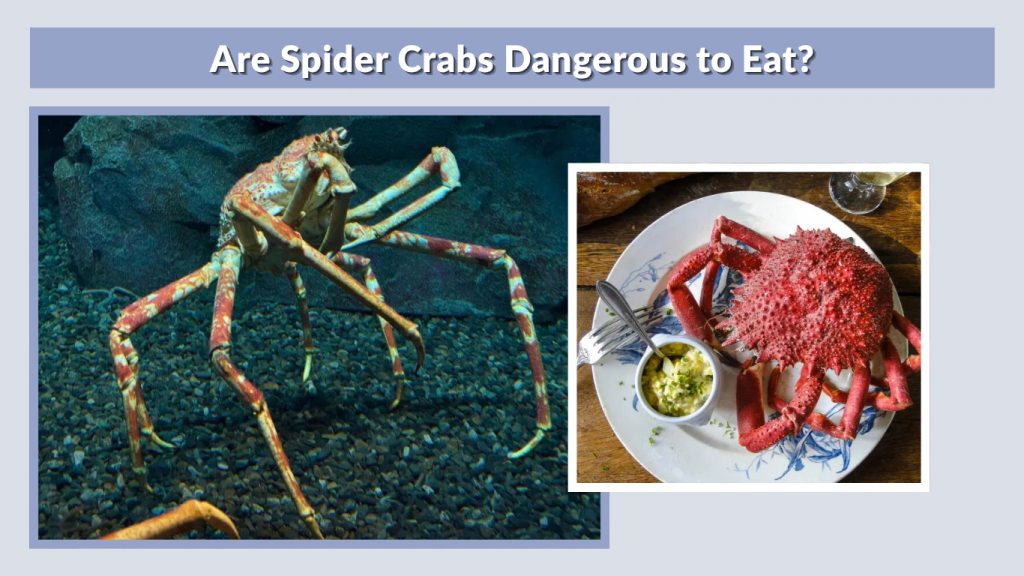
Spider crabs are not only harmless — they are safe and edible. In fact, they are a culinary delicacy in several countries. The Japanese spider crab is prized for its sweet, tender meat, while the European spider crab is commonly eaten along the Atlantic coast.
Like most seafood, spider crab meat must be cooked properly before consumption to eliminate natural bacteria. Once prepared, the flavor is often compared to that of king crab, with a mild sweetness and soft texture. There are no toxic or poisonous compounds in spider crabs, making them entirely safe for human consumption.
However, their large size and deep-sea habitat mean they are caught carefully and sustainably to protect populations. Some regions regulate spider crab fishing to prevent overharvesting, especially during breeding seasons.
Why People Think Spider Crabs Are Dangerous
Spider crabs’ appearance is the main reason behind their frightening reputation. Their enormous size, spiky shells, and long, jointed legs give them a monster-like look, especially in underwater photos. Viral videos and exaggerated stories online have fueled myths that these creatures attack divers or humans — which is entirely false.
In reality, spider crabs are slow, fragile, and avoid confrontation. Even the largest species, such as the Japanese spider crab, prefer to hide among rocks rather than approach humans. Their calm nature has made them a popular exhibit in aquariums, where they are observed peacefully coexisting with other marine species.
Another source of confusion is their name. Many people mistakenly associate “spider crabs” with “crab spiders,” which are land-dwelling arachnids. While crab spiders do possess mild venom to hunt insects, spider crabs are marine crustaceans and have no venom or fangs at all.
FAQs
Are spider crabs dangerous to humans?
No, spider crabs are not dangerous to humans. They are docile creatures that feed on dead plants and animals. The most harm they can cause is a light pinch if provoked, which is rare and harmless.
Are Japanese spider crabs aggressive?
Japanese spider crabs are completely non-aggressive. They are slow, gentle scavengers that avoid humans. Their intimidating appearance hides a calm temperament.
Can a spider crab hurt you?
Only if mishandled. A spider crab might pinch defensively if grabbed or cornered, but it cannot bite or inject venom. The pinch may sting briefly but causes no real injury.
Are spider crabs poisonous or venomous?
No, spider crabs are neither poisonous nor venomous. They contain no toxins and are safe to handle and eat. Their meat is even considered a delicacy in Japan and Europe.
How should divers behave around spider crabs?
Divers should observe from a respectful distance and avoid touching or grabbing them. Spider crabs are delicate and easily stressed. They move slowly and pose no threat, making them safe and fascinating to watch.