

Crab spiders often attract attention because of their sideways crab-like walk and vibrant colors. However, people sometimes mistake their appearance for danger and worry about being bitten. The truth is that while crab spiders can bite, they are not aggressive and rarely pose any threat to humans. This guide explains what a crab spider bite looks like, its symptoms, and how to treat it safely at home.
What Is a Crab Spider?
Crab spiders belong to the family Thomisidae, a large group of ambush-hunting spiders found worldwide. They’re named for their flat bodies and sideways movements, which closely resemble those of crabs. Most are small—less than half an inch long—and found in gardens, meadows, and even homes.
Instead of spinning webs to catch prey, crab spiders hide on flowers or leaves and wait patiently for insects like flies, bees, or butterflies to come close. Once a target lands nearby, they grab it with their strong front legs and inject mild venom to immobilize it. This venom, however, is far too weak to harm humans.
Do Crab Spiders Bite Humans?
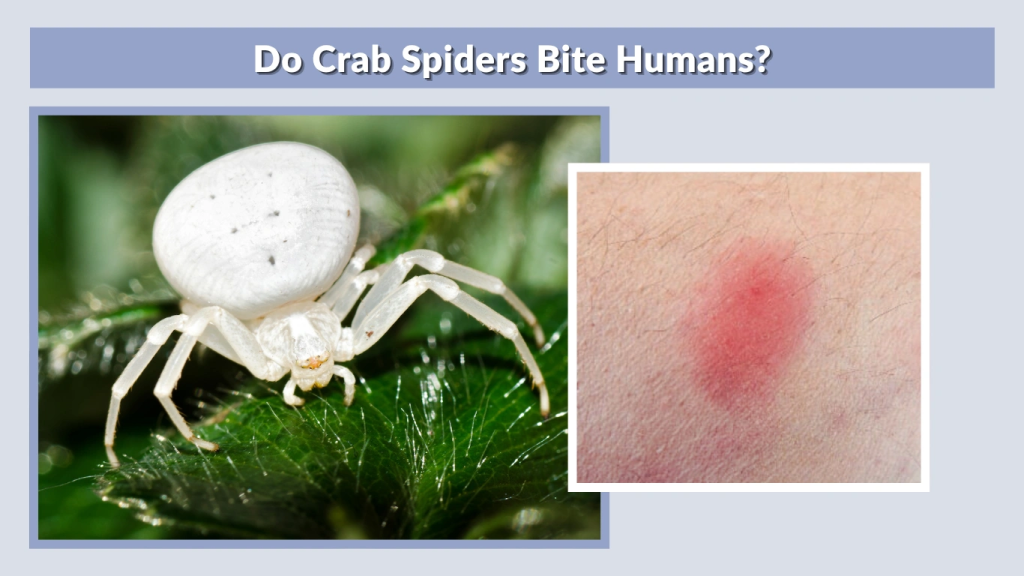
Crab spiders can bite, but only when provoked or handled roughly. They are non-aggressive creatures that prefer to flee when disturbed. Most bites happen accidentally, such as when someone brushes against one while gardening or picking flowers.
Unlike dangerous spiders such as black widows or brown recluses, crab spiders’ fangs are small and shallow. Even if a bite occurs, it’s typically painless or results in only mild, short-term irritation. People often don’t even realize they’ve been bitten until noticing a small red bump later.
Crab Spiders vs. Spider Crabs
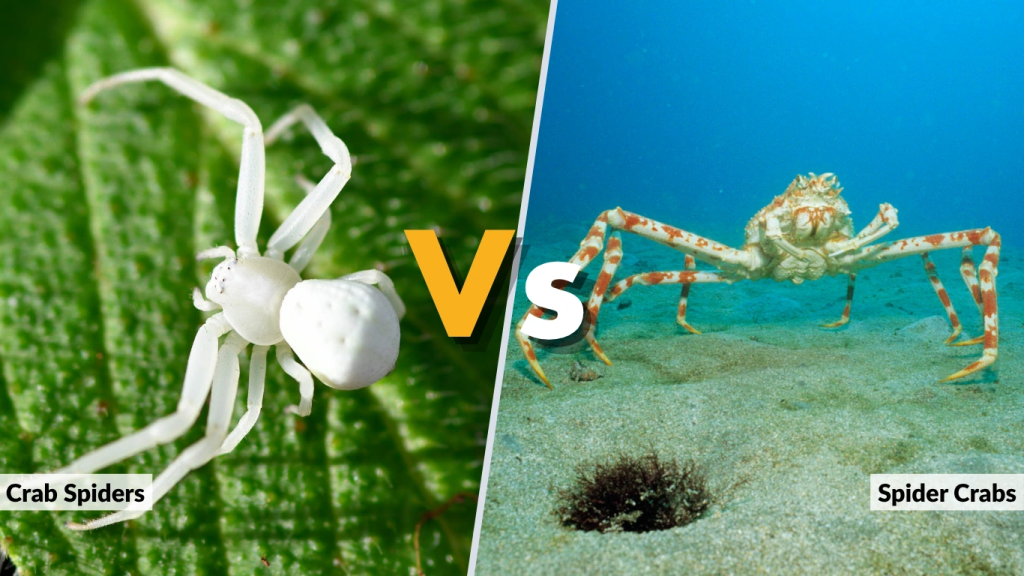
It’s easy to confuse the two because of their names, but crab spiders are true spiders that live on land, while spider crabs are ocean-dwelling crustaceans. Spider crabs cannot bite; instead, they may pinch with their claws. Their “bites” are simply pinches and do not involve venom.
| Feature | Crab Spider | Spider Crab |
| Type | Land arachnid | Marine crustacean |
| Venom | Mild (for insects) | None |
| Injury Type | Bite | Pinch |
| Danger to Humans | Minimal | Minimal |
What Does a Crab Spider Bite Look Like?
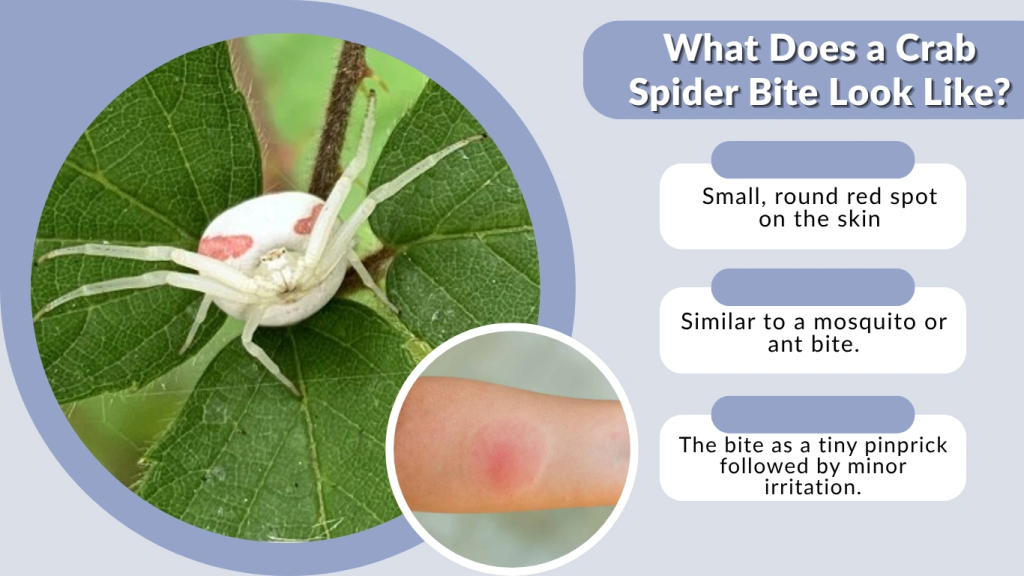
A crab spider bite typically looks like a small, round red spot on the skin, similar to a mosquito or ant bite. There might be slight swelling, itching, or tenderness around the area. The reaction varies from person to person but is almost always mild.
Most people describe the bite as a tiny pinprick followed by minor irritation. The redness may fade within a few hours or last up to two days. If the bite site is scratched or not cleaned properly, it can become slightly inflamed, but this is due to infection rather than venom.
Color Variations and Species Mentions
People often report “white crab spider bites,” “green crab spider bites,” or “yellow crab spider bites.” These color labels refer to the spider’s appearance, not the bite reaction. Regardless of color—white, yellow, green, or brown—the symptoms remain the same: mild redness and no serious effects.
In regions like Florida, Hawaii, and the UK, crab spider bites follow the same harmless pattern. Even species such as the goldenrod crab spider, green crab spider, and running crab spider produce only minor, short-lived reactions.
Symptoms and Timeline
Immediate Reactions (First Few Hours)
- A light sting or pinch sensation at the bite site
- Localized redness or a small raised bump
- Slight itchiness or burning
Over the Next 24–48 Hours
- Redness and itching subside
- A small scab or dry patch may form as the bite heals
- Pain and swelling remain minimal or nonexistent
If you notice spreading redness, pus, or warmth around the bite after several days, it could be a sign of infection rather than spider venom. In such cases, cleaning and basic first aid will typically resolve the issue.
Are Crab Spider Bites Dangerous?
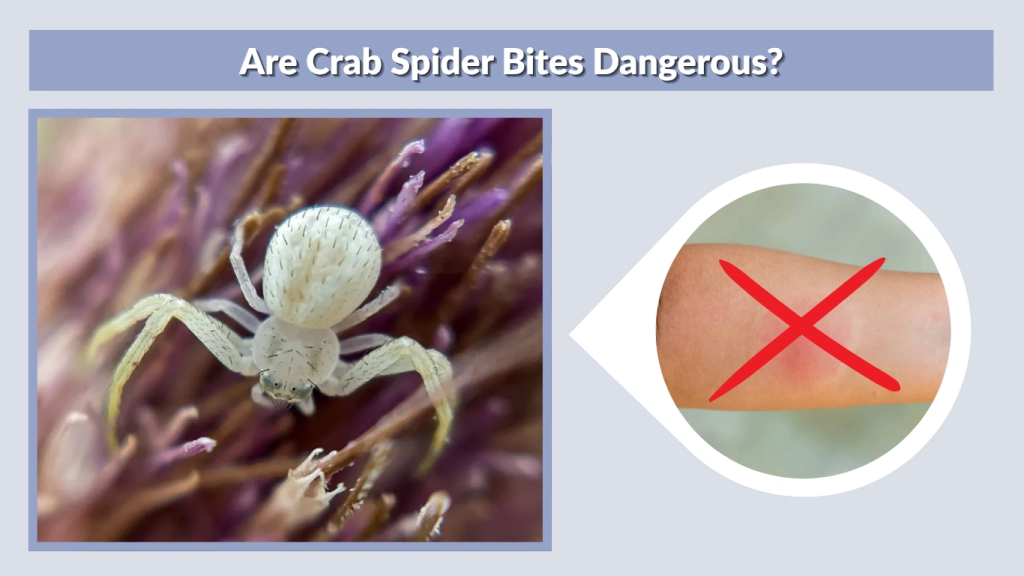
Crab spider bites are generally not dangerous to humans. These spiders possess mild venom meant to paralyze their insect prey, such as flies, bees, or moths. The venom’s potency is far too weak to cause harm to humans or pets. Most people who experience a crab spider bite report only minor symptoms, such as slight redness, itching, or a small raised bump.
Unlike more aggressive species such as black widows or recluse spiders, crab spiders rarely bite unless cornered or pressed against the skin. Even then, their fangs are so small that they often fail to penetrate deeply enough to inject venom. Serious allergic reactions are extremely uncommon, though individuals with sensitive skin may experience slightly more pronounced swelling.
First Aid and Treatment

Immediate Steps
If you suspect you’ve been bitten by a crab spider, here’s what to do:
- Clean the area – Wash the bite with mild soap and water to remove any bacteria.
- Apply ice or a cold compress – Reduces swelling, itching, and discomfort.
- Avoid scratching – Scratching may introduce bacteria, leading to infection.
- Use an anti-itch cream or antihistamine – Over-the-counter creams containing hydrocortisone or oral antihistamines like diphenhydramine can relieve itching and redness.
- Keep the area elevated – If the bite is on a limb, raising it can help minimize swelling.
When to See a Doctor
While medical attention is rarely needed, seek professional help if:
- The bite becomes increasingly painful or swollen after 48 hours.
- You develop fever, chills, or muscle pain.
- There is pus or spreading redness, suggesting infection.
- You have a known allergy to insect or spider bites.
These symptoms usually point to a secondary bacterial infection or unrelated allergic response rather than spider venom.
Pets and Crab Spider Bites
Crab spider bites on pets, such as dogs or cats, are very rare. If bitten, pets might lick or scratch the affected area, showing mild irritation or a small welt. In almost all cases, the bite heals on its own. Clean the spot with mild antiseptic and prevent excessive licking. If swelling spreads or your pet appears in pain, contact your veterinarian for advice. No lasting harm occurs from crab spider venom in animals.
Myths and Misunderstandings
Many people misidentify harmless garden crab spiders as dangerous species due to their vivid colors and sideways movements. Online photos labeled as “crab spider bite pictures” often show infections caused by bacteria or other insects. Crab spider bites are small, round, and mild—not necrotic or severe.
Another common confusion involves spider crabs and coconut crabs—marine crustaceans, not spiders. These creatures do not bite and are not venomous. The only injury they can cause is a pinch from their claws, which may break the skin but involves no venom.
FAQs
What happens if a crab spider bites you?
A crab spider bite may cause mild redness, itching, or a tiny welt. The discomfort fades within a day or two. Their venom affects insects but has no harmful effects on humans.
Are crab spider bites dangerous or poisonous to humans?
No. Crab spiders are mildly venomous to their prey but harmless to humans. Their bites are non-toxic and result only in temporary irritation or swelling.
What does a crab spider bite look like compared to other spider bites?
Crab spider bites look like small red dots or bumps—similar to mosquito bites. They don’t form ulcers or blisters and heal quickly without medical treatment.
How do I treat a crab spider bite at home, and when should I see a doctor?
Clean the bite with soap and water, apply ice, and use a soothing cream for itching. Seek medical help if swelling increases, if pus develops, or if you have an allergic reaction.
Do spider crabs or Japanese spider crabs bite people?
No, spider crabs are marine crustaceans that lack fangs or venom. They can only pinch with their claws, which may cause mild pain but no lasting injury.