

Baby tarantulas, often called spiderlings, are one of the most fascinating stages in the tarantula life cycle. These tiny versions of adult tarantulas capture the curiosity of enthusiasts because of their delicate nature, rapid growth, and the remarkable survival strategies they employ in the wild. While some species produce only a few dozen young, others may hatch hundreds at once, making baby tarantulas an incredible subject for both hobbyists and researchers. Understanding their appearance, behavior, and care requirements is essential for anyone interested in keeping them as pets.
General Identification & Naming
A baby tarantula is technically called a spiderling. This term refers to any tarantula in its earliest life stages, usually after emerging from the egg sac. While they look like miniature spiders, spiderlings are much more fragile and require careful handling and care.
In the hobby, you may see baby tarantulas referred to simply as:
- Slings (short for spiderlings).
- Tarantula babies or baby tarantulas in pet trade listings.
Despite their small size, spiderlings already possess many of the traits seen in adults, such as basic coloration patterns, venom glands, and the ability to spin silk.
Appearance & Size

One of the most common questions from beginners is: What does a baby tarantula look like? The answer depends on the species, but most spiderlings resemble tiny, pale versions of their adult form. As they grow and molt, their colors and patterns become more defined.
Size at Birth: Most tarantula spiderlings measure only a few millimeters across, often no larger than the tip of a pencil eraser.
Early Stages: They are soft-bodied and somewhat translucent right after hatching, gradually darkening as their exoskeleton hardens.
Development: With each molt, their size increases and more distinct markings appear, making it easier to identify the species.
Photos of baby tarantulas often show them sitting in enclosures or on a keeper’s fingertip, highlighting just how tiny and fragile they are compared to adults.
Reproduction & Birth

Tarantulas are prolific breeders, and one of the most extraordinary aspects of their life cycle is the number of babies they can produce.
- How Tarantulas Reproduce: After mating, the female creates an egg sac, which she carefully guards until the spiderlings hatch. Depending on the species, incubation lasts several weeks.
- Egg Sac Size: A single egg sac can contain anywhere from 50 to over 1,000 eggs, although not all hatch successfully.
- Emergence of Spiderlings: Once the eggs develop, tiny spiderlings emerge, usually remaining near the mother for a short period before dispersing.
- Carrying Babies: Unlike wolf spiders, tarantulas do not carry their babies on their backs. Instead, the spiderlings are independent once they leave the egg sac.
For example, the Goliath Birdeater Tarantula can produce hundreds of spiderlings in a single sac, while smaller species may have far fewer. This reproductive strategy ensures that at least some survive, even in harsh environments.
Behavior of Baby Tarantulas

Despite their small size, baby tarantulas already display much of the behavior of adults.
Do Baby Tarantulas Bite? Yes, spiderlings have fangs and can bite, though their venom is generally weaker than that of adults. Still, even a tiny bite can cause irritation.
Are They Dangerous? Baby tarantulas are not considered dangerous to humans, but they are fragile and can easily die if mishandled. Their defense mechanism at this stage is usually retreating rather than aggression.
Do Tarantulas Eat Their Babies? In some cases, yes. Stress or lack of food may cause a mother tarantula to consume part of her egg sac or even her spiderlings. This is one reason breeders carefully manage conditions when raising slings.
Feeding Habits: Baby tarantulas eat appropriately sized live prey such as fruit flies or pinhead crickets. As they grow, their appetite increases, and they display the same ambush hunting style as adults.
Interestingly, spiderlings are known for their resilience. Even in captivity, where survival rates are higher, they demonstrate strong instincts to burrow, web, and hunt.
Buying & Selling

Baby tarantulas are highly sought after in the exotic pet trade. Many enthusiasts prefer buying spiderlings because they are more affordable than adults and allow the keeper to raise them from a young age.
- Price Range: Depending on the species, baby tarantulas can cost anywhere from $15 for common species (like the Chilean Rose Hair) to $100+ for rare or colorful species such as the Gooty Sapphire or Brazilian Jewel.
- Availability: Slings are frequently sold by online exotic pet shops, breeders, and reptile expos. They are often shipped in small containers filled with substrate to keep them safe during transport.
- Buying Slings vs Adults:
- Slings: Cheaper, adapt easily to captivity, and provide the joy of watching them grow. However, they are delicate and require more care.
- Adults: More expensive but sturdier, with their sex usually identifiable, which matters for breeding or long-term ownership.
- Slings: Cheaper, adapt easily to captivity, and provide the joy of watching them grow. However, they are delicate and require more care.
- Beginner-Friendly Choices: Certain species like the Curly Hair Tarantula or Pink Toe Tarantula are popular choices for newcomers because their slings are hardy and easy to care for.
- Advanced Species: Aggressive or fast-growing species like the Orange Baboon Tarantula or Cobalt Blue Tarantula are better suited for experienced keepers.
When buying a baby tarantula, it’s essential to research the specific species, as each one has unique care needs, temperament, and growth rate.
Species-Specific Baby Tarantulas

Different species of tarantulas are popular in the pet trade, and their spiderlings vary in color, behavior, and care requirements. Here are some of the most sought-after baby tarantulas:
- Baby Pink Toe Tarantula (Avicularia avicularia) – An arboreal species with gentle temperament, making it one of the better starter tarantulas. Slings require vertical enclosures with plenty of climbing space.
- Baby Mexican Red Knee Tarantula (Brachypelma hamorii) – Famous for its red-orange knee joints, this slow-growing species is hardy and suitable for beginners.
- Baby Brazilian Black Tarantula (Grammostola pulchra) – Known for its velvety black coloration and calm nature, slings are small but grow into large, docile adults.
- Baby Chilean Rose Hair Tarantula (Grammostola rosea) – One of the most common pet tarantulas; its slings are affordable and relatively hardy.
- Baby Cobalt Blue Tarantula (Cyriopagopus lividum) – A striking but aggressive species. Its spiderlings are fast-growing but very defensive.
- Baby Curly Hair Tarantula (Tliltocatl albopilosus) – Recognized for its curly bristles, this species is low-maintenance and recommended for first-time keepers.
- Baby Goliath Birdeater (Theraphosa blondi) – Among the largest tarantulas in the world; spiderlings start small but grow rapidly into giants with impressive appetites.
- Baby Green Bottle Blue Tarantula (Chromatopelma cyaneopubescens) – Colorful even as slings, these spiderlings spin elaborate webs and are prized for their vibrant adult colors.
- Baby Orange Baboon Tarantula (Pterinochilus murinus) – Also known as the “OBT” or “Orange Bitey Thing.” Slings are fast, defensive, and best kept by experienced hobbyists.
Each of these species offers a unique tarantula-keeping experience. Some are docile display pets, while others are aggressive and require strict caution.
Regional Baby Tarantulas
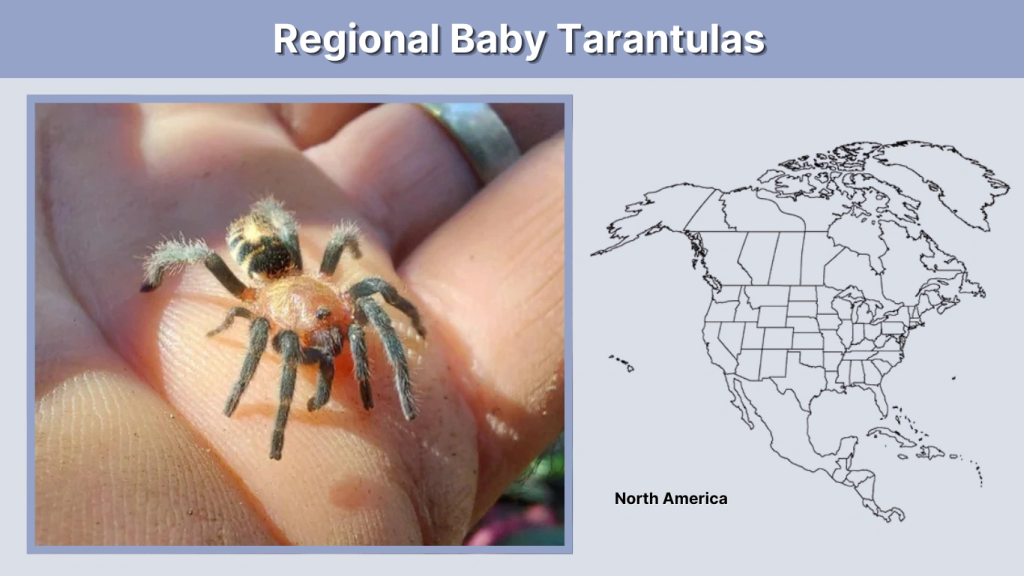
Tarantulas are found across the Americas, Africa, and parts of Asia, and their spiderlings inherit traits adapted to their native environment.
- North America: Species such as the Texas Brown Tarantula (Aphonopelma hentzi) and Arizona Blonde Tarantula (Aphonopelma chalcodes) produce slings that are hardy and well-adapted to drier climates.
- South America: Brazilian and Chilean tarantulas, like the Brazilian Black or Chilean Rose, are favorites in the trade due to their calm nature. Their spiderlings grow slowly but are robust.
- Africa: Species like the Orange Baboon Tarantula are notorious for their defensive behavior from a young age. These slings require more care and should only be kept by advanced hobbyists.
- Asia: Rare species such as the Gooty Sapphire (Poecilotheria metallica) produce visually stunning spiderlings with unique webbing habits, though they are fast and skittish.
Regional origin often influences whether a sling is more arboreal, terrestrial, or burrowing, making it important to research housing setups accordingly.
Care & Enclosure

Raising baby tarantulas requires attention to their size and fragility. Unlike adults, they need smaller and more secure enclosures to prevent escape.
- Tank Size: A simple vial or deli cup is usually sufficient for spiderlings. As they grow, they can be transferred into small terrariums. A 5-gallon tank is typically enough for young juveniles.
- Substrate: Coconut fiber, peat moss, or soil works best, allowing for burrowing. Depth should be adjusted to the species—arboreal slings need less substrate but more vertical space.
- Humidity & Temperature: Baby tarantulas require stable humidity levels depending on their species. Tropical species like Pink Toes need higher humidity, while desert species thrive with drier conditions. A range of 70–85°F is ideal for most.
- Feeding: Offer small prey such as pinhead crickets, fruit flies, or tiny roaches. Uneaten food should be removed promptly to prevent stress or mold in the enclosure.
- Enrichment: Spiderlings instinctively web and burrow, so providing cork bark, small hides, or twigs encourages natural behavior.
Unique Varieties & Rare Mentions
The tarantula hobby occasionally features unique or rare baby tarantulas that attract collectors:
- Albino Tarantula Slings: Extremely rare genetic variations that are prized for their unusual appearance.
- Antilles Pinktoe Spiderlings: Known for their bright colors and arboreal lifestyle.
- Blue Foot Baboon and Gooty Sapphire Slings: Highly valued for their iridescent blue hues.
- Mini Tarantulas: Smaller species that stay petite even in adulthood, though less common in the trade.
These varieties often come with higher prices due to rarity and limited availability.
Comparisons & Growth
Watching a tarantula grow from a sling to an adult is one of the most rewarding experiences for hobbyists.
Baby vs Adult: Spiderlings are fragile and require careful humidity and feeding, while adults are sturdier and easier to manage.
Growth Rate: Growth speed varies widely—species like the Curly Hair are slow growers, while the Orange Baboon grows more rapidly.
Molting: Each molt brings visible changes in size and coloration. During this stage, slings are highly vulnerable and should not be disturbed.
Adulthood: Depending on species, it can take anywhere from 2–6 years for a spiderling to reach full maturity.
Health & Molting
Molting is critical for baby tarantulas, as it allows them to grow and develop properly.
- Molting Process: Slings flip onto their backs to shed their old exoskeleton, which can take several hours.
- Health Risks: Stuck molts are a common issue that can lead to deformities or even death. Maintaining correct humidity reduces this risk.
- Signs of Premolt: Reduced appetite, darkening of the exoskeleton, and increased reclusiveness often signal an upcoming molt.
- Post-Molt Care: After molting, slings should not be fed for several days until their new exoskeleton hardens.