

Australia is home to some of the largest spiders in the world—creatures that amaze, surprise, and sometimes terrify. From the wide-legged Huntsman to the heavy-bodied Australian Tarantula, these spiders come in various shapes, sizes, and behaviors.
In this guide, I’ll walk you through the 7 biggest spiders found across the country, focusing on their impressive size, unique features, habitats, and whether they’re truly dangerous or just misunderstood giants.
1. Huntsman Spider

The Huntsman spider is the largest spider in Australia by leg span, making it one of the most striking arachnids in the country. With its impressive reach and fast movement, it often surprises people indoors, but it’s not aggressive and plays a helpful role by hunting insects.
Identification
- Leg span can reach up to 30 cm, the widest of any Australian spider
- Flattened, wide body helps it squeeze into narrow spaces
- Long, curved legs give it a crab-like appearance
- Color ranges from brown to grey with dark banding on legs
Habitat
Huntsman spiders are found all over Australia, especially in warmer areas. They live under loose bark, inside garages, behind curtains, or even in cars. They prefer hidden, dry locations close to human activity.
Behavior
Known for their speed and size, Huntsman spiders are active hunters, not web builders. They chase prey rather than trap it. Despite their size, they are timid and usually flee when approached.
Venom and Danger
They do have venom, but Huntsman bites are not dangerous to humans. Their size can be intimidating, but they rarely bite and are more likely to run away than attack.
2. Golden Orb-Weaving Spider
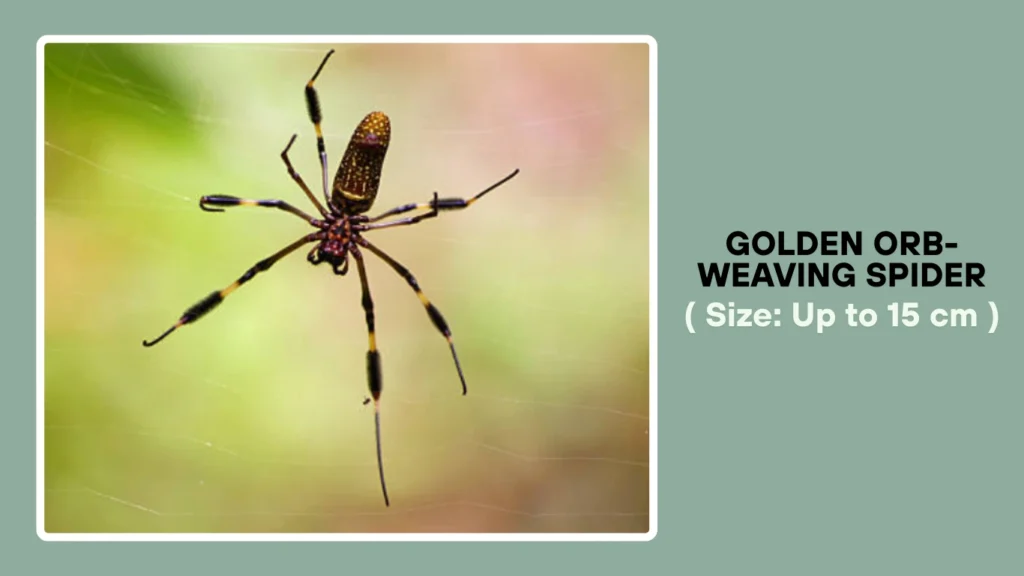
The Golden Orb-Weaving Spider is one of the largest web-building spiders in Australia, known for its striking size and golden-colored silk. Females are especially large, with long legs and bulky bodies, often seen hanging in massive webs in gardens and forests.
Identification
- Female leg span can reach up to 15 cm
- Body length around 4–5 cm (males are much smaller)
- Shiny body with yellow, silver, or brown markings
- Long legs with noticeable tufts or bands
Habitat
Common across Australia, especially in bushlands, gardens, and wooded areas. They spin large, strong webs between trees or man-made structures, often in sunny, open areas.
Behavior
These spiders are passive and non-aggressive. They wait in their large golden webs for flying insects to get caught. Despite their size, they rarely move unless disturbed.
Venom and Danger
Golden Orb-Weavers are not dangerous to humans. Bites are rare and usually cause only mild local pain or redness. Their large size may cause alarm, but they are gentle giants in the spider world.
3. Australian Tarantula (Whistling Spider)

The Australian Tarantula, also called the Whistling Spider due to the hissing sound it can make, is one of the heaviest and most powerful spiders in Australia. Known for its thick body and large fangs, this ground-dwelling spider can deliver a strong bite, especially when threatened.
Identification
- Leg span up to 16 cm
- Body length ranges from 6–8 cm
- Thick, hairy body with earthy colors like brown or tan
- Large fangs that can be seen clearly when it rears up
Habitat
Found mostly in northern parts of Australia, including Queensland and Western Australia. They live in deep burrows in warm, dry areas and rarely leave unless hunting or disturbed.
Behavior
Australian Tarantulas are slow movers but strong hunters. They ambush prey from their burrows and feed on insects, frogs, and even small reptiles. At night, they may come out to hunt.
Venom and Danger
Their bite can be painful and serious—especially for pets like dogs—but rarely dangerous to humans. The venom causes swelling, nausea, and discomfort but is not fatal. Their size and hiss can be scary, but they avoid humans when possible.
4. Sydney Funnel-Web Spider
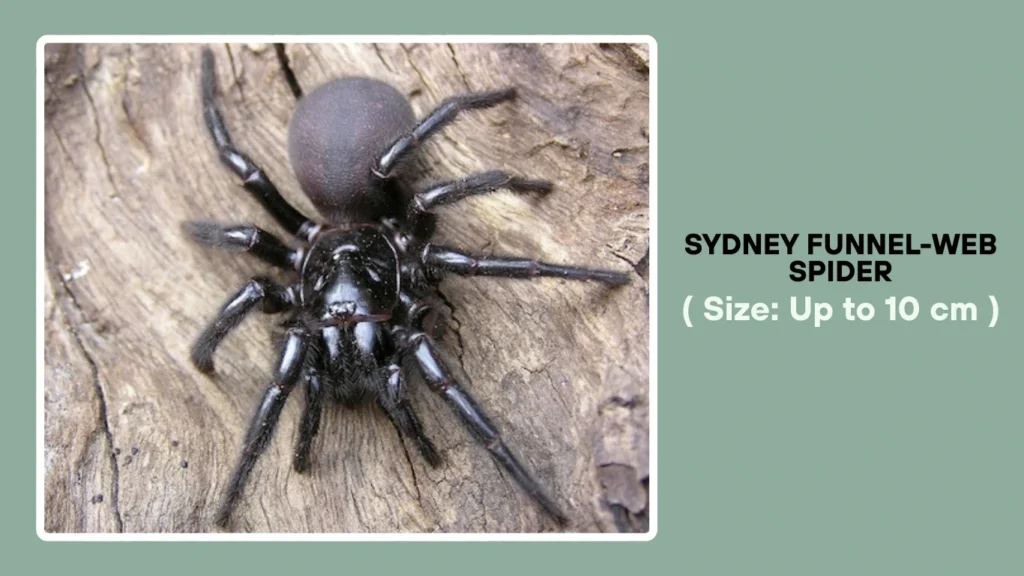
The Sydney Funnel-Web Spider is one of Australia’s most infamous spiders, not just for its dangerous venom but also its sturdy size and powerful fangs. It’s bulky and intimidating, often found in the forested and suburban areas around Sydney.
Identification
- Leg span up to 10 cm
- Shiny black body with a large, smooth head
- Thick legs and strong fangs that point downward
- Males are slimmer but still large; females are heavier
Habitat
Native to the eastern coastal regions of Australia, especially in New South Wales. They live in moist, sheltered places like under logs, leaf litter, and in garden beds. They create funnel-shaped webs inside burrows.
Behavior
These spiders are aggressive when threatened. Males often wander during warm, humid nights in search of mates, increasing the chance of human contact.
Venom and Danger
Sydney Funnel-Webs are highly venomous, and bites from males can be life-threatening. However, anti-venom is available and effective, and no deaths have occurred since it was introduced. They are considered a medical emergency if bitten.
5. Mouse Spider

The Mouse Spider is another large burrowing spider in Australia, often confused with funnel-webs due to its size and glossy appearance. Though not as well-known, its bite can also be dangerous if not treated.
Identification
- Body length up to 4.5 cm; leg span slightly larger
- Glossy black or dark blue body
- Short, powerful legs and thick fangs
- Some species have red or orange markings on the head
Habitat
Mouse Spiders are found across most of Australia. They dig burrows with trapdoors and prefer undisturbed areas like bushland, gardens, and open fields.
Behavior
They are solitary and aggressive if provoked. Males often roam during mating season, which increases human encounters. They don’t build webs for catching prey but ambush from their burrows.
Venom and Danger
Their venom is potent and closely related to the funnel-web’s, but serious bites are rare. They often deliver dry bites (without venom), and anti-venom for funnel-webs is effective if needed.
6. Trapdoor Spider
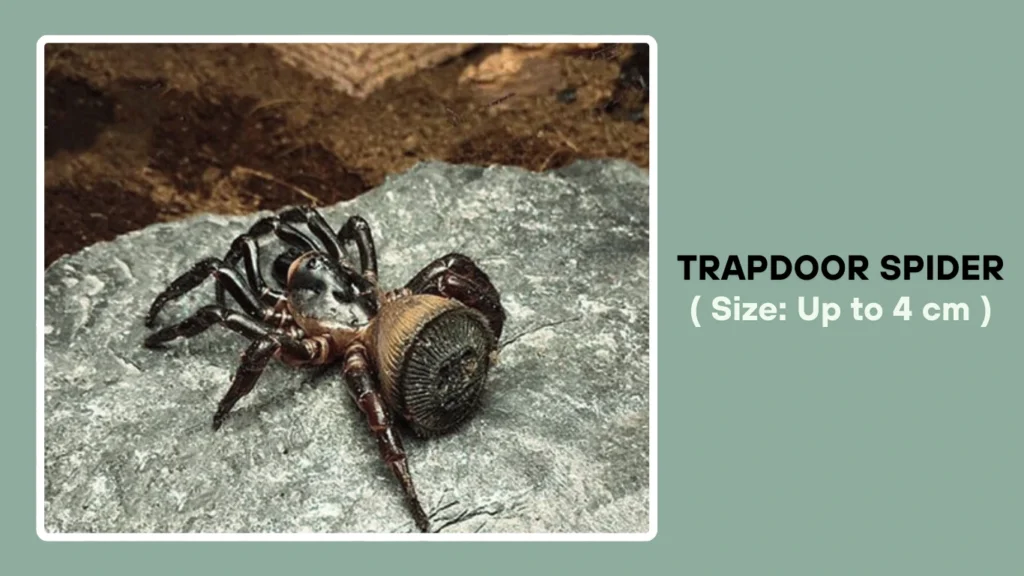
Trapdoor spiders are medium-to-large burrowing spiders found throughout Australia, known for their secretive nature and impressive underground homes. While not the biggest by leg span, their thick bodies and powerful build make them one of the more noticeable Australian spiders.
Identification
- Body length up to 4 cm
- Stocky body with short, strong legs
- Brown to dark brown coloration with a matte or velvety texture
- Fangs point downward like those of tarantulas
Habitat
They live across most parts of Australia, preferring soil that’s easy to dig. Trapdoor spiders create burrows lined with silk and closed with a hinged door made of soil and vegetation.
Behavior
Trapdoor spiders are reclusive and ambush predators. They rarely leave their burrows and strike quickly when prey passes by. They are usually seen only after heavy rain or during mating season.
Venom and Danger
Their bite is not considered dangerous to humans. It can cause localized pain or swelling, but they are shy and prefer to stay hidden underground rather than interact with people.
7. Garden Orb-Weaver
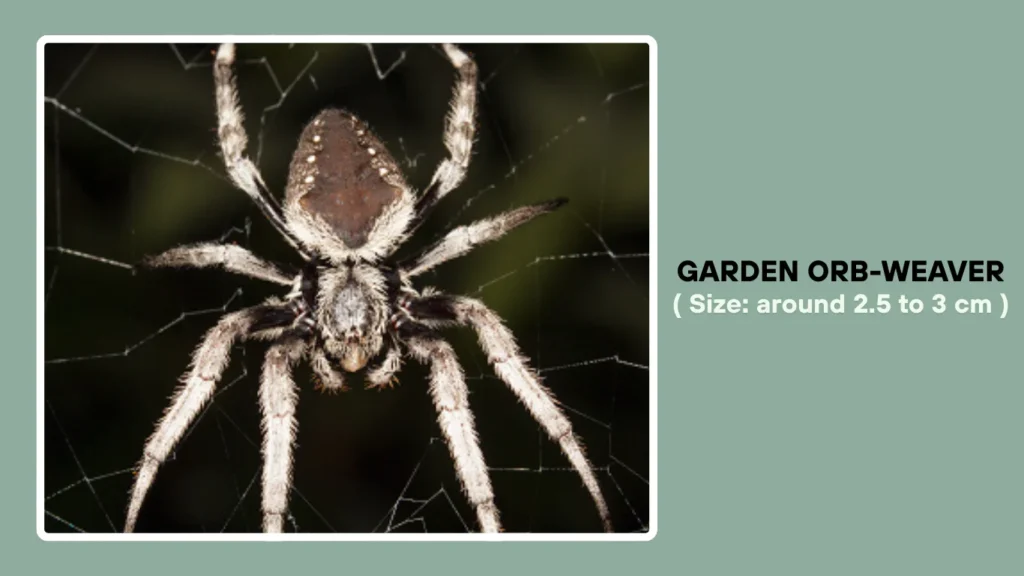
The Garden Orb-Weaver may be smaller in body size compared to other spiders on this list, but with its extended legs and wide web structures, it’s still one of the more noticeable Australian garden spiders.
Identification
- Body length around 2.5 to 3 cm; leg span may reach 5–6 cm
- Plump body with color variations from brown to orange
- Patterned abdomen often with markings or humps
- Short, strong legs used for web weaving
Habitat
Common in gardens, parks, and forests across Australia. They build large circular webs, often stretching between trees or garden structures, mostly active during the evening.
Behavior
Garden Orb-Weavers are harmless and peaceful, staying in the center of their webs at night and hiding during the day. They rebuild their webs nightly and help control insect populations.
Venom and Danger
Bites are very mild, causing slight discomfort or swelling at most. They are not aggressive and will only bite if provoked or handled roughly.
The Biggest Spiders in Australia
| Spider Name | Max Leg Span | Max Body Length | Known For | Venom Danger to Humans |
| Huntsman Spider | Up to 30 cm | ~2 cm | Widest leg span in Australia | Mild, not dangerous |
| Australian Tarantula | Up to 16 cm | 6–8 cm | Heaviest and thickest body | Painful, dangerous to pets |
| Golden Orb-Weaving Spider | Up to 15 cm | 4–5 cm (females) | Golden web and large web span | Mild, not dangerous |
| Sydney Funnel-Web Spider | Up to 10 cm | 3–5 cm | Highly venomous, shiny black body | Medical emergency |
| Mouse Spider | ~7–8 cm | Up to 4.5 cm | Thick body, powerful fangs | Can be dangerous, rarely severe |
| Trapdoor Spider | ~5–6 cm | Up to 4 cm | Hidden burrows with trapdoor lids | Mild, not dangerous |
| Garden Orb-Weaver | ~5–6 cm | 2.5–3 cm | Common in gardens with large round webs | Very mild, not dangerous |
FAQs
1. How big is the biggest spider in Australia?
The Huntsman spider holds the record for the largest leg span, reaching up to 30 cm across. It’s not dangerous but can give quite a shock due to its size and speed.
2. What is Australia’s largest spider by body size?
The Australian Tarantula (also called Whistling Spider) has the largest body, measuring up to 8 cm long. It’s heavy, thick-legged, and capable of taking down small animals like frogs or lizards.
3. Why are spiders bigger in Australia?
Australia’s climate and environment allow spiders to grow larger. Warm temperatures, abundant food, and fewer natural spider predators contribute to their size. Evolution has also favored large burrowing and hunting spiders in certain regions.
4. Are Australian spiders really that big?
Yes, many species in Australia are noticeably larger than average. While not every spider is massive, species like the Huntsman, Golden Orb-Weaver, and Sydney Funnel-Web can be impressively large and very visible.
5. Does Australia have dangerous big spiders?
Yes, a few large spiders like the Sydney Funnel-Web are medically significant and can be dangerous to humans. However, most large spiders like the Huntsman or Garden Orb-Weaver are harmless and even helpful for controlling pests.