

The Sydney funnel-web spider (Atrax robustus) is widely known as one of the deadliest spiders in the world. With its glossy black body, large fangs, and highly toxic venom, it has gained a fearsome reputation across Australia and beyond. However, there’s much more to this spider than just its bite. From its underground web structures to its defensive behavior, the Sydney funnel-web is both fascinating and misunderstood. In this article, I’ll share 31 important facts about its venom, habitat, behavior, life cycle, and more to help you truly understand this unique species.
Species Overview
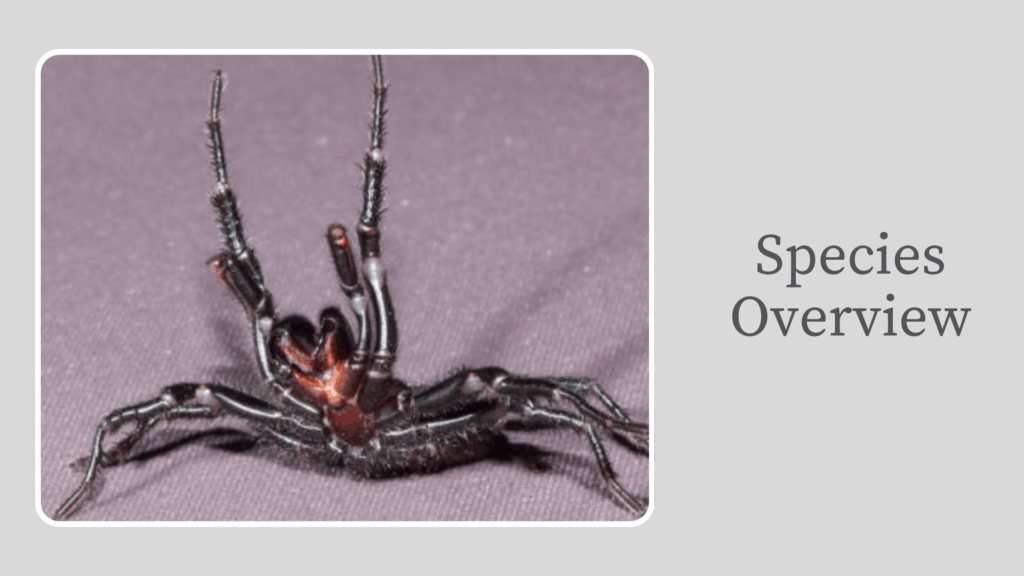
The Sydney funnel-web spider is one of Australia’s most dangerous and well-known arachnids. Scientifically named Atrax robustus, this spider belongs to the family Atracidae. In this section, we’ll explore its scientific classification, habitat, and appearance in a clear, fact-by-fact format.
1. Scientific Classification
The Sydney funnel-web spider falls under the kingdom Animalia and the class Arachnida. It is part of the order Araneae, which includes all spiders, and belongs specifically to the family Atracidae. Its genus is Atrax, and the species name is robustus, making the full scientific name Atrax robustus.
2. Common Names and Recognition
This spider is most commonly known as the Sydney funnel-web spider. However, it is also referred to as the Australian funnel-web spider or simply the funnel-web spider. Male specimens are sometimes specifically called the male Sydney funnel-web spider due to their different behavior and venom potency.
3. Natural Range and Distribution
The Sydney funnel-web spider is native to eastern Australia. It is mainly found in New South Wales, particularly around the Sydney Basin and Blue Mountains. Closely related funnel-web species can also be found in regions like Queensland, Victoria, and parts of South Australia.
4. Habitat Preferences
This species prefers cool, moist environments. It typically lives in forest floors, under rocks, in rotting logs, and around leaf litter. In suburban areas, it may be found in gardens, woodpiles, sheds, and even within the foundations of homes. It builds a silk-lined burrow or crevice with a distinctive funnel-shaped entrance and radiating trip lines.
5. Physical Appearance
The Sydney funnel-web spider has a shiny black or dark brown body with a glossy head region (carapace). Its legs are thick and hairy, and it has long, powerful fangs capable of delivering a strong bite. Adult spiders usually grow between 3.5 to 5 centimeters in body length. Males are smaller and slimmer than females but often more venomous.
6. Differences Between Male and Female Spiders
Male and female Sydney funnel-web spiders are visibly different. Females are bulkier and spend most of their lives hidden in burrows, while males are lighter and more mobile. During mating season, males leave their shelters to search for females, increasing their chances of encountering humans. Interestingly, the male’s venom is significantly more toxic to humans than the female’s.
Web, Habitat, and Behavior
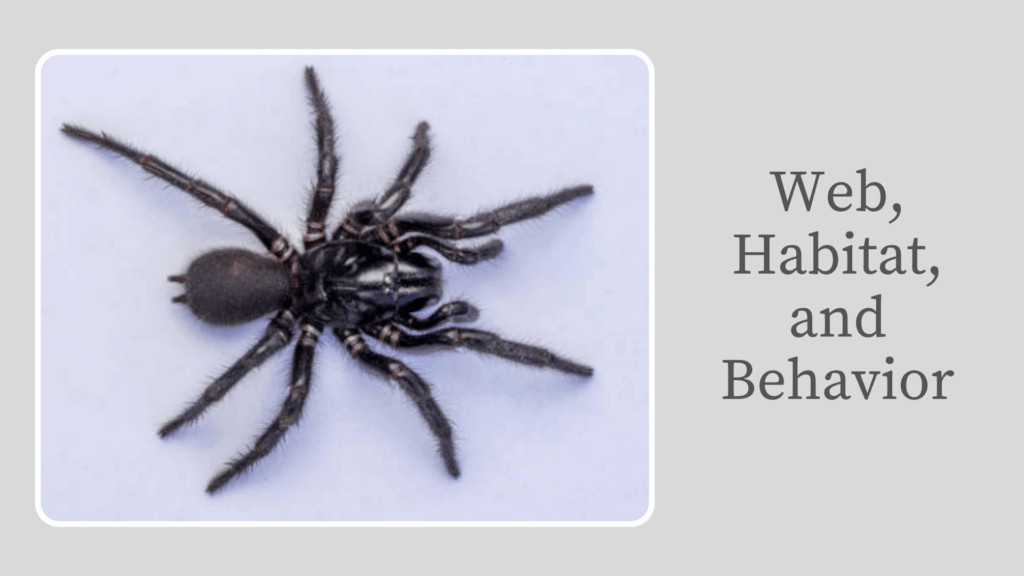
The Sydney funnel-web spider is not just known for its venom, but also for its unique web structure, hidden lifestyle, and fast, aggressive responses when disturbed. This section explains how it builds its web, where it lives, and how it behaves in the wild or near human homes.
7. Funnel-Shaped Web Structure
The spider constructs a silk-lined, funnel-shaped web that leads into a burrow or deep retreat. Unlike open orb webs seen in garden spiders, this web looks like a tunnel, often hidden in dark corners or covered by leaf litter. Radiating from the entrance are several trip lines, which help the spider detect vibrations caused by prey or predators.
8. Web Location and Setup
These webs are usually found in moist, shaded areas like under logs, rocks, leaf litter, or tree roots. In urban environments, you might spot them in garden beds, crevices in retaining walls, under pot plants, or inside unused pipes. The spider stays deep inside the funnel and waits patiently until movement triggers its alert.
9. Habitat and Environment
The Sydney funnel-web prefers habitats with high humidity and low light. Forest floors, bushland, and shaded suburban gardens are ideal locations. These spiders avoid dry or sun-exposed places and tend to stay close to their burrows during the day. The natural habitat provides the perfect conditions for their silk-lined tunnels to remain intact and functional.
10. Nocturnal Behavior
This spider is strictly nocturnal. During daylight hours, it remains hidden inside its web or burrow. At night, it emerges to hunt or repair its web. Males are especially active during the night in mating season, often wandering across the ground, climbing into shoes, sheds, or garages.
11. Aggressive Defensive Display
When threatened, the Sydney funnel-web spider displays a powerful defense. It raises its front legs high, spreads its fangs wide, and rears back in a classic threat posture. If the threat continues, it may strike repeatedly and quickly. Unlike many spiders that run away, this species stands its ground.
12. Hunting and Feeding Tactics
Although it uses a web, the spider does not trap prey in sticky silk. Instead, it waits for the vibration of nearby insects on the trip lines and then lunges forward to bite. It can move fast and bite multiple times. After injecting venom, it drags the prey back into its funnel to consume it safely.
Bite and Venom
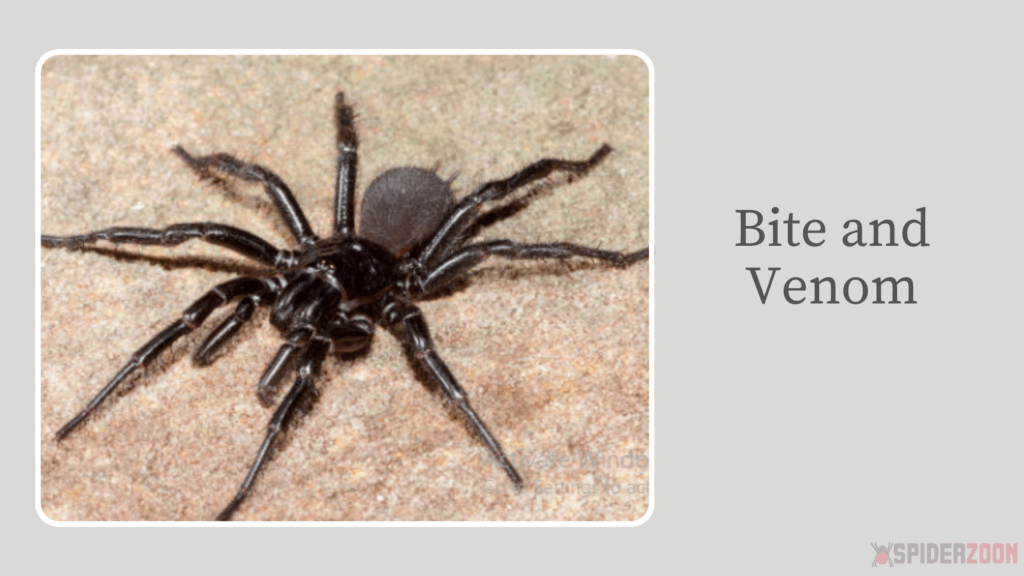
The Sydney funnel-web spider is feared mostly for its highly toxic venom and its ability to deliver deep, painful bites. This section explains the nature of its venom, the symptoms it causes, and how modern medicine has greatly reduced the danger associated with its bite.
13. Type of Venom
The venom of the Sydney funnel-web spider contains a powerful neurotoxin called atracotoxin. This toxin disrupts the normal function of the human nervous system, making it extremely dangerous—especially to children and small animals. Interestingly, the venom is not harmful to many animals, such as dogs, cats, or rabbits, but it is highly toxic to primates, including humans.
14. Venom Potency in Males
Male Sydney funnel-web spiders produce much more potent venom than females. Their venom contains a unique component (delta-atracotoxin) that is more harmful to humans. Because males leave their burrows to search for mates, they are responsible for the majority of dangerous bites.
15. Bite Symptoms
A bite can cause severe and rapid symptoms. These may include intense pain at the bite site, sweating, nausea, vomiting, muscle twitching, salivation, difficulty breathing, high blood pressure, and confusion. In extreme cases, untreated bites can lead to death within hours, especially in children.
16. How Fast Do Symptoms Appear?
Symptoms often begin within 15 to 30 minutes of a bite. The speed and severity of the reaction depend on the amount of venom injected and the age or health of the person bitten. Children are at greater risk due to their smaller body size.
17. Availability of Antivenom
An effective antivenom has been available since 1981, produced using venom extracted from captive funnel-web spiders. Thanks to the prompt use of antivenom in hospitals, no deaths have been recorded since its introduction—even in severe cases.
18. Historical Fatalities
Before antivenom was developed, the Sydney funnel-web spider caused at least 13 recorded deaths, mostly in or near Sydney. Most fatal cases occurred in children or elderly individuals who could not receive treatment in time.
19. Bite Cases and Public Awareness
Although the spider is dangerous, serious bite cases are relatively rare. Increased public awareness, better medical response, and education on prevention have significantly reduced the risk. Most bites happen during warm, wet seasons when males are roaming and more likely to enter human homes.
Life Cycle and Lifespan
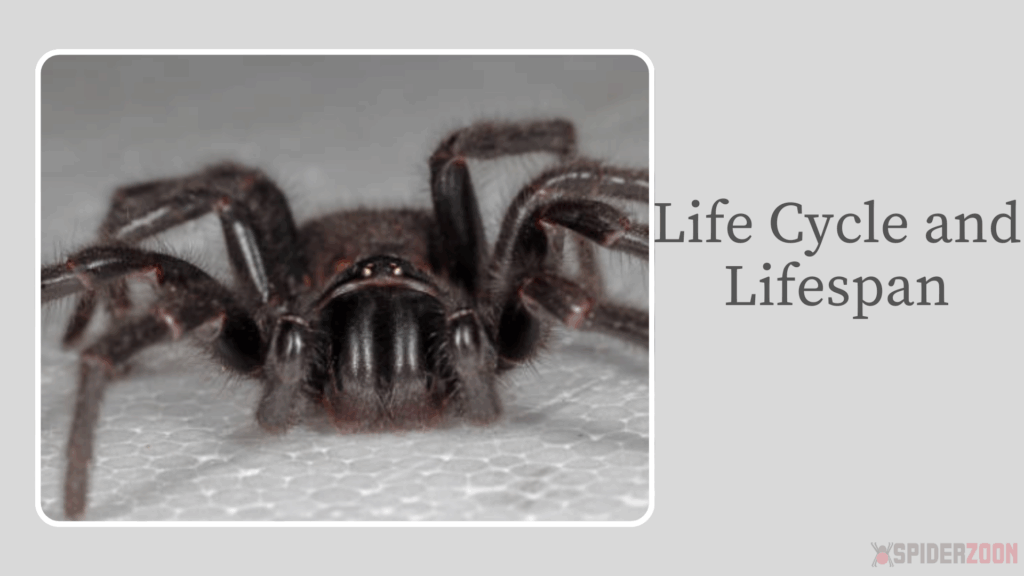
Understanding the life cycle of the Sydney funnel-web spider reveals how it grows, reproduces, and survives in the wild. Though feared for its venom, this spider also has a fascinating development process and a surprisingly long life—especially for a spider species.
20. Egg Development and Hatching
The life cycle begins when the female lays around 100 eggs inside a silk-lined sac within her burrow. These eggs are carefully guarded and maintained for several weeks. Once developed, the spiderlings hatch and remain in the mother’s burrow for a short period before dispersing to build their own homes.
21. Spiderling Stage
After leaving the mother’s burrow, the young spiders, known as spiderlings, go through multiple molts as they grow. They are extremely small and vulnerable during this stage and often hide in soil or under debris. This stage can last for months depending on environmental conditions.
22. Time to Maturity
It takes two to four years for a Sydney funnel-web spider to reach full maturity. Males typically mature faster than females and begin roaming for mates once they are sexually mature. The long maturation period allows them to survive for extended periods if undisturbed.
23. Lifespan of Female Spiders
Female Sydney funnel-web spiders can live for 10 to 20 years, spending most of their life hidden in the same burrow. They are sedentary and rarely leave their webs unless disturbed. Their long lifespan is due to their stable habitat and minimal exposure to predators.
24. Lifespan of Male Spiders
Males have a much shorter lifespan, usually living only 5 to 7 years, with most dying soon after mating. Once mature, males leave their burrows in search of females and are often exposed to predators, dehydration, and accidents, leading to early death.
25. Mating Season Behavior
During warm and humid months, especially late spring to summer, males begin their search for mates. This is when they are most commonly seen by humans—roaming at night across paths, patios, and garages. After mating, males often die shortly afterward.
Public Perception and Misconceptions
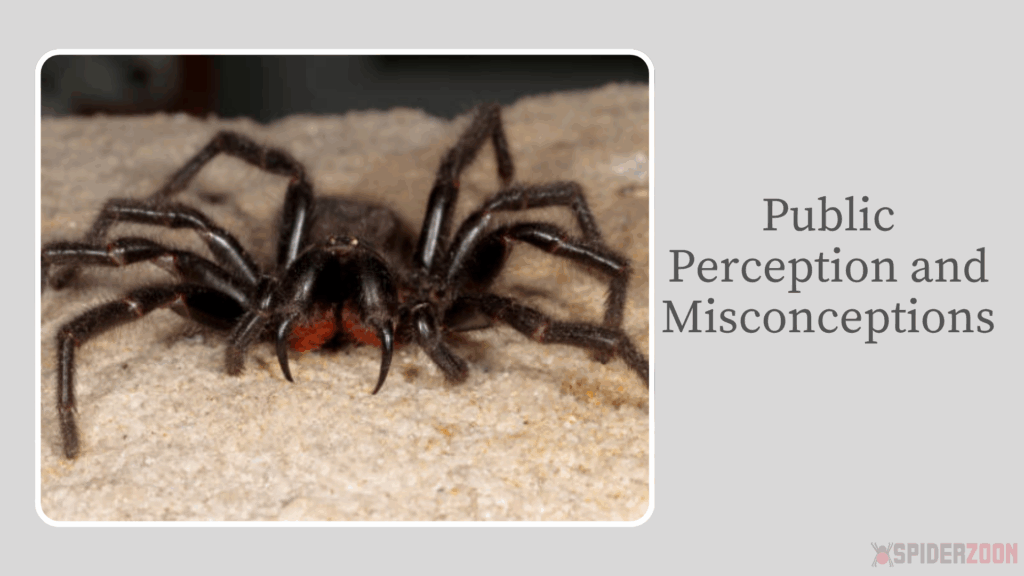
Despite its small size, the Sydney funnel-web spider has gained worldwide notoriety as a symbol of fear. Much of its terrifying reputation is based on stories, media coverage, and myths that often exaggerate its threat. In this section, we’ll explore how this spider is viewed by the public and separate fact from fiction.
26. Public Fear vs. Reality
The Sydney funnel-web spider is often described as “the most dangerous spider in the world,” and while this title is scientifically supported due to its potent venom, the actual risk to humans today is very low. The wide availability of antivenom and fast medical response has eliminated fatalities since 1981. However, fear remains strong due to dramatic headlines and viral stories.
27. Misunderstandings About Its Aggression
This spider is frequently labeled as extremely aggressive, but in truth, it does not attack unprovoked. Its well-known threat posture—rearing up and baring fangs—is meant to scare away threats, not invite confrontation. It bites only when cornered, handled, or severely disturbed. Most encounters can be avoided with caution and awareness.
28. Pet Ownership Debate
Some collectors and researchers have attempted to keep Sydney funnel-web spiders in captivity. While legal in specific cases (such as venom collection for antivenom production), keeping one as a pet is dangerous and strongly discouraged. These spiders are fast, venomous, and difficult to manage safely, especially outside of controlled environments.
29. Media and Cultural References
Public fascination with the Sydney funnel-web often spikes after major sightings. For example, a large male nicknamed “Big Boy” gained attention when donated to a venom-milking facility. Celebrities like Chris Hemsworth have promoted spider awareness through social media, helping balance fear with facts. These stories help educate people but also sometimes dramatize the spider’s threat.
30. Is It Really the Deadliest Spider?
The Sydney funnel-web is indeed one of the most venomous spiders to humans. Its venom works rapidly and can be fatal without treatment. However, compared to spiders like the black widow or Brazilian wandering spider, the actual number of deaths is low, especially in recent decades. Thanks to scientific research and antivenom development, its “deadliest” status now reflects potential danger—not common outcomes.
Fun and Unusual Facts
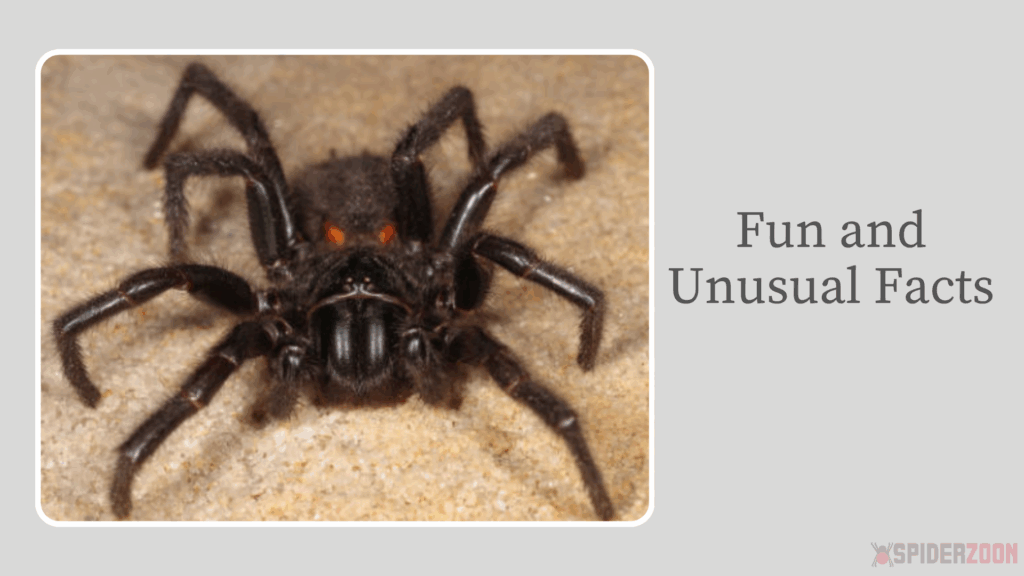
While the Sydney funnel-web spider is mostly known for its venom and aggression, there are also some curious and lesser-known aspects that make it even more fascinating. This final section shares a standout fact that highlights the spider’s unique role in science and nature.
31. The Sydney Funnel-Web Spider Helps Save Lives
Despite being deadly, the Sydney funnel-web spider actually helps save lives. Venom extracted from these spiders is used to create life-saving antivenom, which has prevented all fatalities from bites since 1981. But beyond that, researchers have discovered that a molecule in its venom—Hi1a—may protect the brain from damage during heart attacks or strokes. This unexpected medical breakthrough has turned one of the world’s most feared spiders into a potential hero in modern medicine.
Conclusion
The Sydney funnel-web spider is a creature that inspires fear, fascination, and scientific curiosity. From its powerful venom and underground web to its critical role in antivenom production, this spider is far more than just a backyard threat. By understanding these 31 facts, we can appreciate its place in nature—and recognize that respect and awareness are far more useful than fear.