
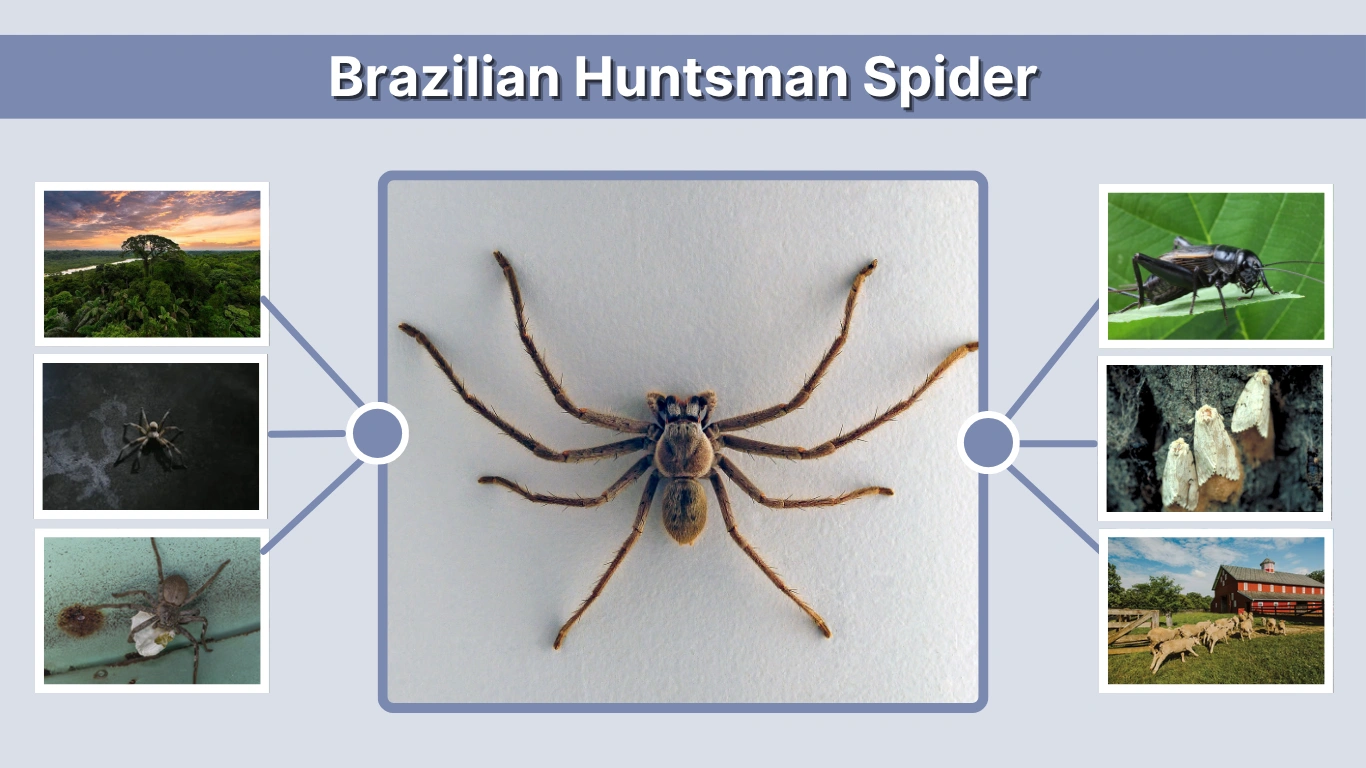
The Brazilian huntsman spider is one of South America’s most remarkable arachnids, known for its size, speed, and hunting skills. Found across Brazil’s rainforests, grasslands, and rural areas, this spider is both fascinating and misunderstood. Its impressive agility and predatory instincts help control insect populations, making it an essential part of the ecosystem. Although its size and quick movements can seem alarming, the Brazilian huntsman is generally harmless to humans.
Overview of the Brazilian Huntsman Spider
The huntsman spider family (Sparassidae) includes hundreds of species, and Brazil is home to several striking examples. These spiders are often referred to as giant crab spiders because of their leg orientation and sideways motion. Unlike web-building species, huntsman spiders actively hunt their prey using speed and precision. In Brazil, they thrive in warm and humid regions, often near homes and plantations where insects are abundant.
Scientific Classification and Origin
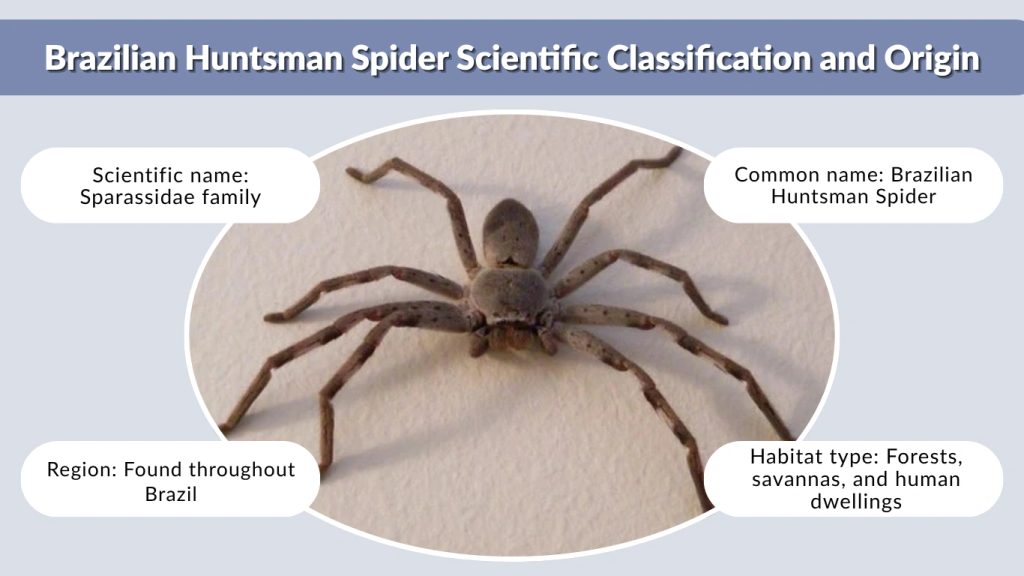
- Scientific name: Sparassidae family
- Common name: Brazilian Huntsman Spider
- Region: Found throughout Brazil and neighboring South American countries
- Habitat type: Forests, savannas, and human dwellings
Brazil’s diverse climate allows multiple huntsman spider species to coexist. The most well-known types include those found in the Amazon basin, coastal forests, and rural farms. Some have developed slight variations in color and size, adapting to the environment around them.
Identification and Appearance

Huntsman spiders are easily recognized for their impressive leg span and agile movements. Below are key physical characteristics that help identify Brazilian species:
- Leg Span: Adults can measure between 10 to 15 centimeters, making them large but not dangerous.
- Color: Brown, tan, or gray shades that blend with bark or soil.
- Body Shape: Flat and wide, allowing them to slip into narrow crevices.
- Eyes: Eight small eyes arranged in two rows for excellent night vision.
- Legs: Long, angled outward, and covered in fine hairs that sense vibrations.
Some individuals may display darker stripes or faint spots, depending on species and habitat. Their overall look is striking but designed for camouflage rather than intimidation.
Habitat and Distribution in Brazil
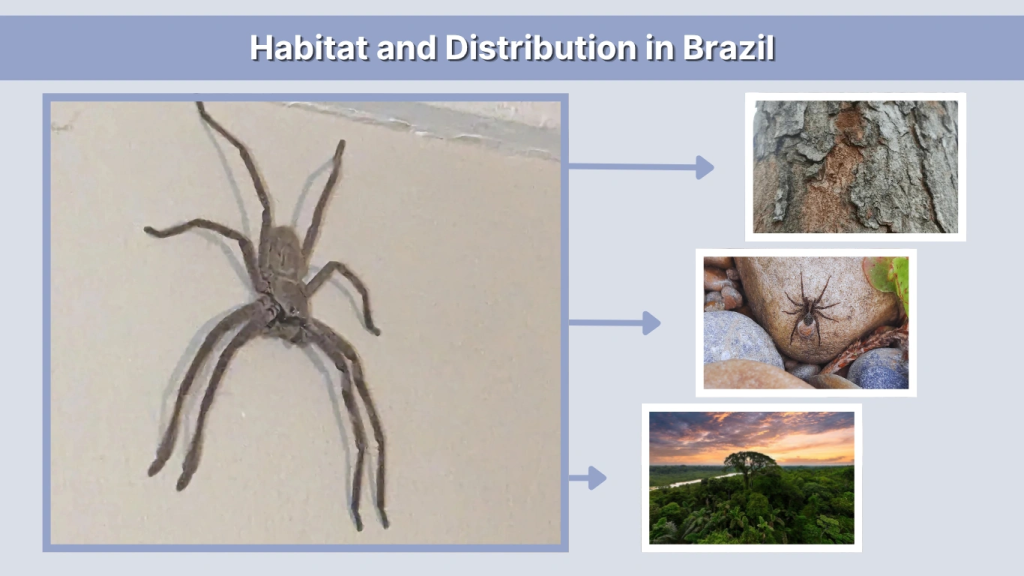
The Brazilian huntsman spider can be found in tropical forests, agricultural fields, and suburban areas. It prefers hiding under bark, stones, or within leaf litter. In humid regions such as the Amazon rainforest, these spiders play a critical role in controlling insect populations.
In drier zones, like parts of the Cerrado (Brazilian savanna), they adapt to heat by staying hidden during the day and hunting at night. Some even venture into homes or barns seeking prey, which often leads to mistaken identity and fear among locals.
Behavior and Lifestyle

The Brazilian huntsman spider is primarily nocturnal, becoming active after sunset. It relies on agility instead of webs, stalking and ambushing prey. Huntsman spiders are known to:
- Chase insects such as cockroaches, crickets, and moths.
- Move rapidly across floors, walls, and ceilings.
- Use vibrations to detect movement in the dark.
- Retreat quickly when confronted rather than attack.
They are solitary creatures and only interact during mating seasons. Their fast movements can be startling, but they prefer flight over fight, making bites extremely rare.
Reproduction and Life Cycle
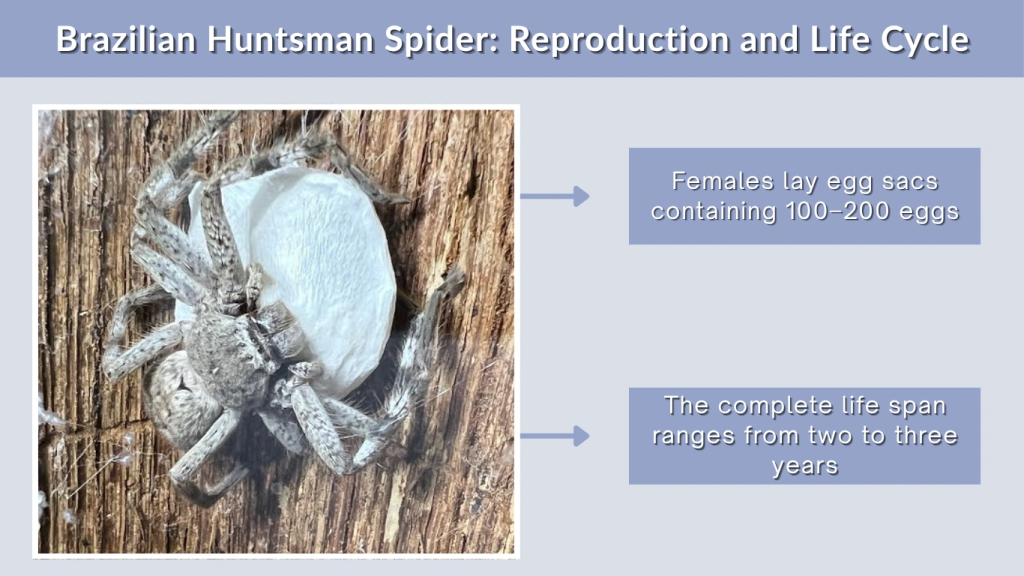
During the warm, rainy months, males and females come together to mate. Females lay egg sacs containing 100–200 eggs, which they guard until hatching. Spiderlings emerge after a few weeks and begin hunting independently soon after molting. The complete life span ranges from two to three years, depending on environmental conditions and prey availability.
Size and Growth Stages
Huntsman spiders experience several molting stages before reaching adulthood. Young spiders shed their exoskeletons as they grow, increasing in size with each molt. Adult females are usually larger and more robust, while males have longer legs but slimmer bodies. In the wild, well-fed huntsman spiders can reach leg spans exceeding 15 cm, rivaling the largest arachnids in South America.
Difference Between Brazilian and Other Huntsman Spiders
While all huntsman spiders share similar traits, Brazilian species are distinct for their tropical adaptations:
- Coloration: More vivid and patterned for rainforest camouflage.
- Behavior: Slightly more aggressive when cornered, compared to Australian types.
- Habitat preference: Thrive in humid, forested zones rather than dry deserts.
These traits make the Brazilian huntsman perfectly suited to its diverse environment.
Habitat Preferences: Forests, Farms, and Urban Areas
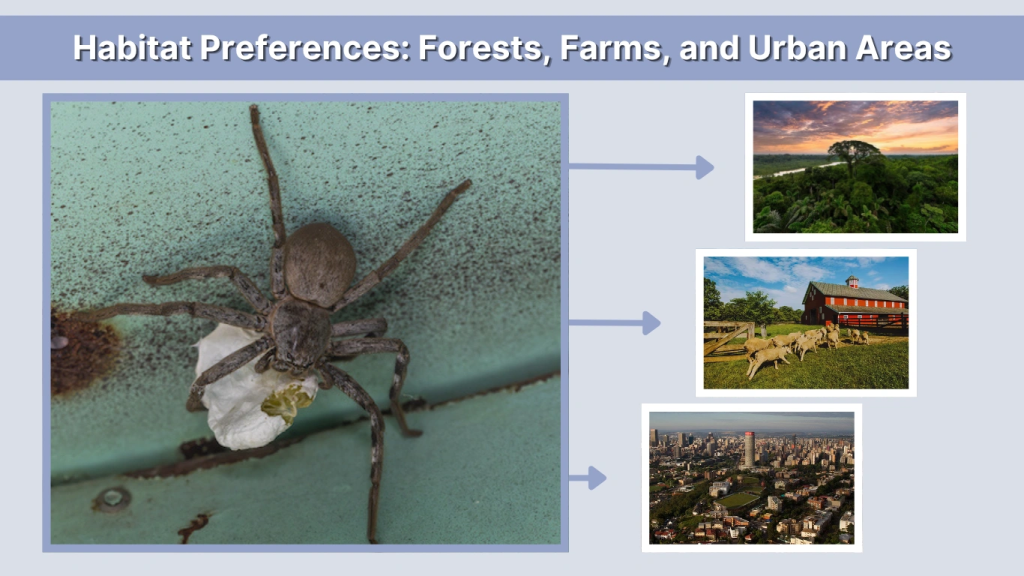
The Brazilian huntsman spider thrives in a wide range of environments. In rainforest regions, it lives beneath bark, inside tree crevices, or under fallen logs, using these spaces for shelter during the day. In farmland areas, especially sugarcane and coffee plantations, they are valuable pest controllers, feeding on insects that damage crops.
Urban environments have also become common homes for these spiders. They occasionally enter houses through open windows or gaps in walls, seeking prey. Warm and humid rooms provide ideal conditions for them to stay hidden behind furniture or under appliances, often surprising homeowners who find them at night.
Diet and Hunting Strategy

Huntsman spiders do not rely on webs to catch food. Instead, they are active hunters with keen senses. Their diet includes:
- Cockroaches
- Crickets
- Moths
- Small beetles
- Occasionally other spiders
Using their sensitive leg hairs, they detect vibrations and swiftly ambush prey. Their fangs inject mild venom that paralyzes the insect, allowing them to feed easily. This hunting behavior not only helps them survive but also plays a crucial ecological role in keeping insect populations under control in Brazil’s tropical ecosystem.
Are Brazilian Huntsman Spiders Dangerous?
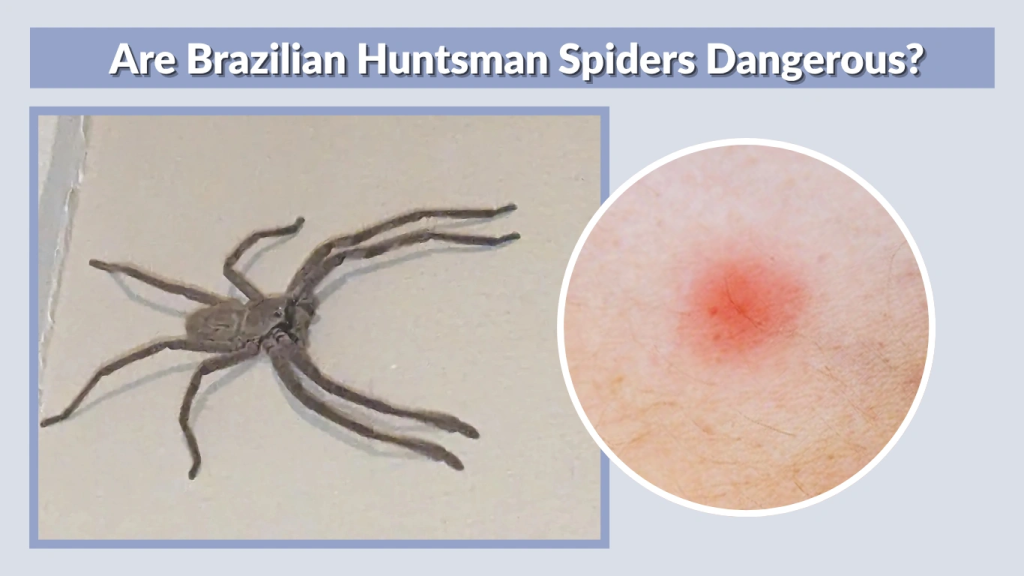
Despite their intimidating appearance, Brazilian huntsman spiders are not dangerous to humans. They are non-aggressive and only bite when threatened or handled roughly. A bite may cause mild pain, redness, or slight swelling, but no serious medical issues.
Their venom is designed for small insects, not humans. In fact, many Brazilians regard huntsman spiders as beneficial because they help control pests naturally, particularly in agricultural areas and around homes.
Myths and Misconceptions
There are several myths about the Brazilian huntsman spider that often lead to unnecessary fear. Common misconceptions include:
- “They are deadly.” In truth, their venom is weak and poses no real danger to people.
- “They chase humans.” Their fast, erratic movements can appear like chasing, but they are usually trying to escape.
- “They are related to the Brazilian wandering spider.” While both are large and live in Brazil, they belong to different families. The wandering spider (Phoneutria) is venomous, but the huntsman (Sparassidae) is not.
Educating people about these differences helps prevent harm to beneficial species.
Ecological Role and Importance
The Brazilian huntsman spider is an essential part of the ecosystem. By preying on insects and other small arthropods, it helps maintain ecological balance in tropical and agricultural environments. In fields and plantations, it acts as a natural pest control agent, reducing the need for chemical pesticides.
Additionally, they serve as prey for birds, reptiles, and small mammals, forming an important link in Brazil’s food chain. Their presence indicates a healthy, balanced ecosystem.
Interaction with Humans
In rural Brazil, encounters with huntsman spiders are common. Farmers often see them around storage sheds or barns, where insect populations are high. In urban homes, these spiders sometimes enter during the rainy season or when searching for food.
To prevent indoor sightings, residents can seal small gaps, use window screens, and reduce clutter. However, many locals choose to leave them alone or gently relocate them outdoors, knowing they help reduce cockroach and mosquito numbers.
Regional Variations in Brazil

Brazil’s vast geography allows multiple huntsman spider variations to exist:
- Amazon Huntsman Spider: Found in tropical rainforests, large and often brown with strong camouflage.
- Coastal Huntsman Spider: Lighter in color, adapted to humid coastal zones.
- Savanna Huntsman Spider: Slimmer body type, living in the open fields of the Cerrado.
Each variant displays minor differences in size, pattern, and habitat preference, but all share the same distinctive sideways movement and hunting technique.
Climate Influence and Adaptation
The tropical and subtropical climates of Brazil provide perfect conditions for huntsman spiders. They prefer temperatures between 24–30°C and high humidity levels. During dry seasons, they hide under logs or enter shaded human dwellings to avoid dehydration.
Their adaptability allows them to survive even in disturbed areas, proving their resilience. As deforestation reduces natural habitats, some huntsman species are becoming more visible near human settlements.
Brazilian Huntsman vs. Brazilian Wandering Spider
While both spiders are native to Brazil, they are vastly different.
| Feature | Brazilian Huntsman Spider | Brazilian Wandering Spider |
| Family | Sparassidae | Ctenidae |
| Venom | Mild, non-dangerous | Highly venomous |
| Aggression | Shy, avoids humans | Defensive when threatened |
| Appearance | Flat, wide body with long legs | Stockier body, darker color |
| Behavior | Nocturnal hunter, harmless | Aggressive, medically significant bite |
This comparison helps clear the confusion and emphasizes that the huntsman spider poses no threat to humans.
Behavior During Rainy Season
In Brazil’s wet season, insects multiply rapidly — which attracts more huntsman activity. They move indoors more frequently during this time, drawn by light sources that attract their prey. Homeowners often spot them on walls or ceilings at night, though they quickly retreat if disturbed.
FAQs
Are Brazilian huntsman spiders venomous?
Yes, but only mildly. Their venom is designed to paralyze insects, not humans. A bite may cause mild irritation, but it’s not medically serious.
How large can a Brazilian huntsman spider grow?
Adults can reach a leg span of up to 15 centimeters, making them one of the largest spider species found in Brazil.
Where do Brazilian huntsman spiders live?
They are found across Brazil — from the Amazon rainforest to urban areas — often hiding under bark, stones, and roofs during the day.
Do huntsman spiders build webs?
No. They are active hunters and do not rely on webs. Instead, they stalk and chase prey using speed and vibration detection.
Are huntsman spiders related to the deadly wandering spider?
No. Although both species live in Brazil, they belong to entirely different families. The wandering spider is venomous, while the huntsman spider is harmless and beneficial.