
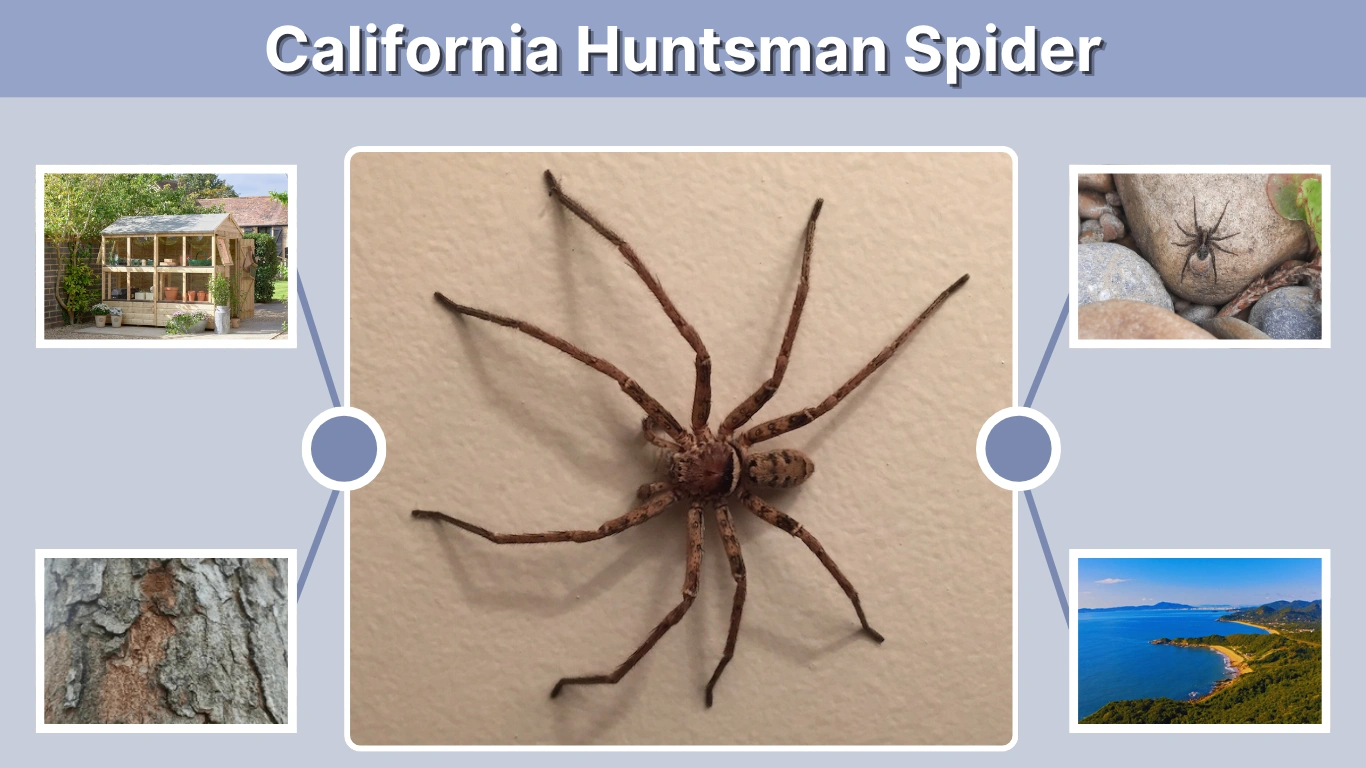
The California huntsman spider is one of the most fascinating arachnids occasionally spotted across the state. Known for its large size, incredible speed, and crab-like movement, it often sparks both fear and curiosity. Though not native to California, these spiders have successfully adapted to the region’s mild climate and urban environments, particularly in Southern California. Despite their intimidating appearance, huntsman spiders are harmless to humans and play a beneficial role in controlling pests.
Is the Huntsman Spider Native to California?
The huntsman spider, scientifically known as Heteropoda venatoria, is not originally native to California. It hails from tropical and subtropical regions of Asia and Australia. However, global trade and travel have allowed it to spread worldwide, including to parts of the United States. In California, the species thrives in warmer coastal and desert regions where temperatures stay mild year-round. Over time, the huntsman has established stable populations in both residential and outdoor settings, adapting remarkably well to local conditions.
Appearance and Identification

Huntsman spiders are easily recognized by their long legs and flattened bodies that allow them to squeeze through tight spaces. Below are some of the key identification features:
- Body Size: Adults typically measure 1 inch in body length, with a leg span reaching up to 5–6 inches.
- Color Variations: They range from light brown and gray to golden hues, depending on species and habitat.
- Leg Shape: Their long, laterally extended legs enable sideways, crab-like movement — a signature trait.
- Distinctive Marks: Most have eight eyes arranged in two rows, with dark patterns or bands across the body and legs.
The golden huntsman spider variant, sometimes found in Southern California, is especially eye-catching due to its lighter yellow-brown coloration. Meanwhile, the brown huntsman spider is darker and often mistaken for the more common wolf spider.
Habitat and Regions in California

Huntsman spiders in California tend to inhabit warm, sheltered places. They prefer environments that provide both cover and an abundant insect food supply.
In Southern California, they are most frequently reported in cities such as Los Angeles, San Diego, and Palm Springs. The region’s dry climate and warm nights are ideal for their survival. Residents occasionally encounter them in garages, storage sheds, or under outdoor furniture.
In contrast, Northern California sightings are less frequent due to cooler conditions. However, some individuals have been observed in the Central Valley and coastal towns, where the temperature remains moderate. Their adaptability allows them to thrive in both urban and semi-natural areas across the state.
Size and Growth Stages of the Huntsman Spider
When people first encounter a huntsman spider, its sheer size can be startling. Adult huntsmen can reach a leg span of 12–15 centimeters, making them one of the largest spiders found in California. Males are typically slimmer, while females have more robust bodies.
Juvenile huntsman spiders grow quickly, shedding their exoskeleton multiple times before reaching maturity. Unlike many other spiders, they don’t rely on webs to catch prey. Instead, they actively hunt insects like cockroaches, moths, and small beetles — a behavior that benefits households by reducing pest numbers.
Behavior and Lifestyle

Huntsman spiders are nocturnal predators known for their stealth and agility. They use their speed and strong legs to chase down prey rather than spinning webs. During the day, they hide behind bark, under rocks, or within crevices of homes and sheds.
These spiders are solitary creatures and prefer to avoid confrontation. Even when threatened, they usually flee instead of biting. Their bites are rare and typically result only in mild irritation.
In California, their behavior makes them particularly effective natural pest controllers. They help reduce insect populations in gardens and indoor spaces without posing danger to people or pets.
The Golden Huntsman Spider in California
The golden huntsman spider is one of the most visually distinct varieties occasionally seen in Southern California. Its golden or light tan body and long legs make it appear almost luminous under sunlight. This spider prefers dry, desert-like areas and often resides near human structures that provide warmth at night.
Although many people confuse it with the giant huntsman species (Heteropoda maxima), the golden huntsman is much smaller. It is harmless and non-aggressive, retreating quickly when approached. Because of its color and size, this variant often features in local myths and online posts claiming “giant spiders in California,” though such claims are exaggerated.
Common Species Found in California

Several huntsman spider types are observed in the state, though Heteropoda venatoria remains the most widespread.
- Heteropoda venatoria: Known as the Banana or Brown Huntsman Spider, common in warm urban areas.
- Golden Huntsman Spider: Lighter in color, usually seen in Southern California deserts.
- Brown Huntsman Spider: Darker and more reclusive, often mistaken for wolf spiders in backyards.
Each of these species displays similar habits and is beneficial for natural pest management.
Habitat Preferences: Desert vs. Coastal Areas
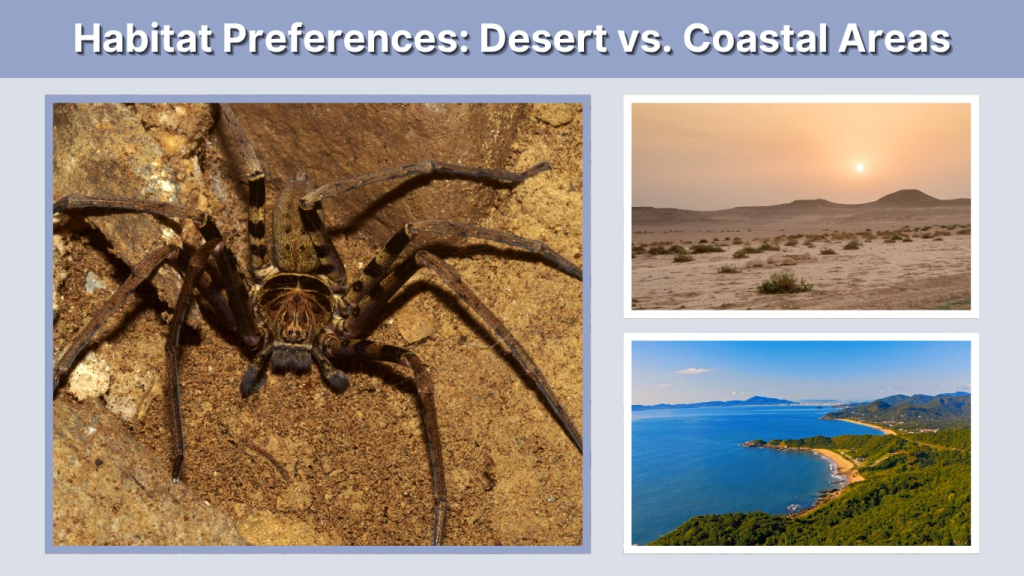
Huntsman spiders show remarkable adaptability across California’s landscapes. In desert regions, such as Palm Springs and Joshua Tree, they seek shelter under rocks, inside woodpiles, or in cool crevices during the daytime. The dry conditions match their natural environment, making deserts ideal habitats.
In coastal areas like Santa Barbara and San Diego, huntsman spiders are often spotted near homes, attracted by insects and mild evening temperatures. Coastal climates provide year-round warmth and humidity, allowing these spiders to thrive both outdoors and inside residential spaces.
Are Huntsman Spiders Dangerous to Humans?

Despite their large size and fast movements, huntsman spiders are not dangerous to humans. They rarely bite, even when provoked, and their venom is not medically significant. A bite may cause mild pain, redness, or swelling, similar to a bee sting.
Most encounters occur when huntsman spiders wander indoors searching for prey or shelter. Rather than attacking, they often freeze or flee when approached. Experts consider them beneficial house guests that naturally control pests like cockroaches and moths.
What to Do If You Find a Huntsman Spider Indoors
If you encounter one in your home, it’s best to handle the situation calmly. Follow these simple steps:
- Stay calm: Huntsman spiders are shy and not aggressive.
- Use a container: Gently trap it using a glass or plastic container and slide a piece of paper underneath.
- Release outside: Relocate the spider to a garden or shaded outdoor area.
- Seal entry points: Inspect windows, vents, and doors to reduce future entry.
- Avoid insecticides: Chemical sprays harm both spiders and beneficial insects unnecessarily.
These actions ensure a humane response while maintaining ecological balance.
California Myths and Misconceptions
The huntsman spider’s intimidating size has fueled numerous myths in California. Social media often exaggerates its proportions, calling it the “giant spider that takes over houses.” In reality, even the largest specimens rarely exceed a 6-inch leg span.
Another common misconception is that they are aggressive or deadly. In truth, they are gentle giants — fast but harmless. They play a crucial ecological role, especially in California neighborhoods where insect activity is high during warmer months.
Difference Between Huntsman and Wolf Spiders in California

Many Californians mistake huntsman spiders for wolf spiders, but there are clear differences:
- Leg Orientation: Huntsman spiders have long, sideways-extending legs, while wolf spiders’ legs point downward.
- Body Build: Huntsman spiders are flatter and lighter; wolf spiders are rounder and stockier.
- Movement: Huntsman spiders move in a smooth, crab-like motion; wolf spiders run directly forward.
- Color: Huntsman spiders often display golden or light brown tones, while wolf spiders are darker with mottled gray patterns.
Knowing these distinctions helps residents identify the harmless huntsman accurately.
Ecological Role and Benefits
Huntsman spiders are valuable members of California’s natural ecosystem. They feed on cockroaches, moths, and small insects, reducing pest populations without chemical intervention. By hunting instead of web-spinning, they actively maintain balance in gardens and around homes.
In agricultural settings, their presence can even help farmers control pests naturally. Encouraging native-friendly environments and avoiding unnecessary pest control ensures that huntsman populations continue benefiting local ecosystems.
Seasonal Activity and Reproduction
Huntsman spiders are most active from late spring through early fall, coinciding with California’s warm seasons. Females lay their eggs in a silk sac, guarding it until hatching. A single egg sac can contain up to 200 spiderlings, which disperse shortly after birth.
The young grow quickly, molting multiple times before reaching adulthood. Because they reproduce in warm months, sightings tend to increase during late summer evenings when both adults and juveniles hunt for food.
Climate Impact on Huntsman Distribution
California’s diverse climate zones significantly affect huntsman spider distribution. Southern California’s warmth supports larger populations, especially in desert towns and low-elevation suburbs. Northern California’s cooler weather limits their spread, though climate change may gradually expand their range northward.
Urban heat and sheltered indoor environments also contribute to their survival, allowing these tropical spiders to persist even during cooler months.
Giant Huntsman Sightings in California
Occasional claims of “giant huntsman spiders” circulate online, often accompanied by exaggerated photos. While these reports attract attention, the true giant huntsman species (Heteropoda maxima) originates from Laos and is not found in California.
Most so-called “giant” sightings are of well-fed Heteropoda venatoria or misidentified wolf spiders. Although large, these spiders pose no threat and are simply impressive examples of nature’s adaptability.
Summary Table of Key Facts
| Trait | Detail |
| Leg Span | 10–15 cm |
| Color | Golden, brown, or gray |
| Native to California | No (introduced species) |
| Preferred Habitat | Warm, dry, or coastal environments |
| Danger to Humans | Minimal |
| Diet | Insects such as moths and cockroaches |
FAQs
Are huntsman spiders native to California?
No. Huntsman spiders are not native to California but have adapted well to its warm regions. They likely arrived via shipping containers and now inhabit urban and desert areas across the southern part of the state.
How big do California huntsman spiders get?
Adults can reach a leg span of up to 15 centimeters, which makes them among the largest spiders in California. Despite their impressive size, they are timid and rarely bite humans.
Where in California can you find huntsman spiders?
They are most common in Southern California, particularly around Los Angeles, San Diego, and desert communities. Occasional sightings occur in the Central Valley and along mild coastal regions.
Are golden huntsman spiders real?
Yes. The golden huntsman is a genuine color variant, recognized by its warm golden or tan body. It is primarily found in Southern California’s drier areas, where the coloration helps with camouflage in desert terrain.
Do huntsman spiders live in California deserts?
Absolutely. Huntsman spiders thrive in desert regions where temperatures remain high. They hide under rocks, bark, and crevices during the day and emerge at night to hunt insects, perfectly suited to California’s arid environments.