
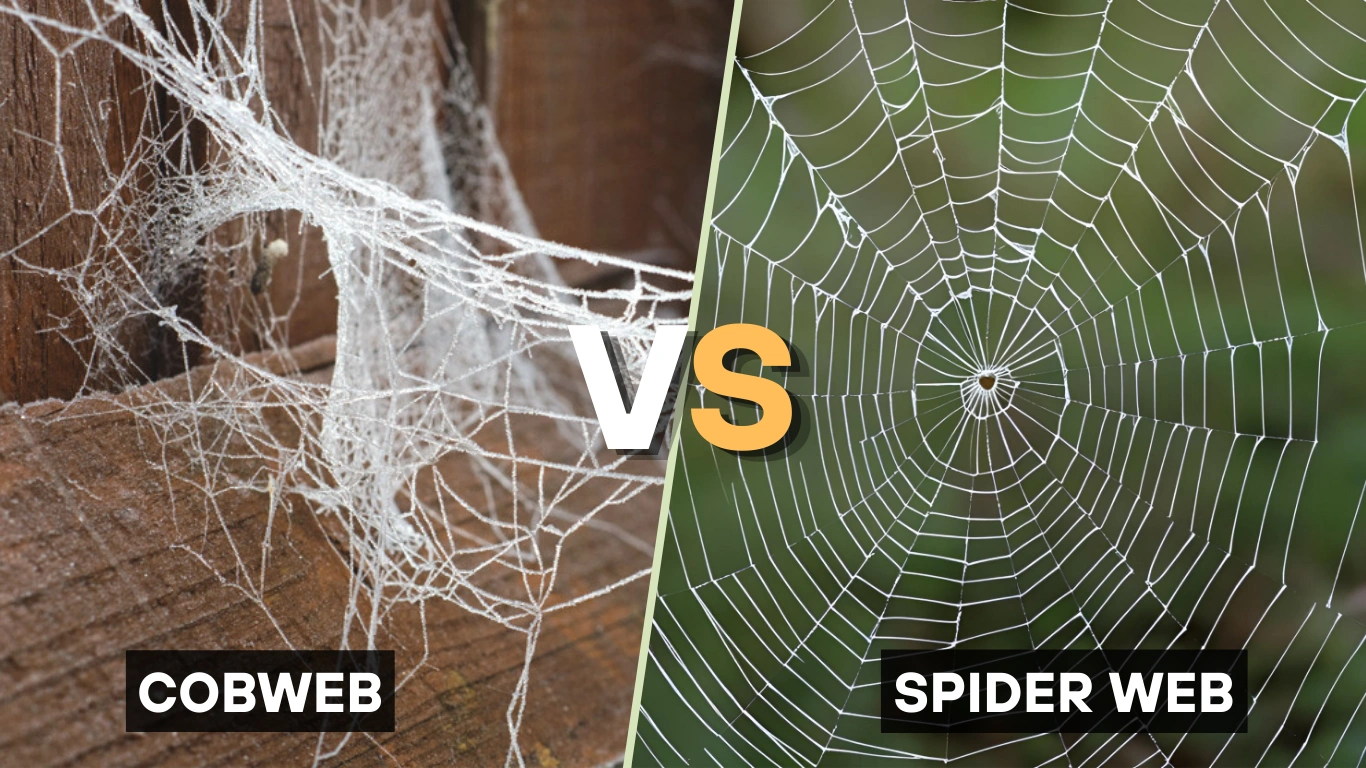
At first glance, cobwebs and spider webs seem like the same thing—thin, sticky threads hanging in corners or across garden paths. But they’re not always identical. The truth is, not all spider webs are cobwebs, and not all cobwebs are active spider traps. This article clears up the confusion, diving into what makes a cobweb different from a spider web, how to identify them, and why the terms are often mixed up.
What Is a Spider Web?

Spider webs are freshly built structures made of silk that spiders use for survival—mainly to catch prey or create shelter. These webs are intricate, clean, and built with specific patterns depending on the spider species.
Common Features of Spider Webs
- Symmetrical or circular patterns (often orb-shaped)
- Sticky and clean, with a glistening look
- Located between branches, fences, or corners
- Regularly rebuilt or repaired
- Built for active use, especially to catch insects
What Is a Cobweb?

Cobwebs, on the other hand, are typically old or abandoned spider webs. They lose their stickiness and collect dust over time. You’ll usually find them in undisturbed places like attic corners or behind furniture.
Common Features of Cobwebs
- Messy or irregular in shape
- Dusty and often coated with debris
- Found in hidden or unused areas of homes
- Made by cobweb spiders, especially from the Theridiidae family
- No longer used for hunting, just remnants of past spider activity
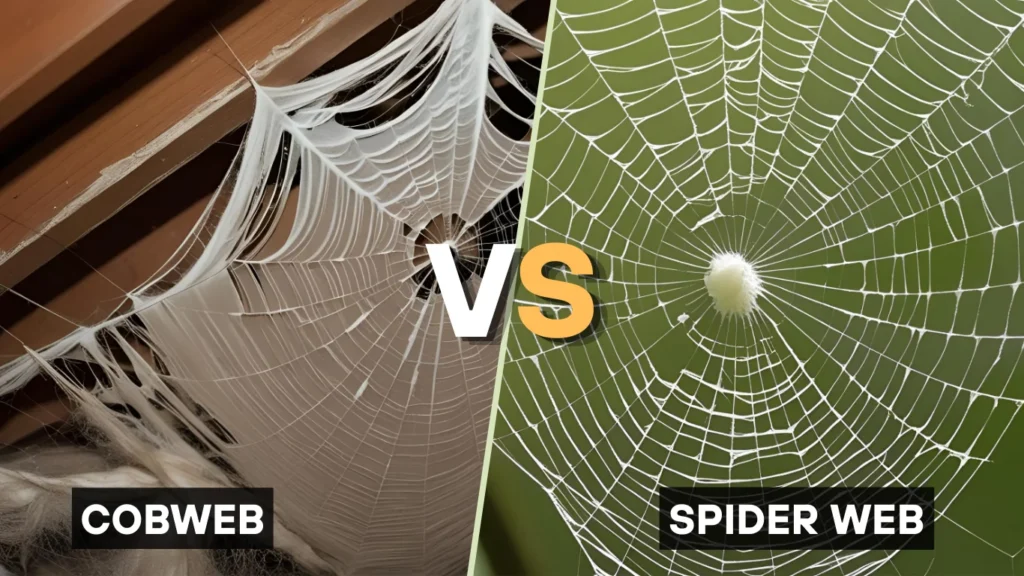
Cobweb vs Spider Web: Key Differences
| Feature | Cobweb | Spider Web |
| Appearance | Irregular, messy | Symmetrical or structured |
| Cleanliness | Dusty, abandoned | Clean, actively maintained |
| Location | Corners, old ceilings | Between branches, fences, hidden zones |
| Spider Activity | No spider or hidden spider | Actively used by spider |
| Type of Spider | Cobweb spiders (Theridiidae) | Orb-weavers, funnel weavers, etc. |
| Purpose | No longer functional | Used to catch prey or build nests |
| Age | Old or forgotten | Freshly spun |
While spider webs are often functional and actively maintained, cobwebs are more like a spider’s forgotten leftovers.
Types of Webs Spiders Create

Not all webs are the same. Different spiders spin different types of webs depending on their species and purpose.
- Orb webs – Round and symmetrical; used by orb-weavers
- Sheet webs – Flat layers of silk; often hidden in grass
- Funnel webs – Tunnel-like structures; used for ambush hunting
- Cobwebs (tangle webs) – Irregular and sticky; created by cobweb spiders
Cobwebs are a specific type of web, not just any web that looks abandoned. They are spun by certain spiders and have a tangled, sticky form meant for trapping prey—but they become dust-covered when left unused.
Do All Spiders Make Cobwebs?
No, not all spiders make cobwebs. Only certain spiders, mainly from the Theridiidae family (also called cobweb spiders or comb-footed spiders), create this kind of tangled web. Other spiders, like orb-weavers and wolf spiders, spin entirely different types of webs—or none at all.
Some spiders actively maintain their webs, while cobweb-building spiders often leave older webs to decay, resulting in the dusty cobwebs found indoors.
Why Are Spider Webs Called Cobwebs?

The term “cobweb” comes from the Old English word coppe, which means spider. Over time, coppeweb evolved into cobweb, referring to any web made by a spider. Today, the word “cobweb” is mostly used to describe older, dusty, or abandoned webs—but technically, it’s still a spider web.
So yes, a cobweb is a type of spider web, but not every spider web is a cobweb.
Are Cobwebs a Sign of Spiders?

Yes, but with a twist. Cobwebs are a sign that a spider was present—but it doesn’t always mean the spider is still around. These dusty webs often remain long after the spider has moved on or died. However, in some cases, cobweb spiders may still be hiding nearby, especially in quiet corners or behind furniture.
So if you’re asking, “do cobwebs mean spiders?”—the answer is yes, but not always active ones.
Spider Web vs Cobweb: Identification Tips
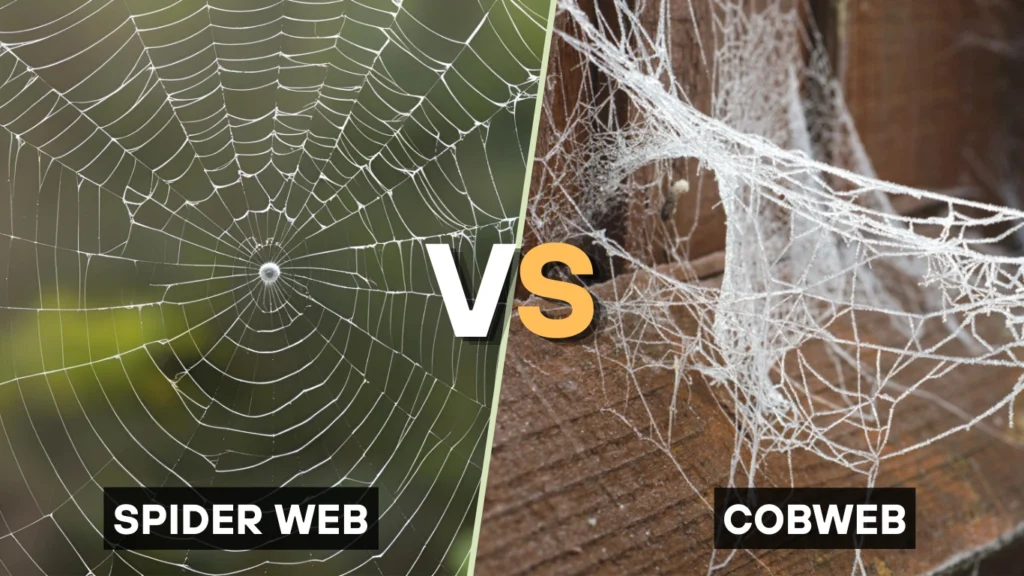
Want to tell the difference at a glance? Here are 7 quick ways to identify whether you’re looking at a spider web or a cobweb:
- Shape: Spider webs are usually structured (orb, funnel); cobwebs are tangled.
- Cleanliness: Fresh spider webs are shiny and clean; cobwebs are dusty and dull.
- Presence of Spider: Spider webs often have a spider nearby; cobwebs may not.
- Location: Cobwebs are found in corners and old spots; spider webs are in more active hunting zones.
- Stickiness: Spider webs are sticky; cobwebs lose their stickiness.
- Use: Spider webs are used for trapping prey; cobwebs are often abandoned.
- Type of Spider: Cobwebs are made by specific spiders; other spiders spin different styles.
Cobweb Ending in a Spider – Myth or Reality?
There’s a curious idea that following a cobweb trail might lead to a spider, often phrased as a “cobweb ending in a spider.” While it sounds spooky, it’s mostly myth. Most cobwebs are old and empty, but it’s possible (especially with comb-footed spiders) that one could still be nearby. These spiders often hide in crevices near their webs.
So, while it’s not common, a cobweb ending in a spider isn’t entirely false—just rare.
Conclusion
Cobwebs and spider webs are both created by spiders, but they differ in form, function, and freshness. Spider webs are newly built and actively used, while cobwebs are old, tangled, and usually abandoned. Knowing the differences helps identify spider activity and clear up common myths. Whether cleaning up corners or exploring nature, now you’ll know exactly what you’re looking at.