

Spiders spin a wide variety of webs—each with its own shape, structure, and purpose. From the iconic orb webs in gardens to hidden tunnel webs in the ground, every web tells a story about how the spider lives and hunts.
In this guide, you’ll explore 12 fascinating types of spider webs, how to identify them, which spiders make them, and where you’re most likely to find them in nature or around your home.
1. Orb Web

Orb webs are the classic, wheel-shaped webs you often see in gardens or woods. These intricate designs are built mainly to trap flying insects. With a spiral pattern stretched across a series of radiating lines, orb webs are not just beautiful but highly functional. They allow spiders to sense vibrations and react quickly to prey caught in the sticky threads.
Identification
- Circular or spiral-shaped web with a central hub
- Straight lines radiating outward like spokes on a wheel
- Sticky spiral lines attached to the radial threads
- Usually positioned vertically or diagonally
- Built between plants, branches, walls, or other anchor points
Spiders That Make It
Orb webs are created by orb-weaver spiders, especially those in the Araneidae family. These spiders can be found across the world and often vary in color, size, and pattern. Some well-known orb-weavers include the garden spider, golden orb-weaver, and spiny-backed orb-weaver. Many of them sit in the center of the web during the day or hide nearby and come out at night.
Web Material and Texture
The orb web is made of two types of silk. The non-sticky silk is used for the web’s framework and radial lines, offering structure and durability. The sticky silk forms the spiral part and is used to trap insects. Despite being delicate in appearance, orb webs are strong and flexible. Some spiders rebuild their web every day, while others maintain and repair the same one for weeks.
Purpose and Function
The orb web’s main job is to catch insects like flies, beetles, and moths. When an insect touches the sticky spiral, the web vibrates, and the spider feels the signal. It quickly rushes to the prey, bites it, and often wraps it in silk. The spider may eat it immediately or save it for later. The center of the web also serves as a resting or feeding spot for some species.
Where You’ll Find It
Orb webs are common in both natural and urban settings. You can find them in gardens, forests, fields, and even around houses. They are often seen between flowers, across walking paths, between fence posts, or under porches. These webs are also frequently found near lights at night, where insects gather, giving the spider an easy meal.
2. Sheet Web
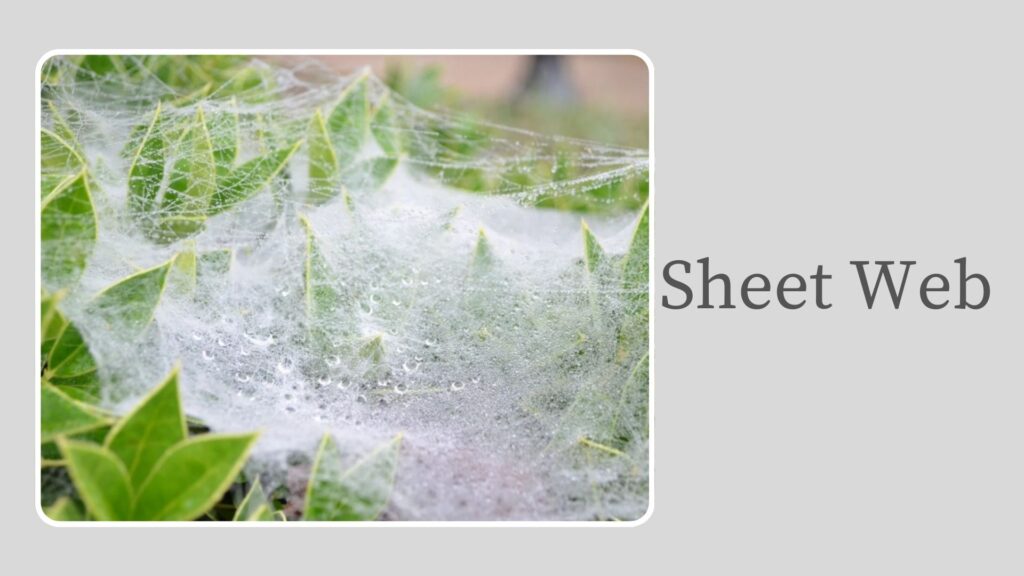
Sheet webs are horizontal, blanket-like webs that lie flat or slightly curved. These webs don’t look as tidy as orb webs but are incredibly effective at trapping small insects. The spider usually hides underneath the sheet or in a nearby retreat, rushing out when it feels vibrations.
Identification
- Horizontal, flat, or curved sheet of silk
- Often layered or slightly dome-shaped
- May include a retreat at the edge or beneath the web
- Web surface is non-sticky but still traps insects by entanglement
- Found on grass, shrubs, or low vegetation
Spiders That Make It
Sheet webs are made by spiders in the family Linyphiidae, often called sheet weavers or money spiders. These spiders are usually small and not easily seen unless you’re looking closely. Some funnel-web spiders and bowl-and-doily spiders also create sheet-like structures.
Web Material and Texture
The web is made of fine, closely spaced threads that resemble a mat. While the web itself is not sticky, it acts like a net to slow or trap insects. Some species combine this sheet with additional threads above to knock insects down onto the web.
Purpose and Function
The sheet web works as a passive trap. Insects flying above may hit loose threads and fall onto the web, or crawl over it and become entangled. The spider underneath feels the vibration and rushes out to grab the prey from below.
Where You’ll Find It
You’ll often find sheet webs in lawns, garden beds, and grassy fields. They may also be built over low bushes, inside hedges, or near fences. The web is best seen in the early morning when dew settles on it.
3. Cobweb (Tangle Web)

Cobwebs, also known as tangle webs, are messy, irregular webs commonly found in the corners of rooms, sheds, or under furniture. Though they may look disorganized, they are effective traps built by specific spiders known for their sticky silk.
Identification
- Chaotic and irregular in shape
- Sticky threads arranged in a tangled, unstructured web
- Lacks a defined pattern like orb webs
- Common in undisturbed corners and basements
- Can look dusty and old even when freshly made
Spiders That Make It
Cobwebs are typically made by comb-footed spiders, including the common house spider (Parasteatoda tepidariorum) and black widows (Latrodectus species). These spiders have a comb-like row of hairs on their legs used to fling silk over their prey.
Web Material and Texture
The silk is sticky and very strong, especially for its size. Unlike orb webs, cobwebs are not rebuilt daily — they may stay in place for weeks or longer. The sticky threads ensnare insects that wander too close.
Purpose and Function
The tangle web works like a tripwire system. When an insect touches the sticky strands, it becomes stuck. The spider, often hiding nearby or upside-down in the web, quickly moves in to bite or wrap its prey.
Where You’ll Find It
You’ll see cobwebs in indoor corners, behind furniture, basements, attics, sheds, and garages. Outdoors, they’re found under rocks, decks, or in wall cracks and eaves where there’s little disturbance.
4. Funnel Web
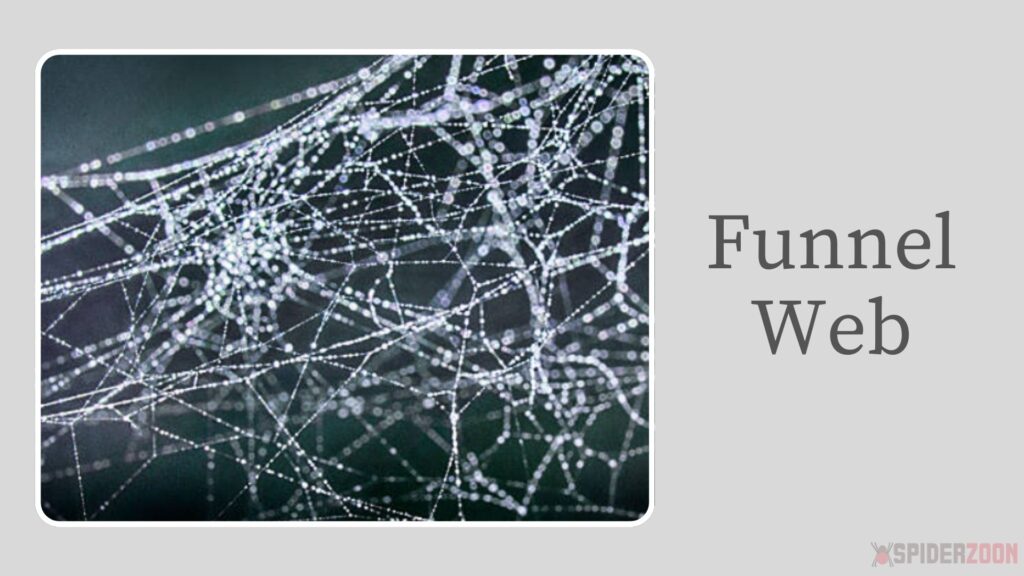
Funnel webs are flat sheets of silk with a tunnel-like retreat at one end. These webs are designed for ambush. The spider hides in the funnel and waits for prey to walk across the surface, then lunges out with speed.
Identification
- Flat sheet of silk leading into a narrow funnel or tunnel
- Funnel often located in grass, wall cracks, or between rocks
- Web surface may appear slightly curved or bowl-shaped
- Not sticky, but dense and fast to tangle prey
- Typically low to the ground or near solid surfaces
Spiders That Make It
Funnel webs are constructed by funnel-web spiders (family Agelenidae), such as grass spiders and hobo spiders. These spiders are fast movers and rely on their speed rather than sticky silk to catch prey.
Web Material and Texture
The silk in funnel webs is not sticky, but it’s thick and tightly woven. The spider often stays deep in the funnel, sensing vibrations through the silk. When prey walks on the flat sheet, the spider dashes out, grabs it, and drags it back into the tunnel.
Purpose and Function
This web serves both as a hunting platform and a protective retreat. Prey like ants or beetles wander onto the sheet, and the spider uses the web’s vibration to detect movement. The funnel provides shelter and a quick escape if threatened.
Where You’ll Find It
Funnel webs are often seen in lawns, bushes, leaf piles, logs, under stones, or near the base of walls. After rain or early in the morning, dew often highlights their shape, making them easier to spot.
5. Triangle Web
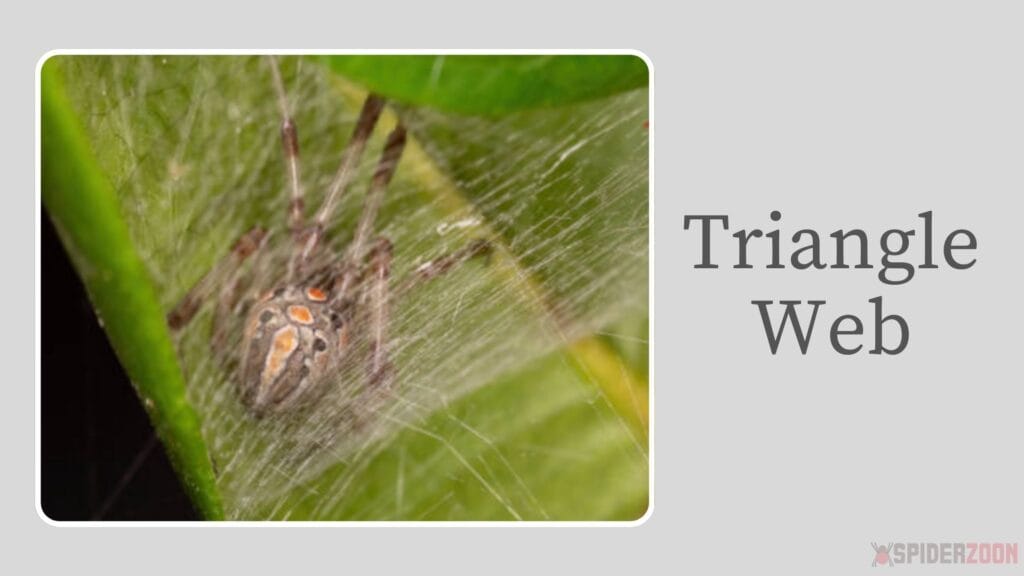
Triangle webs are unique, flat webs built in the shape of a triangle. These webs are more open than orb webs and are made by a small group of specialized spiders. They use tension to help trap prey instead of relying solely on stickiness.
Identification
- Flat, triangular web, often shaped like a slice of pie
- Three main anchor lines form the triangle’s shape
- Short sticky threads are strung across the frame
- Web appears loose, not tightly woven
- Suspended between grass or low plants
Spiders That Make It
Triangle webs are made by triangle-weaver spiders, mostly from the genus Hyptiotes. These spiders are found in wooded areas and gardens. They usually hang on one end of the web, holding it under tension with their legs.
Web Material and Texture
The web includes non-sticky anchor lines and short sticky catching threads. The spider pulls the web taut and releases it when prey touches it, causing the web to snap forward and entangle the insect.
Purpose and Function
This web works like a trap that springs. When an insect brushes the silk, the spider lets go of the tension, throwing the web forward to wrap around the prey. It’s a clever mechanism not seen in many other spiders.
Where You’ll Find It
Triangle webs are found in bushes, shrubs, and low vegetation in woodlands, gardens, or shaded trails. They can be difficult to see unless backlit by sunlight or dew.
6. Bolas Web
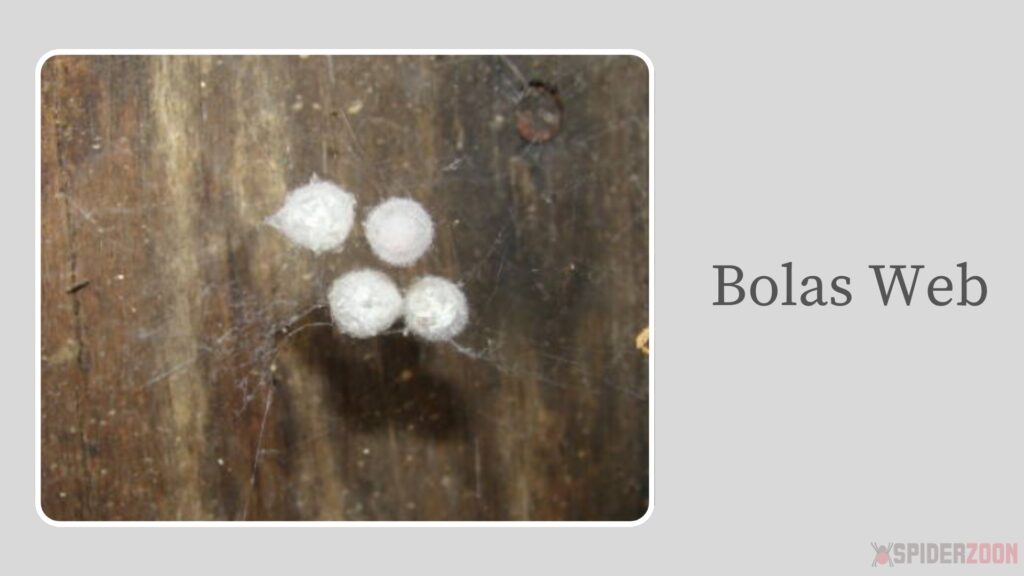
Bolas webs are one of the strangest and most fascinating spider webs. Instead of spinning a full web, the spider uses a single silk thread with a sticky “bolas” at the end — similar to a fishing line with bait. It mimics insect pheromones to lure prey directly.
Identification
- No full web structure
- One or two hanging silk threads with a sticky blob at the tip
- Used more like a tool than a web
- Often rebuilt nightly
- Usually seen suspended from leaves or branches
Spiders That Make It
These webs are created by bolas spiders, especially in the genus Mastophora. They are nocturnal and often stay motionless during the day, resembling bird droppings for camouflage. At night, they become active hunters.
Web Material and Texture
The silk used is strong and stretchy, with a sticky droplet at the end to trap insects. The bolas is swung in the air to ensnare prey — usually moths — that are attracted by the spider’s chemical mimicry.
Purpose and Function
Unlike typical passive traps, the bolas web is part of an active hunting method. The spider mimics the pheromones of female moths, attracting male moths right into the bolas. It then swings the sticky blob like a lasso to grab its victim in midair.
Where You’ll Find It
Bolas spiders are usually found in warm, humid regions such as forests and gardens. You can sometimes spot their hanging bolas in bushes or from tree leaves during the night.
7. Purse Web
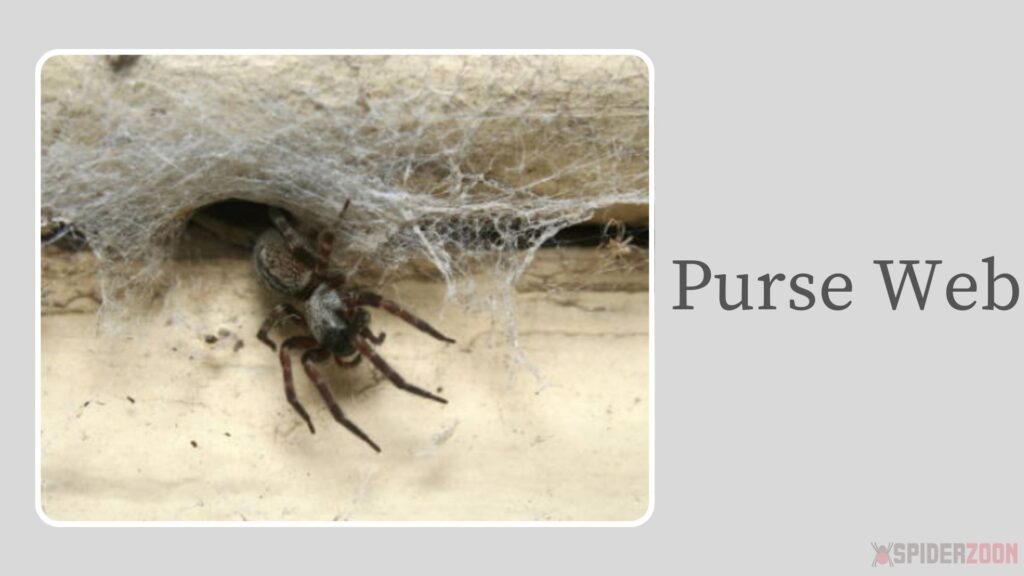
Purse webs are tube-like silk structures built vertically against trees, walls, or underground. They’re not open for catching flying insects — instead, the spider waits inside the tube and attacks prey that brushes against the outer surface.
Identification
- Tube-shaped silk web, sometimes partly buried or hidden
- Thick, tough-looking outer layer
- Often blends in with tree bark, walls, or soil
- Not sticky but built to sense movement
- Entry point is sealed or disguised
Spiders That Make It
These webs are made by purse-web spiders in the family Atypidae. These spiders are related to tarantulas and can be quite large. They are ambush predators that rarely leave the safety of their web tube.
Web Material and Texture
The silk used is dense and strong, forming a camouflaged tube. The spider waits inside with its fangs facing the wall. When prey walks over the outside, the spider bites through the silk and pulls the prey in.
Purpose and Function
The purse web provides both shelter and hunting ability. It works like a trap door, allowing the spider to stay hidden until the exact moment to strike. The silk transmits vibrations to alert the spider of potential food.
Where You’ll Find It
Purse webs are most commonly seen on tree trunks, garden walls, forest floors, and sometimes underground in burrows. They are often well camouflaged and difficult to spot unless you know what to look for.
8. Spherical Web
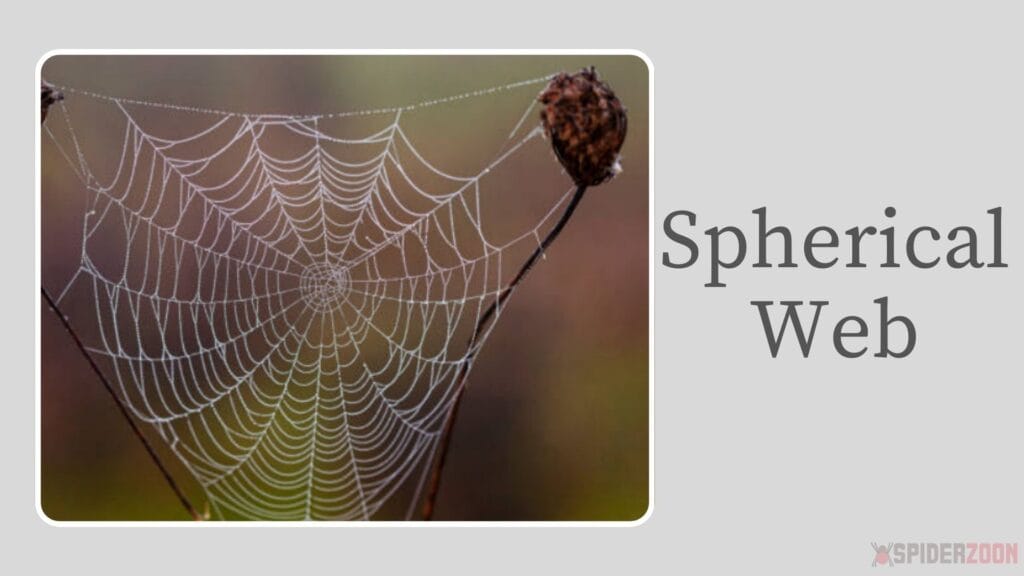
Spherical webs are three-dimensional dome or globe-shaped webs. Unlike the flat design of orb webs, these structures surround the spider on all sides, providing a more complex trapping zone. They’re built to catch insects flying from any direction.
Identification
- Dome-shaped or fully round (like a globe) web structure
- Made with loosely arranged silk
- Multi-layered, 3D network of threads
- Often anchored to leaves, branches, or ground vegetation
- Appears like a ball or bowl of webbing
Spiders That Make It
Spherical webs are often made by spiders in the Theridiosomatidae family, such as ray spiders. Other small, lesser-known spider species also build similar dome webs. These spiders are usually tiny and easily overlooked.
Web Material and Texture
The silk is thin and delicate, forming a lightweight 3D mesh. It’s not always sticky, but it entangles insects flying into it. The spider often hides in the middle or underneath the web, quickly moving in when prey is caught.
Purpose and Function
The 3D shape increases the chances of intercepting flying insects from different angles. The spherical web also offers some protection from predators by surrounding the spider with silk barriers. It’s an efficient design for dense forest environments.
Where You’ll Find It
These webs are typically found in humid forests, especially in shaded, quiet areas like under large leaves, near stream banks, or within low vegetation. They’re often hard to see unless dew collects on the silk.
9. Tent Web
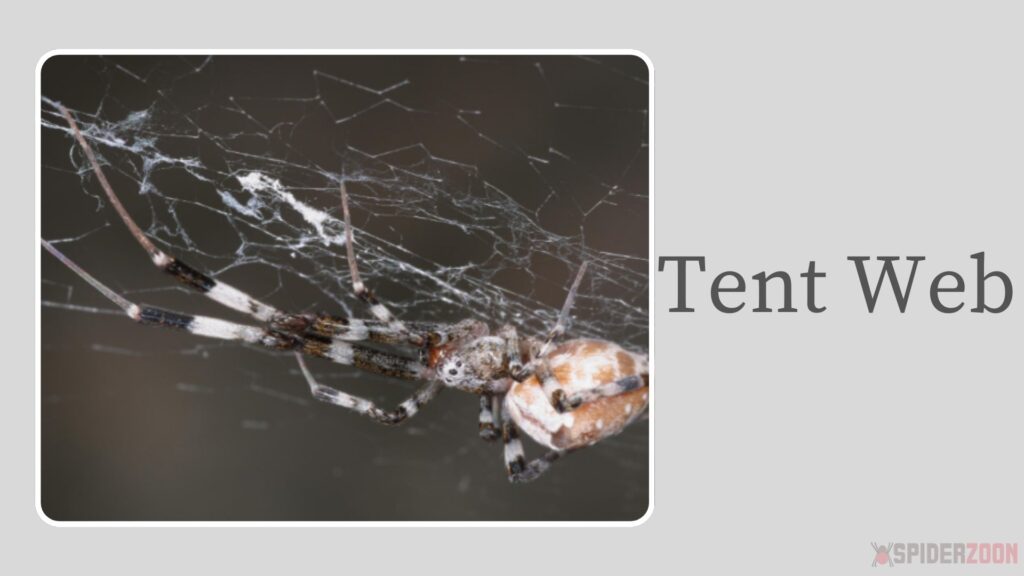
Tent webs are large, loosely built webs resembling a tent or canopy. They serve both as a trap and a shelter for the spider, and sometimes multiple spiders live in or around a single structure. The web may look chaotic but has a clear functional layout.
Identification
- Web shaped like a tent or canopy over plants or grass
- Multiple anchor points stretch the silk outward
- Dense silk mat underneath with finer threads above
- Not an organized geometric pattern
- Often extends over a wide area
Spiders That Make It
Tent webs are created by tent-web spiders and some social spiders, including species in the genus Cyrtophora. Some spiders that live in groups also construct tent-shaped webs that are shared by dozens or hundreds of individuals.
Web Material and Texture
The web is made from strong, non-sticky silk. The top is often layered with finer threads to catch prey, while the bottom provides a stable platform. Some spiders add multiple levels to the structure, like a hanging net above a silk floor.
Purpose and Function
The tent-shaped structure helps trap flying insects that hit the top threads and fall down. The large surface area also helps in intercepting multiple prey. The base layer acts as a resting zone for the spider to monitor web activity.
Where You’ll Find It
Tent webs are often seen in bushes, between tall grasses, or stretched across low shrubs. You can spot them in gardens, hedges, and forest edges — especially after rain or in morning dew when the silk is more visible.
10. Hackled Band Web

The hackled band web is an unusual and primitive web design. It features a horizontal band of silk with loosely woven, woolly threads. These webs don’t use sticky silk but instead rely on texture to trap prey. They are built by a unique group of spiders that don’t produce venom.
Identification
- Flat, horizontal band of silk strung between supports
- Woolly or fuzzy appearance due to special silk fibers
- No sticky strands
- Often appears disorganized or unkempt
- Usually small and close to the ground or vegetation
Spiders That Make It
These webs are made by Uloborid spiders — also known as cribellate orb-weavers. Unlike most spiders, Uloborids do not have venom glands. Instead, they rely on the web’s wool-like silk to physically entangle prey.
Web Material and Texture
The silk used in hackled band webs is dry, fuzzy, and made using a special comb-like organ called a cribellum. The fine fibers catch onto small spines and legs of insects, making it difficult for them to escape. The web is usually horizontal or angled slightly downward.
Purpose and Function
The fuzzy silk grabs onto prey without stickiness, acting more like Velcro. When an insect brushes against the band, the spider senses the disturbance and quickly wraps it up in more silk. Since they lack venom, Uloborids rely entirely on wrapping to subdue prey.
Where You’ll Find It
Hackled band webs are often found on low vegetation, bushes, or between grass blades. They may also appear under leaves or in low forest understory areas. The web is small
11. Lined Burrow Web
Lined burrow webs are silk-lined tunnels built underground or at the base of trees and rocks. These are not catching webs like orb or funnel webs but serve as hidden hunting zones where the spider ambushes prey from inside.
Identification
- Vertical or horizontal tunnel made with dense silk lining
- Opening often camouflaged with dirt, leaves, or debris
- Not visible unless closely inspected
- May include a silk door or flap
- Found at the base of walls, in soil, or under rocks
Spiders That Make It
Trapdoor spiders, turret spiders, and other mygalomorphs create lined burrow webs. These spiders are solitary, ground-dwelling hunters that rely on stealth and speed rather than web traps. Some build trapdoors or towers to hide the entrance.
Web Material and Texture
The web inside the burrow is dense, tough, and waterproof. It lines the walls of the tunnel, making it more durable and secure. Some species create silk “trip lines” outside the entrance to detect passing prey.
Purpose and Function
The main purpose is protection and ambush. The spider stays hidden inside the silk-lined tunnel, waiting for vibrations outside. When prey passes nearby, it quickly lunges out, grabs the insect, and pulls it back into the tunnel to consume it safely.
Where You’ll Find It
Lined burrow webs are common in forests, gardens, and natural ground habitats. You might spot them at the base of tree trunks, inside cracks, or under flat rocks — usually in places that stay moist and shaded.
12. Cribellate Web
Cribellate webs may look like traditional orb or sheet webs, but their silk is fundamentally different. Instead of using sticky glue, cribellate spiders produce dry, woolly silk made with a special spinning organ. This silk tangles prey through its fuzzy texture rather than stickiness.
Identification
- Web structure may resemble an orb, a sheet, or a hackled band web
- Silk appears fuzzy or wool-like under close inspection
- No sticky droplets on threads
- Often has a bluish or grayish tint in sunlight
- Web layout depends on spider type (orb or sheet style)
Spiders That Make It
Cribellate silk is produced by spiders with a cribellum — a silk-spinning plate near their spinnerets. Families that include cribellate spiders are Uloboridae, Dictynidae, and Amaurobiidae. These spiders may build different styles of webs but share this special silk-producing ability.
Web Material and Texture
Cribellate silk is dry and woolly, made by combing thousands of ultra-fine fibers with a structure called the calamistrum on the spider’s hind legs. It feels like Velcro to small insects, entangling their legs and bodies on contact.
Purpose and Function
Though cribellate silk lacks glue, its tangled texture makes it highly effective for capturing prey. The spider senses vibrations in the web and rushes in to wrap and bite the trapped insect. This method is especially useful in dusty or dry environments where sticky silk might fail.
Where You’ll Find It
You can find cribellate webs in shrubs, bark crevices, under stones, and forest understories. Since the silk is not shiny or sticky, these webs are often overlooked unless the light catches the fuzzy threads.
How Do Spiders Make Webs? (Step by Step)
- Choose a Location
The spider first selects a stable spot with good support and insect traffic, like between branches, corners, or grass. - Release the First Silk Thread (Bridge Line)
The spider climbs to a high point and releases a thread into the air. If it catches onto something, it forms the first bridge line. - Create a Y-Shape Base
From the bridge line, the spider drops down to create a “Y” pattern by connecting anchor points, forming the foundation of the web. - Build the Frame
Next, the spider strengthens the outer frame by moving around and attaching silk lines to form a supportive boundary. - Add Radial Lines
Like spokes on a wheel, the spider moves to the center and adds straight radial lines outward, connecting them to the frame. - Spin the Spiral (Temporary)
The spider then creates a loose, non-sticky spiral starting from the center outward—used as a guide. - Spin the Sticky Spiral (Final Web)
Starting from the outside, the spider replaces the temporary spiral with a sticky one, moving inward in a circular path. - Rest and Wait
Once the web is complete, the spider may rest in the center or nearby, waiting for vibrations from trapped prey.