

The Florida garden spider, also called the yellow garden spider or garden orb weaver, is one of the most recognized arachnids across the Sunshine State. With its vibrant yellow and black coloring, intricate webs, and calm demeanor, it plays a vital role in maintaining Florida’s ecological balance. From backyard gardens to open fields, these spiders fascinate both scientists and homeowners. But despite their intimidating size, they’re harmless allies to any Florida garden.
Identification
Appearance
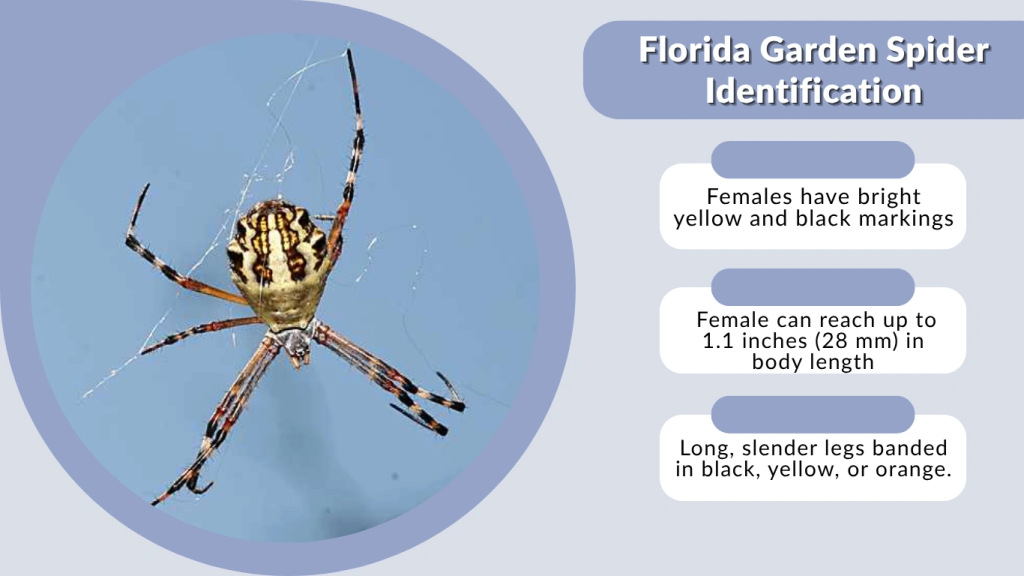
The Florida garden spider is known for its stunning color patterns and symmetrical design. Most females have bright yellow and black markings on their abdomen, while males are smaller and less colorful. The average female can reach up to 1.1 inches (28 mm) in body length, with long, slender legs banded in black, yellow, or orange. These alternating bands make the spider easy to identify from a distance.
Their large, circular webs often include a zigzag silk pattern in the center, called a stabilimentum. This striking feature not only reflects sunlight, deterring birds, but also serves as a visual warning for humans and animals to avoid breaking the web.
Species Found in Florida
Florida’s warm climate supports several species of garden spiders, including:
- Yellow Garden Spider (Argiope aurantia) – The most common type found across Florida, recognized for its bold yellow abdomen and black legs.
- Banded Garden Spider (Argiope trifasciata) – Features a silver or white body with horizontal black and yellow bands.
- Black and Yellow Garden Orb Spider – Similar in color to the yellow garden spider but may have darker patterns.
- Brown and Green Garden Spiders – Less common, often blending with vegetation in shaded areas.
These species belong to the Argiope genus, all known for their orb-shaped webs and beneficial pest control habits.
Similar Species
The Florida garden spider is sometimes confused with other large web builders:
- Banana Spider (Golden Orb Weaver) – Larger and golden in color; often found in tropical forests and gardens.
- Wolf Spider – A ground hunter that doesn’t spin orb webs.
- Huntsman Spider – Big and fast-moving but lives under bark or inside homes, not in webs.
Recognizing the distinctive zigzag pattern in the web and the symmetrical yellow-and-black body helps distinguish true garden spiders from these look-alikes.
Habitat and Distribution
Where They Live
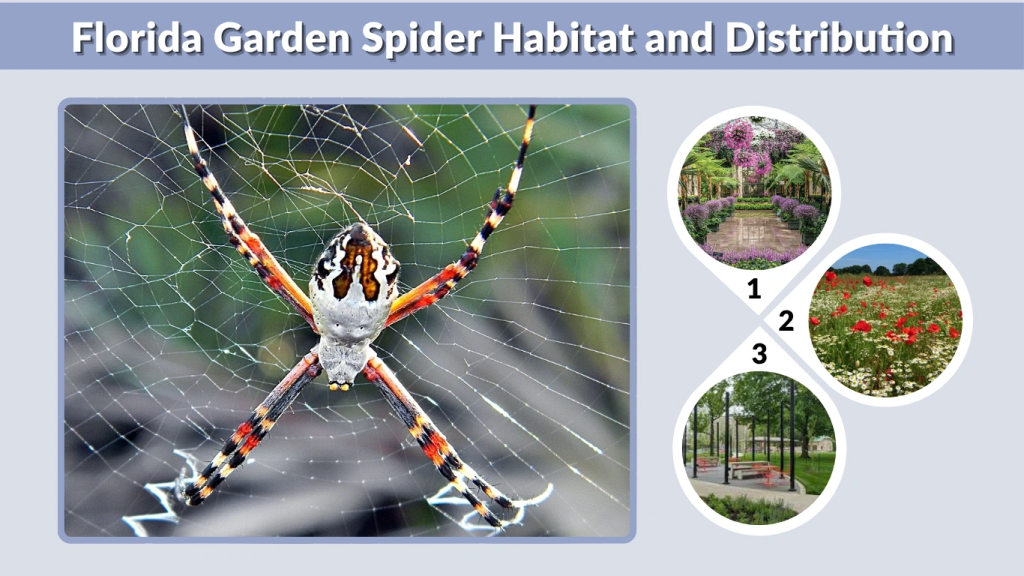
Florida garden spiders thrive in sunny, open spaces where insects are abundant. Common habitats include gardens, yards, meadows, parks, and farmland. They prefer to build their webs between sturdy plants, fences, or outdoor furniture, allowing good airflow and insect traffic. You’ll see them most frequently from late spring to early fall, especially in South and Central Florida, where the climate remains warm and humid year-round.
During cooler months or after heavy storms, they may retreat to sheltered areas or rebuild their webs once conditions improve. Their ability to adapt to various landscapes makes them one of the most widespread spider species in Florida.
Web Characteristics
The Florida garden spider’s web is one of the most beautiful and effective designs in nature. Measuring up to two feet in diameter, the circular orb web is made of sticky silk that traps flying insects. At the center sits the spider, waiting patiently for vibrations that signal captured prey.
A defining feature of the web is the stabilimentum, a zigzag silk structure that reflects light. Scientists believe it may serve multiple purposes — camouflage, strengthening the web, or attracting prey. Garden spiders rebuild or repair their webs daily, usually in the early morning or late evening.
Behavior and Diet
Feeding Habits
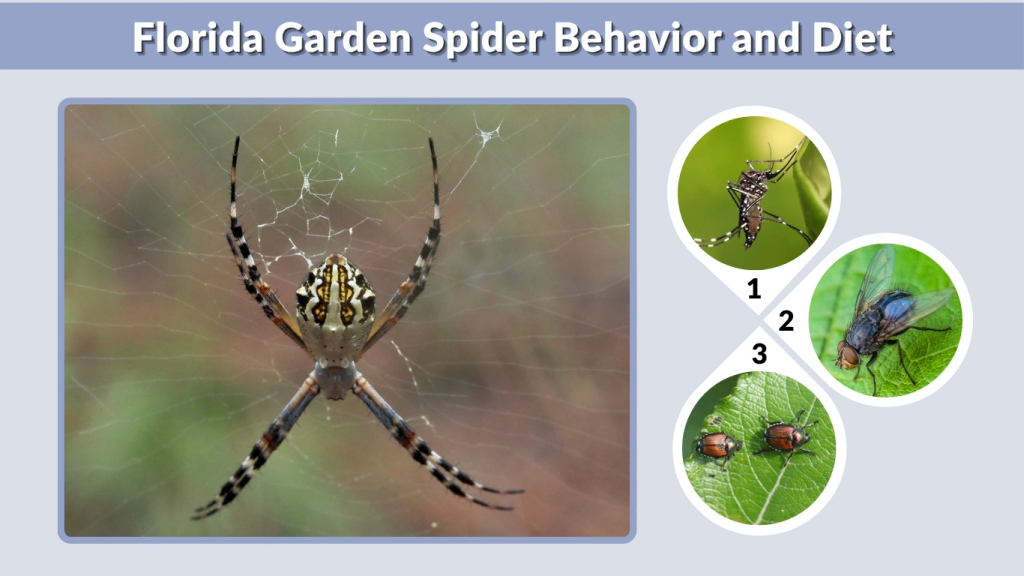
The Florida garden spider is a natural pest controller, feeding on a wide variety of insects such as mosquitoes, flies, beetles, and moths. When prey becomes entangled in the sticky silk, the spider rushes over, delivers a quick venomous bite, and wraps it in silk for later consumption.
Their venom is non-toxic to humans and used only to paralyze small insects. Because of this, they play a crucial role in reducing pest populations in gardens and farms across the state.
Daily Activity
These spiders are mostly diurnal, meaning they are active during the day. You’ll often spot them sitting calmly in the center of their web with their legs forming an “X” shape. They rarely move unless disturbed or chasing prey.
At night, they may consume damaged portions of their web and spin new threads to maintain its structure. This constant rebuilding ensures their traps stay strong and effective in catching fresh prey each day.
Are Florida Garden Spiders Dangerous?
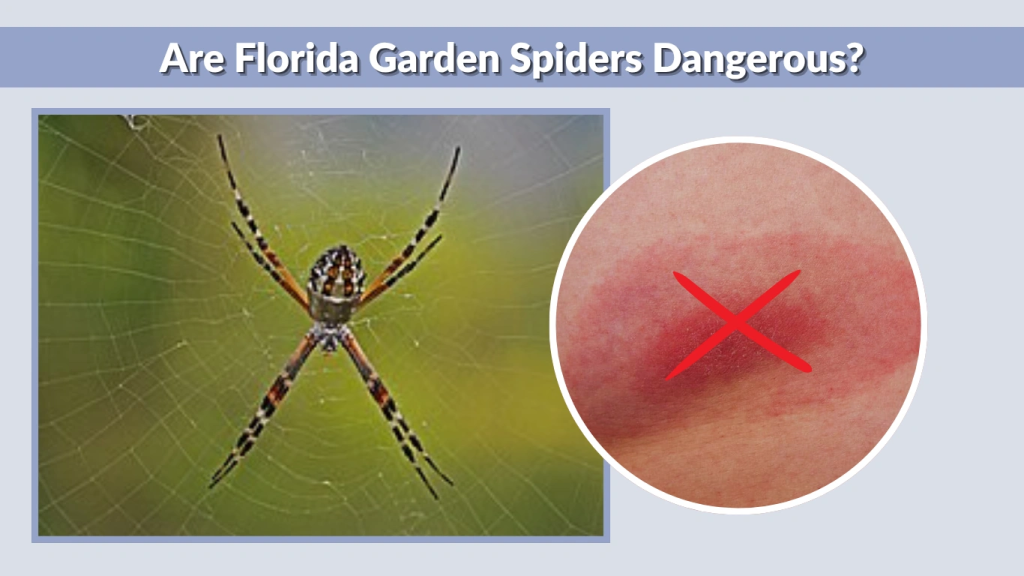
Despite their size and intimidating appearance, Florida garden spiders are not dangerous to humans. Their venom is designed to immobilize small insects and is far too weak to harm people or pets. If threatened, these spiders typically retreat rather than attack.
A bite is extremely rare and usually occurs only if the spider is accidentally pressed against the skin. In such cases, the symptoms are mild — slight redness, swelling, or itching similar to a mosquito bite. Applying a cold compress is typically enough to relieve discomfort.
These spiders are beneficial allies, acting as natural pest controllers that help balance insect populations in gardens. Because they prey on flies, mosquitoes, and crop-damaging bugs, gardeners often appreciate their presence.
Interesting Facts
- Florida garden spiders are sometimes called “writing spiders” because of the zigzag silk pattern in their webs.
- The female is significantly larger than the male and often remains at the center of the web while the male hides nearby.
- After mating, the female lays hundreds of eggs in a silken sac, often attached to nearby vegetation.
- Young spiderlings hatch in spring and disperse using silk threads, floating through the air in a process known as ballooning.
- Their webs can reach up to two feet wide, rebuilt every morning to maintain strength and stickiness.
- Although often confused with banana or orb-weaver spiders, their color pattern and smaller size help tell them apart.
These fascinating traits make the Florida garden spider an essential and harmless part of the state’s diverse wildlife.
FAQs
Are Florida garden spiders poisonous?
No, Florida garden spiders are not poisonous to humans. Their venom is harmless and intended only to subdue insects. Even if bitten, symptoms are mild and temporary. These spiders are safe to have around and can even help control pests naturally.
What does a Florida garden spider look like?
It has a distinctive black and yellow abdomen, long banded legs, and a round body. Females are larger and more colorful than males. The spider’s web often features a white zigzag pattern that shines in sunlight — one of its most recognizable features.
Where can you find garden spiders in Florida?
They’re common throughout the state — from South Florida gardens to northern farmlands. You’ll often find them in open, sunny spaces like yards, fences, and fields where they build large, circular webs to catch flying insects.
Do garden spiders in Florida bite humans?
Bites are rare and occur only when the spider feels trapped. Their bites cause mild irritation, similar to a bee sting, and do not require medical care. Garden spiders are non-aggressive and usually flee when approached.
What’s the difference between a garden spider and a banana spider in Florida?
The banana spider, also called the golden orb weaver, is larger and spins golden-colored webs. The garden spider, on the other hand, has black and yellow patterns and builds symmetrical orb webs with a white zigzag. Both species are harmless and beneficial to gardens.
