
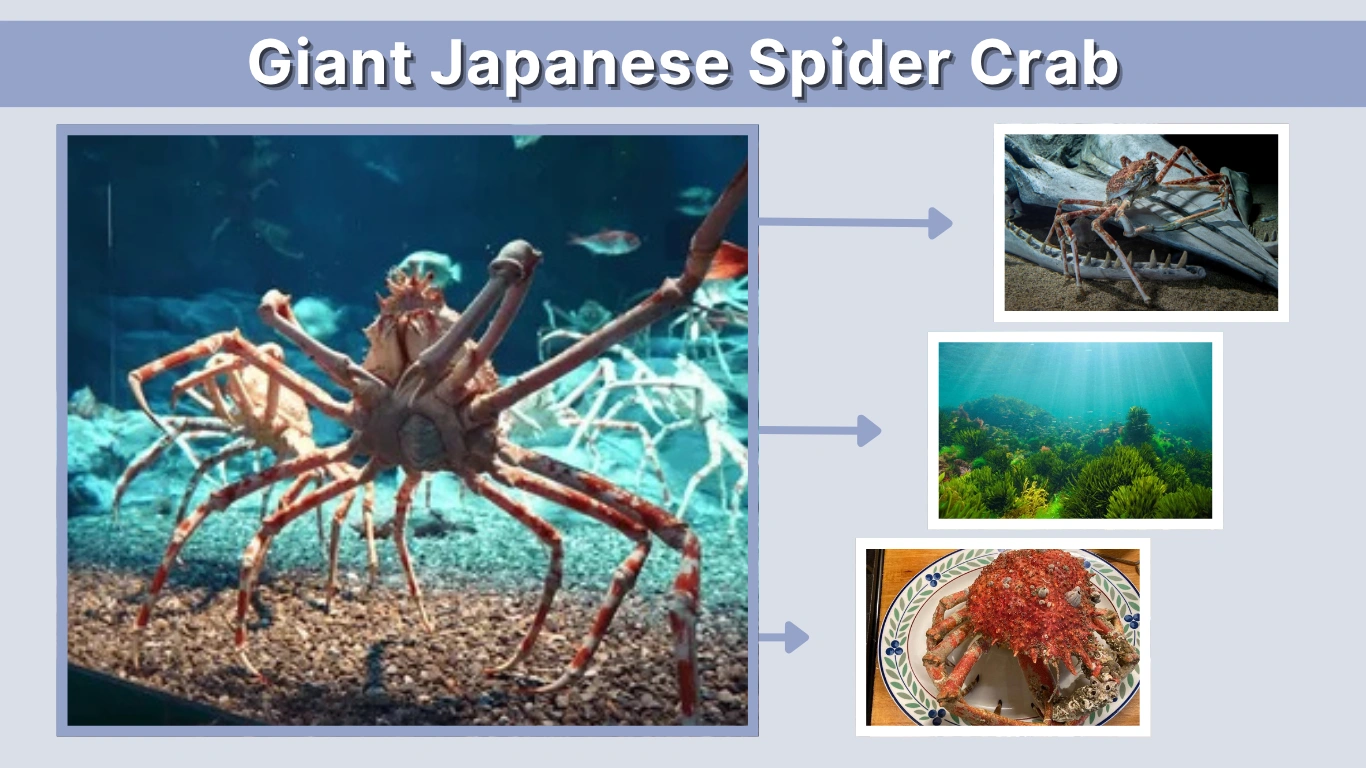
The Giant Japanese Spider Crab (Macrocheira kaempferi) is the world’s largest arthropod, famous for its long, spider-like legs and enormous size. Native to Japan’s deep waters, this fascinating creature combines the elegance of a crab with the appearance of a spider. Its intimidating look often sparks fear, but in reality, it is a gentle scavenger that plays a vital role in maintaining ocean health.
What Is the Giant Japanese Spider Crab?
The Japanese Giant Spider Crab is a crustacean species belonging to the family Inachidae. It thrives in the cold, deep waters surrounding Japan, particularly near Honshu Island. Recognized for its immense leg span—sometimes reaching up to 12 feet—it holds the record as the largest living crab species on Earth.
It has an orange body with white-spotted legs that resemble spider limbs, giving it an alien-like look. Despite its menacing appearance, the crab is slow-moving and non-aggressive, relying on stealth and camouflage rather than speed or strength.
Giant Japanese Spider Crab Classification

Taxonomic Breakdown:
- Kingdom: Animalia
- Phylum: Arthropoda
- Class: Malacostraca
- Order: Decapoda
- Family: Inachidae
- Genus: Macrocheira
- Species: M. kaempferi
Notable Traits:
- Has ten limbs, with the first pair forming powerful claws.
- Possesses a hard exoskeleton that provides excellent protection.
- Uses its long legs to reach food and navigate rocky seabeds.
- Can live up to 100 years, making it one of the ocean’s oldest crustaceans.
Habitat: Where Does the Giant Japanese Spider Crab Live?
These crabs are primarily found in the Pacific Ocean near Japan’s Honshu Island, particularly in Suruga Bay and Sagami Bay. They prefer living at depths ranging from 150 to 300 meters, where sunlight barely penetrates and temperatures remain low.
Their habitat consists of rocky trenches, vents, and sandy ocean floors, providing both food sources and protection from predators. Because of their deep-sea environment, encounters with humans are rare, except when captured or displayed in aquariums.
Giant Japanese Spider Crab Size and Comparison
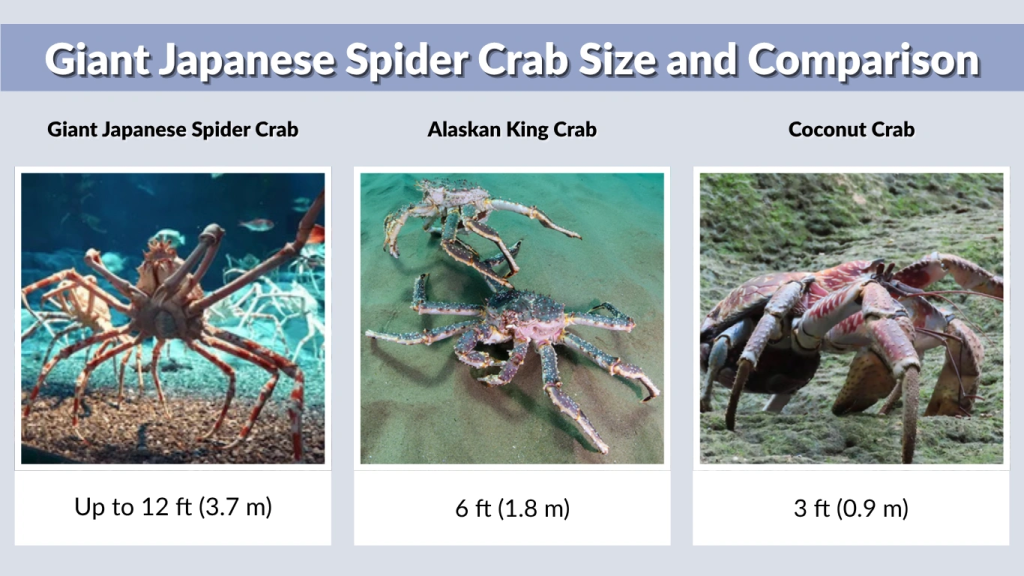
| Feature | Giant Japanese Spider Crab | Alaskan King Crab | Coconut Crab |
| Average Leg Span | Up to 12 ft (3.7 m) | 6 ft (1.8 m) | 3 ft (0.9 m) |
| Weight | 40 lbs (18 kg) | 24 lbs (11 kg) | 9 lbs (4 kg) |
| Habitat | Deep ocean (Japan) | Cold Arctic waters | Tropical islands |
| Lifespan | 100 years | 30 years | 60 years |
This comparison shows why the Giant Japanese Spider Crab is considered a true ocean giant. Its size, longevity, and adaptation to deep-sea conditions make it unique among crustaceans.
Adaptations of the Giant Japanese Spider Crab
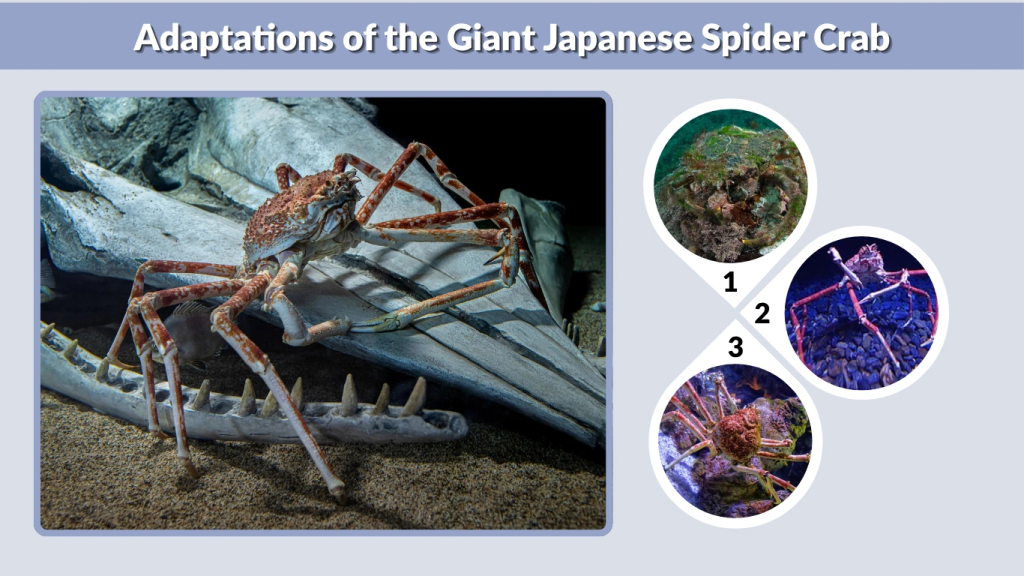
Key Survival Features
The crab has evolved several biological adaptations to survive extreme underwater conditions:
- Camouflage: Covers itself with shells, debris, and sponges to blend into surroundings.
- Thick Exoskeleton: Protects against predators and water pressure.
- Long Limbs: Help in scavenging food and navigating rocky ocean floors.
- Slow Metabolism: Conserves energy in low-oxygen, cold environments.
- Sensitive Antennae: Detects vibrations and food movement in the dark.
These features have helped it thrive in the deep sea for millions of years.
What Does the Giant Japanese Spider Crab Eat?
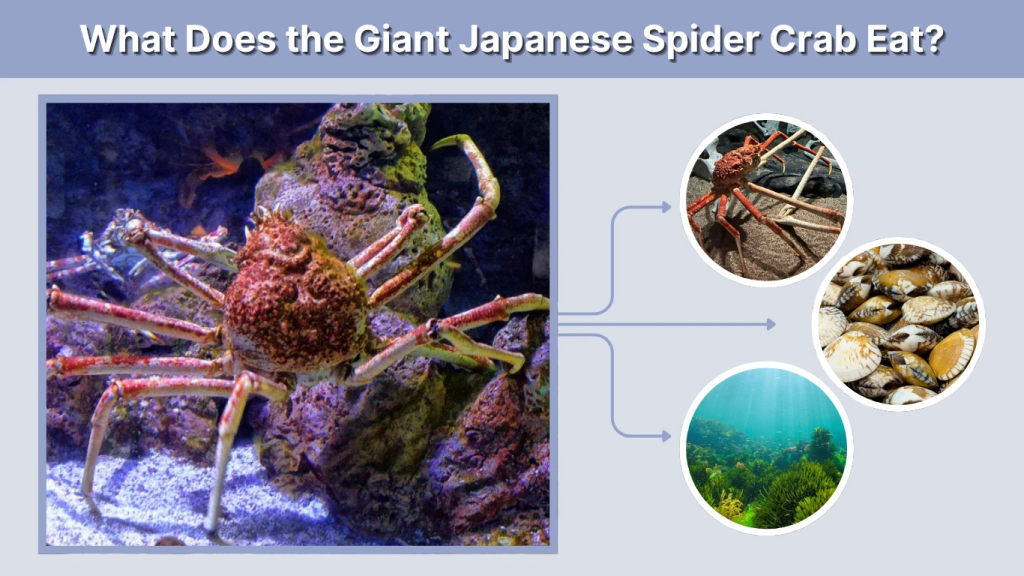
The Giant Japanese Spider Crab is an omnivorous scavenger. Its diet mainly includes:
- Dead fish and marine carcasses
- Mollusks and shellfish
- Seaweed and algae
- Smaller crustaceans
It plays an important ecological role as an ocean cleaner, feeding on decaying matter and preventing the buildup of waste on the seabed. This behavior keeps marine ecosystems balanced and supports nutrient recycling in deep-sea environments.
Life Cycle and Molting
The life cycle of a Giant Japanese Spider Crab begins as tiny eggs carried under the female’s abdomen. After hatching, larvae float near the ocean surface before settling on the seabed to grow.
As they mature, crabs undergo a process called molting, where they shed their exoskeleton to form a new, larger one. This process continues throughout life, though less frequently with age. Adult crabs are slow-growing but can live for nearly a century, making them one of the longest-living crustaceans in the world.
Molting is dangerous — during this stage, they are soft and vulnerable to predators. However, successful molting allows them to maintain growth and regenerate damaged limbs.
Can You Eat Giant Japanese Spider Crab?
Culinary and Cultural Significance
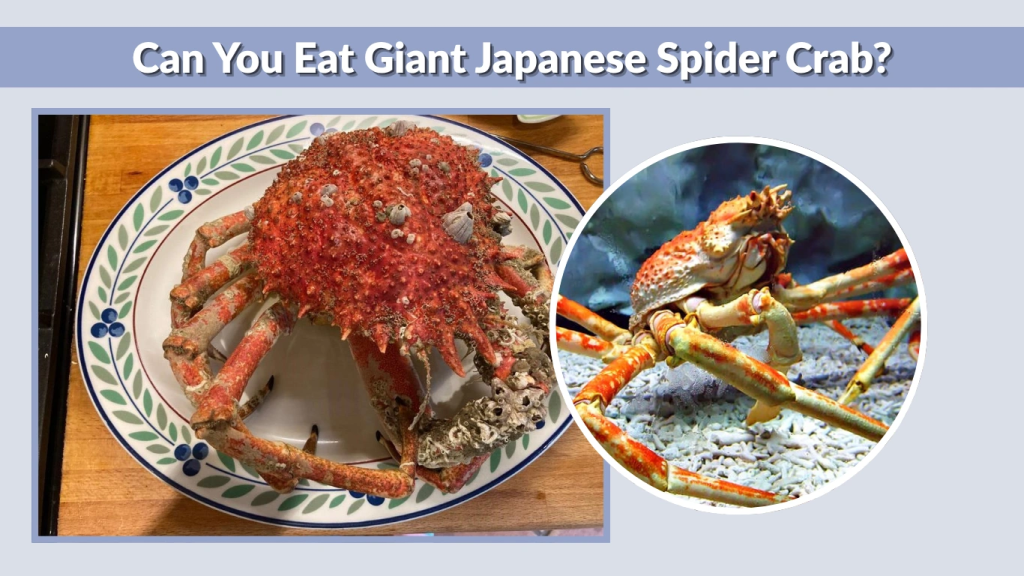
Yes, the Giant Japanese Spider Crab is edible, but not widely consumed. It’s considered a rare delicacy due to its limited availability and conservation rules. The meat is tender, white, and sweet, similar to snow crab but more flavorful.
Common Preparation Methods:
- Boiled or Steamed: To preserve natural flavor.
- Grilled (Yaki-gani Style): Often served with soy sauce and miso.
- In Seafood Broths: Combined with vegetables and noodles.
However, overfishing has reduced their numbers, leading to strict seasonal bans in Japan. This ensures the species’ survival while allowing controlled, sustainable consumption.
Aquarium Encounters: See the Giant Japanese Spider Crab Up Close
The Giant Japanese Spider Crab is a highlight attraction in several world-class aquariums, where visitors can observe their immense size and slow, graceful movements. These exhibits educate the public about deep-sea ecosystems and conservation efforts.
Top Aquariums Featuring Giant Japanese Spider Crabs:
- Osaka Aquarium Kaiyukan (Japan): One of the few places breeding them successfully.
- Blackpool Sea Life Centre (UK): Features large deep-sea displays with lighting to mimic ocean depths.
- Mystic Aquarium (USA): Offers educational sessions and feeding demonstrations.
- Tokyo Sea Life Park (Japan): Houses mature specimens in temperature-controlled tanks.
Aquarium Experience Highlights:
- View them in simulated deep-sea habitats.
- Learn about their adaptations and diet.
- Participate in educational workshops for students.
Interesting Facts About the Giant Japanese Spider Crab
Quick Facts to Know
- The Japanese name for this crab is Takaashigani, meaning “long-legged crab.”
- It’s the largest arthropod on Earth, with a maximum leg span of 12 feet.
- The crab’s body can grow to 15 inches (38 cm) across.
- It has been around since the prehistoric era, making it a living fossil.
- Despite its frightening look, it’s completely harmless to humans.
- Featured in National Geographic and viral YouTube videos showcasing its size and movement.
These fascinating details have made it a popular subject for documentaries, memes, and art projects.
Giant Japanese Spider Crab Population and Conservation
The population of Giant Japanese Spider Crabs is considered vulnerable, primarily due to overfishing, habitat loss, and environmental changes. Japan enforces seasonal bans during their breeding period (spring), allowing the species time to reproduce safely.
Marine biologists are studying their breeding habits to support captive breeding programs in aquariums. Awareness campaigns also encourage sustainable fishing practices. While they aren’t listed as endangered, continued conservation is essential to prevent population decline.
How to Draw a Japanese Giant Spider Crab
Drawing this impressive creature can be both fun and educational. Follow these simple steps to sketch one accurately:
Step-by-Step Drawing Tutorial:
- Start with the Body: Draw an oval for the crab’s shell.
- Add Legs: Create four long legs on each side, bent at the joints.
- Sketch Claws: Make the front pair thicker with pointed claws.
- Add Details: Draw small dots, eyes, and shell patterns.
- Coloring: Use orange for the body and light white for the legs.
Bonus Tip: Watch “How to Draw a Japanese Giant Spider Crab” on YouTube for visual guidance — great for students and artists learning marine illustration.
Fun Online Buzz: Videos, Memes & Taxidermy Displays
The Giant Japanese Spider Crab has become an internet sensation. Viral YouTube videos often show deep-sea footage, fishing expeditions, or “catch and cook” segments. Some viral memes exaggerate its size, comparing it to movie monsters.
Taxidermy versions of this species are also found in museums across Japan and Europe, offering a close look at their anatomy. These exhibits help raise awareness about marine biodiversity and the need for conservation.
Predators and Threats
Like all sea creatures, the Giant Japanese Spider Crab faces natural dangers in its ecosystem.
Natural Predators Include:
- Octopuses: Main predators that can pry open the crab’s shell.
- Large Fish Species: Attack juveniles and molting crabs.
- Humans: Catch them for food or display purposes.
Main Environmental Threats:
- Overfishing: Especially during spawning seasons.
- Ocean Warming: Affects their deep-water habitat balance.
- Pollution: Damages breeding zones and affects larvae survival.
Protecting them ensures a stable ecosystem, as they help clean the seafloor by feeding on decaying matter.
FAQs
1. Where do Giant Japanese Spider Crabs live?
They live in deep Pacific waters near Japan, mainly around Honshu Island, at depths of 150–300 meters where temperatures remain cold and dark.
2. Can humans eat them?
Yes, they are edible and sometimes prepared in Japanese cuisine. However, catching them is regulated to protect their population during breeding seasons.
3. How big can they grow?
They can reach up to 12 feet in leg span and weigh about 40 pounds, making them the largest crab species in the world.
4. Are they dangerous to humans?
Not at all. They move slowly and feed mostly on dead animals. Their claws can pinch, but they rarely show aggression.
5. Why are Giant Japanese Spider Crabs important?
They act as deep-sea recyclers, cleaning up decomposing matter and helping maintain the balance of marine ecosystems.