

The Goliath bird-eating tarantula is one of the most extraordinary arachnids on Earth. With its intimidating size, hairy body, and powerful fangs, it often sparks both fear and fascination. Despite its name, this spider rarely eats birds, yet its hunting skills and natural dominance make it a true marvel of the rainforest. Native to South America, it has become a popular subject of research, media coverage, and even the exotic pet trade. This article explores its identity, names, species variations, size, habitat, feeding behavior, and more, offering a closer look at the world’s largest tarantula.
General Identification

The bird-eating tarantula is widely recognized under different names and associations:
- Scientific identity: Refers to Theraphosa blondi, best known as the Goliath bird-eating tarantula.
- Origin of the name: The term “bird-eating” comes from early explorers who witnessed them preying on small birds, though such events are rare.
- Common references: Frequently called bird spider, tarantula bird, or simply bird eater.
- World record holder: Known as the largest tarantula in the world due to its massive body size and wide leg span.
Scientific & Popular Names
Scientifically, the Goliath bird-eating tarantula belongs to the family Theraphosidae. Its Latin name, Theraphosa blondi, highlights its classification within the Theraphosa genus, which also includes other large species.
Popular names like Goliath bird eater, bird eater tarantula, and goliath bird-eating spider are often used interchangeably in documentaries, books, and the pet trade. Some confusion exists because regional names vary, but all point to the same species that dominates South American rainforests.
The term “Goliath” is fitting, as this tarantula grows larger than most of its cousins, rivaling other species such as the Brazilian salmon pink tarantula in weight and leg span.
Other Variants & Regional Species
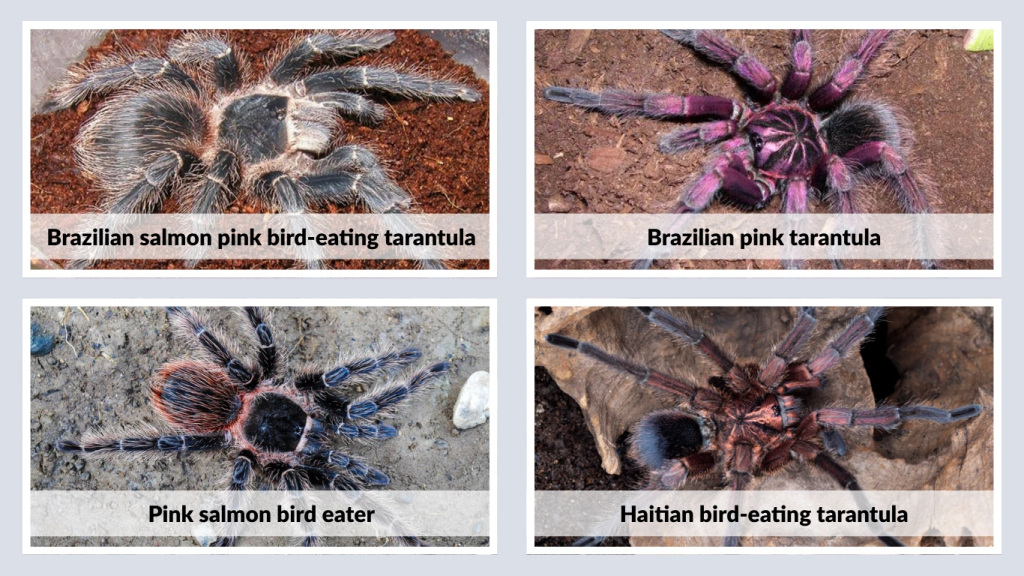
Although the Goliath bird-eating tarantula is the most famous, other species also carry the “bird-eater” label:
- Brazilian salmon pink bird-eating tarantula (Lasiodora parahybana) – Common in captivity, known for pinkish bristles and easier care compared to the Goliath.
- Brazilian pink tarantula – Slightly smaller but still considered among the large bird eaters.
- Pink salmon bird eater – Recognized for its distinct coloration.
- Haitian bird-eating tarantula – Found in the Caribbean, adding to the regional diversity of bird eaters.
- Australian bird-eating tarantula – Belongs to a different spider family, yet shares the “bird eater” title due to its size and hunting ability.
These species showcase the diversity of tarantulas worldwide, each with unique traits but sharing the bird-eater reputation for their impressive size and strength.
Physical Features

The Goliath bird-eating tarantula is celebrated for its sheer size. A fully grown specimen can reach a leg span of up to 12 inches (30 cm), making it the largest tarantula by span and weight. Its body alone may measure up to 5 inches (12 cm), and some individuals can weigh over 170 grams (6 ounces).
Its fangs are another striking feature, growing up to 1.5 inches long. These powerful fangs can easily pierce human skin and deliver venom, though it is not typically lethal to people. The spider’s body is covered with dense brown hairs, some of which are urticating bristles that it can flick at predators to cause irritation.
Despite its intimidating appearance, much of its defense lies in these hairs rather than aggressive attacks. Still, its size alone makes it one of the most formidable arachnids in existence.
Habitat & Distribution

The Goliath bird-eating tarantula is native to the tropical rainforests of South America. Countries such as Venezuela, Brazil, Suriname, and Guyana provide ideal conditions for its survival. These spiders thrive in humid, swampy regions, often near rivers and marshes where prey is abundant.
They live in deep burrows or use abandoned animal holes, emerging mostly at night to hunt. Their environment provides camouflage and protection against predators, while the dense rainforest ensures a steady supply of insects, amphibians, and small mammals.
Unlike smaller spiders, the Goliath bird eater is a ground-dwelling hunter, rarely climbing trees but instead waiting patiently for prey to pass close to its burrow.
Feeding Behavior

The “bird-eating” label is somewhat misleading. While capable of killing small birds, these tarantulas mainly feed on insects, frogs, lizards, and even small rodents. Opportunistic predators, they rely on their ambush strategy, striking quickly and injecting venom to immobilize prey.
Their digestive process involves liquefying the insides of their catch before sucking it up, as spiders cannot chew solid food. Although rare, there are documented cases of these tarantulas preying on birds, which is how they earned their infamous title.
In captivity, they are usually fed crickets, roaches, or small mice. Their feeding habits demonstrate both their adaptability and their importance in controlling populations of smaller animals in their natural ecosystem.
Predators & Threats
Despite being one of the largest spiders in the world, the Goliath bird-eating tarantula still faces threats in the wild. Birds, snakes, and larger mammals occasionally prey on them. One of their most dangerous natural enemies is the tarantula hawk wasp, a large insect that can paralyze tarantulas with a sting and lay eggs inside their bodies. Once hatched, the larvae consume the spider alive, making this wasp a formidable predator.
To defend themselves, these tarantulas rely on urticating hairs, which they flick from their abdomen when threatened. These tiny barbed hairs can cause severe irritation to the skin and eyes of attackers. While they rarely bite unless provoked, their sheer size and defensive adaptations make them a challenge even for determined predators.
Care & Pet Trade

The Goliath bird-eating tarantula is a sought-after specimen in the exotic pet trade, though it requires careful handling and a specialized setup. Owners must provide a large enclosure that mimics a rainforest environment with high humidity, deep substrate for burrowing, and controlled temperatures.
Handling these spiders is discouraged because they can become stressed easily. Their hairs can irritate human skin, and a defensive bite, while not deadly, can be painful. Instead, experienced keepers focus on creating a stable environment and observing their natural behavior.
Feeding them in captivity usually involves crickets, roaches, and occasional small vertebrates like mice. Their long lifespan—females can live up to 20 years—makes them a long-term commitment.
For Sale & Pricing
The Goliath bird-eating tarantula is occasionally available for purchase through specialized breeders or exotic pet dealers. Prices vary depending on size, age, and availability. Young spiderlings may sell for less, while large, healthy adults command higher prices due to their rarity.
Other bird-eating tarantulas, such as the Brazilian salmon pink bird eater, are more commonly available and less expensive. However, buyers should always research legality before purchasing, as some countries regulate or ban ownership of such exotic species. Ethical considerations also arise, as capturing wild specimens can impact natural populations.
Dangers & Venom

One of the biggest questions people ask is whether the Goliath bird-eating tarantula is dangerous to humans. The truth is that their venom is not considered lethal to people. A bite may cause localized pain, swelling, and discomfort, similar to a wasp sting, but it is rarely medically serious.
The greater danger comes from the spider’s urticating hairs, which can cause severe skin irritation or even eye damage if they make contact. For this reason, handling should be kept to a minimum. While they are intimidating in appearance, they are not the deadly monsters their name might suggest.
Facts, Media & Visuals
The Goliath bird eater has gained worldwide fame thanks to documentaries, viral videos, and photographs that showcase its enormous size. Viewers are often amazed to see it compared to a dinner plate in size or watch it overpower small prey.
Some fascinating facts include:
- It holds the record for the world’s heaviest spider.
- Females can live over two decades, while males usually live around 5–6 years.
- Despite the “bird eater” name, they mainly hunt ground-dwelling animals.
Images and videos of these tarantulas continue to circulate online, fueling both fascination and fear. They have become symbols of the exotic world of arachnids, frequently appearing in nature documentaries and horror-inspired media.
Giant & Rare Mentions
The Goliath bird-eating tarantula is often referred to as the biggest spider in the world by mass. With leg spans reaching 12 inches and weights surpassing 6 ounces, it outcompetes nearly every other arachnid. Other contenders, such as the giant huntsman spider, may rival it in leg span but not in bulk.
Some accounts describe gigantic specimens, sparking myths of spiders larger than those recorded scientifically. While most reports are exaggerated, they contribute to the tarantula’s fearsome reputation. This legendary status ensures that the Goliath bird eater remains one of the most talked-about spiders worldwide.
FAQs
What is the Goliath bird-eating tarantula?
The Goliath bird-eating tarantula (Theraphosa blondi) is the largest tarantula in the world by mass. Native to South American rainforests, it can reach a leg span of up to 12 inches. Despite its name, it rarely eats birds, feeding mostly on insects, frogs, and small rodents.
Are Goliath bird-eating tarantulas poisonous?
Yes, they are venomous, but their venom is not considered dangerous to humans. A bite may cause pain and swelling, similar to a wasp sting. The bigger threat is their urticating hairs, which can cause severe irritation if they contact the skin or eyes. Handling is generally discouraged.
Can you keep a Goliath bird-eating tarantula as a pet?
Yes, but they are recommended only for experienced keepers. These spiders need large enclosures, high humidity, and deep substrate for burrowing. They dislike frequent handling and can release irritating hairs when stressed. While they are impressive pets, their size and care requirements make them challenging for beginners.
How long do Goliath bird-eating tarantulas live?
Females live significantly longer than males, often reaching 15 to 20 years in captivity with proper care. Males, however, live only about 5 to 6 years after maturity. This long lifespan makes female tarantulas a long-term commitment, especially for hobbyists who want to keep them as pets.
Where can you find Goliath bird-eating tarantulas?
These spiders are native to South America, especially Venezuela, Brazil, Suriname, and Guyana. They thrive in humid rainforests near rivers and swamps. In captivity, they can be found through specialized breeders or exotic pet dealers, though their availability depends on local wildlife trade laws and ethical breeding practices.