
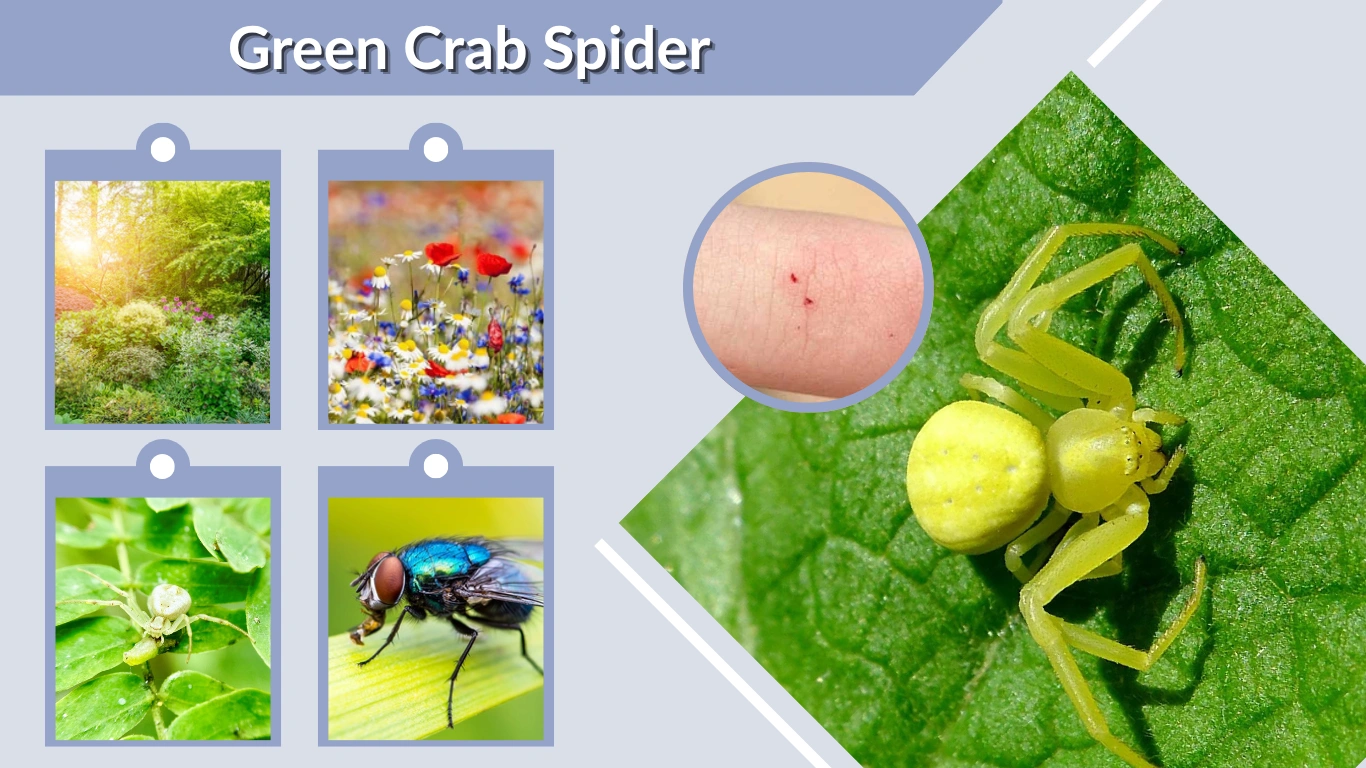
The Green Crab Spider (Misumessus oblongus) is a fascinating arachnid admired for its vivid green color and crab-like stance. Found in gardens, meadows, and forests, it is a master of camouflage, blending effortlessly into leaves and flowers. Despite its exotic appearance and sharp hunting skills, the green crab spider is harmless to humans and plays a vital role in maintaining insect balance in nature.
Identification and Appearance
Color and Size
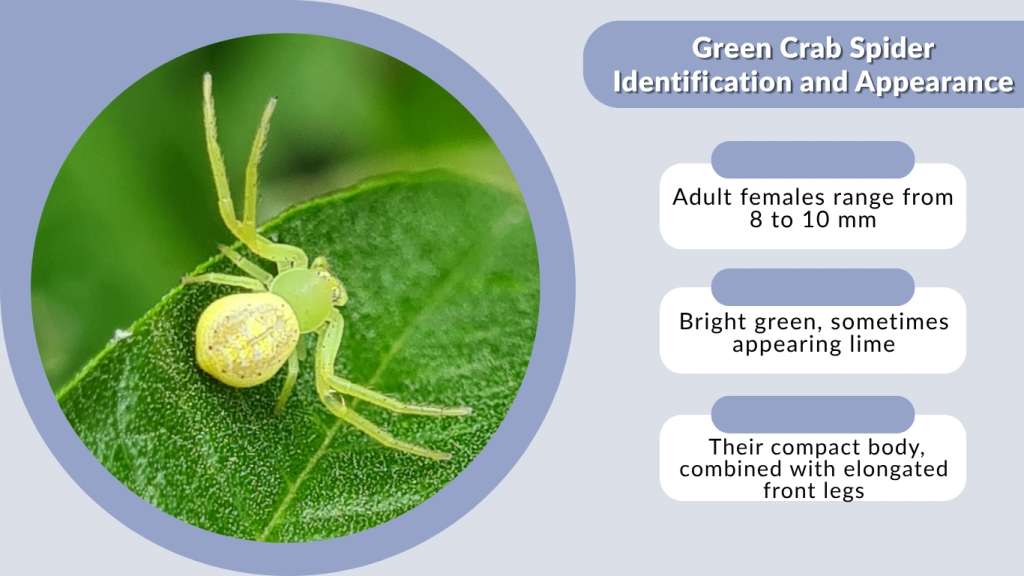
The green crab spider is typically bright green, sometimes appearing lime or pale green depending on its surroundings. Adult females range from 8 to 10 mm, while males are slightly smaller. Their compact body, combined with elongated front legs, gives them a distinctive crab-like posture. This physical adaptation aids them in grabbing prey with remarkable precision.
Distinctive Features
One of the most recognizable traits is the spider’s ability to walk sideways, much like a crab. The front two pairs of legs are longer and more powerful, enabling quick strikes when prey comes close. Their coloration often changes slightly depending on light exposure or habitat, helping them blend with leaves and flower petals. Some individuals even display faint white or yellow stripes along their abdomen, adding to their striking appearance.
Species and Variants
American Green Crab Spider
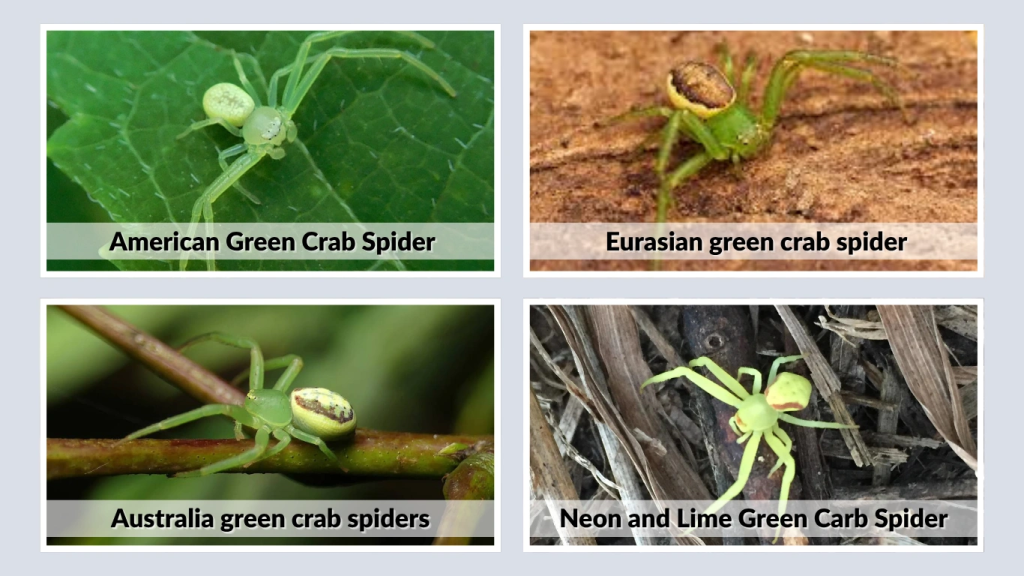
The American Green Crab Spider is the most widespread species, inhabiting large parts of the United States, including Texas, Florida, and California. It thrives in warm, humid climates and can often be seen perched on wildflowers waiting for pollinators. Its body structure and coloration make it nearly invisible to both prey and predators.
Eurasian and Australian Variants
Across Europe and Asia, similar species share the same behavioral traits. The Eurasian green crab spider prefers meadows and gardens with abundant flowering plants. In Australia, green crab spiders are often spotted along coastal regions, taking advantage of warm climates and dense vegetation. Their adaptability has allowed them to thrive in a wide range of environments, from grasslands to suburban backyards.
Neon and Lime Green Types
Variations in coloration—such as neon green, bright green, or lime shades—often appear in younger spiders or during the mating season. The vibrant tones help them camouflage among lush foliage. These bright hues can also serve as a deterrent, signaling predators to stay away. The neon-green crab spider is particularly eye-catching and often photographed for its luminous beauty.
Habitat and Distribution
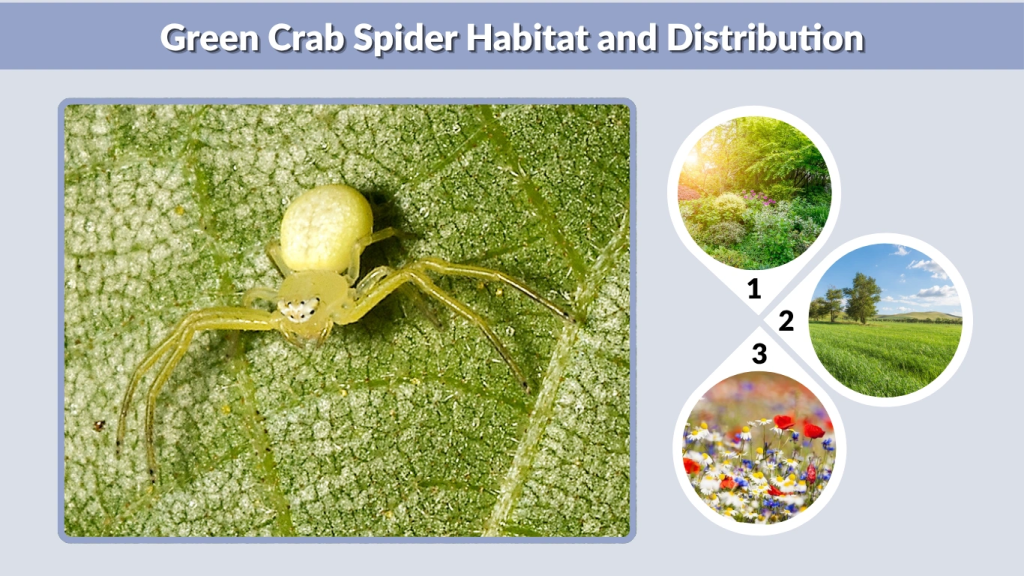
The green crab spider is native to North America but has expanded its range across other continents due to its adaptability. In the United States, it is commonly found in Texas, Florida, Ohio, Michigan, Virginia, and California. These spiders favor sunny gardens, grasslands, and meadows where flowers are abundant.
They also inhabit Eurasian regions, and sightings have been recorded in Singapore, the UK, and South Africa. Their green coloration allows them to live undetected in tropical or temperate zones. Because they rely heavily on camouflage, their success depends on habitats with dense vegetation or colorful flora that match their body color.
Behavior and Diet
Hunting Style
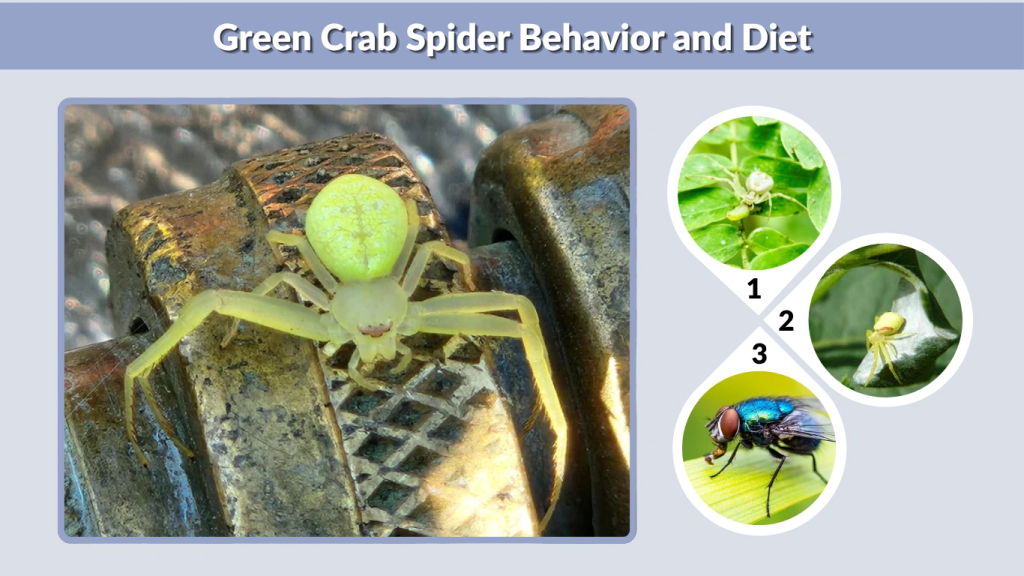
Unlike many other spiders, the green crab spider does not build a web to trap prey. Instead, it is an ambush predator, patiently waiting for unsuspecting insects to land nearby. It typically positions itself on a flower or leaf and grabs prey—such as bees, flies, or butterflies—using its powerful front legs.
Its hunting success relies on its stealth and speed. Once prey is captured, it injects venom to paralyze it, then consumes the prey’s soft tissue. This efficient hunting style helps maintain a healthy balance of pollinating insects.
Web and Egg Sac
Although the green crab spider doesn’t spin capture webs, females do create small silk retreats or egg sacs attached to the underside of leaves. The mother guards the sac until the spiderlings hatch, showing unusual parental care for a spider species. The tiny offspring emerge after a few weeks and begin hunting on their own.
Diet
The spider’s diet mainly consists of small flying insects such as moths, flies, and bees. It often targets insects larger than itself, demonstrating impressive strength and precision. Its ambush method makes it an important biological pest controller in gardens and farms.
The next section (to follow) will cover Venom, Bite, and Safety along with Interesting Facts and the FAQs — keeping the total article consistent with your Spider 1 format.
Venom, Bite, and Safety
Is the Green Crab Spider Poisonous?
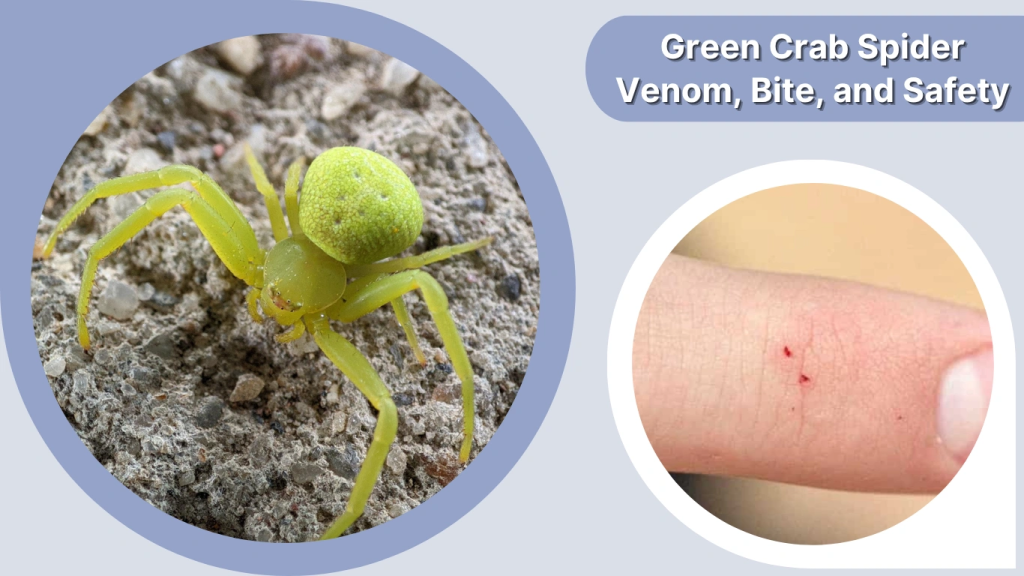
The Green Crab Spider is mildly venomous, but its venom is designed to paralyze insect prey — not harm humans. It uses this venom to immobilize bees, flies, and other small insects quickly. When it comes to humans, the bite is considered harmless, with no medical significance. Most people never experience a bite since the spider prefers hiding rather than confronting.
Bite Effects
Bites from green crab spiders are extremely rare. If one occurs, it typically results in mild redness, swelling, or irritation, similar to a mosquito or ant bite. The discomfort lasts only a few hours. Applying an ice pack or mild antiseptic cream usually resolves any minor symptoms. The spider is not aggressive and only bites when handled roughly or trapped against the skin.
Venom and Prey Capture
The venom contains enzymes that dissolve the internal tissues of insects, allowing the spider to feed efficiently. Despite its potency on prey, it poses no risk to humans or pets. This unique adaptation makes the green crab spider an important biological pest controller, helping reduce populations of crop-damaging insects.
Interesting Facts
- Scientific Name: Misumessus oblongus, a species within the Thomisidae family.
- Nickname: Often called the “flower crab spider” due to its tendency to rest on blossoms.
- Color-Changing Ability: Some individuals can slightly alter their hue between green, yellow, or white for better camouflage.
- Role in Ecosystem: Helps regulate insect populations naturally, reducing the need for pesticides.
- Global Distribution: Found not only in the U.S. but also in parts of Asia, Europe, and Oceania.
- Behavioral Traits: Females are known for their protective maternal instincts, often guarding their eggs until hatching.
- Visual Appeal: Their neon or lime-green tones make them a favorite subject for macro photography and nature enthusiasts.
FAQs
What is the size of a green crab spider?
The average green crab spider measures between 5–10 millimeters in length. Females are typically larger than males, and their compact body paired with elongated front legs gives them a crab-like stance. This unique shape allows them to move sideways and capture prey efficiently.
Is the green crab spider venomous to humans?
Yes, the green crab spider has venom, but it’s harmless to humans. Its venom is only strong enough to paralyze small insects like flies or bees. Human bites are rare, and when they occur, they cause only mild redness or swelling that fades quickly.
Where are green crab spiders commonly found?
These spiders are widespread across North America, particularly in Texas, Florida, Ohio, and California. They also appear in Europe, Asia, and Australia. Green crab spiders prefer sunny habitats such as gardens, fields, and meadows filled with flowering plants where they can easily blend in.
What does the green crab spider eat?
Green crab spiders are ambush hunters that feed on pollinators like bees, flies, and butterflies. Instead of spinning webs, they hide on flowers or leaves, waiting patiently for prey. Once the target approaches, they strike swiftly, injecting venom and consuming the liquified tissues.
How can you identify a green crab spider?
You can identify a green crab spider by its bright green color, sideways movement, and two long front legs used for grasping prey. They are often seen sitting on flowers or leaves, perfectly camouflaged. Their body is small and flat, resembling a tiny crab in shape and posture.