Brown recluse spiders are one of the most feared household pests in the United States. Known for their violin-shaped marking and venomous bite, they can cause serious health risks if left unchecked. While they are shy and reclusive by nature, a full infestation inside your home can put your family at risk. Getting rid of these spiders requires a combination of inspection, cleaning, sealing, and sometimes professional treatment.
Understanding the Brown Recluse Spider
The brown recluse (Loxosceles reclusa) is a venomous spider commonly found in the central and southern United States. They are light to medium brown in color, with a distinct dark marking on their back that resembles a violin. Unlike most spiders, which have eight eyes, the brown recluse has six arranged in pairs.
Although they prefer to stay hidden, infestations can grow quickly since a single female can produce multiple egg sacs, each containing dozens of spiderlings. Their venom can cause tissue damage, skin lesions, and in rare cases, systemic reactions. For this reason, controlling a brown recluse population is not just about comfort—it’s about safety.
Signs of a Brown Recluse Infestation

Before you can control brown recluse spiders, it’s important to recognize the signs of their presence. The most common indicators include:
- Spider sightings: While they are reclusive, you may spot them crawling along walls, especially at night.
- Webs and egg sacs: Their webs are loose, irregular, and often found in dark, undisturbed areas. Egg sacs look like small, silken balls attached to surfaces.
- Shed skins: As they grow, brown recluse spiders shed their exoskeletons, leaving behind dry shells.
- Unexplained bites: While not always easy to confirm, recurring bites in the home may signal their presence.
Identifying these signs early allows you to act before the infestation becomes overwhelming.
Common Areas Where Brown Recluse Spiders Hide

Brown recluse spiders prefer dark, undisturbed areas where they can remain hidden during the day and come out at night to hunt. Some of their favorite spots include:
- Basements, attics, and crawl spaces.
- Closets, storage boxes, and clothing left on the floor.
- Behind furniture, picture frames, or appliances.
- Cardboard boxes, woodpiles, and cluttered garage corners.
They often choose areas that humans rarely disturb, which makes regular inspections and cleaning an essential part of prevention.
Step 1: Inspect and Identify

A proper inspection is the foundation of any successful control plan. Start by focusing on areas where you’ve noticed signs of activity. Use a flashlight to check behind stored items, under furniture, and inside closets.
Always wear gloves and long sleeves during inspection, as brown recluse spiders may defend themselves if disturbed. Sticky traps can also be placed in suspected areas to confirm their presence. If you catch one, carefully compare its appearance to online resources or consult a pest control professional to ensure accurate identification.
Step 2: Reduce Clutter and Seal Entry Points

Clutter provides hiding spots for brown recluse spiders, so reducing it is key to breaking the infestation cycle. Remove piles of clothes, cardboard boxes, and unnecessary storage items from your home. Store items in sealed plastic containers rather than cardboard, which spiders can easily hide inside.
Next, seal potential entry points. Caulk cracks around windows, doors, and baseboards. Install door sweeps and repair any torn window screens. Outdoors, check for gaps near foundations, siding, or utility lines where spiders may be entering from outside. By reducing hiding spots and sealing entryways, you make your home less inviting to brown recluse spiders.
Step 3: Safe Cleaning Practices
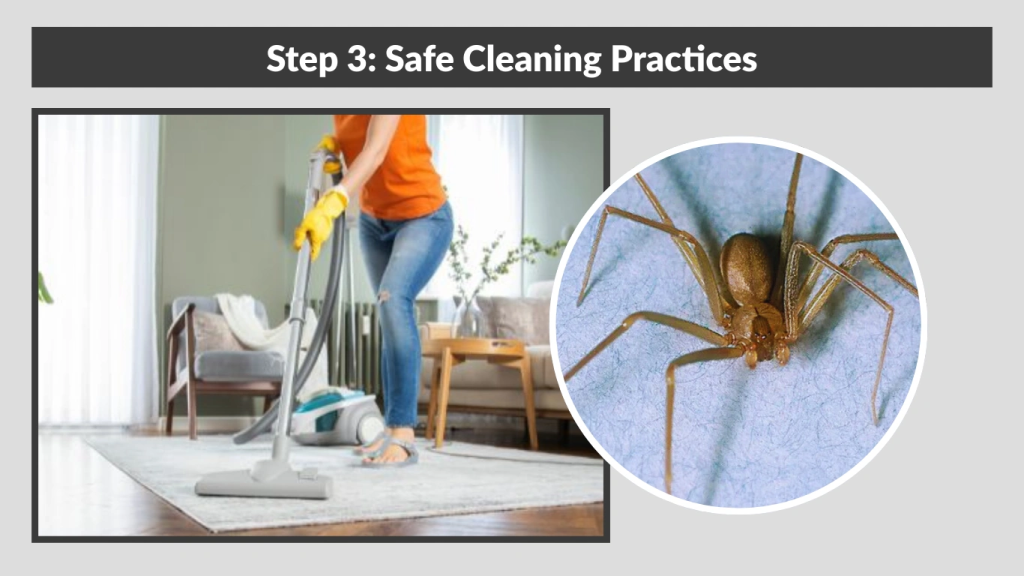
Regular cleaning disrupts brown recluse activity and helps reduce their numbers. Use a vacuum cleaner with a hose attachment to remove webs, egg sacs, and even live spiders. Immediately dispose of the vacuum bag in a sealed container outside your home.
Shake out clothing, shoes, and bedding before use, especially if stored in closets or basements. Wash fabrics in hot water when possible to eliminate hidden spiders. Sticky traps placed along walls, behind furniture, and inside storage areas can help monitor and capture stragglers.
Step 4: Natural and DIY Remedies
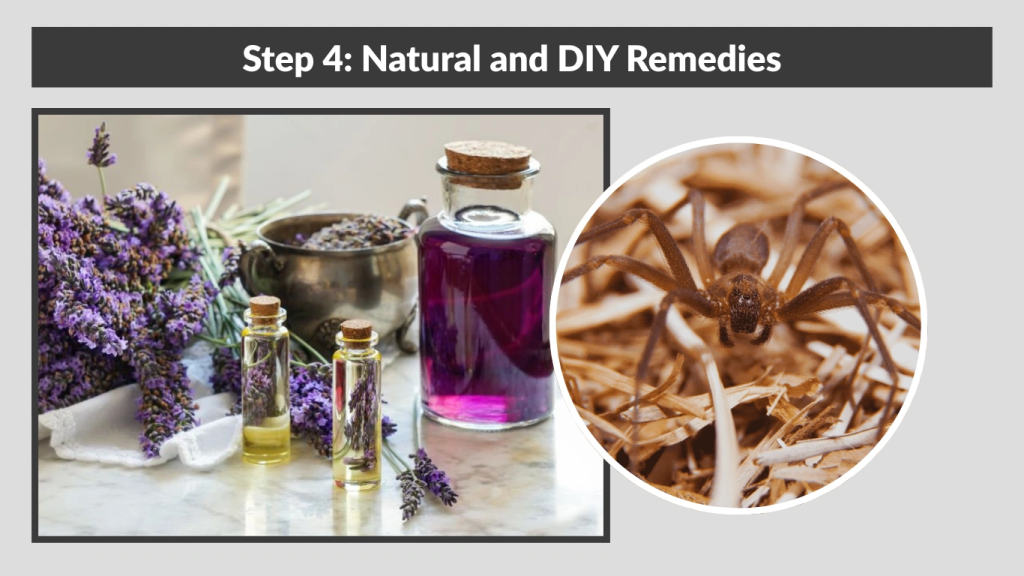
If you prefer to avoid harsh chemicals, there are several natural ways to deter brown recluse spiders:
- Essential oils: Peppermint, lavender, and tea tree oils can be mixed with water and sprayed around entry points, baseboards, and corners. The strong scent disrupts their movement and discourages nesting.
- Vinegar solution: White vinegar sprayed directly onto spiders or webs can kill them on contact.
- Sticky glue boards: Placing glue traps in corners and along walls helps capture wandering spiders and gives you an idea of infestation levels.
- Light control: Since insects are attracted to light, reducing outdoor lighting helps decrease the spider’s food supply, indirectly lowering their presence.
While these remedies can be effective for small infestations, they work best when combined with thorough cleaning and sealing practices.
Step 5: Chemical Treatments

For moderate to severe infestations, chemical control may be necessary. Several options are commonly used:
- Residual sprays: Pyrethroid-based insecticides can be applied around baseboards, cracks, and wall voids. These provide long-lasting control by killing spiders that come into contact with treated surfaces.
- Insecticidal dust: Silica or diatomaceous earth dusts can be applied into wall voids, attics, and crawl spaces. These powders cling to the spider’s body, causing dehydration and death.
- Aerosol sprays: Useful for spot-treating webs or visible spiders but less effective for hidden populations.
Note: Always read and follow product labels carefully. Pets and children should be kept away from treated areas until it is safe. If you’re unsure about handling chemicals, professional help is the safest option.
Step 6: Professional Pest Control
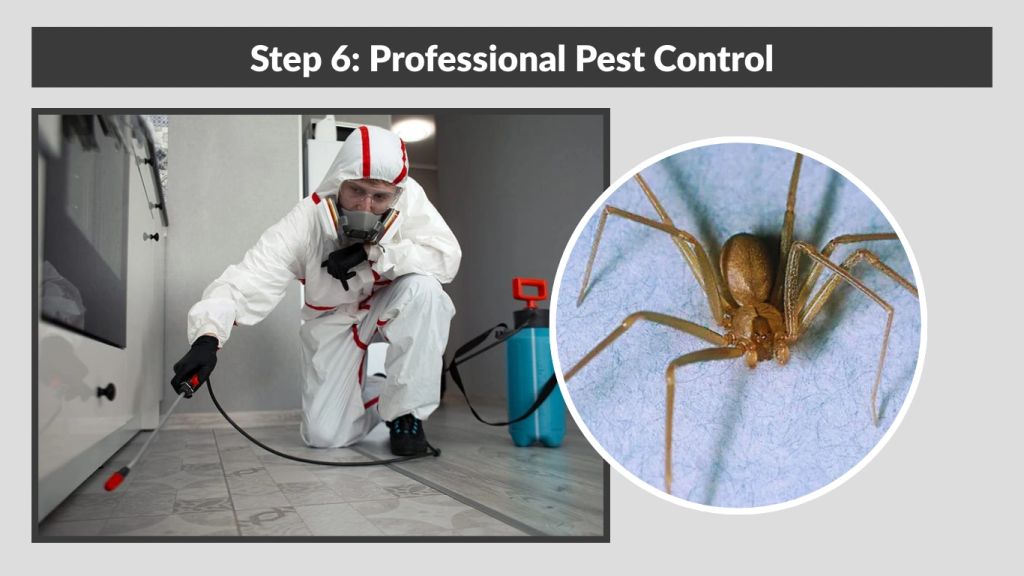
When infestations are widespread or hard to manage, professional exterminators offer the most reliable solution. Pest control experts use a combination of methods, such as:
- Applying residual insecticides in targeted areas.
- Dusting voids, attics, and crawl spaces.
- Conducting follow-up inspections to monitor activity.
- Offering maintenance plans to prevent re-infestation.
Professionals also have protective gear and specialized knowledge, reducing risks during treatment. If you’ve noticed spiders across multiple rooms or repeatedly found egg sacs, hiring a licensed pest control service is the most effective route.
Preventing Future Infestations
Once you’ve dealt with an infestation, prevention becomes your most powerful tool. Simple habits can make your home uninviting to brown recluse spiders:
- Keep storage areas organized and clutter-free.
- Use plastic bins instead of cardboard boxes.
- Store shoes, clothing, and bedding in sealed containers.
- Reduce insect populations (their food source) by eliminating pests like crickets or cockroaches.
- Perform seasonal inspections of attics, basements, and garages.
By staying proactive, you significantly reduce the chance of another infestation.
What Not to Do
When trying to control brown recluse spiders, certain actions can make the problem worse:
- Do not attempt DIY fumigation: Foggers and “bug bombs” often fail because brown recluse spiders hide in deep cracks where fog doesn’t reach.
- Avoid misidentification: Many harmless spiders resemble the brown recluse. Incorrect identification could lead to unnecessary panic and treatments.
- Don’t ignore early signs: Waiting until spiders multiply makes eradication harder and more expensive.
Safety and Medical Considerations
Brown recluse spiders are not aggressive, but bites can occur when they feel trapped, often inside shoes, clothing, or bedding. If bitten:
- Clean the wound with mild soap and water.
- Apply a cool compress to reduce swelling.
- Seek medical attention if symptoms worsen, such as spreading redness, ulceration, or systemic effects like fever and nausea.
Prompt care helps minimize long-term damage from the venom.
FAQs
How dangerous is a brown recluse infestation in a home?
A large infestation poses real health risks, as bites can cause necrotic skin lesions. While fatalities are extremely rare, the medical consequences make quick action important.
Can I get rid of brown recluse spiders without chemicals?
Yes. Regular cleaning, reducing clutter, sealing entry points, and using sticky traps can help control small populations naturally. However, chemicals or professional help may be needed for larger infestations.
How long does it take to eliminate an infestation?
It depends on the severity. Small infestations may take a few weeks to control, while larger ones may require multiple treatments and follow-up inspections over several months.
Are brown recluse spiders aggressive toward humans?
No. They are shy and usually avoid contact. Bites generally occur when a spider is accidentally pressed against the skin.
What is the best long-term prevention method?
Keeping your home clutter-free, sealing cracks, and storing items in plastic containers are the most effective long-term measures. Pair this with seasonal inspections to stay ahead of potential problems.