



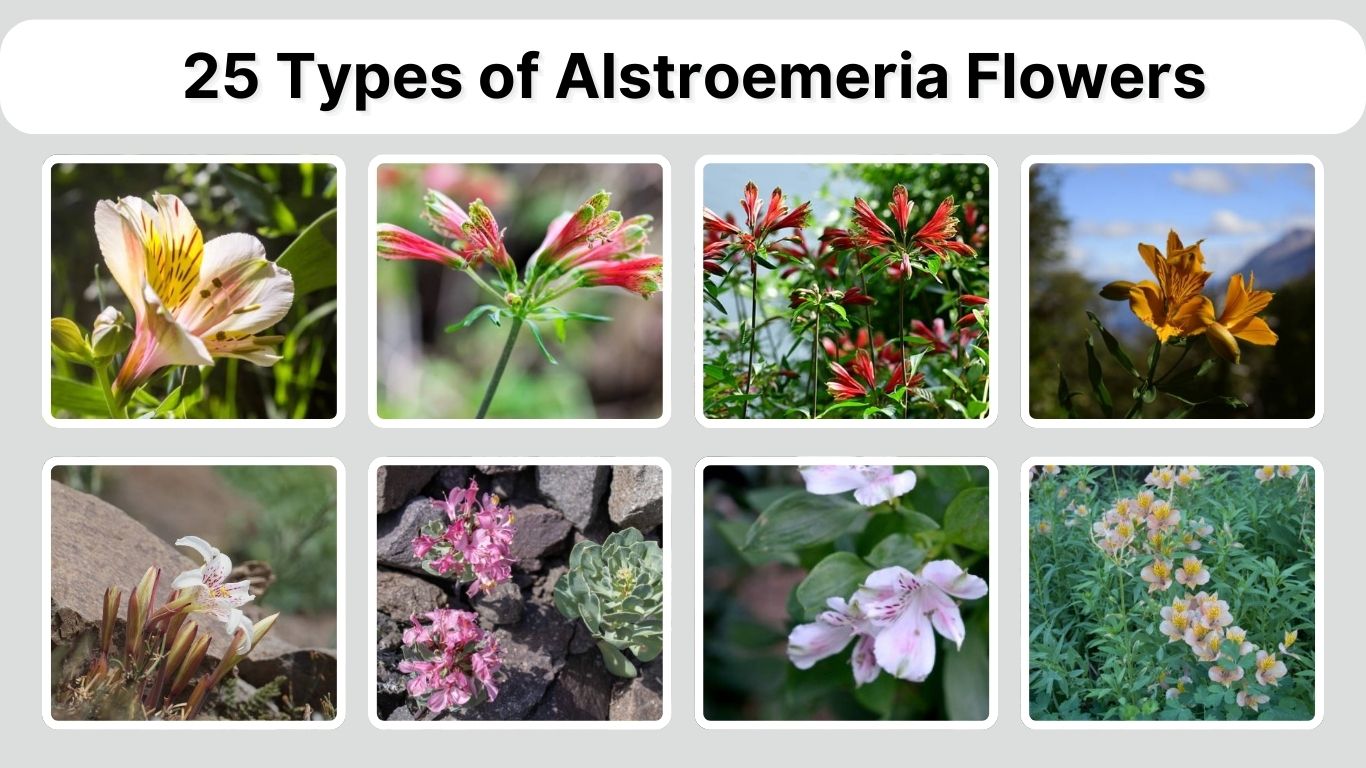
Alstroemeria, commonly known as the Peruvian lily, is a popular flowering plant admired for its colorful, long-lasting blooms and elegant petal patterns. Native mainly to South America, these flowers are widely grown in gardens and used in floral arrangements because of their beauty, variety, and strong stems. This guide explores 25 different types of Alstroemeria flowers, highlighting the natural diversity found within this genus, from soft pastel species to bold, vividly marked varieties loved by gardeners and flower enthusiasts.
1. Alstroemeria aurea (Peruvian Lily)

Alstroemeria aurea is a bright, hardy species of Peruvian lily known for its golden-yellow flowers and light speckling on the inner petals. Native to southern South America, it is widely grown in gardens and floral landscapes because of its long blooming season, clump-forming growth, and excellent cut-flower quality.
Identification (Flower Traits)
- Golden-yellow to orange-yellow petals
- Dark streaks or speckles on inner petals
- Six petal-like tepals with soft, rounded tips
- Grows 2–3 feet tall with upright flowering stems
- Narrow, twisting green leaves along the stem
Flower Color & Patterns
The flowers of Alstroemeria aurea are most famous for their rich golden tones. Inner petals usually display reddish-brown lines or spots, which guide pollinators. Some cultivated forms may appear deeper orange or pale yellow, depending on soil and light conditions.
Blooming Season & Flowering Habit
Alstroemeria aurea typically blooms from late spring through summer. Each stem produces clusters of trumpet-shaped flowers that open gradually, extending the overall flowering display. With proper care, plants can rebloom lightly in early autumn.
Habitat & Natural Range
This species is native to Chile and parts of Argentina, where it grows in open woodlands, grasslands, and mountain slopes. It prefers cool climates and well-drained soils, which makes it well-suited for temperate gardens.
Garden & Floral Uses
Alstroemeria aurea is widely planted in borders, cottage gardens, and cutting beds. Its long-lasting blooms hold up well in floral arrangements, often staying fresh for up to two weeks when cut and placed in water.
2. Alstroemeria ligtu

Alstroemeria ligtu is one of the most colorful wild species of Peruvian lily, widely valued as a parent plant in many modern hybrids. It is native to central Chile and is admired for its soft pastel petals, strong markings, and elegant flower clusters.
Identification (Flower Traits)
- Medium-sized, trumpet-shaped flowers
- Six soft tepals with rounded edges
- Inner petals marked with dark streaks or freckles
- Upright stems reaching 1.5–3 feet
- Twisting, lance-shaped green leaves
Flower Color & Patterns
Flowers commonly appear in shades of lavender, pale purple, pink, or creamy white. The inner petals usually carry dark purple or maroon striping, creating a dramatic contrast that makes the blooms highly attractive in gardens and floral arrangements.
Blooming Season & Flowering Habit
Alstroemeria ligtu blooms from late spring to mid-summer. Each stem forms a loose umbel of several flowers that open in succession, allowing a long-lasting floral display. Under favorable conditions, it may produce a light second flush later in the season.
Habitat & Natural Range
This species naturally grows on hillsides and open scrublands of Chile. It prefers well-drained soils, mild temperatures, and sunny to lightly shaded locations.
Garden & Floral Uses
Alstroemeria ligtu is commonly grown in ornamental borders and cutting gardens. Because of its strong stems and long vase life, it is also widely used in breeding programs for commercial cut-flower varieties.
3. Alstroemeria psittacina (Parrot Lily)

Alstroemeria psittacina is often called the “parrot lily” due to its vivid red flowers tipped with green. It is one of the most distinctive Alstroemeria species and is popular both in gardens and as a parent of many striking hybrid cultivars.
Identification (Flower Traits)
- Narrow, pointed petals with flared tips
- Bright red base color with green outer edges
- Dark speckles on inner petals
- Tall, arching stems up to 3 feet
- Long, narrow, twisting leaves
Flower Color & Patterns
The flowers are primarily scarlet red, with green-tipped outer tepals that resemble parrot feathers. Dark spotting and streaking on the inner petals enhance the exotic appearance and attract pollinators.
Blooming Season & Flowering Habit
Blooming usually occurs from late spring through summer. Plants produce clusters of flowers at the top of each stem, opening gradually to maintain continuous color over several weeks.
Habitat & Natural Range
Alstroemeria psittacina is native to Brazil, Paraguay, and Argentina. It grows naturally in warm regions, along forest edges, and in open fields with well-drained soils.
Garden & Floral Uses
This species is widely planted for bold color effects in flower beds and containers. Its dramatic blooms are also valued in floral design, especially in tropical-style arrangements.
4. Alstroemeria pulchella

Alstroemeria pulchella is a graceful Peruvian lily species known for its soft-toned flowers and delicate markings. It is less common in cultivation than hybrid alstroemerias, but it is appreciated for its natural beauty and refined floral structure.
Identification (Flower Traits)
- Medium-sized, trumpet-shaped blooms
- Six smooth, slightly pointed tepals
- Inner petals with fine streaks or light spotting
- Upright stems with narrow, twisting leaves
- Grows about 1.5–2.5 feet tall
Flower Color & Patterns
The flowers are typically pale pink, lilac, or creamy white, often accented with faint purple or reddish lines on the inner petals. These subtle patterns give the blooms a soft, elegant appearance.
Blooming Season & Flowering Habit
Flowering usually occurs from late spring through summer. Blooms appear in loose clusters at the top of the stems, opening gradually to extend the flowering period.
Habitat & Natural Range
This species is native to parts of South America, where it grows in open grasslands and light woodland areas with well-drained soils.
Garden & Floral Uses
Alstroemeria pulchella is suitable for natural-style gardens, mixed borders, and cut-flower beds, where its gentle colors blend well with other flowering plants.
5. Alstroemeria pelegrina

Alstroemeria pelegrina is one of the most visually striking species, famous for its large, open flowers and bold purple markings. It is often considered one of the most ornamental wild alstroemerias.
Identification (Flower Traits)
- Large, open, trumpet-like flowers
- Broad, rounded tepals
- Strong dark streaks on inner petals
- Thick, upright flowering stems
- Broad, twisting green leaves
Flower Color & Patterns
Flowers are usually pale pink to lavender with dramatic deep purple or maroon lines radiating from the center. A yellow throat is often present, increasing contrast and visual impact.
Blooming Season & Flowering Habit
Blooming takes place in late spring and early summer. Each stem produces several large flowers that open widely, creating a bold floral display.
Habitat & Natural Range
Alstroemeria pelegrina is native to coastal regions of Chile, where it grows in sandy or rocky soils with good drainage.
Garden & Floral Uses
Because of its large, showy blooms, this species is highly valued in ornamental gardens and is frequently used in breeding programs to develop large-flowered hybrid alstroemerias.
6. Alstroemeria haemantha

Alstroemeria haemantha is a striking species recognized for its bright red to orange-red flowers and bold internal markings. It is a vigorous Peruvian lily that adds intense color to natural gardens and mixed borders.
Identification (Flower Traits)
- Medium to large, trumpet-shaped flowers
- Six broad tepals with rounded tips
- Dark streaks or spots on inner petals
- Strong upright stems, 2–3 feet tall
- Narrow, twisting green leaves
Flower Color & Patterns
The flowers are usually deep red, scarlet, or orange-red, often highlighted with yellow zones and dark maroon striping on the inner petals. This high-contrast coloring makes the blooms highly attractive to pollinators.
Blooming Season & Flowering Habit
Flowering typically occurs from late spring into summer. Blooms form in clustered umbels at the top of each stem, opening in sequence to extend the display period.
Habitat & Natural Range
This species is native to Chile, where it grows in open habitats, hillsides, and well-drained soils under cool to mild climates.
Garden & Floral Uses
Alstroemeria haemantha is grown for bold color accents in borders and is also useful as a cut flower because of its long-lasting blooms.
7. Alstroemeria angustifolia

Alstroemeria angustifolia is known for its slender leaves and refined flower form. The name “angustifolia” refers to its narrow foliage, which gives the plant a lighter, more delicate appearance.
Identification (Flower Traits)
- Narrow, elegant, trumpet-shaped flowers
- Slim, twisting leaves along the stem
- Inner petals with fine streaks
- Upright, lightly branched flowering stems
- Average height of 1.5–2.5 feet
Flower Color & Patterns
Flowers are commonly soft pink, pale lilac, or light orange, usually decorated with thin, dark lines or spots on the inner tepals. The overall coloration tends to be gentle rather than bold.
Blooming Season & Flowering Habit
Blooming generally occurs from late spring to early summer. Flower clusters open gradually, allowing the plant to maintain color for several weeks.
Habitat & Natural Range
This species grows naturally in parts of South America, especially in open fields and mountain foothills with good drainage.
Garden & Floral Uses
Alstroemeria angustifolia works well in mixed borders and naturalistic plantings. Its lighter structure and subtle flowers also make it suitable for soft, pastel-style floral arrangements.
8. Alstroemeria garaventae

Alstroemeria garaventae is a lesser-known but attractive species valued for its soft flower colors and neat growth habit. It contributes genetic diversity to the Alstroemeria group and is appreciated by collectors and botanical gardens.
Identification (Flower Traits)
- Medium-sized, trumpet-shaped flowers
- Six smooth tepals with slightly pointed tips
- Inner petals marked with fine lines
- Upright, slender flowering stems
- Narrow, twisting green leaves
Flower Color & Patterns
Flowers are usually pale yellow, creamy white, or soft pink, often decorated with delicate reddish or brownish streaks on the inner petals. These subtle markings give the blooms a refined, natural look.
Blooming Season & Flowering Habit
Blooming occurs mainly in late spring and early summer. Flowers grow in loose clusters, opening one after another to maintain a steady floral display.
Habitat & Natural Range
This species is native to Chile, where it grows in well-drained soils, open slopes, and lightly wooded areas.
Garden & Floral Uses
Alstroemeria garaventae is suitable for natural gardens, plant collections, and mixed borders. Its gentle coloring also works well in soft floral arrangements.
9. Alstroemeria magnifica

Alstroemeria magnifica is one of the most impressive wild species, known for its tall growth and large, brightly colored flowers. It is often considered a parent of many ornamental Alstroemeria hybrids.
Identification (Flower Traits)
- Large, showy trumpet-shaped flowers
- Broad, rounded tepals
- Strong streaks on inner petals
- Tall, upright stems up to 3–4 feet
- Long, twisting lance-shaped leaves
Flower Color & Patterns
The flowers are commonly deep pink, rose, or purplish-red, often combined with yellow centers and dark purple lines. The vivid contrast makes this species especially eye-catching in bloom.
Blooming Season & Flowering Habit
Flowering usually takes place from late spring into summer. Each stem produces multiple large blooms that open widely, creating a bold and dramatic display.
Habitat & Natural Range
Alstroemeria magnifica is native to Chile, particularly coastal and mountainous regions with cool temperatures and good drainage.
Garden & Floral Uses
Because of its height and large flowers, Alstroemeria magnifica is ideal for the back of borders, feature plantings, and cut-flower gardens.
10. Alstroemeria caryophyllaea

Alstroemeria caryophyllaea is a historic and fragrant species that was one of the first alstroemerias introduced into European cultivation. It is known for its soft-colored flowers and light, pleasant scent.
Identification (Flower Traits)
- Medium-sized, open trumpet-shaped flowers
- Rounded tepals with gentle curves
- Inner petals with fine dark streaks
- Slender upright stems
- Narrow, twisting green leaves
Flower Color & Patterns
Flowers are usually pale pink, soft rose, or creamy white, often marked with subtle purple or brown lines near the throat. Some forms may show a yellowish center that highlights the petal markings.
Blooming Season & Flowering Habit
Blooming occurs mainly in late spring and early summer. Flowers are borne in loose clusters and open successively, providing several weeks of color.
Habitat & Natural Range
This species originates from Chile, where it grows in open areas with good drainage and mild temperatures.
Garden & Floral Uses
Alstroemeria caryophyllaea is valued in cottage gardens and heritage plantings. Its lightly scented blooms and long-lasting stems also make it suitable for cut-flower use.
11. Alstroemeria hookeri

Alstroemeria hookeri is a compact, attractive species recognized for its rich pink to purple flowers and strong internal markings. It is widely studied and cultivated in South America.
Identification (Flower Traits)
- Medium-sized, trumpet-shaped blooms
- Broad tepals with rounded tips
- Prominent dark streaks on inner petals
- Upright stems, usually under 2 feet
- Twisting, lance-shaped leaves
Flower Color & Patterns
Flowers typically range from deep pink to violet-purple, often with yellow highlights and dark maroon striping on the inner petals. This combination gives the blooms a bold, ornamental look.
Blooming Season & Flowering Habit
Flowering generally occurs from late spring into early summer. Plants produce clusters of blooms that open gradually for a prolonged flowering period.
Habitat & Natural Range
Alstroemeria hookeri is native to Chile, where it grows in grasslands and open woodland environments.
Garden & Floral Uses
Because of its shorter height, Alstroemeria hookeri works well in borders, containers, and foreground plantings. Its bright flowers are also useful in floral arrangements.
12. Alstroemeria kingii

Alstroemeria kingii is a hardy South American species known for its elegant flowers and good tolerance to cooler conditions. It is less common in commercial trade but valued in botanical collections and natural-style gardens.
Identification (Flower Traits)
- Medium-sized, trumpet-shaped flowers
- Six smooth tepals with rounded ends
- Inner petals marked with fine dark lines
- Upright, moderately tall stems
- Narrow, twisting green leaves
Flower Color & Patterns
Flowers are typically soft pink, pale lavender, or light rose, often accented with yellow tones in the throat and thin maroon or purple streaks on the inner petals.
Blooming Season & Flowering Habit
Blooming usually takes place from late spring to early summer. Blooms appear in loose clusters, opening gradually and extending the flowering display.
Habitat & Natural Range
This species is native to Chile and parts of Argentina, where it grows in open hillsides and well-drained soils.
Garden & Floral Uses
Alstroemeria kingii is suitable for mixed borders and naturalistic plantings. Its steady flowering and strong stems also make it useful as a cut flower.
13. Alstroemeria ligtu ssp. incarnata

Alstroemeria ligtu ssp. incarnata is a beautiful subspecies of Alstroemeria ligtu, distinguished by its soft pastel shades and refined floral markings.
Identification (Flower Traits)
- Medium-sized, elegant trumpet-shaped blooms
- Smooth, rounded tepals
- Delicate streaks on inner petals
- Upright flowering stems
- Slender, twisting leaves
Flower Color & Patterns
Flowers are most often light pink, blush, or pale peach, highlighted with fine purple or reddish lines near the center. The gentle coloring gives this subspecies a graceful appearance.
Blooming Season & Flowering Habit
Flowering occurs from late spring into summer. Each stem carries clusters of blooms that open one after another, extending the flowering period.
Habitat & Natural Range
This subspecies is native to central Chile, growing in open habitats with well-drained soils.
Garden & Floral Uses
Alstroemeria ligtu ssp. incarnata is well suited to ornamental borders, botanical gardens, and soft-color floral arrangements.
14. Alstroemeria pallida

Alstroemeria pallida is a subtle and attractive species recognized for its lighter-toned flowers and soft internal markings. It is mainly found in South America and is appreciated for its natural elegance.
Identification (Flower Traits)
- Medium-sized, trumpet-shaped flowers
- Pale, smooth tepals
- Fine streaks on inner petals
- Upright, slender stems
- Narrow, twisting leaves
Flower Color & Patterns
Flowers are usually pale pink, creamy white, or light lilac, often with faint yellow shading in the throat and delicate maroon or purple lines on the inner petals.
Blooming Season & Flowering Habit
Blooming takes place from late spring through early summer. Flowers open gradually in clusters, providing a steady and gentle floral display.
Habitat & Natural Range
This species is native to Chile, where it grows in open grasslands and light woodland environments with good drainage.
Garden & Floral Uses
Alstroemeria pallida works well in naturalistic gardens, mixed borders, and botanical collections. Its soft colors also suit pastel-style floral designs.
15. Alstroemeria orchidioides

Alstroemeria orchidioides is named for its orchid-like appearance, featuring broad petals and showy markings that give it an exotic look among Peruvian lilies.
Identification (Flower Traits)
- Broad, open, trumpet-like flowers
- Rounded tepals resembling orchid petals
- Strong markings on inner petals
- Upright flowering stems
- Twisting, lance-shaped leaves
Flower Color & Patterns
Flowers commonly appear in shades of lavender, pink, or soft purple, often with bold dark streaks and a yellow throat that enhances contrast.
Blooming Season & Flowering Habit
Flowering generally occurs in late spring and early summer. The large blooms open widely and are carried in loose clusters at the tops of the stems.
Habitat & Natural Range
This species is native to parts of South America, especially Chile, where it grows in well-drained soils and open habitats.
Garden & Floral Uses
Because of its large, decorative flowers, Alstroemeria orchidioides is ideal for ornamental borders, feature plantings, and cut-flower gardens.
16. Alstroemeria patagonica

Alstroemeria patagonica is a hardy species adapted to cooler climates and open landscapes. It is valued for its resilience, neat growth form, and softly colored flowers.
Identification (Flower Traits)
- Medium-sized, trumpet-shaped blooms
- Smooth tepals with rounded tips
- Inner petals lightly streaked
- Upright, sturdy stems
- Narrow, twisting green leaves
Flower Color & Patterns
Flowers are usually pale yellow, creamy white, or light pink, often marked with thin reddish or brownish lines on the inner petals and a soft yellow throat.
Blooming Season & Flowering Habit
Blooming typically occurs from late spring to early summer. Flowers appear in clustered umbels and open gradually to extend the blooming period.
Habitat & Natural Range
This species is native to southern Chile and Argentina, especially the Patagonian region, where it grows in open fields and well-drained soils under cool conditions.
Garden & Floral Uses
Alstroemeria patagonica is suitable for cool-climate gardens, natural borders, and wildflower-style plantings. Its flowers also work well in gentle-toned arrangements.
17. Alstroemeria graminea

Alstroemeria graminea is unique within the genus because of its grass-like foliage and small, delicate flowers. It is sometimes classified separately due to its distinct growth habit.
Identification (Flower Traits)
- Small, narrow, star-like flowers
- Slender tepals
- Fine dark markings on inner petals
- Thin, branching stems
- Grass-like, linear leaves
Flower Color & Patterns
Flowers are usually yellow, greenish-yellow, or light orange, often with brown or reddish streaks and spots concentrated toward the center.
Blooming Season & Flowering Habit
Blooming generally occurs from spring to early summer. The flowers are smaller than most alstroemerias and appear in loose, airy clusters.
Habitat & Natural Range
This species is native to Chile, where it grows in dry grasslands, rocky slopes, and open areas with excellent drainage.
Garden & Floral Uses
Alstroemeria graminea is well suited for rock gardens, dry borders, and botanical collections. Its fine texture also makes it useful in delicate, natural-style plantings.
18. Alstroemeria violacea

Alstroemeria violacea is known for its rich violet to purple-toned flowers and refined floral structure. It is a visually appealing species that contributes strong color to wild and cultivated plantings.
Identification (Flower Traits)
- Medium-sized, trumpet-shaped flowers
- Smooth, rounded tepals
- Dark streaks on inner petals
- Upright, moderately tall stems
- Narrow, twisting green leaves
Flower Color & Patterns
Flowers typically range from deep violet to soft purple, often with yellow highlights in the throat and dark maroon or brown striping on the inner petals.
Blooming Season & Flowering Habit
Flowering usually occurs from late spring through summer. Blooms open in clusters, providing a consistent and colorful display.
Habitat & Natural Range
This species is native to Chile and nearby regions of South America, where it grows in open slopes and well-drained soils.
Garden & Floral Uses
Alstroemeria violacea works well in ornamental borders, wildflower gardens, and cut-flower beds because of its strong color and good stem quality.
19. Alstroemeria presliana

Alstroemeria presliana is a distinctive species adapted to higher elevations, valued for its delicate flowers and natural resilience.
Identification (Flower Traits)
- Medium-sized, elegant trumpet-shaped blooms
- Slightly pointed tepals
- Fine dark markings on inner petals
- Upright, slender stems
- Twisting, narrow leaves
Flower Color & Patterns
Flowers are often pale pink, soft lilac, or creamy white, commonly highlighted with yellow tones near the throat and fine purple or maroon streaks.
Blooming Season & Flowering Habit
Blooming usually occurs from late spring into early summer. Flowers are carried in loose clusters that open progressively.
Habitat & Natural Range
This species is native to mountainous regions of Chile and Argentina, where it grows in cool, open habitats with excellent drainage.
Garden & Floral Uses
Alstroemeria presliana is suitable for alpine gardens, rock gardens, and botanical collections. Its gentle colors also fit well in natural-style floral designs.
20. Alstroemeria umbellata

Alstroemeria umbellata is named for its umbel-like flower clusters, which create a rounded and balanced floral display. It is valued for its neat form and softly colored blooms.
Identification (Flower Traits)
- Medium-sized, trumpet-shaped flowers
- Rounded tepals arranged in clustered umbels
- Fine streaks on inner petals
- Upright, sturdy stems
- Narrow, twisting green leaves
Flower Color & Patterns
Flowers are commonly pale yellow, creamy white, or light pink, often accented with reddish or brownish lines on the inner petals and soft yellow tones in the throat.
Blooming Season & Flowering Habit
Blooming usually takes place from late spring into summer. Flowers open gradually within each cluster, extending the overall blooming period.
Habitat & Natural Range
This species is native to Chile, where it grows in open habitats, grasslands, and well-drained soils.
Garden & Floral Uses
Alstroemeria umbellata is suitable for mixed borders, naturalistic gardens, and cut-flower plantings where soft colors are desired.
21. Alstroemeria werdermannii

Alstroemeria werdermannii is a rare and lesser-known species distinguished by its refined flowers and adaptation to drier environments.
Identification (Flower Traits)
- Medium-sized, elegant trumpet-shaped blooms
- Smooth tepals with gentle curves
- Subtle streaks on inner petals
- Upright, slender stems
- Narrow, twisting leaves
Flower Color & Patterns
Flowers are usually pale pink, soft lavender, or creamy white, with light yellow shading in the throat and delicate maroon or purple lines.
Blooming Season & Flowering Habit
Flowering generally occurs in late spring and early summer. Blooms appear in loose clusters and open progressively.
Habitat & Natural Range
This species is native to arid and semi-arid regions of Chile, where it grows on rocky slopes and well-drained soils.
Garden & Floral Uses
Alstroemeria werdermannii is best suited for rock gardens, dry borders, and botanical collections. Its subtle beauty also works well in soft floral compositions.
22. Alstroemeria parvula

Alstroemeria parvula is a smaller-growing species recognized for its compact form and delicate flowers. It is well adapted to open, well-drained habitats and is often appreciated in botanical and alpine-style gardens.
Identification (Flower Traits)
- Small to medium-sized trumpet-shaped flowers
- Slender tepals with rounded tips
- Fine dark streaks on inner petals
- Shorter, upright flowering stems
- Narrow, twisting leaves
Flower Color & Patterns
Flowers are usually pale yellow, soft pink, or light lilac, often with subtle reddish or brownish markings near the center and a faint yellow throat.
Blooming Season & Flowering Habit
Blooming occurs mainly from late spring to early summer. Flowers are produced in loose clusters and open gradually, giving a gentle but extended floral display.
Habitat & Natural Range
This species is native to Chile, where it grows in open slopes, rocky soils, and well-drained environments.
Garden & Floral Uses
Alstroemeria parvula is suitable for rock gardens, compact borders, and plant collections. Its smaller size makes it useful for foreground plantings.
23. Alstroemeria andina

Alstroemeria andina is a mountain-adapted species known for its hardiness and clean, attractive flowers. It thrives in cooler conditions and open, sunlit landscapes.
Identification (Flower Traits)
- Medium-sized, neat trumpet-shaped blooms
- Smooth tepals with slightly pointed ends
- Fine streaking on inner petals
- Upright, sturdy stems
- Narrow, twisting green leaves
Flower Color & Patterns
Flowers commonly appear in pale yellow, creamy white, or soft pink shades, often accented with darker lines and gentle yellow coloring in the throat.
Blooming Season & Flowering Habit
Flowering generally takes place from late spring into summer. Blooms open in clusters at the top of the stems, extending the flowering season.
Habitat & Natural Range
This species is native to the Andes regions of South America, particularly Chile and Argentina, where it grows in open mountain environments.
Garden & Floral Uses
Alstroemeria andina works well in alpine gardens, cool-climate borders, and botanical plantings. Its resilience and soft colors also suit naturalistic landscapes.
24. Alstroemeria longistyla

Alstroemeria longistyla is a distinctive species named for its elongated floral structures. It is valued for its elegant blooms and natural adaptability to open, well-drained habitats.
Identification (Flower Traits)
- Medium-sized, trumpet-shaped flowers
- Smooth, slightly elongated tepals
- Fine dark streaks on inner petals
- Upright, slender flowering stems
- Narrow, twisting green leaves
Flower Color & Patterns
Flowers are typically pale pink, soft lilac, or creamy yellow, often highlighted with yellow throats and delicate maroon or purple lines near the center.
Blooming Season & Flowering Habit
Blooming usually occurs from late spring into early summer. Flowers are borne in loose clusters and open gradually for an extended display.
Habitat & Natural Range
This species is native to Chile, where it grows in open fields and mountain foothills with excellent drainage.
Garden & Floral Uses
Alstroemeria longistyla is suitable for mixed borders, natural gardens, and botanical collections. Its refined flowers also make it useful for light, pastel-style floral designs.
25. Alstroemeria diluta

Alstroemeria diluta is known for its soft coloration and delicate markings. It is a subtle but attractive species that blends well into naturalistic and pastel-themed gardens.
Identification (Flower Traits)
- Medium-sized, graceful trumpet-shaped blooms
- Rounded tepals
- Light streaks on inner petals
- Upright flowering stems
- Narrow, twisting leaves
Flower Color & Patterns
Flowers are generally pale pink, creamy white, or light peach, often with faint yellow tones and fine reddish or brown lines near the throat.
Blooming Season & Flowering Habit
Flowering takes place from late spring through early summer. Blooms open in gentle clusters, creating a soft and extended flowering effect.
Habitat & Natural Range
This species is native to Chile and neighboring regions, where it grows in open habitats with well-drained soils.
Garden & Floral Uses
Alstroemeria diluta is well suited for natural-style borders, botanical gardens, and soft floral arrangements where subtle color is desired.