






The calla lily flower is admired for its smooth, sculptural form and timeless elegance. Often mistaken for a true lily, calla lilies belong to the genus Zantedeschia and are valued in gardens, floral design, and ceremonial arrangements. Their graceful funnel-shaped blooms and deep green leaves create a striking visual contrast that suits both modern and classic settings. From traditional white varieties to rich purple, pink, and yellow forms, calla lily flowers offer beauty, symbolism, and versatility in almost any landscape or decorative style.
Calla Lily Flower Overview
Calla lilies are ornamental plants known for their distinctive flower structure and long, upright stems. Instead of layered petals, the calla lily flower displays a single curved spathe that wraps around a central spadix. This gives the bloom its iconic trumpet-like appearance and makes it easily recognizable among flowering plants.
These plants originate from southern Africa, where they naturally grow in damp meadows and near water sources. Because of this background, calla lilies prefer consistently moist soil and moderate temperatures. Their natural environment has strongly influenced how they are grown in gardens and containers today.
Modern cultivation has expanded calla lilies into a wide range of colors and sizes. Dwarf varieties suit indoor pots, while taller forms are commonly used in outdoor borders and landscape designs. Their long-lasting blooms also make them a favorite choice for cut flowers and decorative arrangements.
Identification of Calla Lily Flower

- Funnel-shaped spathe surrounding a finger-like spadix
- Thick, fleshy, upright stems
- Broad, arrow-shaped green leaves, sometimes speckled
- Average height ranging from 12 to 36 inches
- Blooming season from spring to early summer
- Light or nearly scentless fragrance
What Is a Calla Lily Flower?
Botanical classification
Calla lilies belong to the genus Zantedeschia within the Araceae family. Plants in this family are known for their unusual floral structure, which is based on a spadix and spathe rather than traditional petals.
Is calla lily a true lily?
Despite its name, the calla lily flower is not a true lily. True lilies belong to the genus Lilium. Calla lilies grow from rhizomes, not bulbs, and their flower form is structurally different.
Scientific name and plant family
The classic white calla lily is scientifically known as Zantedeschia aethiopica. Many modern colored calla lilies are hybrids developed from several Zantedeschia species.
Natural habitat and origin
Calla lilies are native to southern Africa. They naturally thrive in moist soil along riverbanks and wetlands, which explains their preference for consistent watering and rich soil.
Types of Calla Lily Flowers

White calla lily
White calla lilies are the most traditional and widely grown. They are strongly associated with purity, elegance, and formal floral design.
Yellow calla lily
Yellow varieties are bright and cheerful, often used in spring gardens and celebratory flower arrangements.
Pink calla lily
Pink calla lilies range from soft blush to deeper rose shades. They are popular in ornamental beds and romantic floral themes.
Purple calla lily
Purple calla lilies bring a dramatic, luxurious look to gardens. Their deep tones contrast beautifully with green foliage.
Black calla lily
Black calla lilies are actually very dark purple or maroon. They are highly valued in modern and artistic floral displays.
Calla Lily Flower Meaning and Symbolism
Cultural symbolism
Across different cultures, the calla lily flower represents beauty, admiration, and renewal. It frequently appears in artwork, celebrations, and decorative traditions.
Spiritual meaning
Spiritually, calla lilies are associated with purity, rebirth, and transformation. Their smooth, unbroken shape often symbolizes peace and spiritual growth.
Wedding and ceremonial symbolism
Calla lily flowers are especially popular in weddings, where they symbolize devotion and unity. They are also used in memorial services to express sympathy and respect.
Colors of Calla Lily Flowers

- White calla lily flower
- Cream calla lily flower
- Yellow calla lily flower
- Pink calla lily flower
- Purple calla lily flower
- Black calla lily flower
- Orange and red calla lily hybrids
Where Calla Lily Flowers Grow Naturally
Calla lily flowers are native to southern Africa, particularly regions of South Africa, Lesotho, and Eswatini. In the wild, they are most commonly found in moist grasslands, marsh edges, and along slow-moving streams. These environments provide the steady moisture and rich soil conditions that calla lilies need to thrive.
Because of their adaptability, calla lilies have been successfully cultivated in many parts of the world. They now grow in gardens across Europe, Asia, the Americas, and Australia. In warm climates, they are often grown outdoors year-round, while in cooler regions they are treated as seasonal or container plants.
Their natural growth habits explain why calla lilies perform best in areas with consistent watering, good drainage, and protection from extreme heat or cold. Gardeners who recreate these conditions are usually rewarded with strong plants and abundant blooms.
How to Grow Calla Lily Flowers
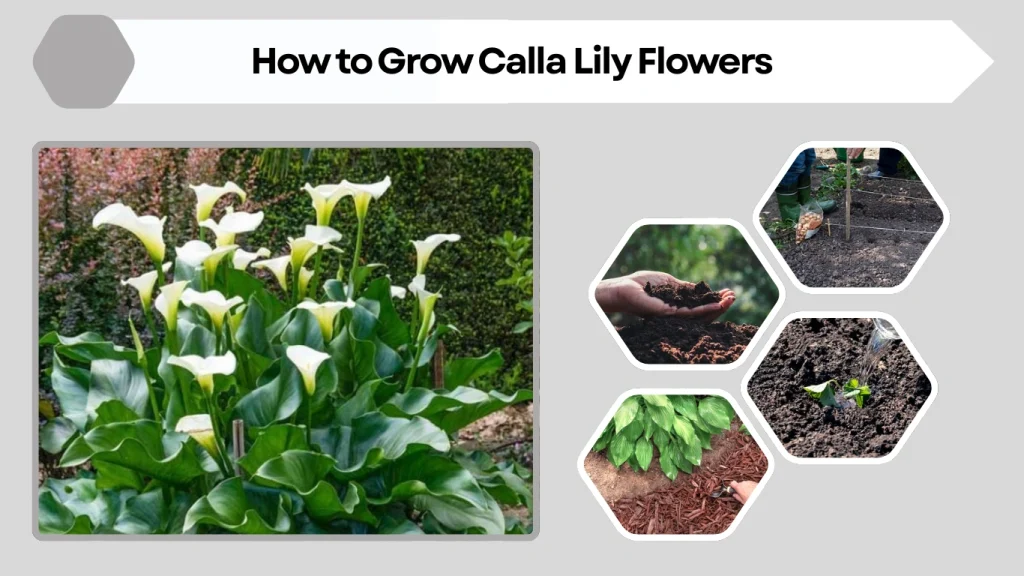
- Choose a location with full sun to partial shade
- Use loose, fertile, well-drained soil
- Plant rhizomes about 3 to 4 inches deep
- Space plants 10 to 14 inches apart
- Water regularly to keep soil evenly moist
- Feed with a balanced fertilizer during active growth
- Mulch lightly to conserve moisture and regulate temperature
Calla Lily Flower Care Guide

Water and humidity
Calla lilies prefer consistently moist soil, especially during the growing and flowering stages. They do not tolerate prolonged drought, but they also should not sit in waterlogged soil. Good drainage combined with frequent watering is ideal.
Light and temperature
Calla lilies grow best in bright light. In cooler regions, full sun encourages strong flowering, while in hot climates, partial shade helps prevent leaf burn. They thrive in mild to warm temperatures and slow their growth when conditions become too cool.
Pruning and deadheading
Removing faded flowers helps the plant direct its energy back into root and leaf growth. Yellowing leaves can be trimmed away once flowering ends, keeping the plant neat and reducing the risk of disease.
Winter care and dormancy
In colder regions, calla lilies enter dormancy after blooming. Rhizomes can be dug up, dried, and stored indoors over winter, then replanted in spring once temperatures rise.
Calla Lily Life Cycle
The calla lily life cycle begins when a rhizome sends up new shoots in spring. Leaves develop first, followed by the formation of strong stems. As the plant matures, the spathe slowly unfurls, revealing the spadix and marking the flowering stage.
Blooming usually lasts several weeks, depending on temperature and care. After flowering, the plant shifts its energy into strengthening the rhizome. Leaves may remain green for some time before gradually yellowing.
As temperatures cool, calla lilies naturally enter a resting phase. During this dormancy period, visible growth stops, but the rhizome remains alive underground, preparing to sprout again in the next growing season.
Common Problems and Diseases
- Aphids and spider mites feeding on leaves
- Soft rot and bacterial infections
- Fungal leaf spot and blight
- Root and rhizome rot from excess moisture
- Yellowing leaves due to nutrient imbalance
- Slugs and snails damaging young growth
Calla Lily in Gardens and Floral Design
Calla lilies are widely used in landscape design because of their clean lines and striking silhouettes. They work well as border plants, focal points in garden beds, and accents near ponds and water features.
In floral design, calla lilies are prized for their long stems and long-lasting blooms. They are frequently used in wedding bouquets, table arrangements, and ceremonial displays. Their ability to complement both minimalist and luxurious themes makes them especially versatile.
Calla lilies are also popular as indoor plants. When grown in containers, they bring a refined, natural elegance to homes, offices, and event spaces.
Calla Lily Flower vs True Lily
Botanical differences
Calla lilies belong to the Araceae family, while true lilies belong to the Liliaceae family. They differ in genetics, growth structure, and flower anatomy.
Flower structure comparison
Calla lilies produce a single curved spathe surrounding a spadix. True lilies have multiple distinct petals arranged around a central reproductive structure.
Growth habit
Calla lilies grow from rhizomes and often prefer moist soil. True lilies grow from bulbs and usually prefer well-drained, moderately dry conditions.
Care requirements
Calla lilies need more consistent moisture and slightly warmer conditions. True lilies are generally more cold-tolerant and prefer less frequent watering.
Are Calla Lily Flowers Toxic?
Calla lily flowers are toxic to humans and animals if ingested. They contain calcium oxalate crystals, which can cause irritation of the mouth, throat, and digestive tract. Symptoms may include drooling, swelling, nausea, and difficulty swallowing.
Pets, especially cats and dogs, are more sensitive and can experience stronger reactions. For this reason, calla lilies should be planted or displayed in areas that are inaccessible to animals.
When handling calla lilies, it is also advisable to wash hands afterward, particularly when cutting stems or repotting plants.
FAQs
What is a calla lily flower?
A calla lily flower is an ornamental plant from the genus Zantedeschia. It is known for its smooth, funnel-shaped bloom and central spadix. Despite its name, it is not a true lily and differs botanically from Lilium species.
Are calla lilies perennial or annual?
Calla lilies are perennial plants in warm climates, where they can grow year-round. In colder regions, they are often treated as seasonal plants, with rhizomes stored indoors during winter and replanted in spring.
How long do calla lily flowers bloom?
Calla lily flowers usually bloom for three to six weeks. With proper care, including regular watering and moderate temperatures, blooming can extend longer, especially in container-grown plants.
Can calla lilies grow indoors?
Yes, calla lilies grow well indoors when placed in bright, indirect light and watered regularly. Potted calla lilies are popular houseplants because they bloom well and maintain a neat, attractive form.
Are calla lilies safe for pets?
No, calla lilies are toxic to pets. Ingesting any part of the plant can cause irritation and digestive distress. They should be kept out of reach of cats, dogs, and other animals.