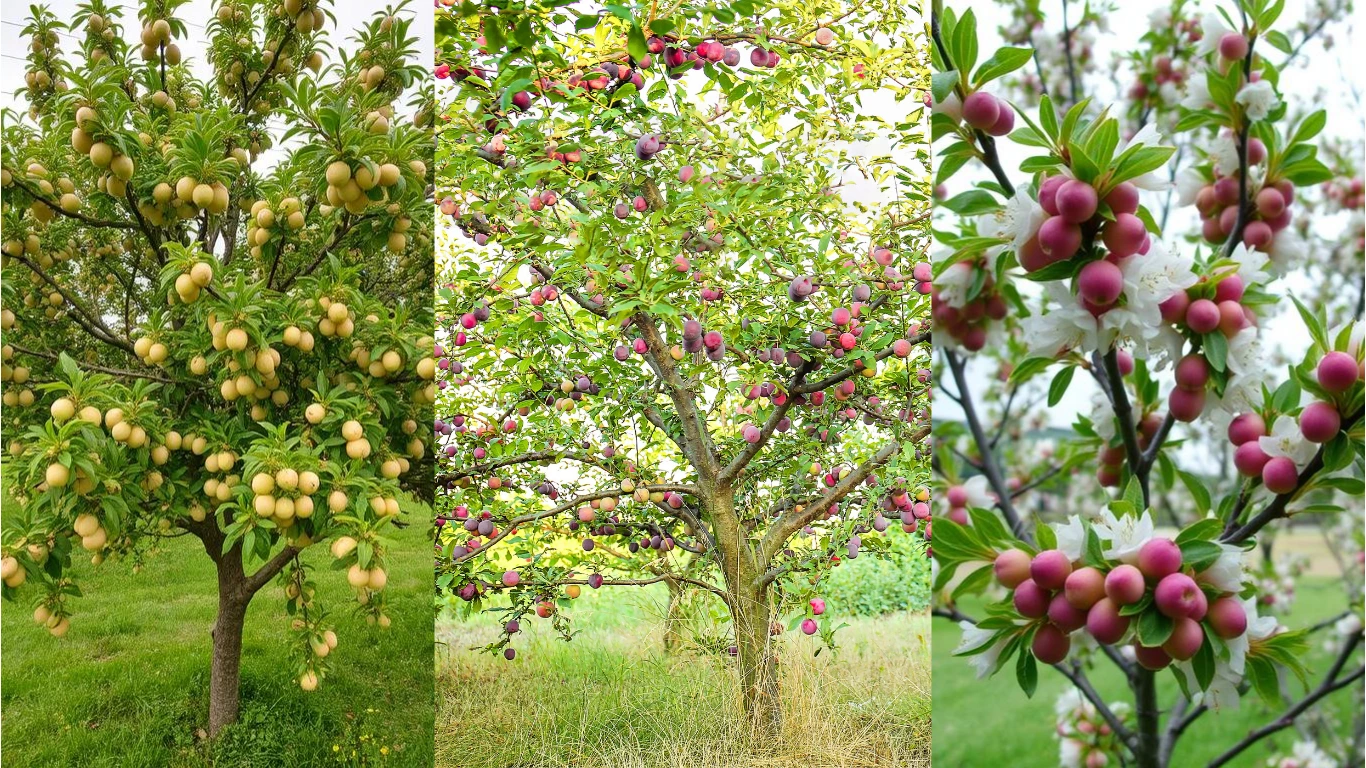
Plum trees are not only beautiful in bloom but also rewarding when they bear sweet, juicy fruit. From cold-hardy European types to heat-loving Japanese varieties, each tree has its own unique characteristics.
This guide highlights 14 popular plum tree types, including how to identify them and practical tips for growing them successfully. Here are the first five:
1. Santa Rosa Plum Tree

The Santa Rosa plum tree is a fast-growing, self-pollinating Japanese variety that’s ideal for home gardens. It produces large, reddish-purple plums with amber-red flesh. The tree is valued for its high yield and sweet, slightly tart fruit.
Identification
- Tree Size: Medium (15–20 feet tall)
- Leaves: Glossy green, oval-shaped
- Flowers: White, blooming in early spring
- Fruit: Round, red-purple skin, amber-red flesh
- Growth Habit: Upright and spreading
Growing Tips
Santa Rosa trees thrive in USDA zones 5–9. They prefer full sun and well-drained soil. Regular pruning is essential for airflow and fruit production. Although self-pollinating, planting another Japanese variety nearby can improve yields. Provide deep watering during dry spells.
2. Stanley Plum Tree

A classic European variety, the Stanley plum tree is prized for producing freestone fruit that’s perfect for drying into prunes or using in baking. This cold-hardy tree is self-pollinating and reliable for growers in cooler climates.
Identification
- Tree Size: Medium (up to 20 feet tall)
- Leaves: Dark green, slightly serrated edges
- Flowers: Small, white, appear in mid-spring
- Fruit: Oval-shaped, dark blue skin, yellow flesh
- Growth Habit: Upright and compact
Growing Tips
Best suited for zones 5–8, Stanley plums grow well in well-drained loamy soil. They tolerate colder temperatures better than many Japanese types. Prune annually to maintain shape and remove any dead or diseased wood. Thin the fruit in early summer for larger, healthier plums.
3. Methley Plum Tree

Methley is an early-bearing Japanese plum tree with red-purple fruit and juicy red flesh. It’s self-pollinating and a great choice for warmer regions. The tree has a strong, spreading habit and produces fruit in abundance, often in the first few years.
Identification
- Tree Size: Medium (15–20 feet tall)
- Leaves: Bright green and narrow
- Flowers: White and showy, early bloom
- Fruit: Round, reddish-purple skin, red flesh
- Growth Habit: Spreading canopy
Growing Tips
Methley trees grow best in USDA zones 6–10. They need full sun and well-drained soil. They’re highly productive but benefit from regular pruning to prevent overcrowding. Water deeply but infrequently, especially during fruit development. Watch for pests like plum curculio.
4. Green Gage Plum Tree

Green Gage trees produce small, green-skinned fruits that are incredibly sweet and rich in flavor. Though not as widely planted as other types, they’re prized for their gourmet-quality fruit. Some Green Gage types require cross-pollination.
Identification
- Tree Size: Medium to large (up to 25 feet)
- Leaves: Medium green, rounded
- Flowers: White, bloom in mid-spring
- Fruit: Small, round, green skin, greenish-yellow flesh
- Growth Habit: Rounded and full canopy
Growing Tips
Green Gage trees do best in zones 5–9. They prefer slightly acidic to neutral soil and regular watering. Mulch around the base to retain moisture and suppress weeds. Check your cultivar—some are self-fertile, but many need a pollinator like Reine Claude or another European plum.
5. Satsuma Plum Tree

Satsuma plum trees produce striking, dark red plums with red flesh. These Japanese trees are semi-dwarf in nature and well-suited to home gardens. They require a pollinator to fruit heavily, usually another Japanese variety like Santa Rosa.
Identification
- Tree Size: Medium (12–18 feet tall)
- Leaves: Shiny and medium green
- Flowers: White to pale pink, bloom in early spring
- Fruit: Round, dark reddish-purple skin, deep red flesh
- Growth Habit: Spreading and slightly weeping
Growing Tips
Satsuma trees grow well in zones 6–9 and love full sun. Ensure the soil drains well, as wet roots can lead to rot. They need a compatible pollinator nearby to set fruit, and consistent watering during the fruiting season helps avoid splitting.
6. Black Amber Plum Tree

Black Amber plum trees are known for their dramatic, dark purple-black fruits with yellow flesh. The fruit has a balanced sweet-tart flavor, and the tree itself is a strong grower. It’s a Japanese variety and generally requires a pollinator to ensure a full fruit set.
Identification
- Tree Size: Medium (15–20 feet tall)
- Leaves: Glossy green, lance-shaped
- Flowers: White, bloom in early spring
- Fruit: Round, dark purple to black skin, yellow flesh
- Growth Habit: Upright and slightly spreading
Growing Tips
Best grown in zones 5–9, Black Amber plum trees prefer full sun and well-drained soil. They need a cross-pollinator like Santa Rosa or Satsuma. Prune during dormancy to maintain shape and encourage healthy branching. Water deeply during dry spells, especially while the fruit is developing.
7. Mirabelle Plum Tree

The Mirabelle plum tree is beloved in Europe, especially in France, for its small, sweet golden fruits. These trees are productive and cold-hardy, typically used for making preserves, tarts, and liqueurs. The fruits have a delicate flavor and are considered gourmet-quality.
Identification
- Tree Size: Medium (15–20 feet tall)
- Leaves: Light to medium green, slightly oval
- Flowers: White, bloom in mid-spring
- Fruit: Small, golden-yellow with red blush
- Growth Habit: Compact and rounded
Growing Tips
Mirabelle plums thrive in USDA zones 5–8. They do best in fertile, well-draining soil and full sunlight. Many varieties are self-fertile, but having another European plum nearby improves yield. Protect fruit from birds and insects as they ripen, and mulch to keep roots cool and moist.
8. Elephant Heart Plum Tree
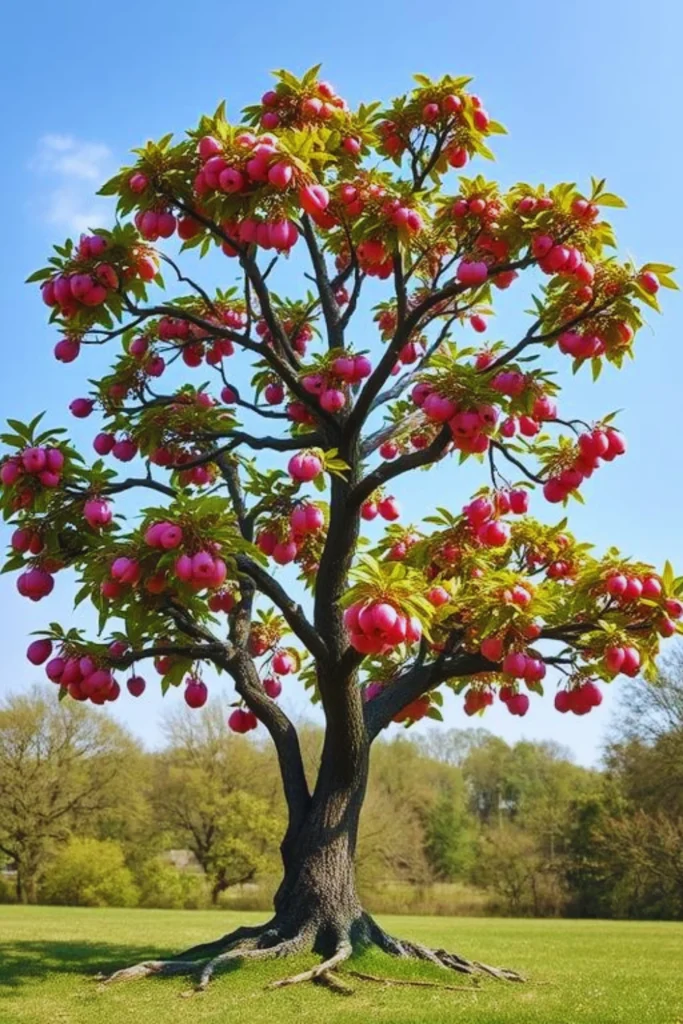
This tree produces large, heart-shaped fruit with juicy red flesh. The Elephant Heart plum tree is a Japanese variety that offers exceptional flavor and beauty. It does require cross-pollination with another Japanese type for good fruit production.
Identification
- Tree Size: Medium (15–18 feet tall)
- Leaves: Medium green, finely toothed
- Flowers: White, bloom early in the season
- Fruit: Large, heart-shaped, dark red skin, red flesh
- Growth Habit: Broad and slightly arching branches
Growing Tips
Grow Elephant Heart in zones 6–9 with full sun exposure. Choose a pollinator like Santa Rosa or Beauty for best results. This tree benefits from regular pruning to encourage air circulation and reduce disease risk. Water weekly, especially during hot months when the fruit is ripening.
9. Beauty Plum Tree

Beauty plum trees are early producers, offering fruit in early summer. They have attractive red skin and amber flesh with a sweet-tart flavor. The tree is vigorous and produces heavily, but needs a pollinator to fruit reliably.
Identification
- Tree Size: Medium (up to 20 feet tall)
- Leaves: Green, slightly glossy
- Flowers: Small white blooms, early spring
- Fruit: Round, red skin, golden to amber flesh
- Growth Habit: Upright with dense branching
Growing Tips
Ideal for zones 6–10, Beauty plum trees need full sun and well-drained soil. Plant alongside other Japanese varieties like Santa Rosa for better fruit set. Thin fruit when young to prevent overloading the branches and encourage larger, healthier plums.
10. Green Gage (Reine Claude) Plum Tree

A classic heirloom tree, the Green Gage (or Reine Claude) plum is famous for its sweet, richly flavored green fruit. Though slower to bear fruit than some varieties, it’s a long-living tree with excellent quality yields when mature.
Identification
- Tree Size: Medium to large (up to 25 feet)
- Leaves: Bright green, broad
- Flowers: White, appear in mid to late spring
- Fruit: Small to medium, green skin, greenish-yellow flesh
- Growth Habit: Broad and rounded
Growing Tips
Grow Green Gage plums in USDA zones 5–9. The tree prefers moist, well-drained soil and full sun. Some cultivars are self-pollinating, while others need a pollinator like a Mirabelle or another European type. These trees benefit from deep watering during drought and thinning for larger fruit.
11. Redheart Plum Tree

Redheart plum trees produce medium to large fruits with reddish skin and striking red flesh. The fruit is sweet with a subtle berry-like flavor. These trees are Japanese in origin and require cross-pollination for a good harvest. They’re often grown for both their beauty and productivity.
Identification
- Tree Size: Medium (15–20 feet tall)
- Leaves: Medium green, oval-shaped
- Flowers: White to pinkish, early spring bloom
- Fruit: Round, red skin, vivid red flesh
- Growth Habit: Upright with rounded canopy
Growing Tips
Best grown in USDA zones 6–9, Redheart trees need full sun and moderately moist, well-drained soil. A compatible pollinator such as Santa Rosa or Beauty is essential for fruiting. Prune in late winter to encourage strong structure and remove any dead wood.
12. American Wild Plum Tree (Prunus americana)

The American Wild Plum is a native species that grows naturally in thickets, open woodlands, and along fencerows. The small fruit is tart and mostly used for jellies and sauces. Though not commonly grown in orchards, it’s valued for its hardiness and wildlife benefits.
Identification
- Tree Size: Small to medium (10–20 feet tall)
- Leaves: Dark green, finely toothed
- Flowers: White, very fragrant, bloom in early spring
- Fruit: Small, round, red to yellow skin, yellow flesh
- Growth Habit: Shrubby and spreading
Growing Tips
Grows well in USDA zones 3–8. Tolerant of poor soil and drought once established, it’s a good choice for naturalized areas. Can be grown from seed or cuttings and may sucker. Regular pruning helps maintain a manageable shape. Great for attracting pollinators and birds.
13. Plumcot Tree

A hybrid between plums and apricots, Plumcot trees produce fruit with the sweet complexity of both parents. The trees grow similarly to standard plum trees but may vary in size depending on the variety. Fruits can range in color and taste, but all are juicy and flavorful.
Identification
- Tree Size: Medium (15–20 feet tall)
- Leaves: Green, slightly fuzzy (like apricot leaves)
- Flowers: White or pale pink
- Fruit: Varies—red, yellow, or speckled skin, juicy flesh
- Growth Habit: Upright to spreading
Growing Tips
Plumcots thrive in zones 6–9. They need full sun and fertile, well-draining soil. Most varieties are not self-fertile, so plant alongside a compatible Japanese plum for pollination. Regular pruning and deep watering will help keep fruit size and yield high.
14. Cherry Plum Tree (Prunus cerasifera)

Often used as both an ornamental and fruiting tree, the Cherry Plum produces small, edible fruits and attractive blossoms. It’s also used as rootstock for grafting other plum types. The fruit can be red, yellow, or dark purple depending on the cultivar.
Identification
- Tree Size: Small to medium (15–25 feet tall)
- Leaves: Green or purple, depending on variety
- Flowers: White or pale pink, very early spring
- Fruit: Small, round, red or yellow skin, soft flesh
- Growth Habit: Rounded, sometimes weeping
Growing Tips
Cherry plums grow in zones 4–9 and adapt to a wide range of soils. They are very cold-hardy and often used in landscape design. Though the fruit is edible, many plant them for ornamental value. Light pruning helps shape the tree, and thinning may be needed for better-quality fruit.