
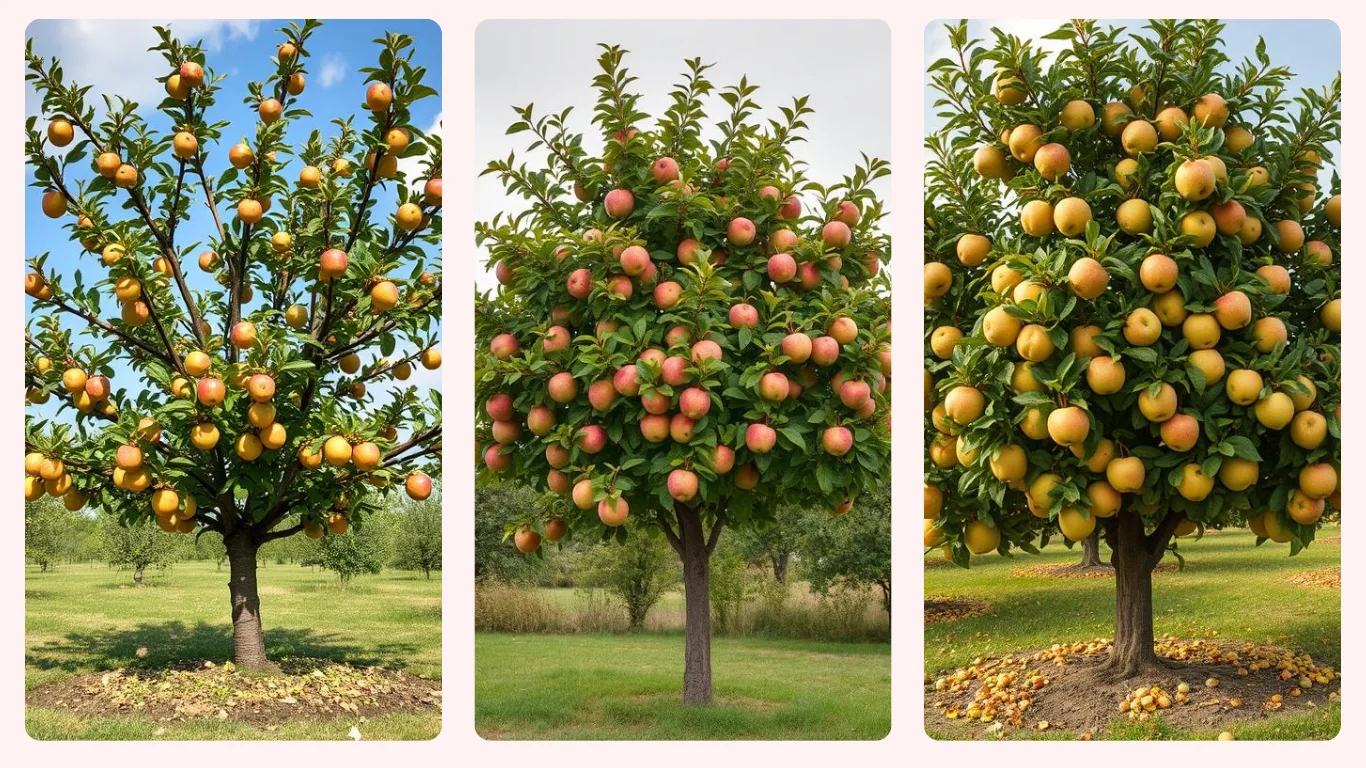
Apple trees are among the most rewarding fruit trees to grow in your backyard or orchard. With the right care, they offer beautiful spring blossoms, shade in the summer, and baskets of delicious fruit in the fall.
But not all apple trees are the same. Some varieties are sweet and crisp, others are tart and juicy. Some are perfect for fresh eating, while others shine in pies, sauces, or cider.
In this article, we’ll explore 10 popular types of apple trees. For each, you’ll find helpful identification tips, harvest time, and a clear photo so you can easily recognize them.
1. Fuji Apple Tree

Fuji apples are known for their crisp texture, extreme sweetness, and long shelf life. Originally developed in Japan, this variety is now a favorite among home gardeners and commercial growers alike. It thrives in warm climates and produces large, reliable crops year after year.
Identification
- Medium to large apples with a rounded, slightly squat shape
- Reddish-pink blush over a yellow-green base
- Dark green, glossy oval leaves
- Broad tree with wide, slightly horizontal branches
- White to light pink blossoms in mid to late spring
- Semi-dwarf trees grow around 10–15 feet tall
Taste
Extremely sweet, crisp, and juicy with a dense texture—ideal for fresh eating or slicing into fruit salads.
Harvest Time
Late-season variety; fruits are typically ready for harvest in mid to late October when they are firm and fully colored.
Growing and Storage Tips
Fuji trees grow best in full sun and well-drained soil. They are generally disease-resistant and benefit from cross-pollination with varieties like Gala or Granny Smith.
These apples store very well. If kept in cool, dark conditions, Fuji apples can last up to 5–6 months without losing their crunch or flavor.
2. Gala Apple Tree
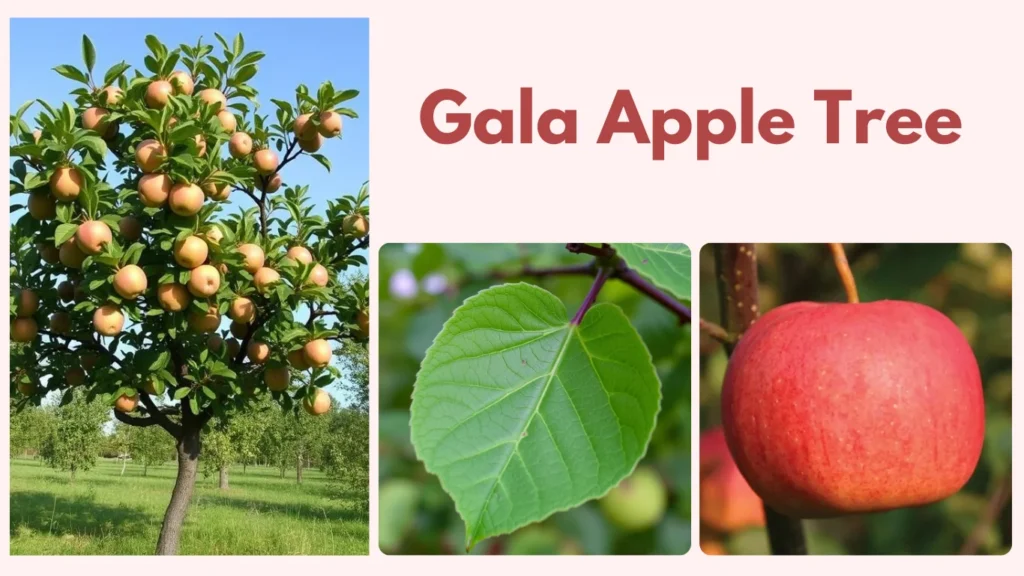
Gala apples are one of the earliest varieties to ripen and are especially popular for their mild sweetness and thin skin. Originally from New Zealand, Gala trees are easy to grow and well-suited for both home gardens and small orchards.
Identification
- Small to medium-sized apples with a round, slightly conical shape
- Yellow-orange base with vertical red stripes
- Smooth, thin skin and creamy yellow flesh
- Upright tree with a narrow, compact growth habit
- Blossoms appear early in spring
- Grows 10–15 feet tall as a semi-dwarf tree
Taste
Mildly sweet and crisp with floral undertones—great for fresh eating, lunchboxes, and juicing.
Harvest Time
Early-season variety; typically harvested from late August to early September depending on the climate and region.
Growing and Storage Tips
Gala apple trees prefer full sun and fertile, well-drained soil. They are fast growers and start producing fruit within a few years of planting.
Gala apples are best enjoyed fresh but can be stored in the refrigerator for up to 3 months. Their thin skin makes them less suited for long-term storage compared to firmer varieties.
3. Honeycrisp Apple Tree
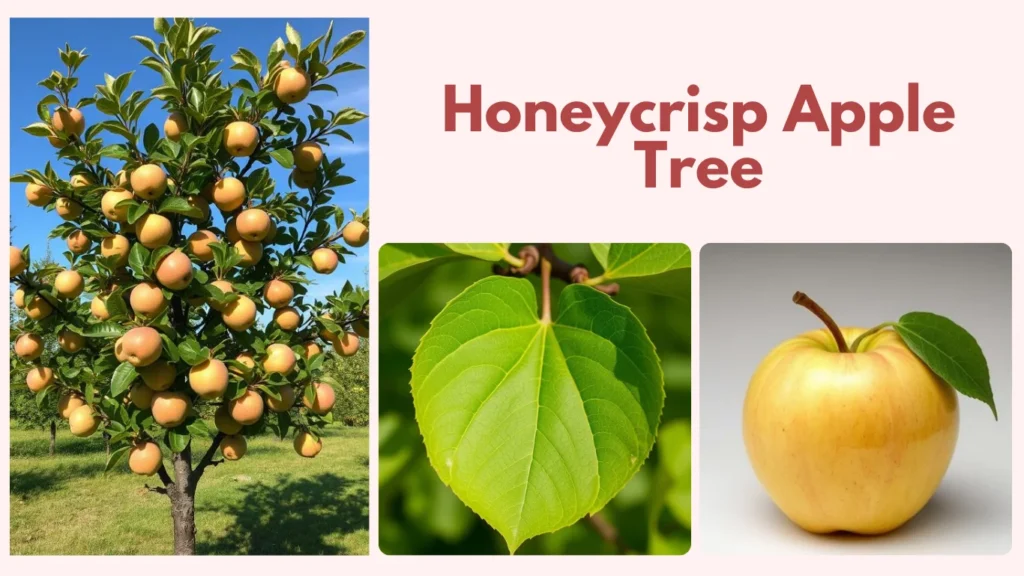
Honeycrisp apples are highly prized for their perfect balance of sweet and tart flavor. Developed in Minnesota, they are especially popular in colder climates and are widely grown across the United States.
Identification
- Medium to large apples with a round, slightly flattened shape
- Skin is mottled with red and yellow-golden patches
- Thick skin with cream-colored, juicy flesh
- Branches grow wide with a spreading canopy
- Blossoms appear mid-spring
- Semi-dwarf trees reach about 12–15 feet in height
Taste
Exceptionally crisp and juicy with a sweet-tart flavor—perfect for eating fresh, in salads, or as a snack.
Harvest Time
Mid to late-season variety; apples are typically harvested from late September through early October when skin color is fully developed.
Growing and Storage Tips
Honeycrisp trees need full sun and well-drained soil. They are hardy and grow best in cooler climates, but they can be prone to bitter pit without proper calcium management.
The apples store well for up to 4 months in cool, humid storage. For best flavor, refrigerate them right after picking and avoid letting them sit at room temperature for too long.
4. Granny Smith Apple Tree
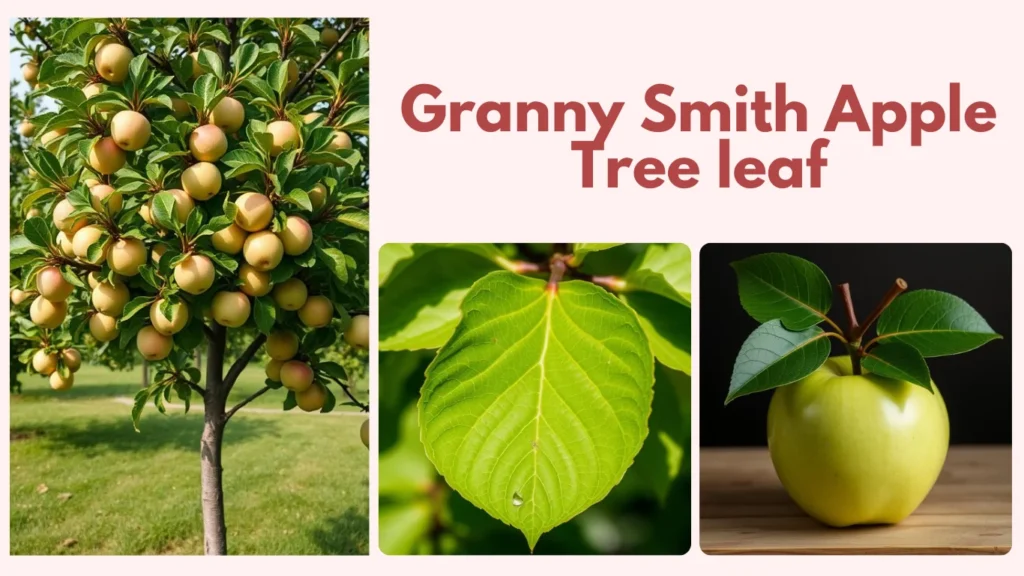
Granny Smith apples are instantly recognizable by their bright green color and tart flavor. Originally from Australia, these trees are known for their long growing season and strong, upright growth.
Identification
- Medium to large apples with a uniform round shape
- Shiny green skin, sometimes with small white lenticels (dots)
- Firm, crisp white flesh
- Tree grows upright with strong, vertical branches
- Blooms later in spring
- Can reach 15–20 feet tall if not pruned
Taste
Very tart and firm with a refreshing zing—excellent for baking, pies, and snacking for those who love a sour bite.
Harvest Time
Late-season variety; apples are usually ready to pick from late October through early November when fully green and firm.
Growing and Storage Tips
Granny Smith trees thrive in warmer regions and need full sun and consistent watering. They are reliable producers and tend to have fewer issues with pests.
This variety stores extremely well. When kept cold and dry, Granny Smith apples can last up to 6 months or more, making them ideal for winter use and extended storage.
5. Red Delicious Apple Tree
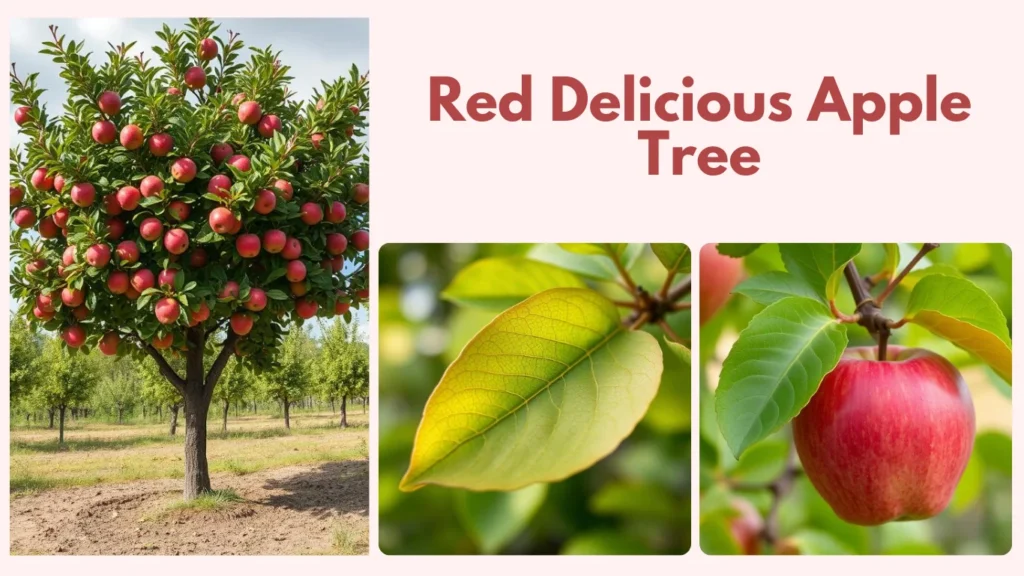
Red Delicious apples are one of the most iconic apple varieties, known for their deep red color and classic apple shape. Originally from Iowa, this variety became widely popular in the United States for its long shelf life and consistent appearance.
Identification
- Medium to large apples with a tall, conical shape and five crown-like bumps on the bottom
- Deep red skin, often solid in color with a glossy finish
- Flesh is light yellow to white and slightly grainy
- Tree has an upright growth habit with strong central branches
- Blooms in mid-spring
- Semi-dwarf trees typically grow 12–15 feet tall
Taste
Mildly sweet with a light, crisp bite—best eaten fresh, not ideal for baking or cooking.
Harvest Time
Mid-season variety; usually ready to harvest from late September to early October when the skin turns dark red and the fruit separates easily from the branch.
Growing and Storage Tips
Red Delicious trees prefer full sun and fertile, well-drained soil. They are low-maintenance and productive, making them suitable for beginner growers.
These apples store well for up to 4–5 months in cold storage. Their firm skin helps preserve freshness, but they’re best consumed within a few months for optimal texture.
6. Golden Delicious Apple Tree

Golden Delicious apples are loved for their mellow sweetness and versatility. This variety originated in West Virginia and has become a staple for eating, baking, and making sauces.
Identification
- Medium to large apples with a uniform round to slightly conical shape
- Smooth, golden-yellow skin that may have small speckles
- Soft, juicy, pale yellow flesh
- Tree has a spreading habit with long, arching branches
- Blooms mid to late spring
- Can reach 12–15 feet tall in semi-dwarf form
Taste
Mildly sweet and smooth with a soft, juicy bite—perfect for fresh eating, baking, and applesauce.
Harvest Time
Mid-season variety; typically harvested between mid-September and early October when skin turns fully golden and fruit is easily picked.
Growing and Storage Tips
Golden Delicious is self-pollinating and does well in a wide range of climates. It performs best in full sun and moderately moist soil.
This variety stores well for up to 4 months in a cool, dry environment. The flavor holds nicely, but the skin can bruise easily, so handle with care during harvest and storage.
7. McIntosh Apple Tree

McIntosh apples are known for their soft texture, sweet-tart flavor, and distinctive aroma. This variety originated in Canada in the early 1800s and has remained a favorite in cooler regions for generations.
Identification
- Small to medium apples with a round shape and slightly flattened base
- Deep red or red-green skin with a waxy finish
- Soft, white flesh that can turn slightly pink when ripe
- Tree has a spreading shape with open branching
- Blooms early to mid-spring
- Grows 12–16 feet tall as a semi-dwarf
Taste
Juicy and aromatic with a sweet-tart balance—excellent for fresh eating, applesauce, and cider, but softens quickly.
Harvest Time
Early to mid-season variety; usually ready in early to mid-September when the apples have full red coloring and come off the branch with a gentle twist.
Growing and Storage Tips
McIntosh trees grow best in cooler climates and require full sun. They need regular pruning to maintain airflow and reduce disease risks.
Because of their soft flesh, McIntosh apples don’t store as long as firmer varieties. Use them within a few weeks of harvest, or refrigerate them for up to 1–2 months.
8. Jonagold Apple Tree

Jonagold is a hybrid variety created by crossing Golden Delicious with Jonathan. It offers a wonderful mix of sweetness and tartness, and the apples are large, crisp, and flavorful.
Identification
- Large apples with a round shape and slightly ribbed surface
- Skin is yellow-green with red or orange blush and striping
- Creamy white flesh that is crisp and juicy
- Tree has a moderately spreading growth habit
- Blooms mid-spring
- Semi-dwarf trees grow about 12–15 feet tall
Taste
Rich and tangy with a perfect balance of sweet and tart—ideal for both fresh eating and baking.
Harvest Time
Mid to late-season variety; typically harvested from late September to early October when the apples are full-colored and firm to the touch.
Growing and Storage Tips
Jonagold trees need a pollination partner, such as Gala or Fuji, to produce fruit. They grow well in full sun and prefer loamy, well-drained soil.
These apples store well for 2–3 months in cool, dark storage. To keep their flavor and texture, refrigerate them soon after picking.
9. Braeburn Apple Tree

Braeburn apples are a favorite for their bold, spicy flavor and firm texture. This variety originated in New Zealand and adapts well to various climates, producing reliable crops with minimal care.
Identification
- Medium to large apples with a tall, slightly oblong shape
- Skin is red-orange with green or yellow streaks
- Crisp, pale yellow flesh with a firm bite
- Tree has upright growth with moderate branching
- Blooms in mid-spring
- Typically grows 12–15 feet tall as a semi-dwarf
Taste
Sweet with a hint of tartness and a slightly spicy flavor—great for baking, snacking, and fruit crisps.
Harvest Time
Mid to late-season variety; apples are usually harvested from mid-October to early November once they are firm, full-colored, and aromatic.
Growing and Storage Tips
Braeburn trees thrive in full sun and are fairly tolerant of different soil types. They benefit from regular pruning and cross-pollination with compatible varieties.
This variety stores very well. When refrigerated, Braeburn apples can keep for up to 4–5 months while maintaining their crisp texture and spicy-sweet flavor.
10. Cortland Apple Tree

Cortland apples are known for their snow-white flesh and slow browning, making them a top choice for salads and fruit trays. Developed in New York, Cortland trees do especially well in cooler climates.
Identification
- Medium-sized apples with a flat-round shape
- Bright red skin with dark red stripes and occasional green patches
- White, tender flesh that resists browning after cutting
- Tree has a spreading, open shape with strong limbs
- Blooms early to mid-spring
- Semi-dwarf trees grow 12–15 feet tall
Taste
Mildly tart and juicy with a hint of sweetness—perfect for salads, desserts, and apple slices.
Harvest Time
Mid-season variety; typically ready by late September when fruits are firm and show deep red coloring across the skin.
Growing and Storage Tips
Cortland trees grow best in full sun and fertile, well-drained soil. They are cold-hardy and resistant to many diseases, making them great for northern climates.
Cortland apples can be stored for 2–3 months under cool, humid conditions. For best results, use them fresh or shortly after harvest to enjoy their crisp, clean flavor.