





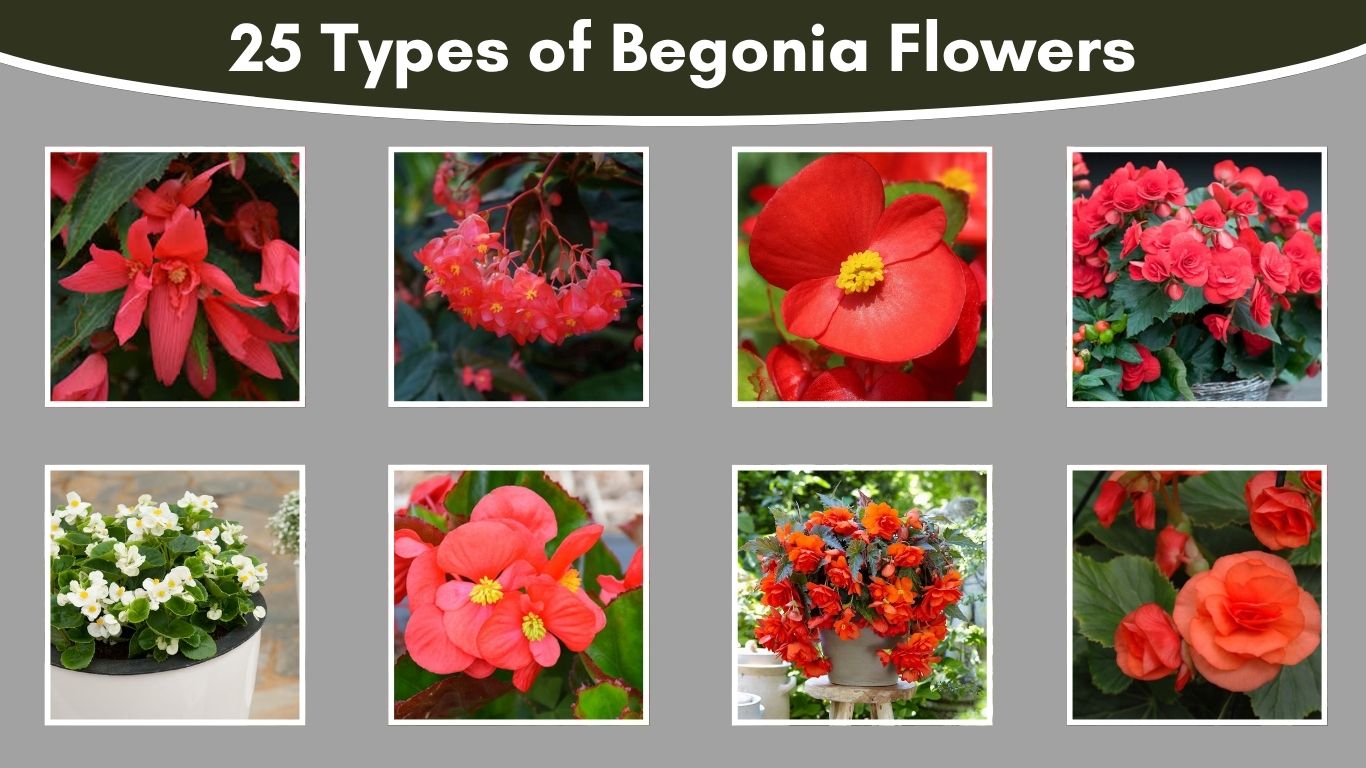
Begonias are one of the most versatile and visually captivating flowering plants, offering a wide array of colors, leaf textures, and growth habits. From the lush, trailing blooms of tuberous begonias to the striking foliage of rex types and the nonstop performance of fibrous varieties, begonias thrive in both shade and sun, indoors or out. Whether you’re designing hanging baskets, shaded borders, or vibrant containers, this list of 25 begonia types introduces you to the most popular and unique varieties—perfect for adding elegance, color, and structure to any garden or patio space.
1. Dragon Wing Begonia

Dragon Wing Begonia is a vigorous, heat-tolerant begonia known for its cascading growth habit and glossy, wing-shaped leaves. It produces clusters of bright red or pink flowers that bloom continuously from spring until frost, making it ideal for hanging baskets, containers, and garden beds.
Identification
- Flower Color: Bright red or pink
- Leaf Type: Glossy, green, wing-like (angel wing-shaped)
- Height: 12–18 inches
- Spread: 18–24 inches
- Bloom Time: Late spring through fall
- Type: Hybrid cane-type begonia
Origin and Popularity
Dragon Wing begonias are bred for toughness and continuous color. Loved for their lush, tropical look and ease of care, they’re often seen brightening patios, entryways, and shaded garden spaces.
Growing and Blooming Season
Plant in spring after the last frost. Blooms non-stop from late spring through the fall season. Best suited for USDA zones 9–11 as a perennial and grown as an annual elsewhere. Prefers partial shade and well-drained, fertile soil.
Companion Plants
Pairs beautifully with coleus, impatiens, or sweet potato vines in containers. It also works well with ferns and caladiums in shaded garden beds, adding vibrant color and foliage contrast.
2. Rex Begonia
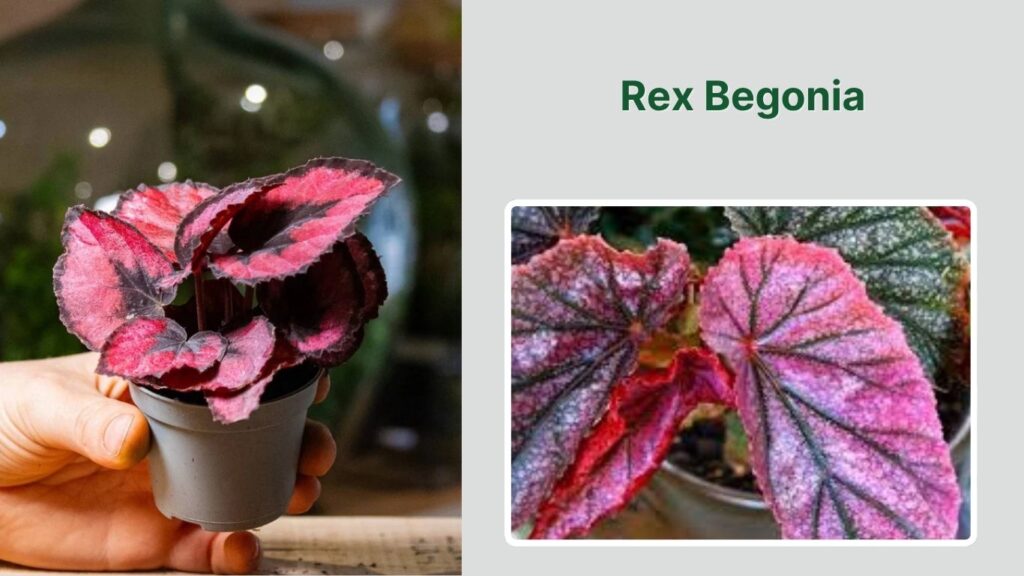
Rex Begonia is a stunning foliage plant known for its dramatic, multicolored leaves in shades of silver, burgundy, green, and pink. While it does produce small flowers, it’s primarily grown for its bold and artistic foliage, making it a standout in indoor gardens and shaded outdoor containers.
Identification
- Flower Color: Pale pink or white (inconspicuous)
- Leaf Type: Large, asymmetrical, textured with metallic or variegated patterns
- Height: 12–18 inches
- Spread: 12–20 inches
- Bloom Time: Summer (flowers are secondary)
- Type: Rhizomatous begonia
Origin and Popularity
Native to northeastern India and China, Rex Begonias have been extensively hybridized. They’re adored for their ornamental foliage and are a favorite among indoor plant collectors and shade gardeners.
Growing and Blooming Season
Grown mainly indoors or in shaded outdoor spaces. Thrives year-round in containers with high humidity and indirect light. Outdoors, it grows best in USDA zones 10–11. Needs consistently moist, well-drained soil and protection from direct sun.
Companion Plants
Ideal with ferns, caladiums, and shade-loving impatiens. Works beautifully in decorative pots, terrariums, or underplantings for taller shade plants.
3. Wax Begonia

Wax Begonia is a compact, easy-care begonia variety recognized by its rounded, waxy leaves and small clusters of red, pink, or white flowers. It’s widely used for bedding displays, borders, and containers, offering constant color throughout the growing season.
Identification
- Flower Color: Red, pink, or white
- Leaf Type: Round, waxy, green or bronze
- Height: 6–12 inches
- Spread: 12–18 inches
- Bloom Time: Late spring to frost
- Type: Fibrous-rooted begonia
Origin and Popularity
One of the most common begonias in landscaping, Wax Begonia is favored for its tidy habit, high tolerance to heat and sun, and continuous blooming. Often used in formal garden designs and public plantings.
Growing and Blooming Season
Plant in spring after the last frost. Blooms continuously from late spring through the first frost. Best grown as an annual in USDA zones 3–9 or as a perennial in zones 10–11. Thrives in full sun to partial shade and well-drained soil.
Companion Plants
Great with marigolds, alyssum, or coleus in sunny beds. In containers, it pairs well with trailing lobelia or sweet alyssum for layered seasonal displays.
4. Tuberous Begonia

Tuberous Begonia is known for its large, rose-like blooms in a wide range of vivid colors. These begonias are grown from tubers and are highly favored for hanging baskets, window boxes, and shaded containers due to their spectacular floral display.
Identification
- Flower Color: Red, pink, yellow, orange, white, or bi-colored
- Leaf Type: Heart-shaped, green or bronze, slightly hairy
- Height: 12–18 inches
- Spread: 12–24 inches
- Bloom Time: Late spring to fall
- Type: Tuberous begonia
Origin and Popularity
Native to the Andes, tuberous begonias have been widely hybridized to create numerous flower forms including single, double, ruffled, and trailing varieties. They’re adored for their brilliant color and dramatic appearance in shade gardens.
Growing and Blooming Season
Plant tubers indoors in early spring or directly outdoors after frost. Blooms from late spring through fall. Suitable for USDA zones 9–11 or grown as annuals elsewhere. Require partial to full shade and well-drained, rich soil.
Companion Plants
Perfect with caladiums, fuchsias, or impatiens in shade gardens. Combine in hanging baskets with trailing ivy or lobelia for vibrant vertical displays.
5. Angel Wing Begonia
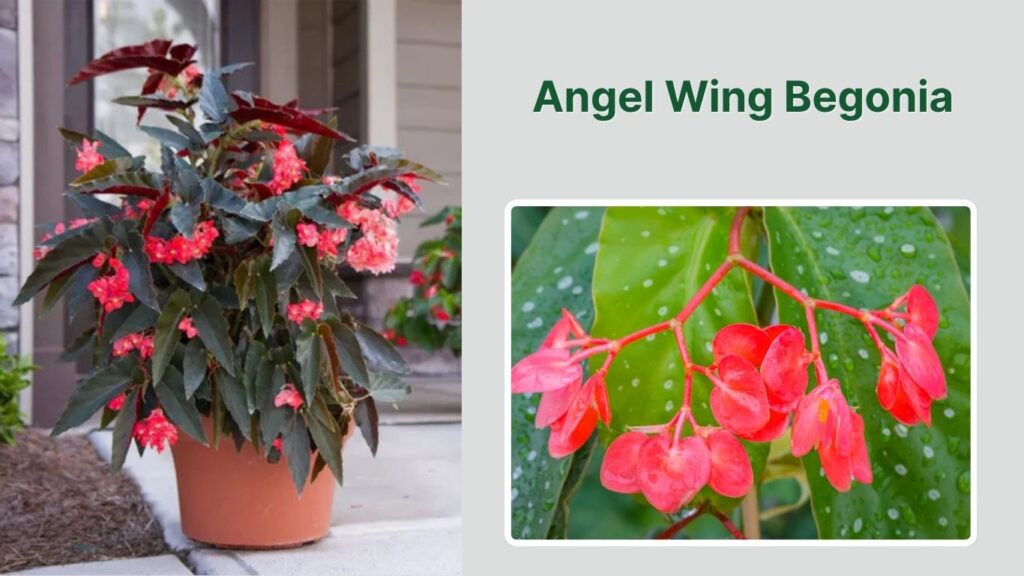
Angel Wing Begonia is named for its distinctive wing-shaped leaves and is loved for both its foliage and its dangling clusters of flowers. This cane-type begonia is often grown indoors or in shaded patios, prized for its tall, upright form.
Identification
- Flower Color: Pink, red, or white in drooping clusters
- Leaf Type: Long, asymmetrical, wing-shaped, often with silver spots
- Height: 18–36 inches
- Spread: 12–24 inches
- Bloom Time: Late spring through fall (or year-round indoors)
- Type: Cane begonia
Origin and Popularity
Developed from hybrids between Begonia aconitifolia and Begonia coccinea, Angel Wing Begonias are popular in both indoor collections and shaded outdoor containers. Their bold foliage and graceful flowers make them an elegant addition to decorative plantings.
Growing and Blooming Season
Plant outdoors in spring in USDA zones 10–11 or grow indoors year-round. Prefers bright, indirect light and moist, well-drained soil. Blooms most profusely in warm weather or with consistent indoor care.
Companion Plants
Beautiful with coleus, bromeliads, or spider plants in tropical-themed containers. Can be grown solo in decorative pots or paired with trailing vines for vertical interest.
6. Rieger Begonia

Rieger Begonia, also known as Elatior Begonia, is a hybrid variety prized for its vibrant, rose-like blooms and glossy foliage. Often grown as an indoor flowering plant, it also thrives outdoors in containers during the cooler months of spring and fall.
Identification
- Flower Color: Red, pink, orange, yellow, or white
- Leaf Type: Glossy, dark green, slightly serrated edges
- Height: 12–18 inches
- Spread: 12–15 inches
- Bloom Time: Winter to early spring (indoors) or spring and fall (outdoors)
- Type: Tuberous hybrid begonia (Elatior group)
Origin and Popularity
Bred in Germany, Rieger Begonias combine the floral beauty of tuberous begonias with the compact size of fibrous types. They’re especially popular as seasonal gift plants and for indoor color during winter.
Growing and Blooming Season
Indoors, they bloom best in late winter and early spring. Outdoors, they prefer cool temperatures and partial shade. Ideal for USDA zones 10–11 or as annuals/houseplants in cooler regions. Needs high humidity and indirect light.
Companion Plants
Excellent paired with ferns, primroses, or kalanchoes indoors. Outdoors, combine with shade-loving pansies or dusty miller in early-season containers.
7. Cane Begonia

Cane Begonia is a broad category of begonias with tall, bamboo-like stems and angel wing-shaped leaves. These upright growers produce clusters of drooping flowers and are widely appreciated for their architectural shape and patterned foliage.
Identification
- Flower Color: Pink, red, white, or coral
- Leaf Type: Wing-shaped, often spotted or glossy green
- Height: 24–60 inches
- Spread: 18–36 inches
- Bloom Time: Spring through fall (or year-round indoors)
- Type: Cane-type begonia
Origin and Popularity
Native to tropical regions of Central and South America, cane begonias have been hybridized extensively. They are especially prized in warm climates and indoor collections for their height and dramatic leaf textures.
Growing and Blooming Season
Grow indoors year-round or plant outside in spring in zones 10–11. Thrives in bright, indirect light and high humidity. Requires consistent moisture but dislikes soggy soil.
Companion Plants
Pairs well with upright tropicals like caladiums or colocasia. In containers, underplant with trailing vines or small-leafed begonias for a layered effect. Indoors, they shine as solo specimens or grouped with other statement foliage plants.
8. Double Begonia
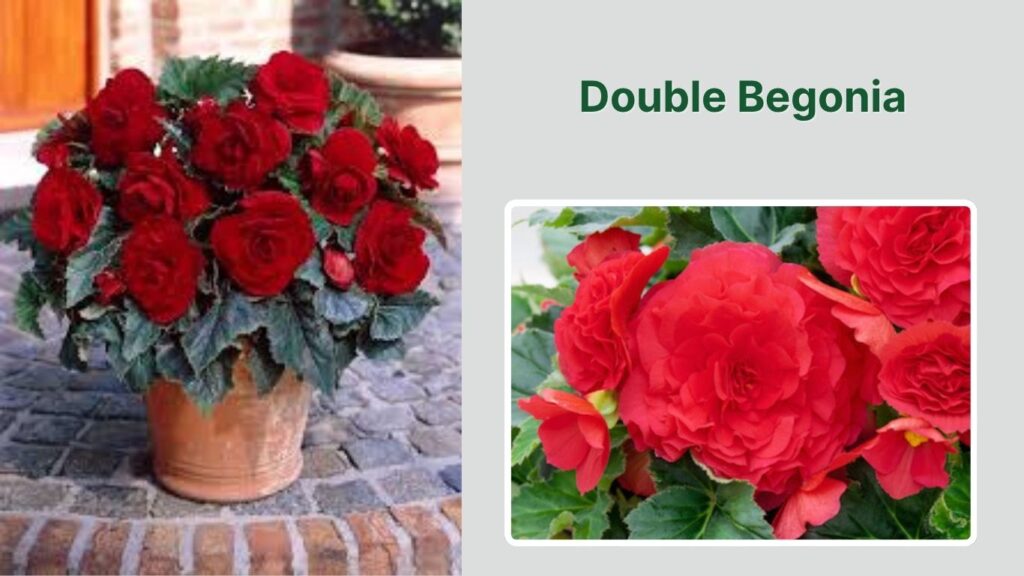
Double Begonia is a show-stopping variety featuring large, fully double blooms that resemble roses or camellias. These flowers are often ruffled and come in a wide range of brilliant colors, making them ideal for dramatic floral displays in containers, hanging baskets, and shaded garden beds.
Identification
- Flower Color: Red, pink, yellow, orange, white, or bi-colored
- Leaf Type: Broad, green or bronze, slightly textured
- Height: 12–18 inches
- Spread: 12–24 inches
- Bloom Time: Late spring to early fall
- Type: Tuberous begonia
Origin and Popularity
These varieties are specially bred from tuberous begonias to maximize petal count and form. Gardeners love them for their luxurious appearance and outstanding color impact in low-light areas.
Growing and Blooming Season
Plant tubers in early spring for blooms that start in late spring and continue into fall. Best in USDA zones 9–11 or as annuals in cooler climates. Needs partial to full shade and fertile, well-draining soil.
Companion Plants
Excellent with foliage plants like caladiums or coleus. Also pairs well with lobelia, bacopa, or trailing ivy in hanging baskets and containers for layered texture and color.
9. Picotee Begonia

Picotee Begonia is a striking variety that features petals edged in a contrasting color, creating a ruffled, outlined appearance. The blooms are often large, double, and richly shaded, giving this type a refined and ornamental look.
Identification
- Flower Color: Typically cream, yellow, or pink with red or orange edges
- Leaf Type: Medium to large, green, serrated edges
- Height: 12–16 inches
- Spread: 12–18 inches
- Bloom Time: Late spring to fall
- Type: Tuberous begonia
Origin and Popularity
Picotee begonias are developed for their unique two-toned blooms and are widely appreciated in decorative plantings and show gardens. They’re a favorite in hanging baskets or elevated containers where the flower edges are easy to admire.
Growing and Blooming Season
Plant in spring after the last frost. Blooms continuously through summer into fall. Suitable for USDA zones 9–11 or grown as annuals elsewhere. Prefers shade or filtered sunlight and consistently moist, well-drained soil.
Companion Plants
Looks stunning with trailing plants like sweet potato vine or silver dichondra. Also pairs beautifully with solid-colored begonias for visual contrast or with white alyssum and blue lobelia for a cool, classy palette.
10. Nonstop Begonia

Nonstop Begonia is a compact, tuberous variety prized for its continuous, vibrant blooms throughout the growing season. Known for its double flowers and wide range of bright colors, it’s especially popular in containers, window boxes, and shaded garden beds.
Identification
- Flower Color: Red, orange, pink, yellow, white, or bicolor
- Leaf Type: Green or bronze, rounded, slightly toothed edges
- Height: 8–12 inches
- Spread: 12–16 inches
- Bloom Time: Late spring to frost
- Type: Tuberous begonia (Nonstop series)
Origin and Popularity
Bred for nonstop flowering, this series of begonias has become a go-to for gardeners seeking bright color in low-light areas. Its compact growth and low maintenance make it perfect for container gardening.
Growing and Blooming Season
Plant in early spring for blooms that last until the first frost. Grows well in USDA zones 9–11 or as an annual. Prefers partial to full shade and consistently moist, well-draining soil.
Companion Plants
Pairs beautifully with lobelia, coleus, or impatiens in containers. Also works well with trailing bacopa or ivy geraniums in hanging baskets for a full, overflowing look.
11. Mocca Begonia

Mocca Begonia is a unique member of the Nonstop series, featuring dark chocolate-bronze foliage and vivid double blooms. The dramatic foliage contrasts beautifully with flower colors, creating rich and elegant container displays.
Identification
- Flower Color: Red, orange, pink, yellow, or white (double blooms)
- Leaf Type: Deep bronze to chocolate-brown, rounded
- Height: 8–12 inches
- Spread: 12–16 inches
- Bloom Time: Late spring to frost
- Type: Tuberous begonia (Nonstop Mocca series)
Origin and Popularity
Developed as part of the Nonstop series, Mocca begonias are beloved for their rich foliage contrast and bold color combinations. They are a favorite for shade containers and premium floral arrangements.
Growing and Blooming Season
Plant in spring after frost danger has passed. Flowers nonstop from late spring into fall. Grows best in USDA zones 9–11 or as an annual in colder climates. Prefers part to full shade and evenly moist soil.
Companion Plants
Striking with bright coleus, silver dichondra, or trailing ivy. Works beautifully in monochromatic arrangements or as a contrast plant in combination containers and window boxes.
12. Bonfire Begonia

Bonfire Begonia is a dramatic, trailing variety known for its fiery orange-red blooms and arching, cascading stems. This sun-tolerant begonia creates an explosion of color in hanging baskets, tall containers, and raised beds.
Identification
- Flower Color: Bright orange-red
- Leaf Type: Serrated, medium green, slightly fuzzy
- Height: 12–18 inches
- Spread: 20–30 inches (trailing/cascading habit)
- Bloom Time: Late spring to early fall
- Type: Tuberous begonia (Begonia boliviensis hybrid)
Origin and Popularity
Bonfire is a hybrid of Begonia boliviensis, known for its vibrant color and vigorous growth. It’s especially popular in summer displays, with trailing blooms that add movement and impact to any space.
Growing and Blooming Season
Plant tubers in early spring for blooming from late May through September. Grows best in USDA zones 9–11 or as an annual. Tolerates more sun than most begonias, especially in cooler climates, but thrives in partial shade with well-drained soil.
Companion Plants
Pairs beautifully with trailing bacopa, verbena, or dichondra. Its bold color contrasts well with lime-green foliage or silver plants. Ideal for hanging baskets, patio containers, and balcony railings.
13. Solenia Begonia

Solenia Begonia is a sun-tolerant, tuberous-type begonia that features strong stems and fully double blooms. It performs well in both sun and shade, making it a versatile choice for gardeners looking for continuous color and resilience.
Identification
- Flower Color: Red, orange, yellow, apricot, pink, or coral
- Leaf Type: Glossy green, rounded with serrated edges
- Height: 10–14 inches
- Spread: 12–16 inches
- Bloom Time: Spring to fall
- Type: Tuberous begonia (Solenia series)
Origin and Popularity
The Solenia series was bred specifically for greater sun tolerance and mildew resistance. It’s prized for its compact, upright habit and weatherproof blooms that resist fading and dropping.
Growing and Blooming Season
Plant in spring after frost. Blooms begin in late spring and continue nonstop into fall. Hardy in USDA zones 9–11 or grown as annuals elsewhere. Performs well in full sun to partial shade with rich, well-drained soil.
Companion Plants
Ideal with lantana, petunias, or ornamental grasses. Solenia begonias also work well in mixed containers or bedding schemes where constant color and upright shape are needed.
14. Superba Begonia
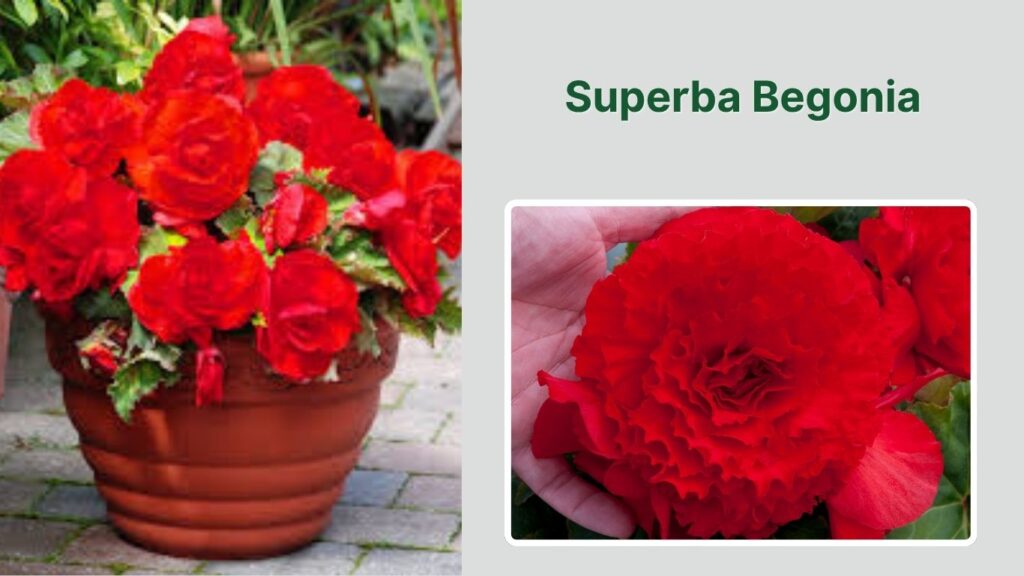
Superba Begonia is a large-flowered, upright begonia known for its bold, double blooms and strong stems. Its elegant appearance and long bloom period make it a favorite for shaded garden beds and large containers.
Identification
- Flower Color: Red, pink, yellow, orange, or white (double blooms)
- Leaf Type: Broad, green or bronze with serrated edges
- Height: 12–18 inches
- Spread: 14–20 inches
- Bloom Time: Late spring to early fall
- Type: Tuberous begonia
Origin and Popularity
Part of the large-flowered tuberous group, Superba begonias are valued for their showy presence and upright form. They’re especially popular in European and formal garden designs where bold blooms are the centerpiece.
Growing and Blooming Season
Plant tubers indoors in early spring or outdoors after frost. Flowers appear from late May to early fall. Ideal for USDA zones 9–11 or as annuals elsewhere. Prefers partial to full shade and rich, well-drained soil.
Companion Plants
Pairs well with impatiens, caladiums, or astilbes in shady borders. Also ideal in mixed containers with trailing plants like ivy or lobelia to enhance vertical and horizontal interest.
15. Big Begonia

Big Begonia is a vigorous, hybrid begonia bred for extra-large blooms, bold foliage, and sun tolerance. It thrives in a wide range of conditions and is ideal for landscape use where bold color and minimal care are needed.
Identification
- Flower Color: Red, pink, white
- Leaf Type: Large, waxy, green or bronze with serrated edges
- Height: 18–24 inches
- Spread: 18–24 inches
- Bloom Time: Spring through frost
- Type: Fibrous begonia (Begonia × benariensis)
Origin and Popularity
Developed for landscape performance, Big Begonia has become a go-to option for city plantings, mass bedding, and public gardens. It’s known for its nonstop blooms and heat tolerance.
Growing and Blooming Season
Plant after the last frost in spring. Blooms continuously into late fall. Suitable for USDA zones 10–11 or grown as an annual in cooler areas. Thrives in full sun to partial shade and tolerates humidity and drought once established.
Companion Plants
Perfect for mass planting with marigolds or dusty miller. Also combines well with coleus or salvia in colorful, low-maintenance beds or planters. Great for urban gardens and roadside displays.
16. Illumination Begonia

Illumination Begonia is a spectacular trailing variety bred for hanging baskets and elevated containers. It features large, cascading double flowers in vivid shades, creating a lush, waterfall-like display ideal for shady patios and porches.
Identification
- Flower Color: Red, orange, yellow, pink, white, or bicolor (double blooms)
- Leaf Type: Medium green, serrated and slightly fuzzy
- Height: 8–12 inches
- Spread/Trail: 18–24 inches
- Bloom Time: Late spring to fall
- Type: Tuberous begonia (Illumination series)
Origin and Popularity
The Illumination series was bred specifically for trailing performance and full, heavy bloom production. It’s a favorite among gardeners seeking dramatic, spilling color in shaded or semi-shaded areas.
Growing and Blooming Season
Plant tubers in early spring for a floral cascade beginning in late May and continuing until frost. Best in USDA zones 9–11 or grown as annuals elsewhere. Thrives in partial to full shade with moist, well-drained soil.
Companion Plants
Ideal in baskets with trailing ivy, bacopa, or sweet alyssum. Also looks stunning combined with upright coleus or ferns for texture and height contrast.
17. Pendula Begonia

Pendula Begonia is a classic trailing type known for its delicate, drooping flowers that hang gracefully over container edges. It is especially suited for window boxes, tall urns, and hanging baskets, where its blooms can spill freely.
Identification
- Flower Color: Pink, red, orange, yellow, or white
- Leaf Type: Light green, slightly serrated, trailing growth
- Height: 8–10 inches
- Spread/Trail: 18–30 inches
- Bloom Time: Late spring to early fall
- Type: Tuberous begonia (Pendula group)
Origin and Popularity
Pendula begonias have long been loved for their graceful, hanging form and ease of cultivation. They’re a staple in classic container gardens and balconies worldwide.
Growing and Blooming Season
Plant tubers in early spring indoors or directly outdoors after frost. Flowers appear from late spring through fall. Ideal for USDA zones 9–11. Prefers shade or filtered sun with fertile, well-draining soil.
Companion Plants
Beautiful alongside lobelia, dichondra, or trailing fuchsia. Ideal for mixed hanging arrangements where texture and color cascade together.
18. Ambassador Begonia

Ambassador Begonia is a compact, fibrous-rooted variety well-suited for garden beds, borders, and containers. Known for its tidy, rounded habit and nonstop blooms, it’s a favorite for mass planting and formal garden designs.
Identification
- Flower Color: White, pink, or red
- Leaf Type: Green or bronze, smooth and rounded
- Height: 6–10 inches
- Spread: 10–12 inches
- Bloom Time: Late spring to frost
- Type: Fibrous begonia (Ambassador series)
Origin and Popularity
The Ambassador series is bred for uniform growth, heat tolerance, and high performance in landscape settings. It’s often seen in public plantings, city parks, and decorative flowerbeds.
Growing and Blooming Season
Plant in spring after the last frost. Blooms nonstop from late spring through fall. Performs best in USDA zones 10–11 or as an annual. Thrives in full sun to partial shade with well-drained soil.
Companion Plants
Perfect for edging with alyssum, salvia, or marigolds. Also combines well with ornamental grasses and coleus in formal or symmetrical garden layouts.
19. Reiger Elatior Begonia

Reiger Elatior Begonia is a lush, flowering hybrid popular as a potted plant for bright indoor spots or shaded outdoor patios. It produces clusters of double, rose-like flowers and has glossy green foliage, offering a refined, elegant look.
Identification
- Flower Color: Red, pink, orange, yellow, white, or multicolored
- Leaf Type: Glossy, serrated, rounded green leaves
- Height: 12–16 inches
- Spread: 12–14 inches
- Bloom Time: Late winter to early spring (indoors); spring and fall (outdoors)
- Type: Tuberous begonia (Elatior/Reiger hybrid)
Origin and Popularity
Reiger begonias, also known as Elatior hybrids, were bred in Germany and are especially valued as decorative indoor flowering plants. They are often given as gifts and are easy to find in garden centers.
Growing and Blooming Season
Typically grown indoors, they bloom in winter and early spring. Outdoors, they do best in spring and fall. Best for USDA zones 10–11 or as houseplants. Prefer bright, indirect light and well-drained soil.
Companion Plants
Grown best alone in decorative pots, but can be grouped with ferns or peace lilies indoors. Outdoors, pair with other cool-season favorites like pansies or violas in shaded containers.
20. Inferno Begonia

Inferno Begonia is a vigorous, sun-tolerant begonia variety from the BIG® series, known for its fiery orange-red flowers and bold, upright growth. It’s perfect for large containers, landscape beds, and areas with strong sunlight where traditional begonias may struggle.
Identification
- Flower Color: Bright orange-red
- Leaf Type: Glossy green or bronze, large and slightly serrated
- Height: 18–24 inches
- Spread: 20–28 inches
- Bloom Time: Late spring to frost
- Type: Fibrous begonia (BIG® series hybrid)
Origin and Popularity
Bred for performance in full sun, Inferno thrives in hot climates and adds bold color to public plantings and home landscapes. It’s known for its drought resistance and nonstop flowering.
Growing and Blooming Season
Plant after the last frost in spring. Blooms continuously through late fall. Suitable for USDA zones 10–11 or as an annual. Performs best in full sun to part shade and requires minimal maintenance.
Companion Plants
Pairs well with petunias, lantana, or ornamental grasses. Excellent in bold color schemes or tropical-style landscapes where heat-loving plants dominate.
21. Gryphon Begonia

Gryphon Begonia is a striking foliage begonia grown primarily for its large, palmate leaves that display silvery patterns over deep green with burgundy undersides. It’s bold, architectural, and ideal as a statement plant in containers or shade gardens.
Identification
- Flower Color: Inconspicuous pale pink (rarely blooms)
- Leaf Type: Large, palmate, deep green with silver markings and red undersides
- Height: 14–18 inches
- Spread: 16–20 inches
- Bloom Time: Primarily grown for foliage
- Type: Rex-style hybrid begonia (foliage-focused)
Origin and Popularity
Developed as a foliage showpiece, Gryphon is highly prized in modern garden design and upscale container arrangements. It performs well both indoors and out.
Growing and Blooming Season
Plant in spring or grow indoors year-round. Performs best in USDA zones 10–11. Prefers partial shade, high humidity, and well-draining soil. Requires very little attention once established.
Companion Plants
Pairs beautifully with other foliage stars like caladium, heuchera, or ferns. Ideal for tropical-themed patios or containers where structure and contrast are key.
22. Cocktail Series Begonia

Cocktail Series Begonias are compact, fibrous-rooted begonias featuring bronze foliage and vibrant single blooms. Known for their tidy growth and bold contrast between leaves and flowers, they’re ideal for mass plantings, edging, and container gardens.
Identification
- Flower Color: Red, white, pink, or rose
- Leaf Type: Dark bronze, rounded, and glossy
- Height: 6–10 inches
- Spread: 10–12 inches
- Bloom Time: Late spring through frost
- Type: Fibrous begonia (Cocktail series)
Origin and Popularity
The Cocktail series was developed for uniformity, weather resistance, and bold contrast. These begonias are widely used in public landscapes and home gardens where neat, low-maintenance color is needed.
Growing and Blooming Season
Plant in spring after the last frost. Blooms from late spring through fall. Best for USDA zones 10–11 or used as annuals. Grows well in full sun to partial shade and thrives in heat and humidity.
Companion Plants
Perfect with dusty miller, blue salvia, or white alyssum in formal beds. Their dark foliage makes light-colored flowers pop, offering a sharp, clean garden aesthetic.
23. Million Kisses Begonia

Million Kisses Begonia is a trailing, tuberous hybrid known for producing masses of small, lipstick-shaped flowers. It’s ideal for hanging baskets and window boxes, offering a constant cascade of blooms from spring to frost.
Identification
- Flower Color: Coral, red, pink, or apricot
- Leaf Type: Pointed, medium green, slightly serrated
- Height: 10–12 inches
- Spread/Trail: 24–36 inches
- Bloom Time: Late spring to fall
- Type: Tuberous begonia (Begonia boliviensis hybrid)
Origin and Popularity
A product of modern breeding, Million Kisses begonias are beloved for their non-stop flowering and elegant trailing habit. They’re low-maintenance and highly floriferous, perfect for vertical displays.
Growing and Blooming Season
Plant in early spring. Begins blooming in late spring and continues until frost. Performs well in USDA zones 9–11 or as an annual. Prefers part shade with well-drained, fertile soil.
Companion Plants
Stunning in hanging baskets with bacopa, lobelia, or dichondra. Their trailing blooms add color to vertical spaces and blend well in romantic or tropical-themed container gardens.
24. Torch Begonia

Torch Begonia is a stunning variety recognized for its upright, torch-like clusters of bright coral-red flowers. It has thick, cane-like stems and lush green foliage, making it a dramatic choice for containers or shaded garden beds.
Identification
- Flower Color: Coral-red
- Leaf Type: Medium green, serrated, and slightly glossy
- Height: 24–36 inches
- Spread: 18–24 inches
- Bloom Time: Late spring through fall
- Type: Cane begonia
Origin and Popularity
Named for its torch-shaped flower clusters, this begonia is valued for its vertical impact and tropical appearance. It’s particularly popular in large containers or mixed tropical displays for shaded patios.
Growing and Blooming Season
Plant in spring. Blooms appear from late spring until fall in USDA zones 10–11 or as annuals/indoor plants elsewhere. Prefers bright, indirect light and well-draining, rich soil.
Companion Plants
Pairs well with elephant ears, caladiums, or large-leaved coleus. Also complements trailing vines like creeping jenny or ivy for full-bodied container arrangements.
25. Bossa Nova Begonia
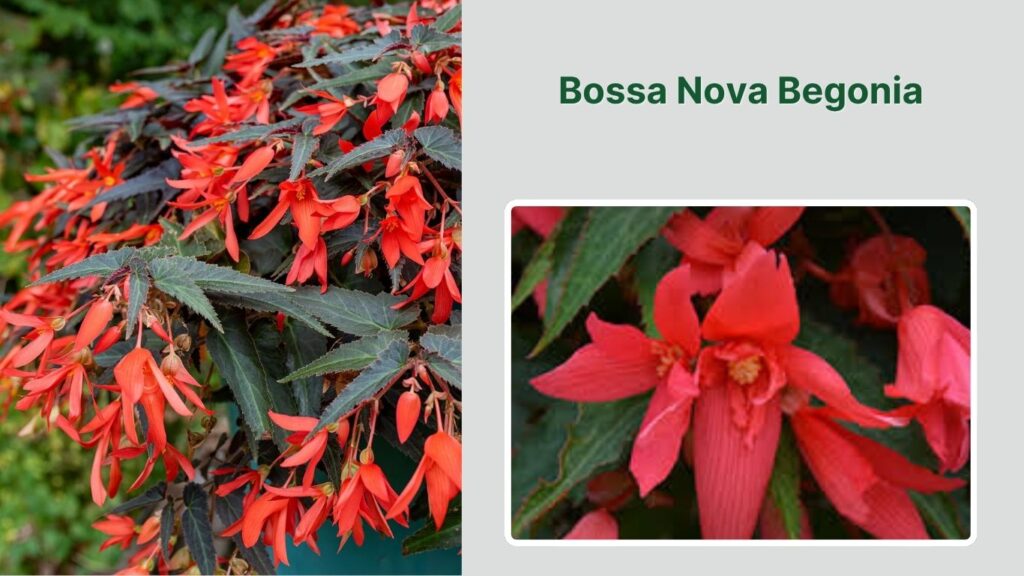
Bossa Nova Begonia is a vibrant, cascading variety with masses of small, colorful flowers and a trailing habit perfect for hanging baskets and balcony planters. It combines the beauty of tuberous begonias with exceptional heat tolerance and non-stop flowering.
Identification
- Flower Color: Orange, red, pink, white, or bicolor
- Leaf Type: Small, pointed, medium green
- Height: 8–12 inches
- Spread/Trail: 18–30 inches
- Bloom Time: Spring to frost
- Type: Tuberous begonia (Begonia boliviensis hybrid)
Origin and Popularity
Bossa Nova is a modern hybrid designed for floriferous performance, even in warmer climates. It’s widely loved for creating lush, colorful hanging baskets and cascading displays in outdoor living spaces.
Growing and Blooming Season
Plant in early spring. Blooms begin in late spring and continue until frost. Best in USDA zones 9–11 or as an annual in cooler areas. Thrives in part shade with well-drained soil and benefits from regular watering.
Companion Plants
Beautiful when mixed with trailing lobelia, alyssum, or calibrachoa. Ideal for spilling from containers or over walls, bringing vibrant movement and continuous color to shaded garden spots.