




Carnations are among the most beloved and versatile flowers in the world. Known for their ruffled petals, wide color palette, and delightful fragrance, they’ve become a staple in gardens, weddings, and floral arrangements. From classic standards like the Sim series to compact types such as Lillipot and Can Can, carnations come in numerous forms to suit every design and purpose. In this guide, you’ll discover 25 stunning types of carnation flowers—including both traditional and modern varieties—perfect for adding elegance, color, and charm to your garden or bouquet.
1. Dianthus caryophyllus (Standard Carnation)

Dianthus caryophyllus, commonly known as the Standard Carnation, is the most widely recognized and cultivated carnation variety. Known for its large, frilly blooms and long, sturdy stems, it is a florist favorite for bouquets, arrangements, and formal displays.
Identification
- Botanical Name: Dianthus caryophyllus
- Common Name: Standard Carnation
- Flower Size: 2–3 inches across
- Color Range: Red, white, pink, yellow, purple, green, and bi-colors
- Height: 18–24 inches
- Growth Habit: Upright with single stems
- Fragrance: Spicy clove-like scent
Origin and Popularity
Native to the Mediterranean region, Dianthus caryophyllus has been cultivated for over 2,000 years. It’s the traditional flower for Mother’s Day in many cultures and is widely used in floral arrangements due to its long vase life and symbolic meanings (love, admiration, remembrance).
Growing and Blooming Season
Plant in spring or fall in temperate zones. Blooms typically appear from late spring through summer. Hardy in USDA zones 6–10. Requires full sun and well-drained, neutral to slightly alkaline soil. Deadheading prolongs blooming.
Companion Plants
Pairs well with lavender, salvia, and coreopsis in ornamental beds. Also complements silver foliage like dusty miller and looks elegant when grouped with other pastel perennials or annuals in formal borders or cutting gardens.
2. Dianthus chinensis (Chinese Pink Carnation)
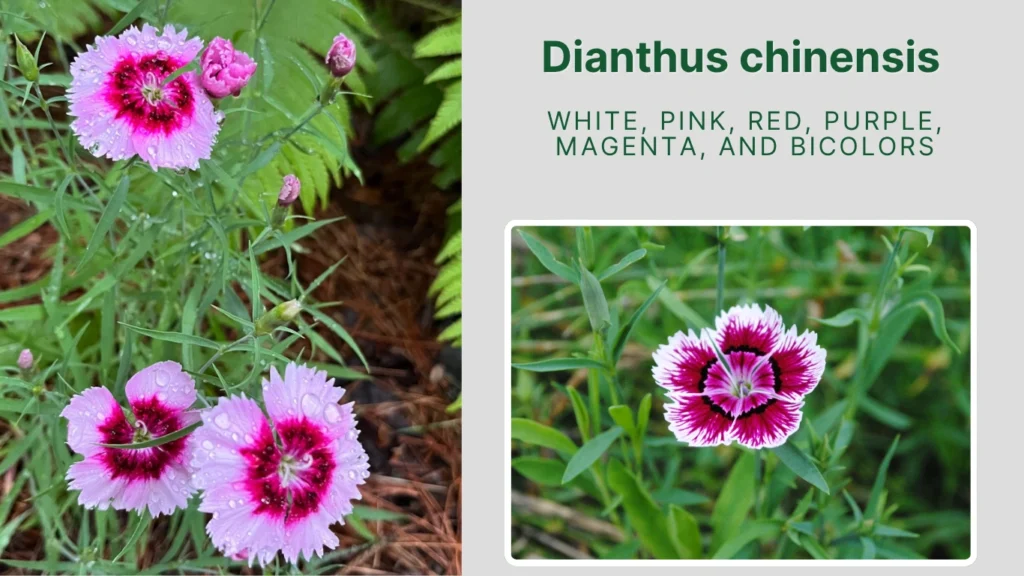
Dianthus chinensis, commonly called Chinese Pink Carnation or simply “Pinks,” is a compact and colorful carnation species known for its frilly-edged petals and wide variety of vibrant colors. It’s often grown as an annual and is perfect for borders, containers, and cottage gardens.
Identification
- Botanical Name: Dianthus chinensis
- Common Name: Chinese Pink
- Flower Size: 1–2 inches
- Color Range: White, pink, red, purple, magenta, and bicolors
- Height: 6–12 inches
- Growth Habit: Low, bushy, and spreading
- Fragrance: Mildly spicy
Origin and Popularity
Native to China and East Asia, this species is widely appreciated for its early blooms, tolerance to cooler temperatures, and charming, lacy petals. It’s a go-to flower for bedding displays and pollinator-friendly gardens.
Growing and Blooming Season
Best planted in early spring or fall (in mild climates). Blooms from late spring through summer and sometimes into early fall. Suitable for USDA zones 6–9. Prefers full sun and moist, well-drained soil.
Companion Plants
Great alongside alyssum, pansies, violas, or dwarf snapdragons. Perfect for edging borders or mixing into patio pots for a long-lasting pop of cheerful color.
3. Dianthus barbatus (Sweet William Carnation)
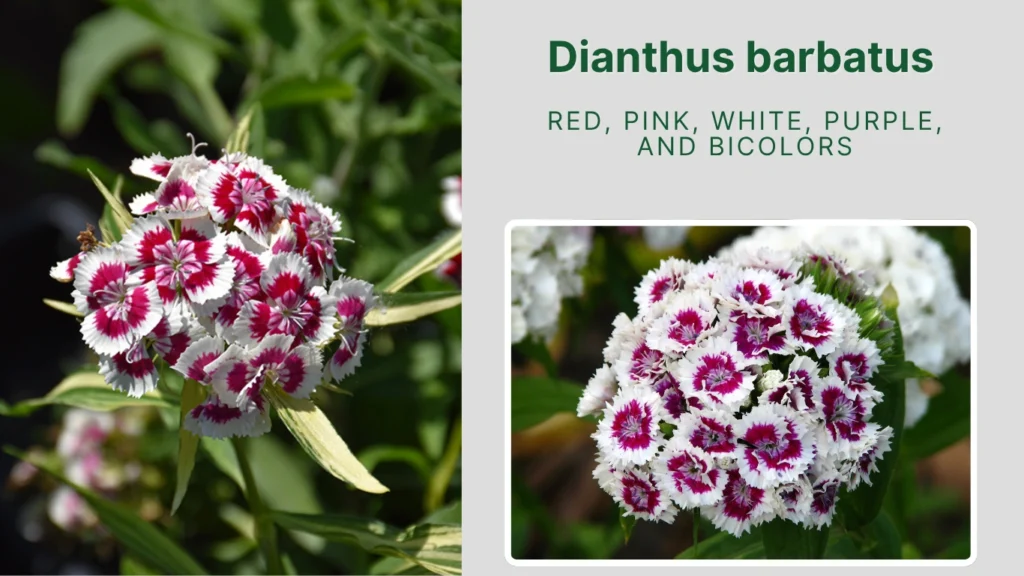
Dianthus barbatus, commonly known as Sweet William, is a biennial or short-lived perennial producing tight clusters of small, sweetly scented blooms. It’s prized for its old-fashioned charm and ability to attract bees and butterflies.
Identification
- Botanical Name: Dianthus barbatus
- Common Name: Sweet William
- Flower Size: 0.5–1 inch per flower, in clusters
- Color Range: Red, pink, white, purple, and bicolors
- Height: 12–24 inches
- Growth Habit: Clumping with upright stems
- Fragrance: Sweet, clove-like
Origin and Popularity
Native to southern Europe, Sweet William has been grown in cottage gardens for centuries. Its dense flower clusters and bold color variations make it a classic choice for borders and cutting gardens.
Growing and Blooming Season
Usually planted in fall for blooms the following spring or summer. Performs best in USDA zones 3–9. Needs full sun to partial shade and well-drained, moderately fertile soil.
Companion Plants
Works well with delphiniums, foxglove, feverfew, and bachelor’s buttons. Its vertical form and dense heads also provide a great contrast in texture to fine-leaved perennials.
4. Chabaud Carnation

Chabaud Carnation is a classic heirloom variety of Dianthus caryophyllus, known for its tall stems, large double blooms, and ruffled, often fringed petals. It’s a favorite among cottage gardeners and flower arrangers for its strong fragrance and wide range of colors.
Identification
- Type: Heirloom Standard Carnation
- Flower Size: 2–3 inches
- Color Range: Pink, red, white, yellow, salmon, and mixed colors
- Height: 18–24 inches
- Growth Habit: Upright with branching stems
- Fragrance: Strong, clove-like scent
Origin and Popularity
First introduced in the early 20th century, Chabaud carnations have remained popular for their vintage charm and long vase life. They are often grown from seed and favored by florists for their fragrance and traditional look.
Growing and Blooming Season
Sow seeds in early spring or fall. Flowers appear from early summer through frost. Best in USDA zones 6–10. Prefers full sun and rich, well-drained soil. Deadhead regularly to encourage continuous blooms.
Companion Plants
Pairs beautifully with larkspur, cosmos, calendula, or old-fashioned roses. A perfect addition to nostalgic gardens, cutting beds, or romantic floral borders.
5. Grenadian Carnation

Grenadin Carnation is a hardy, early-blooming type of Dianthus caryophyllus, often grown as a biennial. It’s known for its tall stems and richly colored, double flowers, which make it an excellent choice for cutting gardens and cool-climate flower beds.
Identification
- Type: Biennial Carnation
- Flower Size: 2–3 inches
- Color Range: Scarlet, pink, white, crimson, and red
- Height: 18–24 inches
- Growth Habit: Upright and tall
- Fragrance: Spicy and strong
Origin and Popularity
Grenadin carnations were developed for gardeners in cooler regions. Their early blooming habit and cold hardiness make them ideal for spring gardens or late-fall flowering with early sowing.
Growing and Blooming Season
Best planted in late summer or fall for blooming the following spring. Thrives in USDA zones 6–9. Prefers full sun, cool temperatures, and fertile, well-drained soil. Mulching in winter can help protect roots in colder climates.
Companion Plants
Complements spring flowers like tulips, wallflowers, and pansies. Its upright structure and bold color also make it a strong focal point in mixed cottage or cutting gardens.
6. Lillipot Carnation

Lillipot Carnation is a compact, dwarf variety of Dianthus caryophyllus, specially bred for container gardening, borders, and small-space landscapes. Despite its small size, it produces vibrant, fully double flowers with a neat, uniform appearance.
Identification
- Type: Dwarf Carnation
- Flower Size: 1.5–2 inches
- Color Range: White, pink, red, salmon, yellow, and mixed shades
- Height: 6–10 inches
- Growth Habit: Compact and bushy
- Fragrance: Mild to moderate
Origin and Popularity
Lillipot is a hybrid series developed for versatility in pots and bedding schemes. It blooms earlier than many traditional carnations and requires less maintenance, making it ideal for patios, balconies, and urban gardens.
Growing and Blooming Season
Plant in spring for blooms from late spring to early fall. Suitable for USDA zones 6–11. Thrives in full sun, well-drained soil, and moderate watering. No staking required due to its sturdy, compact form.
Companion Plants
Great for pairing with dwarf petunias, alyssum, marigolds, or creeping thyme. It’s perfect for colorful container combinations and edging around raised beds.
7. King of the Black Carnation
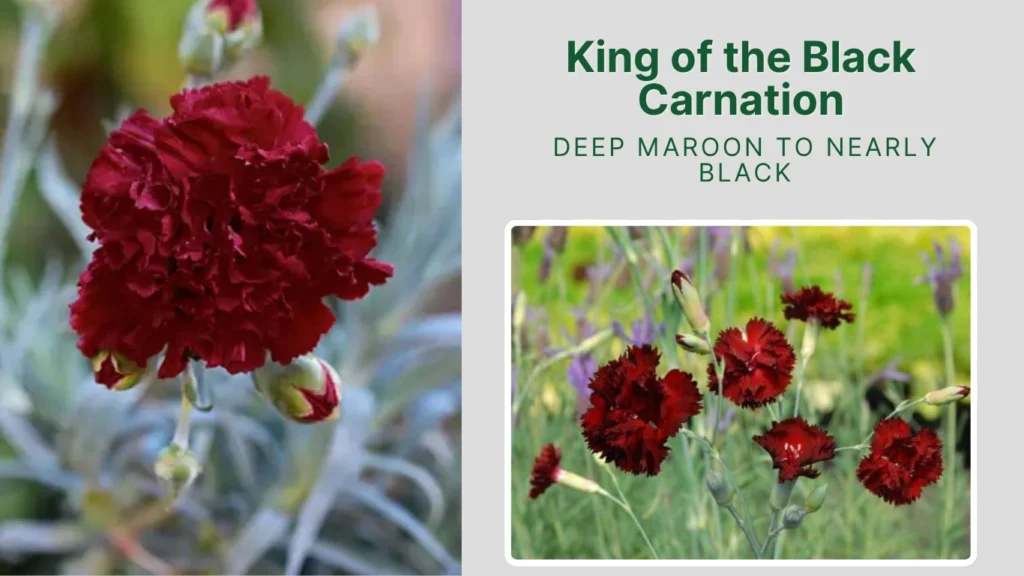
King of the Blacks is a dramatic and unique standard carnation cultivar known for its deep, velvety crimson blooms that appear almost black in certain lighting. It’s an eye-catching flower for formal arrangements and gothic or moody garden themes.
Identification
- Type: Standard Carnation (Dianthus caryophyllus)
- Flower Size: 2–3 inches
- Color Range: Deep maroon to nearly black
- Height: 18–24 inches
- Growth Habit: Upright
- Fragrance: Mild, spicy
Origin and Popularity
King of the Blacks is a longtime favorite among florists and gardeners for its rare, bold color. It adds depth and drama to bouquets and garden beds and is often used as a striking contrast plant.
Growing and Blooming Season
Best planted in spring for blooms throughout summer and into fall. Thrives in USDA zones 6–10. Requires full sun and rich, well-drained soil. Staking may be helpful for longer stems used in cut flower arrangements.
Companion Plants
Pairs well with silver foliage (like dusty miller), white flowers, or pale pinks for contrast. Ideal for gothic gardens, moonlight-themed displays, or elegant floral borders.
8. La France Carnation
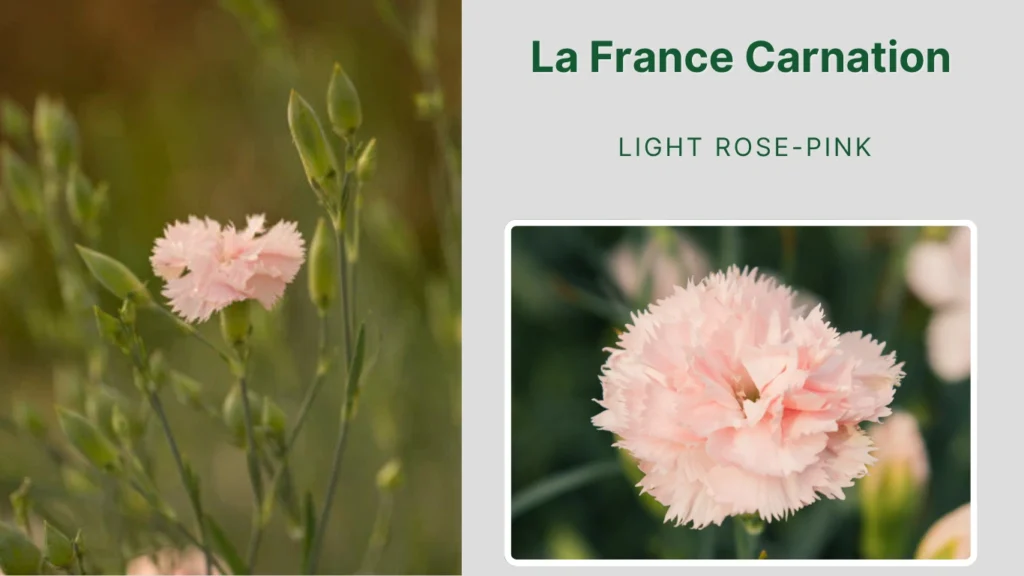
La France Carnation is a beautiful, soft-toned carnation variety known for its ruffled, fully double blooms in pastel pink with a romantic, vintage feel. It’s often used in classic floral arrangements, weddings, and cottage gardens.
Identification
- Type: Standard Carnation (Dianthus caryophyllus)
- Flower Size: 2–2.5 inches
- Color Range: Light rose-pink
- Height: 18–24 inches
- Growth Habit: Upright with sturdy stems
- Fragrance: Soft and sweet
Origin and Popularity
Named after the elegance of French florals, this variety is loved for its soft coloring and romantic presence. It’s often featured in pastel-themed gardens and arrangements focused on elegance and subtle beauty.
Growing and Blooming Season
Plant in spring for blooms from late spring through summer. Hardy in USDA zones 6–10. Prefers full sun and well-drained, slightly alkaline soil. Deadhead to encourage more blooms.
Companion Plants
Pairs beautifully with lavender, baby’s breath, white cosmos, or pale yellow daisies. A natural addition to cottage-style borders or delicate bridal arrangements.
9. White Sim Carnation

White Sim Carnation is a pure, crisp white cultivar from the Sim series, renowned for its elegance and classic form. Often used in formal bouquets and ceremonies, it’s a symbol of purity and remembrance.
Identification
- Type: Standard Carnation (Dianthus caryophyllus)
- Flower Size: 2–3 inches
- Color Range: Pure white
- Height: 20–24 inches
- Growth Habit: Upright and tall
- Fragrance: Mild, clove-like
Origin and Popularity
The Sim series is one of the most commercially grown carnation groups, and the white variety is especially popular for sympathy arrangements, weddings, and religious ceremonies due to its timeless look.
Growing and Blooming Season
Plant in spring for blooms from late spring through early fall. Best in USDA zones 6–10. Grows well in full sun with moist, well-drained soil. Needs support in windy areas due to tall stems.
Companion Plants
Pairs well with blue delphinium, soft pink roses, or silver foliage like artemisia. Also effective in monochrome white gardens or elegant patio containers.
10. Red Sim Carnation

Red Sim Carnation is a bold and passionate variety from the famous Sim series, known for its deep red, velvety blooms and classic carnation form. It’s widely used in romantic bouquets, Valentine’s Day arrangements, and patriotic floral designs.
Identification
- Type: Standard Carnation (Dianthus caryophyllus)
- Flower Size: 2–3 inches
- Color Range: Deep, true red
- Height: 20–24 inches
- Growth Habit: Upright with strong stems
- Fragrance: Spicy and rich
Origin and Popularity
The Red Sim variety is a favorite in the floral industry due to its long-lasting blooms and vibrant color. It symbolizes love, admiration, and respect, making it a top choice for celebrations and formal events.
Growing and Blooming Season
Plant in spring for blooms from early summer through fall. Best in USDA zones 6–10. Prefers full sun and well-drained, moderately alkaline soil. Requires occasional deadheading to promote continuous flowering.
Companion Plants
Pairs well with white lilies, baby’s breath, and dusty miller for a formal look. Also great with blue delphiniums or silver foliage in patriotic arrangements or contrast-rich borders.
11. Pink Sim Carnation
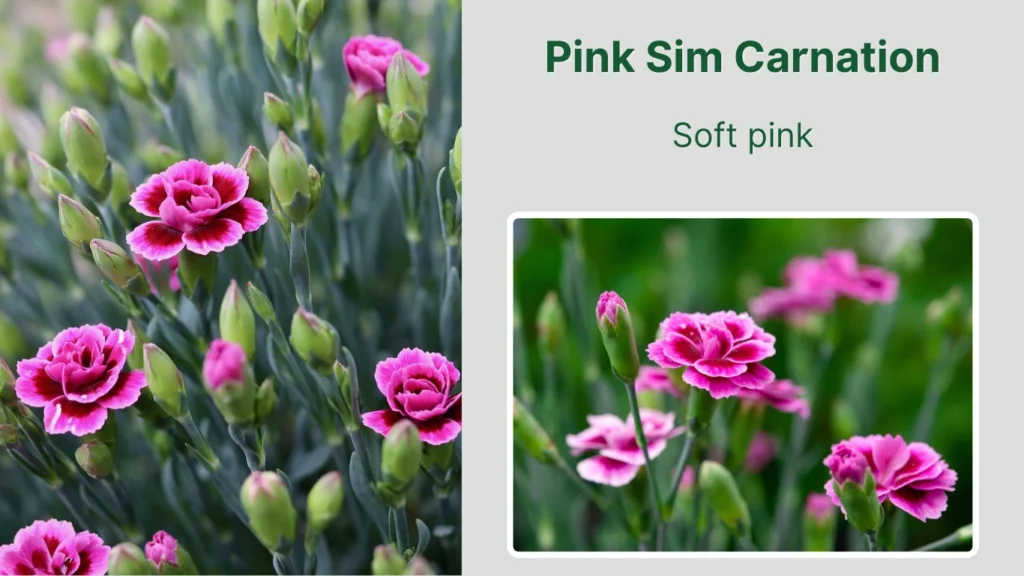
Pink Sim Carnation is another beloved member of the Sim series, offering soft pink, full blooms that evoke sweetness and grace. It’s commonly used in sympathy bouquets, baby showers, and garden designs with a gentle, feminine touch.
Identification
- Type: Standard Carnation (Dianthus caryophyllus)
- Flower Size: 2–2.5 inches
- Color Range: Soft pink
- Height: 18–22 inches
- Growth Habit: Upright and well-branched
- Fragrance: Mild and pleasant
Origin and Popularity
Pink carnations are associated with gratitude and motherly love, and the Pink Sim is especially popular for Mother’s Day arrangements. Its long vase life and lovely pastel color make it a staple in home gardens and flower shops alike.
Growing and Blooming Season
Plant in spring for blooms from early summer through early fall. Performs best in USDA zones 6–10. Requires full sun, fertile soil, and consistent watering. Staking may be needed in exposed garden beds.
Companion Plants
Looks beautiful with lavender, blue salvia, coral bells, or white daisies. Ideal for pastel-themed beds, memory gardens, or floral arrangements with soft romantic tones.
12. Yellow Sim Carnation

Yellow Sim Carnation is a cheerful and sunny variety from the Sim series, offering bright yellow, frilled blooms on strong, upright stems. It brings warmth and positivity to any arrangement or flower bed, often symbolizing friendship and joy.
Identification
- Type: Standard Carnation (Dianthus caryophyllus)
- Flower Size: 2–3 inches
- Color Range: Bright golden yellow
- Height: 20–24 inches
- Growth Habit: Upright and bushy
- Fragrance: Light, clove-like
Origin and Popularity
Yellow carnations have long symbolized happiness and optimism. The Yellow Sim cultivar is popular in spring bouquets, summer containers, and vibrant garden borders due to its bold color and floral longevity.
Growing and Blooming Season
Plant in spring after frost for continuous blooms into fall. Grows best in USDA zones 6–10. Requires full sun and well-drained soil. Deadhead spent blooms for best results.
Companion Plants
Pairs well with blue lobelia, purple petunias, or white alyssum for bright contrast. Also effective when grouped with other Sim carnations in mixed-color arrangements or garden rows.
13. Stardust Carnation

Stardust Carnation is a dazzling, bi-colored carnation variety known for its creamy yellow petals with bright red or crimson edges. Its contrasting tones and unique pattern make it a favorite for striking floral arrangements and standout garden beds.
Identification
- Type: Standard Carnation (Dianthus caryophyllus)
- Flower Size: 2–2.5 inches
- Color Range: Yellow with red edges (bi-colored)
- Height: 18–24 inches
- Growth Habit: Upright and well-branched
- Fragrance: Moderate and spicy
Origin and Popularity
Stardust is prized for its eye-catching, two-tone appearance, often featured in festive bouquets or celebratory garden designs. It symbolizes admiration and excitement, making it great for birthdays or themed color gardens.
Growing and Blooming Season
Plant in mid to late spring for blooms throughout the summer. Hardy in USDA zones 6–10. Thrives in full sun, with well-drained soil and moderate watering. Fertilize lightly for continued bloom.
Companion Plants
Complements bold blooms like red geraniums, blue salvia, or white snapdragons. Ideal for themed containers, mixed beds, or vibrant floral arrangements with a playful or festive feel.
14. Liberty Carnation

Liberty Carnation is a reliable, large-flowered carnation series bred for commercial cut-flower production. It’s known for strong, upright stems and vibrant, uniform blooms that are perfect for bouquets, floral arrangements, and display gardens.
Identification
- Type: Standard Carnation (Dianthus caryophyllus)
- Flower Size: 2.5–3 inches
- Color Range: Red, white, pink, yellow, and bicolors
- Height: 20–24 inches
- Growth Habit: Tall and upright
- Fragrance: Mild, with a light clove scent
Origin and Popularity
The Liberty series is widely cultivated in greenhouses and flower farms for florists. It’s admired for its consistency in size, color, and bloom quality, making it a go-to for professionals and advanced gardeners alike.
Growing and Blooming Season
Plant in spring for blooms from early summer through fall. Performs well in USDA zones 6–10. Prefers full sun, neutral to slightly alkaline soil, and good drainage. Regular feeding promotes healthy flowering.
Companion Plants
Pairs beautifully with snapdragons, lisianthus, or blue delphiniums in arrangements. In gardens, they complement cosmos, foxglove, or verbena for elegant vertical displays.
15. Rony Carnation

Rony Carnation is a striking standard variety known for its deep, velvety crimson petals and long stems, making it ideal for dramatic floral arrangements. It delivers rich color and classic form with a luxurious touch.
Identification
- Type: Standard Carnation (Dianthus caryophyllus)
- Flower Size: 2–3 inches
- Color Range: Deep red to burgundy
- Height: 20–24 inches
- Growth Habit: Upright and strong-stemmed
- Fragrance: Mild and sweet
Origin and Popularity
Rony is highly regarded among florists for its deep, elegant color and long vase life. It’s commonly used in romantic or high-contrast bouquets, adding depth and sophistication to floral arrangements.
Growing and Blooming Season
Best planted in spring; blooms from summer through early fall. Grows well in USDA zones 6–10. Requires full sun and well-drained soil. Light staking may be needed in windy areas to support taller stems.
Companion Plants
Pairs well with ivory roses, lavender, or ornamental grasses. Also makes a stunning contrast with white daisies, baby’s breath, or soft pink carnations in both garden beds and cut flower designs.
16. Moonshade Carnation
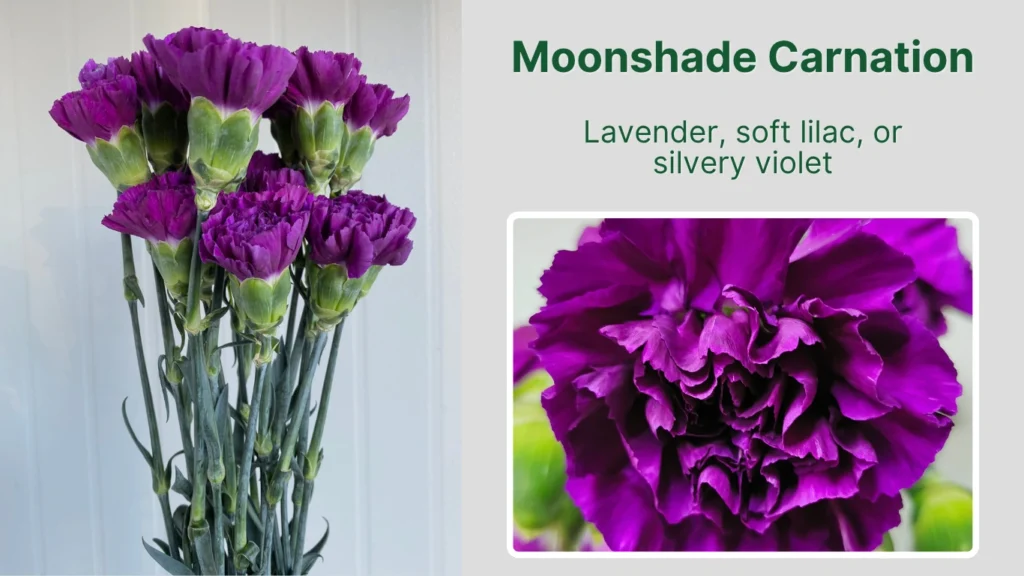
Moonshade Carnation is a mystical and elegant variety known for its unusual lavender to silvery-purple petals. Its cool-toned blooms add a sense of calm and uniqueness to floral arrangements, moon gardens, or pastel-themed beds.
Identification
- Type: Standard Carnation (Dianthus caryophyllus)
- Flower Size: 2–2.5 inches
- Color Range: Lavender, soft lilac, or silvery violet
- Height: 18–22 inches
- Growth Habit: Upright with sturdy stems
- Fragrance: Light and pleasant
Origin and Popularity
Moonshade is a modern cultivar gaining attention for its uncommon color, especially popular in wedding bouquets, memorial arrangements, and soft-toned garden displays. It brings a whimsical and soothing element to both cut and planted designs.
Growing and Blooming Season
Plant in spring after frost for summer-long blooms. Best in USDA zones 6–10. Thrives in full sun, rich soil, and well-drained conditions. Mulching helps retain moisture and protect roots.
Companion Plants
Pairs well with white cosmos, pastel blue salvia, lamb’s ear, or pink stock. Excellent for moon gardens, romantic border plantings, or elegant patio containers.
17. Tanga Carnation
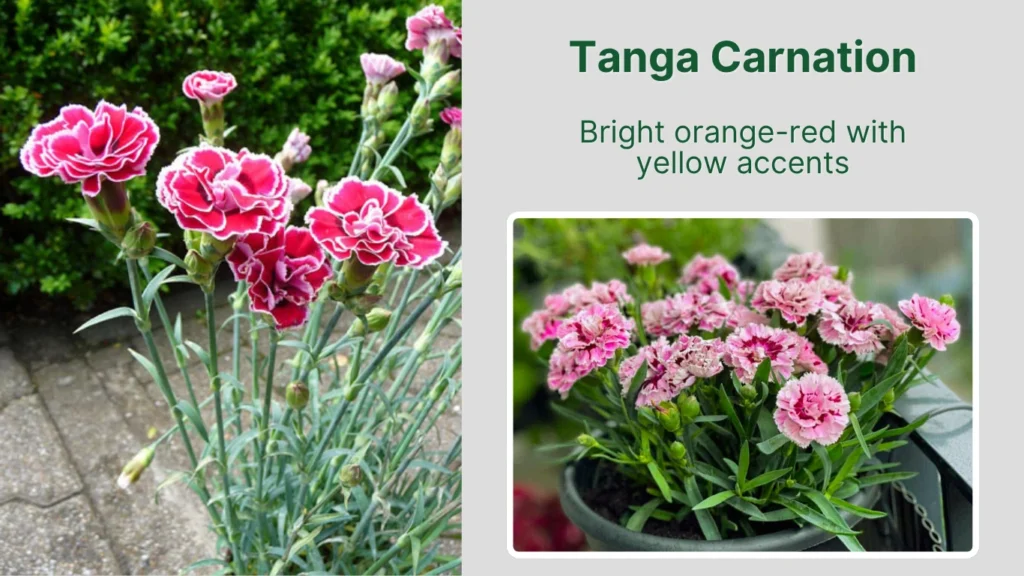
Tanga Carnation is a fiery and vibrant variety with bold orange-red petals often outlined or flushed with yellow. It creates a strong visual impact and is ideal for hot-colored garden themes or tropical-style arrangements.
Identification
- Type: Standard Carnation (Dianthus caryophyllus)
- Flower Size: 2.5–3 inches
- Color Range: Bright orange-red with yellow accents
- Height: 20–24 inches
- Growth Habit: Upright and bushy
- Fragrance: Mildly spicy
Origin and Popularity
Tanga is widely admired for its tropical color palette and is frequently featured in summer bouquets, sunset garden borders, and exotic-themed floral designs. Its striking tones are both energizing and cheerful.
Growing and Blooming Season
Plant in late spring for blooms throughout summer and into fall. Performs well in USDA zones 6–10. Requires full sun, moderate watering, and regular deadheading for best flower production.
Companion Plants
Pairs beautifully with bright zinnias, red salvia, yellow marigolds, or lime green coleus. A great centerpiece in warm-toned flower beds or bold seasonal containers.
18. Super Trouper Carnation

Super Trouper Carnation is a high-performing, florist-grade series known for its large, richly colored blooms and reliable production. It comes in a wide range of vibrant shades and is prized for its strong stems and long vase life.
Identification
- Type: Standard Carnation (Dianthus caryophyllus)
- Flower Size: 2.5–3 inches
- Color Range: Red, pink, white, yellow, purple, and bi-colors
- Height: 18–24 inches
- Growth Habit: Upright with strong stems
- Fragrance: Mild
Origin and Popularity
Bred for commercial use, Super Trouper carnations are popular with florists and home growers alike. Their consistent blooming and wide range of colors make them suitable for both formal and casual arrangements.
Growing and Blooming Season
Plant in spring for blooms that last well into fall. Grows best in USDA zones 6–10. Prefers full sun and well-drained, fertile soil. Minimal maintenance aside from occasional deadheading.
Companion Plants
Pairs well with lisianthus, snapdragons, stock, or ornamental kale. Great for large beds or bouquet cutting gardens where continuous color and structure are desired.
19. Odessa Series Carnation
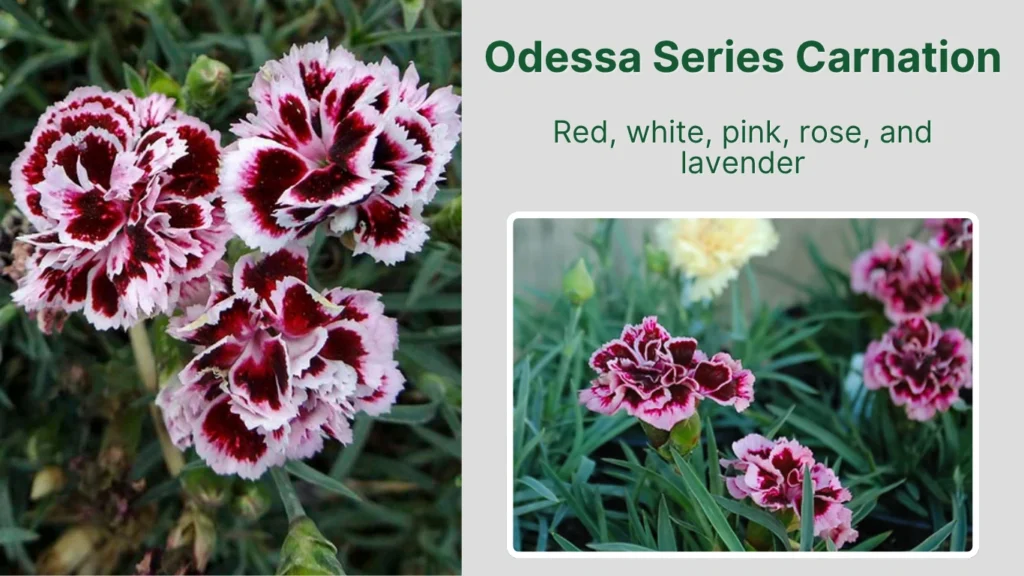
The Odessa Series Carnation is a dwarf, early-flowering type known for its compact size and colorful, full blooms. It’s perfect for pots, edging, and small-scale flower beds, offering charm and color without taking up much space.
Identification
- Type: Dwarf Carnation (Dianthus caryophyllus)
- Flower Size: 1.5–2 inches
- Color Range: Red, white, pink, rose, and lavender
- Height: 6–10 inches
- Growth Habit: Compact and bushy
- Fragrance: Mildly sweet
Origin and Popularity
The Odessa series was developed for container gardening and urban spaces. It’s ideal for small patios, windowsills, or balcony gardens, and blooms early and prolifically compared to taller varieties.
Growing and Blooming Season
Plant in early spring for blooms from late spring through midsummer. Best in USDA zones 7–11. Requires full sun and light, well-drained soil. Water consistently but avoid soggy roots.
Companion Plants
Perfect with low-growing annuals like alyssum, pansies, or creeping phlox. Great in colorful tabletop containers or tight borders where space is limited but floral impact is desired.
20. Can Can Scarlet Carnation
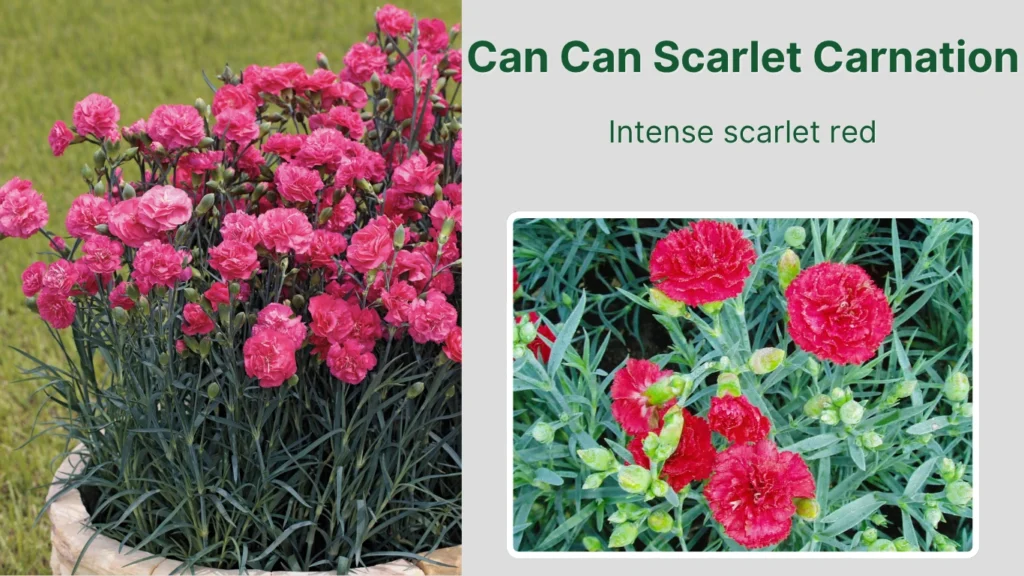
Can Can Scarlet Carnation is a vibrant, eye-catching dwarf variety known for its bold scarlet-red blooms and compact growth habit. This variety is ideal for borders, containers, and mass plantings where strong color is desired in a smaller space.
Identification
- Type: Dwarf Carnation (Dianthus caryophyllus)
- Flower Size: 1.5–2 inches
- Color Range: Intense scarlet red
- Height: 6–10 inches
- Growth Habit: Compact, rounded, and dense
- Fragrance: Lightly spicy
Origin and Popularity
Part of the Can Can series, this variety was bred for bedding schemes and pots. Its rich red petals and neat shape make it a standout in smaller gardens or low-profile displays.
Growing and Blooming Season
Plant in spring for blooming from early summer into fall. Suitable for USDA zones 6–11. Thrives in full sun, with regular watering and good drainage. Deadheading extends the bloom cycle.
Companion Plants
Pairs well with white alyssum, dwarf marigolds, or blue lobelia. Ideal for patriotic themes, romantic borders, or vivid color containers in compact garden spaces.
21. Can Can White Carnation

Can Can White Carnation is a clean, crisp-flowered dwarf variety from the same compact Can Can series. With its pure white blooms and uniform growth, it adds elegance to borders, edging, and container arrangements.
Identification
- Type: Dwarf Carnation (Dianthus caryophyllus)
- Flower Size: 1.5–2 inches
- Color Range: Pure white
- Height: 6–10 inches
- Growth Habit: Compact and low-growing
- Fragrance: Mild and fresh
Origin and Popularity
Highly valued for its simplicity and versatility, Can Can White is ideal for formal plantings, wedding-themed gardens, and small-scale arrangements where purity and precision are desired.
Growing and Blooming Season
Plant in spring for blooms from late spring to early fall. Best in USDA zones 6–11. Requires full sun, light soil, and consistent moisture without overwatering.
Companion Plants
Pairs beautifully with lavender, creeping thyme, or red/pink carnations from the same series. Also effective
22. Orange Sherbet Carnation
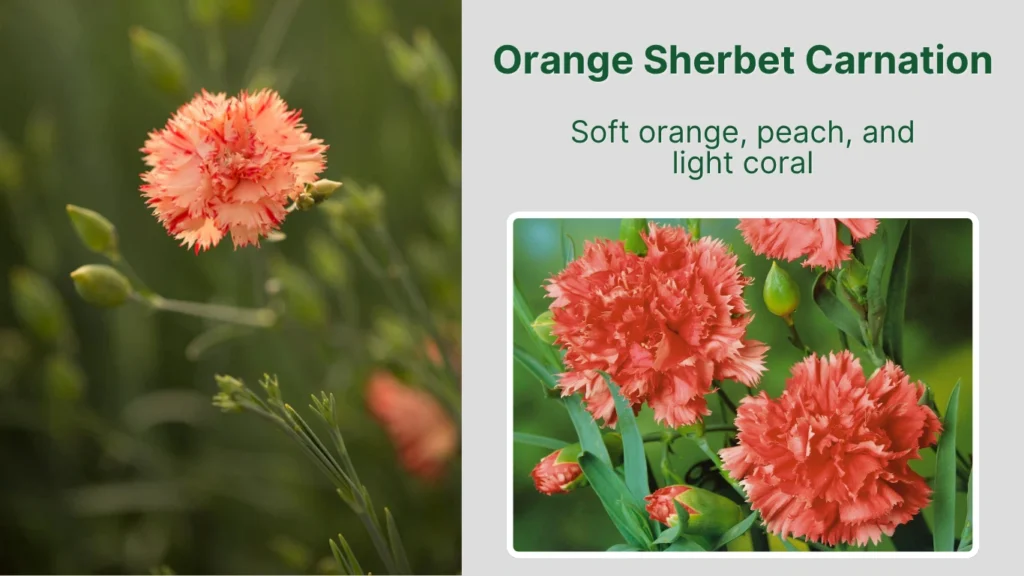
Orange Sherbet Carnation is a cheerful and refreshing variety known for its soft orange blooms with subtle hints of peach or coral. Its warm, sherbet-like tones make it ideal for summer bouquets, festive arrangements, and sunset-themed gardens.
Identification
- Type: Standard Carnation (Dianthus caryophyllus)
- Flower Size: 2–2.5 inches
- Color Range: Soft orange, peach, and light coral
- Height: 18–22 inches
- Growth Habit: Upright and branching
- Fragrance: Mild and sweet
Origin and Popularity
Orange Sherbet is loved for its warm, tropical look and is frequently used in wedding décor, seasonal floral mixes, and cheerful garden displays. Its unique hue stands out without being too bold.
Growing and Blooming Season
Plant in spring; blooms from early summer through fall. Thrives in USDA zones 6–10. Prefers full sun, moderate watering, and well-drained soil. Deadhead to prolong blooming.
Companion Plants
Combines beautifully with yellow marigolds, purple petunias, or pale pink geraniums. Perfect for brightening up containers, garden borders, or lively floral centerpieces.
23. Purple Wedding Carnation

Purple Wedding Carnation is an elegant and deeply colored variety that brings rich violet-purple hues to any floral setting. Its saturated tone adds depth, drama, and luxury to wedding bouquets and evening-themed gardens.
Identification
- Type: Standard Carnation (Dianthus caryophyllus)
- Flower Size: 2–3 inches
- Color Range: Deep violet to royal purple
- Height: 18–24 inches
- Growth Habit: Upright with long stems
- Fragrance: Light, with a hint of spice
Origin and Popularity
Highly sought after for formal events, especially weddings, the Purple Wedding Carnation is often used in contrast arrangements and regal floral designs. It symbolizes dignity, admiration, and sophistication.
Growing and Blooming Season
Plant in mid-spring for blooms lasting into fall. Hardy in USDA zones 6–10. Full sun and well-drained, rich soil produce the best color and bloom size. Regular feeding enhances flower quality.
Companion Plants
Pairs well with ivory roses, dusty miller, or white carnations. Also striking alongside silver-foliage plants or in monochromatic purple-themed beds.
24. Green Trick Carnation

Green Trick Carnation is one of the most unique and modern carnation varieties, featuring fluffy, moss-like green balls instead of traditional petals. Its unusual texture and vibrant color make it a bold choice for contemporary floral designs.
Identification
- Type: Specialty Carnation (Dianthus barbatus ‘Green Trick’)
- Flower Size: 2–3 inches (rounded, fuzzy ball shape)
- Color Range: Bright, vibrant green
- Height: 20–24 inches
- Growth Habit: Upright with firm stems
- Fragrance: Nearly scentless
Origin and Popularity
Developed in Japan, Green Trick has gained popularity in modern flower arrangements and high-end event décor. Its novelty appearance offers texture and contrast, often used to add freshness and a natural “mossy” feel.
Growing and Blooming Season
Plant in spring for blooms from late spring to early fall. Best in USDA zones 6–10. Requires full sun, well-drained soil, and regular moisture. Good air circulation helps maintain healthy blooms.
Companion Plants
Pairs well with roses, ranunculus, or ornamental grasses. Ideal in contrast arrangements, minimalist gardens, or avant-garde floral designs where shape and texture are the focus.
25. Black Magic Carnation
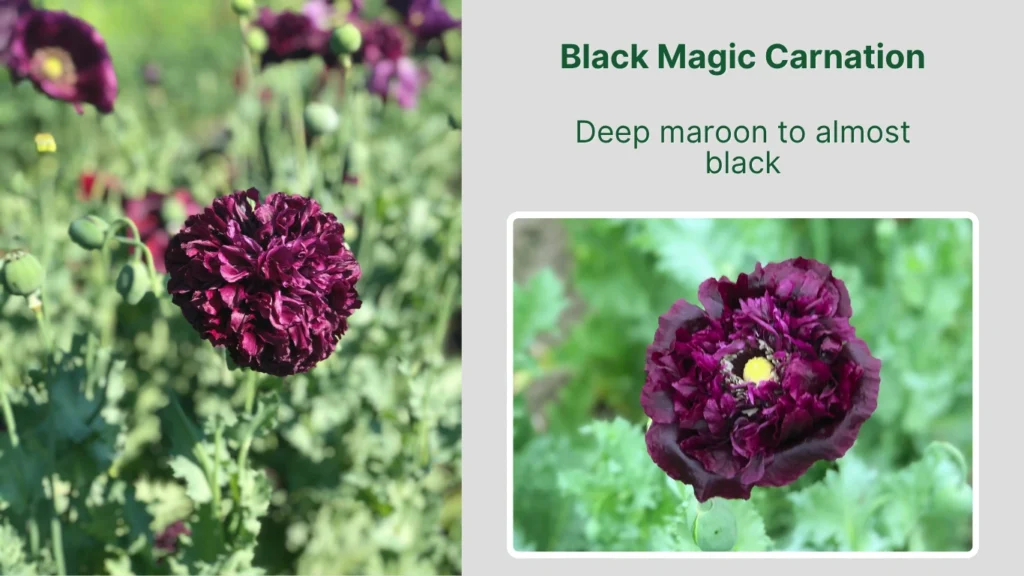
Black Magic Carnation is a stunning and mysterious variety known for its deep burgundy, nearly black petals. Its rich, velvety appearance adds drama and sophistication to floral designs, especially in moody or gothic themes.
Identification
- Type: Standard Carnation (Dianthus caryophyllus)
- Flower Size: 2–3 inches
- Color Range: Deep maroon to almost black
- Height: 18–24 inches
- Growth Habit: Upright with dense blooms
- Fragrance: Light, earthy scent
Origin and Popularity
Black Magic is a favorite in alternative wedding bouquets, Halloween arrangements, and dramatic garden compositions. It symbolizes mystery, elegance, and individuality.
Growing and Blooming Season
Plant in spring for summer through fall blooms. Thrives in USDA zones 6–10. Prefers full sun, consistent watering, and fertile, well-drained soil. Pinch back for bushier growth.
Companion Plants
Pairs beautifully with pale pink or white carnations, silver-leafed plants like dusty miller, or lime green accents. Perfect for bold container displays, evening garden beds, or theatrical cut-flower arrangements.