


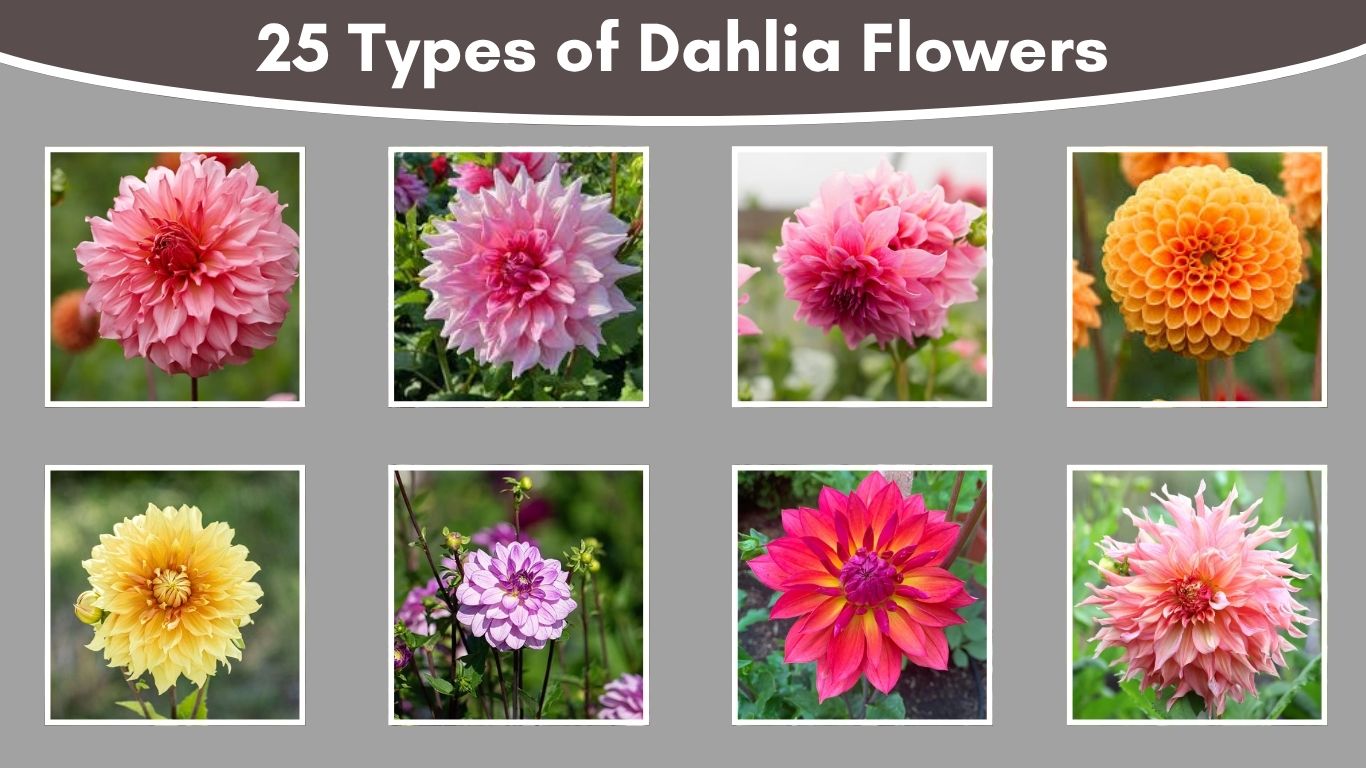
Dahlias are among the most diverse and spectacular flowering plants, known for their wide range of colors, shapes, and sizes. From petite pompons to massive dinnerplate blooms, there’s a dahlia to suit every garden design and bouquet. Whether you’re looking to create a vibrant border, a romantic floral arrangement, or a pollinator-friendly space, these blooms offer endless inspiration. Below is a curated list of 25 breathtaking dahlia varieties—each with its own charm, bloom style, and visual appeal to elevate your summer and fall garden.
1. Café au Lait Dahlia

Café au Lait is one of the most beloved and widely recognized dahlia varieties, especially in the world of floral design. Known for its enormous blooms and creamy, blush-toned petals, this decorative dahlia brings a soft, romantic elegance to late summer and fall gardens.
Identification
- Color: Creamy beige, blush pink, or pale peach (color may vary slightly)
- Bloom Size: 8–10 inches across
- Plant Height: 36–48 inches
- Form: Decorative Dahlia
Origin and Popularity
Originally bred in France, Café au Lait gained massive popularity in weddings and high-end floral arrangements for its muted, neutral tones and luxurious texture.
Growing and Blooming Season
Plant tubers in spring after the last frost. Blooms typically begin mid to late summer and continue until the first frost in fall. Prefers full sun, rich soil, and regular watering. Hardy in USDA zones 8–11 (grown as annual in cooler zones unless tubers are lifted).
Companion Plants
Pairs beautifully with soft pink roses, dusty miller, ornamental grasses, and creamy zinnias. Also makes a stunning contrast when planted alongside darker dahlias like ‘Arabian Night’ or ‘Karma Choc’.
2. Bishop of Llandaff Dahlia

Bishop of Llandaff is a striking dahlia variety known for its vivid red blooms and deep purple-black foliage. This single-flowered dahlia offers both color and contrast, making it a standout in garden beds and pollinator-friendly landscapes.
Identification
- Color: Bright scarlet red
- Bloom Size: 3–4 inches
- Plant Height: 36–42 inches
- Form: Single Dahlia
Origin and Popularity
Introduced in the UK in the 1920s and named after the Bishop of Llandaff in Wales, this variety has won multiple awards for garden performance. Its dark foliage makes it uniquely attractive even when not in bloom.
Growing and Blooming Season
Plant in spring after frost. Begins blooming in mid to late summer and continues into early fall. Best suited for full sun and well-drained soil. Hardy in USDA zones 8–11, or lift and store tubers in colder zones.
Companion Plants
Pairs beautifully with yellow or white flowers like coreopsis, cosmos, and daisies. The dark foliage also contrasts well with ornamental grasses or silver-leaved plants like artemisia.
3. Thomas A. Edison Dahlia
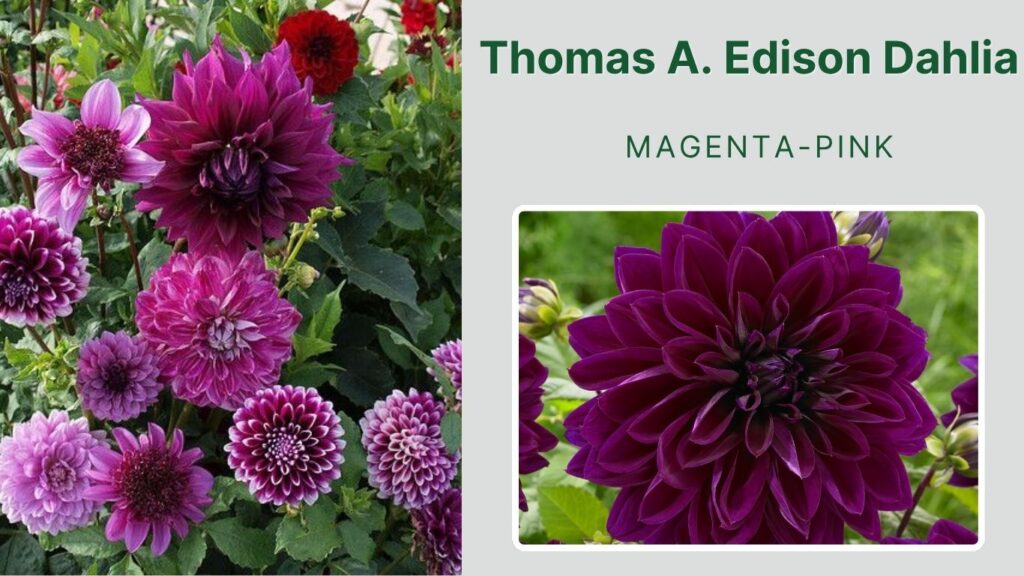
Thomas A. Edison is a classic dahlia known for its large, vibrant purple blooms and bold presence in the garden. This decorative type is perfect for those who love rich jewel tones and dramatic floral arrangements.
Identification
- Color: Deep purple to violet
- Bloom Size: 6–8 inches
- Plant Height: 36–48 inches
- Form: Decorative Dahlia
Origin and Popularity
Named after the famed American inventor, this dahlia has been a garden favorite for decades. It’s often used in mixed borders, backdrops, and cutting gardens due to its size and color intensity.
Growing and Blooming Season
Plant tubers in spring after frost has passed. Blooms appear from midsummer through fall. Performs best in full sun, with rich soil and consistent watering. Suitable for USDA zones 8–11 or lifted for storage in cooler climates.
Companion Plants
Pairs well with white dahlias, golden rudbeckia, or silvery foliage like dusty miller. Its rich hue also complements softer shades like pale pink zinnias or lavender asters for a balanced palette.
4. Kelvin Floodlight Dahlia
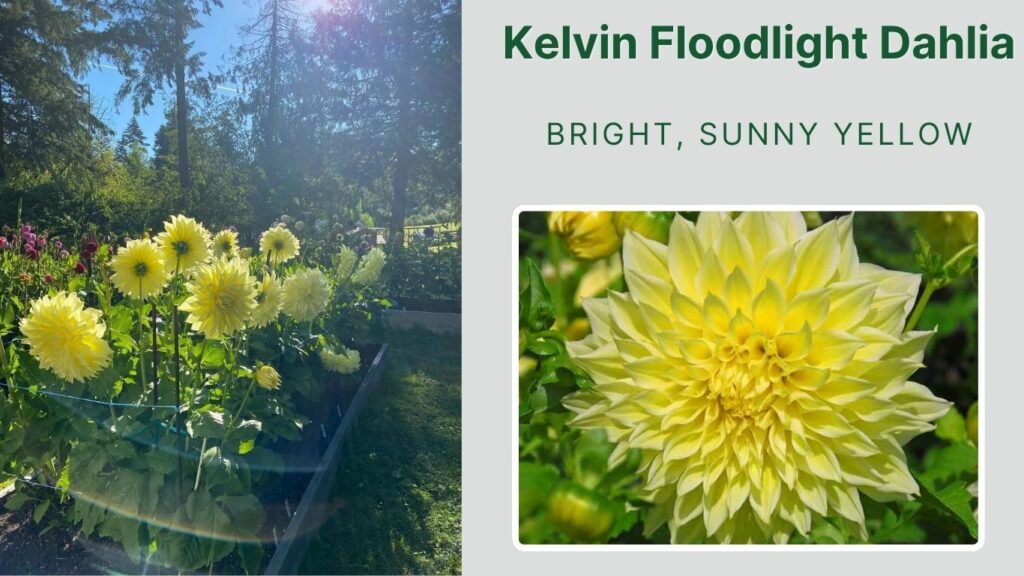
Kelvin Floodlight is a bold, bright dahlia with massive yellow blooms that command attention in any garden. As one of the largest dinnerplate varieties, it’s ideal for creating cheerful focal points and eye-catching floral displays.
Identification
- Color: Bright golden yellow
- Bloom Size: 8–10 inches
- Plant Height: 36–48 inches
- Form: Dinnerplate Dahlia
Origin and Popularity
A long-time favorite among gardeners and florists, Kelvin Floodlight is known for its consistent performance and enormous blooms. It’s especially popular in sunny garden borders and cut flower arrangements.
Growing and Blooming Season
Plant in spring after frost. Blooms from midsummer to the first frost in fall. Needs full sun and fertile, well-drained soil. Support may be needed due to the size of the flowers. Hardy in USDA zones 8–11; lift and store tubers in colder areas.
Companion Plants
Pairs well with deep purples like ‘Thomas A. Edison’ or soft pastels like ‘Café au Lait’. Also striking with blue salvia, white cosmos, or ornamental grasses for a lively summer-to-fall garden.
5. Arabian Night Dahlia

Arabian Night is a sultry and elegant dahlia known for its deep crimson, almost black petals and velvety texture. This decorative variety adds drama and sophistication to borders, beds, and cut arrangements.
Identification
- Color: Dark red to blackish-maroon
- Bloom Size: 4–6 inches
- Plant Height: 36–42 inches
- Form: Decorative Dahlia
Origin and Popularity
This vintage variety has been prized for decades for its moody coloring and reliable growth. It remains a go-to choice for dramatic floral themes and late-season garden contrast.
Growing and Blooming Season
Plant in late spring and expect blooms from midsummer into fall. Requires full sun, regular watering, and rich, well-drained soil. Suitable for USDA zones 8–11 or as an annual with stored tubers in colder climates.
Companion Plants
Pairs beautifully with lighter dahlias like ‘Café au Lait’ or yellow varieties like ‘Kelvin Floodlight’. Also looks striking next to ornamental kale, silver foliage, or pink snapdragons in mixed beds.
6. Honka Dahlia

Honka is a unique and airy dahlia variety featuring star-shaped petals that curve slightly backward, creating a windmill-like appearance. Unlike most dahlias, it has a minimalist, almost wildflower charm that attracts pollinators and adds lightness to floral designs.
Identification
- Color: Bright yellow with a dark central disc
- Bloom Size: 3–4 inches
- Plant Height: 24–30 inches
- Form: Star or Orchid Dahlia
Origin and Popularity
Originally bred in Europe, Honka has gained a niche following for its unusual shape and dainty elegance. It’s a favorite among wildlife gardeners and those seeking a more naturalistic style.
Growing and Blooming Season
Plant in spring after danger of frost. Begins blooming in mid to late summer and lasts until frost. Performs well in USDA zones 8–11 and prefers full sun with well-drained soil. Its smaller size and open center make it a magnet for bees and butterflies.
Companion Plants
Pairs wonderfully with grasses, cosmos, or echinacea in prairie-style gardens. Also complements heavier, fuller dahlias by adding a touch of contrast in both form and texture.
7. Akita Dahlia
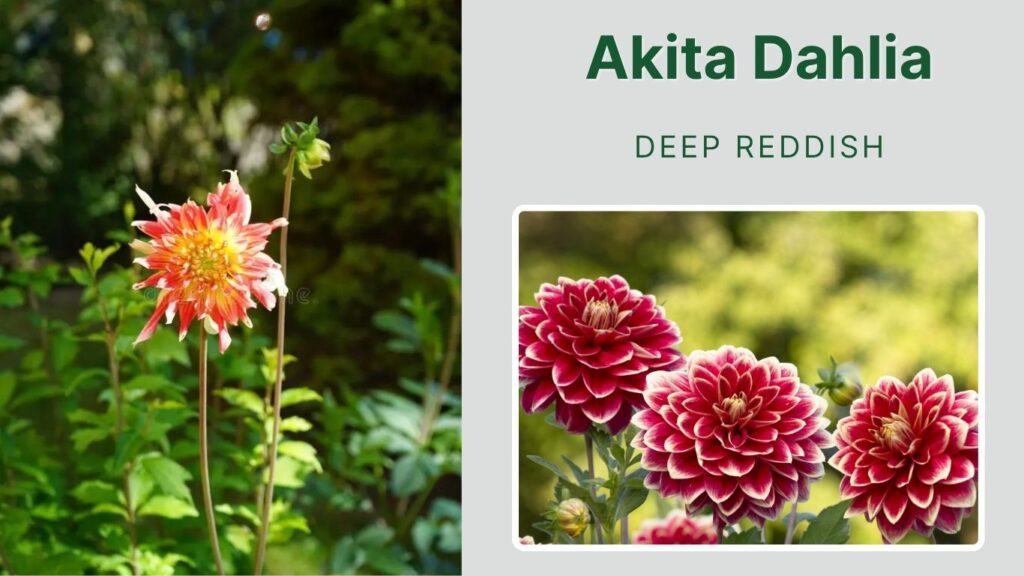
Akita is a dramatic and fiery dahlia variety with spiky, bi-colored petals in red, gold, and orange hues. A large decorative dahlia, it creates an intense, flame-like effect in late summer borders and floral displays.
Identification
- Color: Deep red with golden yellow tips
- Bloom Size: 6–8 inches
- Plant Height: 36–44 inches
- Form: Decorative Dahlia
Origin and Popularity
Named after the Akita region of Japan, this eye-catching variety is known for its bold coloring and large, radiant blooms. It’s a standout choice for fiery garden palettes and autumn arrangements.
Growing and Blooming Season
Plant tubers after the last frost. Akita blooms from midsummer to frost and thrives in USDA zones 8–11. Needs full sun, regular moisture, and rich, well-drained soil. Due to its size and weight, staking is often recommended.
Companion Plants
Pairs well with yellow or orange dahlias like ‘Kelvin Floodlight’, or cooler tones like blue salvia for contrast. Also combines beautifully with bronze foliage plants and late-season perennials.
8. Cornell Dahlia

Cornell is a classic and reliable ball dahlia known for its perfectly rounded, deep red blooms. Its symmetrical form and long-lasting flowers make it a top choice for cut flower gardens and formal arrangements.
Identification
- Color: Rich, uniform red
- Bloom Size: 3–4 inches
- Plant Height: 36–42 inches
- Form: Ball Dahlia
Origin and Popularity
Bred for strength and symmetry, Cornell has become a staple in flower farms and competitive dahlia shows. Its strong stems and compact blooms are ideal for bouquets and floral work.
Growing and Blooming Season
Plant in spring after frost danger passes. It blooms from midsummer through early fall. Thrives in USDA zones 8–11, or lift and store tubers in colder areas. Requires full sun and moist, fertile soil for best performance.
Companion Plants
Pairs beautifully with white or blush varieties like ‘Sweet Nathalie’, or golden blooms like ‘Kelvin Floodlight’. Also works well with lisianthus, zinnias, and other cut flowers for structured bouquet arrangements.
9. Black Narcissus Dahlia
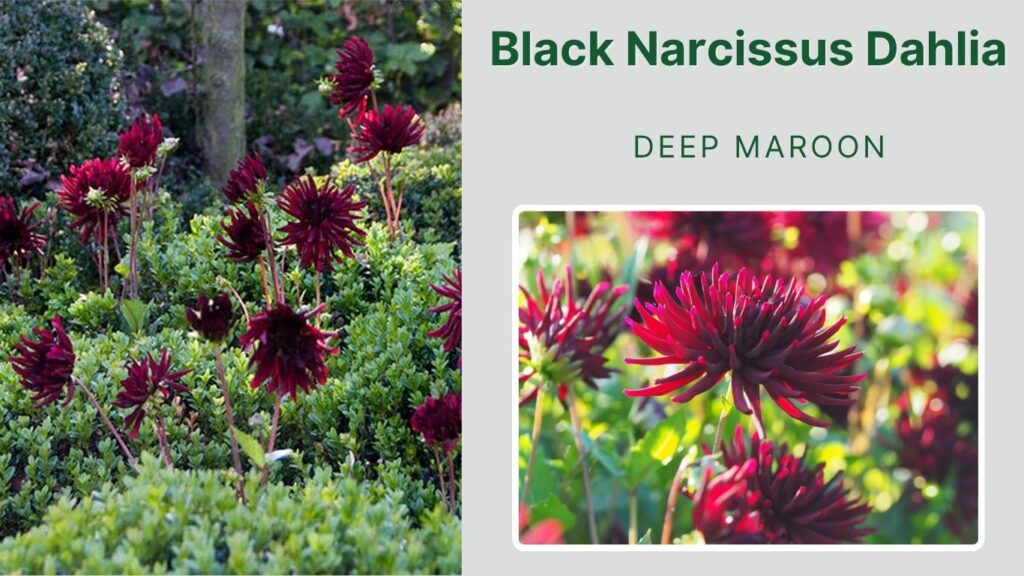
Black Narcissus is a dramatic dahlia with dark burgundy to black petals and a semi-cactus form. Its spiky appearance and deep tones give it a bold, gothic beauty that’s highly sought after in late-season gardens and moody floral arrangements.
Identification
- Color: Deep burgundy to near-black
- Bloom Size: 4–6 inches
- Plant Height: 36–48 inches
- Form: Semi-Cactus Dahlia
Origin and Popularity
A unique and striking variety, Black Narcissus is admired for its texture and unusual coloring. It’s often used in dark-themed gardens and sophisticated bouquets.
Growing and Blooming Season
Plant in mid to late spring for blooms from late summer to frost. Performs best in USDA zones 8–11 and needs full sun, rich soil, and consistent watering. Its upright habit and weather tolerance make it garden-friendly and long-lasting.
Companion Plants
Perfectly paired with soft pinks like ‘Sweet Nathalie’, white dahlias, or dusty miller for contrast. It also enhances moody combinations with plum-colored foliage or deep blue salvia.
10. Sweet Nathalie Dahlia

Sweet Nathalie is a stunning dahlia variety known for its soft blush-pink blooms and elegant form. With its romantic coloring and symmetrical petals, this variety is highly favored in wedding bouquets and pastel-themed gardens.
Identification
- Color: Blush pink to pale rose
- Bloom Size: 4–6 inches
- Plant Height: 36–40 inches
- Form: Decorative Dahlia
Origin and Popularity
Bred in Europe, Sweet Nathalie has become a go-to dahlia for florists and event designers due to its graceful shape and delicate color, which photographs beautifully in natural light.
Growing and Blooming Season
Plant in spring after frost for blooms from midsummer until the first frost. Thrives in USDA zones 8–11 or can be grown as an annual in cooler zones with tuber storage. Requires full sun and nutrient-rich, well-drained soil.
Companion Plants
Pairs well with cream-colored dahlias like ‘Café au Lait’, lavender cosmos, or white roses. Also lovely with dusty miller and soft foliage for a romantic, muted garden palette.
11. Labyrinth Dahlia
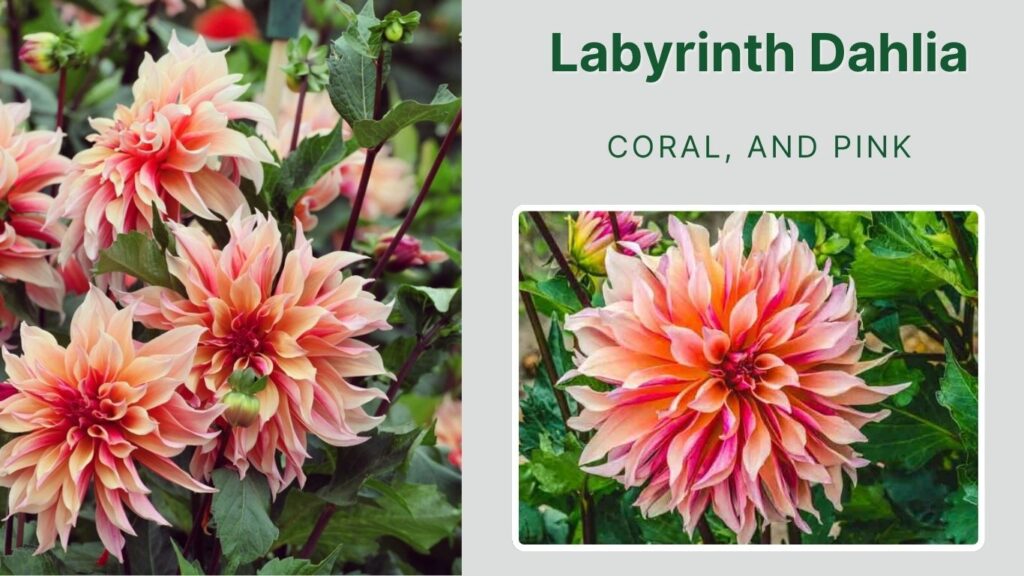
Labyrinth is a bold, whimsical dahlia featuring large, twisted petals in shades of coral, peach, and pink. With its artistic flair and huge blooms, this decorative type creates a stunning impact in garden beds and floral arrangements.
Identification
- Color: Coral, peach, and pink blend
- Bloom Size: 6–8 inches
- Plant Height: 40–48 inches
- Form: Decorative Dahlia
Origin and Popularity
Known for its “painted” petal effect and free-spirited structure, Labyrinth is a favorite among flower farmers and garden designers who want something unique and eye-catching.
Growing and Blooming Season
Plant tubers in spring for flowering from late summer through fall. Best in USDA zones 8–11 or lifted in colder climates. Needs full sun, regular feeding, and consistent moisture for best flower production.
Companion Plants
Pairs beautifully with dahlias in soft yellows or creams, or with deep purples like ‘Arabian Night’ for contrast. Looks stunning in lush, overflowing bouquets with eucalyptus or ornamental grasses.
12. Fleurel Dahlia
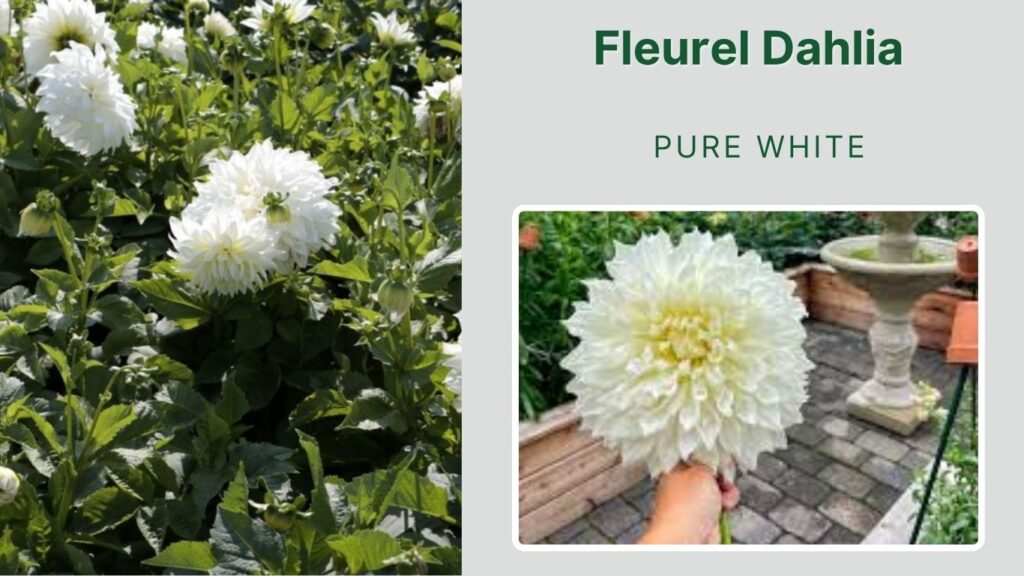
Fleurel is a majestic white dinnerplate dahlia with enormous, pure white blooms that exude elegance and grace. It’s one of the largest white varieties, making it a showstopper in both garden beds and sophisticated floral arrangements.
Identification
- Color: Pure white
- Bloom Size: 8–10 inches
- Plant Height: 36–48 inches
- Form: Dinnerplate Dahlia
Origin and Popularity
Fleurel is widely celebrated for its size, form, and pristine coloring. It’s a top choice for weddings, formal gardens, and any setting where a clean, dramatic white bloom is desired.
Growing and Blooming Season
Plant in spring after the last frost. Fleurel begins blooming in mid to late summer and continues until frost. Ideal for USDA zones 8–11 or grown as an annual elsewhere. Requires staking due to its massive flower heads and benefits from rich soil and full sun.
Companion Plants
Perfectly complements soft pinks like ‘Sweet Nathalie’, rich burgundy dahlias, or blue-toned flowers like ageratum. Works well in monochromatic white gardens or paired with silver foliage for a serene look.
13. Karma Choc Dahlia
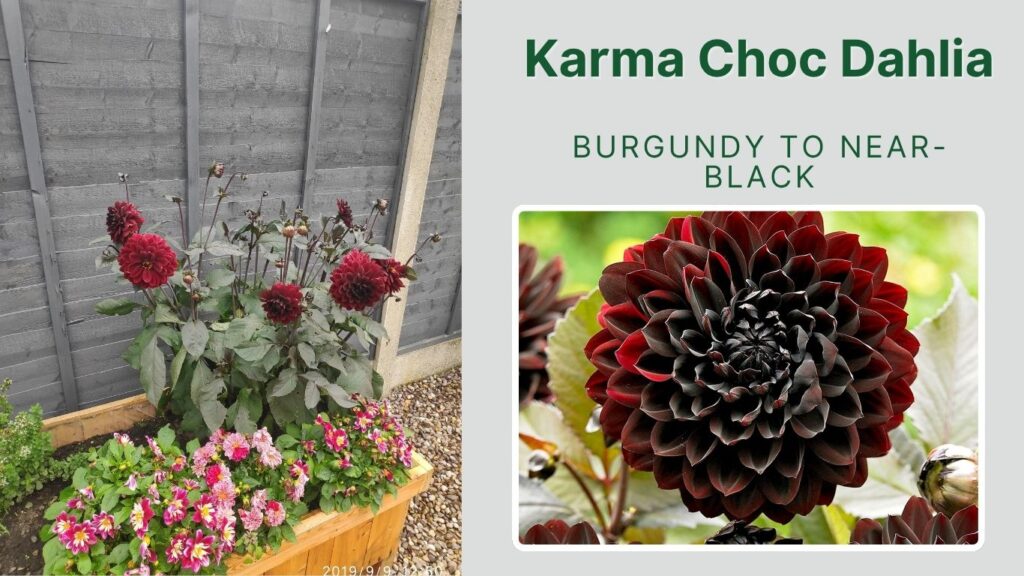
Karma Choc is a luxurious dahlia variety featuring velvety dark burgundy petals that appear almost black in low light. Known for its long vase life and striking color, it belongs to the Karma series bred especially for cut flowers.
Identification
- Color: Deep burgundy to black-red
- Bloom Size: 4–6 inches
- Plant Height: 36–40 inches
- Form: Decorative Dahlia
Origin and Popularity
Bred specifically for floristry, Karma Choc has become a favorite among flower farmers and designers. Its unique coloring and sturdy stems make it ideal for high-end bouquets and dramatic centerpieces.
Growing and Blooming Season
Plant in spring for blooms from midsummer through fall. Thrives in USDA zones 8–11 and needs full sun, regular watering, and fertile, well-drained soil. Its upright growth and strong stems make it easy to maintain.
Companion Plants
Combines beautifully with creamy white dahlias like ‘Fleurel’ or light blush varieties such as ‘Sweet Nathalie’. Also pairs well with eucalyptus, chocolate cosmos, or silver-leafed plants for moody, romantic arrangements.
14. Jowey Winnie Dahlia
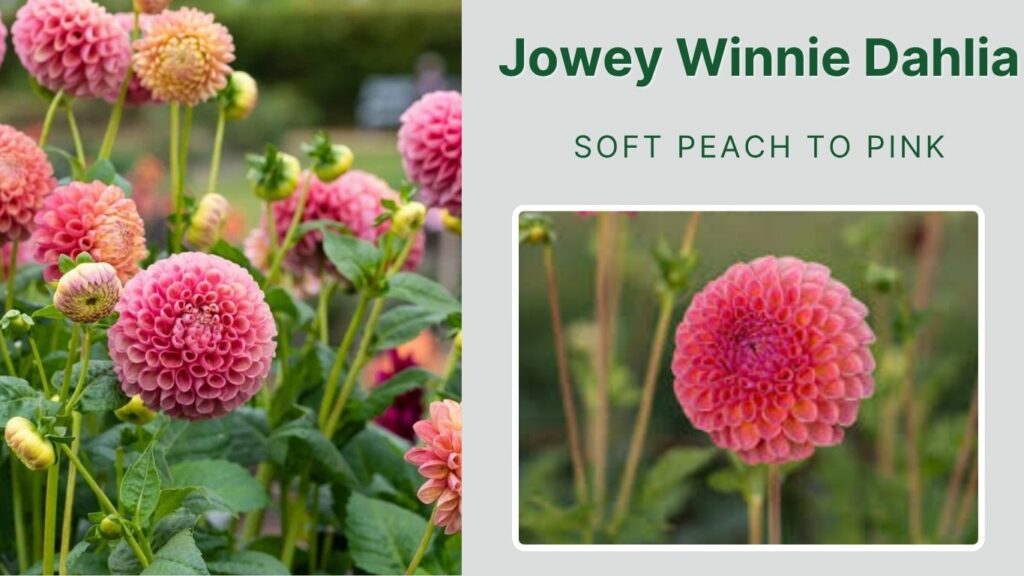
Jowey Winnie is a perfectly round ball dahlia with tightly packed petals in soft peach to salmon tones. Its tidy shape and smooth coloring make it a top choice for flower arrangements and uniform garden borders.
Identification
- Color: Soft peach to pale salmon
- Bloom Size: 3–4 inches
- Plant Height: 36–40 inches
- Form: Ball Dahlia
Origin and Popularity
Part of the well-known Jowey series from Belgian breeders, Jowey Winnie is favored for its consistency in form and ideal stem strength for cutting. It’s a staple in flower farms and wedding floral work.
Growing and Blooming Season
Plant in spring after frost. Blooms from midsummer until the first frost. Performs best in USDA zones 8–11. Needs full sun, good air circulation, and rich, moist soil to produce continuous blooms.
Companion Plants
Pairs elegantly with pale dahlias like ‘Café au Lait’ or white ball types like ‘Boom Boom White’. Complements blue-gray foliage like dusty miller or pastel cosmos in romantic garden designs.
15. Wizard of Oz Dahlia
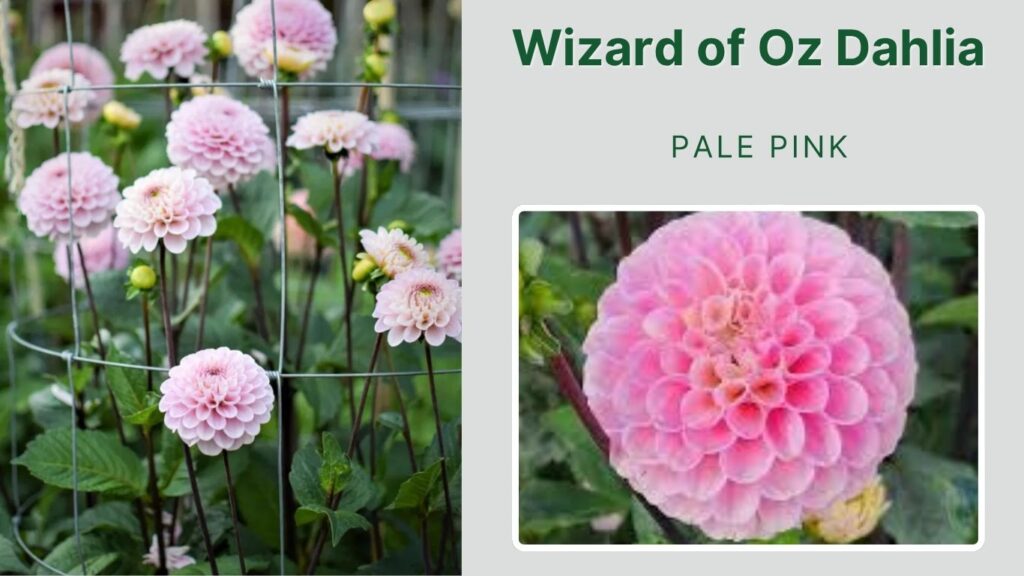
Wizard of Oz is a charming, petite pompon dahlia with soft, baby-pink blooms and a lollipop-like structure. Its tiny, perfectly rounded flowers are ideal for bouquet fillers and add delicate texture to garden beds.
Identification
- Color: Pale blush pink
- Bloom Size: 2–3 inches
- Plant Height: 30–36 inches
- Form: Pompon Dahlia
Origin and Popularity
Loved for its dainty appearance and compact blooms, Wizard of Oz is a favorite among florists and growers for adding texture and pastel color to arrangements. Its form is especially useful for detailed floral work.
Growing and Blooming Season
Plant in spring for blooms throughout summer and into fall. Grows well in USDA zones 8–11. Requires full sun, consistent watering, and rich, loose soil. Great for containers or as a low-growing layer in flower beds.
Companion Plants
Looks beautiful alongside roses, lisianthus, and lavender. Also pairs well with other pompon dahlias in various shades of pink, peach, and cream for soft, feminine floral themes.
16. White Perfection Dahlia
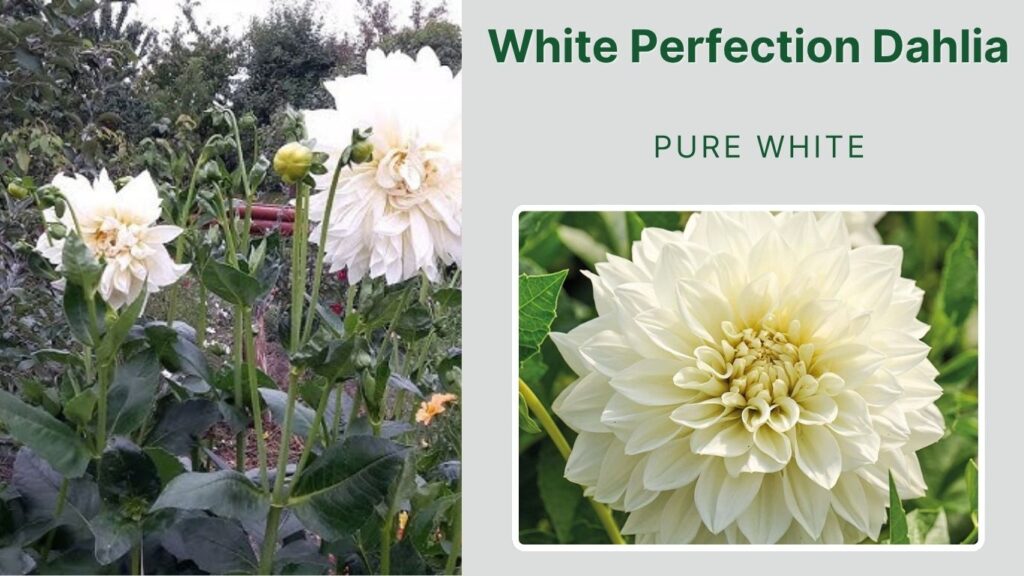
White Perfection is a large, classic dinnerplate dahlia with pristine white blooms and beautifully rounded petals. Its clean color and massive flower heads make it ideal for elegant garden displays and formal floral arrangements.
Identification
- Color: Pure white
- Bloom Size: 8–10 inches
- Plant Height: 36–48 inches
- Form: Dinnerplate Dahlia
Origin and Popularity
As one of the most popular white dahlias, White Perfection is cherished for its symmetry, reliability, and timeless appeal. It’s a top choice for wedding arrangements and formal garden backdrops.
Growing and Blooming Season
Plant in spring after frost has passed. Blooms appear from midsummer through the first frost. Best in USDA zones 8–11 or lifted in colder areas. Thrives in full sun with nutrient-rich, well-drained soil. Due to its bloom size, it often benefits from staking.
Companion Plants
Pairs beautifully with soft pink varieties like ‘Wizard of Oz’ or bolder shades like ‘Arabian Night’. Complements silver-foliaged plants such as artemisia or dusty miller, and fits perfectly in monochrome or cottage-style gardens.
17. Tsuki Yori no Shisha Dahlia
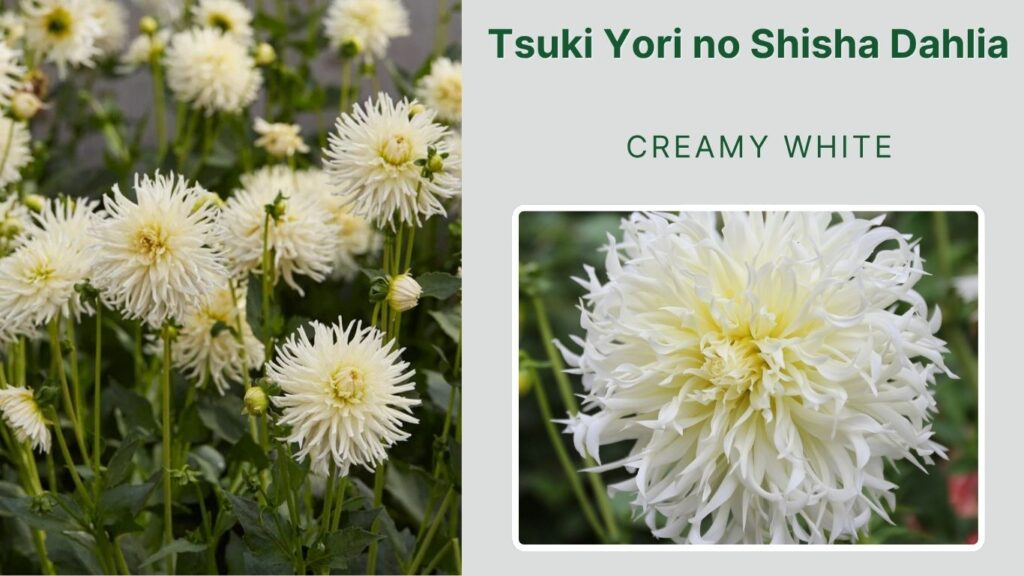
Tsuki Yori no Shisha, which translates to “Messenger from the Moon” in Japanese, is a stunning and unique variety featuring creamy white petals that twist and curl in a shaggy, informal shape. This laciniated dahlia adds softness and motion to floral displays.
Identification
- Color: Creamy to pure white
- Bloom Size: 6–8 inches
- Plant Height: 36–44 inches
- Form: Laciniated Dahlia
Origin and Popularity
This Japanese variety is prized for its artistic, feathery petals and delicate beauty. It’s a standout in both cutting gardens and floral designs that lean toward the wild or whimsical.
Growing and Blooming Season
Plant tubers in spring. Blooms from late summer through fall in USDA zones 8–11, or grow as an annual in cooler zones. Prefers full sun and fertile, well-drained soil. The soft structure adds texture to bouquets and layered borders.
Companion Plants
Combines beautifully with soft-colored dahlias like ‘Sweet Nathalie’ or ‘Fleurel’. Works well with herbs like lavender or trailing plants like creeping Jenny for added softness in floral compositions.
18. David Howard Dahlia
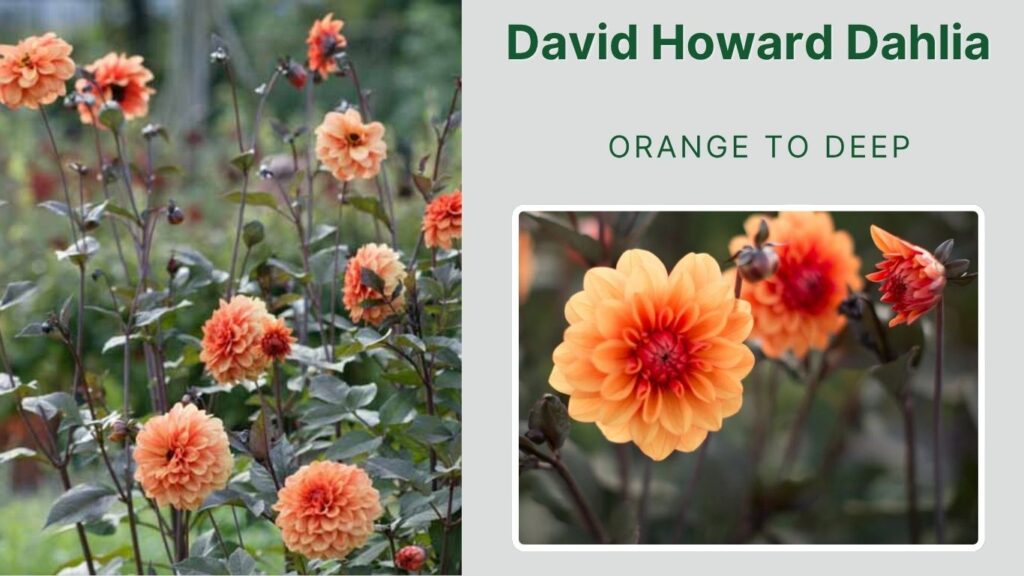
David Howard is a striking dahlia variety known for its vivid orange blooms and contrasting dark bronze foliage. This combination of bold color and rich foliage makes it a standout in mixed borders and vibrant floral displays.
Identification
- Color: Bright orange
- Bloom Size: 4–5 inches
- Plant Height: 36–40 inches
- Form: Decorative Dahlia
Origin and Popularity
Bred in the UK, David Howard has become a garden favorite due to its unique foliage and long-lasting blooms. It has also won the Royal Horticultural Society’s Award of Garden Merit for its excellent performance.
Growing and Blooming Season
Plant in spring after the last frost. Blooms from midsummer until frost in USDA zones 8–11. Requires full sun, moist but well-drained soil, and benefits from regular deadheading. Its bronze foliage adds season-long interest even before flowering begins.
Companion Plants
Pairs well with purple-leaved plants like heuchera or deep blue flowers such as salvia and agastache. Its vivid orange also looks stunning alongside yellow and burgundy dahlias for a fiery late-summer garden palette.
19. Penhill Watermelon Dahlia
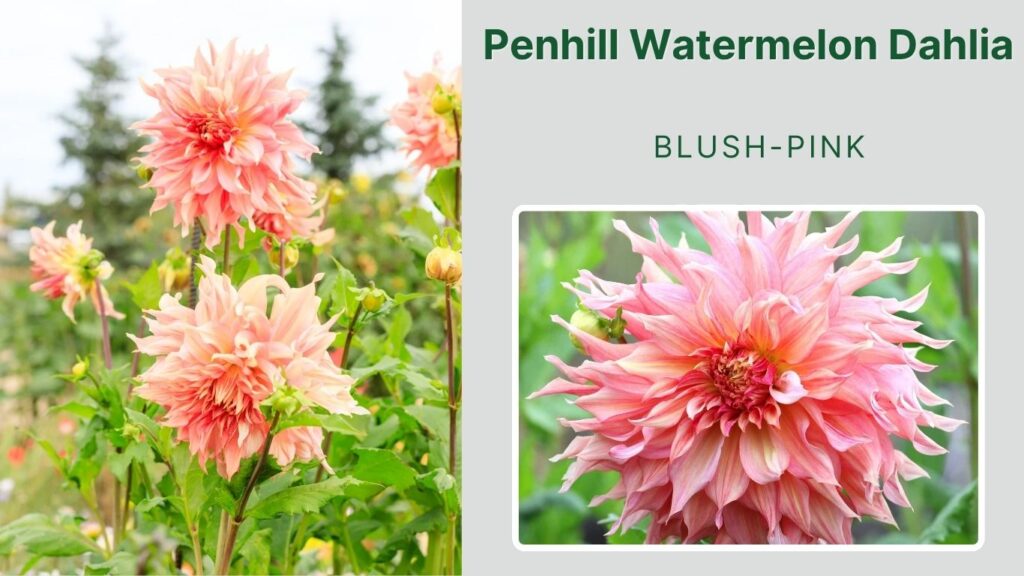
Penhill Watermelon is a giant, dinnerplate dahlia with soft, billowy petals in pink, peach, and watermelon tones. Its large, informal blooms and ever-changing color make it a favorite for statement arrangements and romantic garden beds.
Identification
- Color: Pink, coral, and peach blend (watermelon tones)
- Bloom Size: 10–12 inches
- Plant Height: 40–48 inches
- Form: Dinnerplate Dahlia
Origin and Popularity
Known for its huge blooms and dreamy pastel palette, Penhill Watermelon is popular among flower farmers, wedding florists, and romantic garden designers. Its unpredictable shading adds a unique character to each bloom.
Growing and Blooming Season
Plant in spring for blooms from late summer into fall. Performs best in USDA zones 8–11. Requires full sun, rich soil, and staking due to its large, heavy flowers. Regular feeding helps produce lush, vibrant blooms.
Companion Plants
Pairs beautifully with creamy whites like ‘Fleurel’, soft pinks like ‘Sweet Nathalie’, or deep burgundy dahlias for contrast. Also complements feathery foliage like ammi or asparagus fern in bouquets.
20. Firepot Dahlia
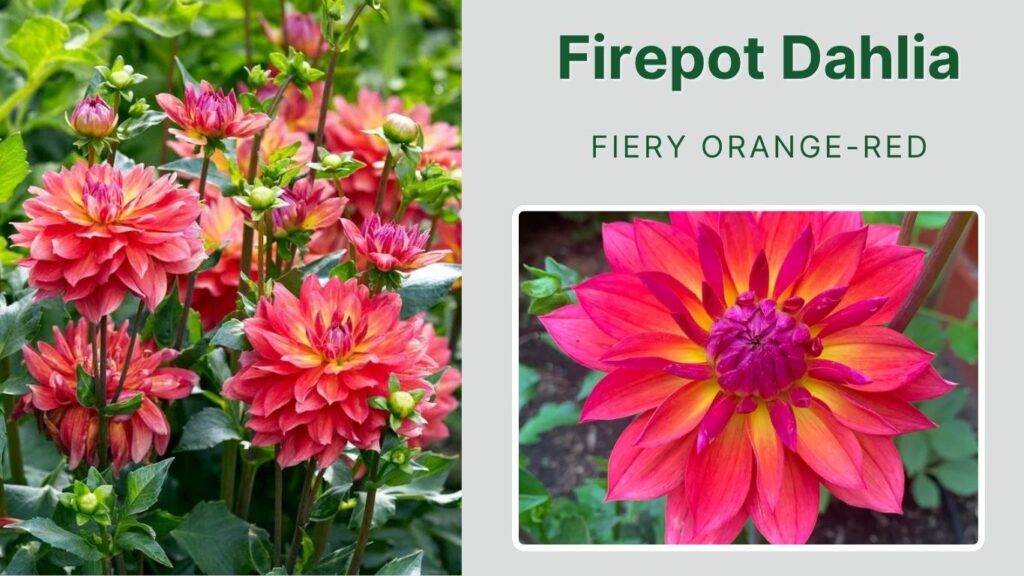
Firepot is a bold and cheerful dahlia with vibrant coral-orange petals tipped in golden yellow. Its semi-cactus form gives it a spiky, dynamic appearance, making it perfect for energizing summer and fall garden beds.
Identification
- Color: Coral-orange with yellow tips
- Bloom Size: 4–6 inches
- Plant Height: 36–42 inches
- Form: Semi-Cactus Dahlia
Origin and Popularity
Firepot is celebrated for its brilliant color blend and long-lasting blooms. It’s a popular choice for cutting gardens and borders where a burst of warm, fiery color is desired.
Growing and Blooming Season
Plant in spring after frost has passed. Blooms from midsummer through fall. Hardy in USDA zones 8–11, or lift and store tubers in colder areas. Requires full sun, well-drained soil, and benefits from regular deadheading to encourage continuous flowering.
Companion Plants
Looks striking with purple salvias, yellow dahlias like ‘Kelvin Floodlight’, or bronze-foliage plants. It also pairs well with ornamental grasses and deep red or burgundy blooms for a lively, autumn-inspired display.
21. Seduction Dahlia
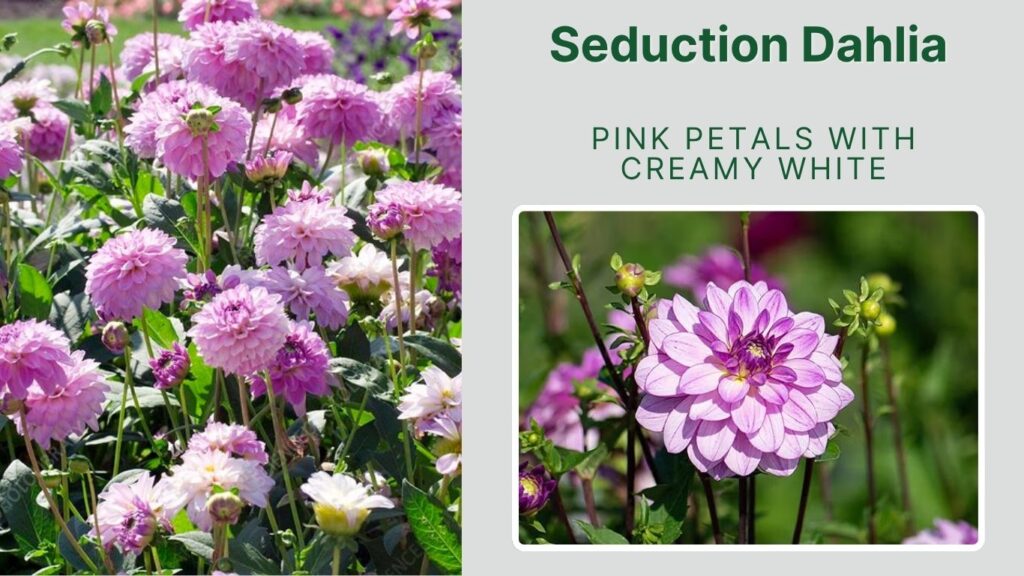
Seduction is a stunning bi-colored dahlia with creamy white petals kissed by raspberry-pink edges. Its rounded, decorative blooms and romantic coloration make it perfect for soft garden palettes and elegant cut flower arrangements.
Identification
- Color: White with raspberry-pink edges
- Bloom Size: 5–6 inches
- Plant Height: 36–40 inches
- Form: Decorative Dahlia
Origin and Popularity
Known for its feminine charm and gentle two-tone appearance, Seduction is especially favored by florists and wedding designers. Its coloring is eye-catching without being overpowering, ideal for soft, romantic themes.
Growing and Blooming Season
Plant tubers in spring. Blooms from midsummer into fall in USDA zones 8–11, or lift and store tubers in cooler regions. Grows best in full sun with fertile, well-drained soil and regular watering.
Companion Plants
Pairs beautifully with soft pinks like ‘Wizard of Oz’, pale yellows, or white blooms like ‘White Perfection’. Also complements greenery such as eucalyptus or ferns for a balanced, elegant bouquet.
22. Sylvia Dahlia
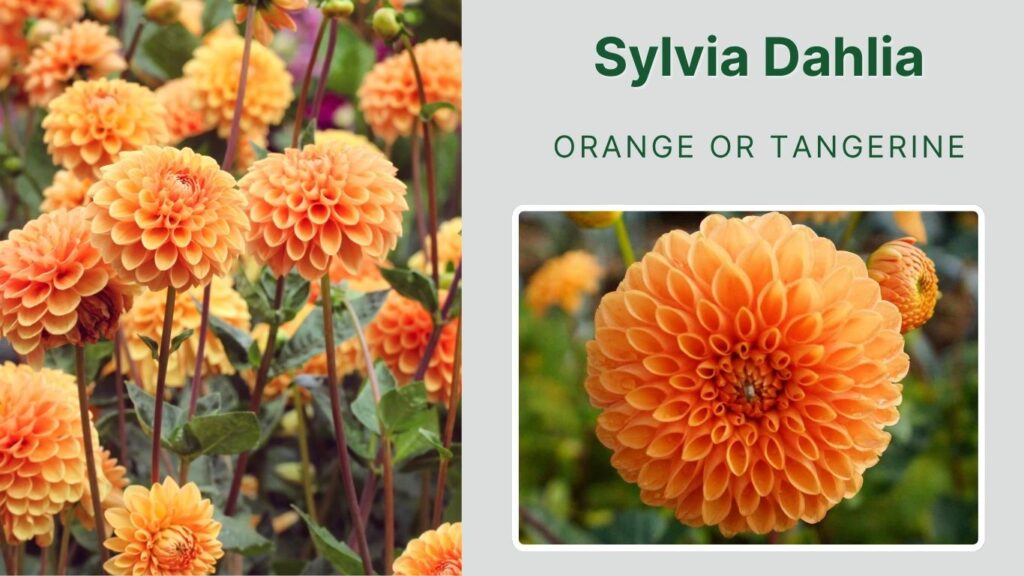
Sylvia is a compact and vibrant orange ball dahlia with neatly arranged petals and a glowing, uniform hue. Its tidy, rounded blooms and long stems make it ideal for cutting gardens, borders, and container displays.
Identification
- Color: Bright orange
- Bloom Size: 3–4 inches
- Plant Height: 30–36 inches
- Form: Ball Dahlia
Origin and Popularity
Sylvia has gained popularity for its tidy form, reliable performance, and bold color. It’s a favorite among flower farmers and backyard gardeners looking for strong stems and repeat blooms.
Growing and Blooming Season
Plant after the last frost in spring. Blooms steadily from midsummer through fall in USDA zones 8–11. Performs well in full sun and fertile, well-drained soil. The plant’s compact habit makes it suitable for small spaces and raised beds.
Companion Plants
Looks striking with purple dahlias like ‘Thomas A. Edison’, yellow marigolds, or white cosmos. Complements vibrant summer color schemes and makes excellent bouquet filler.
23. Hamari Gold Dahlia
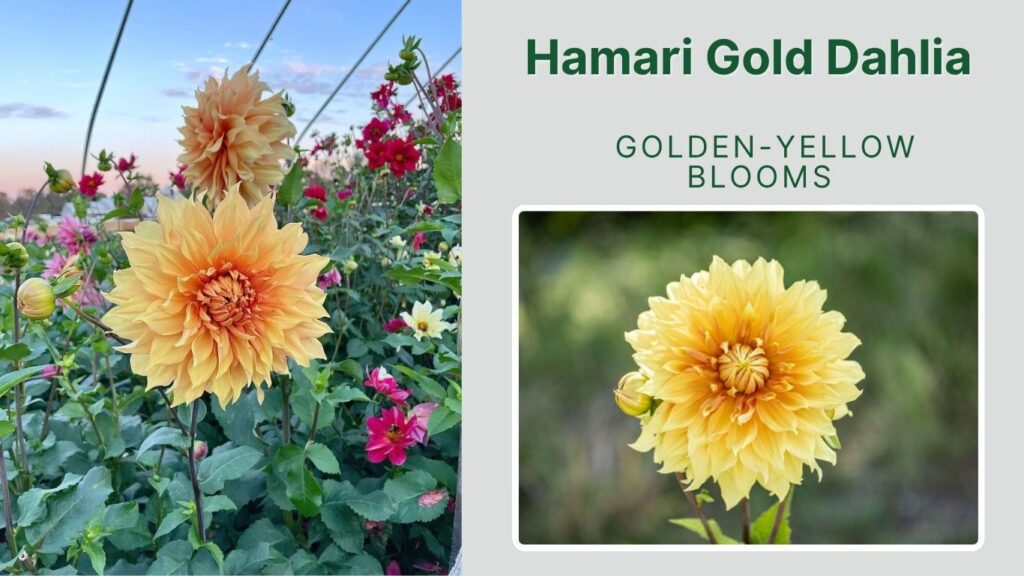
Hamari Gold is a radiant dinnerplate dahlia with huge, golden-orange blooms that glow in the sunlight. Its broad petals and sunny tone make it a favorite for warm, energetic garden themes and dramatic floral displays.
Identification
- Color: Golden orange
- Bloom Size: 8–10 inches
- Plant Height: 40–48 inches
- Form: Dinnerplate Dahlia
Origin and Popularity
A classic among dinnerplate varieties, Hamari Gold is known for its size and vigor. It’s frequently seen in competitive dahlia shows and is prized by gardeners who love bold, warm hues.
Growing and Blooming Season
Plant tubers in spring after frost. Flowers from mid to late summer through fall. Best grown in USDA zones 8–11, or lifted in colder areas. Needs full sun, good air circulation, and sturdy support due to its large blooms.
Companion Plants
Pairs well with deep red or burgundy dahlias like ‘Arabian Night’, or soft peach tones like ‘Penhill Watermelon’. It also shines with contrasting purple salvia or ornamental grasses in vibrant mixed borders.
24. Otto’s Thrill Dahlia
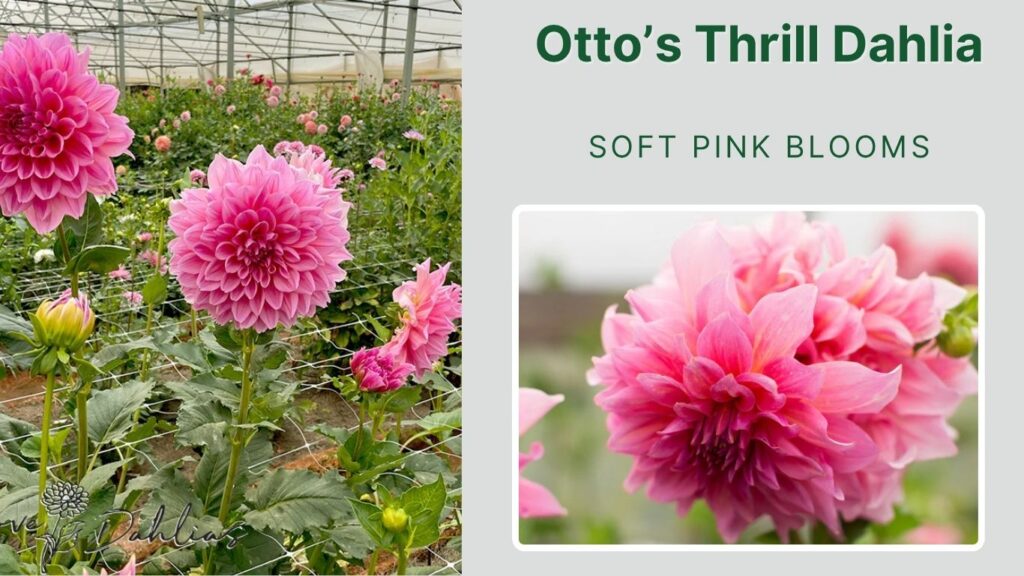
Otto’s Thrill is a stunning dinnerplate dahlia with massive, soft pink blooms and perfectly curved petals. Its impressive size and romantic color make it a showstopper in both gardens and floral arrangements.
Identification
- Color: Light to medium rose pink
- Bloom Size: 10–12 inches
- Plant Height: 40–48 inches
- Form: Dinnerplate Dahlia
Origin and Popularity
This variety has been a long-standing favorite among dahlia enthusiasts for its consistent blooms and graceful presence. Its large flowers are highly sought after for weddings and events.
Growing and Blooming Season
Plant in spring after danger of frost. Blooms from midsummer into fall in USDA zones 8–11, or lift and store tubers in colder zones. Prefers full sun and nutrient-rich, well-drained soil. Staking is necessary due to the large, heavy blooms.
Companion Plants
Pairs beautifully with white dahlias like ‘Fleurel’, soft peaches such as ‘Labyrinth’, or lavender-toned flowers. It also complements ornamental grasses or eucalyptus in romantic garden themes.
25. Islander Dahlia
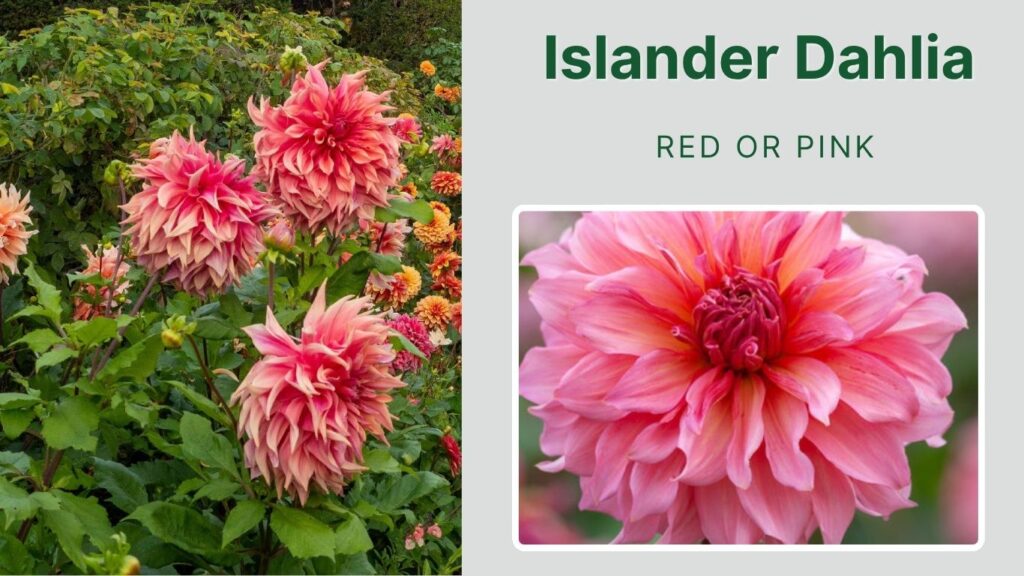
Islander is a spectacular dahlia variety featuring enormous blooms in swirled shades of pink, peach, and coral. With its giant, fluffy petals and tropical vibe, it brings boldness and elegance to late summer landscapes.
Identification
- Color: Blended shades of pink, coral, and peach
- Bloom Size: 10–12 inches
- Plant Height: 40–50 inches
- Form: Dinnerplate Dahlia
Origin and Popularity
Known for its dramatic size and glowing tropical tones, Islander is a favorite for flower farmers and home gardeners alike. It stands out in large bouquets and adds instant drama to any flower bed.
Growing and Blooming Season
Plant tubers in spring for blooms from late summer through frost. Ideal for USDA zones 8–11. Needs full sun, rich soil, and plenty of space. Due to its height and bloom size, sturdy staking is essential.
Companion Plants
Pairs wonderfully with warm-toned dahlias like ‘Hamari Gold’, pale pinks like ‘Otto’s Thrill’, or contrasting deep burgundy varieties. Complements lush foliage and tropical-style plantings for a vibrant, exotic look.