





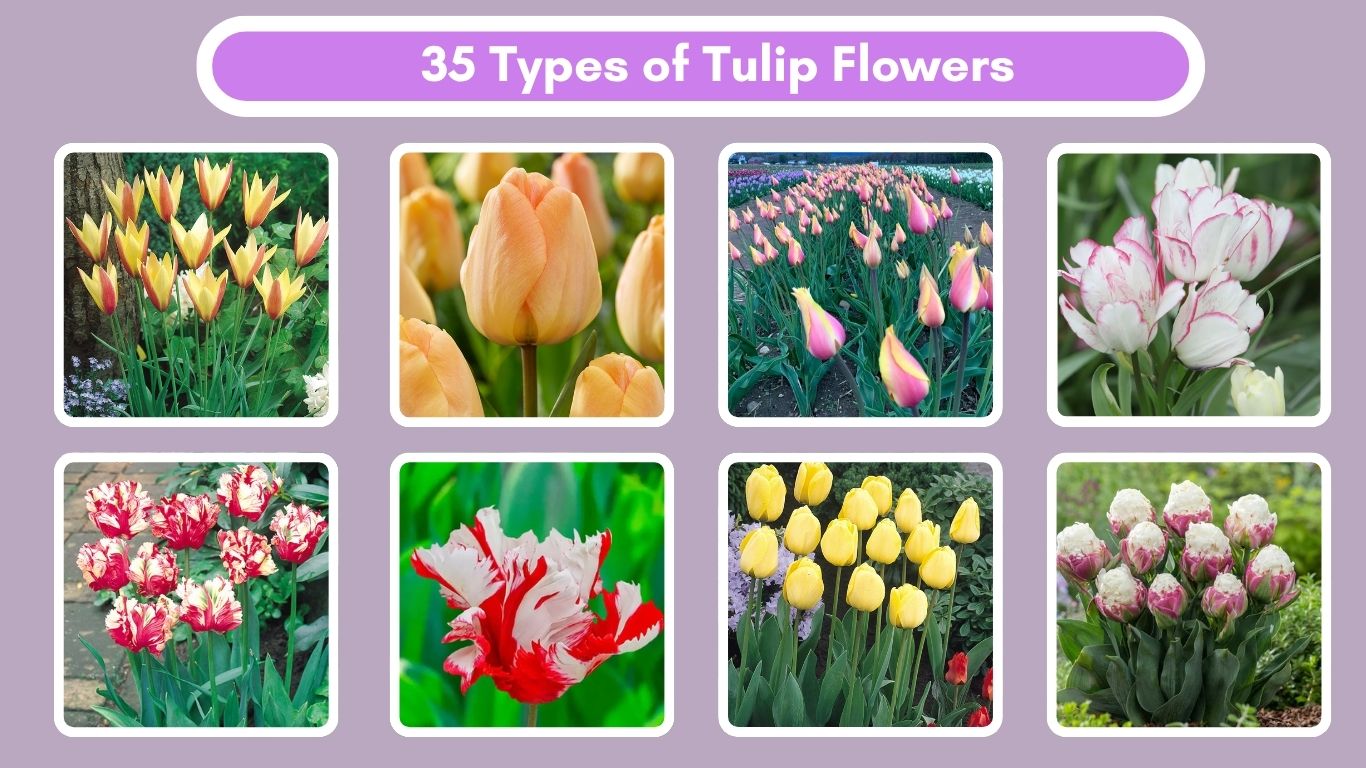
Tulips are among the most cherished spring flowers in the world, known for their vibrant colors, elegant shapes, and rich history rooted in Dutch culture. With over 3,000 registered varieties and a wide range of types, tulips offer endless possibilities for garden design and floral arrangements. In this list, you’ll discover 35 stunning types of tulip flowers—each with its own unique charm, color palette, and bloom time. Whether you’re planning a formal border, a whimsical cottage garden, or a colorful container display, these tulip names will inspire your next spring planting.
1. Queen of Night Tulip

The Queen of Night tulip is one of the darkest and most striking tulip varieties. Its deep maroon to almost-black petals give it a dramatic elegance that stands out in any garden. Part of the Single Late group, it’s a popular choice for adding depth and contrast to spring flower beds.
Identification
- Color: Deep maroon to black
- Petal Shape: Smooth, cup-shaped
- Height: 20–24 inches
- Bloom Time: Late spring
- Group: Single Late Tulip
Origin and Popularity
Bred in the Netherlands, this tulip has gained fame worldwide for its mysterious, velvety look. It’s frequently used in high-end garden designs and floral arrangements.
Growing and Blooming Season
Plant the bulbs in fall (around October to November) for blooming in late spring, typically from late April to May. It prefers cooler climates and does well in USDA zones 3–8.
Companion Plants
Pairs well with lighter tulips like ‘White Triumphator’ or ‘Angelique’, as well as spring bulbs like daffodils or alliums to create a bold contrast.
2. Angelique Tulip

Angelique is a romantic, soft pink tulip known for its peony-like, double-layered petals. This variety belongs to the Double Late group and is a favorite in cottage-style and wedding-themed gardens due to its fluffy, rose-like appearance and gentle fragrance.
Identification
- Color: Soft pink with hints of blush and cream
- Petal Shape: Double, ruffled, and rounded
- Height: 16–18 inches
- Bloom Time: Late spring
- Group: Double Late Tulip
Origin and Popularity
Introduced in the mid-20th century, Angelique quickly gained popularity for its lush blooms. It’s often featured in floral displays, bridal bouquets, and romantic garden themes.
Growing and Blooming Season
Bulbs should be planted in autumn. Blooms appear in late spring, usually in May, making them one of the last tulips to flower.
Companion Plants
Blends beautifully with pastel tulips, forget-me-nots, and white narcissus to enhance its soft and elegant look.
3. Red Emperor Tulip

Also known as ‘Madame Lefeber’, the Red Emperor tulip is a bold, early-blooming tulip from the Fosteriana group. It is famous for its vibrant scarlet-red petals and large flower size, often among the first tulips to bloom in spring gardens.
Identification
- Color: Brilliant red
- Petal Shape: Broad and slightly pointed
- Height: 14–18 inches
- Bloom Time: Early spring
- Group: Fosteriana Tulip
Origin and Popularity
Red Emperor originated in the Netherlands and has become a staple in classic tulip collections for its reliable early bloom and bold presence.
Growing and Blooming Season
Plant bulbs in fall for early spring flowering—usually blooming in March or early April, depending on climate.
Companion Plants
Combines well with yellow tulips or blue hyacinths to create eye-catching spring displays.
4. Black Parrot Tulip
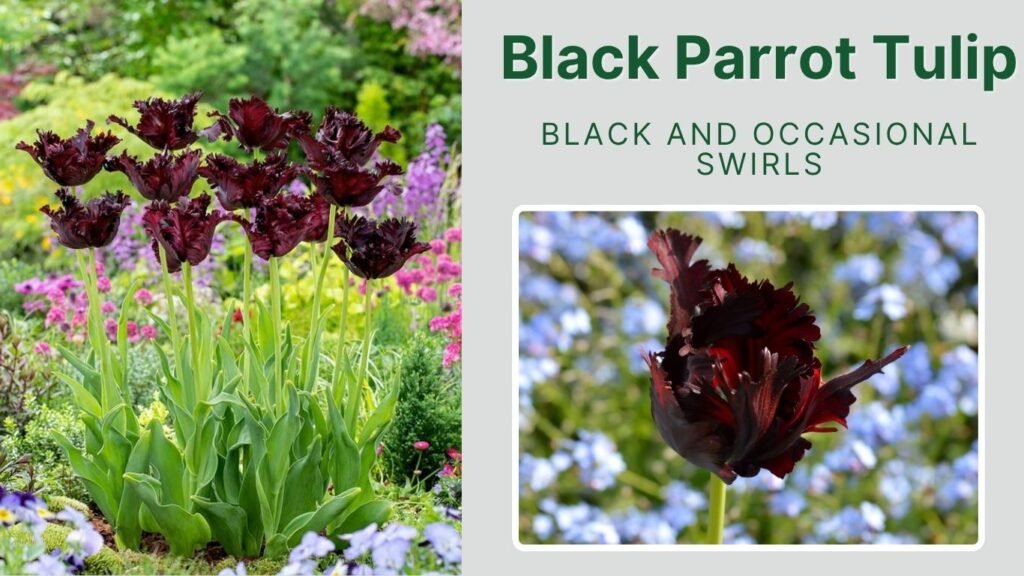
Black Parrot tulip is a unique and dramatic variety known for its deeply fringed, feather-like petals and rich, dark purple to black coloration. This exotic-looking flower is part of the Parrot group and adds an artistic, luxurious touch to late-spring gardens.
Identification
- Color: Dark purple to nearly black
- Petal Shape: Fringed and ruffled, parrot-like
- Height: 20–24 inches
- Bloom Time: Late spring
- Group: Parrot Tulip
Origin and Popularity
Introduced in the 1930s, Black Parrot has since become a standout in the tulip world. It’s often showcased in public displays and used in cutting gardens for its bold texture and deep tone.
Growing and Blooming Season
Plant Black Parrot bulbs in mid to late fall for best results. It blooms in late spring, around mid to late May, depending on the region. This tulip prefers full sun and rich, well-drained soil, and it does well in USDA zones 3–7. Expect it to flower after most standard tulips, providing a late-season burst of color.
Companion Plants
Stunning when paired with pastel or white tulips like ‘Maureen’ or ‘Mount Tacoma’. It also complements silver-leaved plants such as lamb’s ear or dusty miller. For dramatic contrast, plant alongside bright yellow tulips or white alliums.
5. White Triumphator Tulip
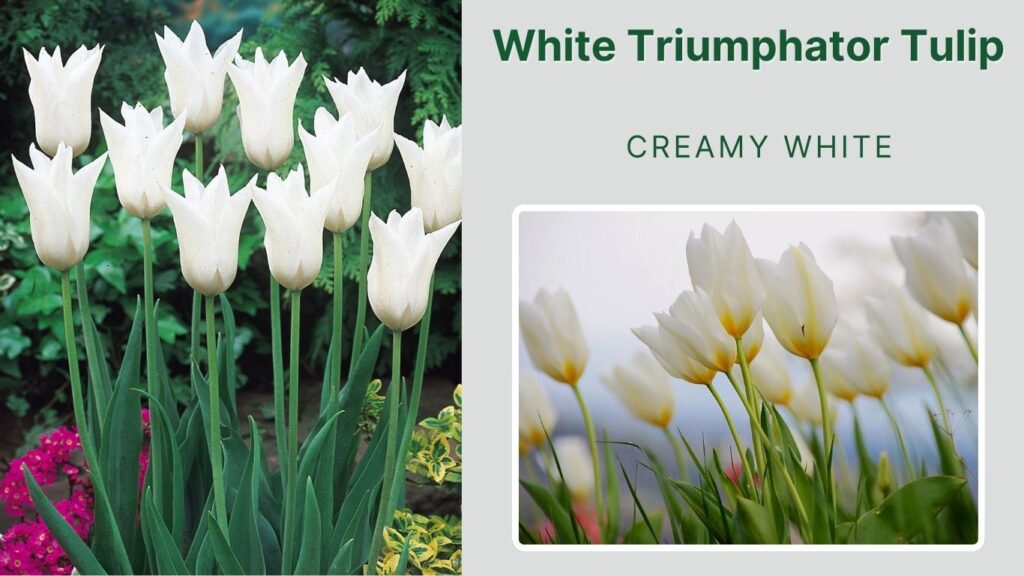
White Triumphator is a refined and elegant tulip featuring pure white, lily-shaped blooms. Belonging to the Lily-Flowered group, it’s cherished for its graceful form and timeless beauty, often used in formal gardens and minimalist floral designs.
Identification
- Color: Pure white
- Petal Shape: Pointed, lily-like with flared tips
- Height: 22–26 inches
- Bloom Time: Late spring
- Group: Lily-Flowered Tulip
Origin and Popularity
Bred in the Netherlands, White Triumphator is a descendant of the older ‘Triumphator’ line. Its elegance and tall stature make it a favorite among landscape designers and florists.
Growing and Blooming Season
Plant bulbs in October or November for blooming in late spring—typically mid to late May. It thrives in sunny spots with good drainage and is well-suited for USDA zones 3–8. The tall stems hold up well in borders and cut arrangements, even during rainy or windy spring days.
Companion Plants
Combines beautifully with deep-toned tulips like ‘Queen of Night’ or ‘Black Hero’ for a dramatic black-and-white theme. It also works well with purple alliums, blue forget-me-nots, or lavender for a soothing, elegant color palette. Ideal for planting in clusters or along walkways for maximum impact.
6. Purple Prince Tulip
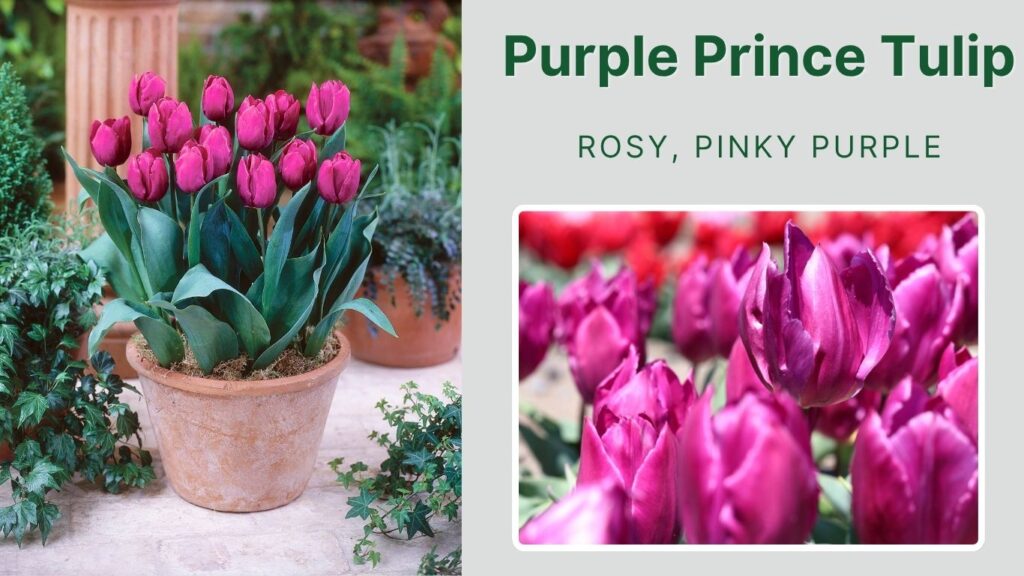
Purple Prince is a vibrant, early-blooming tulip with rich magenta-purple petals and a classic tulip shape. Part of the Triumph group, this variety is loved for its sturdy stem, long-lasting blooms, and ability to bring early color to spring gardens.
Identification
- Color: Deep purple with magenta tones
- Petal Shape: Smooth, oval, and slightly pointed
- Height: 14–16 inches
- Bloom Time: Early to mid-spring
- Group: Triumph Tulip
Origin and Popularity
Bred in the Netherlands, Purple Prince has become a favorite among gardeners for its vivid color, excellent performance, and reliability in mixed plantings and containers.
Growing and Blooming Season
Plant the bulbs in fall (September to November). This tulip blooms early, often appearing in March to early April, depending on the region. It performs best in full sun and well-drained soil, and it’s hardy in USDA zones 3–7. Its early bloom time helps bridge the gap between crocuses and mid-season tulips.
Companion Plants
Pairs wonderfully with yellow early tulips like ‘Yokohama’ or white varieties such as ‘Flaming Purissima’. Great for borders and containers. It also looks striking beside pansies, grape hyacinths, and early daffodils in layered spring beds.
7. Ballerina Tulip
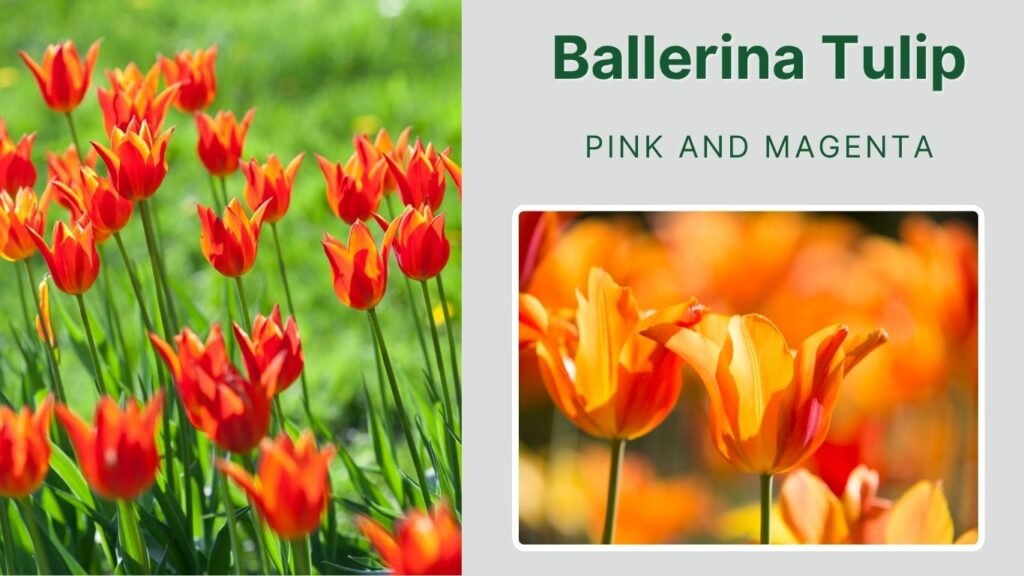
Ballerina is a graceful, lily-flowered tulip with bright orange petals and a spicy fragrance. This tulip stands out for its flared shape and glowing color, adding warmth and movement to mid-to-late spring gardens.
Identification
- Color: Vivid orange with slight red undertones
- Petal Shape: Pointed and flared, lily-like
- Height: 20–24 inches
- Bloom Time: Mid to late spring
- Group: Lily-Flowered Tulip
Origin and Popularity
Ballerina was introduced in the 20th century and quickly became known for its elegance and scent. Its unique form and fiery hue make it a highlight in tulip collections and formal landscapes.
Growing and Blooming Season
Plant bulbs in autumn, and expect blooms in late April through mid-May. It thrives in sunny locations with well-drained soil and is suitable for USDA zones 3–8. Its moderate height makes it ideal for both front and mid-border plantings.
Companion Plants
Pairs well with purple tulips like ‘Negrita’ or blue spring flowers such as muscari. The warm tones also contrast beautifully with ivory-colored tulips or soft pink varieties. It looks especially charming when planted in drifts or intermingled with ornamental grasses and late-blooming perennials.
8. Apricot Beauty Tulip

Apricot Beauty is a charming early-blooming tulip known for its warm, peachy-apricot petals and sweet fragrance. Belonging to the Single Early group, it’s a soft and romantic choice that adds gentle color to spring displays, especially in pastel-themed gardens.
Identification
- Color: Apricot with pink and coral undertones
- Petal Shape: Cup-shaped, smooth
- Height: 12–16 inches
- Bloom Time: Early spring
- Group: Single Early Tulip
Origin and Popularity
Introduced in the 1950s, this Dutch-bred tulip became a favorite for both home gardens and professional arrangements due to its early bloom and rare, soft tone.
Growing and Blooming Season
Plant the bulbs in fall for blooms in early spring, often as early as March in warmer climates. It flourishes in USDA zones 3–8, preferring full sun and well-drained soil. Because of its low height, it’s perfect for front borders, rock gardens, or containers.
Companion Plants
Looks stunning with white or pale yellow tulips like ‘Concerto’ or ‘Yokohama’. Also pairs well with grape hyacinths, blue scilla, or white daffodils. The warm hue blends nicely in pastel color schemes and cottage-style gardens.
9. Ice Cream Tulip
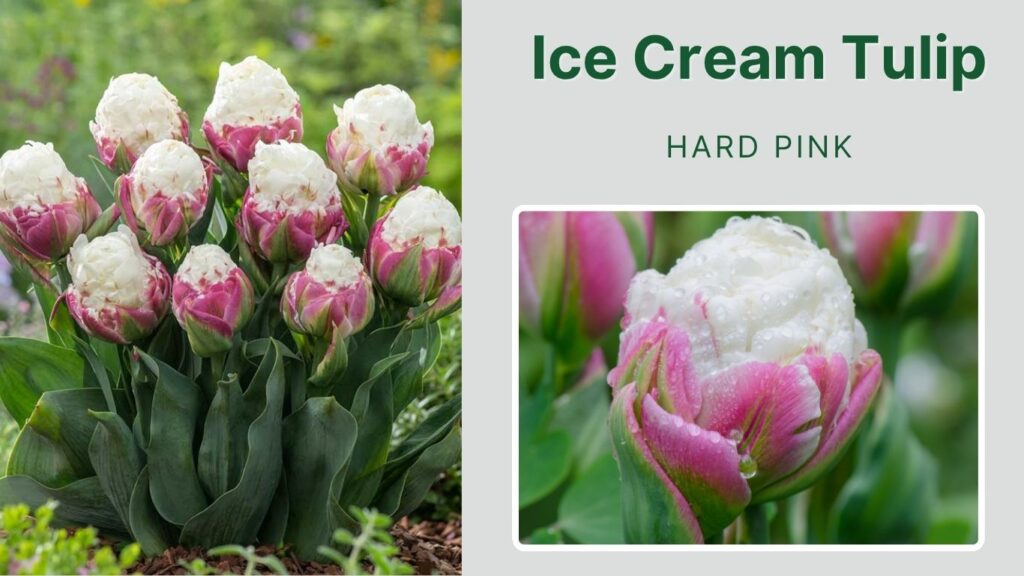
Ice Cream Tulip is a spectacular and whimsical variety, admired for its unique structure that resembles a scoop of vanilla ice cream sitting in a pink cup. This double late tulip is highly decorative and a conversation piece in any garden or container.
Identification
- Color: Creamy white center with pink outer petals
- Petal Shape: Layered and rounded; double bloom
- Height: 10–12 inches
- Bloom Time: Late spring
- Group: Double Late Tulip
Origin and Popularity
A modern novelty from Dutch hybridizers, Ice Cream Tulip quickly became famous on social media and garden shows for its dessert-like appearance and compact, bold structure.
Growing and Blooming Season
Plant bulbs in mid to late autumn for late spring blooms, generally around May. Best grown in USDA zones 3–7. It thrives in full sun with fertile, well-drained soil and is ideal for pots, raised beds, or small floral borders due to its short stature and ornamental look.
Companion Plants
Pairs beautifully with pink or purple double tulips like ‘Angelique’ or ‘Blue Diamond’. Because of its compact size, it’s perfect for mixing with pansies, violas, or low-growing forget-me-nots. Works best as a featured plant in small clusters for maximum visual impact.
10. Princess Irene Tulip

Princess Irene is a striking and fragrant tulip known for its vibrant orange petals accented with deep purple flames. Belonging to the Triumph group, it offers a warm, regal appearance and is one of the few tulips with a noticeable scent, making it popular in both gardens and bouquets.
Identification
- Color: Orange with rich purple streaks
- Petal Shape: Rounded, classic tulip form
- Height: 14–16 inches
- Bloom Time: Mid-spring
- Group: Triumph Tulip
Origin and Popularity
Introduced in the 1940s and named after a Dutch princess, this tulip remains a favorite for its bold color combination and delightful fragrance. It has received multiple garden awards for performance and beauty.
Growing and Blooming Season
Plant bulbs in fall (October to November) for mid-spring blooms, usually in April. Suitable for USDA zones 3–8, it prefers full sun and grows best in rich, well-drained soil. Its compact height makes it ideal for front borders and containers.
Companion Plants
Looks stunning alongside dark tulips like ‘Queen of Night’ or purple hyacinths. Pairs well with blue muscari and yellow daffodils to enhance its fiery tones. Often used in modern or formal spring garden schemes.
11. Blue Diamond Tulip
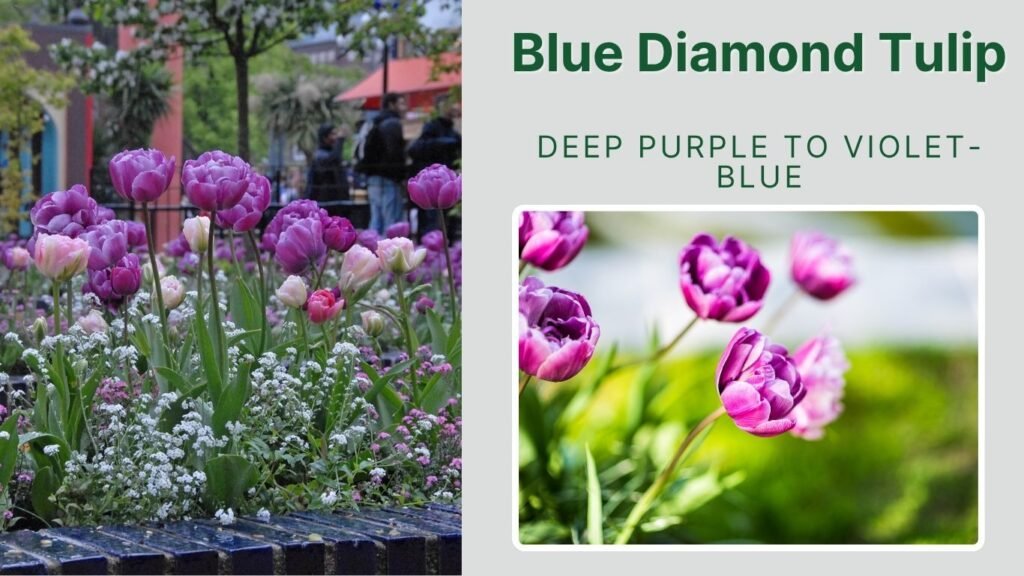
Blue Diamond is a dramatic double tulip with rich violet-blue petals that resemble a peony. Part of the Double Late group, this tulip is admired for its full, layered blooms and regal color, making it a showstopper in late spring flower beds.
Identification
- Color: Deep violet-blue
- Petal Shape: Double, layered, and ruffled
- Height: 16–18 inches
- Bloom Time: Late spring
- Group: Double Late Tulip
Origin and Popularity
A more recent cultivar from the Netherlands, Blue Diamond gained popularity for its unusual color and lush form. It’s a top choice for gardeners seeking something different from the standard tulip palette.
Growing and Blooming Season
Plant in autumn for late spring blooms, typically flowering in May. It thrives in USDA zones 3–7, doing best in full sun and moderately moist, well-drained soil. Because of its dense bloom, it performs well in both garden beds and cut flower arrangements.
Companion Plants
Pairs well with white double tulips like ‘Mount Tacoma’ or soft pinks like ‘Angelique’. Also complements darker varieties like ‘Black Hero’ for bold contrasts. Ideal for elegant spring borders or grouped in decorative containers.
12. Golden Apeldoorn Tulip
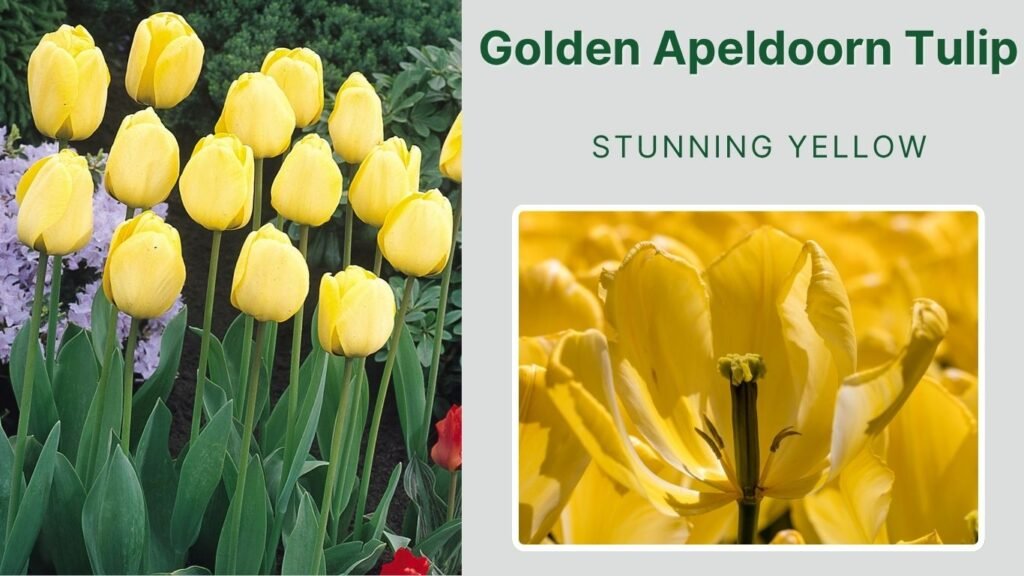
Golden Apeldoorn is a classic Darwin Hybrid tulip known for its large, golden-yellow blooms and strong, tall stems. It’s one of the most reliable and long-lasting tulips, perfect for mass plantings and creating a cheerful spring display.
Identification
- Color: Bright golden yellow
- Petal Shape: Broad and cup-shaped
- Height: 20–24 inches
- Bloom Time: Mid-spring
- Group: Darwin Hybrid Tulip
Origin and Popularity
A beloved variety from the mid-20th century, Golden Apeldoorn has remained popular for its vibrant color, durability, and perennial tendency in ideal conditions. It’s a favorite in parks and public gardens for large-scale displays.
Growing and Blooming Season
Plant bulbs in mid to late fall for blooms around mid-April. It thrives in USDA zones 3–7, prefers full sun, and adapts well to a variety of soil types. Thanks to its strong stems, it withstands wind and rain, making it suitable for open landscapes.
Companion Plants
Pairs beautifully with red tulips like ‘Red Apeldoorn’ or orange Darwin hybrids. It also contrasts well with blue spring bulbs such as muscari or scilla, and adds brightness when combined with white narcissus.
13. China Pink Tulip
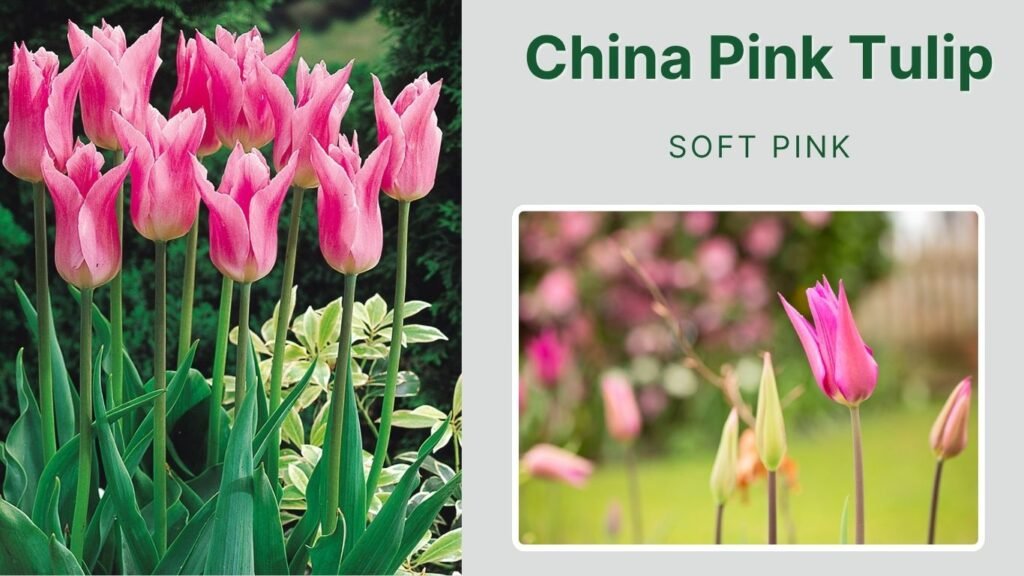
China Pink is a graceful lily-flowered tulip with soft pink petals that gently curve outward. Its delicate appearance and elegant silhouette make it a popular choice for sophisticated garden designs and spring bouquets.
Identification
- Color: Light pink with silvery or rose undertones
- Petal Shape: Pointed and reflexed, lily-like
- Height: 18–22 inches
- Bloom Time: Late spring
- Group: Lily-Flowered Tulip
Origin and Popularity
Introduced in the late 20th century, China Pink quickly gained recognition for its refinement and long-lasting blooms. It is often selected for formal gardens and bridal-themed spring displays.
Growing and Blooming Season
Plant in October or November for flowering in late spring—typically around mid to late May. Grows well in USDA zones 3–8 and performs best in sunny, well-drained spots. Its height and grace make it suitable for both borders and cutting gardens.
Companion Plants
Blends beautifully with white tulips like ‘White Triumphator’ or soft purples such as ‘Negrita’. It also adds elegance next to alliums or ornamental grasses, and fits seamlessly into pastel or cottage-style garden palettes.
14. Mount Tacoma Tulip
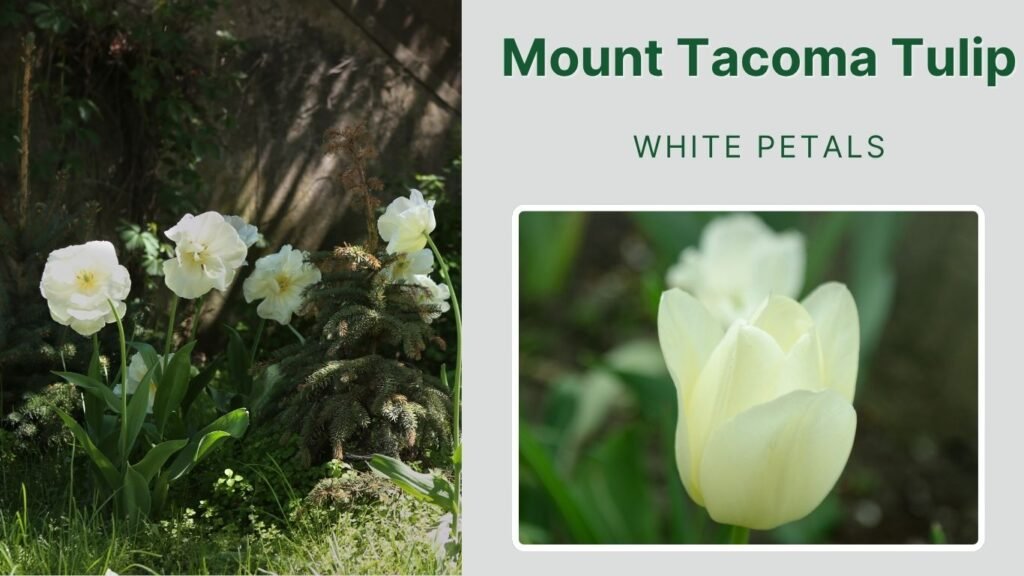
Mount Tacoma is a luxurious double white tulip that closely resembles a peony. With its full, ruffled petals and creamy white hue, this variety from the Double Late group brings elegance and softness to any spring garden.
Identification
- Color: Creamy white
- Petal Shape: Fully double, layered and rounded
- Height: 16–18 inches
- Bloom Time: Late spring
- Group: Double Late Tulip
Origin and Popularity
Introduced in the early 20th century, Mount Tacoma remains one of the most cherished white tulips. Its romantic, rose-like form has made it a staple in bridal bouquets and sophisticated floral borders.
Growing and Blooming Season
Plant bulbs in fall (October to November). Flowers bloom in May, during the late tulip season. Ideal for USDA zones 3–8. Performs well in sunny locations with fertile, well-drained soil. Its compact and full shape makes it great for containers and front borders.
Companion Plants
Pairs elegantly with pastel-colored tulips like ‘Angelique’ or deep contrasts like ‘Queen of Night’. Complements other white blooms such as white narcissus or ranunculus, and provides a classic look when mixed with soft pinks or pale lavender tones.
15. Estella Rijnveld Tulip
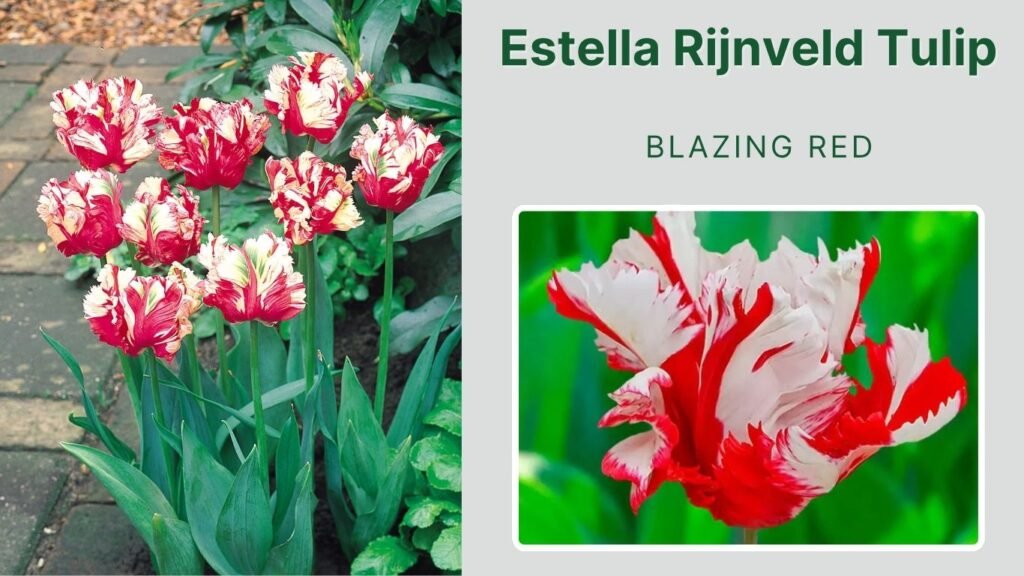
Estella Rijnveld is a flamboyant parrot tulip with bold red and white petals that are heavily ruffled and twisted. Its dramatic form and striking colors make it an eye-catching addition to artistic or themed garden beds.
Identification
- Color: Red and white streaked
- Petal Shape: Heavily fringed, twisted, and feathered
- Height: 18–22 inches
- Bloom Time: Late spring
- Group: Parrot Tulip
Origin and Popularity
Bred in the Netherlands, Estella Rijnveld is one of the most recognized parrot tulips. Gardeners and designers love it for its showy form and carnival-like coloring, perfect for creating theatrical spring displays.
Growing and Blooming Season
Plant in the fall for May blooming. Grows best in USDA zones 3–7. Requires a sunny position with good drainage. Due to its large blooms and slightly heavier heads, some support may be needed in windy areas.
Companion Plants
Perfectly matched with solid red or white tulips for balance. Also pairs beautifully with soft blue muscari or light green foliage like hostas or ferns to highlight its vivid colors. Excellent for cutting gardens and focal points in flower beds.
16. Candy Club Tulip
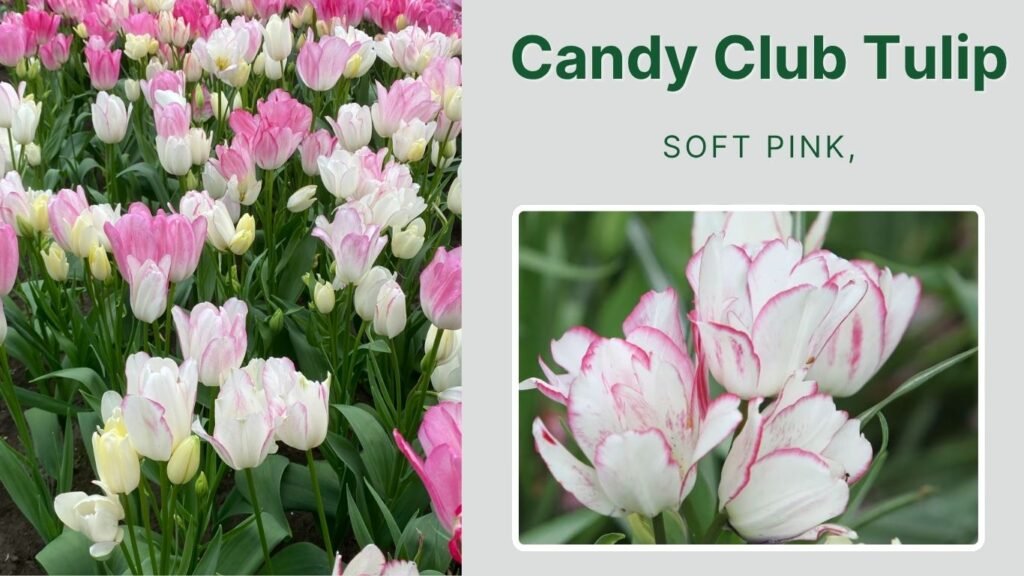
Candy Club is a unique and cheerful tulip that surprises gardeners with blooms that can range from creamy white to pale pink, often showing multiple soft hues on a single flower. As a tall, multi-flowering variety, it adds vertical interest and playful charm to garden beds.
Identification
- Color: Creamy white to pale pink with yellow base
- Petal Shape: Cup-shaped with slightly pointed tips
- Height: 24–28 inches
- Bloom Time: Late spring
- Group: Multi-Flowering Tulip
Origin and Popularity
Bred in the Netherlands, Candy Club is appreciated for producing up to five flowers per stem. Its soft, ever-changing colors make it a favorite for pastel-themed plantings and layered garden compositions.
Growing and Blooming Season
Plant in fall for blooming in late April through May. Best suited for USDA zones 3–7. It thrives in sunny spots with well-drained soil. Because of its tall height and multiple blooms, it makes an excellent choice for the back of borders or as a standout in mixed beds.
Companion Plants
Pairs well with soft yellows, purples, or whites—try combining it with ‘White Triumphator’, light-blue muscari, or lavender. Its height makes it a good companion for alliums and taller daffodil varieties for a varied, textured look.
17. Flaming Parrot Tulip
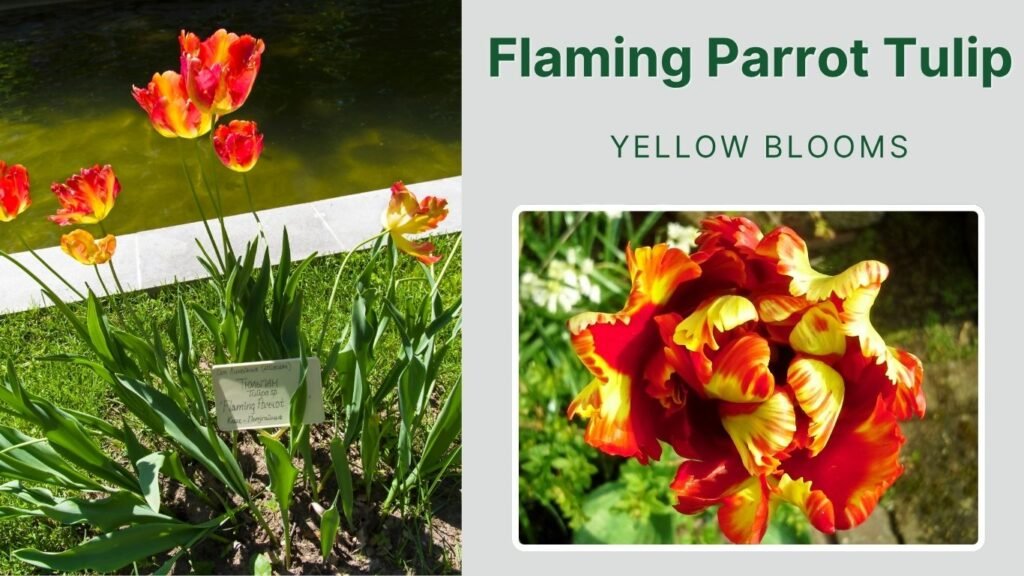
Flaming Parrot is a vibrant, exotic-looking tulip known for its large, ruffled petals splashed with bold yellow and red flame-like markings. This variety from the Parrot group is ideal for adding drama and bold color to spring gardens.
Identification
- Color: Yellow base with scarlet red flames
- Petal Shape: Fringed, ruffled, and curved
- Height: 20–24 inches
- Bloom Time: Late spring
- Group: Parrot Tulip
Origin and Popularity
Introduced in the 20th century, Flaming Parrot remains a standout variety among parrot tulips. Gardeners value it for its fiery appearance and large, showy blooms, making it perfect for focal points and dramatic plantings.
Growing and Blooming Season
Plant in fall for blooming in mid to late May. Ideal for USDA zones 3–7. Needs a sunny, well-drained area to prevent the heavy blooms from drooping. May require some wind protection or light staking in exposed gardens.
Companion Plants
Stunning when paired with dark tulips like ‘Black Parrot’ or purple varieties like ‘Negrita’. Also works well with creamy white tulips or bold spring flowers like crown imperials. Great for themed borders, container displays, and cut flower arrangements.
18. Negrita Tulip
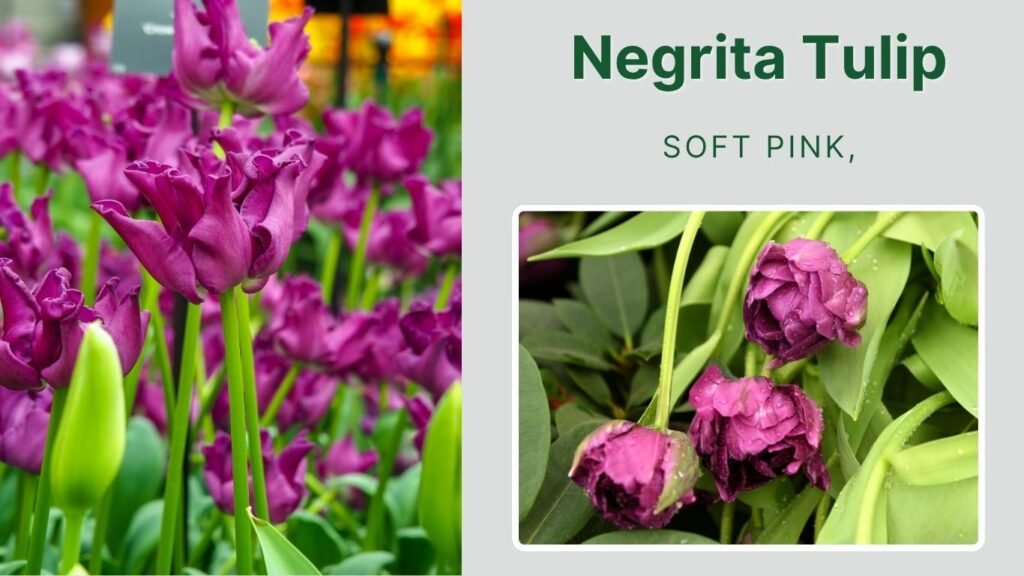
Negrita is a bold and velvety tulip with deep purple blooms and a classic tulip shape. Belonging to the Triumph group, this variety offers richness, depth, and elegance to spring gardens. Its reliable performance and strong stems make it ideal for both landscaping and cut flower use.
Identification
- Color: Rich purple with hints of plum and violet
- Petal Shape: Smooth, oval, and slightly pointed
- Height: 18–20 inches
- Bloom Time: Mid-spring
- Group: Triumph Tulip
Origin and Popularity
Bred in the Netherlands, Negrita has become a favorite for purple-themed gardens and mixed-color plantings. Its durable blooms and elegant color give it wide appeal among both casual and professional gardeners.
Growing and Blooming Season
Plant bulbs in the fall for blooming in April, around mid-spring. Best in USDA zones 3–8, it thrives in full sun and well-drained soil. The blooms are long-lasting, making Negrita a great choice for garden borders, containers, and fresh-cut bouquets.
Companion Plants
Pairs beautifully with bright orange tulips like ‘Ballerina’, white tulips such as ‘Mount Tacoma’, or pink varieties like ‘Angelique’. Also combines well with grape hyacinths and pansies for a harmonious spring display.
19. Blushing Lady Tulip
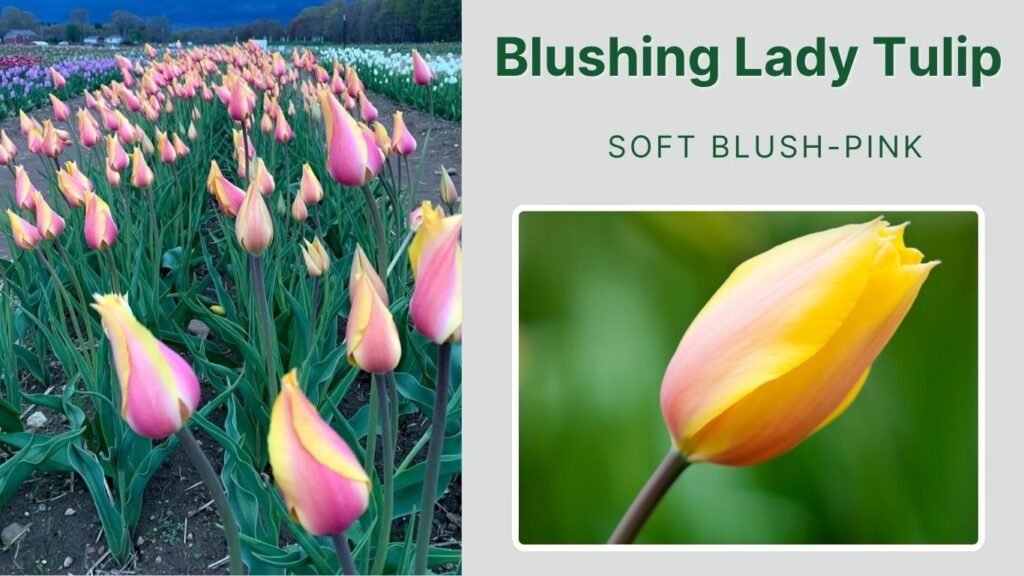
Blushing Lady is a tall, elegant tulip known for its creamy yellow petals kissed with soft pink edges. It belongs to the Single Late group and adds a graceful, feminine touch to gardens, especially when planted in clusters or naturalized areas.
Identification
- Color: Pale yellow with blushing pink edges
- Petal Shape: Tall, slender, and slightly pointed
- Height: 24–28 inches
- Bloom Time: Late spring
- Group: Single Late Tulip
Origin and Popularity
Blushing Lady is appreciated for its refined color gradient and stately posture. Often chosen for romantic garden themes, it stands out in both formal beds and wildflower-inspired designs.
Growing and Blooming Season
Plant in fall for blooms in late spring, typically in May. Best suited for USDA zones 3–8. Requires full sun and well-drained soil. Because of its tall stems, it’s excellent for the middle or back of flower beds and works well in floral arrangements.
Companion Plants
Complements soft-toned tulips like ‘China Pink’ or white varieties such as ‘White Triumphator’. Also lovely with blue muscari, soft lavender, or pink bleeding hearts. Perfect for cottage-style gardens or pastel-themed spring borders.
20. Daydream Tulip
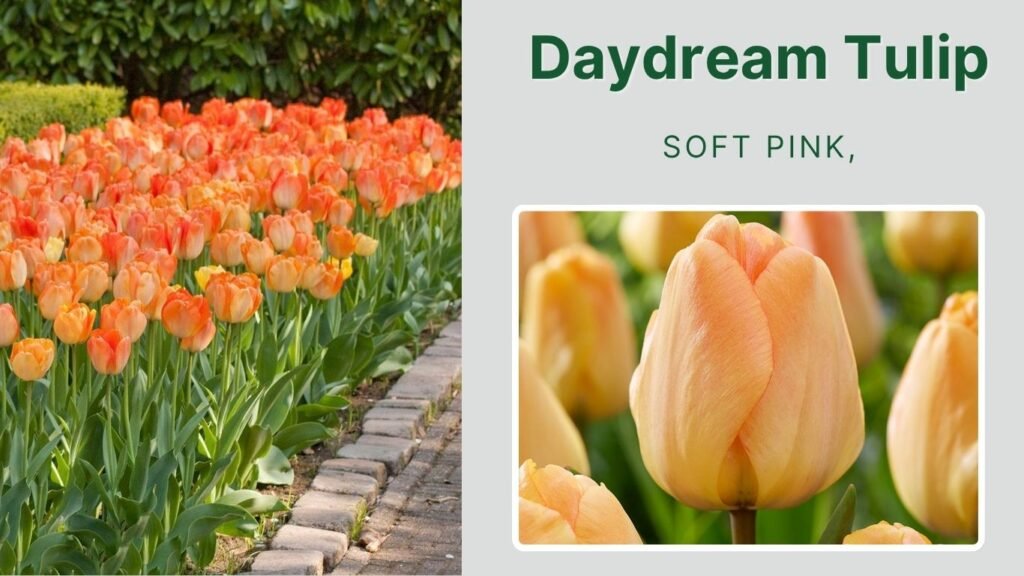
Daydream is a fascinating tulip known for its color-changing petals that open in bright yellow and gradually shift to warm orange as they mature. A member of the Darwin Hybrid group, this tulip brings dynamic color and strong visual impact to mid-spring gardens.
Identification
- Color: Starts yellow, matures to orange or apricot
- Petal Shape: Broad and rounded
- Height: 20–24 inches
- Bloom Time: Mid to late spring
- Group: Darwin Hybrid Tulip
Origin and Popularity
Bred for both strength and beauty, Daydream tulip is prized for its evolving coloration. Gardeners love its tall, sturdy stems and its ability to stand out in both mass plantings and mixed borders.
Growing and Blooming Season
Plant in autumn for blooms that appear from late April through early May. Thrives in USDA zones 3–7, requiring full sun and fertile, well-drained soil. Its tall stems make it a showpiece in flower beds, public parks, or large spring displays.
Companion Plants
Daydream pairs well with purple tulips like ‘Negrita’ or dark reds such as ‘Ronaldo’. It also complements pastel-colored spring flowers like hyacinths or early alliums. For contrast and vibrancy, try planting alongside creamy white tulips or blue muscari.
21. Pink Impression Tulip
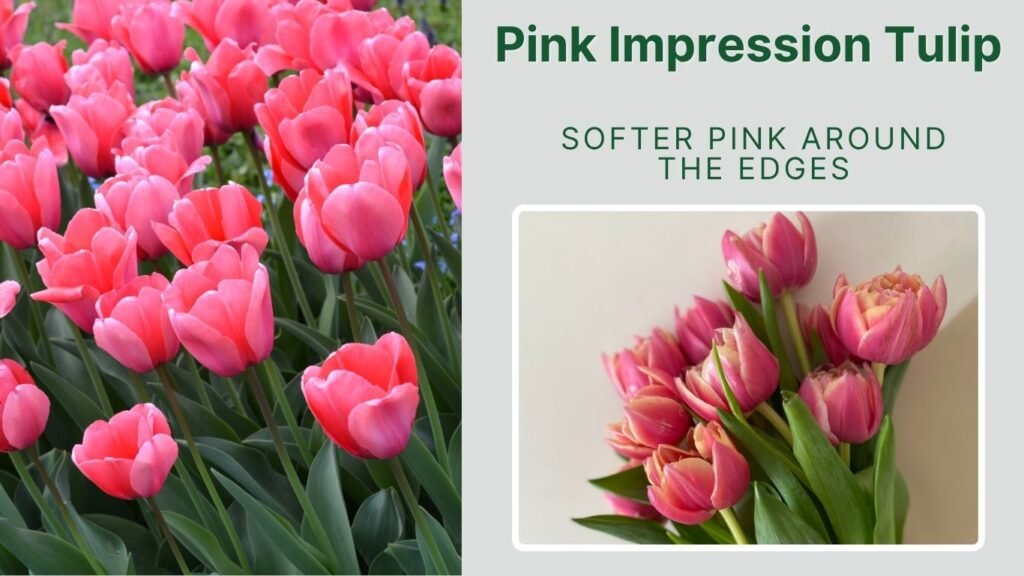
Pink Impression is a large, bold tulip that produces impressive blooms in a rich, rosy-pink shade. Part of the Darwin Hybrid group, it’s known for its size, vigor, and reliable performance year after year.
Identification
- Color: Deep rose-pink with salmon undertones
- Petal Shape: Broad, classic cup shape
- Height: 22–26 inches
- Bloom Time: Mid-spring
- Group: Darwin Hybrid Tulip
Origin and Popularity
A sister variety to ‘Red Impression’ and ‘Apricot Impression’, this tulip is loved for its powerful presence and long blooming window. It’s widely used in both public displays and private gardens due to its vibrant color and height.
Growing and Blooming Season
Plant bulbs in October or November. Blooms emerge in April, lasting for weeks. Hardy in USDA zones 3–8, it grows best in sunny, well-drained locations. Its tall, robust stems make it ideal for cutting and reliable in unpredictable spring weather.
Companion Plants
Combines beautifully with lighter tulips like ‘Angelique’ or ‘Mount Tacoma’ for a soft, romantic effect. For bolder color combinations, plant with orange or purple Darwin hybrids. Also looks excellent in large clusters with forget-me-nots or ornamental grasses.
22. Spring Green Tulip
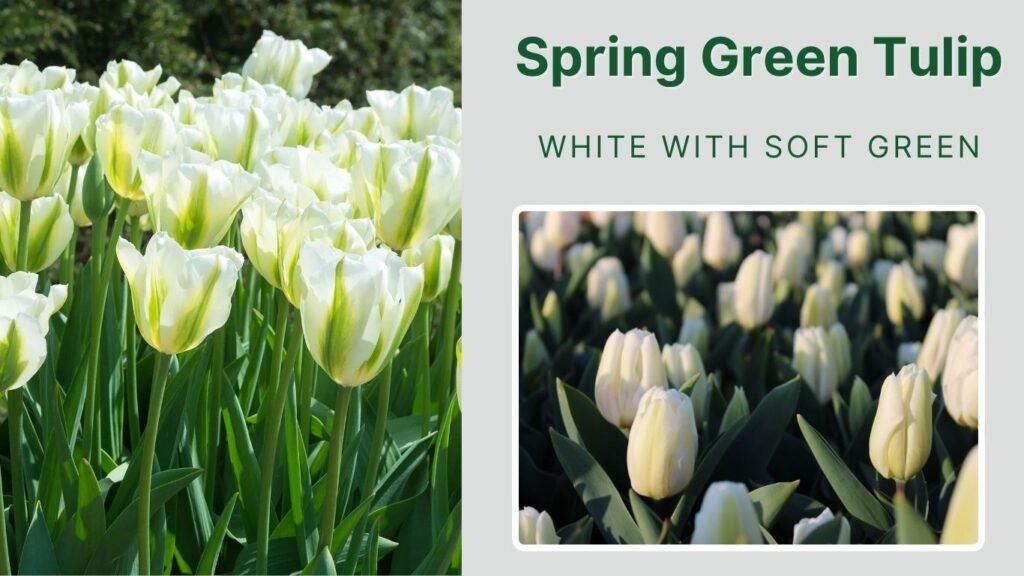
Spring Green is an elegant and refreshing tulip, easily recognized by its creamy white petals with distinctive green feather-like streaks. Belonging to the Viridiflora group, it adds a natural, almost wildflower-like beauty to spring gardens and minimalist landscapes.
Identification
- Color: Creamy white with green vertical stripes
- Petal Shape: Smooth, slightly pointed
- Height: 18–22 inches
- Bloom Time: Late spring
- Group: Viridiflora Tulip
Origin and Popularity
Spring Green has gained popularity for its understated elegance and ability to blend seamlessly with many garden styles. It’s often chosen for modern, white-and-green gardens or planted en masse for a calming, fresh spring look.
Growing and Blooming Season
Plant in fall for blooms in mid to late May. Performs well in USDA zones 3–8. Prefers full sun to partial shade and thrives in loose, well-drained soil. The long bloom time and strong stems make it suitable for beds, borders, and floral arrangements.
Companion Plants
Pairs beautifully with white tulips like ‘White Triumphator’, soft pinks such as ‘Angelique’, or deep greens like ornamental hostas. Also complements woodland perennials like ferns and hellebores for a naturalistic setting.
23. Carnaval de Nice Tulip
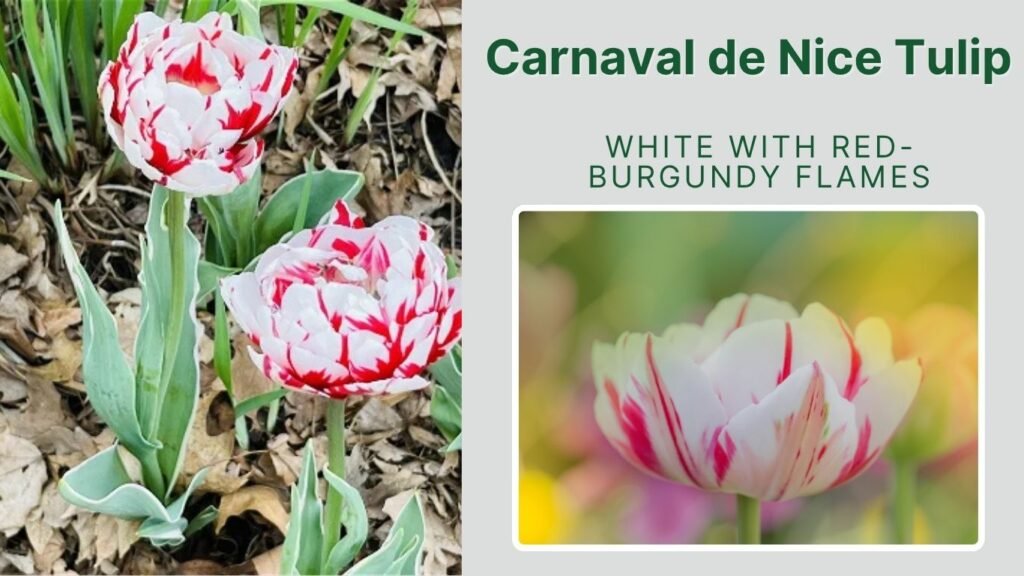
Carnaval de Nice is a spectacular double late tulip with white petals boldly streaked in deep crimson red. Its large, rose-like blooms and dramatic coloration make it a standout in formal gardens and decorative containers.
Identification
- Color: White with bold red flame-like streaks
- Petal Shape: Double, rounded, and heavily layered
- Height: 16–18 inches
- Bloom Time: Late spring
- Group: Double Late Tulip
Origin and Popularity
Developed in the Netherlands, this variety is admired for its showy, long-lasting blooms and peony-like appearance. It’s commonly featured in spring flower shows and is a top pick for dramatic, high-impact displays.
Growing and Blooming Season
Plant in fall for a strong bloom in May. Best in USDA zones 3–7. Requires full sun and fertile, well-drained soil. Due to its heavy double blooms, some light staking may help in windy areas. It’s especially suited for containers and compact beds.
Companion Plants
Looks stunning when paired with deep-colored tulips like ‘Black Hero’ or ‘Queen of Night’. Also complements lighter varieties like ‘Mount Tacoma’ and low-growing flowers such as violas or creeping phlox for a lush garden tapestry.
24. Rembrandt Tulip
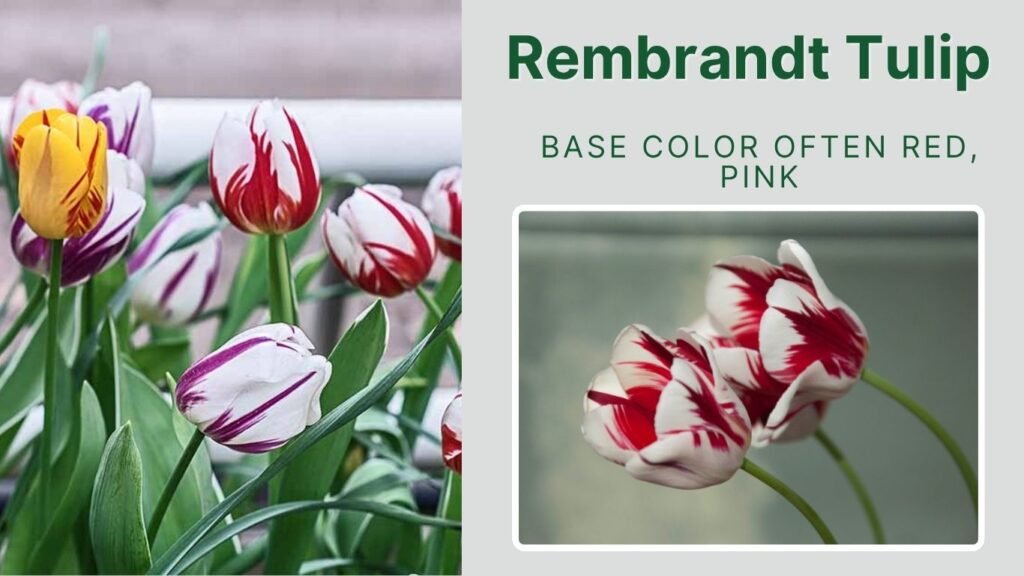
Rembrandt Tulips are famous for their striking feathered or flamed petal patterns in a wide range of colors. Historically, these tulips were associated with the Dutch Golden Age and tulip mania. Modern Rembrandt tulips mimic the look of the original virus-infected varieties but are bred safely and intentionally.
Identification
- Color: Varied—white, yellow, or red base with feathered streaks of contrasting colors
- Petal Shape: Oval, slightly pointed
- Height: 18–24 inches
- Bloom Time: Mid to late spring
- Group: Rembrandt Tulip
Origin and Popularity
Named after the famous Dutch painter, these tulips evoke a vintage and historical feel. They are beloved for their artistic streaks and are frequently featured in heritage gardens and tulip exhibitions.
Growing and Blooming Season
Plant in fall for blooms from late April to May. Best grown in USDA zones 3–8. Needs full sun and well-drained soil. The patterns become most visible when planted en masse or grouped with solid-colored tulips for contrast.
Companion Plants
Great companions include solid-colored tulips in similar tones to highlight the streaking—such as pairing red-and-white Rembrandt tulips with solid crimson or white blooms. Also looks beautiful with spring annuals like pansies or violas for a vintage cottage garden vibe.
25. Tulipa clusiana (Lady Tulip)
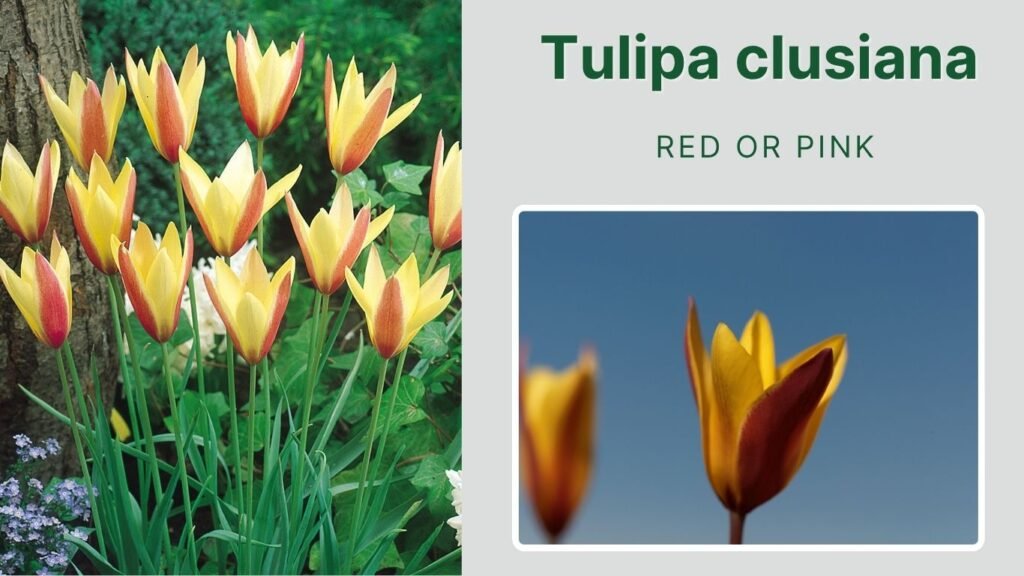
Tulipa clusiana, commonly known as the Lady Tulip, is a species tulip known for its slim petals, bi-colored blooms, and graceful appearance. It brings a wildflower feel to gardens and naturalized landscapes.
Identification
- Color: Cream or white with pink to red outer petal stripes
- Petal Shape: Long, narrow, and pointed
- Height: 10–14 inches
- Bloom Time: Mid to late spring
- Group: Species Tulip
Origin and Popularity
Native to Iran and surrounding areas, it was introduced to European gardens in the 17th century. Loved for its natural, delicate look, it’s ideal for rock gardens, borders, and naturalized meadow settings.
Growing and Blooming Season
Plant in fall for blooming around April or early May. Hardy in USDA zones 4–8. It prefers full sun and well-drained, sandy soil. Unlike hybrids, Tulipa clusiana can naturalize and return for many years if left undisturbed.
Companion Plants
Perfect for wildflower meadows or minimalist plantings. Pairs well with other species tulips, grape hyacinths, or low-growing herbs like thyme. Its slender form complements ferns and native grasses in informal landscapes.