


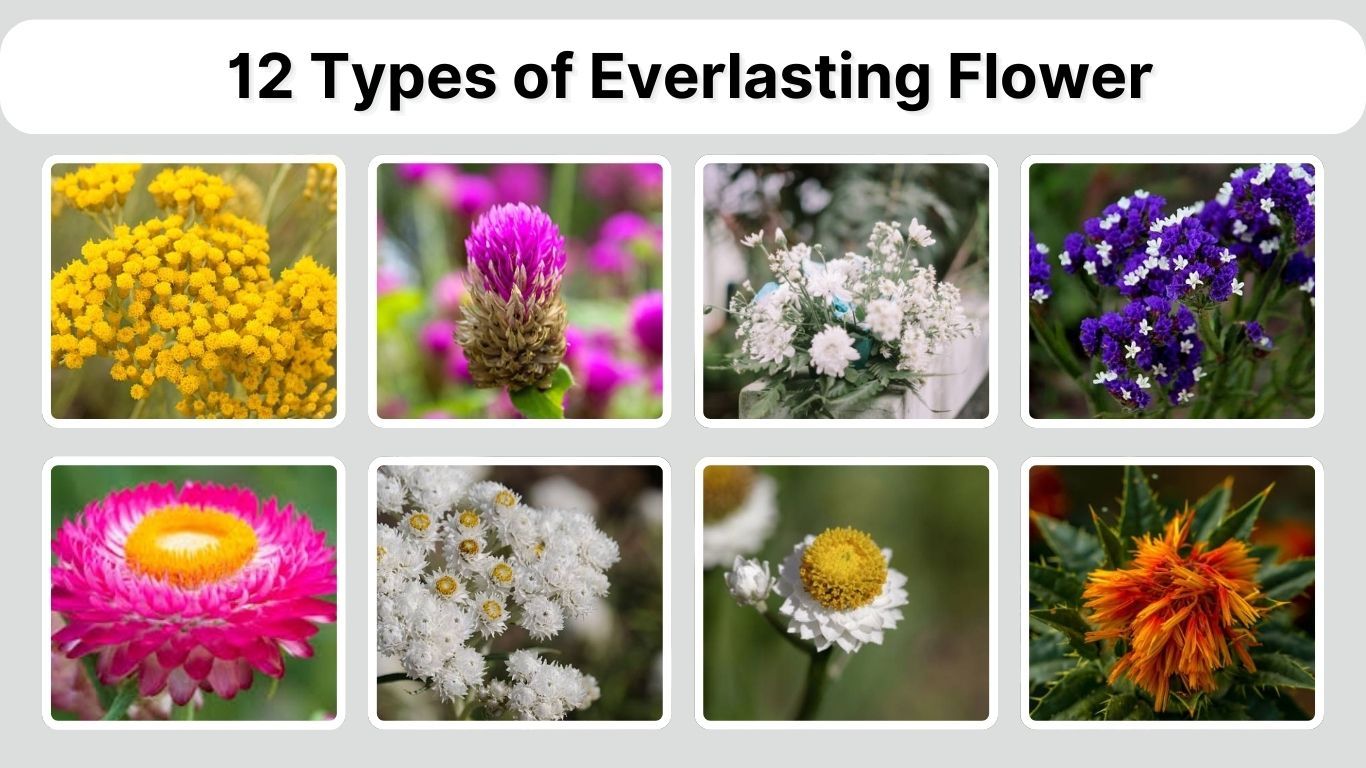
Everlasting flowers are prized for their unique ability to retain beauty long after being harvested. Unlike ordinary blooms, these special plants dry naturally while keeping much of their color, shape, and texture, making them perfect for long-lasting decorations, wreaths, and floral crafts. From bright, papery daisies to soft, fluffy plumes, everlasting flowers add charm to gardens and preserved arrangements alike. Their durability, wide variety of forms, and ease of drying have made them popular with gardeners, florists, and DIY enthusiasts around the world.
1. Strawflower (Xerochrysum bracteatum)
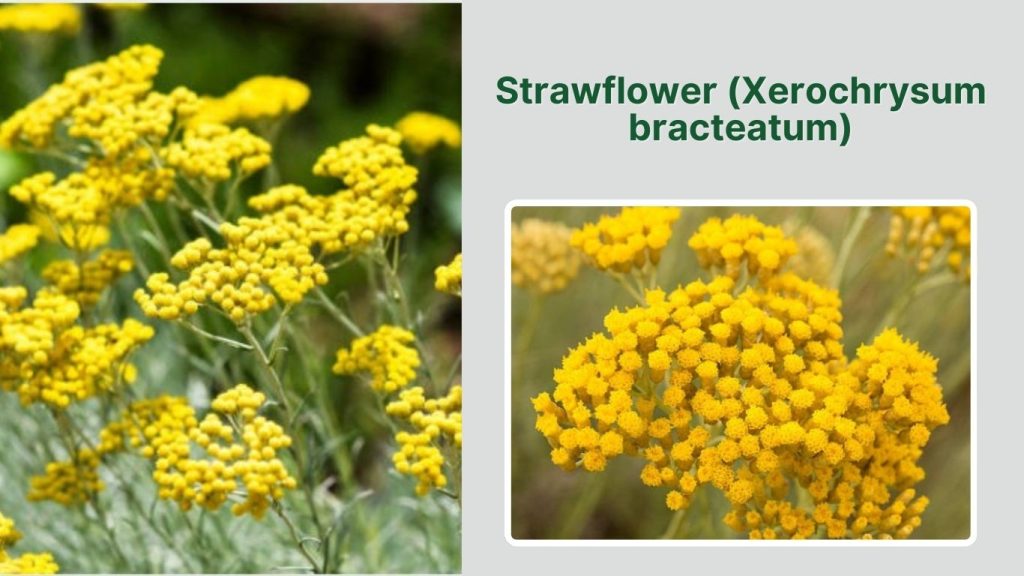
Strawflower is one of the most popular everlasting flowers, widely known for its papery petals and exceptional ability to retain color and shape after drying. Native to Australia, this hardy flowering plant is commonly used in dried bouquets, floral crafts, and long-lasting decorations. Its bright, daisy-like blooms appear in shades of yellow, orange, red, pink, and white, making it a favorite for both fresh gardens and preserved floral designs.
Identification
- Bright, daisy-shaped flower heads with stiff, papery bracts
- Common colors include yellow, orange, red, pink, bronze, and white
- Central disk is usually golden yellow
- Upright stems, typically 1 to 3 feet tall
- Narrow, lance-shaped green leaves
- Dry, crisp texture even when freshly bloomed
Habitat and Growing Conditions
Strawflowers thrive in warm, sunny environments and are naturally adapted to open grasslands and coastal regions of Australia. They prefer full sun exposure and well-drained soil, performing best in sandy or loamy ground. Once established, strawflowers are drought-tolerant and can handle hot, dry climates better than many ornamental flowers.
Blooming Season and Growth Pattern
Strawflowers usually bloom from late spring through early autumn, producing flowers continuously when dead blooms are removed. They grow quickly from seed and often flower within 10 to 12 weeks. The plants develop upright, branching stems that carry single large blooms, making them excellent for both garden display and cutting purposes.
Uses and Significance
Strawflowers are especially valued for dried floral arrangements because their stiff bracts hold color for months or even years. They are commonly used in wreaths, bouquets, potpourri, and craft projects. In gardens, they attract pollinators like bees and butterflies, adding both visual beauty and ecological value.
2. Globe Amaranth (Gomphrena globosa)
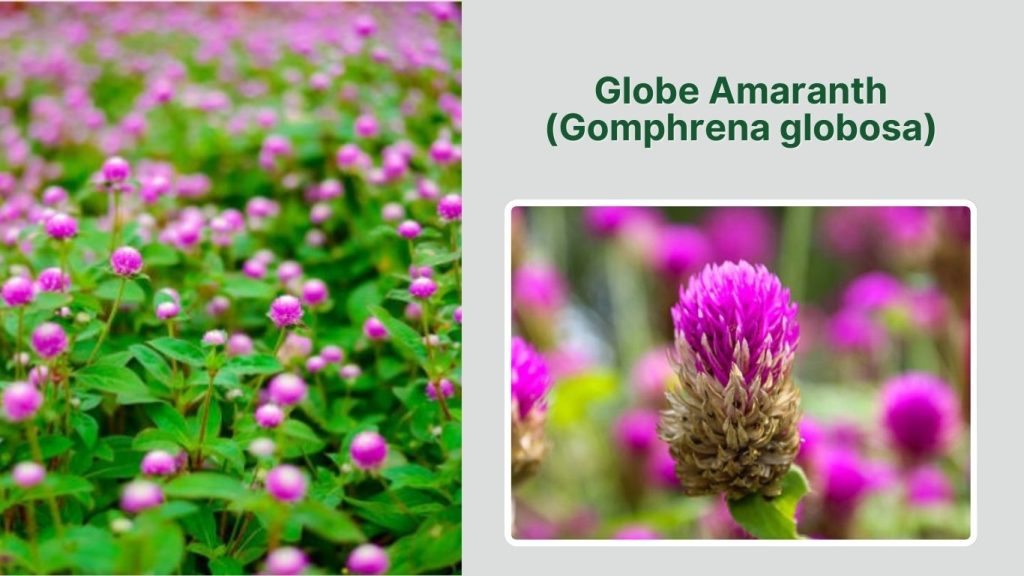
Globe amaranth is a classic everlasting flower admired for its round, clover-like blooms and outstanding color retention when dried. Native to Central America, this cheerful plant produces vibrant purple, pink, red, white, and magenta flower heads that stay attractive long after harvest. Because of its long vase life and papery texture, globe amaranth is widely used in dried bouquets, garlands, and craft arrangements.
Identification
- Small, round, ball-shaped flower heads
- Common colors include purple, magenta, pink, red, and white
- Papery bracts with tiny true flowers inside
- Slender, upright stems about 1 to 2 feet tall
- Opposite, oval to lance-shaped green leaves
- Firm texture that holds shape when dried
Habitat and Growing Conditions
Globe amaranth thrives in warm, sunny locations and prefers full sun for best flowering. It grows well in well-drained soil and tolerates poor, sandy, or slightly dry conditions. This plant is heat-loving and drought-tolerant once established, making it suitable for summer gardens and low-maintenance landscapes.
Blooming Season and Growth Pattern
Blooming usually begins in early summer and continues until the first frost. Globe amaranth produces flowers steadily on branching stems, creating a compact, bushy plant. Regular harvesting encourages more blooms, making it an excellent choice for continuous cutting throughout the growing season.
Uses and Significance
Globe amaranth is prized for dried flower crafts, wreaths, and long-lasting arrangements because its color remains vivid after drying. Fresh flowers are also popular in borders and containers. In traditional cultures, it has been used in herbal teas and decorative garlands, and it attracts butterflies and beneficial insects.
3. Baby’s Breath (Gypsophila paniculata)
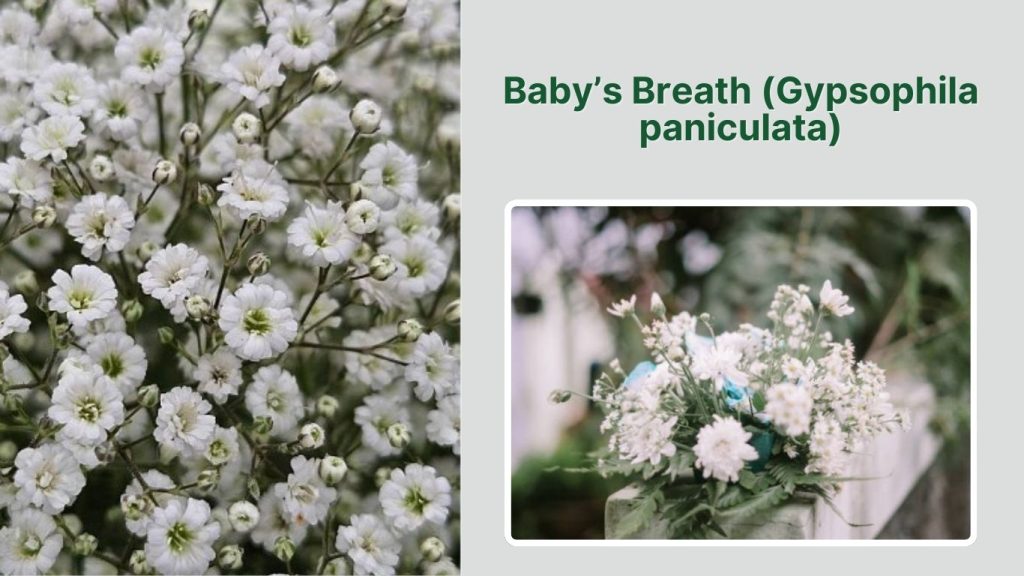
Baby’s breath is a delicate yet hardy everlasting flower, best known for its clouds of tiny white or pale pink blooms that create a soft, airy appearance. Native to Eastern Europe and Central Asia, this plant is widely used both fresh and dried in floral arrangements. Its thin, branching stems and long-lasting flowers make it one of the most popular filler plants in bouquets and preserved floral designs.
Identification
- Masses of very small, star-shaped white or pale pink flowers
- Highly branched, thin, wiry stems
- Fine, narrow, gray-green leaves
- Light, airy, cloud-like growth form
- Mature plants often reach 2 to 3 feet tall
- Flowers dry naturally on the stem and retain shape
Habitat and Growing Conditions
Baby’s breath grows best in full sun and prefers well-drained, slightly alkaline soil. It naturally occurs in open fields, rocky slopes, and grasslands. The plant is drought-tolerant once established and dislikes heavy, waterlogged soils, which can cause root problems.
Blooming Season and Growth Pattern
This flower typically blooms from late spring through mid-summer. Plants form rounded, bushy clumps and produce thousands of tiny blossoms on branching sprays. With proper care and cutting, baby’s breath can rebloom lightly later in the season.
Uses and Significance
Baby’s breath is famous for adding softness and volume to bouquets, wreaths, and dried floral crafts. When dried, the flowers keep their shape and can be dyed for decorative use. In gardens, it works well in borders and cottage-style landscapes and attracts small pollinators.
4. Statice (Limonium sinuatum)
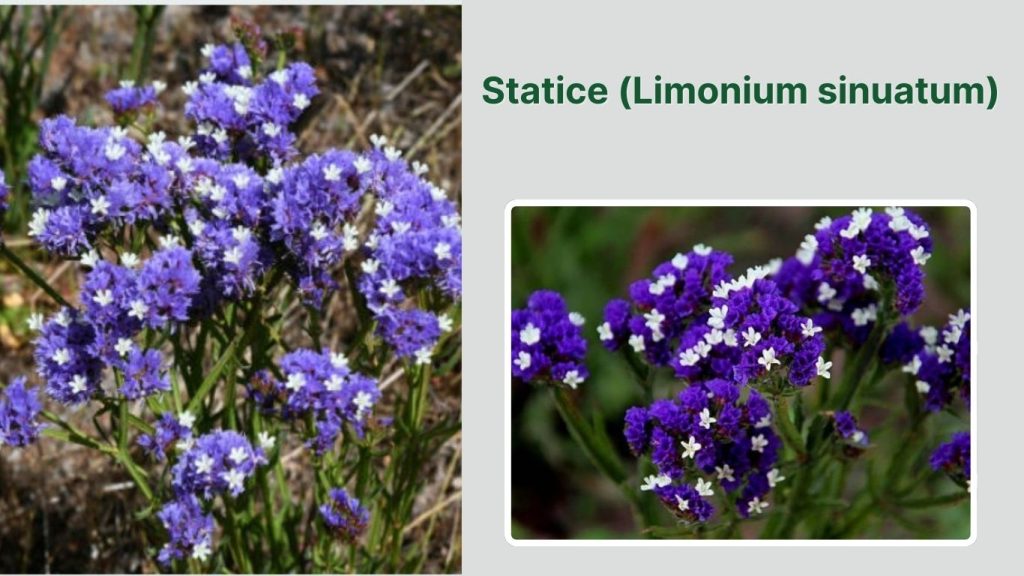
Statice is a classic everlasting flower recognized for its papery, colorful calyces and excellent ability to retain both form and color when dried. Native to the Mediterranean region, this plant produces clusters of small flowers in shades of purple, blue, pink, yellow, and white. Because of its long-lasting nature, statice is one of the most widely used flowers in dried arrangements and floral crafts.
Identification
- Clusters of small, papery, funnel-shaped flowers
- Common colors include purple, blue, lavender, pink, yellow, and white
- Stiff, branching stems ideal for cutting
- Wrinkled, lance-shaped basal leaves
- Plants usually grow 1 to 2.5 feet tall
- Flowers feel dry and crisp even when fresh
Habitat and Growing Conditions
Statice thrives in full sun and prefers well-drained, sandy or loamy soils. It is naturally adapted to coastal and open, dry environments and tolerates salt and drought better than many ornamentals. Good air circulation and moderate watering help produce strong stems and vivid flower color.
Blooming Season and Growth Pattern
Blooming generally begins in early summer and can continue into fall. The plant forms a basal rosette of leaves, from which tall, branching flower stalks emerge. Regular harvesting encourages continued flowering throughout the warm months.
Uses and Significance
Statice is prized for dried bouquets, wreaths, and long-lasting decorative displays. It is also used fresh in floral arrangements for its bright color and texture. In gardens, statice adds long-season interest and attracts bees and other pollinators.
5. Paper Daisy (Helichrysumspp)
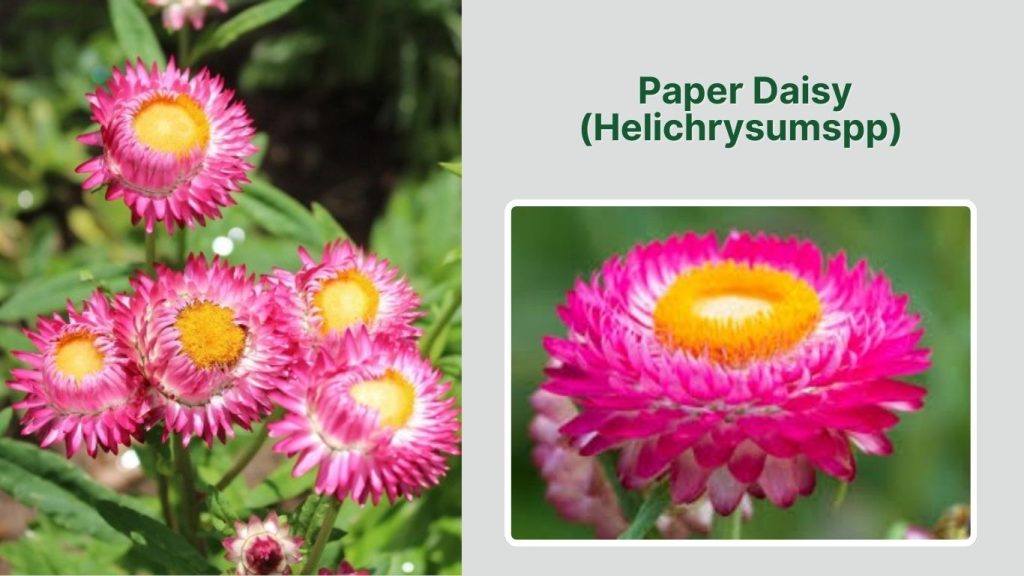
Paper daisy is a well-known everlasting flower group admired for its crisp, papery petals and bright, sun-like blooms. Native mainly to Australia and parts of Africa, these flowers are famous for holding their shape and color long after drying. Paper daisies appear in vivid shades of yellow, white, pink, orange, and red, making them highly valued for dried floral art and ornamental gardens.
Identification
- Daisy-like flowers with stiff, papery bracts
- Common colors include yellow, white, pink, orange, and red
- Prominent central disc, often yellow or dark
- Upright stems with narrow to oval leaves
- Dry, straw-like texture even when fresh
- Blooms often feel crisp to the touch
Habitat and Growing Conditions
Paper daisies thrive in full sun and naturally grow in open grasslands, coastal areas, and dry regions. They prefer well-drained sandy or loamy soils and do not tolerate heavy, waterlogged ground. These plants are drought-tolerant and well suited to warm climates with plenty of light.
Blooming Season and Growth Pattern
Most paper daisies bloom from spring through late summer. They grow as compact to medium-height plants with branching stems that hold flowers well above the foliage. Regular cutting of blooms encourages continuous flowering and bushier growth.
Uses and Significance
Paper daisies are among the most popular everlasting flowers for dried bouquets, wreaths, and long-lasting decorations. They are also attractive in garden borders and wildflower plantings. Their bright colors and open flower centers make them appealing to bees and other pollinators.
6. Pearly Everlasting (Anaphalis margaritacea)
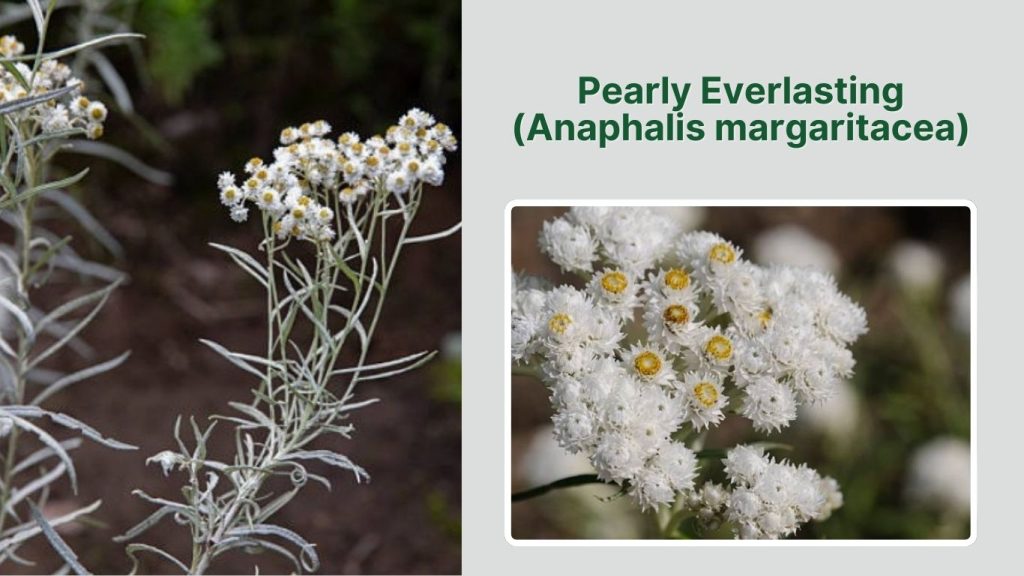
Pearly everlasting is a hardy perennial everlasting flower known for its small, pearl-like white blooms with golden centers. Native to North America and parts of Asia, this plant is especially valued for dried flower arrangements because its stiff, papery flowers keep their shape and soft color for a very long time. Its silvery foliage also adds texture and contrast in gardens.
Identification
- Small, white, button-like flowers with yellow centers
- Clusters of blooms held at the tops of upright stems
- Narrow, gray-green to silvery leaves
- Soft, woolly texture on stems and foliage
- Plants usually grow 1.5 to 3 feet tall
- Flowers dry easily and retain form
Habitat and Growing Conditions
Pearly everlasting naturally grows in open woods, meadows, and mountain slopes. It prefers full sun to light shade and well-drained soil. The plant is very cold-hardy and drought-tolerant once established, making it suitable for naturalized gardens and low-maintenance landscapes.
Blooming Season and Growth Pattern
Blooming typically occurs from mid-summer to early fall. The plant spreads slowly by underground rhizomes, forming clumps over time. Upright stems rise above the foliage and produce clusters of long-lasting flowers.
Uses and Significance
Pearly everlasting is widely used in dried floral crafts, wreaths, and arrangements. It has also been used traditionally in herbal remedies and was historically valued by Native American tribes. In gardens, it attracts butterflies and adds a soft, silvery tone to wildflower plantings.
7. Winged Everlasting (Ammobium alatum)
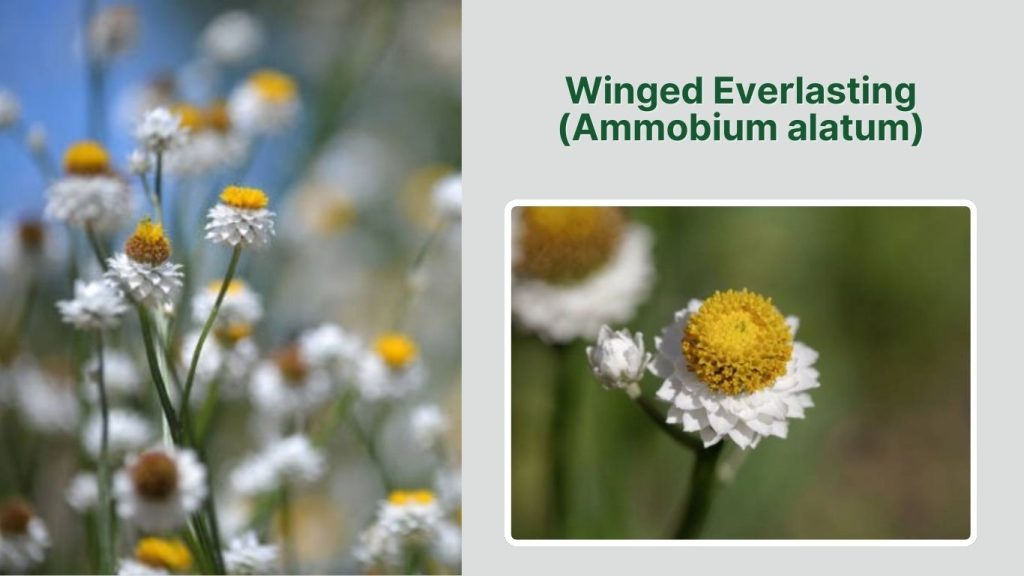
Winged everlasting is a charming everlasting flower recognized for its crisp white petals and distinctive winged stems. Native to eastern Australia, this plant produces bright, daisy-like blooms with yellow centers that dry beautifully while keeping their shape and color. Because of its neat form and long-lasting flowers, winged everlasting is widely used in dried bouquets and floral crafts.
Identification
- White, papery, daisy-like flowers with yellow centers
- Flat, winged edges running along the stems
- Clusters of blooms held above the foliage
- Narrow, gray-green leaves near the base
- Plants usually grow 1 to 2 feet tall
- Flowers feel stiff and dry even when fresh
Habitat and Growing Conditions
Winged everlasting thrives in full sun and prefers well-drained, light soils. It naturally grows in open grasslands and dry woodland areas. This plant tolerates drought and heat well and performs best where soil does not stay wet for long periods.
Blooming Season and Growth Pattern
Blooming begins in early summer and often continues into early autumn. Plants grow upright with branching, winged stems that support multiple blooms. Regular cutting of flowers encourages more branching and extended blooming.
Uses and Significance
Winged everlasting is popular in dried floral arrangements, wreaths, and decorative crafts. Fresh flowers are also used in bouquets for their clean white color and bright centers. In gardens, they add a light, airy look and attract pollinating insects.
8. Safflower (Carthamus tinctorius)
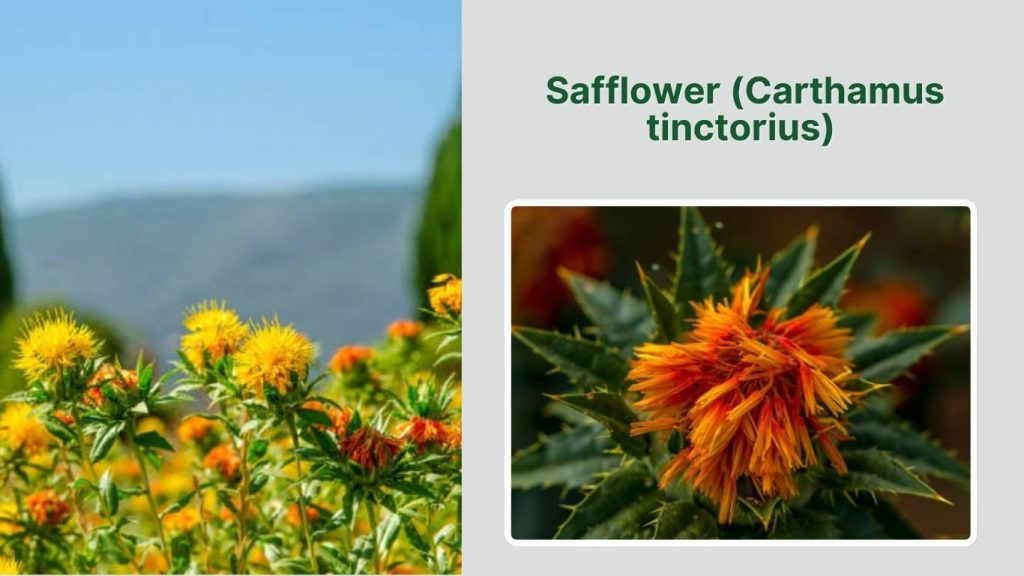
Safflower is a bold everlasting flower known for its spiky, thistle-like blooms and rich orange, red, or yellow tones that hold well when dried. Native to the Middle East and parts of Asia, safflower has been cultivated for thousands of years for dye, oil, and ornamental use. Its strong stems and long-lasting flowers make it popular in dried floral arrangements.
Identification
- Round, thistle-like flower heads with stiff bracts
- Common colors include yellow, orange, and deep red
- Upright, branching stems that may be slightly spiny
- Glossy, oval to lance-shaped leaves
- Plants often reach 2 to 4 feet tall
- Flowers dry firmly and retain color
Habitat and Growing Conditions
Safflower grows best in full sun and prefers deep, well-drained soils. It is highly drought-tolerant and adapted to dry, open environments. The plant develops a long taproot, which helps it survive in low-water conditions but makes transplanting difficult.
Blooming Season and Growth Pattern
Blooming usually occurs in early to mid-summer. Plants grow upright with strong, branched stems that support many flower heads. Each plant produces multiple blooms, and once flowering begins, it continues steadily for several weeks.
Uses and Significance
Safflower is widely used in dried floral designs because of its bold color and sturdy form. Historically, its petals were used to make red and yellow dyes, and today it is also cultivated for safflower oil. In gardens, it adds height, texture, and visual interest.
9. Sea Lavender (Limonium latifolium)
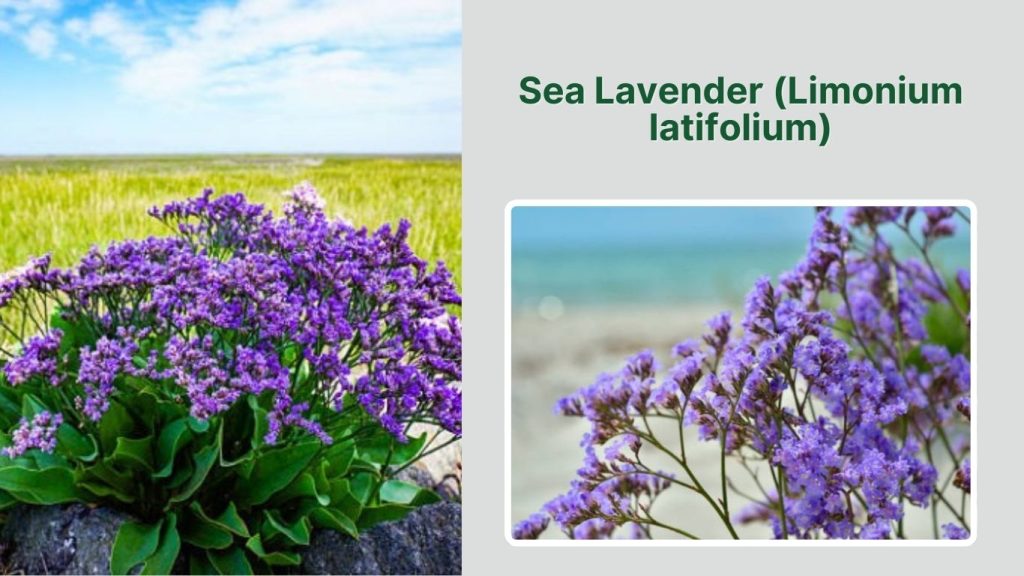
Sea lavender is a graceful everlasting flower valued for its airy sprays of tiny purple to lavender blooms that dry exceptionally well. Native to coastal regions of Europe, this plant is closely related to statice and is prized for adding light texture and soft color to dried arrangements. Its long-lasting flowers and cloud-like form make it a favorite filler plant.
Identification
- Large, branching clusters of very small purple or lavender flowers
- Thin, wiry stems forming airy, cloud-like sprays
- Broad, leathery basal leaves
- Papery flower texture ideal for drying
- Plants commonly reach 1.5 to 3 feet tall
- Flowers fade slightly but keep their form when dried
Habitat and Growing Conditions
Sea lavender thrives in full sun and prefers well-drained, sandy or rocky soils. It naturally grows along coastlines and open dry fields and is tolerant of salt and drought. Good drainage is essential, as the plant does not perform well in heavy or waterlogged soils.
Blooming Season and Growth Pattern
Blooming usually occurs from mid-summer through early fall. The plant forms a low rosette of leaves, from which tall, highly branched flower stalks emerge. These stalks create a soft, mist-like appearance above the foliage.
Uses and Significance
Sea lavender is widely used in dried bouquets, wreaths, and floral crafts for adding volume and a delicate look. Fresh flowers are also used as fillers in arrangements. In the garden, it provides long-season interest and attracts bees and butterflies.
10. Celosia (Celosia argentea)
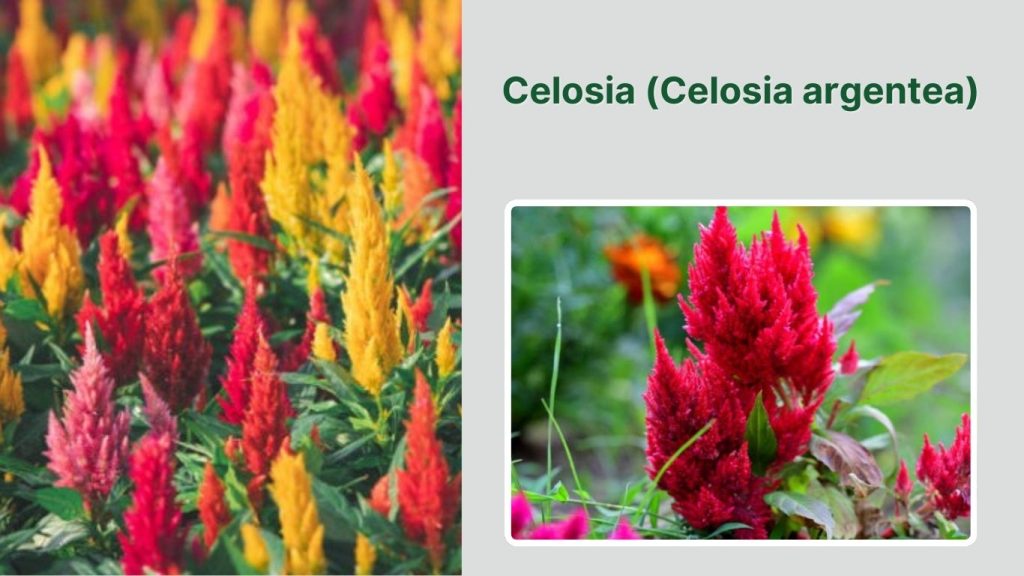
Celosia is a striking everlasting flower admired for its unusual flame-like or feathery blooms and brilliant colors that hold well when dried. Native to tropical regions of Africa and Asia, celosia produces upright flower plumes or crested heads in shades of red, orange, yellow, pink, and purple. Its bold form makes it a standout in both fresh gardens and preserved floral designs.
Identification
- Upright, plume-like or crested flower heads
- Bright colors such as red, orange, yellow, pink, and purple
- Soft but firm, velvety flower texture
- Smooth, oval to lance-shaped green leaves
- Plants typically grow 1 to 3 feet tall
- Flowers dry well and keep much of their color
Habitat and Growing Conditions
Celosia thrives in warm climates with full sun exposure. It prefers fertile, well-drained soil and regular watering, though it tolerates short dry periods once established. Being heat-loving, celosia performs best in summer gardens and protected, sunny locations.
Blooming Season and Growth Pattern
Blooming begins in early summer and continues until frost in warm regions. The plant grows upright with branching stems that support large, colorful flower heads. Regular cutting encourages side shoots and extended flowering.
Uses and Significance
Celosia is widely used in dried flower arrangements, wreaths, and decorative crafts because of its intense color and unique shapes. Fresh, it is popular in borders and containers. In some cultures, celosia leaves are also grown as a leafy vegetable, adding extra value to the plant.
11. Chinese Lantern (Physalis alkekengi)
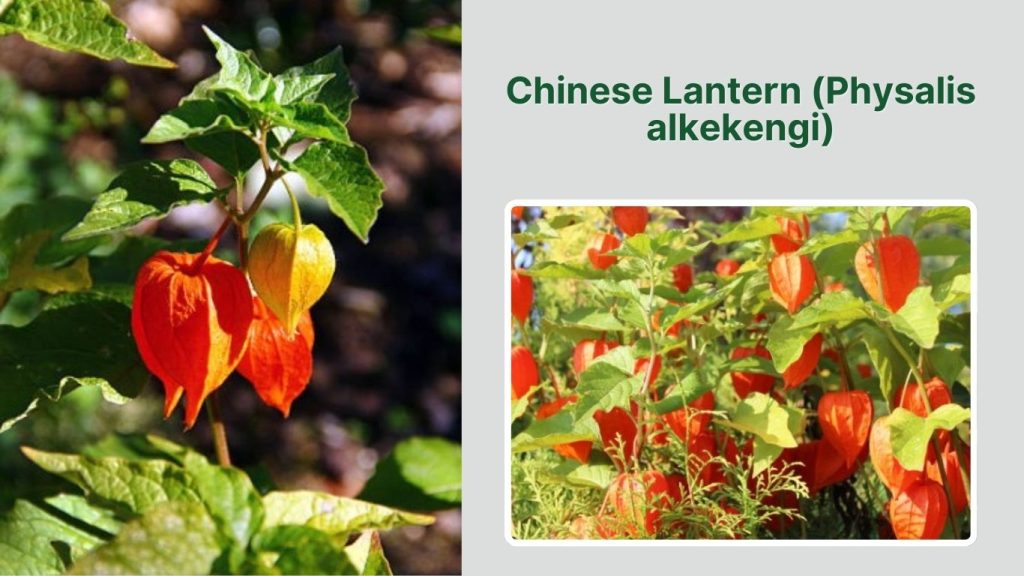
Chinese lantern is a unique everlasting plant best known for its bright, papery, lantern-shaped husks that surround the fruit. Native to Europe and Asia, it is widely grown for ornamental and dried floral use rather than for its small flowers. Once dried, the husks turn a vivid orange-red and can last for months, making them a favorite in decorative arrangements.
Identification
- Inflated, lantern-shaped papery husks
- Husk color changes from green to bright orange or red
- Small white flowers appear before husks form
- Upright, branching stems
- Oval, slightly toothed green leaves
- Mature plants usually grow 1.5 to 2.5 feet tall
Habitat and Growing Conditions
Chinese lantern thrives in full sun to partial shade and prefers well-drained, moderately fertile soil. It is hardy and easy to grow but spreads quickly through underground rhizomes, which can make it invasive in some gardens. It tolerates a wide range of conditions once established.
Blooming Season and Growth Pattern
Small white flowers appear in late spring to early summer, followed by the formation of the lantern-like husks in mid to late summer. As the season progresses, the husks dry naturally on the plant, becoming brighter and more papery.
Uses and Significance
Chinese lanterns are mainly used in dried arrangements, wreaths, and autumn decorations because of their dramatic color and shape. They are also popular in craft projects and ornamental displays. In traditional medicine, some Physalis species have been used, though the fruits should be handled with care.
12. Bunny Tails (Lagurus ovatus)
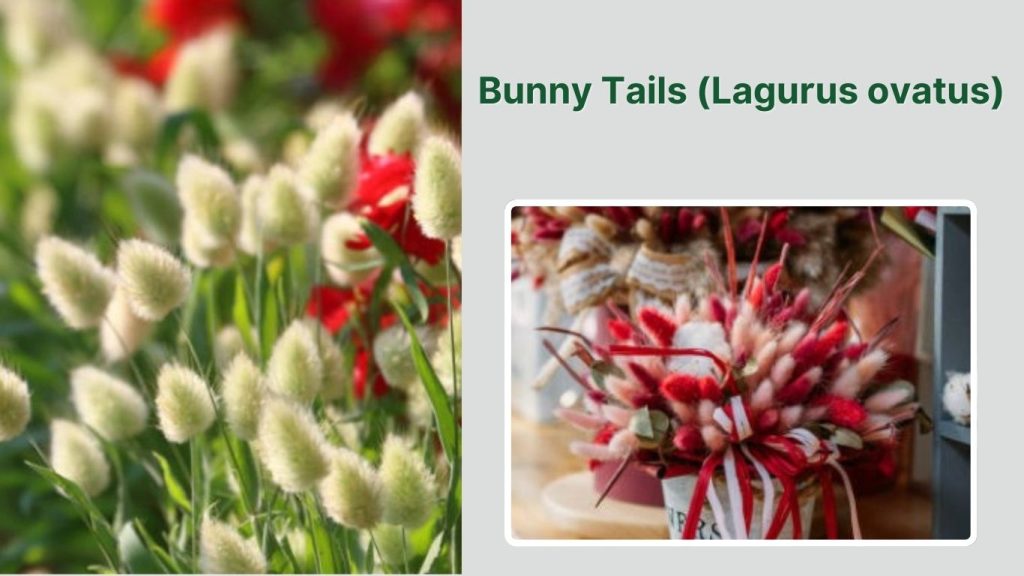
Bunny tails is a soft, ornamental everlasting grass valued for its fluffy, oval flower heads that resemble tiny rabbit tails. Native to the Mediterranean region, this plant is widely grown for dried flower arrangements and decorative crafts. Its pale cream to light beige plumes dry naturally and keep their gentle texture and shape for a long time.
Identification
- Small, oval, fluffy flower heads resembling soft tails
- Creamy white to pale beige color
- Slender, upright green stems
- Narrow, grass-like leaves
- Plants usually grow 1 to 2 feet tall
- Flower heads dry easily and remain intact
Habitat and Growing Conditions
Bunny tails thrives in full sun and prefers well-drained, sandy or light soils. It naturally grows in open fields and coastal regions. This plant is drought-tolerant once established and performs best in warm, dry conditions with good air circulation.
Blooming Season and Growth Pattern
Blooming occurs from late spring through early summer. The plant forms neat clumps of fine foliage, from which slender stems rise carrying soft, fuzzy plumes. Cutting the plumes encourages continued production during the season.
Uses and Significance
Bunny tails are extremely popular in dried bouquets, wreaths, and home décor because of their soft look and long-lasting quality. They are also used fresh in arrangements and are a favorite in minimalist and natural-style decorative designs.
FAQs
What are everlasting flowers?
Everlasting flowers are plants whose blooms can be dried and preserved while keeping their shape and much of their original color. They are commonly used in dried bouquets, wreaths, and craft projects. Their papery or firm textures help them last for months or even years.
Which everlasting flowers are best for drying?
Some of the best everlasting flowers for drying include strawflower, statice, globe amaranth, paper daisy, and pearly everlasting. These flowers naturally have stiff or papery parts that hold form well. Cutting them just before full maturity usually gives the best dried results.
How do you dry everlasting flowers at home?
Everlasting flowers are usually dried by hanging them upside down in small bunches in a dark, dry, well-ventilated place. This method helps preserve color and shape. Most types dry completely within one to three weeks, depending on stem thickness and humidity.
Do everlasting flowers need special care to grow?
Most everlasting flowers prefer full sun and well-drained soil. Many are drought-tolerant once established and do not require heavy feeding. Regular deadheading or cutting encourages more blooms and healthier growth throughout the season.
How long do dried everlasting flowers last?
When properly dried and kept away from moisture and direct sunlight, everlasting flowers can last from several months to a few years. Their longevity depends on the plant type, drying method, and storage conditions, but many remain decorative for a very long time.