





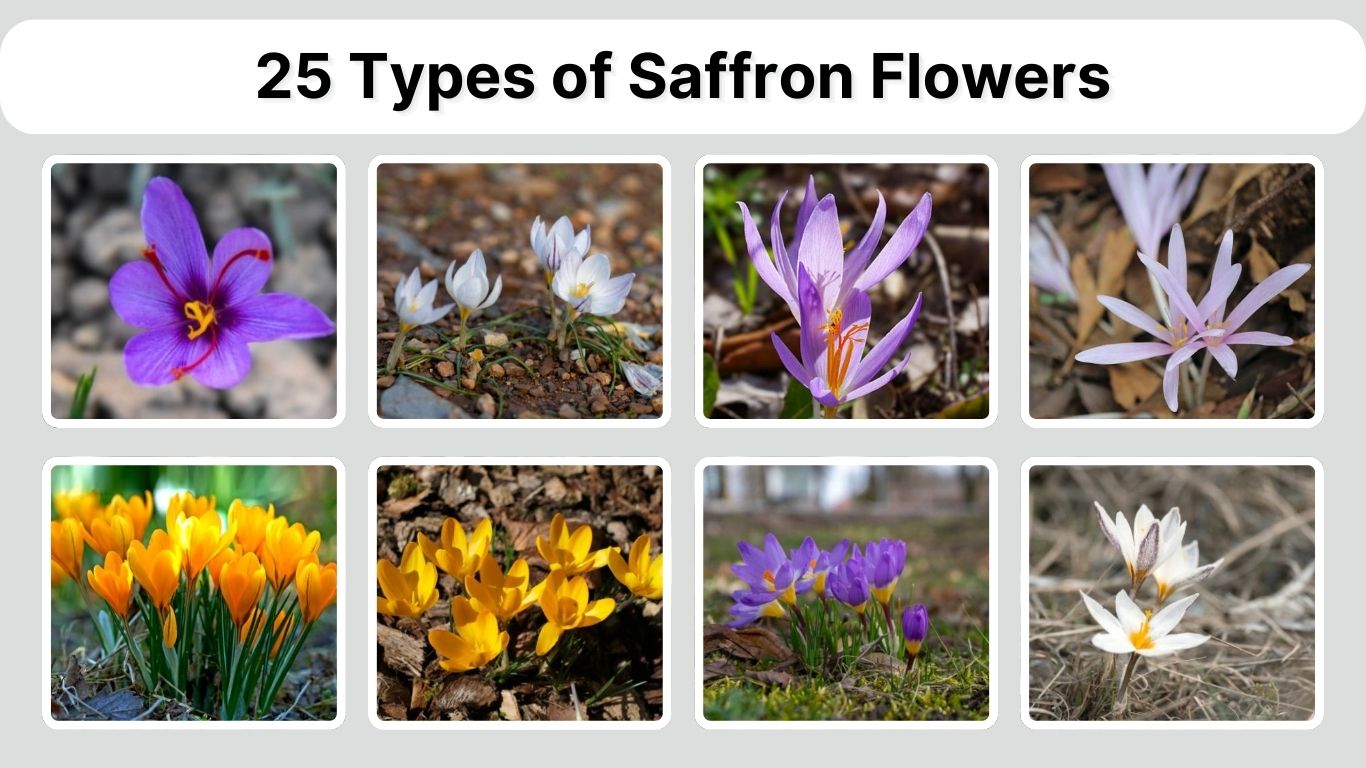
Saffron flowers belong to the Crocus genus, a group of small but highly valued plants known for their cup-shaped blooms and vivid seasonal colors. While Crocus sativus is the true saffron flower used for producing saffron spice, there are many other Crocus species that closely resemble it and are often called “saffron flowers.” These types vary in bloom season, color, size, and natural habitat. In this guide, you’ll explore 25 different saffron flower types, highlighting the diversity within this beautiful and historically important group.
1. Crocus sativus (True Saffron Flower)
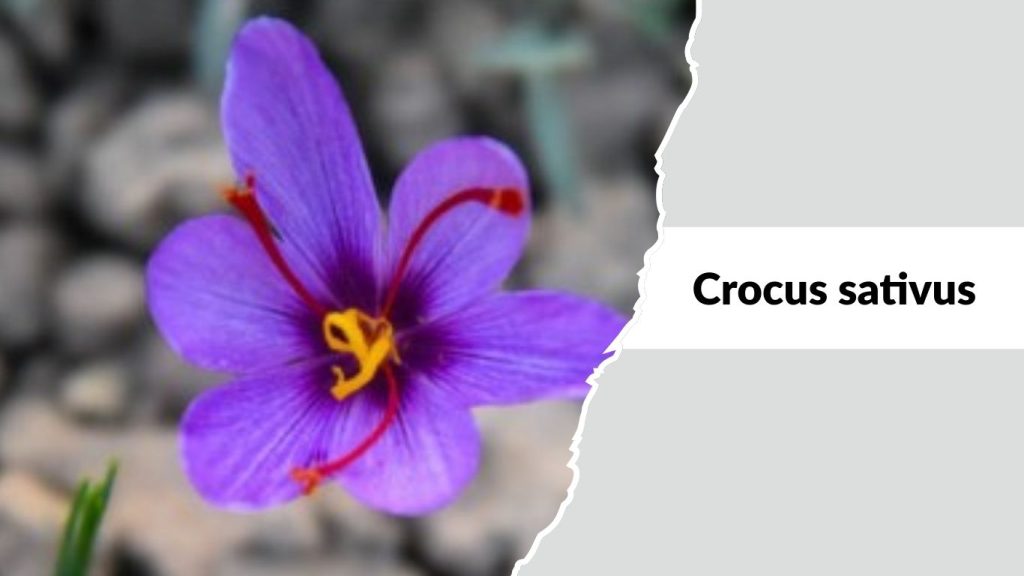
Crocus sativus is the true saffron flower and the only species used commercially to produce saffron spice. It is a small, autumn-blooming crocus famous for its vivid purple petals and deep red stigmas, which are carefully harvested and dried to make saffron. This plant has been cultivated for thousands of years and is highly valued for culinary, medicinal, and ornamental purposes.
Identification
- Purple to violet cup-shaped flowers
- Three long, deep red stigmas (saffron threads)
- Narrow, grass-like green leaves with a pale stripe
- Low-growing plant, usually 10–25 cm tall
Flower Characteristics
The flowers are large compared to the plant’s size, with six lilac to deep-purple tepals. At the center are three bright crimson stigmas and yellow anthers, creating a strong color contrast. Each flower blooms briefly, usually for only a few days, but produces the prized saffron threads.
Native Habitat
Crocus sativus is believed to have originated from the Mediterranean region and western Asia. It thrives in areas with hot, dry summers and cool autumns. The plant prefers well-drained, sandy or loamy soil and full sunlight.
Growth and Blooming Habit
This species grows from a corm rather than a true bulb. It flowers in autumn, unlike most crocuses that bloom in spring. After flowering, thin leaves continue growing through winter and early spring, storing energy in the corm for the next blooming season.
2. Crocus cartwrightianus

Crocus cartwrightianus is considered one of the closest wild relatives of Crocus sativus and is often called the “wild saffron crocus.” It produces attractive lilac to pale purple flowers and is native to the eastern Mediterranean region. This species is important botanically because it is believed to be one of the parent plants of cultivated saffron.
Identification
- Pale lilac to soft purple flowers
- Orange-red stigmas, shorter than true saffron
- Narrow, grass-like leaves
- Low-growing, corm-forming plant
Flower Characteristics
The blooms are cup-shaped with six delicate tepals, often showing darker veins. The stigmas are colored but not as long or thick as those of Crocus sativus. Flowers usually appear in autumn and open fully in bright sunlight.
Native Habitat
This species is native to Greece and nearby Aegean islands. It naturally grows on rocky hillsides, open woodlands, and well-drained slopes, preferring Mediterranean climates with dry summers and mild, wetter seasons.
Growth and Blooming Habit
Crocus cartwrightianus grows from a small corm and flowers in autumn. After blooming, slender leaves continue to grow through winter. It is hardy in mild climates and is sometimes grown ornamentally in rock gardens and naturalized plantings.
3. Crocus pallasii

Crocus pallasii is an autumn-flowering crocus known for its soft lavender to pale violet blooms and graceful form. It is a wild species sometimes called “Pallas’s crocus” and is appreciated for extending color in gardens after most summer flowers fade.
Identification
- Pale lilac to lavender flowers
- Yellow to orange throat with darker veining
- Narrow, grass-like leaves
- Compact, low-growing plant
Flower Characteristics
The flowers are moderately sized with six tepals that may show fine purple veins. The center is often bright yellow, creating a gentle contrast with the pale petals. Blooms usually appear in early to mid-autumn.
Native Habitat
Crocus pallasii is native to southeastern Europe, the Balkans, and parts of western Asia. It grows in open grasslands, light woodland edges, and rocky soils with good drainage.
Growth and Blooming Habit
This species grows from a corm and blooms in autumn. Leaves may appear with or after the flowers. It prefers full sun to light shade and well-drained soil, making it suitable for naturalized plantings and alpine gardens.
4. Crocus thomasii
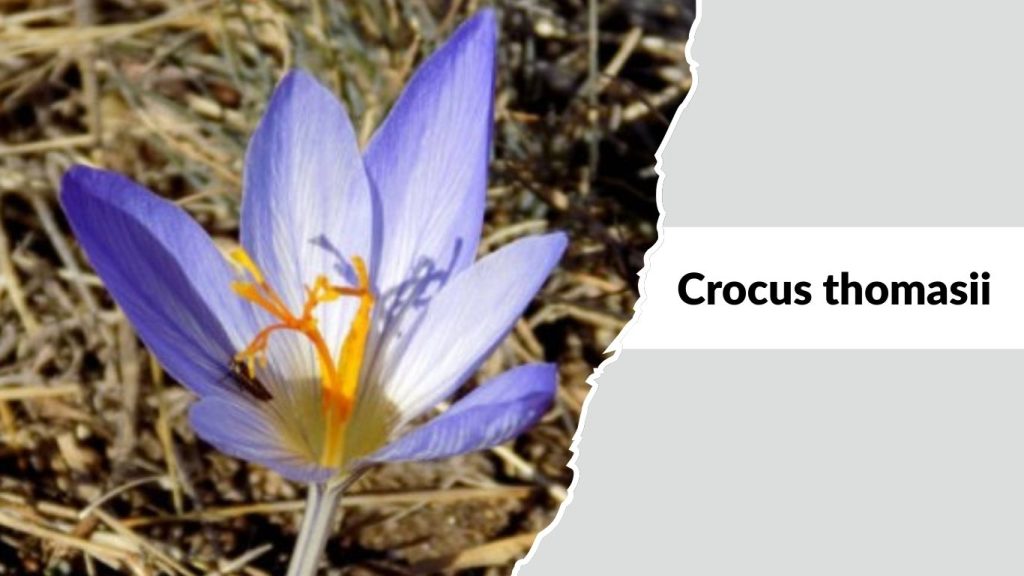
Crocus thomasii is a graceful crocus species known for its soft lavender to pale purple flowers and early seasonal blooms. It is mainly valued as an ornamental plant and is appreciated for its delicate appearance and adaptability to garden conditions.
Identification
- Pale lavender to light purple flowers
- Yellow throat with subtle darker veining
- Slender, grass-like leaves
- Small, corm-forming plant
Flower Characteristics
The flowers are cup-shaped with six smooth tepals that open widely in sunlight. Their gentle pastel coloring and fine texture give them a refined look. Blooms are usually medium-sized and appear in loose, natural-looking clusters.
Native Habitat
This species is native to parts of southern Europe. It naturally grows in open meadows, woodland edges, and rocky slopes where soil drains well and sunlight is abundant.
Growth and Blooming Habit
Crocus thomasii grows from an underground corm and typically blooms in autumn. The narrow leaves emerge around the same time or shortly after flowering. It performs well in well-drained garden beds and rock gardens.
5. Crocus hadriaticus
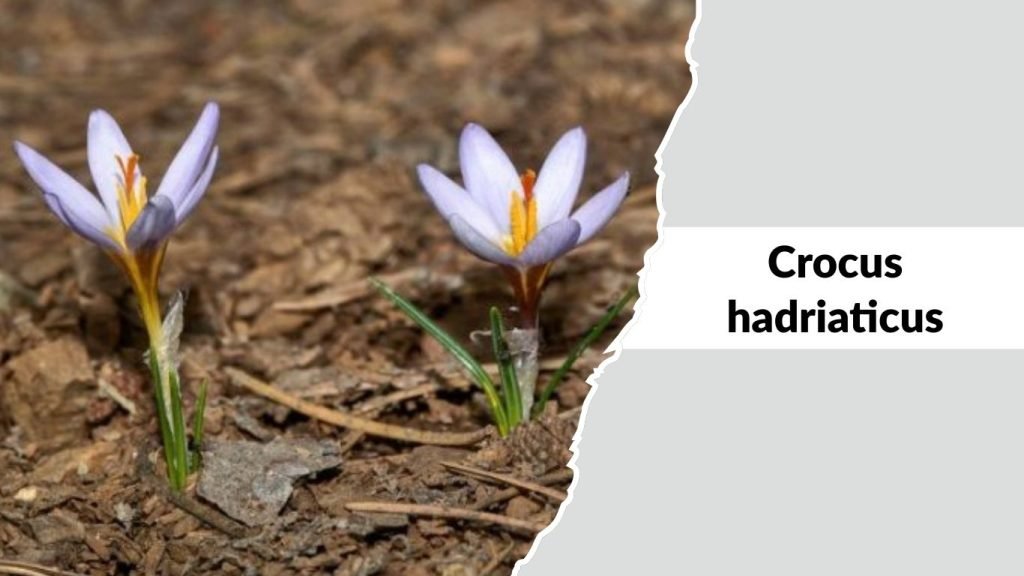
Crocus hadriaticus is distinguished by its clean white flowers and bright yellow to orange center. It is one of the more striking crocus species and is often cultivated for ornamental use due to its pure color and neat form.
Identification
- White to creamy-white flowers
- Bright yellow to orange throat
- Narrow, dark-green leaves with a pale stripe
- Low-growing, corm-based plant
Flower Characteristics
The flowers are goblet-shaped and open wide under sunlight. The pure white tepals contrast strongly with the golden throat, making the blooms very noticeable. Some forms may show faint purple markings at the base.
Native Habitat
This species is native to the Balkans and parts of southeastern Europe. It grows naturally in grassy hillsides, woodland clearings, and rocky soils in regions with mild, Mediterranean-type climates.
Growth and Blooming Habit
Crocus hadriaticus grows from a corm and usually blooms in autumn. Leaves develop alongside or after the flowers. It prefers full sun, moderate moisture, and well-drained soil, and is well suited to borders and naturalized plantings.
6. Crocus laevigatus
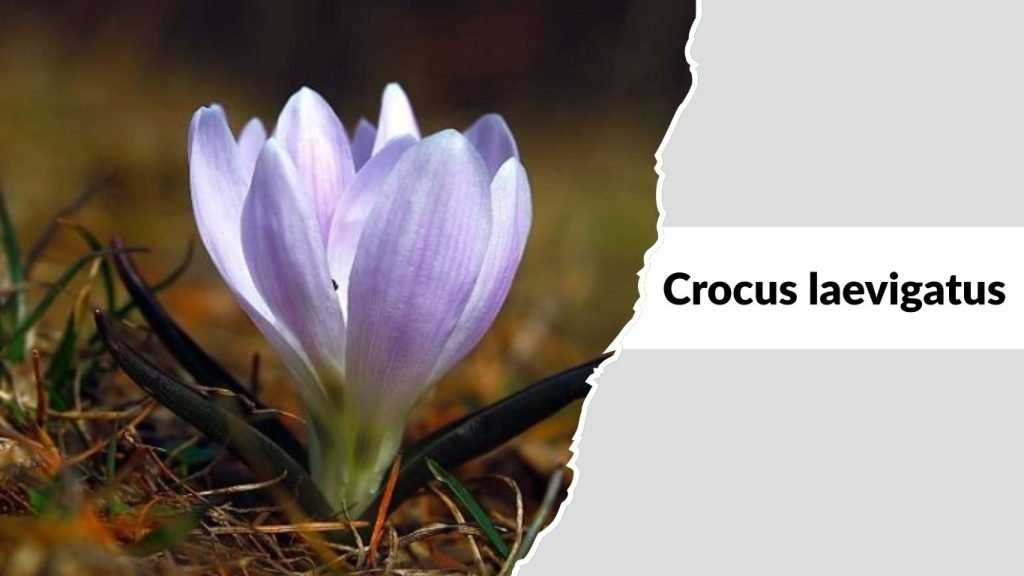
Crocus laevigatus is a charming autumn-blooming crocus valued for its soft lilac to pale purple flowers and subtle veining. It is sometimes called the “smooth crocus” and is grown mainly as an ornamental plant in mild climates.
Identification
- Pale lilac to light purple flowers
- Darker purple veins on the petals
- Narrow, grass-like leaves with a pale mid-stripe
- Small, corm-forming plant
Flower Characteristics
The flowers are cup-shaped with six smooth tepals that open fully in bright light. The delicate veining adds visual interest, while the yellow center provides contrast. Blooms are usually medium-sized and appear singly or in small groups.
Native Habitat
This species is native to Greece and nearby Mediterranean islands. It naturally grows in open scrublands, rocky slopes, and light woodland areas where soils are well drained.
Growth and Blooming Habit
Crocus laevigatus grows from a corm and flowers in autumn. Leaves usually emerge at the same time or shortly after blooming. It prefers full sun to light shade and well-drained soil.
7. Crocus serotinus
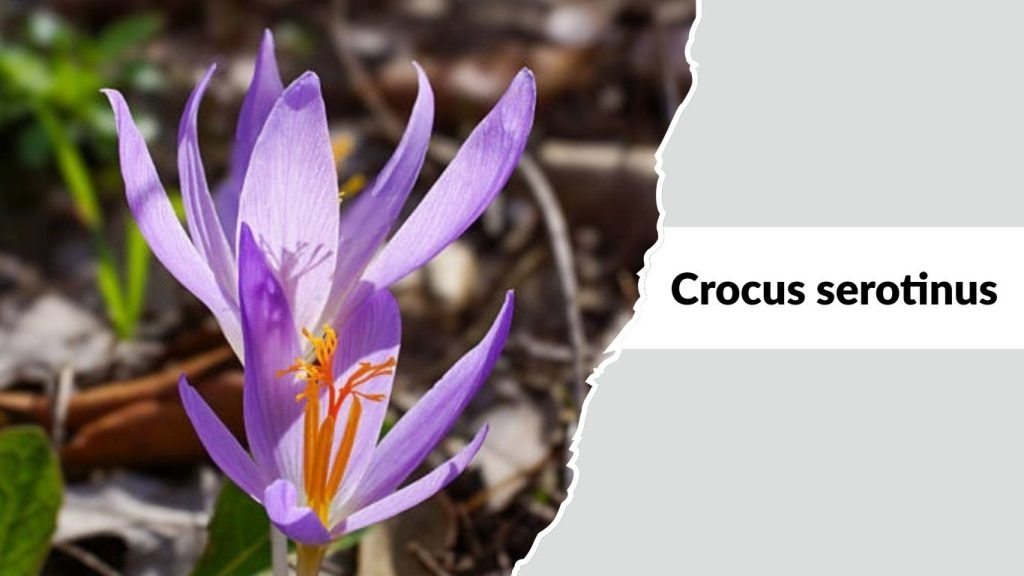
Crocus serotinus is known for its late-season flowering, often blooming after many other crocuses have finished. Its flowers are usually lilac, pale purple, or sometimes white, making it useful for extending autumn color in gardens.
Identification
- Lilac to pale purple, sometimes white flowers
- Yellow throat, often with fine veining
- Narrow, linear leaves
- Low-growing, corm-based plant
Flower Characteristics
The flowers are moderately sized and open widely in sunlight. They often show soft color variations and faint veins. The bright yellow throat highlights the gentle pastel petals.
Native Habitat
This species is native to the Iberian Peninsula and parts of western Mediterranean Europe. It grows in open fields, rocky hillsides, and grasslands with good drainage.
Growth and Blooming Habit
Crocus serotinus grows from a corm and blooms in late autumn. Leaves may appear with or after the flowers. It prefers sunny locations and well-drained soils, making it suitable for naturalized areas and rock gardens.
8. Crocus cancellatus
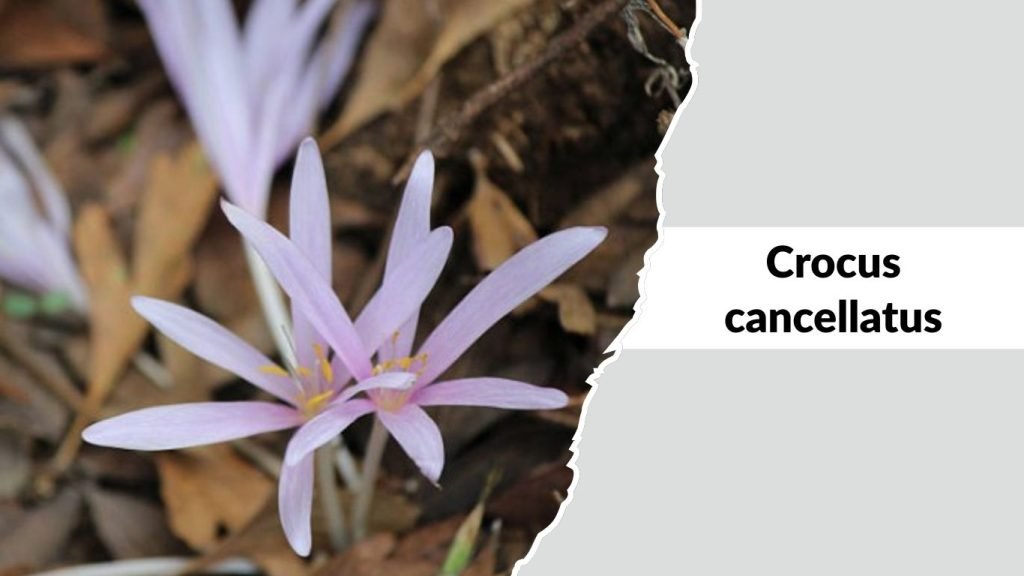
Crocus cancellatus is an autumn-flowering crocus recognized for its soft lilac to pale violet blooms and distinctive veining. It is mainly appreciated as an ornamental species and is found both in the wild and in cultivation in suitable climates.
Identification
- Pale lilac to light violet flowers
- Darker purple veins on the tepals
- Narrow, grass-like leaves
- Small, corm-forming plant
Flower Characteristics
The flowers are cup-shaped and open wide in sunlight. The fine veining gives the petals a net-like pattern, which inspired the species name “cancellatus.” Blooms are moderately sized and appear singly or in small groups.
Native Habitat
This species is native to southeastern Europe, Turkey, and parts of the Middle East. It naturally grows in rocky slopes, open scrublands, and grassy hillsides with well-drained soil.
Growth and Blooming Habit
Crocus cancellatus grows from a corm and flowers in autumn. Leaves usually emerge during or shortly after flowering. It prefers full sun to light shade and well-drained conditions.
9. Crocus biflorus
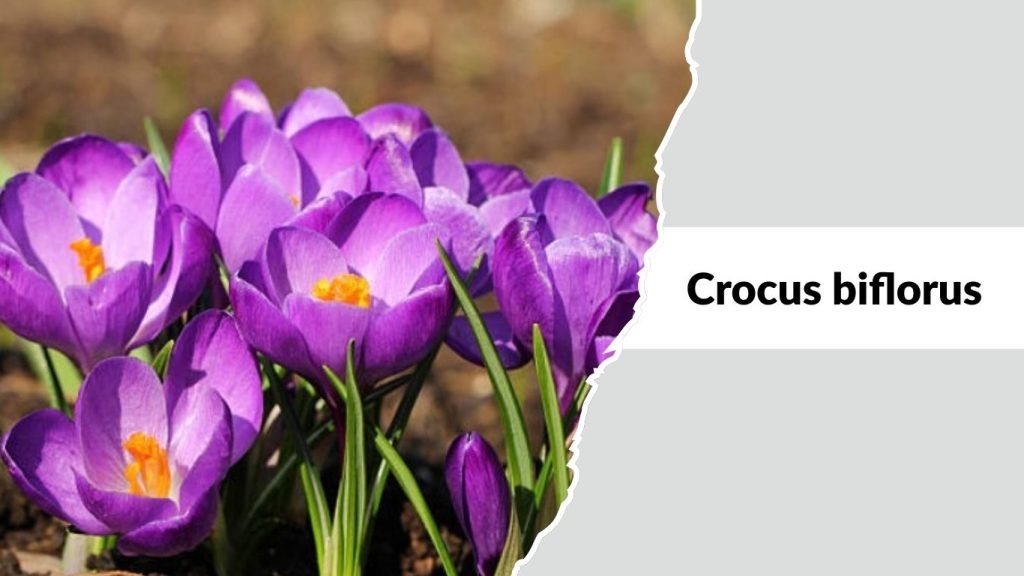
Crocus biflorus is a diverse and widespread crocus species complex known for producing one or two flowers per corm, often with attractive color patterns. It includes many natural forms and cultivated varieties.
Identification
- White, pale lilac, or light purple flowers
- Often marked with darker stripes or patches
- Bright yellow to orange throat
- Narrow, grass-like leaves
Flower Characteristics
The flowers are cup-shaped and medium-sized. Many forms show striking contrasts, such as white petals with purple bases or streaks. The blooms often appear early in the season compared to many other crocuses.
Native Habitat
This species is native to southeastern Europe and western Asia. It grows in grasslands, rocky hillsides, and open woodland areas.
Growth and Blooming Habit
Crocus biflorus grows from a corm and typically blooms from late winter to early spring. Leaves develop with or after the flowers. It is popular in gardens for its hardiness and variability.
10. Crocus vernus
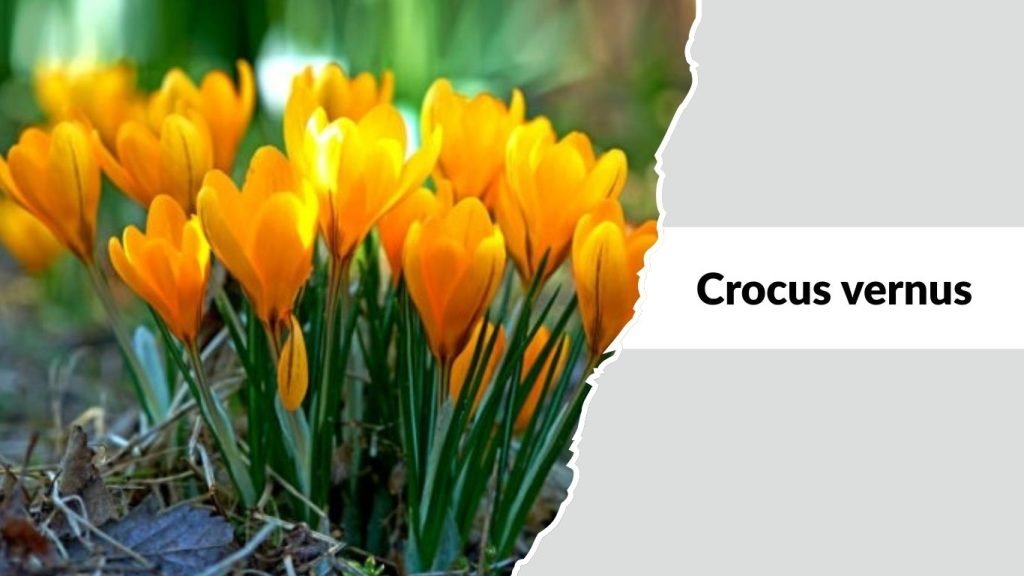
Crocus vernus is one of the best-known spring-flowering crocuses and is widely grown as an ornamental plant. It is famous for its relatively large blooms and bright colors, which range from deep purple to violet, white, and striped forms.
Identification
- Large, cup-shaped flowers
- Purple, violet, or white petals, sometimes striped
- Bright yellow to orange center
- Narrow green leaves with a pale central stripe
Flower Characteristics
The flowers are among the biggest in the crocus group. They open wide in sunlight and often close in cloudy weather. Many cultivated garden crocuses are derived from Crocus vernus.
Native Habitat
This species is native to the Alps and mountainous regions of central and southern Europe. It naturally grows in meadows, open slopes, and woodland edges.
Growth and Blooming Habit
Crocus vernus grows from a corm and blooms in late winter to early spring. Leaves emerge with the flowers and continue growing for several weeks after blooming.
11. Crocus speciosus
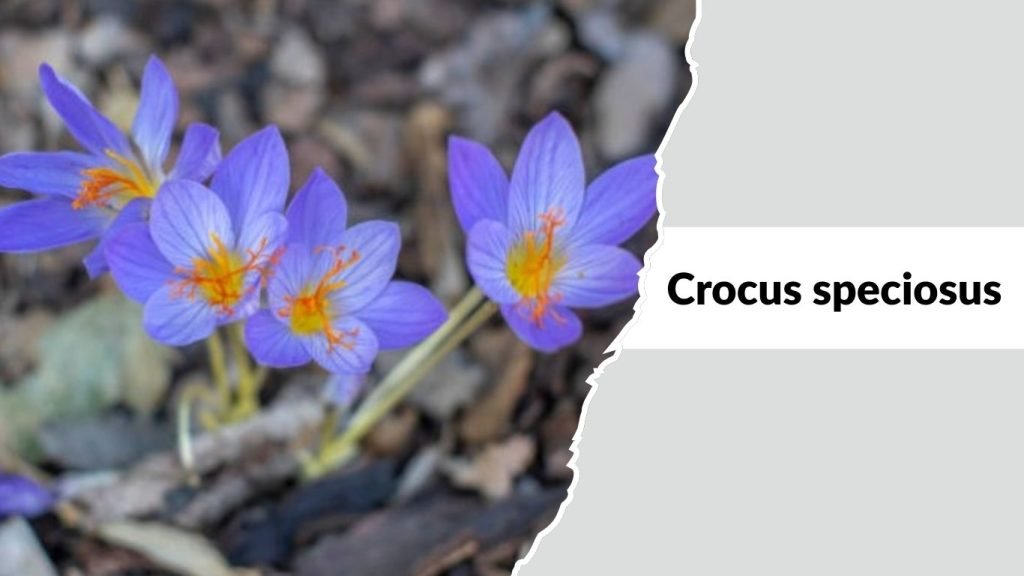
Crocus speciosus is an autumn-flowering crocus admired for its large, soft lavender to blue-violet blooms and prominent yellow-orange stigmas. It is often cultivated to add strong color to fall gardens.
Identification
- Large lavender to blue-violet flowers
- Bright yellow stamens with orange stigmas
- Long, narrow leaves
- Low-growing, corm-based plant
Flower Characteristics
The flowers are broad, open, and often lightly veined. They are among the showiest of the autumn crocuses, standing out clearly against fall foliage.
Native Habitat
This species is native to southeastern Europe, the Caucasus region, and parts of western Asia. It grows in open woodlands, grassy slopes, and well-drained soils.
Growth and Blooming Habit
Crocus speciosus blooms in autumn, often before the leaves fully appear. It prefers sunny locations and well-drained soil and is commonly planted in borders and naturalized areas.
12. Crocus chrysanthus
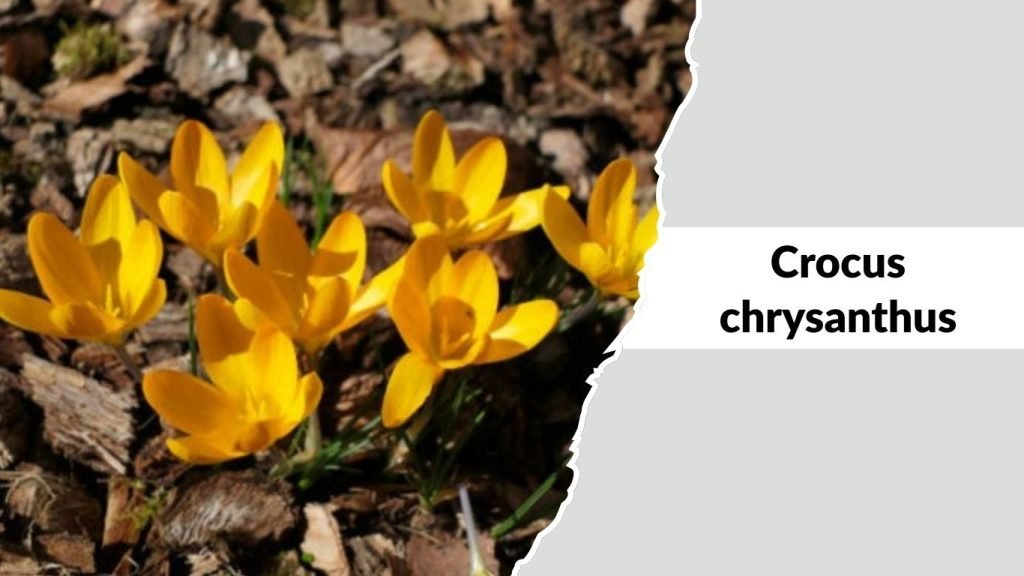
Crocus chrysanthus is commonly known as the “golden crocus” and is famous for its bright yellow flowers and early blooming season. It is one of the first crocuses to flower, often appearing in late winter while snow is still on the ground.
Identification
- Golden-yellow flowers, sometimes with bronze or brown markings
- Bright orange-yellow center
- Narrow, grass-like leaves with a pale stripe
- Small, corm-forming plant
Flower Characteristics
The flowers are cup-shaped and open wide in sunlight. Some forms show darker outer markings, giving extra decorative appeal. Their bright color makes them stand out strongly in early-season gardens.
Native Habitat
This species is native to southeastern Europe and Turkey. It grows naturally in open grasslands, rocky slopes, and light woodland areas.
Growth and Blooming Habit
Crocus chrysanthus grows from a corm and blooms in late winter to early spring. Leaves emerge with the flowers and continue growing for a short period after flowering.
13. Crocus angustifolius
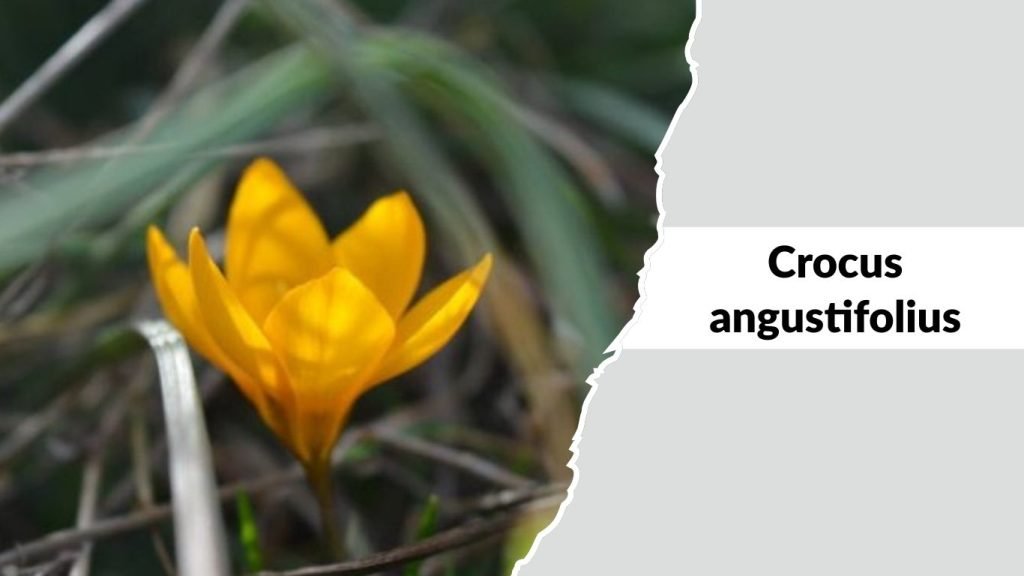
Crocus angustifolius is another yellow-flowering crocus species, sometimes called the “striped crocus” because of the darker markings on the outer petals. It is valued as an ornamental plant for early spring color.
Identification
- Bright yellow flowers
- Dark brown or purple stripes on the outer tepals
- Narrow, grass-like leaves
- Compact, low-growing plant
Flower Characteristics
The flowers are medium-sized and open widely in sunlight. The bright yellow interior contrasts with the darker outer markings, giving the blooms a two-toned effect.
Native Habitat
This species is native to eastern Europe and western Asia. It naturally grows in open hillsides, grasslands, and rocky areas with good drainage.
Growth and Blooming Habit
Crocus angustifolius grows from a corm and flowers in late winter to early spring. Leaves develop alongside the flowers. It prefers full sun and well-drained soil.
14. Crocus sieberi
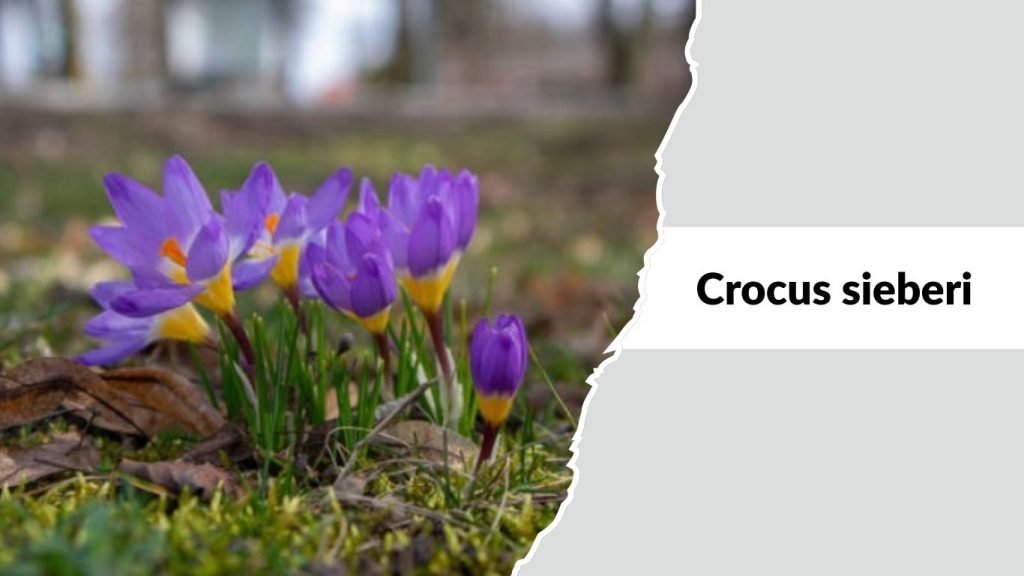
Crocus sieberi is a charming crocus species best known for its delicate lavender to pale violet flowers, often with a yellow throat. It is widely grown as an ornamental plant and has produced many attractive garden forms.
Identification
- Pale lilac to lavender flowers
- Bright yellow throat
- Narrow green leaves with a pale central stripe
- Small, corm-based plant
Flower Characteristics
The flowers are cup-shaped and open fully in sunlight. Some forms show darker markings near the base of the petals, adding extra detail. They are relatively small but appear in abundance, creating a soft carpet of color.
Native Habitat
This species is native to Greece and surrounding regions. It grows naturally in open grasslands, rocky slopes, and woodland edges.
Growth and Blooming Habit
Crocus sieberi grows from a corm and blooms in late winter to early spring. Leaves appear with the flowers and persist briefly afterward. It prefers sunny locations and well-drained soil.
15. Crocus korolkowii
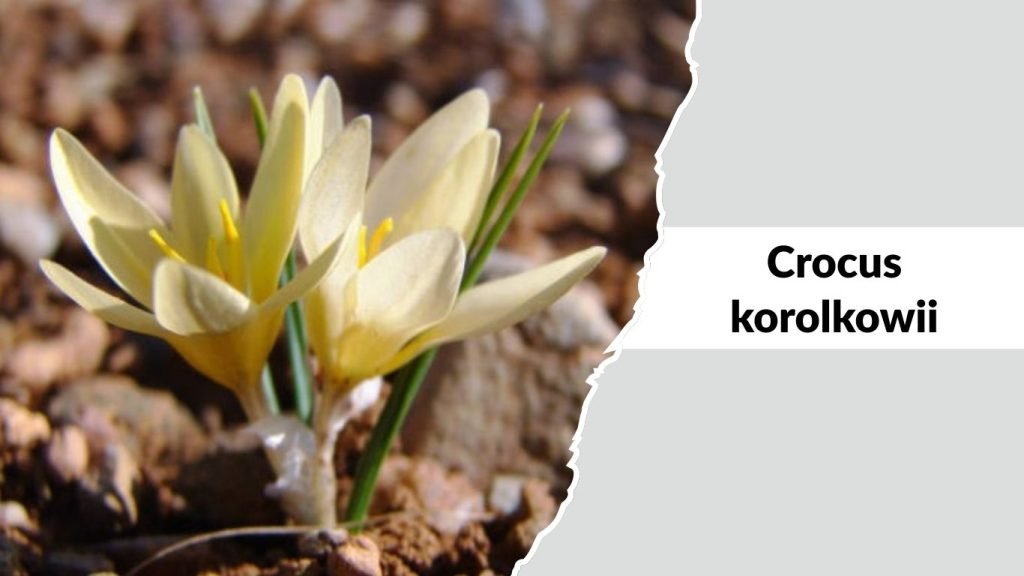
Crocus korolkowii is a striking early-blooming crocus recognized for its bright yellow flowers often marked with bronze or brown on the outside. It is valued for bringing strong color to late-winter gardens.
Identification
- Bright yellow flowers with darker outer markings
- Golden-yellow center
- Narrow, grass-like leaves
- Compact, low-growing plant
Flower Characteristics
The flowers are medium-sized and open widely in sunlight. The darker outer stripes contrast with the bright yellow interior, making the blooms visually attractive.
Native Habitat
This species is native to Central Asia, including parts of Kazakhstan and Uzbekistan. It grows in open grasslands, foothills, and rocky slopes.
Growth and Blooming Habit
Crocus korolkowii grows from a corm and blooms in late winter to early spring. Leaves emerge with the flowers. It prefers full sun and well-drained soils and is suitable for rock gardens and borders.
16. Crocus alatavicus
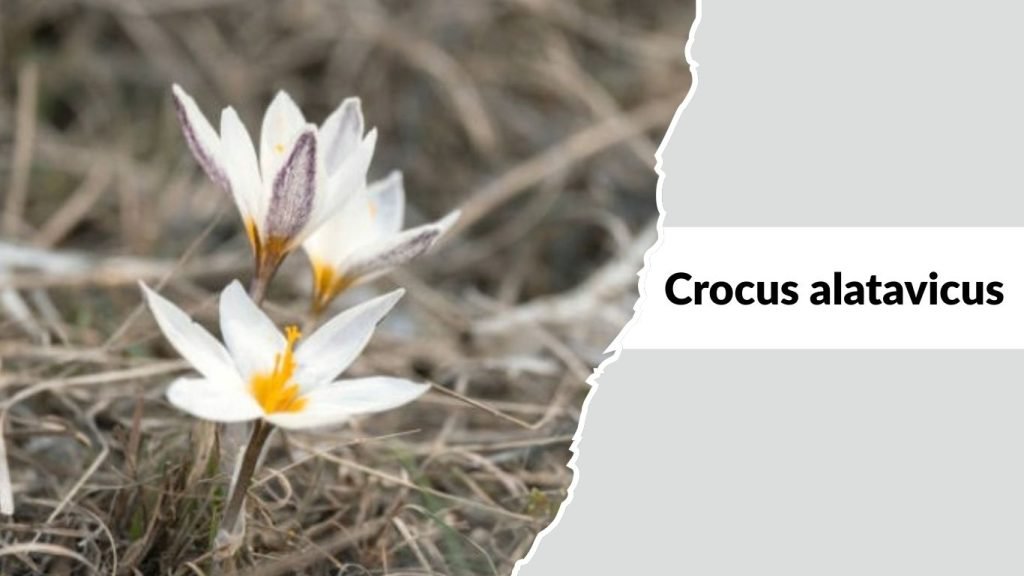
Crocus alatavicus is an early-flowering crocus species known for its white to pale cream flowers and neat, compact form. It is mainly valued as an ornamental plant for late winter and early spring gardens.
Identification
- White to creamy flowers
- Yellow to orange throat
- Narrow, grass-like leaves
- Small, corm-based plant
Flower Characteristics
The flowers are cup-shaped and may show faint markings on the outer petals. They open widely in sunlight, revealing a bright yellow center that contrasts with the pale tepals.
Native Habitat
This species is native to Central Asia, especially regions of Kazakhstan and western China. It naturally grows in open slopes, grasslands, and rocky terrain.
Growth and Blooming Habit
Crocus alatavicus grows from a corm and blooms in late winter to early spring. Leaves appear with the flowers. It prefers sunny sites and well-drained soils.
17. Crocus etruscus
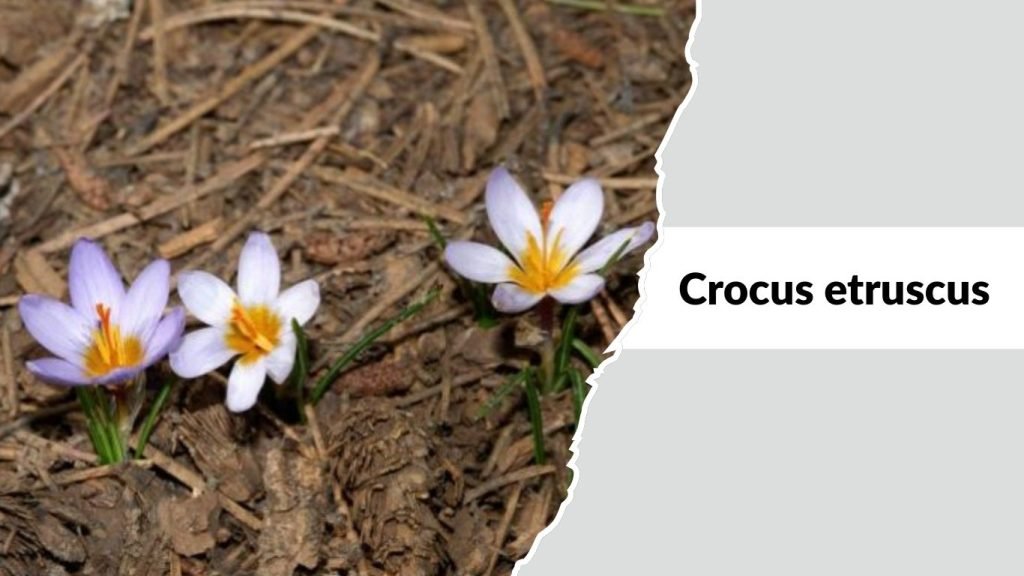
Crocus etruscus is a rare crocus species admired for its soft lavender flowers and elegant form. It is sometimes cultivated by collectors and in botanical gardens.
Identification
- Pale lavender to soft purple flowers
- Yellow throat
- Narrow green leaves
- Compact, low-growing plant
Flower Characteristics
The flowers are moderately sized and cup-shaped. They often have subtle darker veining on the petals, adding visual interest. The bright center contrasts gently with the soft outer color.
Native Habitat
This species is endemic to central Italy, where it grows in open woodlands, grassy hillsides, and meadows.
Growth and Blooming Habit
Crocus etruscus grows from a corm and blooms in late winter to early spring. Leaves usually appear alongside the flowers. It prefers full sun to light shade and well-drained soil.
18. Crocus goulimyi
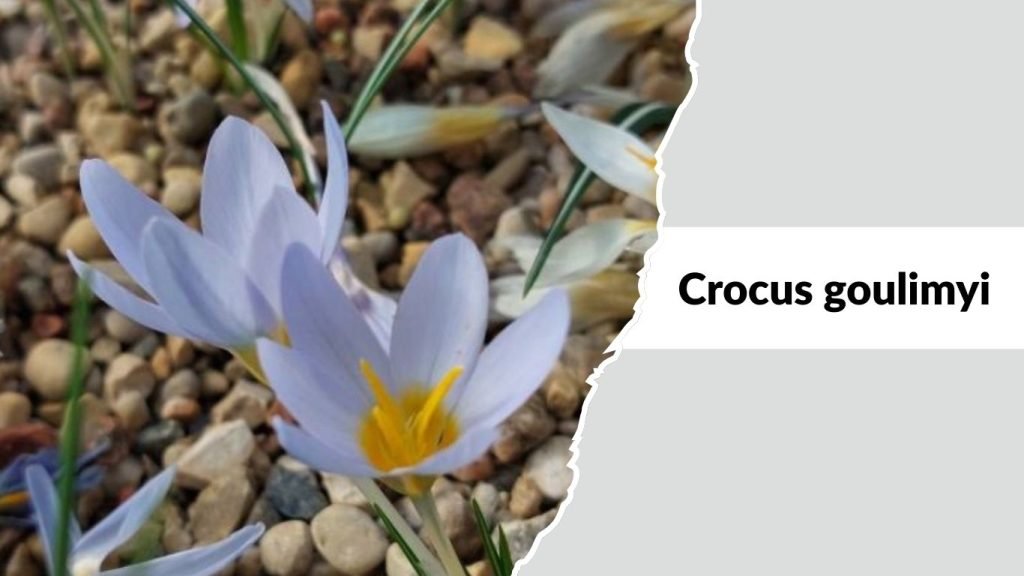
Crocus goulimyi is an autumn-flowering crocus known for its soft lilac to pale purple blooms, often with delicate veining. It is valued in ornamental gardening for adding gentle color to fall landscapes.
Identification
- Pale lilac to light purple flowers
- Fine darker veins on the petals
- Bright yellow to orange throat
- Narrow, grass-like leaves
Flower Characteristics
The flowers are medium to large and open widely in sunlight. Their soft pastel coloring and prominent yellow center make them attractive in naturalized plantings.
Native Habitat
This species is native to southern Greece, especially the Peloponnese region. It naturally grows in rocky fields, open scrublands, and grassy slopes.
Growth and Blooming Habit
Crocus goulimyi grows from a corm and blooms in autumn. Leaves often appear after flowering. It prefers full sun and well-drained soil.
19. Crocus salzmannii
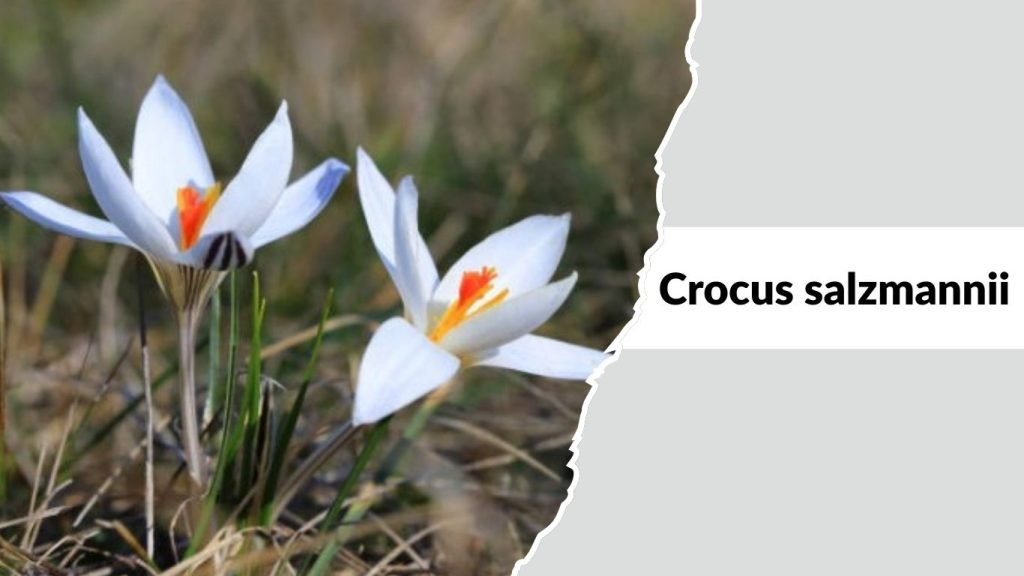
Crocus salzmannii is an autumn-blooming crocus recognized for its pale lilac to lavender flowers and refined appearance. It is mainly grown as an ornamental species.
Identification
- Pale lilac to soft lavender flowers
- Yellow throat with subtle veining
- Slender, grass-like leaves
- Low-growing, corm-based plant
Flower Characteristics
The flowers are cup-shaped and moderately sized. They often show gentle color shading and fine veins, giving them a delicate look.
Native Habitat
This species is native to the Iberian Peninsula and parts of northwestern Africa. It grows in open grasslands, rocky hillsides, and well-drained soils.
Growth and Blooming Habit
Crocus salzmannii grows from a corm and flowers in autumn. Leaves may emerge during or after blooming. It thrives in sunny positions with good drainage.
20. Crocus ancyrensis
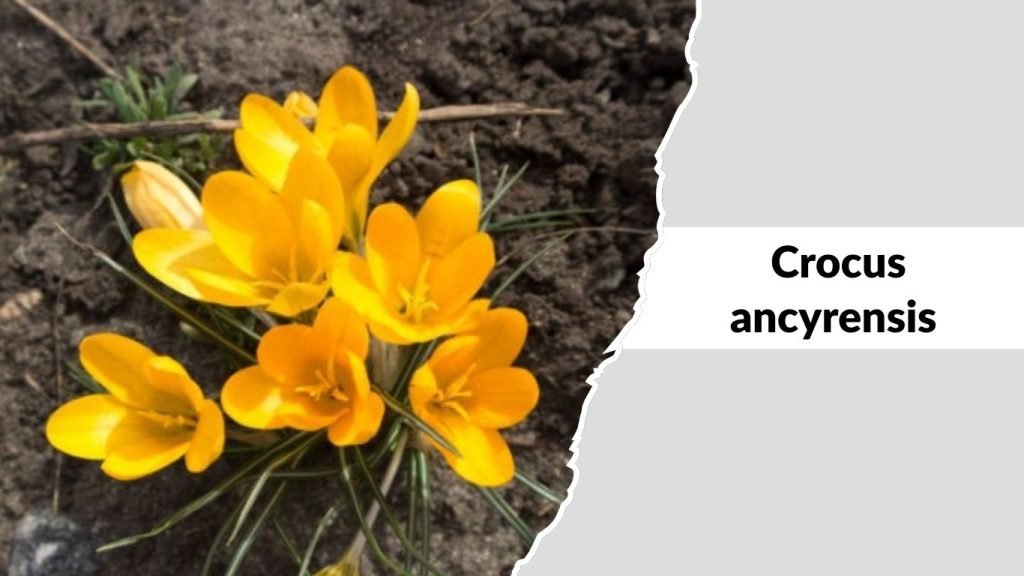
Crocus ancyrensis is an early-blooming crocus best known for its rich golden-yellow flowers and compact growth. It is valued in ornamental gardening for bringing bright color to late winter landscapes.
Identification
- Deep golden-yellow flowers
- Bright yellow-orange center
- Narrow, grass-like leaves
- Small, corm-forming plant
Flower Characteristics
The flowers are medium-sized and open widely in sunlight. The intense yellow color makes them especially noticeable in early-season gardens.
Native Habitat
This species is native to central Turkey. It naturally grows on rocky slopes, open grasslands, and hillsides.
Growth and Blooming Habit
Crocus ancyrensis grows from a corm and blooms in late winter. Leaves emerge with the flowers. It prefers full sun and well-drained soils.
21. Crocus tommasinianus
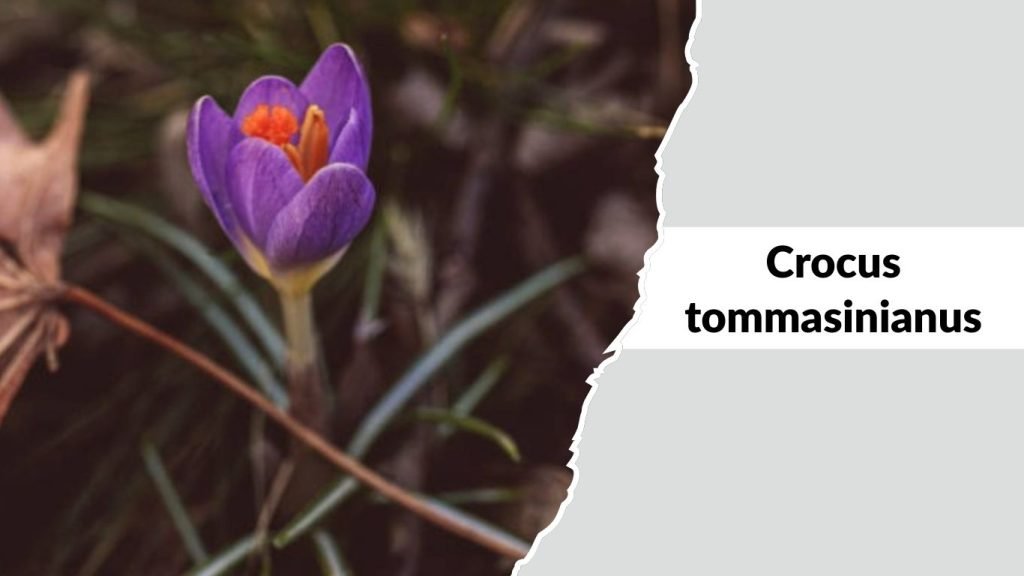
Crocus tommasinianus is commonly called the “early crocus” and is popular for its pale lavender flowers and ability to naturalize easily. It is often among the first crocuses to bloom in late winter.
Identification
- Pale lavender to silvery-purple flowers
- White or pale throat
- Narrow green leaves with a pale stripe
- Slender, low-growing plant
Flower Characteristics
The flowers are elegant and starry when fully open. They are usually lightly scented and appear in abundance, creating carpets of soft color.
Native Habitat
This species is native to southeastern Europe, especially the Balkans. It grows in open woodlands, grassy slopes, and meadows.
Growth and Blooming Habit
Crocus tommasinianus grows from a corm and blooms in late winter to very early spring. Leaves appear with the flowers. It spreads readily and is widely used in naturalized plantings.
22. Crocus banaticus
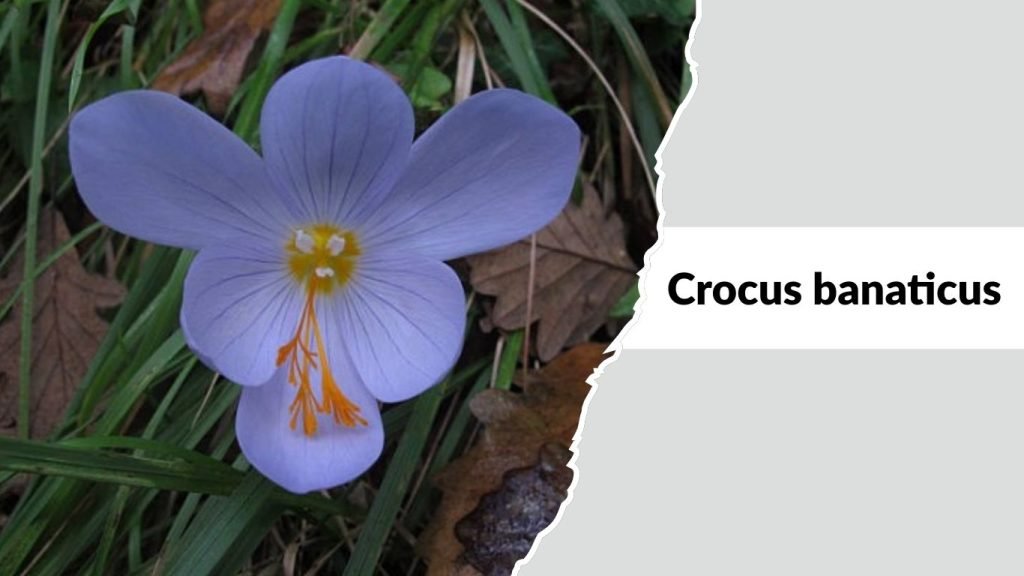
Crocus banaticus is a unique crocus species distinguished by its iris-like flower form, with larger outer petals and smaller inner ones. It blooms in autumn and is valued for its unusual appearance among crocuses.
Identification
- Soft lilac to violet flowers
- Three large outer tepals and three much smaller inner ones
- Bright yellow center
- Narrow, grass-like leaves
Flower Characteristics
The flowers have a more open, layered look compared to typical crocuses. The larger outer segments spread widely, while the inner ones remain more upright, giving the bloom an iris-like shape.
Native Habitat
This species is native to Romania and parts of the Balkans. It naturally grows in woodland edges, forest clearings, and moist meadows.
Growth and Blooming Habit
Crocus banaticus grows from a corm and blooms in autumn. Leaves usually appear after flowering. It prefers partial shade to sun and well-drained but slightly moist soils.
23. Crocus pulchellus
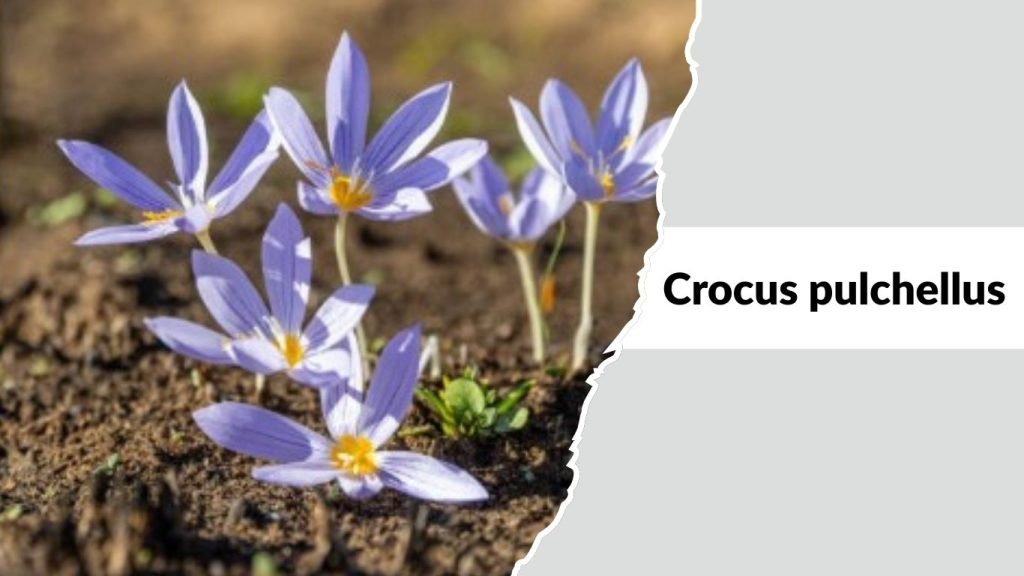
Crocus pulchellus is an autumn-blooming crocus admired for its soft lilac to pale blue flowers and fine veining. It is often grown ornamentally for late-season garden interest.
Identification
- Pale lilac to soft blue flowers
- Darker veins on the tepals
- Yellow to orange throat
- Narrow, grass-like leaves
Flower Characteristics
The flowers are medium to large and open widely in sunlight. The gentle blue-lilac coloring and delicate striping give them a refined, elegant appearance.
Native Habitat
This species is native to southeastern Europe and western Asia, especially Turkey. It grows in open woodlands, grassy slopes, and rocky fields.
Growth and Blooming Habit
Crocus pulchellus grows from a corm and flowers in autumn. Leaves may appear with or after the blooms. It prefers sunny to lightly shaded sites with good drainage.
24. Crocus michelsonii
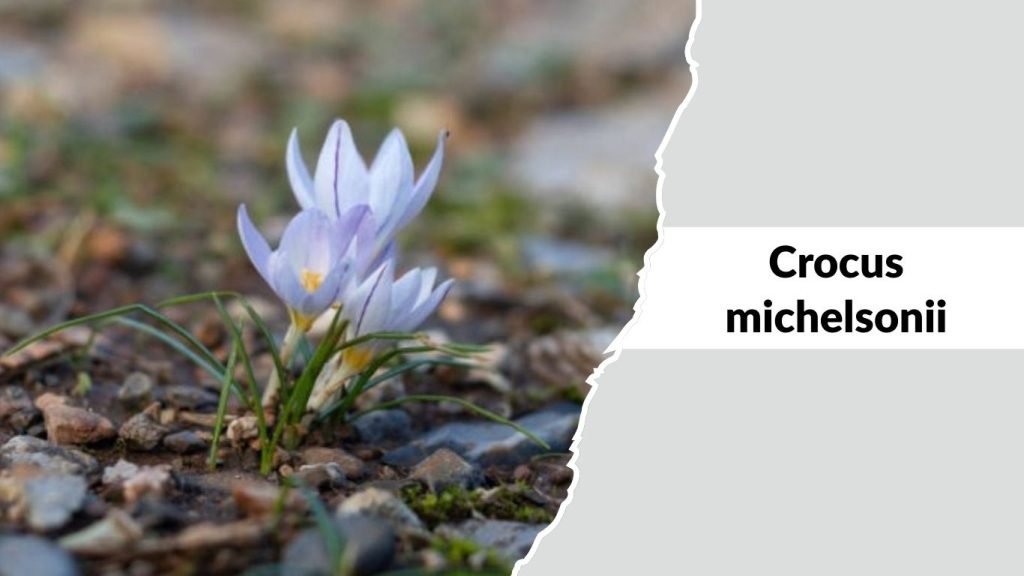
Crocus michelsonii is a distinctive spring-flowering crocus known for its bright yellow flowers often marked with darker outer striping. It is appreciated for adding strong, cheerful color to early-season gardens.
Identification
- Bright yellow flowers
- Dark brown or purple stripes on the outer tepals
- Yellow-orange center
- Narrow, grass-like leaves
Flower Characteristics
The flowers are medium-sized and open widely in sunlight. The bold contrast between the yellow inner petals and darker outer markings makes this species visually striking.
Native Habitat
This species is native to Central Asia, including regions of Kazakhstan, Uzbekistan, and Turkmenistan. It naturally grows in open grasslands and rocky slopes.
Growth and Blooming Habit
Crocus michelsonii grows from a corm and blooms in late winter to early spring. Leaves appear with the flowers. It prefers full sun and well-drained soils.
25. Crocus nudiflorus
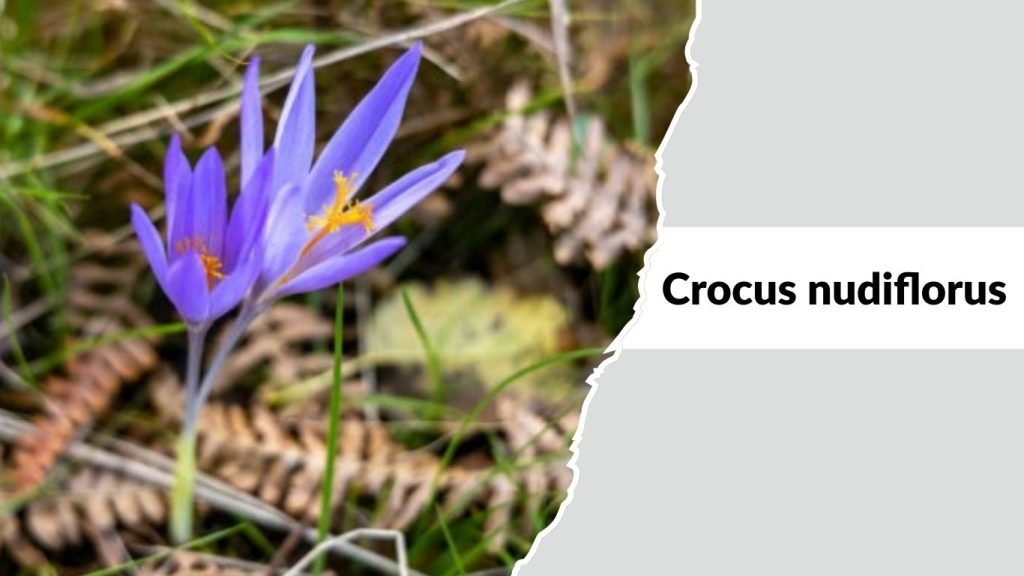
Crocus nudiflorus is an autumn-flowering crocus recognized for its soft lilac to violet flowers that often appear before the leaves. It is valued for extending crocus blooming into the fall season.
Identification
- Lilac to violet flowers
- Yellow to orange center
- Flowers often appear before leaves
- Slender, grass-like foliage
Flower Characteristics
The flowers are medium-sized, cup-shaped, and may show subtle veining. Their appearance without leaves gives them a clean, delicate look.
Native Habitat
This species is native to southwestern Europe, especially Spain and southern France. It grows in open fields, rocky slopes, and meadows.
Growth and Blooming Habit
Crocus nudiflorus grows from a corm and blooms in autumn. Leaves usually emerge after flowering. It prefers sunny positions and well-drained soil.