



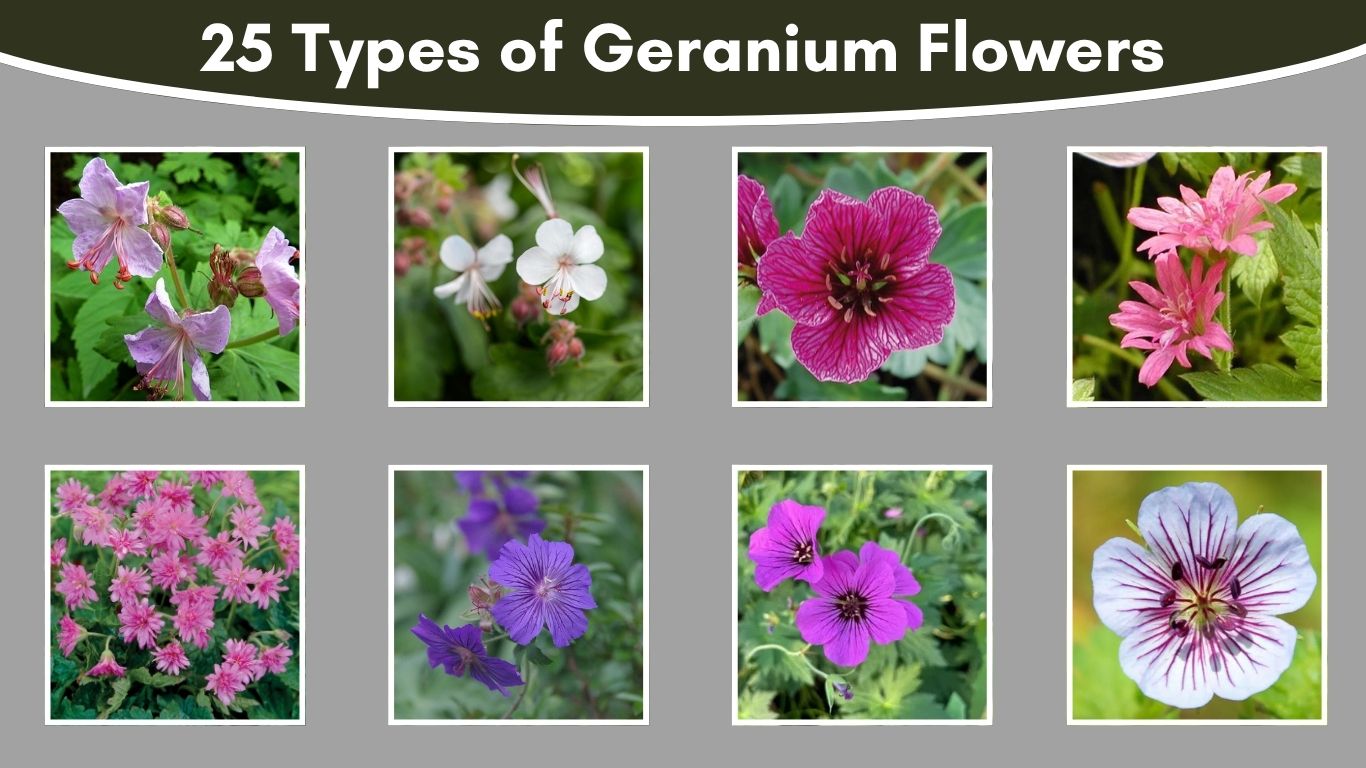
Geraniums, especially the hardy perennial types known as cranesbills, are beloved for their long bloom time, low maintenance needs, and wide variety of colors and forms. From compact ground covers to bold border fillers, geraniums offer something for every garden style. Whether you’re looking for soft pastels, vibrant magentas, or trailing varieties for containers, this list introduces 25 popular types of geranium flowers—each unique in color, growth habit, and seasonal appeal. Explore these garden favorites to find the perfect addition to your flower beds, borders, or shaded corners.
1. Rozanne Geranium
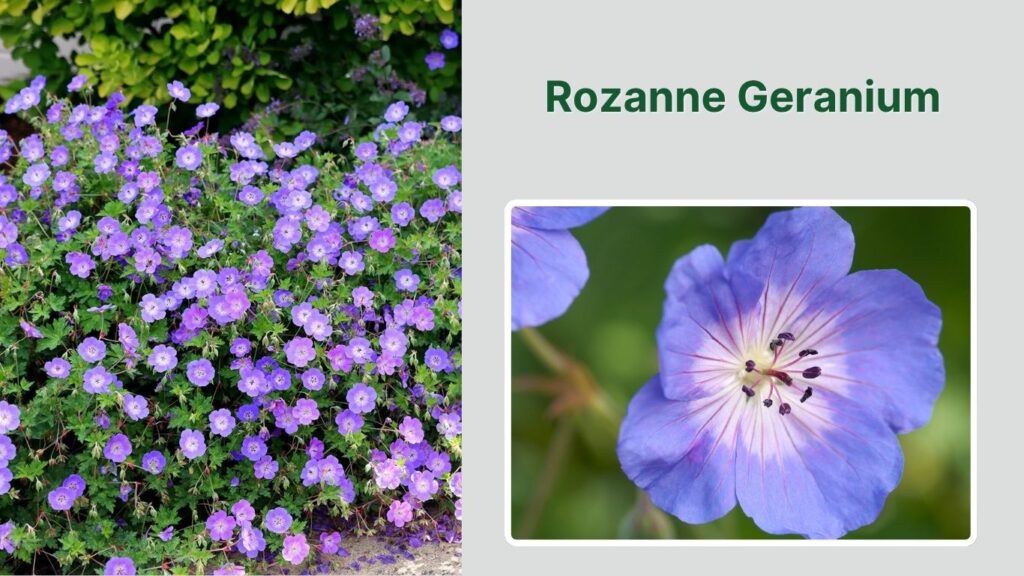
Rozanne is one of the most popular and award-winning hardy geraniums, celebrated for its long blooming season and vibrant violet-blue flowers. It’s a trailing perennial that creates a lush, spreading mat of foliage and blooms, making it ideal for ground cover or spilling over garden borders.
Identification
- Flower Color: Violet-blue with white centers
- Leaf Type: Deeply lobed, green foliage that may turn reddish in fall
- Height: 18–20 inches
- Spread: Up to 24–36 inches
- Bloom Time: Late spring to first frost
- Type: Hardy perennial geranium (Cranesbill)
Origin and Popularity
Rozanne was introduced in the early 2000s and quickly gained recognition, including the RHS Award of Garden Merit and being named Plant of the Year by the Royal Horticultural Society. Its low maintenance and impressive floral display have made it a favorite in gardens worldwide.
Growing and Blooming Season
Plant in spring or fall. Rozanne begins blooming in late spring and continues through summer into fall—often until the first frost. Best suited for USDA zones 5–8 and prefers full sun to partial shade with well-drained soil.
Companion Plants
Perfect when paired with ornamental grasses, salvia, coreopsis, or daylilies. Its trailing habit makes it excellent for softening edges of flower beds, rock gardens, and containers. Also works well under roses or taller shrubs for added color at ground level.
2. Johnson’s Blue Geranium

Johnson’s Blue is a classic and beloved hardy geranium known for its large, sky-blue flowers and lush mounded growth. It adds a soft, cooling touch to borders and cottage-style gardens and is especially valued for its early-season blooms.
Identification
- Flower Color: Clear sky-blue
- Leaf Type: Deeply divided green leaves
- Height: 14–18 inches
- Spread: 20–24 inches
- Bloom Time: Late spring to early summer
- Type: Hardy perennial geranium (Cranesbill)
Origin and Popularity
A cross between Geranium himalayense and Geranium pratense, Johnson’s Blue has been a garden favorite for decades due to its reliable color and full, tidy shape. It’s widely available and often planted in traditional or informal settings.
Growing and Blooming Season
Plant in spring or fall for best results. Blooms appear in late spring and may continue into mid-summer. It performs well in USDA zones 4–8 and prefers full sun to partial shade with moist, well-drained soil.
Companion Plants
Looks beautiful alongside yellow daylilies, white daisies, and pink peonies. Also pairs well with ornamental alliums and early summer salvias. Excellent for planting in groups along borders or as a filler between shrubs.
3. Biokovo Geranium
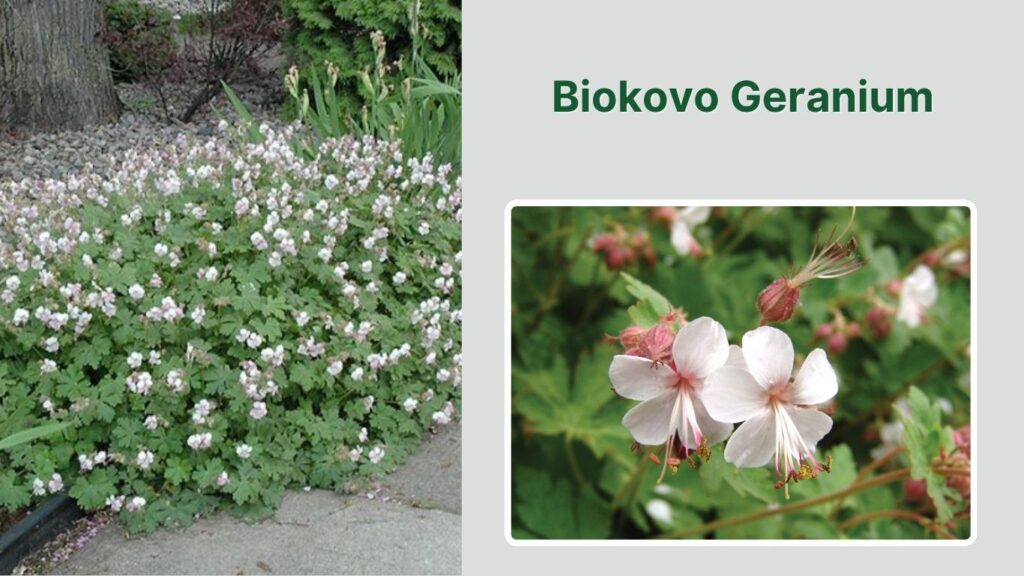
Biokovo is a compact, low-growing geranium variety prized for its delicate white flowers with pink blush tones. Part of the Geranium × cantabrigiense group, it’s ideal for ground cover, edging, and underplanting roses or shrubs.
Identification
- Flower Color: White with soft pink centers
- Leaf Type: Small, aromatic, semi-evergreen foliage
- Height: 6–12 inches
- Spread: 18–24 inches
- Bloom Time: Late spring to early summer
- Type: Hardy perennial geranium
Origin and Popularity
Native to the Biokovo Mountains in Croatia, this geranium is known for its neat growth habit and soft beauty. It received the RHS Award of Garden Merit and is a go-to choice for low-maintenance perennial beds.
Growing and Blooming Season
Plant in fall or early spring. Blooms in May and June, with some repeat blooming in cooler climates. Hardy in USDA zones 4–8, it tolerates full sun to partial shade and grows well in average to dry soils.
Companion Plants
Excellent with other shade-tolerant plants like hostas, ferns, and astilbes. Its white-pink tones also contrast beautifully with purple salvia or lavender. Perfect for woodland edges, rock gardens, and borders.
4. Patricia Geranium

Patricia is a tall, vibrant geranium variety known for its large, bright magenta-pink flowers with a dark center eye. This striking perennial is ideal for adding bold color to the middle or back of borders and thrives in cottage and naturalistic garden settings.
Identification
- Flower Color: Deep magenta-pink with dark purple center
- Leaf Type: Deeply cut, dark green foliage
- Height: 24–36 inches
- Spread: 24–30 inches
- Bloom Time: Early summer to early fall
- Type: Hardy perennial geranium (Geranium × oxonianum)
Origin and Popularity
A hybrid between Geranium endressii and Geranium psilostemon, Patricia combines bold coloration with excellent garden performance. It’s widely appreciated for its long bloom time and ability to attract pollinators.
Growing and Blooming Season
Plant in spring or fall. Begins blooming in early summer and continues through early autumn. Hardy in USDA zones 4–8 and performs best in full sun or partial shade with well-drained soil.
Companion Plants
Pairs well with ornamental grasses, daylilies, and coneflowers. Its vivid color makes it a great contrast to softer tones like white daisies or lavender. Suitable for large borders, pollinator gardens, and mixed perennial beds.
5. Orion Geranium

Orion is a robust and floriferous variety producing intense violet-blue flowers that are slightly larger than those of similar types. It has a spreading growth habit and offers a lush, informal look—great for softening garden edges.
Identification
- Flower Color: Violet-blue with faint veining
- Leaf Type: Deep green, deeply lobed foliage
- Height: 20–24 inches
- Spread: 24–30 inches
- Bloom Time: Late spring to midsummer
- Type: Hardy perennial geranium (Cranesbill)
Origin and Popularity
Orion is often compared to ‘Johnson’s Blue’ but is known for its stronger performance and more abundant flowers. It’s become a favorite for those wanting reliable, blue-toned ground cover or border color.
Growing and Blooming Season
Plant in fall or early spring. Flowers bloom from late spring through July, with a possible light rebloom in fall. Hardy in USDA zones 4–8, and thrives in full sun to part shade with moist, well-drained soil.
Companion Plants
Beautiful alongside pink roses, yellow coreopsis, and silver-foliaged plants like artemisia. Works well in cottage gardens, meadow-style borders, and informal landscape designs. Also complements ornamental grasses for a natural look.
6. Ann Folkard Geranium

Ann Folkard is a striking and vigorous geranium variety known for its vivid magenta-pink flowers with a black eye and contrasting golden-green foliage. It has a sprawling, semi-trailing habit that makes it excellent for weaving through shrubs or groundcover in borders.
Identification
- Flower Color: Bright magenta with dark purple-black center
- Leaf Type: Golden-green, lobed foliage
- Height: 12–18 inches
- Spread: 24–36 inches (trailing/sprawling habit)
- Bloom Time: Early summer to early fall
- Type: Hardy perennial geranium (Geranium × oxonianum)
Origin and Popularity
Ann Folkard has been admired for its bold contrast between flower and foliage. It’s particularly appreciated in layered plantings and informal garden designs for its dynamic, wandering growth.
Growing and Blooming Season
Plant in spring or fall. Starts blooming in early summer and continues into early autumn. Best in USDA zones 4–8. Grows well in full sun to partial shade and prefers moderately fertile, well-drained soil.
Companion Plants
Pairs beautifully with silver-leaved plants like stachys (lamb’s ear) or airy grasses like panicum. Also winds attractively through shrubs or alongside tall perennials like echinacea, rudbeckia, or delphiniums.
7. Brookside Geranium

Brookside is a reliable and floriferous geranium known for its deep blue-purple blooms and refined mounding habit. It offers long-lasting color and strong garden presence, making it a popular choice for perennial borders.
Identification
- Flower Color: Deep blue with violet undertones and white center
- Leaf Type: Deeply divided green foliage
- Height: 18–24 inches
- Spread: 24–30 inches
- Bloom Time: Late spring to midsummer
- Type: Hardy perennial geranium
Origin and Popularity
A hybrid geranium, Brookside is highly valued for its intense color and lengthy bloom period. It’s often chosen as a reliable filler in mixed perennial plantings.
Growing and Blooming Season
Plant in fall or early spring. Blooms from late spring into early summer, sometimes reblooming with deadheading. Hardy in USDA zones 4–8. Prefers full sun to partial shade and well-drained, moderately moist soil.
Companion Plants
Pairs well with yarrow, catmint, and coreopsis. Its cool-toned flowers contrast nicely with warmer shades like orange daylilies or yellow heleniums. Also great in cottage gardens or informal borders.
8. Karmina Geranium

Karmina is a compact, ground-hugging geranium variety known for its vivid pink flowers and dense, mounding foliage. It’s part of the Geranium × cantabrigiense group and is ideal for edging pathways, rock gardens, or underplanting shrubs.
Identification
- Flower Color: Bright purplish-pink
- Leaf Type: Aromatic, small, deeply lobed green leaves
- Height: 8–12 inches
- Spread: 18–24 inches
- Bloom Time: Late spring to early summer
- Type: Hardy perennial geranium
Origin and Popularity
A hybrid between Geranium macrorrhizum and Geranium dalmaticum, Karmina is prized for its tidy growth, bright color, and ability to suppress weeds. It’s especially useful in shaded or partially shaded gardens.
Growing and Blooming Season
Plant in spring or fall. Blooms begin in late May and continue into early July. Hardy in USDA zones 4–8. Prefers partial shade but tolerates full sun in cooler climates. Grows best in average to dry, well-drained soil.
Companion Plants
Great alongside hostas, heucheras, or astilbes in woodland gardens. Also pairs nicely with ferns or early-blooming bulbs like scilla and chionodoxa. Perfect for low-maintenance and mass plantings.
9. Tiny Monster Geranium
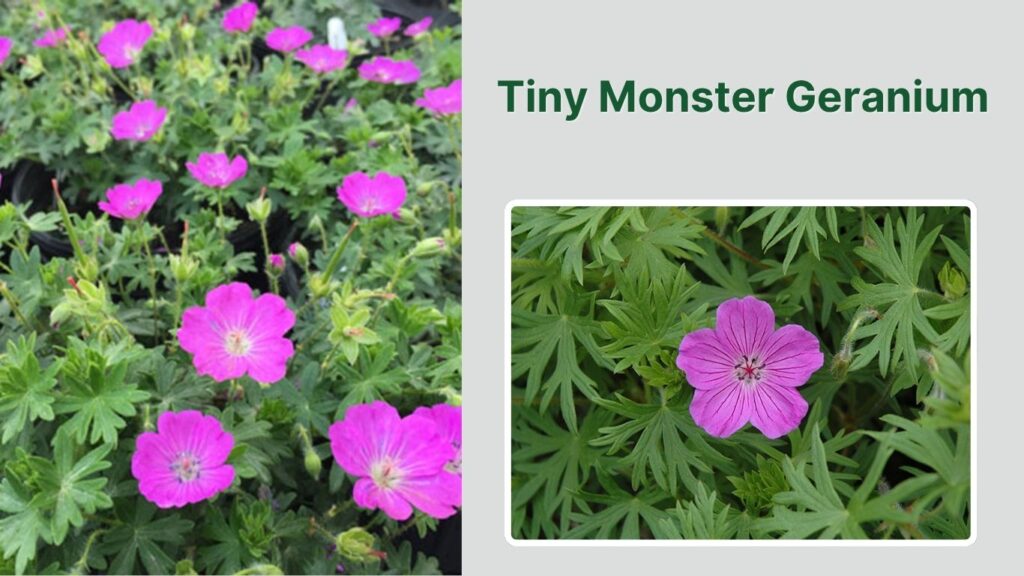
Tiny Monster is a vigorous, mounding geranium with magenta-pink flowers and a spreading habit. Despite its name, it’s not tiny—it’s named for its ability to quickly fill in spaces, making it excellent for ground cover or large border edges.
Identification
- Flower Color: Bright magenta-pink
- Leaf Type: Deeply divided green foliage, turning reddish in fall
- Height: 12–18 inches
- Spread: 24–36 inches
- Bloom Time: Early summer to early fall
- Type: Hardy perennial geranium
Origin and Popularity
A hybrid of Geranium sanguineum, Tiny Monster is favored for its long bloom time, dense coverage, and adaptability. It’s often used in low-care landscapes, informal borders, and cottage gardens.
Growing and Blooming Season
Plant in spring or fall. Starts blooming in early summer and continues until fall with light deadheading. Thrives in USDA zones 4–8. Grows in full sun to part shade and adapts to various soil types.
Companion Plants
Ideal with ornamental grasses, coreopsis, or ground-level bulbs. Its spreading habit makes it useful between stepping stones, around shrubs, or as a vibrant filler along garden paths. Also effective in mass plantings for weed control.
10. Splish Splash Geranium

Splish Splash is a unique and playful geranium variety featuring white petals splattered with blue or purple streaks—no two flowers look exactly the same. This variety brings an artistic flair to cottage gardens and mixed perennial beds.
Identification
- Flower Color: White with irregular blue or purple splashes
- Leaf Type: Deep green, lobed foliage
- Height: 18–24 inches
- Spread: 20–30 inches
- Bloom Time: Early summer to midsummer
- Type: Hardy perennial geranium (Geranium pratense)
Origin and Popularity
Splish Splash stands out for its one-of-a-kind variegated petals. Popular among gardeners looking for a whimsical touch, it performs well in both formal and informal designs.
Growing and Blooming Season
Plant in spring or fall. Blooms begin in early June and continue into July. Suitable for USDA zones 4–8. Prefers full sun to part shade and well-drained, fertile soil. May benefit from mid-season trimming to encourage fresh blooms.
Companion Plants
Looks great with white daisies, lavender, or ornamental grasses. Pairs well with pink or purple geraniums for contrast and variety. Ideal for borders, meadow-style plantings, or artistic garden themes.
11. Jolly Bee Geranium
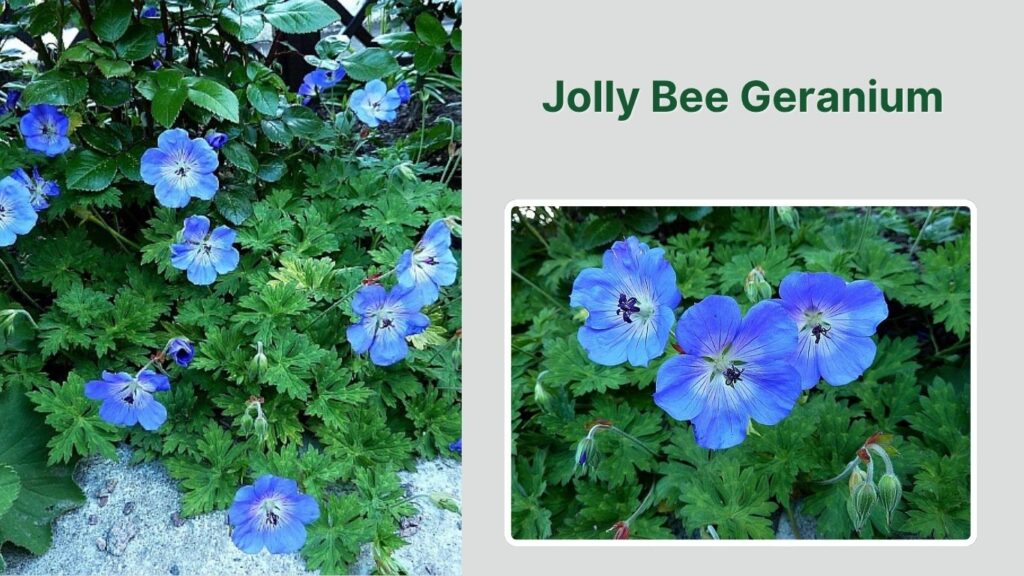
Jolly Bee is a long-flowering and sprawling geranium that produces wide, violet-blue flowers with a distinct white eye. It’s closely related to the famous ‘Rozanne’ and offers similar spreading ground cover benefits.
Identification
- Flower Color: Violet-blue with white center
- Leaf Type: Light green, lobed, and slightly aromatic
- Height: 15–20 inches
- Spread: 24–36 inches
- Bloom Time: Late spring to fall
- Type: Hardy perennial geranium
Origin and Popularity
Developed in the UK, Jolly Bee is prized for its incredibly long blooming season and relaxed, rambling growth. Although sometimes confused with Rozanne, it maintains its own loyal following.
Growing and Blooming Season
Plant in fall or early spring. Begins blooming in late May and continues through October in many regions. Hardy in USDA zones 5–8. Grows best in full sun or light shade with well-drained soil.
Companion Plants
Excellent with rudbeckia, echinacea, or coreopsis in summer borders. Its mounding, trailing form makes it ideal for softening the edges of raised beds, paths, and rock gardens. Blends well in both naturalistic and modern designs.
12. Nimbus Geranium
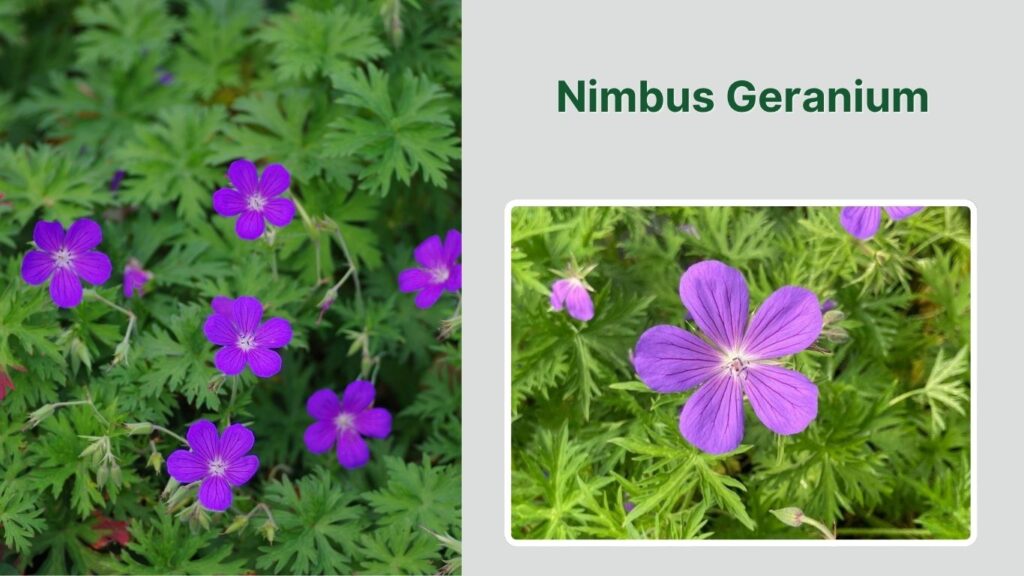
Nimbus is a graceful geranium variety that features soft, lavender-blue flowers with intricate veining and deeply dissected, lacy foliage. Its airy appearance and fine texture make it ideal for softening garden borders and blending into mixed plantings.
Identification
- Flower Color: Lavender-blue with dark veining
- Leaf Type: Finely divided, fern-like green foliage
- Height: 18–24 inches
- Spread: 20–30 inches
- Bloom Time: Late spring to mid-summer
- Type: Hardy perennial geranium (Geranium himalayense hybrid)
Origin and Popularity
Nimbus is cherished for both its beautiful bloom and foliage. It’s especially popular in cottage gardens and designs that prioritize texture and softness.
Growing and Blooming Season
Plant in spring or fall. Flowers appear from late May through July, sometimes with a lighter rebloom in autumn. Hardy in USDA zones 4–8 and grows best in full sun to partial shade with well-drained soil.
Companion Plants
Complements other finely textured plants like astilbes and lady’s mantle. Looks beautiful mixed with blue salvias, white shasta daisies, or ornamental grasses. Ideal for naturalistic borders or perennial flower beds.
13. Mavis Simpson Geranium
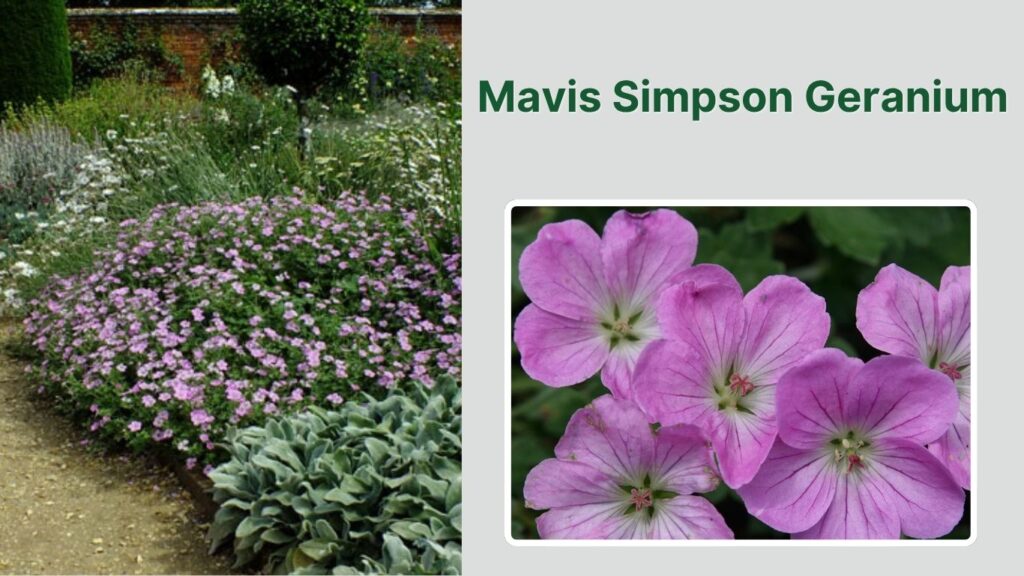
Mavis Simpson is a charming, low-growing geranium that produces soft pink flowers and has silver-tinted foliage. It’s known for its spreading habit and makes an excellent ground cover in sunny to lightly shaded gardens.
Identification
- Flower Color: Pale shell-pink with fine veining
- Leaf Type: Silvery-green, lightly hairy and deeply lobed
- Height: 8–12 inches
- Spread: 24–30 inches
- Bloom Time: Early summer to early fall
- Type: Hardy perennial geranium (Geranium × riversleaianum)
Origin and Popularity
Named after a noted British gardener, Mavis Simpson is loved for its soft color palette and ability to provide long-lasting ground cover with minimal maintenance.
Growing and Blooming Season
Plant in spring or autumn. Begins blooming in June and often continues into September. Best in USDA zones 5–8. Thrives in full sun and well-drained soils, though it tolerates light shade.
Companion Plants
Perfect with lamb’s ear, lavender, and other pastel perennials. Its silvery foliage contrasts well with darker greens, and its spreading habit makes it excellent for edging, pathways, or spilling over low walls.
14. Elke Geranium
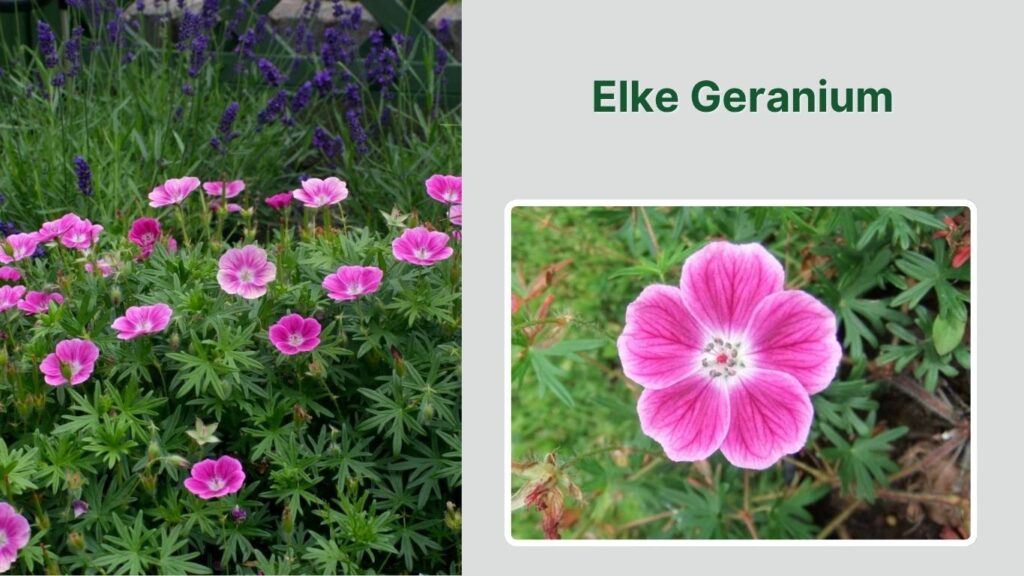
Elke is a compact, free-flowering geranium known for its bright pink blooms with a pale white center and delicate veining. Its low, mounding growth and long bloom season make it perfect for edging, rock gardens, or containers.
Identification
- Flower Color: Bright pink with pale center and fine white veining
- Leaf Type: Deeply lobed, aromatic green foliage
- Height: 10–12 inches
- Spread: 18–24 inches
- Bloom Time: Late spring to early fall
- Type: Hardy perennial geranium (Geranium sanguineum hybrid)
Origin and Popularity
A hybrid selection from Europe, Elke is favored for its compact size and nonstop blooming habit. It’s especially useful in small-space gardens and sunny borders.
Growing and Blooming Season
Plant in early spring or fall. Starts flowering in late May and continues through September with minimal care. Suitable for USDA zones 4–8. Grows best in full sun and well-drained soil.
Companion Plants
Pairs well with low-growing companions like thyme, campanula, or dwarf lavender. Also looks lovely near stone paths, container edges, or mixed in perennial borders with coreopsis or salvia.
15. Wargrave Pink Geranium
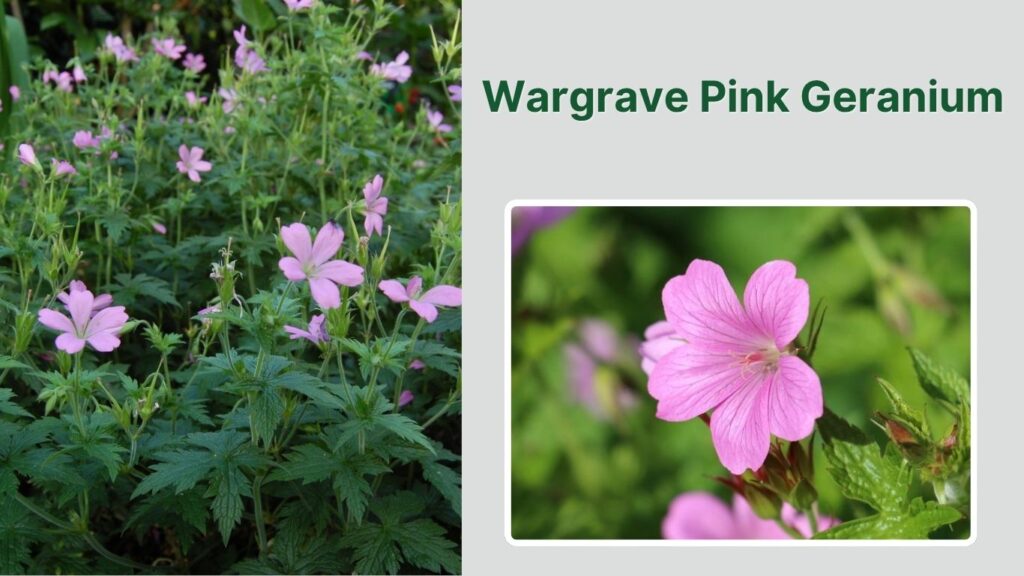
Wargrave Pink is a vigorous and long-blooming geranium with coral-pink flowers and attractive lobed foliage. Its upright, mounding habit makes it a great filler for borders and informal flower beds.
Identification
- Flower Color: Coral pink to salmon
- Leaf Type: Deep green, lobed, slightly glossy
- Height: 18–24 inches
- Spread: 20–30 inches
- Bloom Time: Late spring to early fall
- Type: Hardy perennial geranium (Geranium × oxonianum)
Origin and Popularity
This variety has been a favorite among gardeners for decades due to its reliability and adaptability. It’s one of the best options for consistent summer color in mixed perennial beds.
Growing and Blooming Season
Plant in fall or spring. Blooms begin in late May and can continue with regular deadheading into September. Hardy in USDA zones 4–8. Thrives in full sun to partial shade with average, well-drained soil.
Companion Plants
Complements daisies, catmint, and rudbeckia in sunny borders. Its soft pink tones contrast nicely with blues and purples, making it a good companion to salvia and veronica. Great for informal gardens and relaxed planting schemes.
16. Dreamland Geranium
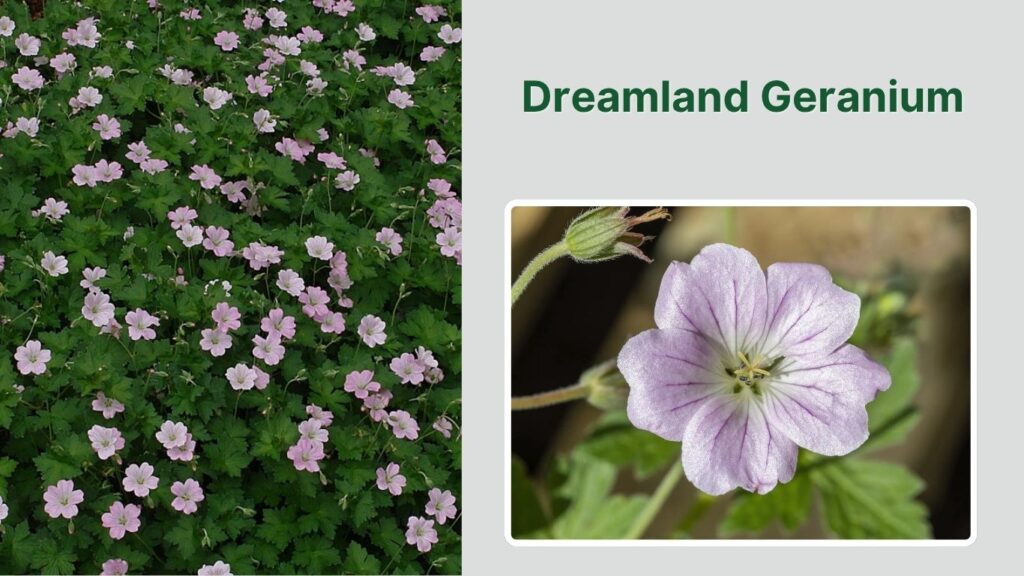
Dreamland is a compact and elegant geranium known for its soft pink flowers and finely textured foliage. It blooms abundantly and fits perfectly into smaller garden spaces, rockeries, and container displays.
Identification
- Flower Color: Pale pink with light veining
- Leaf Type: Soft green, deeply lobed, compact growth
- Height: 10–14 inches
- Spread: 16–20 inches
- Bloom Time: Late spring to early fall
- Type: Hardy perennial geranium (Geranium wallichianum hybrid)
Origin and Popularity
Dreamland was bred for continuous blooming and a tidy growth habit. Its gentle colors and neat form make it a top choice for edging and patio gardens.
Growing and Blooming Season
Plant in spring or autumn. Begins flowering in late May and often continues through September with light deadheading. Best in USDA zones 5–8 and thrives in full sun to partial shade with well-drained soil.
Companion Plants
Lovely with lavender, campanula, or small ornamental grasses. Its compact shape makes it excellent for pairing with creeping thyme, sedums, or other low-growing plants along walkways or garden borders.
17. Crystal Lake Geranium
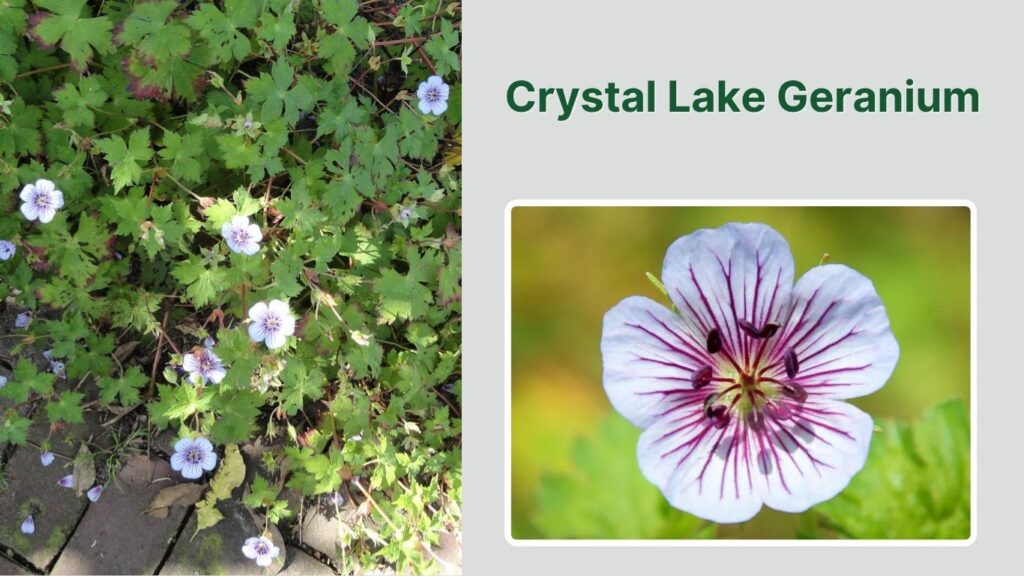
Crystal Lake is a striking geranium with large, pale blue to lavender flowers featuring a dark purple center and veins. It stands out for its bold contrast and upright habit, ideal for adding cool tones to warm garden palettes.
Identification
- Flower Color: Pale blue-lavender with purple eye and veining
- Leaf Type: Green, deeply cut and bushy
- Height: 18–24 inches
- Spread: 20–28 inches
- Bloom Time: Early summer to mid-summer
- Type: Hardy perennial geranium (Geranium pratense hybrid)
Origin and Popularity
Crystal Lake is appreciated for its cool coloring and structured form, especially in mixed borders and summer perennial gardens.
Growing and Blooming Season
Plant in spring or fall. Blooms from early June into mid-July. Suitable for USDA zones 4–7. Grows best in full sun and moderately fertile, well-drained soil. Can rebloom with cutting back after first flush.
Companion Plants
Excellent with yellow yarrow, pink echinacea, or white shasta daisies. Works well in perennial borders and meadow-style plantings, especially when blended with complementary blue and silver plants.
18. Blue Sunrise Geranium
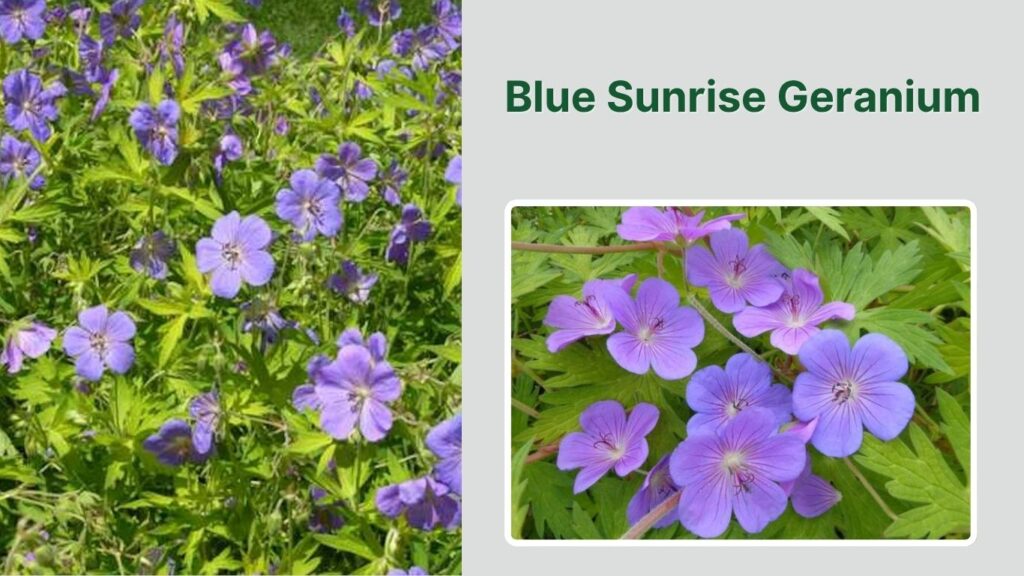
Blue Sunrise is an eye-catching geranium known for its striking chartreuse-yellow foliage that contrasts beautifully with its violet-blue flowers. As the season progresses, the foliage deepens to lime green, adding ongoing visual interest.
Identification
- Flower Color: Violet-blue
- Leaf Type: Bright yellow to lime green, deeply lobed
- Height: 12–16 inches
- Spread: 18–24 inches
- Bloom Time: Late spring to midsummer
- Type: Hardy perennial geranium (Geranium himalayense hybrid)
Origin and Popularity
This variety is especially popular for foliage-focused garden designs. The combination of colorful leaves and bold flowers makes it a unique choice in sunny beds or borders.
Growing and Blooming Season
Plant in fall or spring. Blooms from May through July, with some reblooming possible. Best for USDA zones 4–8. Prefers full sun to partial shade and moderately moist, well-drained soil.
Companion Plants
Pairs beautifully with purple salvia, ornamental grasses, or burgundy foliage plants like heuchera. Also contrasts nicely with dark-leaved shrubs and softens the edge of paths and walkways.
19. Pink Penny Geranium
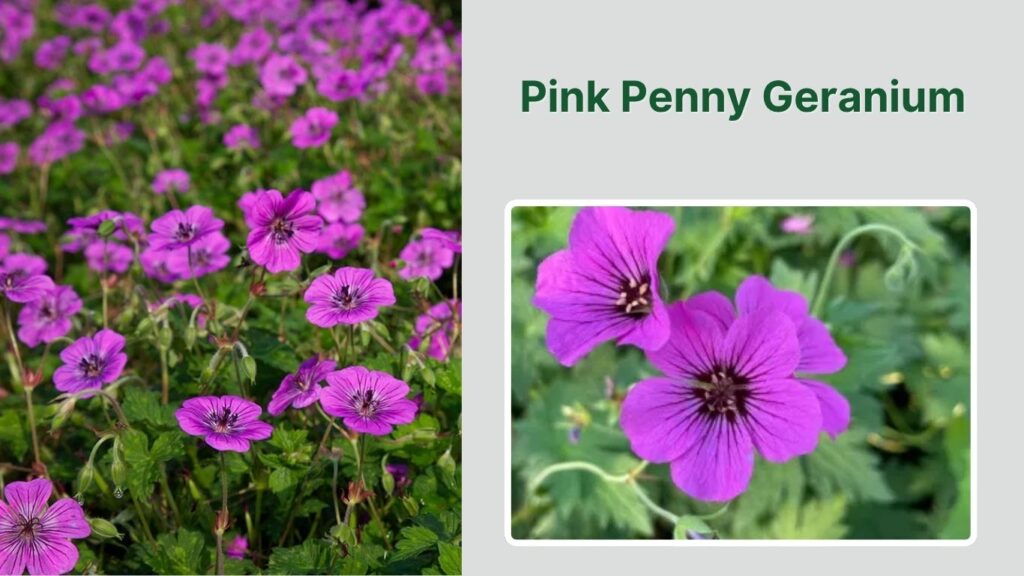
Pink Penny is a trailing geranium variety with bright salmon-pink blooms and glossy green foliage. It’s well-suited for hanging baskets, containers, and sunny ground cover where it can spread freely.
Identification
- Flower Color: Bright salmon-pink
- Leaf Type: Rounded, glossy green, slightly scalloped edges
- Height: 10–12 inches
- Spread: 24–36 inches (trailing habit)
- Bloom Time: Late spring to early fall
- Type: Hardy perennial geranium (Geranium × oxonianum)
Origin and Popularity
Pink Penny is widely appreciated for its vibrant blooms and spreading nature. It’s ideal for adding a splash of color to low-maintenance, informal garden areas.
Growing and Blooming Season
Plant in early spring or fall. Begins blooming in late spring and continues well into fall with regular deadheading. Performs best in USDA zones 5–8, in full sun to part shade and moist, well-drained soil.
Companion Plants
Perfect for spilling over walls or containers. Looks great with dwarf lavender, creeping thyme, or golden sedums. Its bold color also contrasts beautifully with white or blue flowering plants in mixed beds.
20. Sweet Heidy Geranium
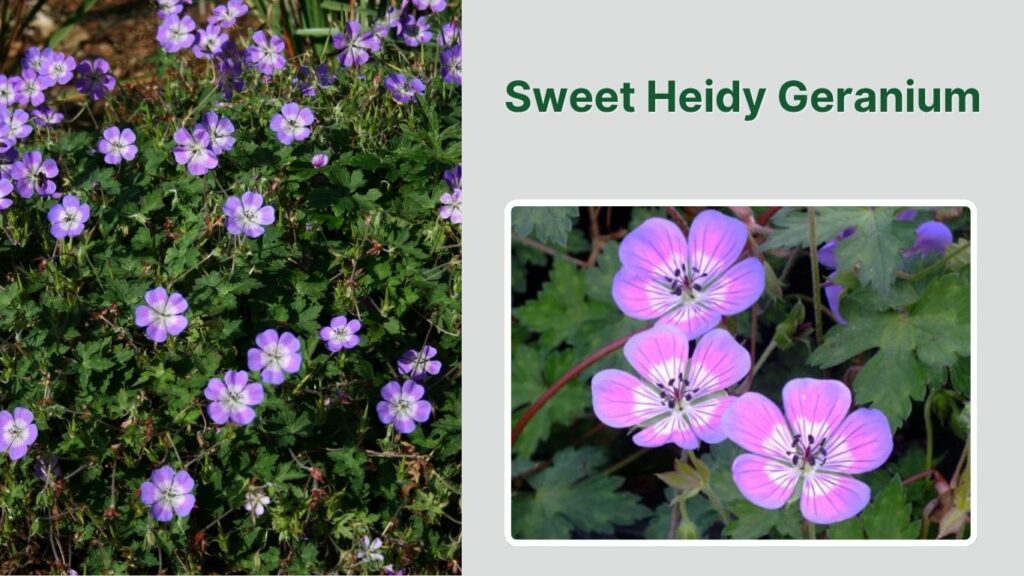
Sweet Heidy is a charming and colorful geranium known for its blend of blue, purple, and pink tones all in one flower. The blooms subtly shift colors depending on maturity and light, making it a dynamic addition to borders and cottage gardens.
Identification
- Flower Color: Blue-purple with pink hues and red veining
- Leaf Type: Deeply lobed, green foliage
- Height: 12–16 inches
- Spread: 18–24 inches
- Bloom Time: Early summer to fall
- Type: Hardy perennial geranium (Geranium wallichianum hybrid)
Origin and Popularity
Bred in the Netherlands, Sweet Heidy is admired for its color-changing flowers and tidy growth habit. It brings a soft, painterly quality to mixed beds and borders.
Growing and Blooming Season
Plant in spring or fall. Begins blooming in early June and often continues until September with deadheading. Hardy in USDA zones 5–8. Prefers full sun to partial shade and moderately moist, well-drained soil.
Companion Plants
Pairs well with soft pastels like ‘Dreamland’ geranium or pale salvia. Also lovely with ornamental grasses, campanula, and lavender for a romantic, blended garden palette.
21. Purple Pillow Geranium
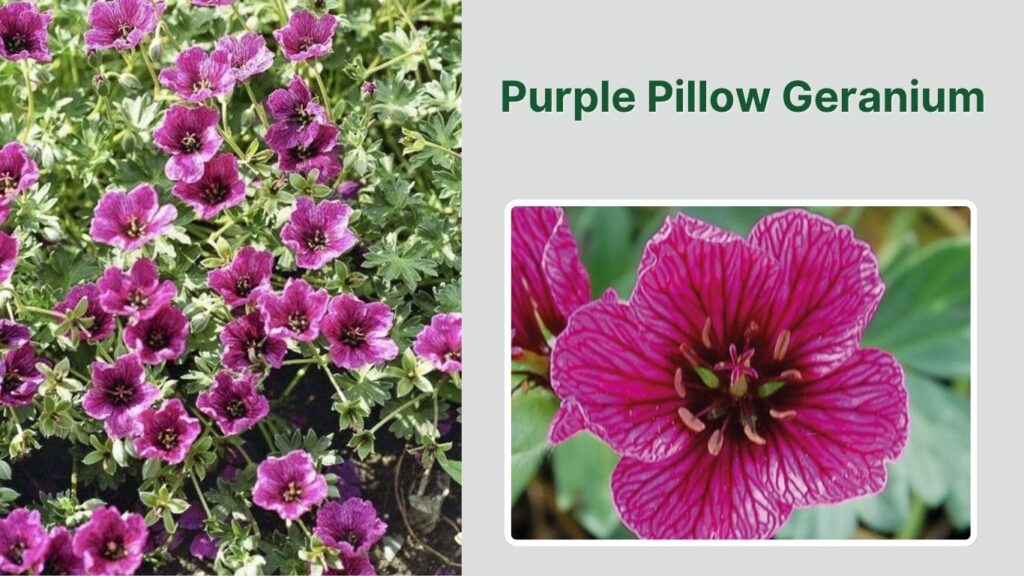
Purple Pillow is a compact, ground-covering geranium known for its rich purple-pink flowers and low, dense foliage. It’s ideal for edging, rock gardens, and covering bare spots with vibrant color and soft texture.
Identification
- Flower Color: Deep purple-pink with darker veining
- Leaf Type: Dark green, rounded and lobed
- Height: 6–10 inches
- Spread: 18–24 inches
- Bloom Time: Late spring to mid-summer
- Type: Hardy perennial geranium (Geranium × cantabrigiense)
Origin and Popularity
Popular for its neat and cushion-like growth habit, Purple Pillow is a favorite for filling gaps in the front of borders or between stepping stones.
Growing and Blooming Season
Plant in spring or early fall. Blooms from May through July, sometimes with a second flush. Thrives in USDA zones 4–8, in full sun to partial shade, and prefers well-drained soil.
Companion Plants
Excellent with alpine plants, creeping thyme, and sedums. It also works well with small ornamental grasses and can be used as a colorful alternative to mulch in flower beds or woodland edges.
22. Southcombe Double Geranium
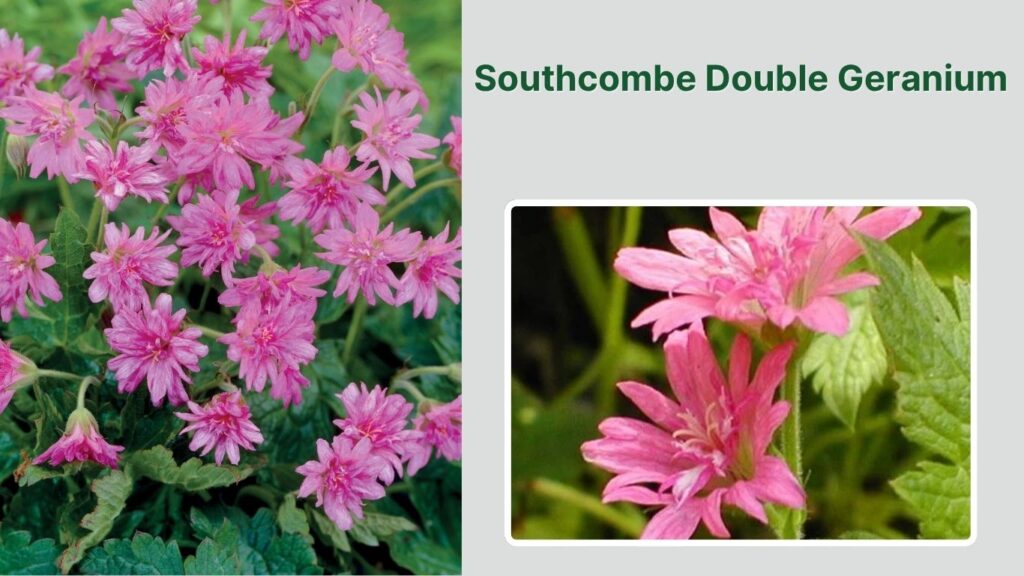
Southcombe Double is a rare and elegant geranium variety known for its fully double, soft pink flowers that resemble miniature roses. Its charming appearance and compact size make it a standout in borders and collector gardens.
Identification
- Flower Color: Soft rose-pink, double blooms
- Leaf Type: Light green, rounded and slightly scalloped
- Height: 12–15 inches
- Spread: 18–22 inches
- Bloom Time: Late spring to midsummer
- Type: Hardy perennial geranium (Geranium pratense cultivar)
Origin and Popularity
This cultivar is admired for its unusual double-flowered form, offering a more textured and romantic look than most single-flowered geraniums. It’s a favorite among enthusiasts and those creating cottage-style gardens.
Growing and Blooming Season
Plant in fall or spring. Blooms from late May through July. Best in USDA zones 4–7. Grows well in full sun with moderately fertile, well-drained soil. Deadheading encourages longer bloom time.
Companion Plants
Lovely with pastel perennials like delphiniums, foxgloves, and campanulas. Also pairs well with ornamental grasses and old-fashioned roses for a vintage look.
23. Spessart Geranium
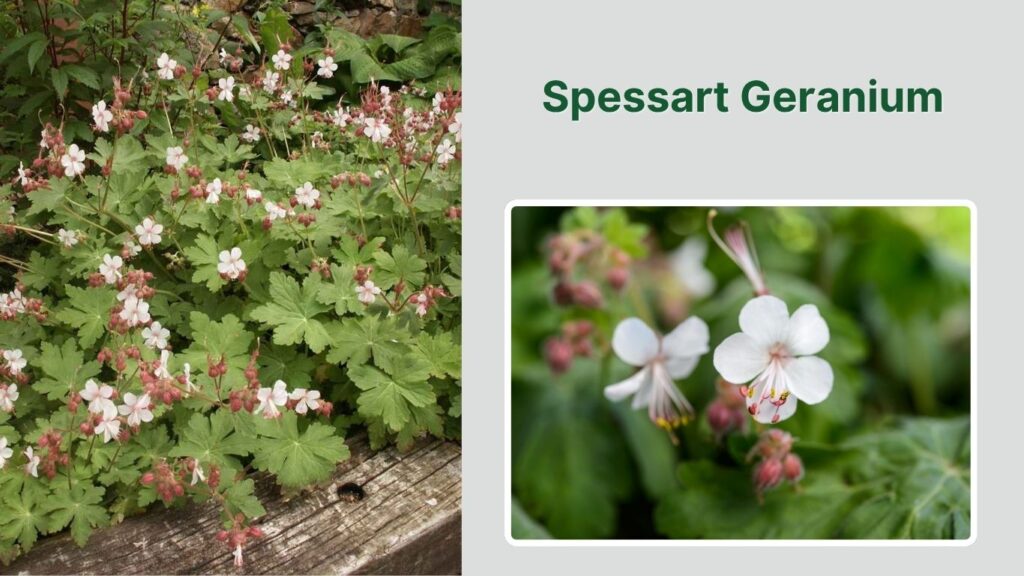
Spessart is a tough and reliable groundcover geranium featuring pale pink, nearly white flowers and semi-evergreen aromatic foliage. It spreads gently, making it ideal for underplanting trees or large shrubs.
Identification
- Flower Color: Very pale pink to white with soft veining
- Leaf Type: Aromatic, deeply lobed, green with red tints in fall
- Height: 10–12 inches
- Spread: 24–30 inches
- Bloom Time: Late spring to early summer
- Type: Hardy perennial geranium (Geranium macrorrhizum hybrid)
Origin and Popularity
Named after the Spessart forest in Germany, this variety is known for its resilience, weed-smothering ability, and shade tolerance. It’s popular in woodland gardens and low-maintenance landscapes.
Growing and Blooming Season
Plant in spring or fall. Begins flowering in May and continues through June. Hardy in USDA zones 3–8. Performs well in partial to full shade and tolerates dry, poor soils once established.
Companion Plants
Ideal with hostas, hellebores, and ferns. It also pairs nicely with spring bulbs or under deciduous trees where other plants may struggle. A go-to choice for tough spots in shaded areas.
24. Sabani Blue Geranium
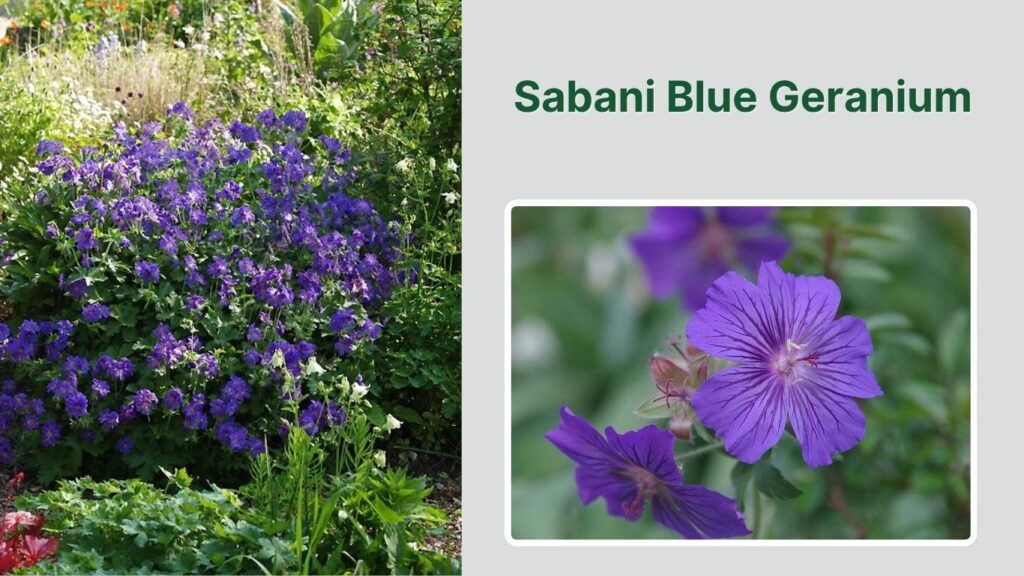
Sabani Blue is a graceful, spreading geranium known for its bright sky-blue flowers and delicate, trailing habit. It brings a soft, naturalistic feel to garden edges, rockeries, and containers.
Identification
- Flower Color: Light sky-blue with faint veining and white centers
- Leaf Type: Small, deeply lobed, light green foliage
- Height: 8–12 inches
- Spread: 20–24 inches
- Bloom Time: Late spring to midsummer
- Type: Hardy perennial geranium (Geranium wallichianum cultivar)
Origin and Popularity
Sabani Blue is appreciated for its long bloom period and charming appearance. It’s often used in informal borders and container plantings, where its trailing nature softens edges and hardscapes.
Growing and Blooming Season
Plant in spring or fall. Blooms from late May through July. Suitable for USDA zones 5–8. Prefers full sun to partial shade and moist, well-drained soil. May rebloom if lightly trimmed after flowering.
Companion Plants
Blends beautifully with pink and purple flowers like salvia, scabiosa, or nepeta. It’s also ideal for growing among stones, in patio planters, or along pathways for a gentle cottage-style effect.
25. Ingwersen’s Variety Geranium
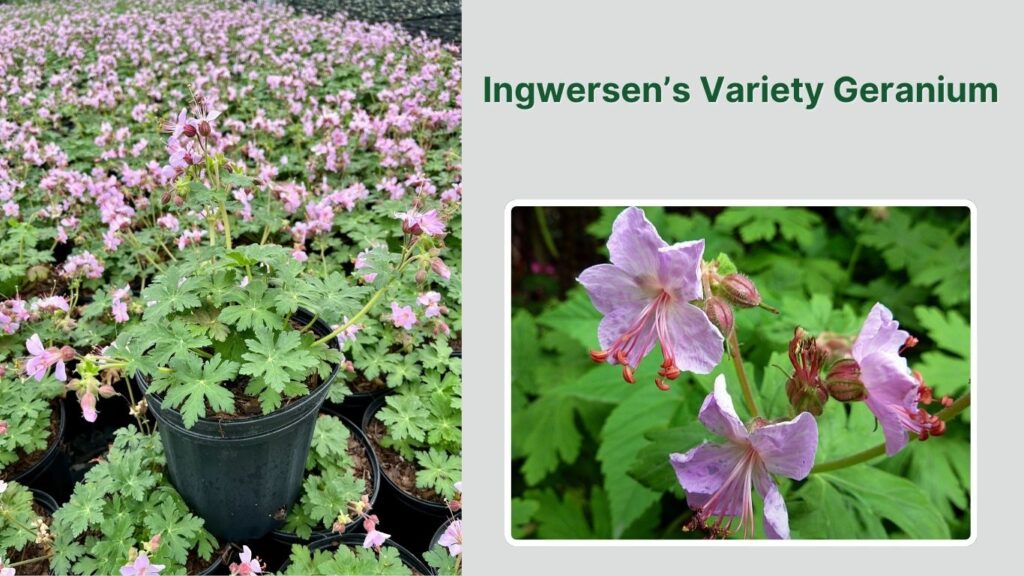
Ingwersen’s Variety is a robust and aromatic groundcover geranium known for its soft pink flowers and strong, pleasant-scented foliage. It’s widely used for suppressing weeds and covering difficult garden spots.
Identification
- Flower Color: Light pink with slightly darker veining
- Leaf Type: Aromatic, semi-evergreen, deeply lobed green leaves
- Height: 10–12 inches
- Spread: 24–36 inches
- Bloom Time: Late spring to early summer
- Type: Hardy perennial geranium (Geranium macrorrhizum cultivar)
Origin and Popularity
Bred by Walter Ingwersen in the UK, this variety has been a reliable favorite since the 1930s for its adaptability and durability in dry shade and poor soil conditions.
Growing and Blooming Season
Plant in fall or early spring. Blooms from May to June, with attractive foliage lasting through winter in many zones. Hardy in USDA zones 3–8. Thrives in partial shade to full shade and tolerates dry conditions once established.
Companion Plants
Perfect with hostas, epimediums, or ferns. Works especially well as a living mulch under trees or shrubs. A great choice for naturalistic and low-maintenance gardens.