





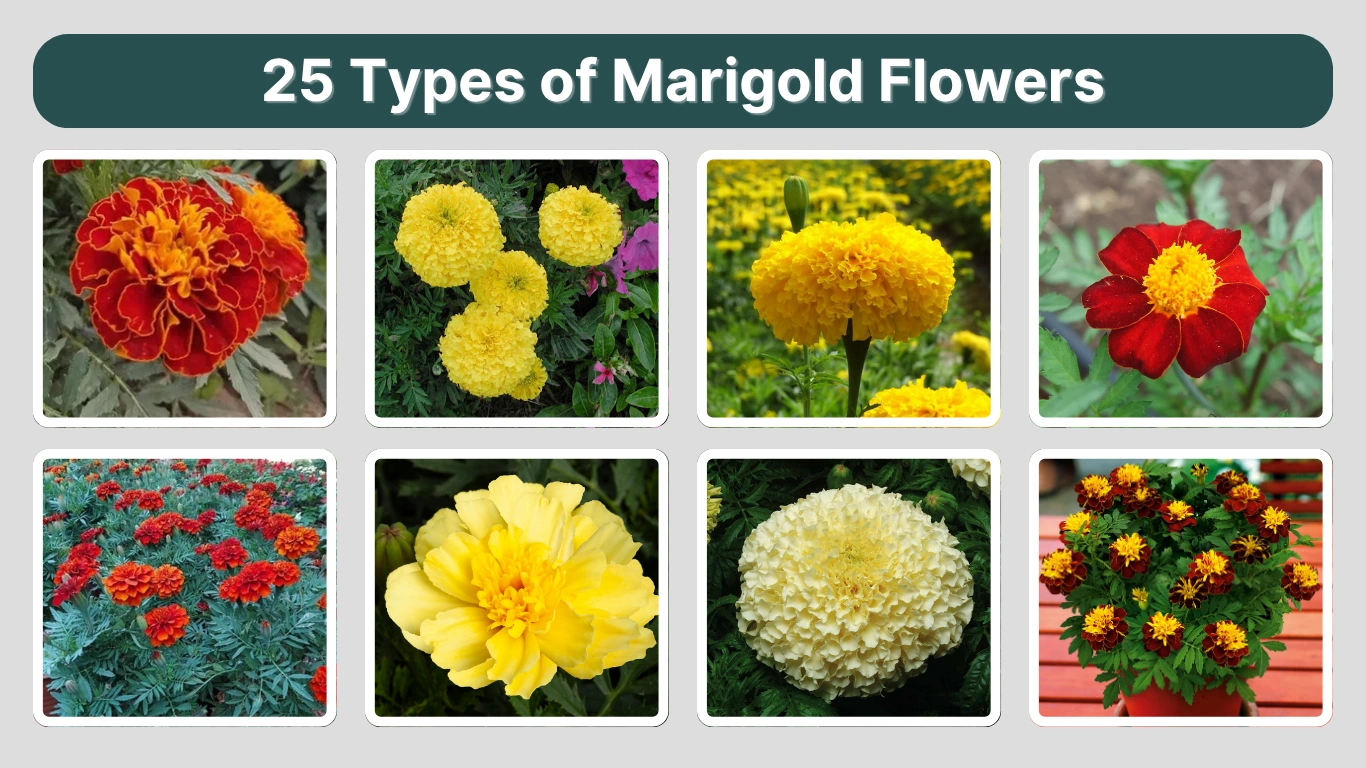
Marigolds are beloved for their bright colors, long-lasting blooms, and natural pest-repelling properties. From tall African marigolds with giant pom-pom flowers to compact French varieties bursting with ruffled color, marigolds offer something for every type of garden. Whether you’re looking to add bold borders, fill containers, or protect your vegetable patch, there’s a marigold to match your needs. In this guide, you’ll discover 25 popular types of marigold flowers, including both classic species and unique modern hybrids—perfect for creating colorful, cheerful, and low-maintenance garden displays.
1. African Marigold (Tagetes erecta)

African Marigold, also known as Aztec or American Marigold, is one of the tallest and most striking marigold varieties. It is famous for its large, fully double blooms that resemble fluffy pom-poms, making it a standout in garden borders and cut flower arrangements.
Identification
- Botanical Name: Tagetes erecta
- Flower Size: 3–5 inches (large and globe-shaped)
- Color Range: Bright yellow, orange, and creamy white
- Height: 18–36 inches
- Growth Habit: Upright and bushy
- Bloom Type: Fully double
- Fragrance: Strong and pungent
Origin and Popularity
Native to Mexico and Central America, African Marigolds have been cultivated for centuries for ornamental, medicinal, and ceremonial uses. They are especially popular in summer flower beds and are often used in Día de los Muertos celebrations.
Growing and Blooming Season
Plant seeds or transplants in spring after the danger of frost has passed. These marigolds bloom profusely from early summer through fall. Best suited for USDA zones 2–11. They thrive in full sun with well-drained soil and are drought-tolerant once established.
Companion Plants
Pair beautifully with zinnias, salvia, or celosia for a bold, sunny garden palette. Their height also makes them ideal as a backdrop for shorter annuals like petunias or dwarf snapdragons. They can help repel certain pests when planted alongside vegetables like tomatoes and beans.
2. French Marigold (Tagetes patula)

French Marigolds are compact, bushy plants known for their richly colored blooms and long-lasting performance. Unlike the taller African types, these marigolds are ideal for borders, edging, and container gardens due to their neat, rounded growth habit.
Identification
- Botanical Name: Tagetes patula
- Flower Size: 1–2.5 inches
- Color Range: Yellow, orange, red, mahogany, and bicolors
- Height: 6–12 inches
- Growth Habit: Low and mounded
- Bloom Type: Single, double, or crested
- Fragrance: Mild and spicy
Origin and Popularity
Though called “French,” this marigold also originates from Central America and Mexico. It’s widely loved for its compact form, heat resistance, and versatility. Commonly used in both ornamental flower beds and vegetable gardens for pest control.
Growing and Blooming Season
Plant after the last frost for continuous blooms from late spring through fall. Thrives in USDA zones 2–11, in full sun and moderately rich soil. French Marigolds are also excellent for container gardens and tolerate humid climates well.
Companion Plants
Perfect companions include basil, tomatoes, and peppers in the vegetable garden, as well as petunias, lobelia, or dusty miller in flower beds and pots. Their natural pest-repelling properties make them especially useful in companion planting.
3. Signet Marigold (Tagetes tenuifolia)

Signet Marigolds are delicate, fine-leaved marigolds that produce small, single flowers with a citrusy scent. Unlike other types, their blooms are edible and often used as colorful garnishes or in salads.
Identification
- Botanical Name: Tagetes tenuifolia
- Flower Size: 0.5–1 inch (small and dainty)
- Color Range: Yellow, orange, and gold
- Height: 8–12 inches
- Growth Habit: Mounded and airy
- Bloom Type: Single
- Fragrance: Light, citrus-like (pleasant)
Origin and Popularity
Native to Mexico and South America, Signet Marigolds are grown for both beauty and culinary uses. Their lacy foliage and prolific tiny blooms make them perfect for herb gardens, edible landscapes, and borders.
Growing and Blooming Season
Sow in spring for blooms from summer into fall. Suitable for USDA zones 3–11. Prefers full sun and well-drained soil. These marigolds thrive in heat and poor soil, making them great for low-maintenance or xeriscape gardens.
Companion Plants
Pair well with herbs like thyme, oregano, or sage. Also great with edible flowers like nasturtiums or calendula in potager or cottage gardens. Their edible petals add color to salads, desserts, and drinks.
4. Mexican Marigold (Tagetes lucida)

Mexican Marigold, also known as Mexican tarragon or sweet marigold, is a perennial herb-like marigold prized for its anise-scented foliage and small golden-yellow flowers. It’s both ornamental and culinary, making it a favorite in herb and pollinator gardens.
Identification
- Botanical Name: Tagetes lucida
- Flower Size: 0.5–1 inch (clusters of small blooms)
- Color Range: Golden yellow
- Height: 18–30 inches
- Growth Habit: Upright and bushy
- Bloom Type: Single
- Fragrance: Anise-like (sweet and herbal)
Origin and Popularity
Native to Mexico and Central America, this marigold was traditionally used by the Aztecs and remains popular in gardens today. It’s often used as a heat-tolerant substitute for French tarragon in culinary dishes.
Growing and Blooming Season
Plant in spring; blooms appear from mid-summer through frost. Best suited for USDA zones 8–11, where it may grow as a perennial. It enjoys full sun and well-drained soil and is drought-tolerant once established.
Companion Plants
Pairs well with herbs like rosemary, sage, or thyme. Its upright form and fragrant foliage make it a great addition to herb gardens, as well as ornamental flower beds. Attracts bees and butterflies while deterring pests.
5. Triploid Marigold (Tagetes hybrid)

Triploid Marigolds are hybrid crosses between African and French marigolds, combining the best traits of both: the large blooms of African marigolds and the weather resilience of French types. These sterile hybrids bloom longer and don’t produce seeds.
Identification
- Botanical Name: Tagetes hybrid
- Flower Size: 3–4 inches
- Color Range: Bright yellow, orange, and gold
- Height: 12–18 inches
- Growth Habit: Upright and compact
- Bloom Type: Double or semi-double
- Fragrance: Mild
Origin and Popularity
Created through hybrid breeding programs, Triploid marigolds are valued for their vigorous bloom production and tolerance to heat and humidity. They are often used in high-traffic garden areas and professional landscapes.
Growing and Blooming Season
Plant in spring for continuous blooms from late spring to frost. Hardy in USDA zones 9–11 as annuals. Requires full sun and moderately fertile, well-drained soil. Since they are sterile, energy is focused entirely on flower production.
Companion Plants
Excellent in mass plantings with zinnias, celosia, or salvia. In containers, they pair well with ornamental grasses or trailing vines like sweet potato vine. Ideal for landscapes needing low-maintenance, long-lasting color.
6. Vanilla Marigold
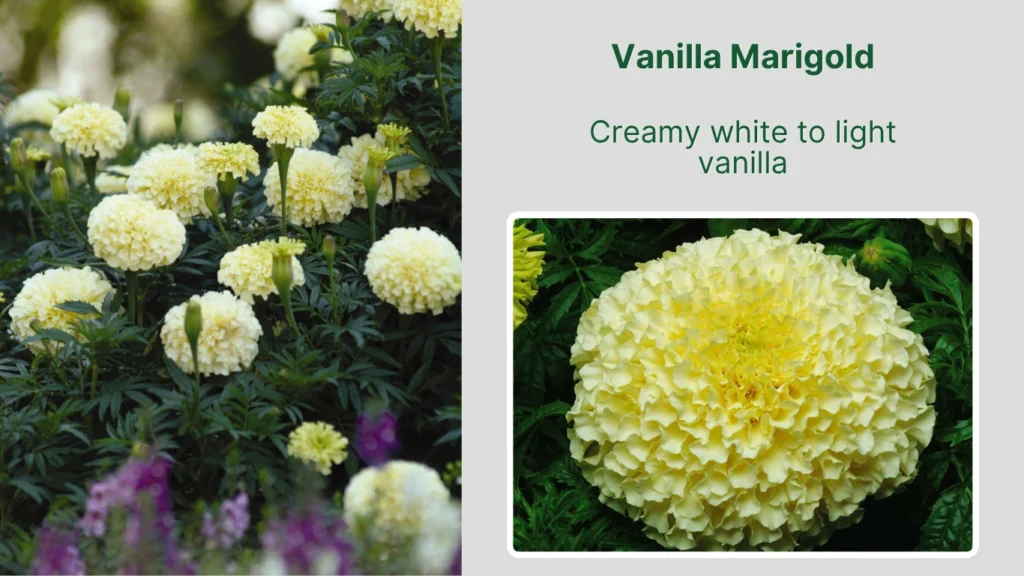
Vanilla Marigold is a unique cultivar of African marigold, prized for its creamy white to pale ivory blooms—an uncommon color in the marigold family. Its large, full flowers and soft tone make it ideal for elegant garden designs and mixed arrangements.
Identification
- Type: African Marigold (Tagetes erecta)
- Flower Size: 3–4 inches
- Color Range: Creamy white to light vanilla
- Height: 12–18 inches
- Growth Habit: Upright and bushy
- Bloom Type: Fully double
- Fragrance: Mild to strong (typical marigold scent)
Origin and Popularity
Developed as a soft-colored alternative to traditional marigolds, Vanilla is popular in wedding gardens, white-themed landscapes, and mixed floral borders. It stands out for its rare color and large bloom size.
Growing and Blooming Season
Plant in spring after frost for blooms from summer into fall. Best grown in USDA zones 9–11. Thrives in full sun and well-drained soil. Deadheading encourages more blooms and keeps the plant looking tidy.
Companion Plants
Perfectly pairs with purple salvia, dusty miller, lavender, or blue petunias for contrast. It also works well with other pastel blooms in white, blush, or light yellow for a romantic garden palette.
7. Crackerjack Marigold

Crackerjack Marigold is a tall, bold African marigold variety featuring extra-large blooms in a mix of vibrant yellow and orange shades. Known for its classic appearance and impressive size, it’s ideal for back borders and bold floral displays.
Identification
- Type: African Marigold (Tagetes erecta)
- Flower Size: 4–5 inches
- Color Range: Bright yellow, orange, and gold
- Height: 24–36 inches
- Growth Habit: Tall and upright
- Bloom Type: Fully double
- Fragrance: Strong, traditional marigold scent
Origin and Popularity
Crackerjack is an heirloom favorite known for its vigor, rich color mix, and high flower production. Popular among home gardeners for decades, it adds height and warmth to summer flower beds.
Growing and Blooming Season
Plant seeds in spring for blooms from early summer through frost. Performs best in USDA zones 2–11. Prefers full sun and fertile, well-drained soil. Tall stems may benefit from staking in windy locations.
Companion Plants
Pairs beautifully with zinnias, cosmos, sunflowers, or amaranth. Also looks striking behind shorter marigolds or annuals like nasturtiums and dwarf dahlias for layered height and bold color.
8. Inca II Marigold

Inca II Marigold is a premium African marigold series known for its large, globe-shaped blooms and strong, uniform plants. It’s favored in professional landscapes and home gardens for its weather resistance and long-lasting color.
Identification
- Type: African Marigold (Tagetes erecta)
- Flower Size: 3.5–4 inches
- Color Range: Bright yellow and deep orange
- Height: 12–14 inches
- Growth Habit: Compact and upright
- Bloom Type: Fully double
- Fragrance: Mild to medium
Origin and Popularity
Bred for uniform size and strong garden performance, Inca II marigolds are widely used in municipal plantings, mass bedding displays, and sunny borders. They’re known for blooming earlier than many other large marigold varieties.
Growing and Blooming Season
Plant in early spring for continuous blooms from late spring through fall. Best in USDA zones 9–11. Thrives in full sun and adapts to a variety of soil conditions. Deadheading helps maintain a clean look.
Companion Plants
Works well with compact salvia, angelonia, vinca, or celosia. The vibrant yellow and orange flowers also make them ideal companions for purple or blue annuals for striking color contrasts.
9. Taishan Marigold

Taishan Marigold is a dense, weather-resistant African marigold series developed for tough garden and landscape conditions. With tight, ball-shaped blooms and strong stems, it maintains excellent form even in rain or high heat.
Identification
- Type: African Marigold (Tagetes erecta)
- Flower Size: 2.5–3 inches
- Color Range: Yellow, orange, and gold
- Height: 10–12 inches
- Growth Habit: Compact and mounding
- Bloom Type: Fully double
- Fragrance: Moderate
Origin and Popularity
Developed by PanAmerican Seed, Taishan marigolds were featured in the 2008 Beijing Olympics. They’ve gained popularity worldwide for their resilience, compact size, and garden versatility.
Growing and Blooming Season
Plant in spring after frost for vibrant blooms from early summer through fall. Ideal for USDA zones 9–11. Requires full sun and thrives in both containers and landscape beds. Resistant to lodging and weather damage.
Companion Plants
Perfect for edging beds or filling containers with petunias, lantana, or blue lobelia. They also work well with herbs like parsley or oregano in edible landscapes.
10. Antigua Marigold

Antigua Marigold is a compact African marigold series known for its large, full blooms on short, sturdy plants. Ideal for small gardens, containers, and tight spaces, it offers the grandeur of tall marigolds in a space-saving form.
Identification
- Type: African Marigold (Tagetes erecta)
- Flower Size: 3–3.5 inches
- Color Range: Orange, gold, yellow, and primrose
- Height: 10–12 inches
- Growth Habit: Uniform, compact, and bushy
- Bloom Type: Fully double
- Fragrance: Mild
Origin and Popularity
Antigua was bred for durability, weather resistance, and uniform flowering. It’s widely used in landscaping projects and home gardens where consistent height and large blooms are desirable.
Growing and Blooming Season
Plant in spring after the last frost for blooms from late spring through fall. Grows best in USDA zones 9–11. Thrives in full sun and well-drained soil. Low maintenance and ideal for beginner gardeners.
Companion Plants
Works beautifully in containers with calibrachoa or trailing petunias. In garden beds, it pairs well with compact zinnias, dusty miller, or sweet alyssum for layered and colorful plantings.
11. Durango Marigold

Durango Marigold is a vibrant French marigold series known for its early blooms, neat form, and ruffled flowers. It offers a variety of color options and excellent performance in both beds and containers.
Identification
- Type: French Marigold (Tagetes patula)
- Flower Size: 2–2.5 inches
- Color Range: Yellow, red, orange, bicolor, and gold
- Height: 10–12 inches
- Growth Habit: Mounded and compact
- Bloom Type: Semi-double and crested
- Fragrance: Mild and pleasant
Origin and Popularity
The Durango series is favored for its consistent performance, uniform size, and quick blooming. It’s commonly used in ornamental displays, mass plantings, and low borders.
Growing and Blooming Season
Plant in early spring for nonstop flowering from spring to frost. Best in USDA zones 9–11. Enjoys full sun, tolerates heat well, and requires little maintenance aside from occasional deadheading.
Companion Plants
Pairs well with other short-statured annuals like begonias, impatiens, or dwarf celosia. Ideal for lining walkways, planting in raised beds, or mixing in decorative pots.
12. Bonanza Marigold
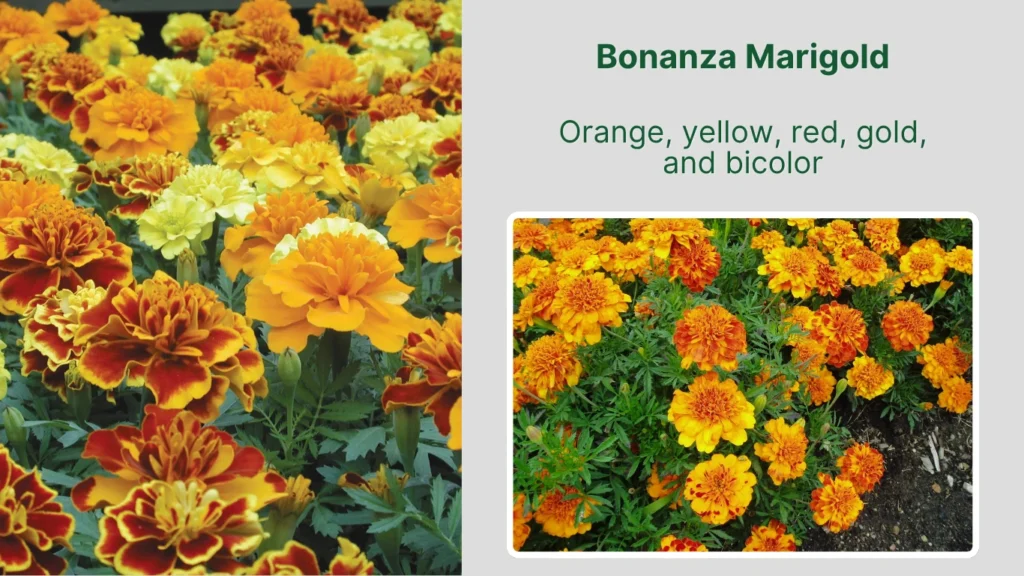
Bonanza Marigold is a compact French marigold series featuring large, full, and frilly blooms with bold, bright colors. Known for its fast growth and long-lasting flowers, it’s ideal for containers, small borders, and mass plantings.
Identification
- Type: French Marigold (Tagetes patula)
- Flower Size: 2–2.5 inches
- Color Range: Orange, yellow, red, gold, and bicolor
- Height: 8–10 inches
- Growth Habit: Compact and bushy
- Bloom Type: Fully double
- Fragrance: Lightly pungent
Origin and Popularity
Bonanza marigolds are widely popular among gardeners and landscapers for their early flowering and long season of bloom. Their tidy form makes them perfect for formal garden edges and container gardens.
Growing and Blooming Season
Plant in spring after frost for continuous blooms into fall. Thrives in USDA zones 9–11. Prefers full sun and benefits from regular watering and deadheading to promote consistent flowering.
Companion Plants
Excellent with dwarf zinnias, alyssum, lobelia, or coleus. Also suitable for veggie beds, where their pest-repelling qualities can support tomatoes, eggplants, and peppers.
13. Safari Marigold

Safari Marigold is a French marigold series known for its large flower heads, vibrant bicolor patterns, and excellent garden durability. It’s a favorite for bold color impact in borders and sunny containers.
Identification
- Type: French Marigold (Tagetes patula)
- Flower Size: 2–3 inches
- Color Range: Gold, yellow, red, orange, and multi-tones
- Height: 10–12 inches
- Growth Habit: Uniform and bushy
- Bloom Type: Semi-double to double
- Fragrance: Moderate, classic marigold scent
Origin and Popularity
The Safari series is praised for early blooms and long-lasting flowers that hold up well in the heat. Popular in both home gardens and commercial flower beds, especially in warm climates.
Growing and Blooming Season
Plant in spring for colorful blooms from late spring to frost. Ideal for USDA zones 9–11. Needs full sun and thrives in a variety of soil types with minimal care.
Companion Plants
Looks great with other bold annuals like celosia, portulaca, or dwarf sunflowers. Use in borders, along pathways, or mixed with herbs in edible gardens for color and pest protection.
14. Hero Series Marigold

The Hero Series is a French marigold line known for its compact size, early flowering, and richly colored double blooms. These marigolds are excellent for smaller spaces, edging, and decorative containers, offering reliable color and a tidy form.
Identification
- Type: French Marigold (Tagetes patula)
- Flower Size: 2–2.5 inches
- Color Range: Red, orange, yellow, gold, and bicolors
- Height: 8–10 inches
- Growth Habit: Compact and uniform
- Bloom Type: Fully double
- Fragrance: Mild
Origin and Popularity
Hero marigolds are widely appreciated for their resilience and versatility. Their manageable height and dense growth habit make them ideal for creating colorful borders and small-scale floral displays.
Growing and Blooming Season
Plant in spring after the last frost for blooms lasting into early fall. Performs well in USDA zones 9–11. Thrives in full sun and well-drained soil. Minimal maintenance required aside from light deadheading.
Companion Plants
Pairs nicely with lobelia, salvia, dusty miller, and verbena. Also great in vegetable gardens alongside tomatoes, beans, or carrots for color and natural pest control.
15. Jubilee Marigold

Jubilee Marigold is a traditional African marigold variety valued for its tall stature and large, sunny blooms. It’s a showy choice for cutting gardens, back borders, and statement plantings.
Identification
- Type: African Marigold (Tagetes erecta)
- Flower Size: 3–4 inches
- Color Range: Bright golden yellow
- Height: 24–36 inches
- Growth Habit: Tall and upright
- Bloom Type: Fully double
- Fragrance: Strong, classic marigold scent
Origin and Popularity
An heirloom favorite, Jubilee has been grown for decades as a reliable, bold-flowering variety. Its rich color and tall height make it ideal for adding structure and warmth to garden beds.
Growing and Blooming Season
Plant in spring for blooms from early summer until frost. Grows best in USDA zones 9–11. Requires full sun and well-drained soil. Deadheading helps extend the flowering season and keeps plants looking clean.
Companion Plants
Pairs beautifully with tall zinnias, cosmos, and sunflowers. Also works well behind shorter annuals like ageratum or petunias to create tiered garden displays.
16. Discovery Marigold

Discovery Marigold is a compact African marigold series known for its early flowering, uniform shape, and strong performance in landscapes and containers. Despite being part of the taller Tagetes erecta family, Discovery plants stay relatively short, making them suitable for tight spaces.
Identification
- Type: African Marigold (Tagetes erecta)
- Flower Size: 2.5–3 inches
- Color Range: Orange, yellow, and gold
- Height: 10–12 inches
- Growth Habit: Bushy and compact
- Bloom Type: Fully double
- Fragrance: Mild
Origin and Popularity
The Discovery series is valued for combining the bold look of African marigolds with the convenience of compact growth. It’s often used in city plantings, formal borders, and smaller garden plots.
Growing and Blooming Season
Plant in spring for blooms from early summer until frost. Performs well in USDA zones 9–11. Thrives in full sun, heat, and well-drained soil. These marigolds require minimal care and no staking.
Companion Plants
Pairs well with petunias, vinca, alyssum, and celosia. It’s also excellent for pairing with herbs or vegetables like basil and tomatoes in small-space gardens.
17. Zenith Marigold

Zenith Marigold is a hybrid French marigold series known for its heat tolerance, long bloom period, and large, full flowers. It combines the best traits of both French and African types, producing larger blooms on a compact plant.
Identification
- Type: Hybrid French Marigold (Tagetes patula)
- Flower Size: 2.5–3 inches
- Color Range: Orange, yellow, red, and bicolors
- Height: 12–14 inches
- Growth Habit: Compact and spreading
- Bloom Type: Fully double
- Fragrance: Mild to moderate
Origin and Popularity
Bred for hot, humid climates, Zenith marigolds are a favorite in southern gardens and summer bedding displays. They offer bold flowers, robust growth, and excellent durability in tough conditions.
Growing and Blooming Season
Plant in spring for nonstop flowering from early summer through frost. Suitable for USDA zones 9–11. Prefers full sun, tolerates heat and humidity well, and benefits from occasional feeding.
Companion Plants
Great with lantana, blue salvia, or trailing vinca. It also complements ornamental sweet potato vine and works well in containers, borders, or mass plantings where strong performance is key.
18. Alumia Vanilla Cream Marigold

Alumia Vanilla Cream is a unique and elegant French marigold variety featuring creamy white to pale yellow blooms. It offers a soft, pastel twist to the typically bold marigold color palette, making it ideal for modern and romantic garden designs.
Identification
- Type: French Marigold (Tagetes patula)
- Flower Size: 2–2.5 inches
- Color Range: Soft cream to light lemon-yellow
- Height: 10–12 inches
- Growth Habit: Compact and bushy
- Bloom Type: Semi-double to double
- Fragrance: Mild and pleasant
Origin and Popularity
Alumia Vanilla Cream is a newer introduction gaining attention for its rare, delicate coloration. It’s often chosen for white or pastel-themed garden beds, cottage gardens, and decorative pots.
Growing and Blooming Season
Plant in spring for soft blooms from late spring through early fall. Performs well in USDA zones 9–11. Prefers full sun, moderate water, and regular deadheading to keep blooms fresh.
Companion Plants
Pairs beautifully with lavender, silver dusty miller, pink cosmos, or soft blue lobelia. Ideal for calming garden palettes and perfect for wedding-themed floral displays.
19. Fireball Marigold
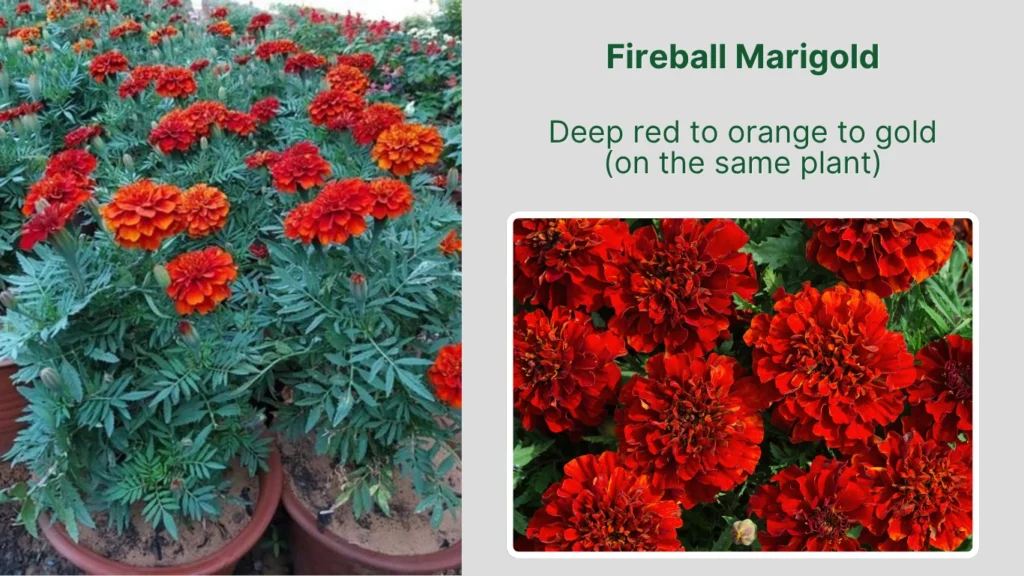
Fireball Marigold is a French marigold cultivar famous for its color-changing blooms. Flowers shift from deep red to bronze to golden orange as they mature, creating a dynamic, multicolor effect on each plant.
Identification
- Type: French Marigold (Tagetes patula)
- Flower Size: 2 inches
- Color Range: Deep red to orange to gold (on the same plant)
- Height: 10–12 inches
- Growth Habit: Compact and bushy
- Bloom Type: Double
- Fragrance: Mildly spicy
Origin and Popularity
A newer hybrid, Fireball is gaining popularity for its unique and ever-changing display. It’s perfect for gardeners who want variety and warmth in a single plant without mixing multiple varieties.
Growing and Blooming Season
Plant in spring after frost. Blooms continuously from late spring until frost. Thrives in USDA zones 9–11. Prefers full sun and well-drained soil; regular deadheading keeps it looking vibrant.
Companion Plants
Pairs well with other warm-toned annuals like red salvia, yellow zinnias, or copper-colored coleus. Works great in containers or borders where dynamic color shifts create visual interest.
20. Strawberry Blonde Marigold

Strawberry Blonde Marigold is a stunning French marigold variety known for its multi-toned petals that blend shades of rose, pink, peach, and yellow. Each bloom can look slightly different, creating a beautiful watercolor-like effect across the plant.
Identification
- Type: French Marigold (Tagetes patula)
- Flower Size: 2–2.5 inches
- Color Range: Rose-pink, peach, yellow, and gold (color varies with temperature)
- Height: 8–12 inches
- Growth Habit: Mounded and compact
- Bloom Type: Semi-double to double
- Fragrance: Mild and sweet
Origin and Popularity
Strawberry Blonde is part of a newer generation of hybrid marigolds bred for unique color combinations. It has become a favorite for pastel-themed gardens and artistic flower arrangements due to its soft, shifting tones.
Growing and Blooming Season
Plant in spring for blooms from early summer through frost. Performs best in USDA zones 9–11. Full sun and well-drained soil encourage the best color development, with cooler temperatures intensifying the pink tones.
Companion Plants
Pairs beautifully with dusty miller, soft purple alyssum, blue salvia, or pink petunias. Ideal for containers, borders, and garden designs that emphasize soft, blended colors.
21. Red Metamorph Marigold

Red Metamorph Marigold is a striking French marigold variety that starts deep red and transitions to shades of bronze, copper, and orange as the flowers mature. This natural color progression gives each plant a fiery, sunset-like appearance.
Identification
- Type: French Marigold (Tagetes patula)
- Flower Size: 2–2.5 inches
- Color Range: Deep red transitioning to bronze and gold
- Height: 10–12 inches
- Growth Habit: Compact and bushy
- Bloom Type: Double
- Fragrance: Mild
Origin and Popularity
Bred for dramatic color change, Red Metamorph is popular in bold garden designs and fall-themed planters. Its fiery shades attract attention and offer dynamic interest as flowers mature.
Growing and Blooming Season
Plant in spring; blooms appear from late spring through fall. Grows best in USDA zones 9–11. Thrives in full sun and well-drained soil, with minimal maintenance beyond occasional deadheading.
Companion Plants
Combines well with orange zinnias, yellow marigolds, ornamental kale, or trailing ivy. Especially attractive in autumn-themed containers, front yard displays, or border plantings.
22. Golden Guardian Marigold

Golden Guardian Marigold is a French marigold specifically bred for its natural nematode-repelling properties, making it a functional and beautiful choice for vegetable gardens. It features bright golden-yellow flowers and a compact, tidy habit.
Identification
- Type: French Marigold (Tagetes patula)
- Flower Size: 2–2.5 inches
- Color Range: Vibrant golden yellow
- Height: 10–12 inches
- Growth Habit: Mounded and compact
- Bloom Type: Single to semi-double
- Fragrance: Mild, with strong pest-repelling aroma
Origin and Popularity
Developed for companion planting, Golden Guardian is widely used in organic gardens to suppress root-knot nematodes and deter pests. It’s also appreciated for its long bloom period and vivid flower color.
Growing and Blooming Season
Plant in early to mid-spring for blooms through summer and early fall. Best in USDA zones 9–11. Requires full sun and well-drained soil. Performs well even in high-heat conditions.
Companion Plants
Ideal for planting with tomatoes, cucumbers, squash, beans, and roses. Also pairs well with herbs like basil and oregano, offering beauty and practical pest control in edible and ornamental gardens.
23. Moonstruck Marigold

Moonstruck Marigold is a premium African marigold series bred for uniform shape, large blooms, and a shorter, more compact habit than traditional tall marigolds. It delivers bold color in a space-efficient form.
Identification
- Type: African Marigold (Tagetes erecta)
- Flower Size: 3–4 inches
- Color Range: Bright yellow, orange, and gold
- Height: 12–14 inches
- Growth Habit: Rounded and bushy
- Bloom Type: Fully double
- Fragrance: Mild
Origin and Popularity
Moonstruck is popular for combining the lush blooms of tall marigolds with a shorter, sturdier form that resists flopping. It’s widely used in public landscaping, containers, and front garden beds.
Growing and Blooming Season
Plant in spring for a long bloom season lasting into fall. Thrives in USDA zones 9–11. Prefers full sun, and tolerates both heat and light drought. Little maintenance required beyond occasional deadheading.
Companion Plants
Looks great with salvia, coleus, ageratum, or purple fountain grass. Also complements trailing plants like calibrachoa in containers or raised beds for a full, balanced look.
24. Little Hero Marigold

Little Hero Marigold is a dwarf French marigold variety known for its petite size and fully double blooms. Despite its compact height, it produces bright, bold flowers that make it ideal for edging, small containers, and tight planting spaces.
Identification
- Type: French Marigold (Tagetes patula)
- Flower Size: 1.5–2 inches
- Color Range: Red, gold, orange, yellow, and bicolor mixes
- Height: 6–8 inches
- Growth Habit: Very compact and mounded
- Bloom Type: Fully double
- Fragrance: Mild to moderate
Origin and Popularity
The Little Hero series is loved for its neat appearance and ability to thrive in both garden beds and containers. Its uniform habit and rich color make it a favorite for decorative borders and mini garden designs.
Growing and Blooming Season
Plant after the last frost in spring; blooms continue through summer into early fall. Best in USDA zones 9–11. Prefers full sun and performs well in a wide range of soils with minimal maintenance.
Companion Plants
Perfect with dwarf alyssum, creeping thyme, or compact petunias. Works well as an edging plant around veggie beds or pathways where space is limited but bold color is desired.
25. Carmen Marigold

Carmen Marigold is a beautiful French marigold cultivar that offers rich mahogany-red petals with golden-yellow edges. Its bi-color petals and compact size make it a standout in containers, flower beds, and mass plantings.
Identification
- Type: French Marigold (Tagetes patula)
- Flower Size: 2–2.5 inches
- Color Range: Mahogany red with yellow edges
- Height: 10–12 inches
- Growth Habit: Mounded and bushy
- Bloom Type: Semi-double to double
- Fragrance: Pleasantly spicy
Origin and Popularity
Carmen is a favorite among gardeners for its dramatic coloration and compact, floriferous growth. It’s often used in borders, fall arrangements, and mixed ornamental displays.
Growing and Blooming Season
Plant in spring for blooms that last into early fall. Performs well in USDA zones 9–11. Thrives in full sun and adapts well to most soil conditions. Low maintenance and drought-tolerant once established.
Companion Plants
Pairs well with yellow marigolds, dusty miller, or purple petunias for high contrast. Also effective when planted near herbs or vegetables, adding beauty and helping deter pests naturally.