




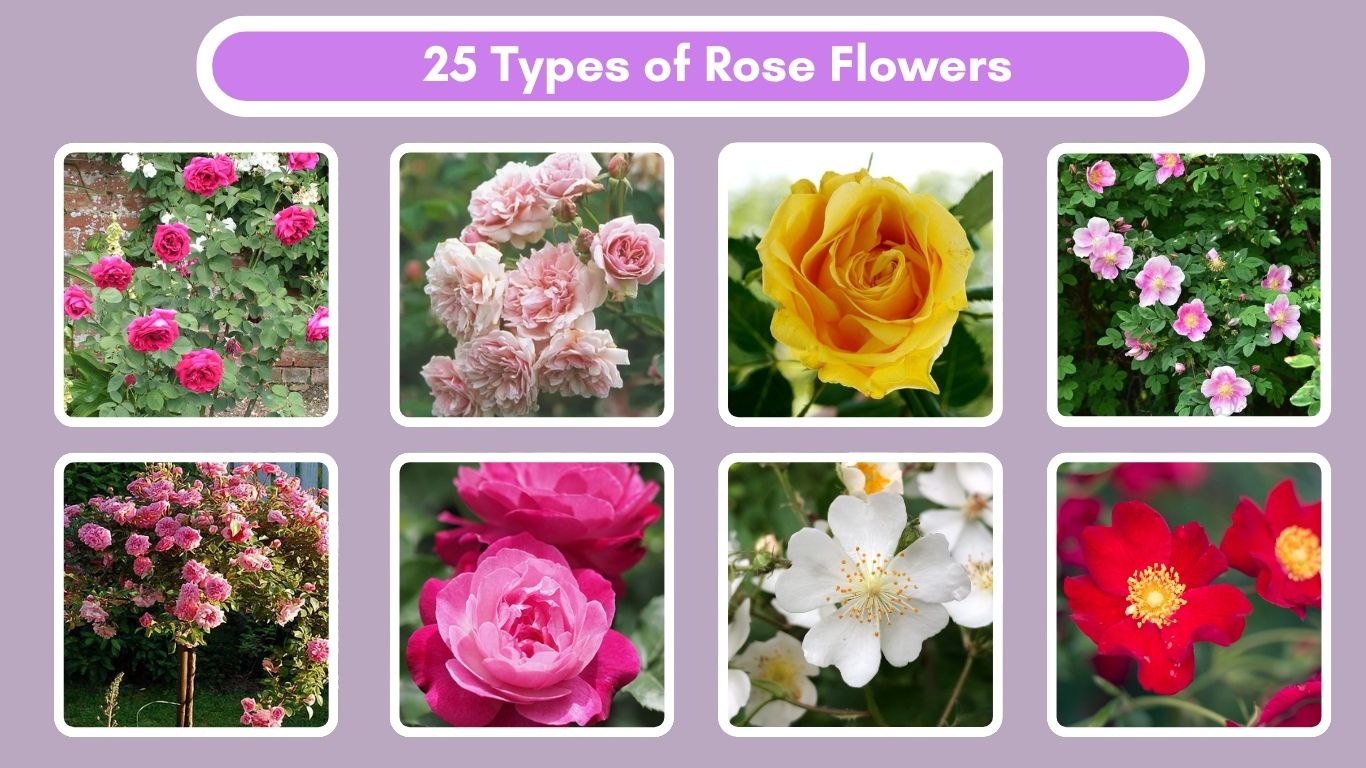
Roses come in countless shapes, sizes, and colors, each variety offering its own charm and characteristics. From delicate wild species to lavish, full-petaled garden favorites, roses have captured hearts for centuries. In this guide, you’ll discover 25 different types of rose flowers—each with a brief identification and blooming detail. Whether you’re a gardener, florist, or simply a flower lover, exploring these rose varieties will give you a deeper appreciation of nature’s floral masterpiece.
1. Damask Rose
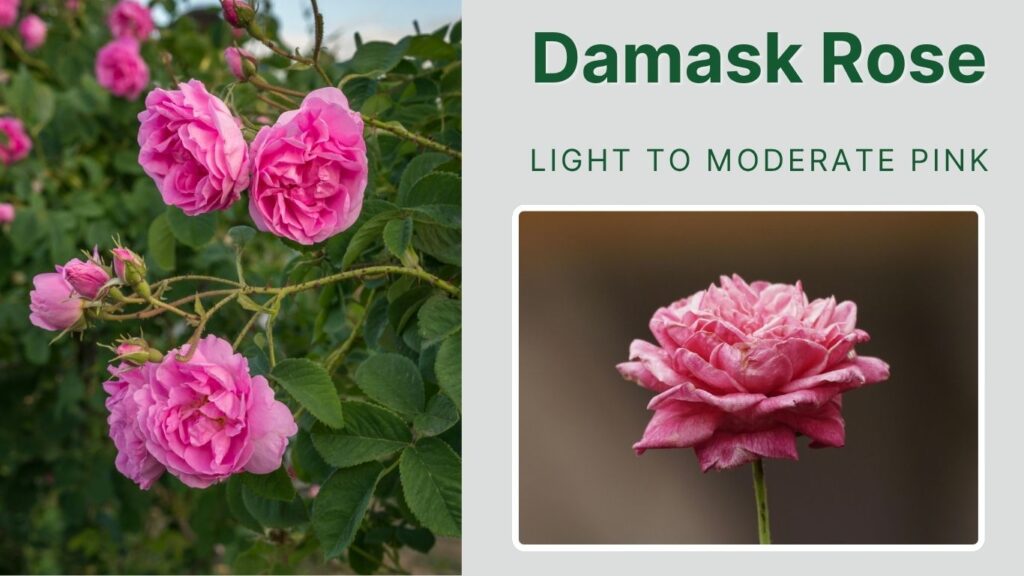
The Damask rose is one of the most ancient and celebrated rose varieties, prized for its unmatched fragrance and historical significance. It has been cultivated for centuries in the Middle East, Europe, and Asia for its beauty and scent, particularly in the making of rose oil and traditional rose gardens.
Flower Color and Appearance
Damask roses usually bloom in delicate shades of soft pink, light rose, or pale red. The blooms are medium to large in size, densely packed with petals, and have a slightly ruffled, romantic look.
Blooming Season
Damask roses fall into two groups:
- Summer Damask: Blooms once in early summer.
- Autumn Damask: Blooms twice—once in summer and again in autumn.
This dual blooming habit adds value and charm to the variety.
Fragrance
The Damask rose is world-renowned for its intense, sweet, and richly floral scent. This variety produces one of the most fragrant rose blooms and is a primary source of traditional rose oil.
Identification
- Scientific Name: Rosa × damascena
- Height: Typically 4–6 feet tall
- Bloom Size: Medium to large
- Petal Count: 30–50 densely layered petals
- Thorns: Present on stems
- Foliage: Green, slightly fuzzy leaves with serrated edges
- Growth Habit: Upright, bushy shrub with arching branches
2. Tea Rose
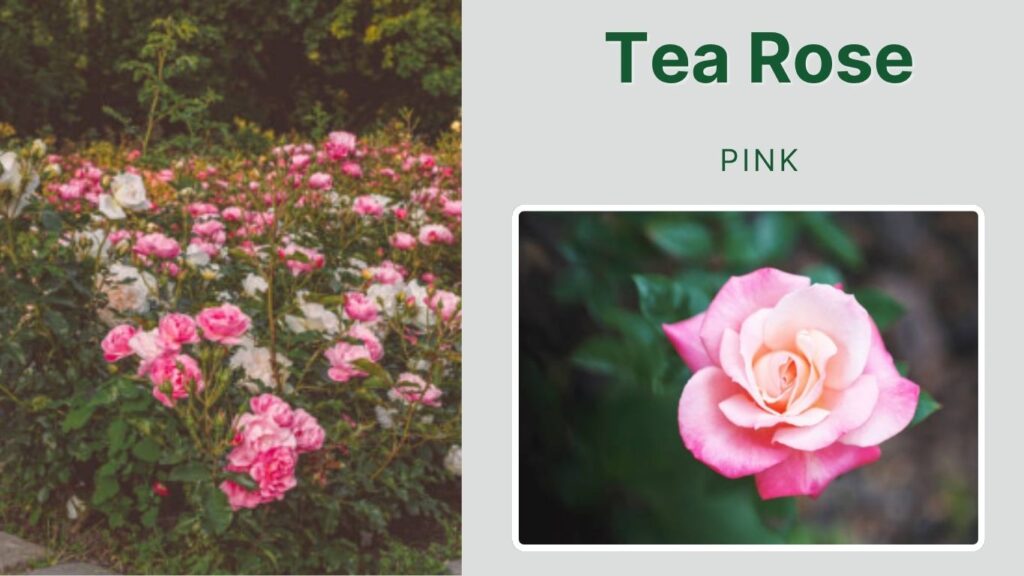
Tea roses are a classic and elegant variety known for their refined form, delicate fragrance, and pointed buds. They earned their name because their scent was thought to resemble freshly brewed Chinese tea. These roses are the ancestors of today’s modern Hybrid Tea roses.
Flower Color and Appearance
Tea roses bloom in a range of pastel shades, including pale pink, cream, yellow, apricot, and light peach. The blooms are medium to large, with a high-centered shape and slightly drooping petals.
Blooming Season
Tea roses are repeat bloomers, producing flowers throughout the growing season—from late spring to early fall—especially in warm climates.
Fragrance
They have a light, tea-like fragrance that is subtle and refreshing. Some cultivars may offer a more fruity or spicy floral scent.
Identification
- Scientific Name: Rosa × odorata
- Height: 3–5 feet tall
- Bloom Size: Medium to large
- Petal Count: 25–40 petals
- Thorns: Light to moderate
- Foliage: Glossy, light green leaves
- Growth Habit: Upright, delicate structure with slightly arching stems
3. Hybrid Tea Rose
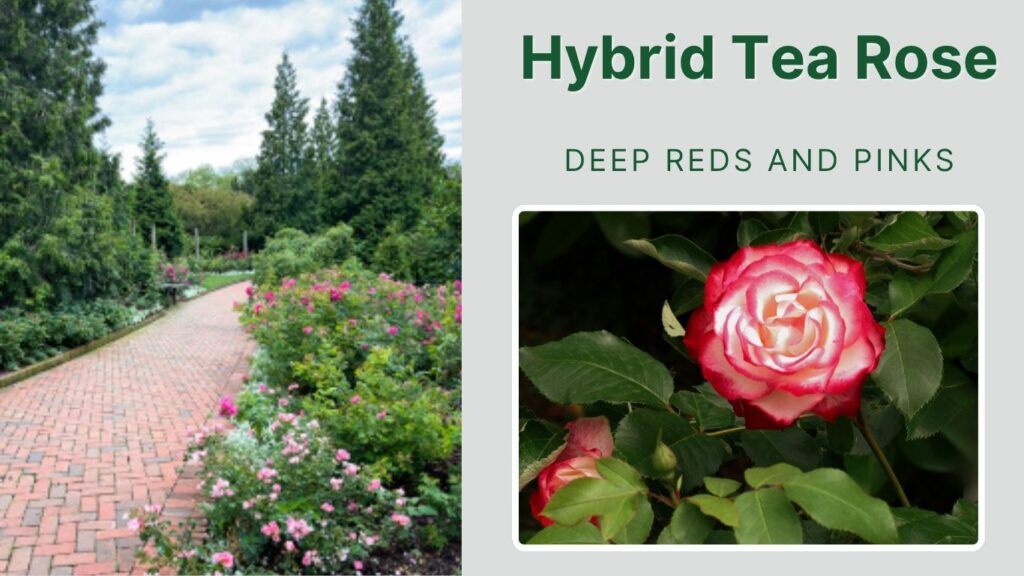
Hybrid Tea roses are the most popular and widely recognized rose variety, especially in floral arrangements and gardens. Known for their long stems and perfectly shaped blooms, they are the result of crossing Tea roses with Hybrid Perpetuals.
Flower Color and Appearance
These roses come in a wide range of colors—red, pink, white, yellow, orange, lavender, and even bi-color varieties. Each flower is typically large, single on a stem, and has a classic pointed bud that opens into a high-centered bloom.
Blooming Season
Hybrid Tea roses bloom repeatedly from late spring through fall, with the main flush occurring in early summer. They are prized for their consistent flowering over the growing season.
Fragrance
Many varieties are highly fragrant, ranging from classic rose to spicy, fruity, or citrus-like aromas. However, scent strength can vary between cultivars.
Identification
- Scientific Name: Rosa hybrida
- Height: 3–6 feet tall
- Bloom Size: Large (4–6 inches wide)
- Petal Count: 30–60 petals depending on cultivar
- Thorns: Moderate to heavy
- Foliage: Dark green, leathery leaves
- Growth Habit: Upright with strong central stems, ideal for cutting flowers
4. Floribunda Rose
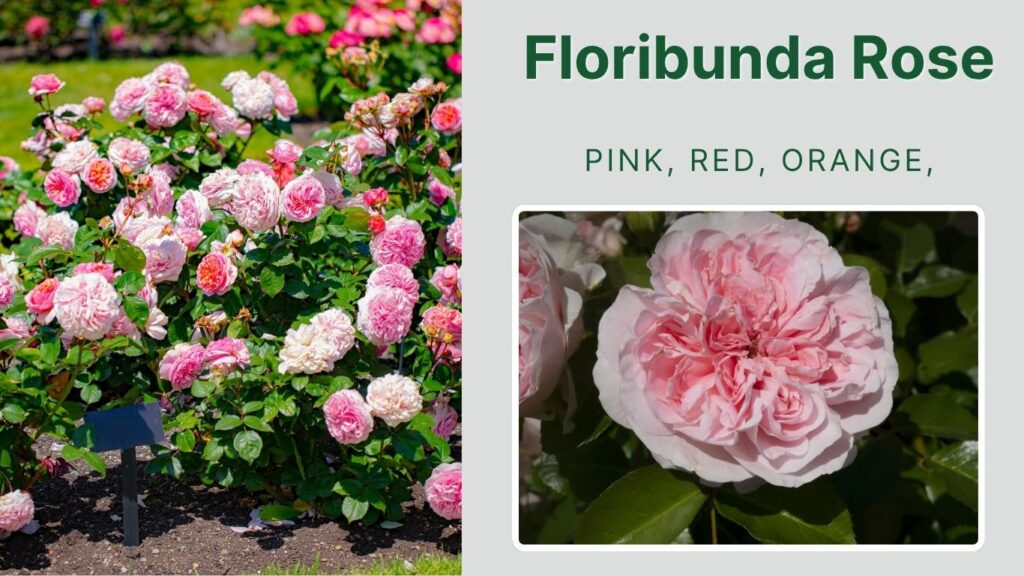
Floribunda roses are a cross between Hybrid Tea and Polyantha roses, bred to produce clusters of flowers rather than single blooms. They are loved for their continuous blooming, bright colors, and suitability for borders and mass plantings.
Flower Color and Appearance
Floribundas come in a wide spectrum of colors including red, pink, white, orange, yellow, and multicolor. Flowers are medium-sized and often grow in clusters of 5 to 10 or more blooms per stem.
Blooming Season
These roses are prolific bloomers, flowering repeatedly from late spring through fall, often more abundantly than Hybrid Teas.
Fragrance
Fragrance varies widely—some varieties are lightly scented while others offer a moderate floral or fruity scent.
Identification
- Scientific Name: Rosa × floribunda
- Height: 2–4 feet tall
- Bloom Size: Medium
- Petal Count: 20–40 petals per bloom
- Thorns: Moderate
- Foliage: Dense, dark green leaves
- Growth Habit: Compact and bushy, with multiple blooms on each stem
5. Grandiflora Rose
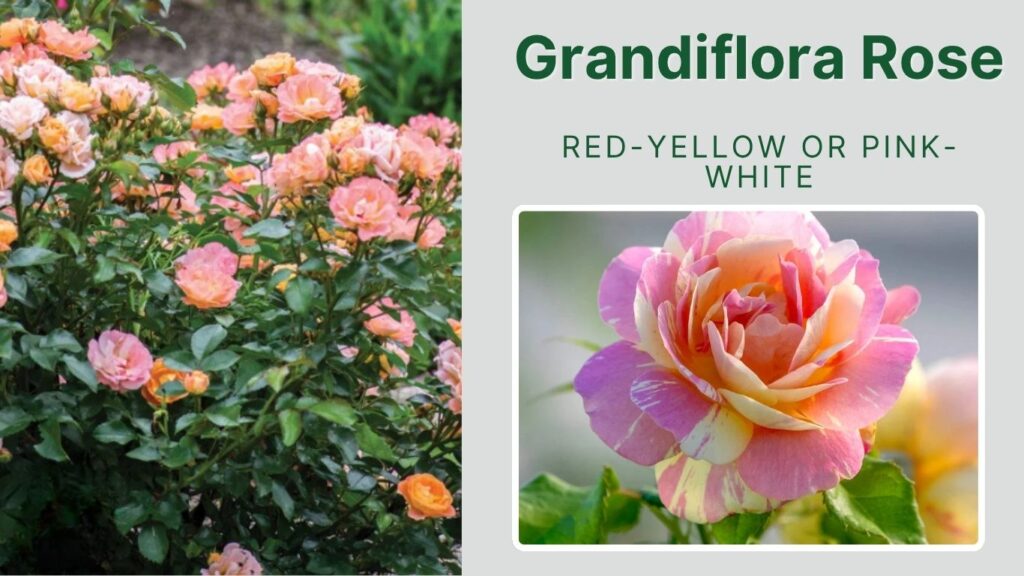
Grandiflora roses combine the long stems and elegant blooms of Hybrid Tea roses with the cluster-flowering habit of Floribundas. They are tall, showy plants ideal for making bold garden statements.
Flower Color and Appearance
Grandifloras bloom in bold shades such as red, pink, orange, yellow, and even lavender. Blooms are large, elegant, and may appear singly or in small clusters.
Blooming Season
They bloom in cycles from late spring through fall, providing frequent flushes of flowers throughout the growing season.
Fragrance
Many varieties have a strong and pleasant scent, ranging from sweet to citrusy or spicy, depending on the cultivar.
Identification
- Scientific Name: Rosa × grandiflora
- Height: 4–6 feet tall or more
- Bloom Size: Large (similar to Hybrid Tea)
- Petal Count: 30–50 petals
- Thorns: Present and often sharp
- Foliage: Glossy, dark green
- Growth Habit: Upright and tall, with clustered or single blooms on strong stems
6. Polyantha Rose
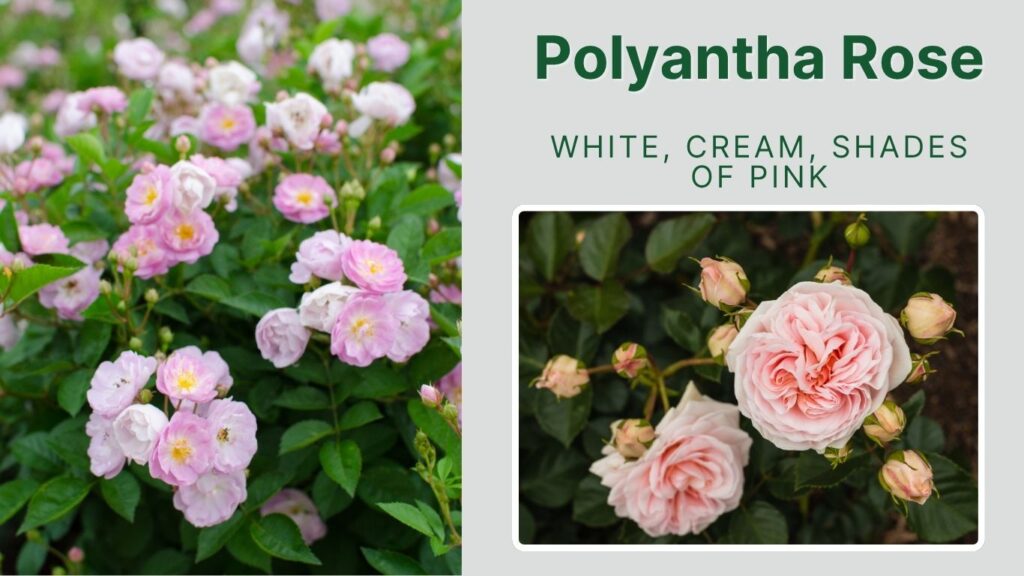
Polyantha roses are compact, hardy shrubs that bloom in dense clusters of small flowers. Developed in the late 19th century, they are ideal for edging, borders, and container gardening due to their low-growing, bushy habit.
Flower Color and Appearance
Polyanthas produce small flowers (1–2 inches wide) in clusters, often in pink, white, red, or light orange. The blooms are simple but numerous, giving a blanket of color when in full bloom.
Blooming Season
They are continuous bloomers, flowering heavily from spring until frost. Their dependable blooming makes them a popular choice for low-maintenance gardens.
Fragrance
Most varieties are lightly fragrant or have no noticeable scent, though a few cultivars may offer a mild floral aroma.
Identification
- Scientific Name: Rosa × polyantha
- Height: 1–3 feet tall
- Bloom Size: Small
- Petal Count: 10–30 petals per flower
- Thorns: Light to moderate
- Foliage: Small, dense, and dark green
- Growth Habit: Compact and mounding, great for mass plantings
7. Climbing Rose
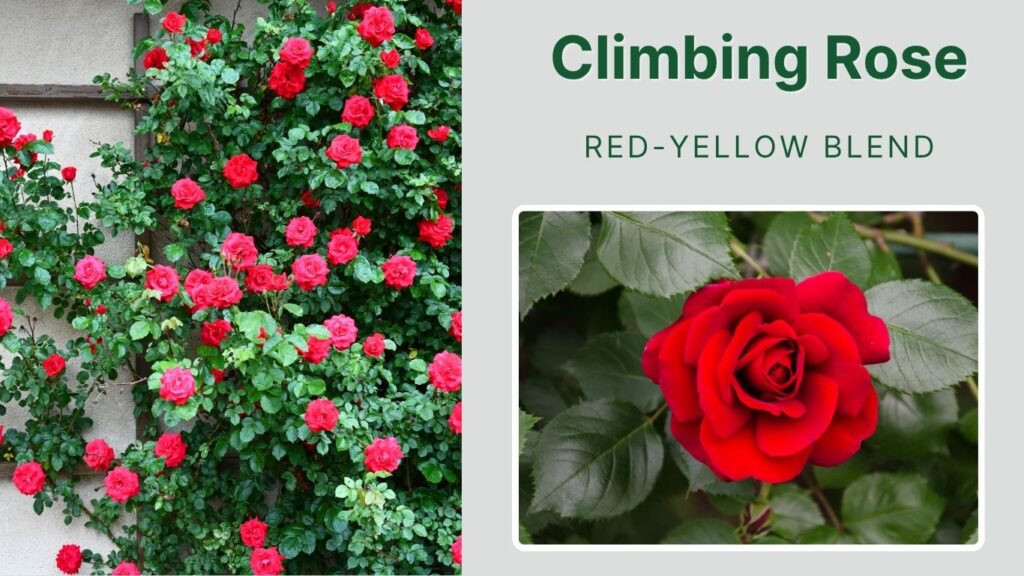
Climbing roses are known for their long, flexible canes that can be trained to grow on fences, arbors, trellises, and walls. They don’t climb like vines but can be guided with support.
Flower Color and Appearance
Climbing roses bloom in almost every color—red, pink, yellow, white, orange, and even multicolor. Blooms range from small to large and can be single or clustered depending on the variety.
Blooming Season
Most modern climbing roses are repeat bloomers, flowering from late spring through fall, while older types may bloom once in early summer.
Fragrance
Varies by cultivar—some are powerfully fragrant with classic rose, citrus, or spicy notes, while others have little scent.
Identification
- Scientific Name: Rosa spp. (Climbing varieties)
- Height: 6–20+ feet (depending on variety and training)
- Bloom Size: Varies—small to large
- Petal Count: 15–60 depending on type
- Thorns: Prominent and curved
- Foliage: Medium to large, often glossy
- Growth Habit: Long canes that require support and training to climb structures
8. Miniature Rose
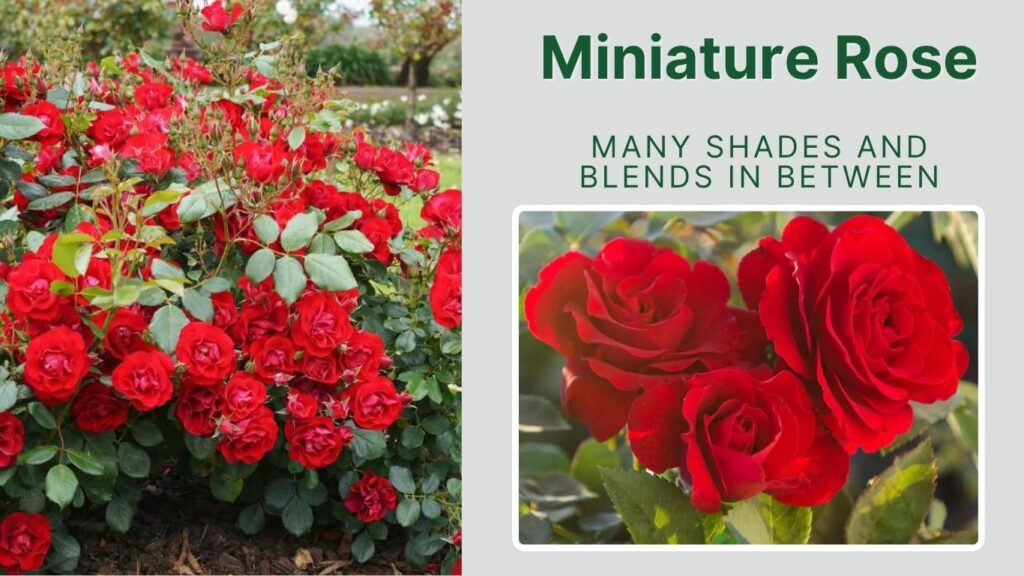
Miniature roses are true roses that have been bred to remain small in size while maintaining the classic rose form. They are perfect for containers, small garden beds, and indoor growing with proper light.
Flower Color and Appearance
Miniature roses bloom in a variety of colors—red, pink, white, yellow, and even bi-colored. Flowers are small (typically under 2 inches wide) but often perfectly shaped, resembling miniature versions of Hybrid Tea roses.
Blooming Season
They bloom continuously from spring to fall, with frequent flushes of blooms throughout the growing season, especially when grown in ideal conditions.
Fragrance
Most miniature roses are lightly fragrant or scentless, though some varieties may have a light, sweet aroma.
Identification
- Scientific Name: Rosa chinensis minima (or hybrid types)
- Height: 6 inches to 2 feet
- Bloom Size: Small (under 2 inches)
- Petal Count: 15–30 petals
- Thorns: Present but small
- Foliage: Small, dark green, and dense
- Growth Habit: Compact, bushy, and ideal for pots or edging
9. Shrub Rose
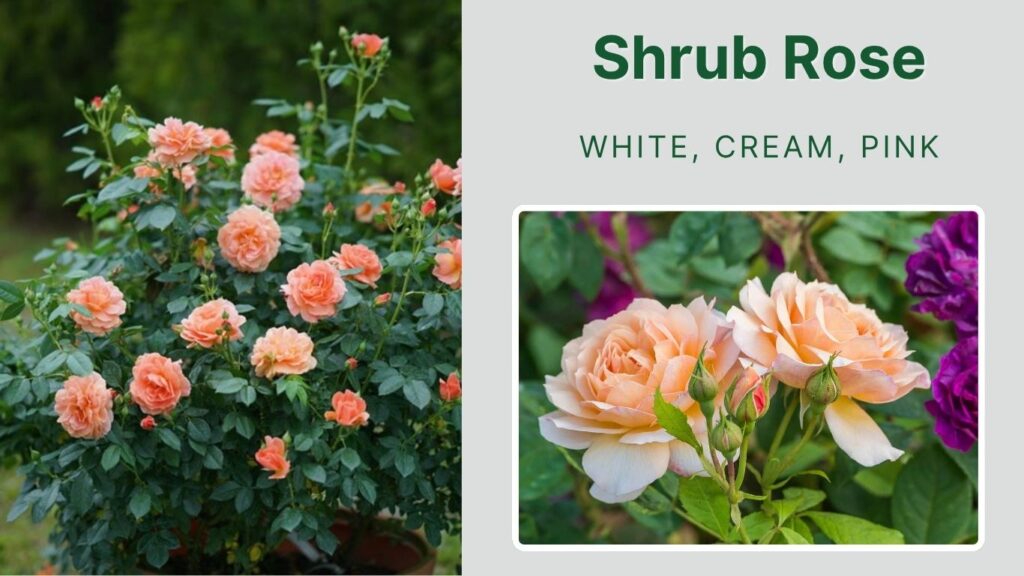
Shrub roses are a diverse group that includes modern hybrids and older varieties bred for disease resistance, hardiness, and heavy blooming. They are often used in landscaping for their large, spreading habit and minimal maintenance needs.
Flower Color and Appearance
Shrub roses come in nearly every color and bloom form—single, semi-double, or full. Flowers can be small to large and are often borne in clusters.
Blooming Season
Most shrub roses are repeat bloomers, flowering from late spring through fall with occasional rest periods between flushes.
Fragrance
Many shrub roses are highly fragrant, offering classic rose, fruity, or spice-like scents. Fragrance strength depends on the variety.
Identification
- Scientific Name: Rosa spp. (Shrub group)
- Height: 3–8 feet or more
- Bloom Size: Varies from small to large
- Petal Count: 10–50+ depending on cultivar
- Thorns: Varies by type
- Foliage: Dense and often leathery or glossy
- Growth Habit: Wide, bushy, and spreading—ideal for hedges and mass planting
10. Bourbon Rose

Bourbon roses are old garden roses that originated in the early 1800s from a natural cross between Damask and China roses. They are known for their richly scented blooms, repeat flowering, and romantic appearance.
Flower Color and Appearance
Bourbon roses typically come in shades of pink, red, and white. The blooms are medium to large, full, and often quartered or rosette-shaped, giving them a vintage, lush look.
Blooming Season
They bloom repeatedly from early summer into fall, with the heaviest flush in spring. Some varieties may offer intermittent blooms later in the season.
Fragrance
Bourbon roses are strongly fragrant with a rich, classic rose scent, often enhanced with spicy or fruity undertones.
Identification
- Scientific Name: Rosa × bourboniana
- Height: 4–6 feet (some climbing types can grow taller)
- Bloom Size: Medium to large
- Petal Count: 30–60 petals
- Thorns: Few to moderate
- Foliage: Semi-glossy, bright green leaves
- Growth Habit: Upright to arching, sometimes semi-climbing
11. China Rose
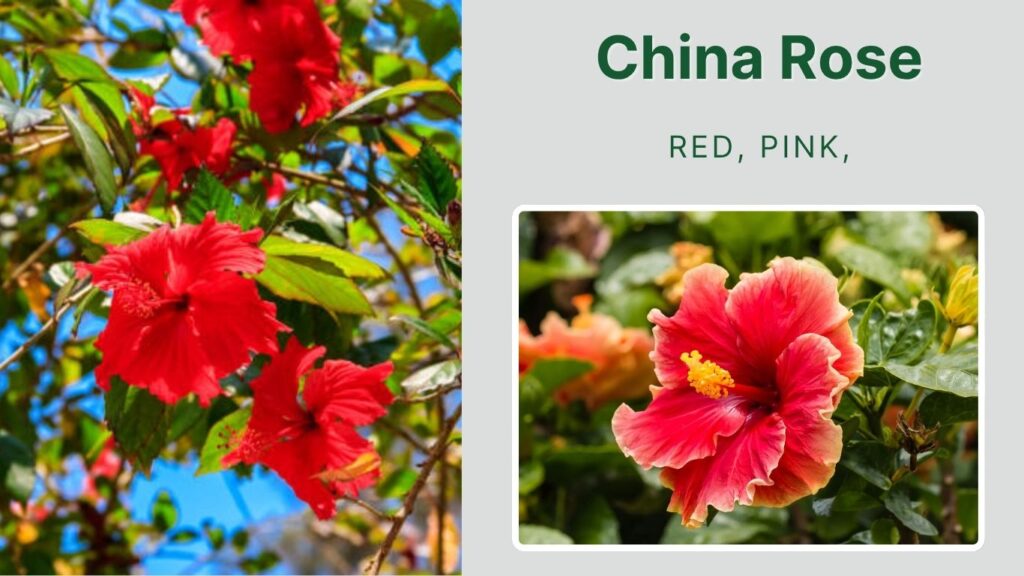
China roses are historic roses originating from East Asia, credited with introducing the trait of repeat blooming to modern rose breeding. They are valued for their elegance, fragrance, and long flowering season.
Flower Color and Appearance
China roses bloom in a range of colors including pink, red, white, and yellow. The blooms are small to medium and often appear in loose clusters with a soft, delicate appearance.
Blooming Season
They flower almost continuously from spring through fall, even into mild winters in warmer regions—one of the earliest roses to offer repeat blooming.
Fragrance
Many varieties have a light to moderate fragrance, often sweet and slightly spicy.
Identification
- Scientific Name: Rosa chinensis
- Height: 3–5 feet
- Bloom Size: Small to medium
- Petal Count: 5–30 depending on the type
- Thorns: Light to moderate
- Foliage: Small, light green leaves
- Growth Habit: Compact and bushy with a refined structure
12. Noisette Rose
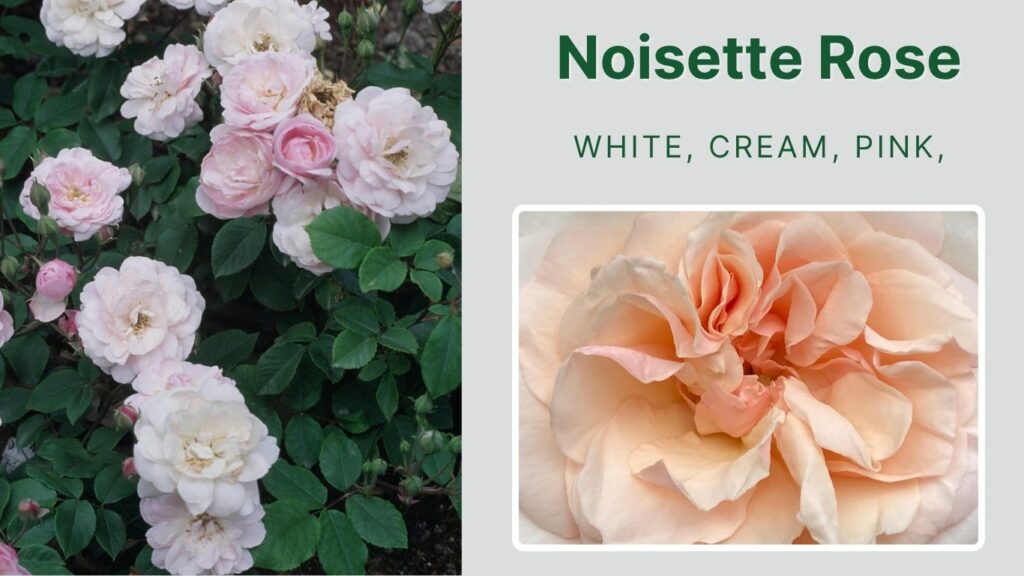
Noisette roses are a class of old garden roses developed in the early 19th century in the United States. Known for their graceful clusters of blooms and climbing nature, they are both charming and highly fragrant.
Flower Color and Appearance
Noisette roses bloom in soft pastel shades—pink, peach, yellow, and cream. Flowers are medium-sized, semi-double to fully double, and appear in clusters.
Blooming Season
They bloom in flushes from late spring through fall, often with excellent repeat blooming when grown in warm climates.
Fragrance
Strong and sweet fragrance, often described as spicy or clove-like, is a standout feature of Noisette roses.
Identification
- Scientific Name: Rosa × noisettiana
- Height: 5–10+ feet (often grown as climbers)
- Bloom Size: Medium
- Petal Count: 20–50 petals
- Thorns: Light
- Foliage: Glossy, light green
- Growth Habit: Tall and arching or climbing with abundant blooms
13. English Rose (David Austin Rose)
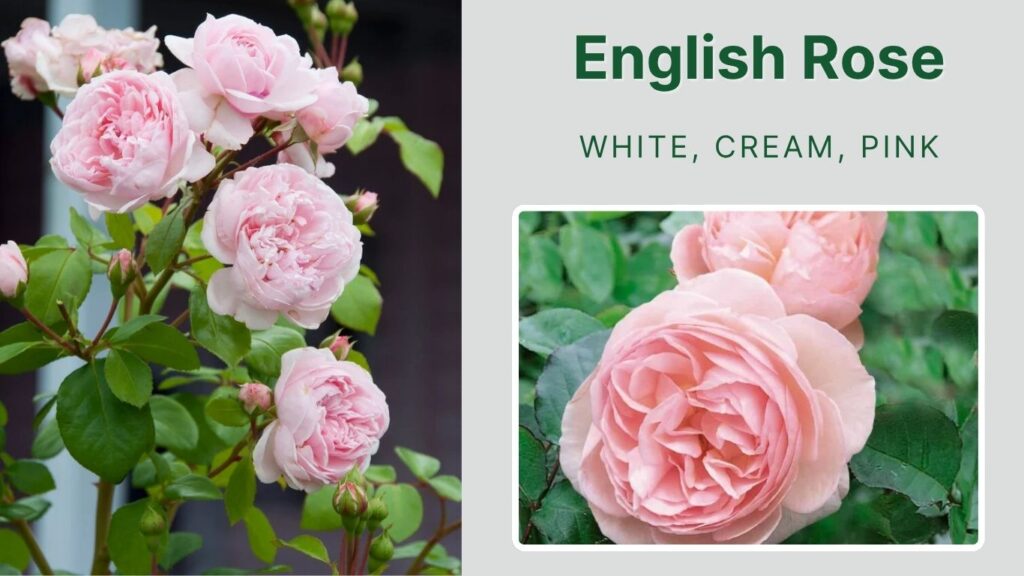
English roses, bred by David Austin, are modern hybrids combining the charm and fragrance of old garden roses with the repeat blooming and color diversity of modern types. They are highly popular in both traditional and contemporary gardens.
Flower Color and Appearance
Available in a wide spectrum—blush pink, apricot, deep crimson, yellow, and white. Blooms are large, very full, often rosette or cupped-shaped, and resemble antique roses.
Blooming Season
English roses bloom repeatedly from late spring to fall, with strong flushes and high flower production throughout the growing season.
Fragrance
One of their strongest traits—ranging from classic rose to fruity, myrrh, or tea-like scents depending on the cultivar.
Identification
- Scientific Name: Rosa (David Austin hybrids)
- Height: 3–6 feet (some varieties may climb)
- Bloom Size: Large (3–5 inches)
- Petal Count: 40–100+
- Thorns: Varies
- Foliage: Lush, medium to dark green
- Growth Habit: Rounded, bushy shrubs with elegant flowering form
14. Alba Rose
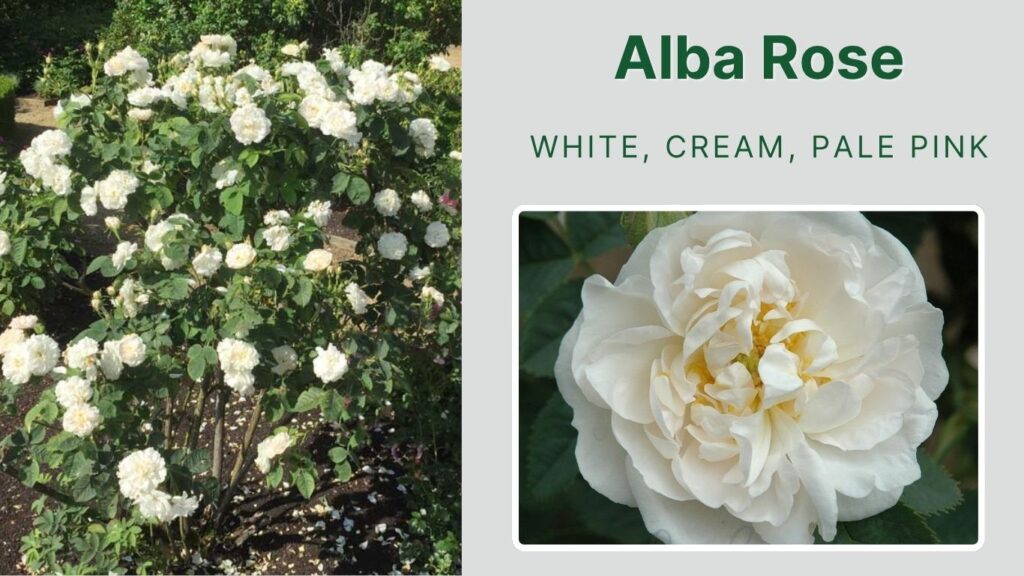
Alba roses are among the oldest cultivated rose varieties, known for their graceful beauty, tall growth, and excellent disease resistance. Often associated with purity, they have a timeless presence in historic and formal gardens.
Flower Color and Appearance
Alba roses bloom in soft, pale shades—typically white or blush pink. Flowers are medium to large, semi-double or fully double, and have a delicate, ethereal appearance.
Blooming Season
These are once-blooming roses, flowering profusely in early summer for a few weeks, with dense, fragrant clusters.
Fragrance
They are strongly fragrant with a sweet, fresh, old-fashioned rose scent that is especially potent in the morning.
Identification
- Scientific Name: Rosa × alba
- Height: 5–7 feet (sometimes taller)
- Bloom Size: Medium to large
- Petal Count: 20–40 petals
- Thorns: Sparse and fine
- Foliage: Blue-green, matte, and elongated
- Growth Habit: Tall, upright, and slightly arching—ideal for hedges or back borders
15. Gallica Rose
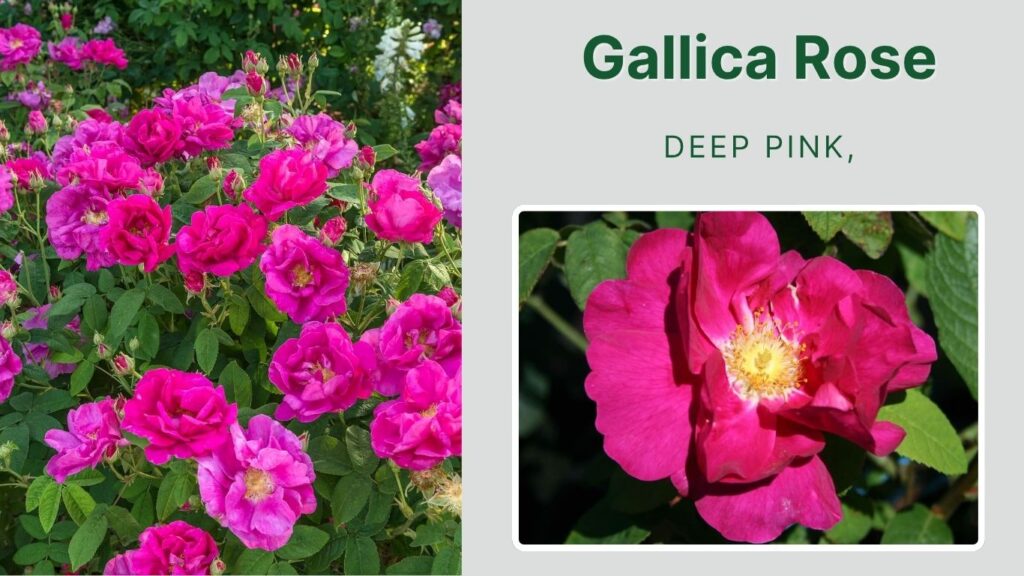
Gallica roses are among the earliest cultivated European roses, valued for their richly colored blooms and deep fragrance. These hardy, compact shrubs are steeped in history and tradition.
Flower Color and Appearance
Gallica roses bloom in shades of deep pink, crimson, purple, and mauve. The flowers are medium-sized, highly double, and often quartered or cupped in shape.
Blooming Season
They are once-blooming, producing a heavy flush of blooms in early to mid-summer that lasts for a few weeks.
Fragrance
Highly fragrant with a rich, old-rose perfume—one of the most deeply scented classes of roses.
Identification
- Scientific Name: Rosa gallica
- Height: 3–4 feet
- Bloom Size: Medium
- Petal Count: 30–50 petals
- Thorns: Light to moderate
- Foliage: Dark green, rough-textured
- Growth Habit: Compact and bushy, perfect for traditional rose beds and historic gardens
16. Moss Rose
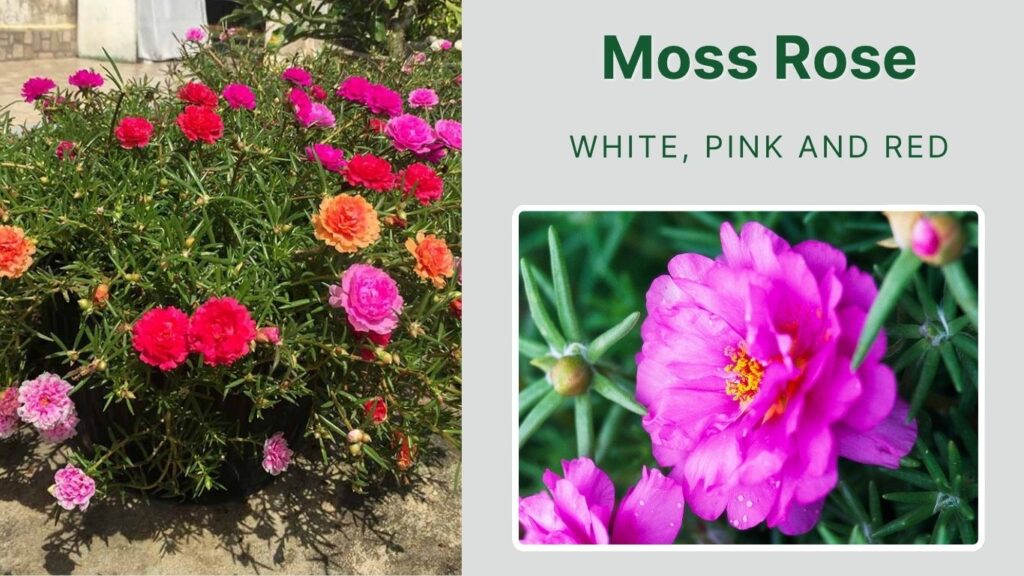
Moss roses are a unique and visually striking group of old garden roses known for the mossy, fragrant growth on their sepals and stems. This “moss” gives the plant a soft, fuzzy texture and a pine-like scent, making them popular for both aesthetics and novelty.
Flower Color and Appearance
Moss roses bloom in shades of pink, purple, red, and white. Flowers are medium to large, fully double, often with a quartered or ruffled look, adding to their antique charm.
Blooming Season
Most moss roses are once-blooming, flowering heavily in early summer, though some modern cultivars offer repeat blooms later in the season.
Fragrance
They are richly scented with a sweet rose fragrance, and the mossy stems also emit a resinous, piney aroma when touched.
Identification
- Scientific Name: Rosa × centifolia muscosa
- Height: 3–5 feet
- Bloom Size: Medium to large
- Petal Count: 40–70 petals
- Thorns: Present, along with mossy growth on stems
- Foliage: Deep green, textured leaves
- Growth Habit: Upright to slightly spreading, ideal for cottage gardens and historic landscapes
17. Rugosa Rose
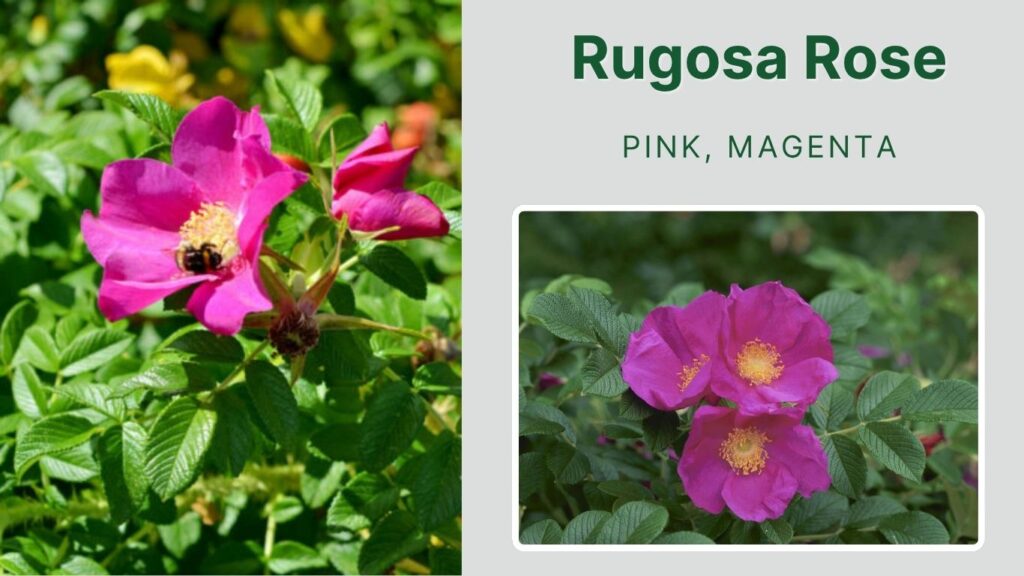
Rugosa roses are rugged, disease-resistant shrubs native to eastern Asia. They’re beloved for their crinkled foliage, strong fragrance, and ability to thrive in poor soils, including sandy and coastal environments.
Flower Color and Appearance
Rugosa roses typically bloom in pink, magenta, or white. Flowers are single to semi-double with a wild, natural look, often followed by large, tomato-like rose hips.
Blooming Season
They bloom repeatedly from late spring through fall, with excellent performance even in difficult climates.
Fragrance
Rugosa roses are intensely fragrant, emitting a classic, sweet rose scent that fills the air around them.
Identification
- Scientific Name: Rosa rugosa
- Height: 4–6 feet
- Bloom Size: Medium (2–3 inches)
- Petal Count: 5–20 petals
- Thorns: Very dense and bristly
- Foliage: Thick, wrinkled (rugose), dark green leaves
- Growth Habit: Dense, rounded shrub—ideal for hedges, borders, and coastal gardens
18. Banksia Rose
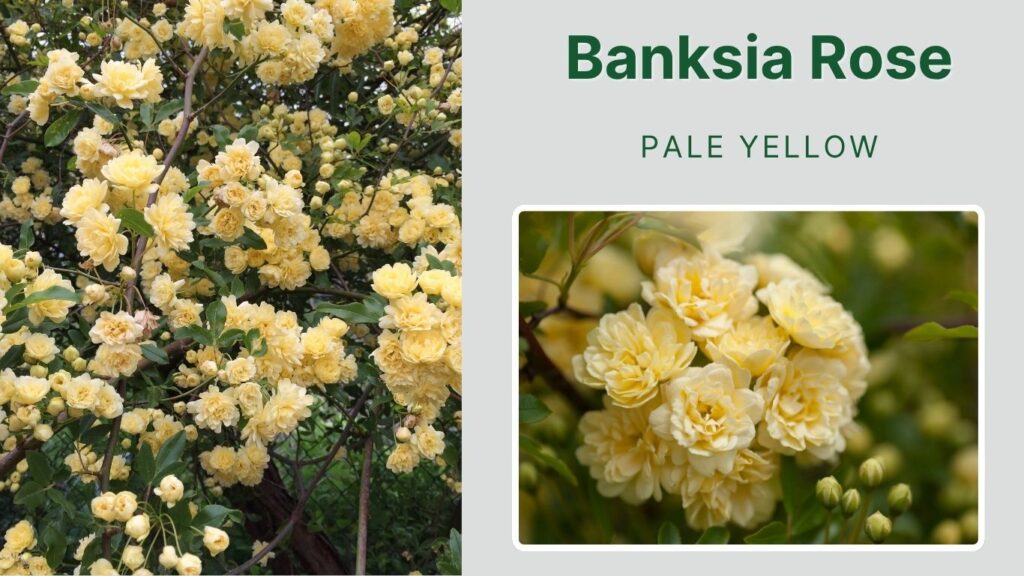
Banksia roses are thornless climbing roses native to China, valued for their vigorous growth and profuse blooming. They are among the earliest roses to flower in spring and are perfect for covering fences, pergolas, and arches.
Flower Color and Appearance
Banksia roses typically bloom in pale yellow or white. Flowers are small, fully double, and clustered in large sprays, giving a soft, cloud-like effect when in full bloom.
Blooming Season
They bloom once in early to mid-spring, often earlier than most other rose varieties. Their flowering is abundant and dramatic.
Fragrance
Generally light to no fragrance, although the white varieties may have a delicate, sweet scent.
Identification
- Scientific Name: Rosa banksiae
- Height: 10–20+ feet (as a climber)
- Bloom Size: Small
- Petal Count: 20–40 petals
- Thorns: Thornless
- Foliage: Small, smooth, and glossy green
- Growth Habit: Fast-growing, trailing climber with arching canes
19. Centifolia Rose

Centifolia roses, also known as “Cabbage Roses,” are historic European roses named for their “hundred-petaled” look. These blooms are iconic in classical paintings and perfumes due to their full shape and strong fragrance.
Flower Color and Appearance
Centifolia roses are most commonly found in soft pink, though other shades like white and mauve exist. Blooms are large, globular, and extremely full—often nodding under their own weight.
Blooming Season
They bloom once a year in early summer, producing a short but breathtaking flush of flowers.
Fragrance
Very fragrant, with a rich, sweet, and complex scent that has been used for centuries in perfumery.
Identification
- Scientific Name: Rosa × centifolia
- Height: 4–6 feet
- Bloom Size: Large
- Petal Count: 60–100+ petals
- Thorns: Moderate
- Foliage: Grayish-green, soft, and textured
- Growth Habit: Rounded, arching bush—best in cottage or vintage-style gardens
20. Groundcover Rose

Groundcover roses, also known as carpet or landscape roses, are low-growing, spreading varieties ideal for covering large areas, slopes, or garden edges. They are bred for toughness, long blooming, and minimal care.
Flower Color and Appearance
These roses come in a wide range of colors including red, pink, white, yellow, and coral. Blooms are small to medium, single or semi-double, and produced in dense clusters.
Blooming Season
Groundcover roses bloom continuously from late spring until frost, with very little deadheading required.
Fragrance
Most varieties are lightly fragrant, though some newer cultivars may have a soft, fruity or sweet scent.
Identification
- Scientific Name: Rosa (groundcover hybrids)
- Height: 1–2 feet
- Spread: 3–6 feet wide
- Bloom Size: Small to medium
- Petal Count: 10–30 petals
- Thorns: Light to moderate
- Foliage: Dense, glossy green leaves
- Growth Habit: Low, spreading, and cascading—ideal for erosion control and border plantings
21. Multiflora Rose

Multiflora rose is a wild, hardy species rose native to East Asia. Known for its abundant white or pale pink blooms in dense clusters, it has naturalized in many parts of the world and is often used as rootstock.
Flower Color and Appearance
Multiflora roses bloom in clusters of small, five-petaled white or light pink flowers. They create a cloud-like display in late spring to early summer.
Blooming Season
Once-blooming, typically flowering in late spring or early summer with a dramatic flush.
Fragrance
Light, sweet fragrance that attracts pollinators like bees and butterflies.
Identification
- Scientific Name: Rosa multiflora
- Height: 6–10 feet or more
- Bloom Size: Small
- Petal Count: 5–10 petals per flower
- Thorns: Numerous and curved
- Foliage: Small, compound leaves with serrated edges
- Growth Habit: Tall, arching shrub or climber—often vigorous and invasive in the wild
22. Perpetual Rose

Perpetual roses, often referred to as “Hybrid Perpetuals,” were popular in the 19th century and are known for their ability to bloom more than once a year—an uncommon trait among old garden roses. They combine the best traits of European and Asian rose species.
Flower Color and Appearance
They are typically found in rich colors such as deep pink, crimson, red, and purple. Blooms are large, full, and often cupped or quartered.
Blooming Season
Perpetual roses bloom in two or more flushes—from late spring through fall—with a particularly heavy bloom in early summer.
Fragrance
Known for their strong and classic rose scent, often rich and spicy.
Identification
- Scientific Name: Rosa × hybrid perpetualis
- Height: 4–6 feet
- Bloom Size: Large
- Petal Count: 30–60 petals
- Thorns: Moderate to heavy
- Foliage: Dark green and leathery
- Growth Habit: Upright and bushy with tall stems—suitable for cutting gardens
23. Foetida Rose

Foetida roses are a group of wild and hybrid roses known for introducing the bright yellow color into modern rose breeding. They have striking, golden blooms but are also known for their strong scent—not always pleasant.
Flower Color and Appearance
Typically deep yellow or golden. Blooms are single or semi-double and stand out sharply against dark green foliage.
Blooming Season
Usually once-blooming in late spring or early summer with a short but dramatic show.
Fragrance
Strong and musky—some people find it unpleasant, hence the name “foetida” (Latin for foul-smelling).
Identification
- Scientific Name: Rosa foetida
- Height: 3–5 feet
- Bloom Size: Medium
- Petal Count: 5–15 petals
- Thorns: Numerous and sharp
- Foliage: Dark green, often with a bluish tint
- Growth Habit: Upright, dense bush—best for adding bold color to borders and wild gardens
24. Scots Rose (Rosa spinosissima)

Scots Rose, also called Rosa pimpinellifolia, is a tough and compact species rose native to Europe. It’s known for thriving in cold, harsh climates and for producing charming single flowers and ornamental black hips.
Flower Color and Appearance
Most commonly white, though pink and yellow forms also exist. Flowers are small, single (5 petals), and delicate with a wildflower-like appeal.
Blooming Season
It blooms once in late spring or early summer. Though short-lived, the bloom is abundant and followed by decorative hips.
Fragrance
Mildly fragrant with a light, sweet scent.
Identification
- Scientific Name: Rosa spinosissima
- Height: 2–3 feet
- Bloom Size: Small
- Petal Count: 5 petals
- Thorns: Very dense and fine
- Foliage: Small, fern-like leaves
- Growth Habit: Low, bushy shrub—ideal for naturalistic and alpine gardens
25. Musk Rose

Musk roses are highly fragrant old garden roses that date back to ancient times. They’re known for their loose, airy clusters of flowers and their light, graceful appearance, making them ideal for informal garden settings.
Flower Color and Appearance
Typically bloom in white or pale pink. Flowers are medium-sized, single or semi-double, and borne in large, loose clusters.
Blooming Season
They bloom repeatedly from late spring to autumn, often with a strong flush in early summer and lighter waves later on.
Fragrance
Exceptionally fragrant with a musky, sweet scent that intensifies in the evening.
Identification
- Scientific Name: Rosa moschata
- Height: 5–8 feet
- Bloom Size: Medium
- Petal Count: 5–20 petals
- Thorns: Sparse
- Foliage: Light green, slightly serrated leaves
- Growth Habit: Graceful, arching shrub or climber—perfect for romantic or cottage-style gardens