






Zantedeschia, commonly known as calla lilies, are elegant flowering plants admired for their smooth, sculptural blooms and decorative foliage. Native mainly to southern Africa, these plants are widely grown in gardens, containers, and cut-flower production. Their trumpet-shaped spathes appear in a wide range of colors, from classic white to yellow, pink, and soft purple. This guide explores eight important types of Zantedeschia flowers, highlighting the natural species that form the foundation of today’s popular calla lily varieties.
1. Zantedeschia aethiopica (White Calla Lily)
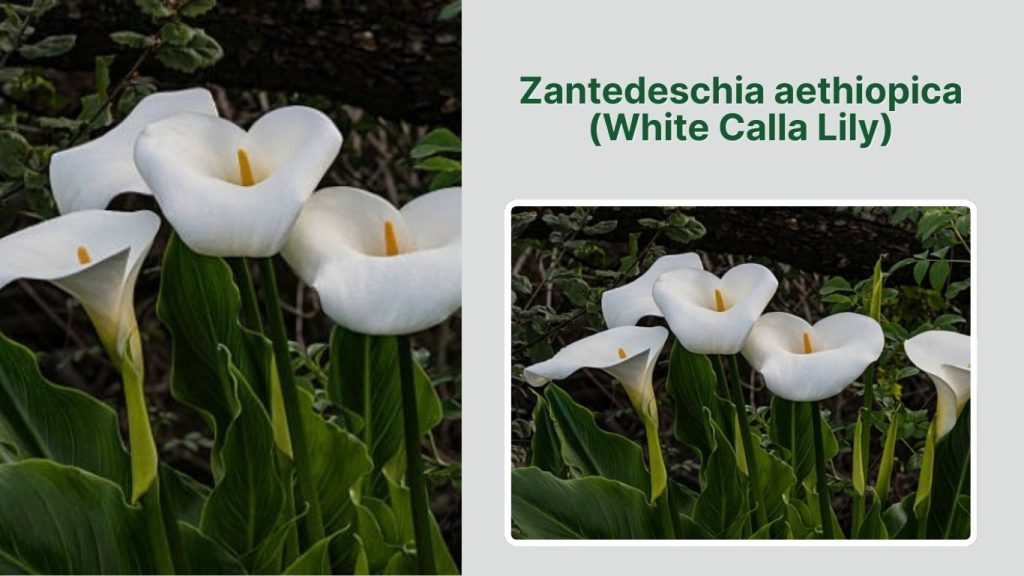
Zantedeschia aethiopica is the most well-known species of calla lily and is famous for its large, pure white spathes and bright yellow spadix. Native to southern Africa, this elegant flowering plant is widely cultivated for gardens, landscaping, and floral arrangements because of its graceful form and long-lasting blooms.
Identification (Flower Traits)
- Large, funnel-shaped white spathe
- Bright yellow central spadix
- Smooth, waxy flower surface
- Long, sturdy flowering stalks
- Broad, deep-green, arrow-shaped leaves
Flower Color & Structure
The classic flower form consists of a snow-white spathe that wraps gracefully around a golden-yellow spadix. Although primarily white, some cultivated forms may show soft green shading near the base of the spathe.
Blooming Season & Flowering Habit
Zantedeschia aethiopica usually blooms from late winter through spring, and in mild climates it may flower again in early summer. Each plant produces multiple tall flower stalks, giving a clean and elegant display.
Habitat & Natural Range
This species is native to wetlands, stream banks, and moist grasslands of South Africa. It naturally thrives in damp, fertile soils and mild climates.
Garden & Floral Uses
Zantedeschia aethiopica is widely used in garden borders, water-garden edges, and containers. Its flowers are also extremely popular in weddings and floral arrangements due to their purity, symbolism, and long vase life.
2. Zantedeschia rehmannii (Pink Calla Lily)
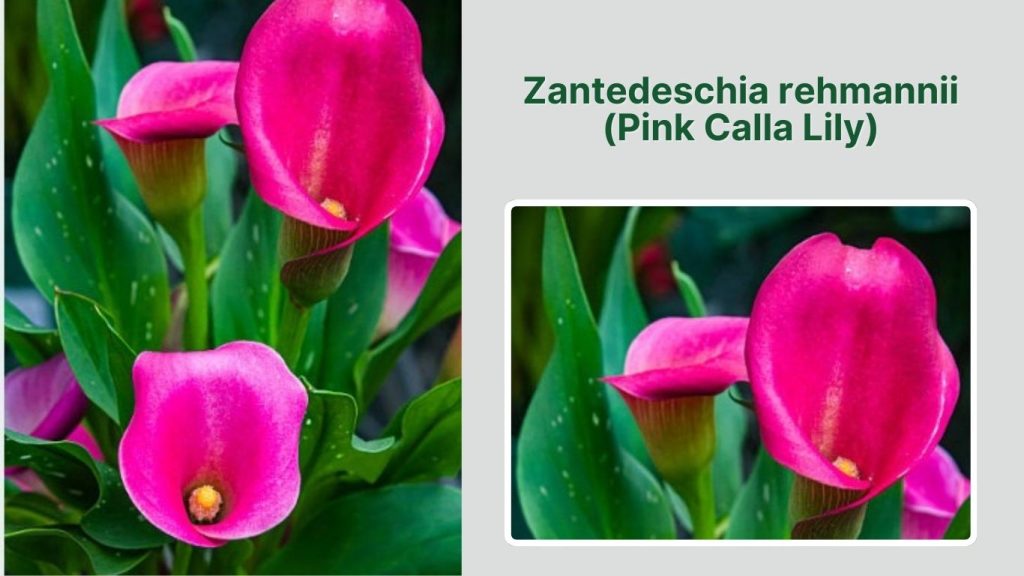
Zantedeschia rehmannii is a colorful calla lily species admired for its rich pink to rose-toned flowers and elegant, upright form. It is smaller and more delicate than the white calla lily, making it especially popular for ornamental gardens and decorative containers.
Identification (Flower Traits)
- Medium-sized, trumpet-shaped spathe
- Colors ranging from soft pink to deep rose
- Slender central spadix
- Smooth, waxy flower texture
- Narrower, lance-shaped green leaves
Flower Color & Structure
The spathe is typically pink, rose, or mauve, sometimes deepening in color toward the throat. The central spadix is often pale yellow or creamy white, creating a gentle contrast with the colored spathe.
Blooming Season & Flowering Habit
Zantedeschia rehmannii blooms mainly from late spring through summer. Plants produce multiple flower stalks, creating a compact but vibrant floral display over several weeks.
Habitat & Natural Range
This species is native to South Africa, where it grows in seasonally moist grasslands and open areas with well-drained soils.
Garden & Floral Uses
Zantedeschia rehmannii is widely grown in containers, borders, and indoor pots. Its colorful blooms are also valued in floral arrangements, especially for adding soft or romantic tones.
3. Zantedeschia elliottiana (Golden Calla Lily)
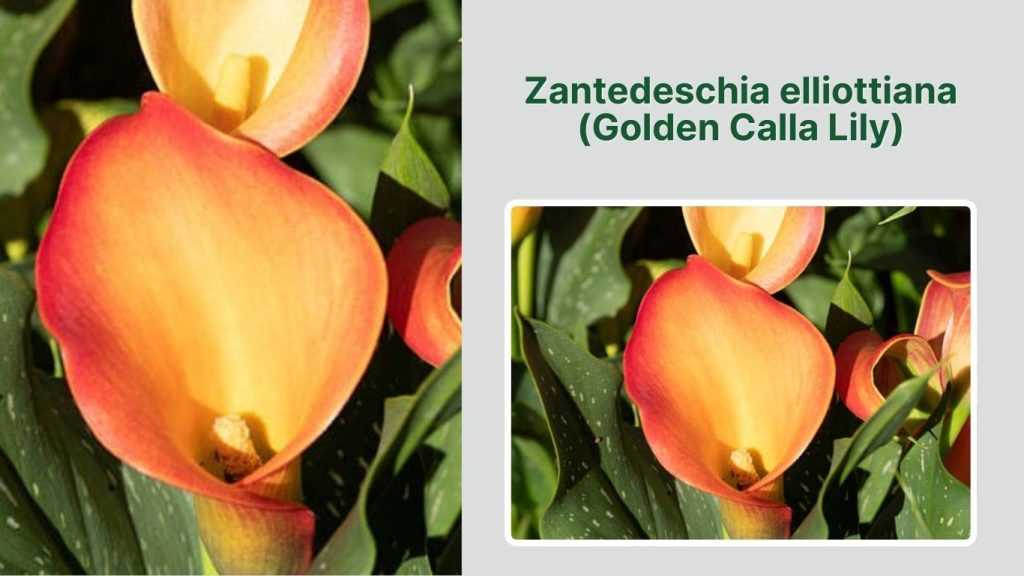
Zantedeschia elliottiana is known for its bright, golden-yellow flowers and decorative, spotted foliage. It is one of the most striking calla lily species and is widely used in ornamental gardening and cut-flower production.
Identification (Flower Traits)
- Large, trumpet-shaped yellow spathe
- Deep yellow to golden central spadix
- Smooth, slightly flared flower form
- Strong, upright flowering stems
- Green leaves often marked with white spots
Flower Color & Structure
The spathe is a vivid yellow to golden shade, sometimes showing faint green tones near the base. The bold color and clean lines give the flower a bright, cheerful appearance.
Blooming Season & Flowering Habit
Zantedeschia elliottiana blooms from late spring through summer. Flowers are produced on tall stalks above the foliage, opening in succession for a prolonged display.
Habitat & Natural Range
This species is native to South Africa, where it naturally grows in seasonally moist areas and open grasslands.
Garden & Floral Uses
Zantedeschia elliottiana is popular in flower beds, patio containers, and cut-flower gardens. Its vivid yellow blooms are especially valued in bright floral arrangements and summer displays.
4. Zantedeschia albomaculata (Spotted Calla Lily)
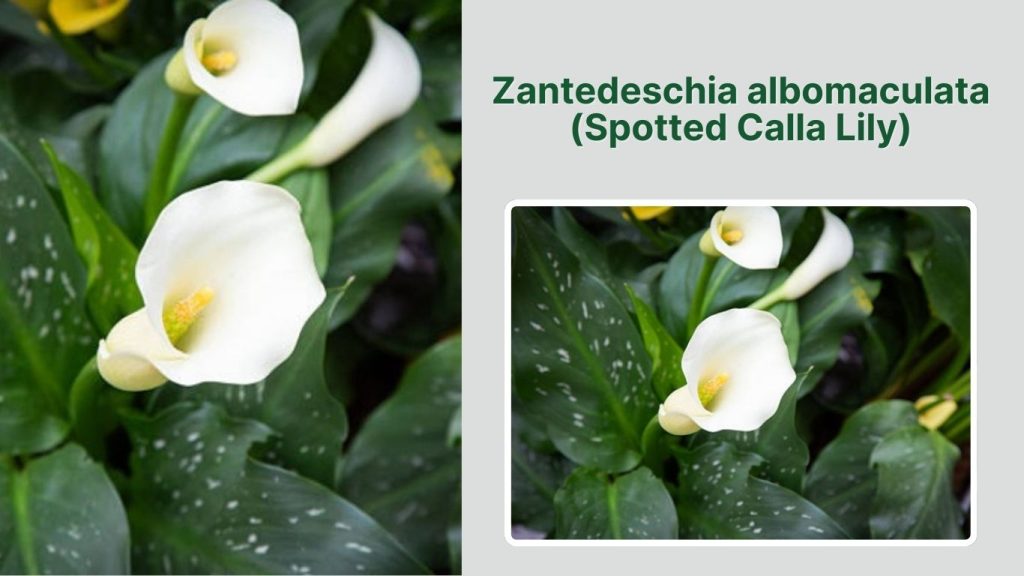
Zantedeschia albomaculata is a highly ornamental calla lily species recognized for its beautifully spotted leaves and softly colored, funnel-shaped flowers. The name albomaculata means “white-spotted,” referring to the decorative white markings on its foliage. This species is a major parent of many modern hybrid calla lilies grown today.
Identification (Flower Traits)
- Medium-sized, trumpet-shaped spathe
- Spathe slightly flared at the rim
- Central spadix usually yellow to cream
- Flowers held on slender, upright stalks
- Bloom height typically 12–24 inches
Flower Color & Structure
The spathe is commonly creamy white, pale yellow, soft pink, or light lavender, often with a darker purple or maroon throat. The contrast between the lighter outer surface and the richer inner tones gives the flower strong visual depth and elegance.
Blooming Season & Flowering Habit
Zantedeschia albomaculata blooms from late spring through summer. Each tuber produces several flowering stems over time, allowing a long and steady flowering season when grown in warm, bright conditions.
Habitat & Natural Range
This species is native to eastern and southern Africa, where it grows in grasslands, open woodland, and rocky slopes. Unlike Zantedeschia aethiopica, it prefers well-drained soils rather than constantly wet ground.
Growth Form & Plant Characteristics
The plant forms compact clumps of arrow-shaped green leaves heavily marked with white spots. It grows from underground rhizomes or tuber-like structures and enters dormancy after flowering, especially in dry or cool seasons.
Pollination & Ecological Role
In its native habitat, Zantedeschia albomaculata is pollinated by insects attracted to the spadix and subtle floral scent. The spotted foliage may help camouflage the plant while the bold flower center guides pollinators efficiently.
Garden & Floral Uses
Zantedeschia albomaculata is extremely popular in borders, containers, and indoor pots. Because of its strong stems, exotic appearance, and long vase life, it is also a favorite in professional floral arrangements and wedding designs.
5. Zantedeschia jucunda
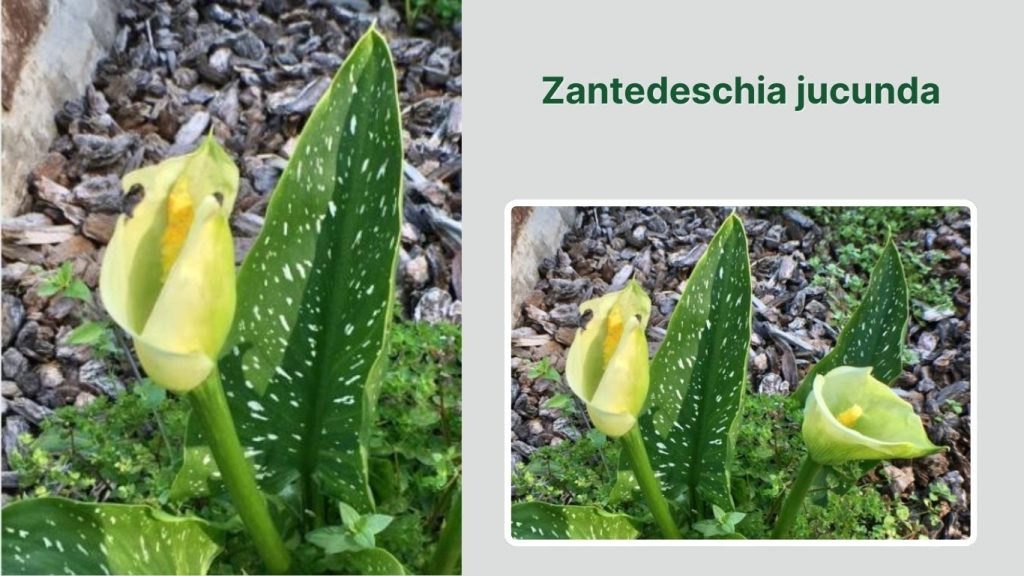
Zantedeschia jucunda is a lesser-known but very attractive calla lily species valued for its soft flower tones and elegant, compact growth. It plays an important role in the development of many ornamental calla lily hybrids.
Identification (Flower Traits)
- Medium-sized, trumpet-shaped spathe
- Smooth, slightly flared rim
- Central spadix pale yellow to cream
- Slender, upright flowering stems
- Compact overall plant habit
Flower Color & Structure
The spathe is typically soft pink, blush, pale rose, or light lavender, often deepening in color toward the throat. Subtle shading and a smooth, waxy surface give the flower a refined, decorative look.
Blooming Season & Flowering Habit
Zantedeschia jucunda blooms mainly from late spring through summer. Plants produce multiple flower stalks over the season, giving a steady display of elegant blooms.
Habitat & Natural Range
This species is native to South Africa, where it grows in open grasslands and rocky, well-drained environments with seasonal moisture.
Growth Form & Plant Characteristics
Zantedeschia jucunda grows from tuber-like rhizomes and forms clumps of arrow-shaped green leaves. The plant typically enters a rest period after flowering, especially during dry or cool conditions.
Garden & Floral Uses
Zantedeschia jucunda is well suited for containers, decorative borders, and greenhouse growing. Its softly colored blooms are also valued in floral arrangements for adding gentle, romantic tones.
6. Zantedeschia odorata
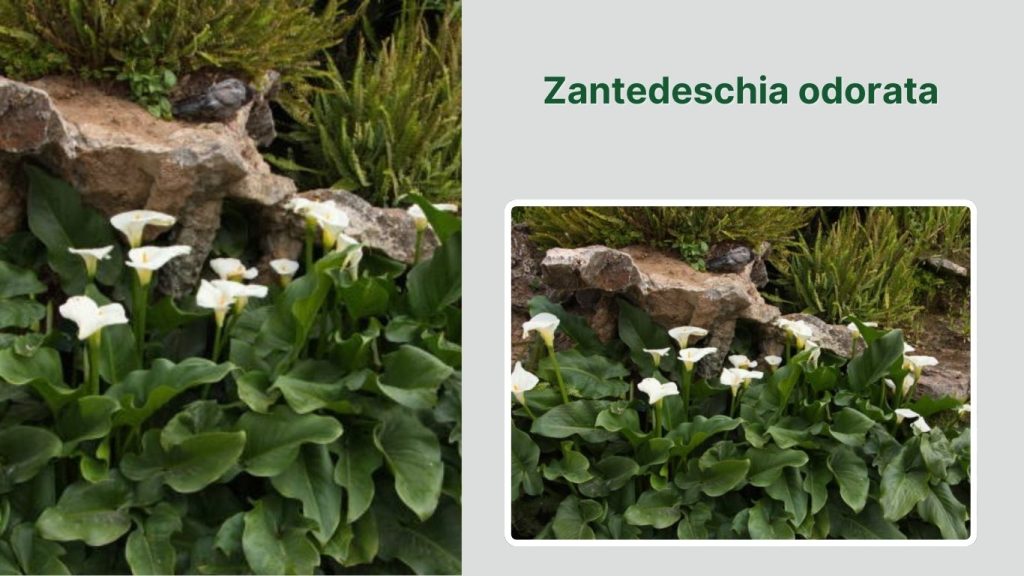
Zantedeschia odorata is a distinctive calla lily species known for its pleasantly scented flowers, a feature that sets it apart from many other members of the genus. It is appreciated for both its fragrance and its refined floral form.
Identification (Flower Traits)
- Medium-sized, elegant trumpet-shaped spathe
- Smooth, slightly curved flower form
- Central spadix creamy yellow
- Flowers borne on upright, slender stalks
- Narrow, deep-green leaves
Flower Color & Structure
The spathe is usually creamy white to pale ivory, sometimes showing soft green shading near the base. Its clean coloration highlights the yellow spadix and enhances the flower’s elegant appearance.
Blooming Season & Flowering Habit
Zantedeschia odorata typically blooms in late winter through spring. The flowers often appear earlier than many other calla lilies, making it valuable for early-season color.
Fragrance & Special Traits
Unlike most calla lilies, this species produces a noticeable, sweet fragrance, especially during warm daylight hours. This scent helps attract pollinating insects in its natural environment.
Habitat & Natural Range
This species is native to South Africa, where it grows in open, seasonally moist areas with well-drained soils.
Growth Form & Plant Characteristics
Zantedeschia odorata grows from underground rhizomes and forms neat clumps of upright leaves. After flowering, the plant may enter a short dormancy depending on climate and moisture.
Garden & Floral Uses
Zantedeschia odorata is ideal for fragrant gardens, patio containers, and indoor displays. Its scented blooms and clean white form also make it valuable for specialty floral arrangements.
7. Zantedeschia valida
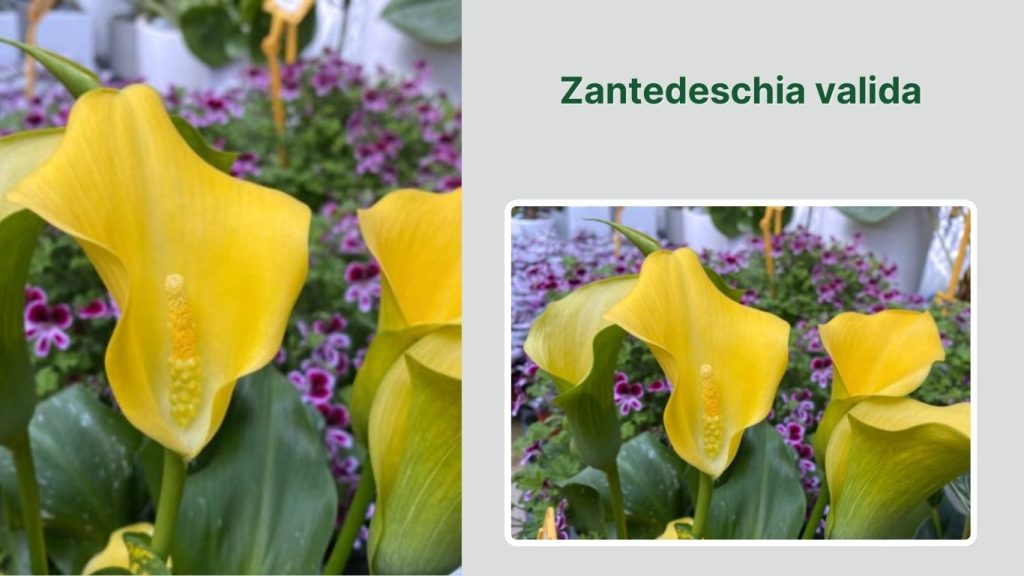
Zantedeschia valida is a robust and visually appealing calla lily species valued for its strong growth, decorative foliage, and richly colored flowers. It is less common than some other species but is important in ornamental breeding.
Identification (Flower Traits)
- Medium to large, trumpet-shaped spathe
- Smooth, thick-textured flower surface
- Central spadix yellow to deep cream
- Strong, upright flowering stems
- Broad, glossy green leaves, sometimes lightly spotted
Flower Color & Structure
The spathe is usually creamy white, pale yellow, or soft pink, often with a deeper yellow or slightly greenish throat. The bold spadix and smooth spathe create a clean, sculptural flower form.
Blooming Season & Flowering Habit
Zantedeschia valida blooms mainly from spring into early summer. Flowers rise well above the foliage and open in succession, creating a long-lasting display.
Habitat & Natural Range
This species is native to southern Africa, where it grows in open grasslands and well-drained slopes with seasonal moisture.
Growth Form & Plant Characteristics
The plant forms strong clumps from underground tubers, producing upright, arrow-shaped leaves. It usually becomes dormant after flowering, especially in dry seasons.
Garden & Floral Uses
Zantedeschia valida works well in mixed borders, patio containers, and greenhouse culture. Its sturdy stems and clean flower shape also make it suitable for cut-flower production.
8. Zantedeschia pentlandii
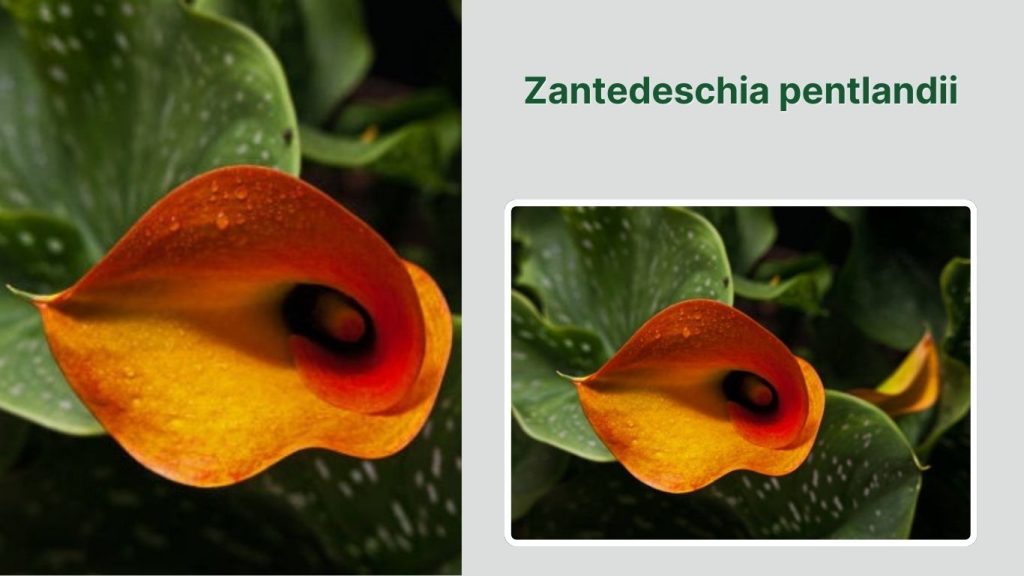
Zantedeschia pentlandii is a striking calla lily species best known for its vivid yellow flowers and bold, decorative foliage. It is one of the most colorful wild calla lilies and has played an important role in the development of many modern yellow and bi-colored hybrids.
Identification (Flower Traits)
- Large, trumpet-shaped bright yellow spathe
- Smooth, waxy flower surface
- Strong yellow central spadix
- Tall, upright flowering stems
- Broad green leaves, often marked with white spots
Flower Color & Structure
The spathe is a rich, glowing yellow, sometimes with soft green shading near the base. The bright coloration and clean curves give the flower a bold, tropical appearance that stands out strongly in gardens.
Blooming Season & Flowering Habit
Zantedeschia pentlandii typically blooms from late spring through summer. Each plant sends up multiple flower stalks that open gradually, extending the blooming period.
Habitat & Natural Range
This species is native to South Africa, where it grows in seasonally moist grasslands and open woodland areas.
Growth Form & Plant Characteristics
Zantedeschia pentlandii grows from tuber-like rhizomes and forms compact clumps of arrow-shaped leaves. It usually enters dormancy after flowering, especially in cooler or drier conditions.
Garden & Floral Uses
Zantedeschia pentlandii is widely used in ornamental borders, containers, and cut-flower gardens. Its intense yellow blooms are especially popular in bright floral arrangements and summer landscape designs.
FAQs
What is Zantedeschia commonly known as?
Zantedeschia is most commonly known as the calla lily. Despite the name, it is not a true lily. The plant belongs to the arum family and is recognized by its funnel-shaped spathe and central spadix, which together create the classic calla lily flower form seen in gardens and floral arrangements.
Are Zantedeschia plants easy to grow?
Zantedeschia plants are generally easy to grow when given warm temperatures, bright light, and well-drained soil. Most types grow from tuber-like rhizomes and need regular watering during the growing season, followed by a drier resting period after flowering to support healthy regrowth.
Do calla lilies prefer sun or shade?
Zantedeschia flowers grow best in bright light with some direct sun, especially morning sun. In very hot climates, light shade helps prevent leaf burn. Too much shade can reduce flowering, while balanced light encourages strong stems, healthy leaves, and well-formed blooms.
How long do Zantedeschia flowers last?
On the plant, Zantedeschia flowers can last several weeks before fading. When cut and placed in water, calla lily blooms often stay fresh for 7 to 14 days. Their long vase life is one reason they are extremely popular in floral design and events.
Are Zantedeschia plants toxic?
Yes, Zantedeschia plants are toxic to humans and pets if eaten. They contain calcium oxalate crystals that can cause mouth irritation, swelling, and digestive discomfort. It is best to keep calla lilies out of reach of children, cats, dogs, and other animals.