
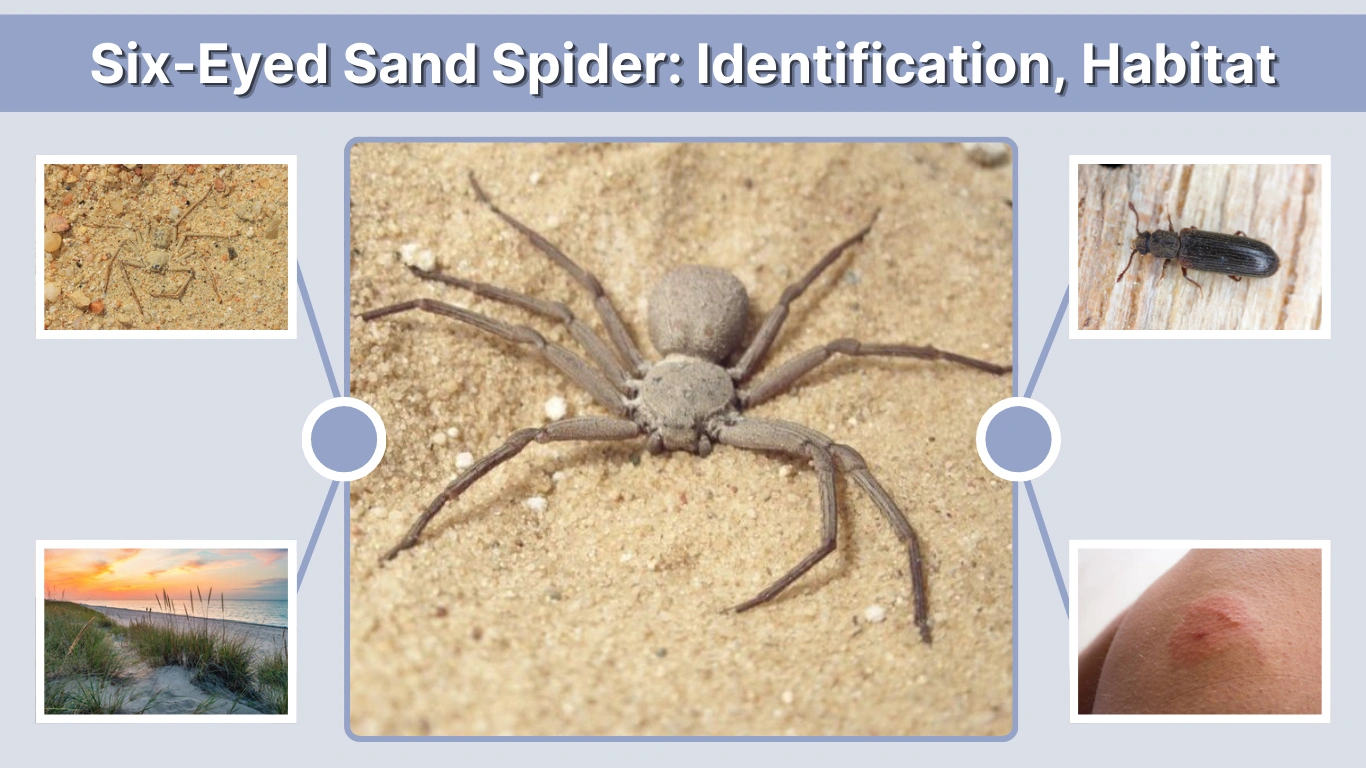
The six-eyed sand spider is one of the most fascinating and mysterious spiders found in desert environments. Known scientifically as part of the genus Sicarius, this spider is famous for its powerful venom and remarkable camouflage abilities. It spends much of its life buried beneath sand, waiting patiently for prey to pass by. Native mainly to desert regions of southern Africa and parts of South America, the six-eyed sand spider is rarely encountered by humans, but its unique adaptations make it one of the most interesting arachnids in the world.
What Is a Six-Eyed Sand Spider?
The six-eyed sand spider belongs to the family Sicariidae, the same family that includes the well-known brown recluse spider. Members of this family are known for possessing strong venom used to subdue prey. However, unlike the brown recluse, the six-eyed sand spider lives primarily in remote desert habitats and is rarely seen by people.
Scientific Classification
The six-eyed sand spider can be classified as follows:
- Genus: Sicarius
- Family: Sicariidae
- Common name: Six-eyed sand spider
The genus Sicarius includes several species adapted to arid and sandy environments. These spiders have evolved specialized traits that allow them to survive in extreme desert conditions.
Overview of the Species
Six-eyed sand spiders are ambush predators, meaning they wait for prey to come close rather than actively hunting. They rely heavily on camouflage and patience to capture insects and other small animals.
One of the spider’s most impressive abilities is its sand camouflage technique. Its body is covered in tiny hairs that trap sand particles, helping the spider blend perfectly into its surroundings. When partially buried, it becomes almost invisible to both prey and predators.
Because they spend most of their time hidden beneath sand, six-eyed sand spiders are extremely difficult to observe in the wild.
How to Identify a Six-Eyed Sand Spider
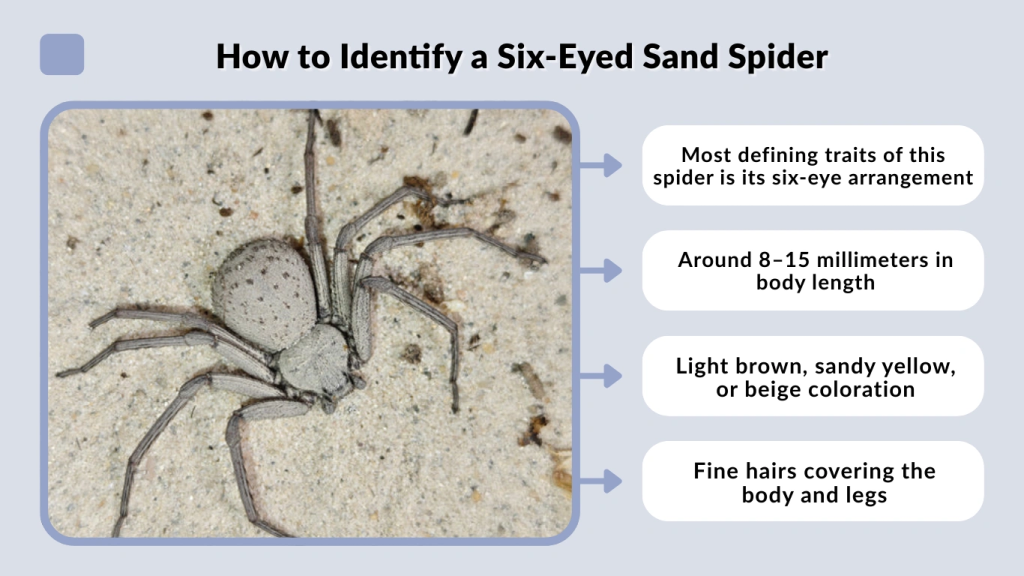
Although rarely encountered, the six-eyed sand spider has several distinctive features that help distinguish it from other spiders.
Physical Appearance
The six-eyed sand spider has a flat, crab-like body that allows it to easily bury itself in sand. Its coloration usually matches the surrounding environment, which helps it remain hidden.
Typical features include:
- Light brown, sandy yellow, or beige coloration
- A flat, wide body
- Long legs that spread outward from the body
- Fine hairs covering the body and legs
These characteristics help the spider blend seamlessly with desert sand.
Key Identification Features
One of the most defining traits of this spider is its six-eye arrangement. Most spiders have eight eyes, but the six-eyed sand spider has only six.
The eyes are arranged in three pairs, positioned toward the front of the head. This eye structure is one of the easiest ways to identify spiders in the Sicarius genus.
Another identifying feature is the spider’s ability to collect sand particles on its body. The tiny hairs on its body hold sand grains, making the spider appear almost identical to the surrounding ground.
Size and Color
Six-eyed sand spiders are medium-sized spiders. Adult individuals typically measure around 8–15 millimeters in body length, though their legs can make them appear larger.
Their coloration varies depending on the habitat but commonly includes:
- Sandy yellow
- Light brown
- Tan or beige
These colors allow the spider to remain hidden in desert landscapes.
Habitat and Distribution
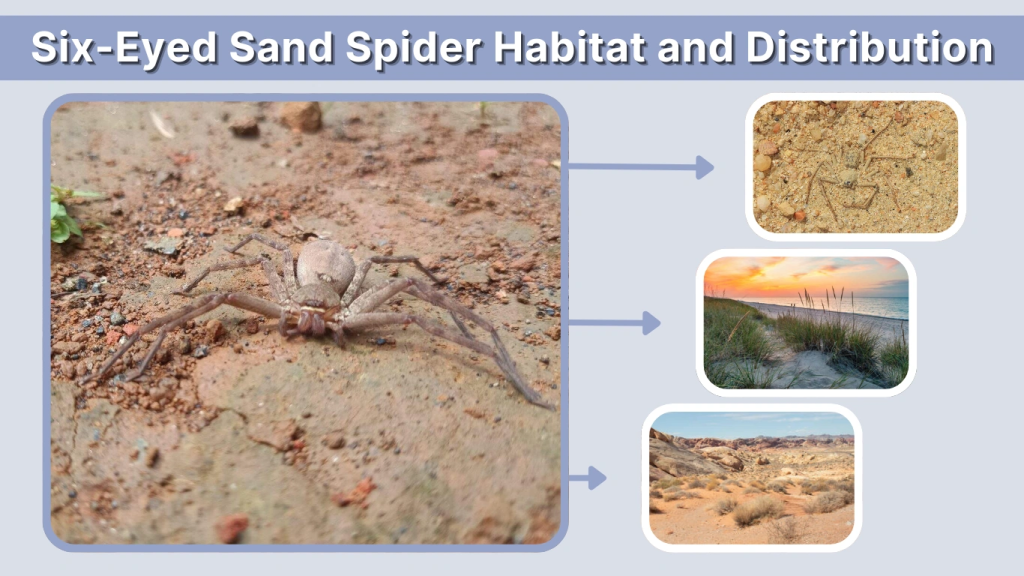
Six-eyed sand spiders are specially adapted to live in dry, sandy environments where few other creatures can survive.
Geographic Range
These spiders are primarily found in desert regions of southern Africa, including countries such as Namibia and South Africa. Some species are also present in parts of South America, where similar sandy habitats exist.
Because they live in remote desert areas, encounters with humans are extremely rare.
Preferred Environment
Six-eyed sand spiders prefer environments with loose sand and dry conditions. These areas allow them to bury themselves easily and wait for prey.
Typical habitats include:
- Desert dunes
- Sandy plains
- Dry riverbeds
- Arid scrublands
These locations provide ideal conditions for their ambush hunting strategy.
Burrowing and Camouflage Behavior
One of the most impressive adaptations of the six-eyed sand spider is its ability to hide beneath sand.
The spider buries itself just below the surface, leaving only a small portion of its body exposed. When insects or small animals move nearby, the spider quickly emerges to capture them.
Because of this behavior, the six-eyed sand spider can remain hidden for long periods without being noticed.
Behavior and Hunting Strategy
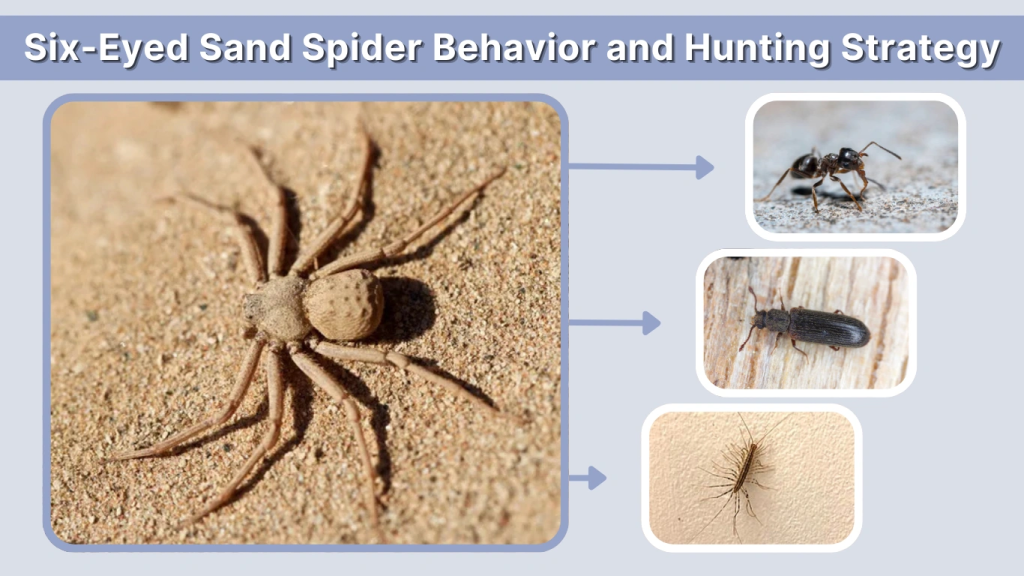
The six-eyed sand spider is a patient ambush predator that relies on stealth rather than speed. Its hunting strategy is designed to conserve energy in harsh desert environments where food may be scarce.
Ambush Predator
Instead of actively searching for prey, the spider buries itself in sand and waits motionless. Its camouflaged body makes it nearly impossible for insects to detect.
When prey moves close enough, the spider suddenly strikes, grabbing the victim with its legs and delivering venom to immobilize it.
Diet
Six-eyed sand spiders feed primarily on small arthropods. Their diet usually includes:
- Ants
- Beetles
- Other insects
- Small arthropods
In some cases, they may also capture slightly larger prey if the opportunity arises.
Nocturnal Activity
Although they can hunt at various times, six-eyed sand spiders are generally more active at night. The cooler nighttime temperatures of desert environments make hunting safer and more efficient.
During the hottest parts of the day, the spider remains buried beneath the sand, avoiding extreme heat.
Six-Eyed Sand Spider Venom
One of the main reasons the six-eyed sand spider attracts scientific interest is its powerful venom. Like other members of the Sicariidae family, this spider produces venom designed to immobilize and digest prey quickly. While it is highly effective against insects and small animals, encounters with humans are extremely rare due to the spider’s remote desert habitat.
How Powerful Is the Venom?
The venom of the six-eyed sand spider contains cytotoxic compounds, which means it can damage cells and tissues in prey. These toxins help the spider quickly subdue insects and begin the digestion process.
Scientists have studied this venom because it can cause necrotic effects, meaning tissue breakdown in the affected area. However, most of what is known comes from laboratory research rather than real human bite cases.
Despite its potency, the spider does not use its venom unless necessary, usually when capturing prey or defending itself.
Effects on Humans
Documented human bites from six-eyed sand spiders are extremely rare. Because these spiders live in isolated desert regions and tend to remain hidden beneath sand, people almost never encounter them.
In theory, if a bite were to occur, symptoms could include:
- Localized pain at the bite site
- Redness and swelling
- Possible tissue damage around the bite area
- Skin irritation or blistering
However, there are very few confirmed cases, making it difficult to fully understand the exact medical effects on humans.
Comparison With Other Spiders
The six-eyed sand spider is closely related to the brown recluse spider, which is also part of the Sicariidae family. Both spiders produce venom that can cause tissue damage.
However, unlike brown recluse spiders that sometimes live near human homes, six-eyed sand spiders inhabit remote desert areas. This greatly reduces the chances of accidental encounters or bites.
Six-Eyed Sand Spider Bite
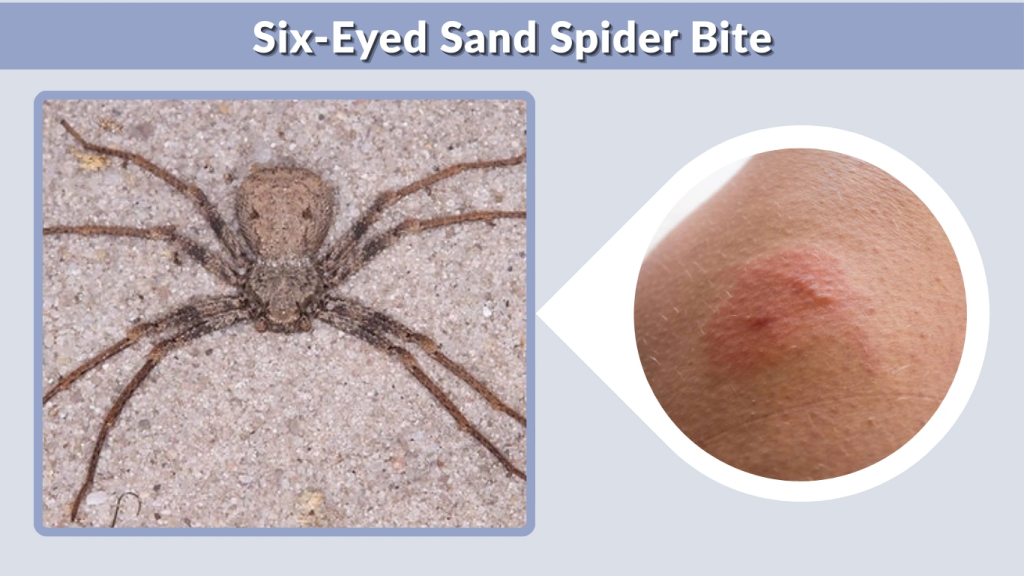
Although the spider has powerful venom, bites involving humans are exceptionally uncommon.
Do They Bite Humans?
Six-eyed sand spiders are not aggressive toward humans. They prefer to remain hidden beneath sand and will usually avoid contact whenever possible.
A bite could theoretically occur if:
- The spider is accidentally touched or stepped on
- Someone disturbs it while it is buried in sand
- The spider feels threatened and cannot escape
Even under these circumstances, the spider is more likely to remain still or retreat rather than bite.
Bite Symptoms
Because real bite cases are rare, symptoms are largely based on scientific understanding of the venom rather than documented human experiences.
Possible symptoms could include:
- Pain at the bite site
- Swelling or redness
- Skin damage or blister formation
- Delayed healing of the affected area
Severe symptoms are considered possible but unlikely because encounters are extremely rare.
Medical Treatment
If someone suspects a bite from a six-eyed sand spider, medical attention should be sought immediately. Proper treatment can help manage symptoms and reduce complications.
Typical medical care may include:
- Cleaning the wound
- Monitoring for tissue damage
- Pain management
- Treatment for infection if necessary
Prompt medical evaluation is always recommended for any unknown spider bite.
Life Cycle of the Six-Eyed Sand Spider
Like most spiders, six-eyed sand spiders go through several developmental stages from egg to adult.
Reproduction
Female six-eyed sand spiders produce silk egg sacs that contain numerous eggs. These sacs are usually placed in protected areas within sandy environments.
The female may remain nearby for a period of time to guard the eggs until they hatch.
Spiderlings
Once the eggs hatch, tiny spiderlings emerge and begin their independent lives. At this stage, they must quickly learn to hide in sand and capture small prey.
Many spiderlings do not survive to adulthood due to environmental challenges and predators.
Lifespan
Six-eyed sand spiders can live several years, which is relatively long for many spider species. Their slow metabolism and ambush hunting strategy allow them to survive extended periods without food.
Interesting Facts About Six-Eyed Sand Spiders
Six-eyed sand spiders possess several fascinating characteristics that help them survive in harsh desert environments.
Masters of Camouflage
These spiders are among the best camouflaged arachnids in the world. Their sand-colored bodies and ability to trap sand particles on their hairs make them almost invisible in their habitat.
Rarely Seen in the Wild
Because they spend much of their time buried beneath sand, six-eyed sand spiders are rarely observed by humans or researchers.
Can Survive Long Periods Without Food
These spiders are capable of surviving long stretches without eating, an adaptation that helps them endure desert conditions where prey may be scarce.
Common Myths About Six-Eyed Sand Spiders
The mysterious nature of these spiders has led to several misconceptions.
Myth: They Frequently Attack Humans
In reality, six-eyed sand spiders almost never encounter humans and are not aggressive.
Myth: They Are Found Everywhere
These spiders are limited mainly to desert regions of Africa and South America, not worldwide.
Myth: Every Bite Is Fatal
While their venom is strong, there are very few confirmed bite cases, and fatal encounters with humans are extremely unlikely.
FAQs
Are six-eyed sand spiders dangerous?
They possess potent venom, but encounters with humans are extremely rare, making them a very low risk.
Where do six-eyed sand spiders live?
They mainly inhabit desert environments in southern Africa and parts of South America.
How big are six-eyed sand spiders?
Adults typically measure 8–15 millimeters in body length, though their legs make them appear larger.
Has a human ever died from a six-eyed sand spider bite?
There are very few confirmed bite cases, and reliable records of human fatalities are extremely limited.
Why do six-eyed sand spiders bury themselves in sand?
Burying themselves helps them hide from predators and ambush prey more effectively.
Conclusion
The six-eyed sand spider is a remarkable desert predator known for its powerful venom and extraordinary camouflage abilities. Although it has gained attention for its potent bite, the spider lives in remote desert habitats and rarely encounters humans. Its ambush hunting strategy, ability to blend into sand, and unique physical characteristics make it one of the most fascinating spiders in the natural world. Understanding these spiders helps highlight their important role in desert ecosystems while also dispelling myths about their behavior and danger.