

The long-bodied cellar spider is one of the most recognizable spiders commonly found inside homes. Known for its extremely long legs and fragile-looking body, this spider often lives quietly in corners, basements, and ceilings. Although many people are startled by its appearance, the long-bodied cellar spider is harmless to humans and actually plays a helpful role by controlling indoor insect populations. These spiders build loose webs and patiently wait for prey such as flies, mosquitoes, and small insects. Because of their calm nature and beneficial behavior, they are often considered helpful household spiders rather than pests.
What Is a Long-Bodied Cellar Spider?
The long-bodied cellar spider, scientifically known as Pholcus phalangioides, belongs to the spider family Pholcidae. It is one of the most common indoor spiders found around the world. Many people mistakenly call it “daddy long-legs,” although that name can also refer to other creatures like harvestmen.
This spider is famous for its long, thin legs and small body. It often hangs upside down in its messy, irregular web, usually in dark and quiet places. Unlike many spiders that actively chase their prey, the cellar spider prefers to wait patiently until insects become trapped in its web.
Because of their ability to survive indoors and their tolerance for human environments, long-bodied cellar spiders have spread to homes and buildings across many regions of the world.
Physical Characteristics
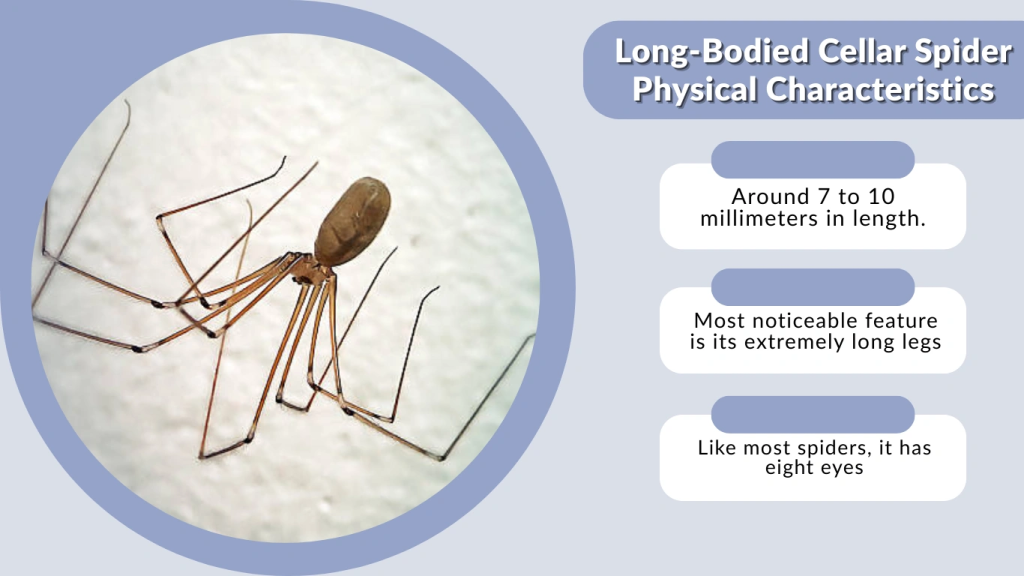
The long-bodied cellar spider has several unique physical features that make it easy to recognize.
Its body is small and delicate, usually measuring around 7 to 10 millimeters in length. The abdomen is oval-shaped and slightly elongated. The color of the spider can vary from pale yellow to light gray or tan, sometimes with faint markings on the body.
The most noticeable feature is its extremely long legs, which can grow up to five or six centimeters in length. These thin legs allow the spider to move carefully across its web and quickly react to prey or threats.
Like most spiders, it has eight eyes, though they are arranged in a pattern different from many other species. The spider’s body structure is designed more for web-dwelling rather than active hunting.
Despite their fragile appearance, these spiders are surprisingly skilled predators and can capture insects larger than themselves.
Habitat and Distribution
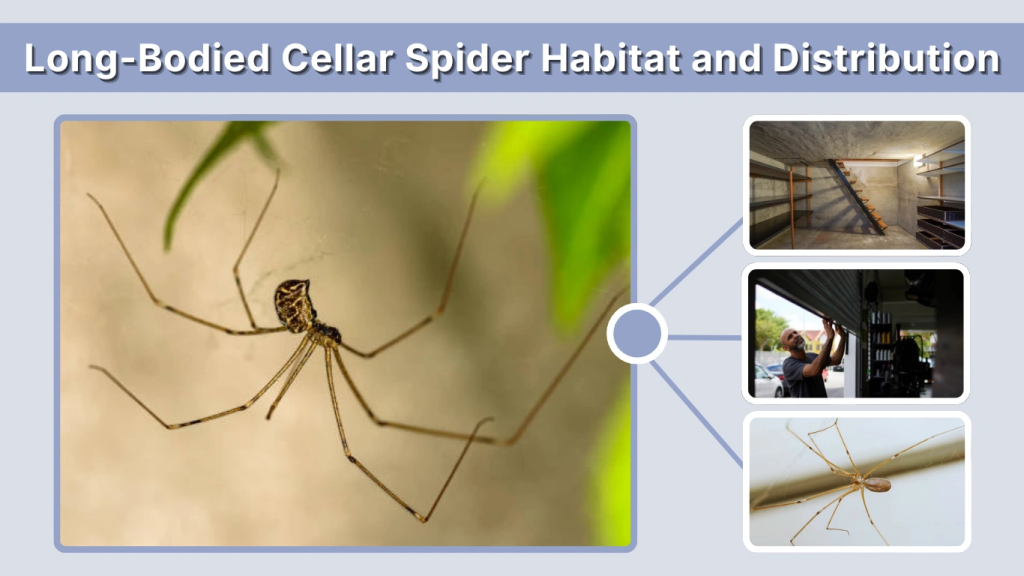
Long-bodied cellar spiders prefer environments that are dark, quiet, and undisturbed. This is why they are frequently found in basements, cellars, garages, attics, and storage areas. They often build their webs in corners near ceilings, behind furniture, or along walls.
Their webs look messy and irregular compared to the neat circular webs created by orb-weaver spiders. However, this loose structure works well for trapping small flying insects.
Originally believed to come from Europe, the long-bodied cellar spider has now spread across the world. Today it is commonly found in North America, Europe, Asia, and many other regions, mostly living inside human buildings.
Because homes provide warmth and a steady supply of insects, these spiders can survive comfortably indoors throughout the year.
Behavior and Hunting
One of the most interesting behaviors of the long-bodied cellar spider is how it reacts when disturbed. Instead of running away immediately, the spider often vibrates rapidly in its web. This movement makes the spider appear blurry and difficult for predators to see, which helps it avoid danger.
When prey becomes trapped in the web, the spider quickly approaches and wraps the insect in silk before delivering a bite. Its venom helps immobilize the prey so the spider can feed safely.
Long-bodied cellar spiders are also known to hunt other spiders, including species that are larger or potentially dangerous. They carefully wrap their opponents in silk before attacking, which gives them an advantage during spider-to-spider encounters.
Because of this ability, they sometimes help reduce populations of other spiders inside homes.
Diet and Role in Pest Control

The diet of a long-bodied cellar spider mainly consists of small insects and other arthropods commonly found indoors. These spiders feed on flies, mosquitoes, ants, moths, beetles, and even other spiders that get caught in their webs.
This feeding behavior makes them beneficial to have around the house. By capturing and eating insects, they help reduce pest populations naturally without the need for chemical sprays or traps.
In some cases, cellar spiders have even been observed catching and feeding on spiders such as house spiders or other web-building species. Their ability to control different types of pests makes them an important part of the small indoor ecosystem.
Because they rarely interact with humans and spend most of their time in hidden corners, many people choose to leave them alone once they understand their helpful role.
Are Long-Bodied Cellar Spiders Dangerous?

Many people worry that long-bodied cellar spiders may be dangerous because of their unusual appearance and long legs. However, these spiders are harmless to humans. They do produce venom, but it is used only to capture and subdue their prey. The venom is extremely mild and not medically significant for people.
Bites from cellar spiders are very rare because they are shy and prefer to avoid contact with humans. Even if a bite occurs, it usually causes little to no reaction. Most cellar spiders would rather vibrate in their webs or move away than defend themselves aggressively.
Another common myth claims that cellar spiders have very powerful venom but cannot bite humans because their fangs are too small. This story is widely repeated but not scientifically supported. In reality, their venom is simply not strong enough to harm people.
Because they are non-aggressive and beneficial for controlling insects, cellar spiders are generally considered harmless and helpful household spiders.
Life Cycle
The life cycle of the long-bodied cellar spider follows the typical development stages of many spiders. It begins when the female produces a cluster of eggs, which she carefully wraps in silk to form an egg sac.
Unlike many other spider species that attach their egg sacs to webs or surfaces, female cellar spiders carry the egg sac in their mouthparts, holding it with their jaws until the eggs hatch. This behavior helps protect the eggs from predators and environmental dangers.
After a few weeks, the eggs hatch into tiny spiderlings. These young spiders remain near the mother for a short period before spreading out to create their own webs.
As they grow, the spiderlings go through several stages called molts, where they shed their outer skin to allow their bodies to grow larger. Each molt brings them closer to adulthood.
Long-bodied cellar spiders usually reach maturity within a few months. Under stable indoor conditions, they can live for one to three years, which is relatively long for small spiders.
Interesting Facts
Long-bodied cellar spiders have several fascinating traits that make them unique among household spiders.
One of their most recognizable behaviors is their rapid web vibration. When disturbed, the spider shakes its body quickly in the web, creating a blurry motion that confuses predators and makes it harder to target the spider.
These spiders are also skilled at capturing other spiders. They can carefully wrap larger spiders in silk before biting them, allowing them to overcome prey that might otherwise be dangerous.
Another interesting fact is that cellar spiders often reuse and expand their webs instead of rebuilding them from scratch. Over time, their webs can become quite large and messy-looking.
Despite their delicate appearance, these spiders are surprisingly adaptable and can survive in many indoor environments. They thrive in places where insects are available and where their webs remain undisturbed.
How to Prevent or Remove Them
Although cellar spiders are harmless, some people prefer not to have spiders inside their homes. Fortunately, there are simple ways to reduce their presence without using harmful chemicals.
One of the easiest methods is regular cleaning. Removing webs from ceilings, corners, and behind furniture discourages spiders from staying in those areas.
Reducing the number of insects in the home can also make the environment less attractive to spiders. This can be done by sealing food properly, keeping trash covered, and minimizing lights that attract insects near windows and doors.
Another helpful step is sealing cracks and gaps around windows, doors, and walls. These openings often allow insects and spiders to enter homes.
FAQs
What is a long-bodied cellar spider?
A long-bodied cellar spider (Pholcus phalangioides) is a common indoor spider recognized by its small body and extremely long legs. It usually lives in basements, ceilings, and corners of homes where it builds loose webs and feeds on insects.
Are cellar spiders dangerous to humans?
No, cellar spiders are not dangerous to humans. Their venom is very mild and bites are extremely rare. These spiders are shy and prefer to stay hidden in quiet areas of the home.
Why do cellar spiders shake in their webs?
Cellar spiders vibrate rapidly in their webs when they feel threatened. This motion blurs their body and makes it difficult for predators to see or catch them.
Do cellar spiders help control insects?
Yes, cellar spiders help control many indoor pests. They feed on flies, mosquitoes, ants, moths, and even other spiders, which makes them beneficial for reducing insect populations inside homes.