
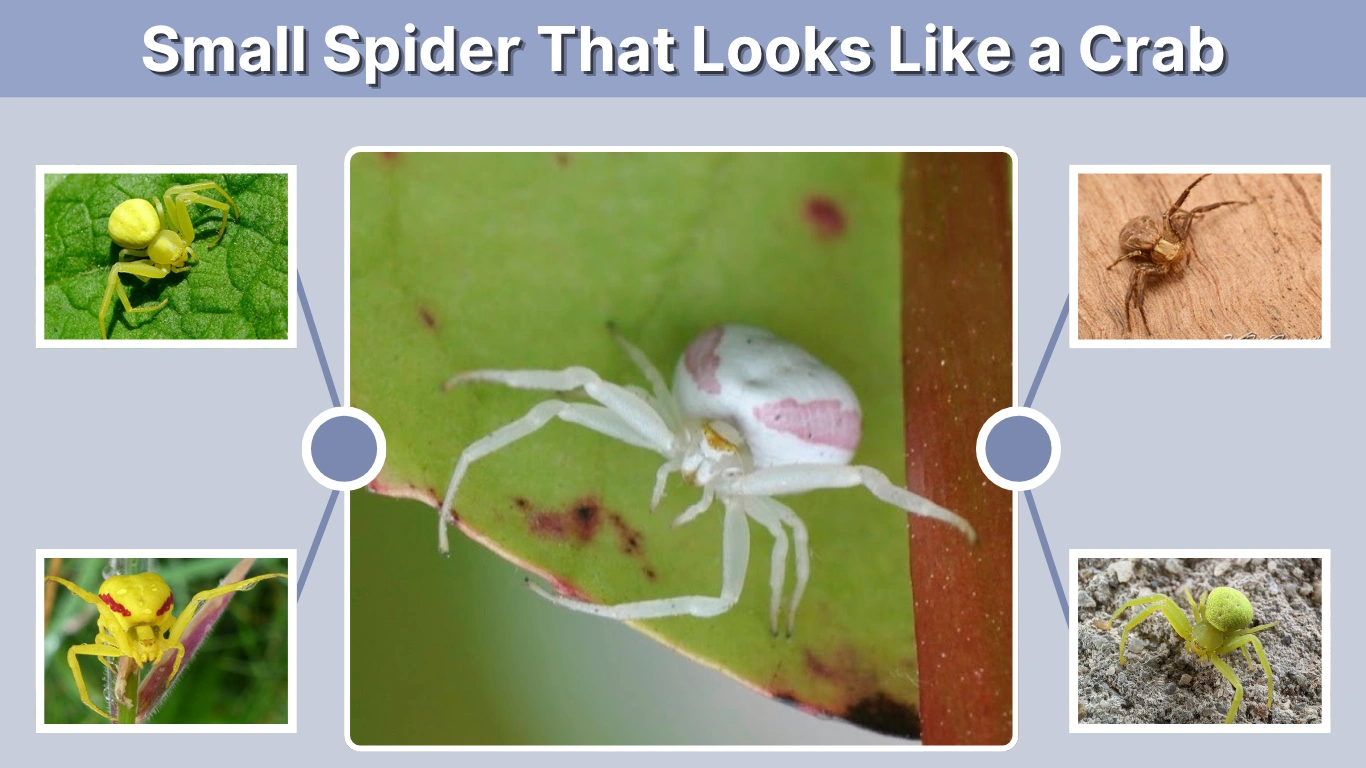
Have you ever spotted a tiny spider walking sideways and wondered if it might be part crab? That fascinating creature is most likely a crab spider, a small arachnid famous for its crab-like stance and motion. These spiders come in a range of colors, from white and yellow to green and brown, and they often hide among flowers or plants. Despite their unusual appearance, crab spiders are harmless and play an important role in keeping insect populations balanced.
What Is a Crab Spider?

Appearance and Behavior
Crab spiders belong to the Thomisidae family, named for their resemblance to crabs. They have flat, wide bodies and legs that extend outward, allowing them to walk sideways or backward just like a crab. Unlike web-building spiders, crab spiders don’t spin webs to catch their prey. Instead, they are ambush hunters that rely on patience and camouflage.
You’ll often find them sitting motionless on flowers, waiting for unsuspecting insects such as bees, flies, or butterflies. When a potential meal lands nearby, they lunge forward and grab it using their strong front legs. Their hunting technique is stealthy and incredibly efficient, making them some of nature’s most skilled ambushers.
Common Traits
Crab spiders are usually small, measuring between 5 to 10 millimeters in body length. Their front legs are longer and more powerful than the others, giving them a “crab claw” look. They don’t build webs, but some species create silk shelters among leaves or flower petals for protection.
Their colors vary widely — bright yellow, white, orange, green, brown, or even black — depending on their species and surroundings. Many are masters of disguise, perfectly blending with their environment to avoid predators and sneak up on prey.
Types of Small Crab-Like Spiders
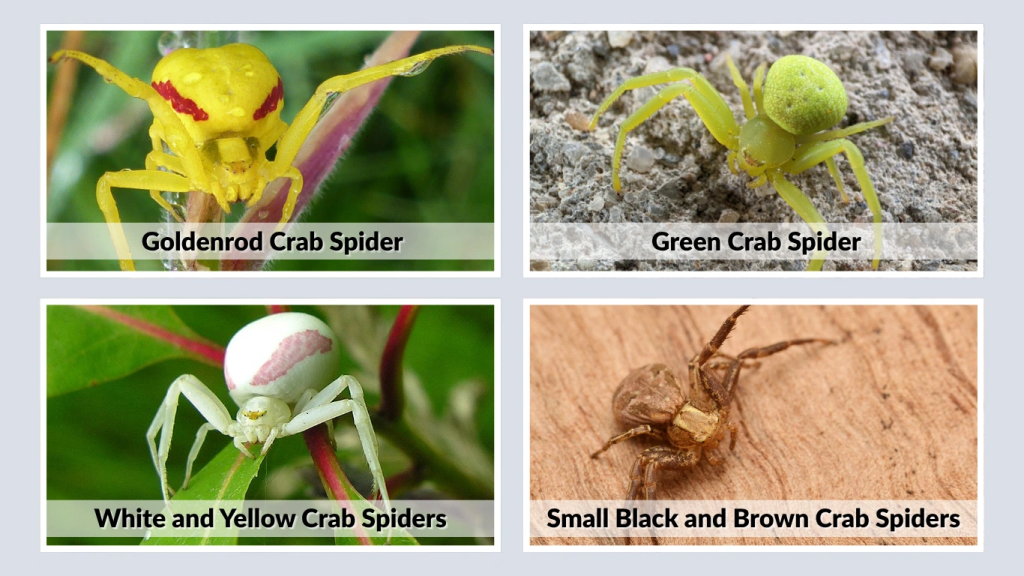
Goldenrod Crab Spider (Misumena vatia)
One of the most recognizable crab spiders is the goldenrod crab spider, found across North America and Europe. Females of this species can change color from white to yellow depending on the flower they’re sitting on — a remarkable camouflage ability. They often hunt on daisies, sunflowers, or goldenrods, waiting patiently for pollinators to come close.
Goldenrod crab spiders are usually small, with females about 10 mm long and males even smaller. Their bright hues make them easy to spot, but they are completely harmless to humans.
Green Crab Spider (Diaea dorsata)
The green crab spider is another tiny species commonly found in gardens and woodlands. It has a lime-green body and translucent legs that help it blend with leaves. Unlike its bright yellow or white relatives, the green crab spider prefers shaded vegetation, where it hides during the day and hunts at dawn or dusk.
White and Yellow Crab Spiders
Small white and yellow crab spiders are often seen on flowers like daisies, tulips, or roses. These colorations act as camouflage, allowing them to become almost invisible to their insect prey. They’re particularly common in gardens and meadows during spring and summer.
Small Black and Brown Crab Spiders
While less colorful, black and brown crab spiders are equally fascinating. These ground-dwelling species are often found on tree bark, soil, or under rocks. Their dark coloring helps them hide from both predators and prey. Some are mistaken for ants or beetles due to their compact shape and quick, sideways scuttle.
How to Identify a Crab-Like Spider
To tell a crab spider apart from other small spiders, look closely at how it moves and how it holds its legs. Crab spiders have wide, flattened bodies and front legs that extend sideways, giving them a crab-like stance. When startled, they often raise these legs defensively, mimicking the way a crab might wave its claws.
They don’t jump or spin webs across large areas; instead, they stay on flowers, leaves, or walls, moving stealthily from place to place. The key identifiers are their sideways movement, flat body shape, and lack of web-building behavior.
Habitat and Distribution
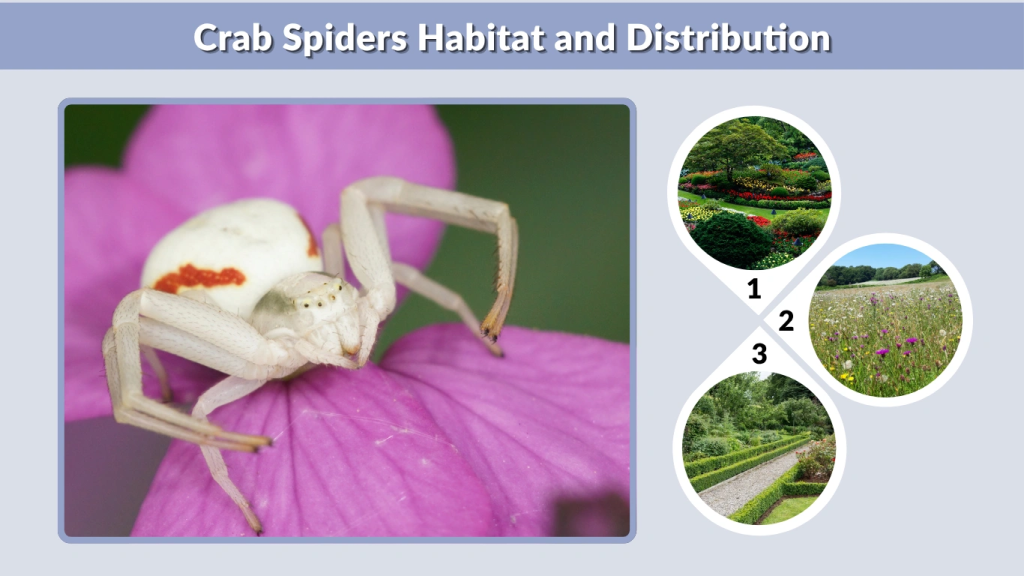
Crab spiders are found worldwide, thriving in warm and temperate regions. They prefer open habitats such as gardens, meadows, hedges, and forest edges where flowers attract insect prey. You can spot them resting on blossoms, waiting for bees or flies.
In colder climates, some species adapt by hiding under leaves or bark. In the United States, they’re especially common in states like Florida, Texas, and Arizona, where bright species such as small white or yellow crab spiders flourish. In the UK, small white crab spiders are frequently seen on window sills and flowerbeds during summer.
Are Crab Spiders Dangerous?
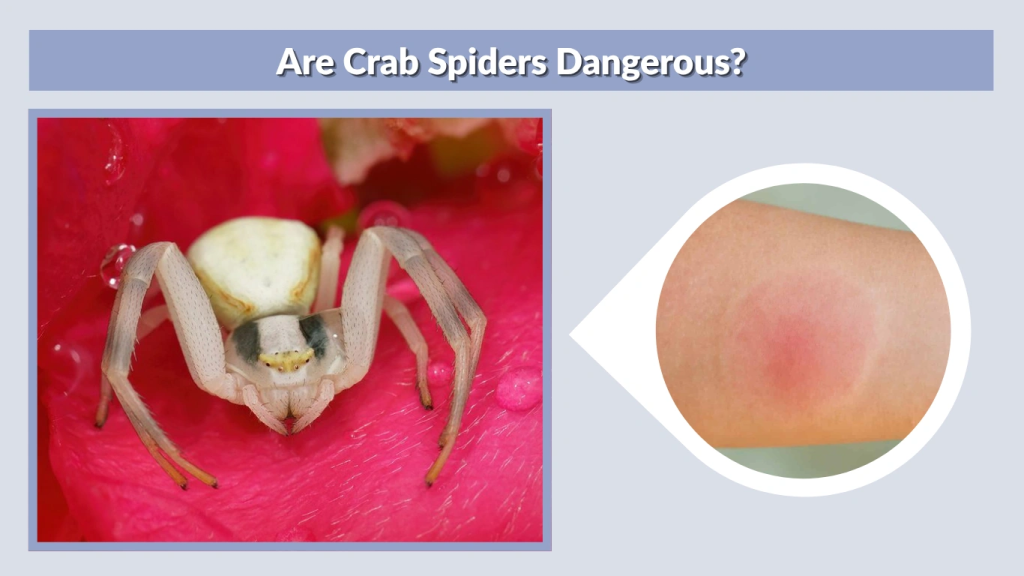
Crab spiders may look unusual, but they are entirely harmless to humans. These small spiders possess mild venom that they use to immobilize their insect prey. The venom is not potent enough to affect humans or pets, and their fangs are too small to penetrate deeply into the skin. As a result, bites are very rare and usually cause only minor irritation, itching, or redness that fades within hours.
They are also non-aggressive, preferring to flee rather than fight. Most encounters occur in gardens or on flowers, and the spiders will remain still, relying on camouflage rather than confrontation. They are beneficial to the environment because they help control pest populations naturally, feeding on flies, mosquitoes, and other small insects.
Interesting Facts About Crab Spiders
- Masters of camouflage: Many crab spiders can change color to match the flower or surface they rest on. This ability allows them to become invisible to both predators and prey.
- No web-building: Unlike typical spiders, crab spiders do not spin webs to catch prey. Instead, they rely on stealth and patience, waiting for insects to approach.
- Sideways walkers: Their sideways and backward movement resembles that of true crabs, which inspired their name.
- Worldwide presence: Found across North America, Europe, Asia, and Australia, crab spiders adapt to almost any environment with vegetation.
- Diverse colors and patterns: From bright white and yellow to brown, green, orange, and black, these tiny spiders display incredible variety in appearance.
Despite their small size, crab spiders are excellent hunters. They often choose brightly colored flowers that attract pollinators, ambushing bees and butterflies that stop to feed. This strategy makes them a crucial part of natural pest control systems in gardens and ecosystems.
FAQs
What kind of small spider looks like a crab?
The small spider that looks like a crab is a crab spider from the Thomisidae family. It has a flat body, long front legs, and moves sideways, just like a crab. You’ll usually find it resting on flowers, leaves, or garden plants waiting to ambush its prey.
Are small crab spiders venomous?
Yes, but only to their insect prey. Crab spiders use mild venom to paralyze small bugs, but their venom is far too weak to harm humans. Even if bitten, you might experience only slight redness or itching.
Why does a crab spider walk sideways?
Crab spiders have legs that extend outward rather than downward, giving them a wide stance. This leg structure allows them to move sideways or backward efficiently—similar to crabs—helping them navigate leaves and petals smoothly.
Where can I find small crab spiders?
Crab spiders are common in gardens, meadows, and forests, especially on brightly colored flowers like daisies, tulips, or sunflowers. Indoors, they might appear near windows or houseplants but are harmless and often short-lived inside.
What colors do small crab spiders come in?
These spiders display a wide range of colors—white, yellow, orange, green, brown, or black—depending on the species. Some, like the goldenrod crab spider, can even change color to blend with their environment for better camouflage.
